Tag: Foreign Investment

  • Kazakhstan to Auction 50 Gold, Copper, Coal, and Rare Metal Deposits in June

    Kazakhstan to Auction 50 Gold, Copper, Coal, and Rare Metal Deposits in June

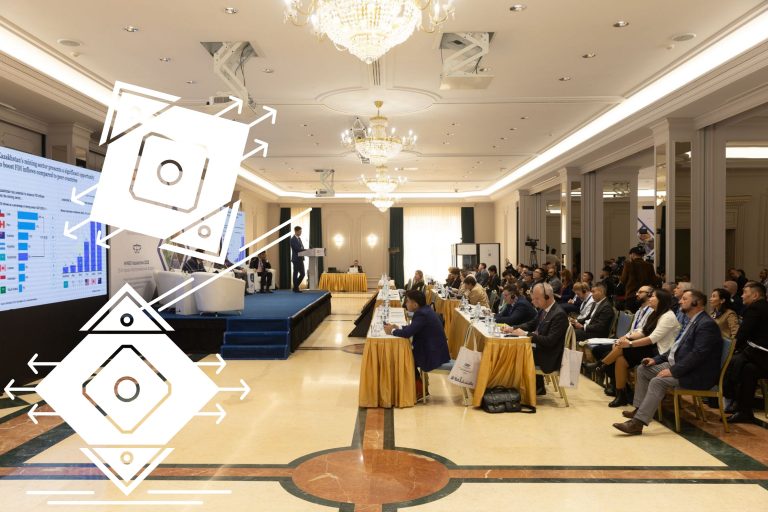
    Kazakhstan will auction 50 deposits of gold, copper, coal, and rare metals in June via its Unified Subsoil Use Platform, representatives from the Ministry of Industry and Construction announced at the 15th MINEX mining and geological forum.

    These deposits, which already have confirmed mineral reserves, will be offered for extraction under licenses valid for up to 25 years. Participating companies must develop a mining plan and specify the development timeline for each site.

    According to the ministry, companies from the United States, the European Union, and China have already applied to participate in the auction.

    Almas Kushumov, Director of the Subsoil Use Department at the Ministry of Industry and Construction of Kazakhstan:
    “These are deposits with proven reserves. We will auction them for extraction — gold, coal, rare and polymetallic deposits. Soon we will publish detailed information on the Unified Subsoil Use Platform. All interested parties will be able to submit documents online and take part in the auction.”

    Experts say that such auctions play a key role in attracting foreign investment to Kazakhstan’s resource sector — especially since some mineral-rich areas have yet to be announced due to incomplete documentation.

    Kushumov noted that in 2024 alone, 23 new deposits of solid minerals were officially added to the national register for the first time.

    “In terms of gold alone, state reserves increased by 20 tonnes. Every year, based on geological exploration results, new reserves are confirmed, added to the state balance, and then made available for extraction.”

  • Ferrexpo Threatens Legal Action Against Ukraine Over Mine Nationalization

    Ferrexpo Threatens Legal Action Against Ukraine Over Mine Nationalization

    London-listed mining giant Ferrexpo is preparing for a legal battle with Ukraine over the government’s plan to partially nationalize the Poltava mine. The mine, located 200 miles southwest of Kyiv, is Ferrexpo’s primary asset, making it the world’s third-largest exporter of iron pellets.

    The dispute arises from Ukraine’s crackdown on oligarch Kostyantyn Zhevago, who owns 49.5% of Ferrexpo. Zhevago, currently under investigation for alleged embezzlement linked to the collapse of his bank in 2015, has been targeted by Kyiv’s efforts to reclaim lost funds. After failing to seize his stake through the London courts in 2023, Ukraine is now attempting to take a direct stake in the mine.

    Ferrexpo argues that this move violates Ukraine’s bilateral investment treaty with the UK. The company has formally notified Ukraine that if the nationalization proceeds, it will initiate international arbitration. Chairman Lucio Genovese warned that such actions could deter foreign investment in Ukraine’s post-war recovery.

    The Ukrainian government has not yet responded to requests for comment. With major investors such as BlackRock, Fidelity, and JPMorgan involved, the outcome of this legal standoff could have significant implications for Ukraine’s economic future.

  • Chinese-Owned PTL Cancels Major Green Energy Investment in Sweden

    Chinese-Owned PTL Cancels Major Green Energy Investment in Sweden

    In a significant blow to Sweden’s green energy ambitions, Chinese-owned PTL has scrapped its planned SEK 13 billion investment in a state-of-the-art anode factory in Timrå. The project, which aimed to produce battery anodes for the growing electric vehicle market, would have created 1,900 jobs and positioned PTL as a key supplier to Northvolt, Sweden’s leading battery manufacturer. However, stringent security policy requirements imposed by the Swedish Inspectorate for Strategic Products (ISP) ultimately led to the project’s cancellation.

    The ISP’s conditions included restrictions on PTL’s ownership, mandating that the company could not hold a majority stake in the factory. Additionally, the CEO, board chairman, and a majority of board members had to be Swedish citizens. PTL, unable to meet these demands within the required timeframe, appealed to the Swedish government but ultimately decided to withdraw from the venture.

    On Thursday, PTL announced the termination of its land contract for the industrial site in Torsboda, effectively ending the project. Dr. Yu Han, PTL’s chief representative in Europe, expressed regret over the decision, stating, “The anode factory in Timrå would have played a key role in a future Swedish battery industry and contributed to the green transition. However, the delays mean that we have to call it a day. The business case for the investment no longer exists.”

    Despite the setback, PTL has agreed to assist Torsboda Industrial Park in exploring opportunities to continue the project with another operator. The cancellation underscores the challenges of balancing foreign investment with national security concerns, particularly in strategic industries like battery manufacturing.

  • Kazakhstan’s Investment Strategy Amid Geopolitical Shifts: Challenges and Opportunities

    Kazakhstan’s Investment Strategy Amid Geopolitical Shifts: Challenges and Opportunities

    Amid the ongoing war in Ukraine and geopolitical tensions, Kazakhstan is positioning itself to attract $150 billion in foreign direct investment (FDI) by 2029. The conflict has provided Central Asian nations, including Kazakhstan, opportunities to strengthen economic ties with the West. In 2022-2023, the Netherlands emerged as the leading investor, contributing over $12 billion to Kazakhstan’s economy, followed by the US and Switzerland.

    However, despite its ambitious goals, Kazakhstan faces challenges. In 2023, FDI inflows dropped by 32.3%, reflecting a lack of comprehensive development strategies for industries and regions. To counteract this, the government has introduced initiatives inspired by British and UAE models, notably through the Astana International Financial Center, which is modeled after Dubai’s financial hub. These measures aim to attract global investors by offering tax breaks, reduced bureaucracy, and a regulatory framework based on British Common Law principles.

    Kazakhstan is also focusing on long-term agreements with foreign companies, particularly in its oil and gas sector. President Kassym-Jomart Tokayev acknowledged that renegotiating production-sharing agreements on favorable terms is essential for securing large investments. However, some companies view these moves as signs of “resource nationalism.”

    Further strategies include initiatives like the Digital Nomad visa to attract remote workers and businesses relocating from Russia. Kazakhstan has already attracted 41 foreign companies worth over $1.5 billion and is in talks with Chinese firms such as Xiaomi and TCL to move production facilities.

    The geopolitical realignment caused by sanctions on Russia has also funneled trade through Central Asia, benefiting Kazakhstan’s economy. The government is investing in developing the Trans-Caspian International Transport Route to strengthen its trade links with Europe and Asia.

    Despite inflation and economic stability challenges, Kazakhstan’s prospects remain strong. The country is now ranked among the world’s top 35 most competitive nations, with the Asian Development Bank projecting 5.1% economic growth by 2025. Kazakhstan’s strategic location, trade agreements, and ongoing reforms position it well to become a regional economic leader.

  • Mongolia and France’s Orano Group Reach Preliminary $1.6 Billion Uranium Mining Deal

    Mongolia and France’s Orano Group Reach Preliminary $1.6 Billion Uranium Mining Deal

    Mongolia has announced a preliminary agreement with Orano Mining Group, a leading French uranium producer, to develop a significant uranium mining project worth $1.6 billion. This project will commence its preparatory phase in 2024, with the goal of initiating uranium production by 2028. The peak production target of 2,600 metric tons is expected by 2044. The government emphasized the importance of this agreement in promoting foreign investment and creating substantial employment opportunities for the Mongolian workforce.

    Orano has been present in Mongolia for over 25 years, conducting extensive exploration activities. The French company, with established mining operations in regions such as Canada, Kazakhstan, and Niger, is expected to bring its expertise to the country’s uranium sector. This agreement follows years of anticipation and is viewed as a strategic move to enhance Mongolia’s role in the global uranium market. However, a previous announcement about the finalization of the agreement was corrected, confirming that only a preliminary deal had been reached.

  • Centerra Gold Ensures Measures to Protect Shareholder Rights Amid Kumtor Mine Seizure

    Centerra Gold Ensures Measures to Protect Shareholder Rights Amid Kumtor Mine Seizure

    Centerra Gold, based in Canada, is actively implementing measures to safeguard shareholder rights following the seizure of its Kumtor gold mine by Kyrgyzstan’s parliament. The company’s Chief Executive, Scott Perry, emphasized strong support from the Canadian and UK governments in this matter, reassuring stakeholders during a conference call with analysts.

    The move by Kyrgyzstan’s parliament to seize control of the Kumtor gold mine, the country’s largest, came after Centerra announced its intention to challenge the government in an international court. This decision has sparked significant concern over foreign investment in the Central Asian country, prompting expressions of disappointment from the Canadian government.

    Furthermore, Centerra Gold imposed restrictions on the sale of shares held by Kyrgyzaltyn JSC, a state-owned entity with a sizable stake in the company. The resignation of Kyrgyzaltyn nominee Tengiz Bolturuk from Centerra’s board was also accepted by the company.

    Despite these developments, Centerra Gold disclosed holding $823 million in cash reserves, with the majority held outside of Kyrgyzstan. Perry emphasized that Centerra no longer retains control over the Kumtor mine.

    This escalation is part of a longstanding dispute between Kyrgyzstan and Centerra Gold over profit-sharing arrangements. The tension intensified following political upheaval in Kyrgyzstan last October, with the country’s new leadership taking a firm stance against the mining company.