Tag: Foreign Investment

  • Regulatory Framework for Mining in Kazakhstan: An Overview

    Regulatory Framework for Mining in Kazakhstan: An Overview

    Kazakhstan’s mining sector is governed by a comprehensive legal framework that ensures state ownership of minerals while facilitating foreign investment. The Republic of Kazakhstan (ROK) retains ownership of subsoil resources, granting licenses for exploration and mining to legal entities. The Code on Subsoil Use 2017 (SSU Code) categorizes mineral resources into solid minerals, hydrocarbons, and uranium, with the Ministry of Industry and Infrastructural Development (MIID) overseeing solid minerals, while the Ministry of Energy (MOE) manages uranium and hydrocarbons due to their significance for energy security.

    The SSU Code is modelled on Australian and Canadian practices and outlines various types of licenses for subsoil rights, including exclusive exploration and mining licenses. Foreign investors can hold mining rights without restrictions, provided they comply with the SSU Code. The licensing process has been digitized to prevent overlaps in mining licenses, and applications can be submitted online. Exploration licenses are essential for obtaining mining licenses, with holders having exclusive rights to apply for mining licenses within their exploration area.

    Kazakhstan’s regulatory environment also includes provisions for environmental protection, requiring permits for activities with potential environmental impacts. The Environmental Code mandates environmental impact assessments (EIA) and public consultations before permits are granted. Furthermore, the ROK has pre-emptive rights over strategic subsoil plots, ensuring that the government retains control over critical resources.

    Foreign lending is generally unrestricted, although lenders must navigate specific regulations related to subsoil rights. Tax legislation in Kazakhstan is subject to frequent changes, impacting corporate income tax, VAT, and other fees associated with mining operations. However, tax incentives may be available for investors engaging in significant development projects.

    Overall, Kazakhstan’s mining sector offers a structured and transparent regulatory framework aimed at attracting foreign investment while safeguarding national interests and environmental standards.


  • Fujian Hengwang to Invest $1.2 Billion in Steel Plant in Kazakhstan

    Fujian Hengwang to Invest $1.2 Billion in Steel Plant in Kazakhstan

    Chinese metallurgical company is set to build a major steel plant in Kazakhstan with an annual production capacity of up to 3 million tonnes. The project, valued at 1.2 billion dollars, is expected to create around 2500 jobs and supply both domestic and export markets.

    The initiative was discussed during a visit by Kazakhstan’s Minister of Trade,  to China’s Fujian province, according to official sources. The project had previously been outlined in February 2025 following talks between Prime Minister  and company chairman Zeng Zhaoqiang.

    Construction of the metallurgical complex is planned in the Zhambyl region, with initial works originally scheduled to begin in April 2025. The first phase, expected to be completed by 2027, will deliver an annual output of 1 million tonnes of steel. Full production capacity of 3 million tonnes per year is targeted by 2029.

    The plant will rely on locally sourced raw materials, including iron ore from deposits in the Ulytau, Karaganda, and Kostanay regions, as well as natural gas and lime.

  • Unpacking Kazakhstan’s $25 Billion Mining and Critical Minerals Revolution

    Unpacking Kazakhstan’s $25 Billion Mining and Critical Minerals Revolution

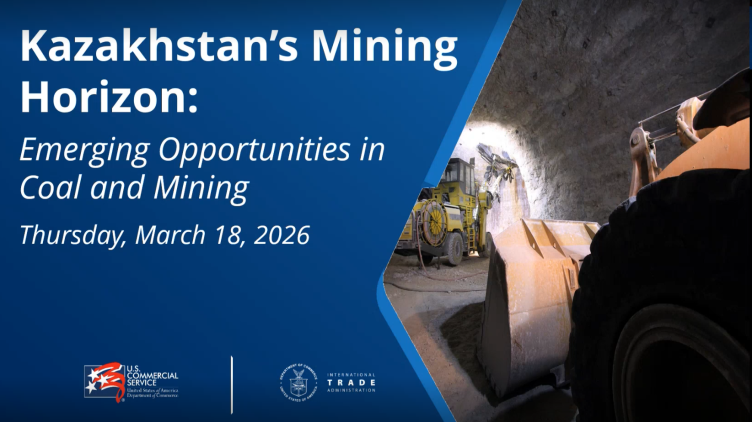
    On 18 March the US Commercial Service hosted a webinar featuring experts from the Kazakh government and industry. The central message was clear: Kazakhstan is no longer presenting itself simply as a resource-rich country. It is actively seeking to become a more significant destination for investment, processing, industrial partnerships and long-term supply chain co-operation.

    If you are tracking the global energy transition and supply chain security, this is a market that demands your attention. Here are my biggest takeaways from the session:

    A market defined by scale, ambition and strategic importance

    Kazakhstan’s resource base remains one of its greatest strengths. Speakers highlighted that mining and metallurgy continue to play a major role in the national economy, while reforms are being introduced to improve transparency, modernise infrastructure and create a more attractive environment for foreign investors.

    Particular attention was given to coal, mining and critical minerals as sectors with major growth potential. Kazakhstan is pursuing a pragmatic approach to energy development, combining its natural resource base with efforts to attract technology, financing and international partners. For U.S. companies, this is increasingly being framed not only as a commercial opportunity, but also as a chance to help build more resilient allied supply chains.

    The Sheer Scale of the Resource Opportunity

    Kazakhstan holds a formidable position on the global energy map, but it’s the untapped potential that is most striking:

    • Massive Reserves: The country sits on 33 billion tonnes of coal reserves, ranking 8th globally—enough to sustain production for over 300 years.
    • Cost Advantages: Kazakh coal prices hover around $25 to $50 per tonne—a fraction of the cost in other global markets. Furthermore, the cost of geological exploration is incredibly low at just $11 per square kilometre, compared to $167 in Australia and $203 in Canada.
    • The Coal Chemistry Boom: Currently, only 3% of Kazakhstan’s coal is processed. Shifting towards deep processing (synthetic fuels, ammonia, urea, methanol) represents a $25 billion untapped market.

    Modernising the Energy Grid

    As power demand surges—driven by industrialisation and the rise of AI—Kazakhstan is heavily focussed on modernising its infrastructure. The Ministry of Energy plans to introduce 26 gigawatts of new power capacity over the next decade. This includes a near-term plan to add 7.6 GW of new coal-fired capacity, requiring an estimated $16 billion in investment by 2030. The government is actively seeking technological partnerships for carbon capture and storage (CCS) and ultra-supercritical boiler technologies to ensure this growth aligns with clean energy standards.

    Critical minerals are becoming central to the conversation

    One of the most interesting aspects of the discussion was the growing focus on critical minerals and rare earth-related opportunities.

    Kazakhstan is developing a more comprehensive strategy for critical raw materials, with plans to define priority minerals, support processing and encourage higher-value production. The direction of travel is clear: the country wants to move further up the value chain and become more than simply an exporter of raw materials.

    This was particularly relevant in light of the tungsten discussion that followed.

    Resources:

    Looking ahead to 14-16 April: MINEX Kazakhstan Forum in Astana

    The next important date in the calendar is 15 April, when Julie M. Stufft , U.S. Ambassador to the Republic of Kazakhstan, will speak at the strategy session on Critical Minerals and Global Strategic Alliances at the 16th MINEX Kazakhstan Forum in Astana.

    Also speaking will be Dominic Heaton Dominic Heaton, CEO of Cove Kaz Capital Group, who will present the Severniy Katpar case study.

    This is especially significant because Severniy Katpar and Verkhnee Kairakty together hold 1.4 million tonnes of tungsten trioxide under JORC standards, representing around 70% of Kazakhstan’s total tungsten reserves. The project involves an estimated $1.1 billion joint venture investment, with potential support from U.S. EXIM and the U.S. International Development Finance Corporation totalling up to $1.6 billion.

    That level of financial and diplomatic backing underlines how strategically important this project could become, not only for Kazakhstan, but also for broader allied efforts to secure critical mineral supply chains.

    Why these matters

    What stood out most from the 18 March webinar was the alignment now emerging between Kazakhstan’s resource ambitions and international demand for secure, diversified supply chains.

    Kazakhstan offers scale, geological potential and a strategic location between major markets. The United States and other partners bring financing, technology and industrial expertise. If those elements come together effectively, the result could be a new phase of co-operation built around mining, processing, infrastructure and critical minerals development.

    For anyone following energy security, industrial policy or strategic resource investment, Kazakhstan is becoming increasingly difficult to ignore.

    The webinar made that case convincingly. The 15 April MINEX Forun sessions should offer an important next step in showing how these opportunities may translate into practical projects and partnerships.

  • Kazakhstan Embassy in Czech Republic deepens industrial cooperation with leading Czech companies

    Kazakhstan Embassy in Czech Republic deepens industrial cooperation with leading Czech companies

    Kazakhstan is stepping up efforts to strengthen industrial cooperation with the Czech Republic as part of its broader economic diplomacy agenda aimed at attracting foreign investment and advanced technologies.

    According to DKNews.kz, Kazakhstan’s Ambassador to the Czech Republic, Kairat Abdrakhmanov, has held a series of meetings with representatives of leading Czech industrial companies during his first official engagements with the country’s business community. The discussions involved major manufacturers including vehicle and machinery producers TATRA and ZETOR, mining equipment supplier FERRIT, industrial engineering firm ZVVZ Engineering, and glass industry equipment producer SKLOSTROJ.

    Czech business leaders expressed satisfaction with their existing partnerships in Kazakhstan and confirmed their interest in expanding cooperation. They were briefed on recent reforms aimed at improving Kazakhstan’s investment climate, introduced under the country’s ongoing modernization program led by President Kassym-Jomart Tokayev.

    The Czech side highlighted Kazakhstan’s continued attractiveness as a long-term industrial market, particularly for projects involving manufacturing, engineering, and technology transfer.

    Talks also focused on opportunities to localize production and establish joint manufacturing facilities in various regions of Kazakhstan. Kazakh diplomats were presented with updates on current projects and potential areas for deeper collaboration, with particular emphasis on advanced industrial and mining technologies designed to improve efficiency, operational reliability, and workplace safety.

    Following the meetings, the parties agreed to organize site visits to Czech production facilities, begin preparations for joint business forums, and maintain regular information exchanges on prospective investment and cooperation opportunities.

    Observers note that these engagements reinforce Kazakhstan–Czech industrial relations and lay the groundwork for new joint initiatives across manufacturing, technology, and investment sectors.

  • Ukraine selects U.S.-linked consortium to develop Dobra lithium deposit

    Ukraine selects U.S.-linked consortium to develop Dobra lithium deposit

    Ukraine has chosen a consortium that includes U.S.-connected investors as the preferred bidder to develop the Dobra lithium deposit in Kirovohrad Oblast, according to a report by The New York Times. The decision was taken on January 8 by a government commission and is expected to receive formal approval from the Cabinet of Ministers, though officials say the outcome is effectively settled.

    The winning consortium includes TechMet, an energy investment company partly owned by a U.S. government-backed investment agency, and billionaire Ronald Lauder, a long-time associate of U.S. President Donald Trump. Commission members cited the consortium’s strong technical and financial proposal, saying it met most of the tender’s criteria and denying allegations of favoritism.

    The Dobra deposit is one of Ukraine’s largest known lithium resources and is considered strategically important for technologies such as electric vehicle batteries. Development will take place under a production-sharing agreement, allowing investors to extract lithium in exchange for sharing output with the Ukrainian state.

    Under a broader U.S.-Ukraine minerals framework, half of the revenue generated for Ukraine from the project is to be channelled into a joint investment fund. Companies seeking to develop mineral deposits are also required to first present their projects to this fund, a mechanism designed to attract U.S. investment.

    While the minimum investment threshold for the tender was set at $179 million, officials indicated that the consortium’s pledged investment exceeds that figure. The agreement предусматривает spending at least $12 million on geological exploration and $167 million on launching extraction and processing, alongside compliance with environmental standards, use of Ukrainian labour and goods, and investment in local communities.

    Before mining can begin, the consortium must complete detailed geological studies to confirm the deposit’s commercial value and then finance the necessary infrastructure. Industry experts note that moving from exploration to full-scale production typically takes more than a decade.

    The Dobra project is expected to become one of the first initiatives implemented under the U.S.-Ukraine minerals partnership, following the launch of a joint reconstruction investment fund earlier this year.

  • Kazakhstan Targets Economic Growth with Rare-Earth Expansion and SEZ Reforms

    Kazakhstan Targets Economic Growth with Rare-Earth Expansion and SEZ Reforms

    Kazakhstan is launching a comprehensive strategy to boost economic growth by strengthening special economic zones (SEZs) and expanding rare-earth metal production, as announced by Industry and Construction Minister Yersayin Nagaspayev during a government meeting chaired by Prime Minister Olzhas Bektenov

    To improve SEZ efficiency, the government will conduct a comprehensive review of their performance and strengthen monitoring mechanisms to ensure investors fulfill their obligations. The country also plans to introduce a framework for foreign companies to manage certain SEZs, while local authorities will intensify efforts to attract new investors.

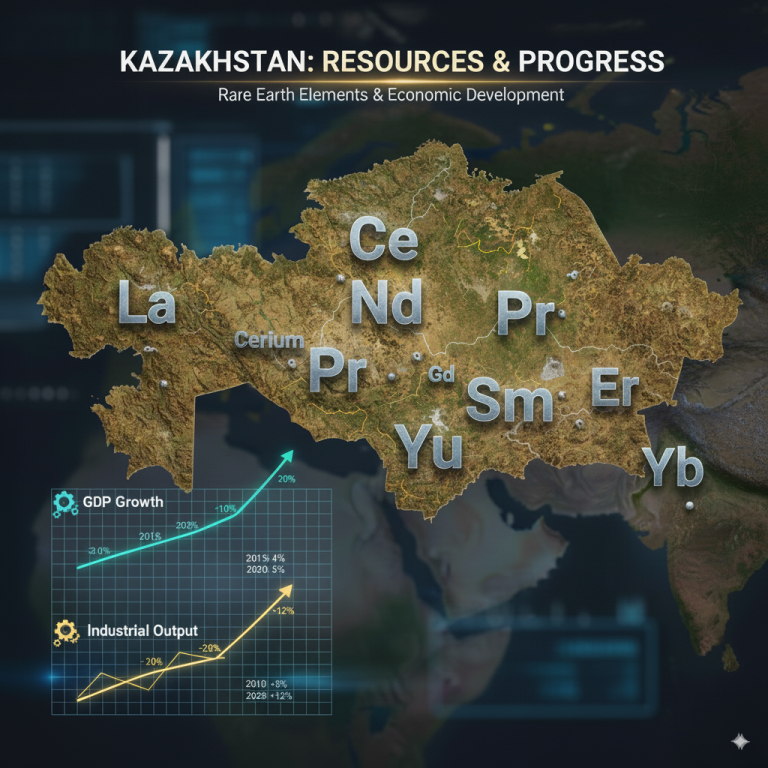
    In addition to SEZs, the government has identified rare-earth metal production as a key area for development. Kazakhstan plans to implement at least three major projects in this field, focusing on the production of battery materials, recycling and manufacturing heat-resistant alloys for jet engines, developing semiconductor components, and reprocessing permanent magnets.

    The country has already established strategic partnerships with leading players from the European Union, the United States, Japan, South Korea, and China. Upcoming projects include the launch of gallium production with an annual capacity of 15 tons, the manufacturing of high-purity manganese sulfate, and the production of graphite for battery components.

    Kazakhstan is also taking significant steps to modernize its geological exploration and mapping. A next-generation geological map will be developed using advanced digital tools, with project preparations already underway and fieldwork scheduled to begin in 2026. The government has allocated funding for new surveying methods, including aerogeophysics, geochemistry, spectral imaging, and high-resolution satellite data analysis.

    Furthermore, the country is introducing a unified digital platform to consolidate all processes related to construction and housing management. The platform will be introduced by the end of 2025 and is expected to enhance efficiency and transparency in the sector.

    The reforms are part of Kazakhstan’s efforts to diversify its economy and reduce its dependence on oil exports. The country aims to become a major player in the global rare-earth market and to attract foreign investment in its SEZs.

  • Uzbekistan and Turkic Business Delegation Discuss Mining Cooperation and Investment Prospects

    Uzbekistan and Turkic Business Delegation Discuss Mining Cooperation and Investment Prospects

    On 26 May 2025, First Deputy Minister of Mining Industry and Geology of Uzbekistan, O. Nasritdinhodjaev, met with a delegation led by Adem Kula, Secretary General of the Union of Chambers of Commerce and Industry of Turkic States. The meeting served as a platform to strengthen cooperation in the mining sector and promote new investment opportunities.

    During the session, representatives from various foreign companies presented their initiatives and expressed interest in participating in Uzbekistan’s rapidly evolving mineral and geological industries. The Uzbek side welcomed the growing engagement of Turkic state partners and emphasized the government’s commitment to transparent and investor-friendly reforms.

    The delegation’s visit includes follow-up meetings with senior officials from major national mining companies—JSC “Navoi Mining and Metallurgical Company” (NMMC) and JSC “Almalyk Mining and Metallurgical Company” (AMMC). Both companies play a central role in Uzbekistan’s mining sector, particularly in the extraction of gold, copper, and other critical minerals.

    The talks reaffirmed the productive nature of ongoing cooperation between Uzbekistan and its Turkic partners, with both sides expressing readiness to deepen economic and technical collaboration.

  • Uzbekistan’s Mining Ministry Discusses Cooperation with SinoPowell Capital

    Uzbekistan’s Mining Ministry Discusses Cooperation with SinoPowell Capital

    The Ministry of Mining Industry and Geology of Uzbekistan hosted a meeting between First Deputy Minister O. Nasritdinkhodjaev and Steve Powell, Managing Director of SinoPowell Capital (USA).

    During the discussion, the parties reviewed recent reforms in the mining and geological sectors, as well as key projects led by JSC “Uzbek Technological Metals Plant.” They also explored opportunities for strengthening long-term cooperation in the industry.

    The meeting highlighted Uzbekistan’s commitment to modernizing its mining sector and attracting foreign investment, with SinoPowell Capital expressing interest in potential projects and joint initiatives aimed at enhancing technological advancements and production efficiency.

    Both sides agreed on the importance of continued dialogue to facilitate mutual growth and innovation in the field of technological metals.

  • Ukraine and U.S. Seal Controversial Minerals Deal After Tense Talks

    Ukraine and U.S. Seal Controversial Minerals Deal After Tense Talks

    Ukraine and the United States signed a landmark minerals and profit-sharing agreement on April 30 in Washington, marking the end of months of turbulent negotiations and the beginning of a new phase of economic cooperation focused on reconstruction.

    The agreement gives the U.S. preferential access to future Ukrainian mineral deals and establishes a joint investment fund for rebuilding Ukraine’s war-torn infrastructure. It also secures Ukraine’s full sovereignty over its natural resources, following President Volodymyr Zelensky’s refusal to sign earlier versions that would have required Ukraine to repay past military aid or relinquish control of key assets.

    “This is a win for Ukraine,” said Prime Minister Denys Shmyhal. “We will attract major investments, secure growth, and remain in control of our critical minerals.”

    The U.S. had previously pushed for terms granting it up to 50% of Ukraine’s revenues from rare earths, oil, and gas, and even a stake in infrastructure like ports. President Donald Trump reportedly demanded repayment of $300 billion in aid and up to $500 billion in future mineral revenue — conditions Kyiv firmly rejected.

    Only after Zelensky sent Trump a letter expressing willingness to negotiate and praising U.S. support did tensions ease. “Nobody wants peace more than the Ukrainians,” Trump quoted Zelensky as writing, using the letter to bolster support for the deal during a speech to Congress.

    The final agreement establishes a joint fund where both nations will equally manage proceeds from newly issued licenses for critical minerals. For the first ten years, profits will be reinvested into Ukraine’s infrastructure and economic development. Past revenues and aid are excluded, and there are no debt obligations.

    Ukraine’s mineral wealth includes Europe’s largest lithium deposits, 20% of global graphite resources, and significant reserves of rare earth elements vital to defense and green technologies. But much of this wealth lies in or near Russian-occupied territories, making future exploitation a complex and risky endeavor.

    Despite securing equal partnership terms and full resource control, the deal offers no U.S. security guarantees. Critics say the agreement may remain symbolic if the war drags on.

    Still, U.S. Treasury Secretary Scott Bessent called the agreement a signal to Russia of Washington’s enduring support for a “free, sovereign, and prosperous Ukraine.”

  • U.S. and Ukraine Near Landmark Deal on Mineral Access and Reconstruction Fund

    U.S. and Ukraine Near Landmark Deal on Mineral Access and Reconstruction Fund

    The United States and Ukraine are poised to finalize a landmark strategic agreement that would grant Washington preferential access to future Ukrainian mineral and energy projects in exchange for continued military aid and investment, according to multiple media reports.

    A draft of the agreement, obtained by Reuters, outlines the creation of a joint U.S.-Ukrainian reconstruction fund. This fund would receive 50% of profits and royalties from newly issued resource permits. While the U.S. will not directly own Ukrainian assets or infrastructure, the deal secures American or U.S.-designated entities first-in-line access to new mineral and energy development licenses.

    The proposed agreement exempts existing contracts and drops earlier provisions that would have allowed U.S. influence over Ukraine’s gas infrastructure.

    Bloomberg reported that the deal covers a wide range of critical resources including graphite, aluminum, oil, and natural gas. With Ukraine holding an estimated $15 trillion in mineral reserves—among the largest in Europe—the agreement positions the country as a key supplier of strategic raw materials.

    Ukrainian Prime Minister Denys Shmyhal described the plan as a “strategic investment partnership” that will help rebuild Ukraine and secure its long-term development. Crucially, only future U.S. military aid will be counted as contributions to the fund—previous military support, amounting to tens of billions of dollars, will not be monetized under this framework.

    The deal requires ratification by Ukraine’s parliament. Economy Minister Yulia Svyrydenko is currently in Washington to finalize negotiations.

    The agreement aligns with U.S. President Donald Trump’s broader policy goals, including securing critical resources and promoting a negotiated ceasefire with Russia. Although peace talks remain stalled, recent backchannel diplomacy—including a private meeting between Presidents Trump and Zelensky at the Vatican—suggests renewed communication.