
Tag: Electricity Generation

  • Uzbekistan Announces Plans for Second Nuclear Power Plant to Boost Energy Supply

    Uzbekistan Announces Plans for Second Nuclear Power Plant to Boost Energy Supply

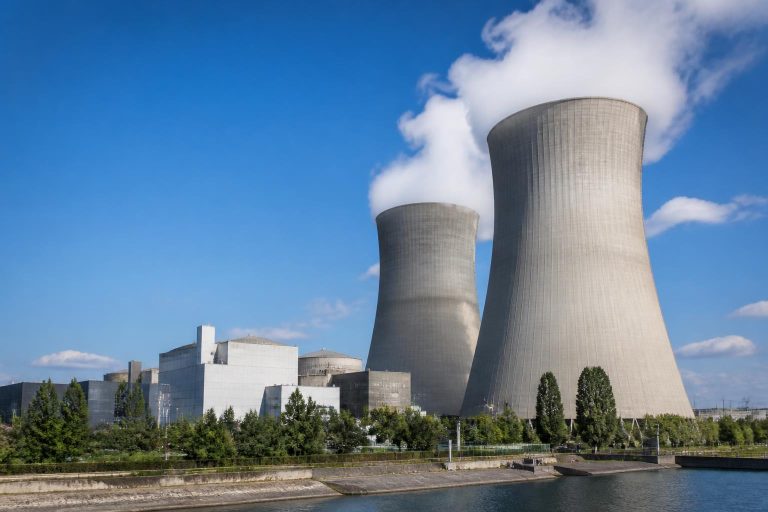
    Uzbekistan is set to construct its second nuclear power plant, as President Shavkat Mirziyoyev emphasised the necessity of stable electricity supply to attract foreign investment. The announcement was made during a ceremony for investment projects in the Khorezm region on August 17, 2026. Although details regarding the location, capacity, and timeline for the new plant are yet to be disclosed, Mirziyoyev highlighted the importance of reliable electricity and predictable energy prices for potential investors. He stated, ‘Why do investors come here? What is their first question? ‘I will bring my investment, but what will the price of electricity be? What guarantees will there be?” This underscores the government’s commitment to implementing its energy strategy through 2030, aiming to ensure dependable power supplies and reduce production costs.

    Uzbekistan’s long-term energy strategy includes a significant expansion of nuclear power, with plans to increase nuclear generation capacity from 0.3 GW by 2030 to 4 GW by 2040. This expansion would position nuclear energy as a dominant source of electricity, surpassing coal. The head of Uzatom, Azim Akhmedkhazhayev, noted that the site of the first nuclear power project has the potential for up to four large reactors, although no decisions have been made regarding such an expansion.

    The first nuclear power complex is currently under construction near Lake Tuzkan in the Farish district of Jizzakh region, with Russian state nuclear corporation Rosatom involved in the project. The facility will feature two small RITM-200N reactor units and two larger VVER-1000 units, with a total generating capacity of approximately 2.1 GW. These reactors are expected to commence operations between 2029 and 2035, contributing significantly to Uzbekistan’s electricity supply.

    Uzbekistan’s nuclear energy ambitions have sparked public debate, with proponents arguing that nuclear power will enhance reliability and support industrial growth, while critics express concerns over environmental safety and project costs. Public hearings regarding the first nuclear power plant were conducted in December 2025, with Uzatom reporting satisfactory outcomes. As preparations for the second plant commence, nuclear energy is poised to play a crucial role in meeting Uzbekistan’s rising electricity demand and fostering future investment.


  • Germany extends emergency coal capacity for another winter

    Germany extends emergency coal capacity for another winter

    Faced with the challenge of another winter with limited gas supplies, the German government has made the decision to keep its lignite coal power plants on standby for one more season. This decision comes as part of Germany’s plan to gradually and collectively shut down its coal power plants in exchange for a portion of the government’s €40 billion coal phase-out fund.

    Last year, the coal plants were kept operational due to disruptions in gas supplies from Russia following the Ukraine conflict, as well as issues with France’s nuclear generation capacity. To address this emergency situation, the government has extended the measure for the upcoming winter, ensuring that approximately 1.9 GW of lignite capacity remains available. This adds to Germany’s existing 45 GW of coal power plants.

    The primary purpose of keeping the lignite plants on standby is to reduce the reliance on gas in electricity generation during periods of peak demand, thus helping to maintain lower electricity prices. By reactivating the supply reserve, the government aims to save gas in electricity generation and prevent supply bottlenecks during the 2023/2024 heating period. It is estimated that this measure will result in gas savings ranging from 3.9 TWh to 5.6 TWh, leading to a reduction in electricity prices by €0.4 per Megawatt-hour (MWh) to €2.8 per MWh.

    While these gas savings are significant, it is important to acknowledge the climate impact associated with running lignite coal power plants. Lignite is known to be the biggest contributor to climate pollution. The government has expressed its commitment to assessing the additional carbon emissions resulting from keeping the coal plants on standby. These emissions are estimated to range from 2.5 to 5.6 tonnes of CO2.

    Despite the decision to keep the lignite plants operational, the government emphasizes that the goal of achieving a coal phase-out by 2030 remains unchanged, as do the climate targets. The data from the third quarter of 2023 supports this assertion, as Germany witnessed its lowest-ever power generation from coal, amounting to only 22.2 TWh. This is a significant decrease compared to the over 60 TWh produced eight years ago.

  • London-based Star Energy acquires geothermal exploration license in Croatia

    London-based Star Energy acquires geothermal exploration license in Croatia

    London-based Star Energy Group has successfully acquired a 51% stake in A14 Energy, the holder of a geothermal exploration license situated in the eastern Croatian region of Ernestinovo within the Pannonian Basin. The acquisition marks Star Energy’s foray into international geothermal energy investments.

    Formerly known as Igas Energy, Star Energy Group intends to construct a 10 MW geothermal power plant, a significant development in a country where only one such facility, Velika Ciglena, exists, having opened in November 2019.

    A14 Energy holds the Ernestinovo geothermal exploration license through its Croatian subsidiary, IGeoPen, in the highly promising Pannonian Basin of Croatia, and the acquisition was executed through Star Energy’s subsidiary, GT Energy Croatia.

    The purchase was completed for EUR 1.3 million in cash, with additional commitments of EUR 100,000 for cash-backed guarantees to the Croatian Hydrocarbon Agency and EUR 200,000 for ongoing expenses related to the assessment of the Ernestinovo license.

    Chris Hopkinson, CEO of Star Energy, expressed satisfaction with the company’s inaugural overseas geothermal investment, emphasizing the substantial opportunities in Croatia for advancing and diversifying their geothermal endeavors.

    The Ernestinovo exploration license spans an area of 76.6 square kilometers, featuring three deep exploration wells and 250 kilometers of 2D seismic data that have been reprocessed and interpreted.

    star energy croatia geothermal power ernestinovo

    The company envisions the construction of a 10 MW electricity generation plant (ORC) based on initial estimations of heat reserves and well productivity. Plans also include the development of four producing wells, two injecting wells, and connections to the Ernestinovo substation, which is linked to Zagreb, Hungary, Serbia, and Bosnia and Herzegovina via 400 kV transmission lines and equipped with stepdown transformers for 110 kV and 85 kV.

    Star Energy views this transaction as a pivotal step in its strategy to transition into a geothermal developer, owner, and operator, thereby mitigating regulatory risks and gaining entry into the electricity generation sector.

    Highlighting the importance of the geothermal sector in the broader context of the energy transition, the company emphasized its ability to offer long-term baseload electricity and heat generation.

    It is noteworthy that Croatia features six geothermal exploration areas spanning four counties: Međimurje, Koprivnica-Križevci, Podravina, and Osijek-Baranja.