Tag: economic growth

  • Finland’s Strategic Vision for Sustainable Mining and Minerals Development

    Finland’s Strategic Vision for Sustainable Mining and Minerals Development

    Finland is positioning itself as a global leader in responsible and sustainable mining practices, particularly through the integration of artificial intelligence (AI) in its mineral operations. The country is exploring ways to enhance its capabilities in the minerals and metals sector, which is deemed a strategic asset for economic growth. This sector not only fosters innovation and creates high-quality jobs but also strengthens Finland’s export capabilities. However, the complexity of the value chains associated with mining necessitates a comprehensive understanding of the interdependencies that exist throughout the production sequence, including the roles of investors, end-users, and decision-makers.

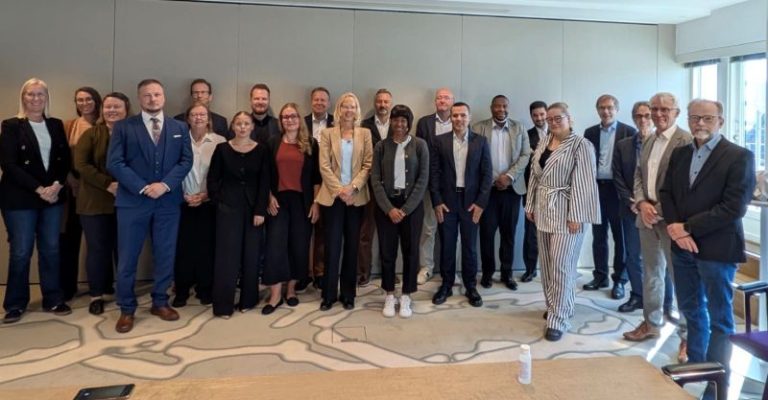
    In a recent brainstorming session involving key Team Finland organisations, stakeholders discussed how to unlock more sustainable and value-adding projects and investments, both domestically and in international markets. The discussions highlighted the importance of maximizing economic impact and maintaining a sustainable competitive advantage by delivering clear value to customers at every stage of the mining process. The session also acknowledged the growing influence of geopolitical and geo-economic factors on the sector, which can significantly affect investments, supply chain resilience, and overall market dynamics.

    Participants identified several prospective actions to address the challenges faced by the sector, including increasing awareness and showcasing Finland’s unique strengths to an international audience. The collaborative effort aims to enhance the visibility of Finland’s capabilities in sustainable mining and to foster partnerships that can lead to innovative solutions and projects. The enthusiasm and commitment expressed during the session suggest a promising future for Finland’s mining sector, with further actions and initiatives expected to emerge in the coming months.

    The event was hosted by the Technology Industries of Finland and included representatives from various organizations, including the Ministry for Foreign Affairs of Finland, the Geological Survey of Finland, and Mining Finland. The collaborative spirit and the quality of discussions indicate a strong foundation for advancing Finland’s position in the global mining industry.

  • Zangezur Copper-Molybdenum Combine Regains Top Taxpayer Status in Armenia

    Zangezur Copper-Molybdenum Combine Regains Top Taxpayer Status in Armenia

    The Zangezur Copper-Molybdenum Combine (ZCMC) has reclaimed its position as the leading taxpayer in Armenia, according to the latest data from the Armenian State Revenue Committee. In the first half of 2026, the top five taxpayers in Armenia contributed a total of 173.8 billion drams (approximately $472.5 million) to the state budget, marking a year-on-year increase of 23.4%. This amount includes 3.8 billion drams from customs duties, 62.1 billion drams from direct taxes, and 70.3 billion drams from value-added tax (VAT), reflecting significant growth across all categories.

    The share of the top five taxpayers in the overall list of 1,000 major taxpayers has risen to 16%, up from 14% the previous year. A significant factor in this increase is the return of ZCMC to the forefront of the taxpayer rankings, having previously dropped out in early 2025. After a strong performance in the second and third quarters of 2025, ZCMC has now firmly established itself at the top, contributing 41.6 billion drams to the state treasury in the first half of 2026, which is double the amount from the previous year.

    ZCMC’s contributions include 582.5 million drams in customs duties, 20.2 billion drams in direct taxes, and 960.1 million drams in VAT. Following ZCMC, the second position is held by Mobile Center Art, which contributed 38.2 billion drams, a 16.1% increase from the previous year. Ardshinbank has moved up to third place, contributing 33.6 billion drams, while Gazprom Armenia has slipped to fourth with a contribution of 31.5 billion drams, reflecting a 12.5% decline.

    The fifth position is occupied by a joint venture that contributed 28.9 billion drams, down 4.9% from the previous year. Overall, the top 1,000 taxpayers in Armenia paid a total of 1.1 trillion drams (over $3 billion) to the state budget in the first half of 2026, representing a 12.5% increase compared to the same period last year. This data highlights the vital role of the mining sector, particularly ZCMC, in Armenia’s economy and its contributions to the national budget amidst fluctuating performances from other sectors.

    In comparison, the top five taxpayers in the first half of 2025 included Mobile Center Art, Grand Tobacco, Gazprom Armenia, Ardshinbank, and Ameriabank, which collectively contributed 140.8 billion drams, showing a decline of 15% year-on-year. The ongoing recovery and growth of ZCMC are crucial for the stability and growth of Armenia’s fiscal landscape, especially as the country navigates economic challenges and seeks to enhance its mining sector’s contributions to the economy.


  • Eurasian Resources Group Commits $1 Billion to Kazakhstan’s Industrial Future

    Eurasian Resources Group Commits $1 Billion to Kazakhstan’s Industrial Future

    Eurasian Resources Group (ERG) has announced a significant investment of approximately $1 billion in Kazakhstan, aimed at bolstering the country’s industrial potential and long-term competitiveness. This investment strategy is rooted in the belief that the most impactful investments are those that continue to create value well beyond the initial capital commitment. ERG’s development program is designed not only to expand its business operations but also to enhance regional economies and contribute to the overall economic landscape of Kazakhstan.

    The investment initiative is set to modernise mining operations and production facilities, promote cleaner energy solutions, and accelerate the digital transformation within the industry. By the end of next year, ERG anticipates creating over 1,100 new jobs, while also contributing an estimated $1.3 billion annually to Kazakhstan’s GDP through direct production and associated economic activities. Key projects under this initiative include the Bolashak Mine, ERG Green, Spetskoks, and various renewable energy ventures, all of which reflect a commitment to industrial performance and environmental responsibility.

    Kudrat Shamiyev, CEO of ERG Kazakhstan, emphasised that effective leadership is about making decisions that will positively impact future opportunities, not just immediate financial results. He highlighted the extraordinary industrial potential of Kazakhstan and the necessity for strategic partnerships, continuous innovation, and responsible environmental practices to unlock this potential. The projects currently underway are viewed as foundational steps towards a more robust industrial future for Kazakhstan, reinforcing the notion that investment should focus on building a stronger future for the nation.


  • Kazakhstan’s Manufacturing Sector Records Strong Growth This Year

    Kazakhstan’s Manufacturing Sector Records Strong Growth This Year

    Kazakhstan’s manufacturing industry has demonstrated positive momentum this year, with production volumes rising by nearly 6%, according to Vice Minister of Industry and Construction Olzhas Saparbekov. The results were presented during a government meeting reviewing the country’s socio-economic development.

    Growth has been driven primarily by increased capacity at metallurgical, engineering, and chemical enterprises. Producers of construction materials have also delivered strong performance, contributing to the overall expansion of the sector.

    The engineering industry recorded one of the fastest growth rates, with output up 11.6%. Higher production was registered across several segments, including automobiles, railway and agricultural machinery, and household equipment.

    Metallurgical enterprises also increased output, producing higher volumes of gold, copper, pig iron, and steel. The chemical industry posted growth of 8.1%, while construction materials expanded by 14.7% and the light industry by 7.4%.

    Saparbekov said the growth in manufacturing is largely the result of state support measures aimed at domestic producers, including initiatives to increase the use of locally sourced raw materials and improve capacity utilization.

    Overall economic indicators also remained positive. Kazakhstan’s gross domestic product grew by 6.4% over the first 11 months of the year. The mining sector expanded by 9.7%, supported by higher oil production, which rose by 14.1%, gas output, up 16.7%, and coal mining, which increased by 9.7%.

  • Kazakhstan Targets Economic Growth with Rare-Earth Expansion and SEZ Reforms

    Kazakhstan Targets Economic Growth with Rare-Earth Expansion and SEZ Reforms

    Kazakhstan is launching a comprehensive strategy to boost economic growth by strengthening special economic zones (SEZs) and expanding rare-earth metal production, as announced by Industry and Construction Minister Yersayin Nagaspayev during a government meeting chaired by Prime Minister Olzhas Bektenov

    To improve SEZ efficiency, the government will conduct a comprehensive review of their performance and strengthen monitoring mechanisms to ensure investors fulfill their obligations. The country also plans to introduce a framework for foreign companies to manage certain SEZs, while local authorities will intensify efforts to attract new investors.

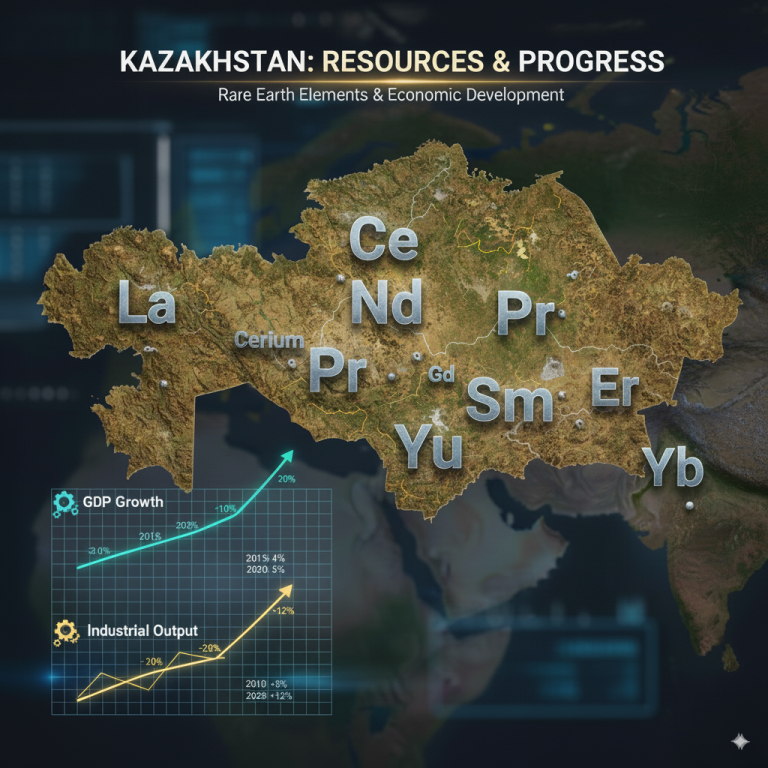
    In addition to SEZs, the government has identified rare-earth metal production as a key area for development. Kazakhstan plans to implement at least three major projects in this field, focusing on the production of battery materials, recycling and manufacturing heat-resistant alloys for jet engines, developing semiconductor components, and reprocessing permanent magnets.

    The country has already established strategic partnerships with leading players from the European Union, the United States, Japan, South Korea, and China. Upcoming projects include the launch of gallium production with an annual capacity of 15 tons, the manufacturing of high-purity manganese sulfate, and the production of graphite for battery components.

    Kazakhstan is also taking significant steps to modernize its geological exploration and mapping. A next-generation geological map will be developed using advanced digital tools, with project preparations already underway and fieldwork scheduled to begin in 2026. The government has allocated funding for new surveying methods, including aerogeophysics, geochemistry, spectral imaging, and high-resolution satellite data analysis.

    Furthermore, the country is introducing a unified digital platform to consolidate all processes related to construction and housing management. The platform will be introduced by the end of 2025 and is expected to enhance efficiency and transparency in the sector.

    The reforms are part of Kazakhstan’s efforts to diversify its economy and reduce its dependence on oil exports. The country aims to become a major player in the global rare-earth market and to attract foreign investment in its SEZs.

  • Tokayev Meets Pavlodar Governor, Reviews Strong Economic Growth and Industrial Projects

    Tokayev Meets Pavlodar Governor, Reviews Strong Economic Growth and Industrial Projects

    President of Kazakhstan Kassym-Jomart Tokayev met with Asain Baikhanov, the governor of Pavlodar region, to review the region’s 2024 performance and discuss strategic priorities for the upcoming period.

    The meeting revealed that Pavlodar region experienced robust economic growth in 2024, with a 5.8% increase in regional GDP. Investments surged to 1.1 trillion tenge, marking a 38% year-on-year growth.

    Key industrial projects are currently underway in the region, including two major initiatives focused on processing gold-bearing concentrate and producing ferroalloys. A particularly significant development is the planned construction of three ferroalloy plants in Ekibastuz, with a combined capacity of 460,000 tons. These plants are expected to elevate Kazakhstan to the position of the world’s second-largest ferroalloys producer.

    The President emphasized the importance of sustaining the region’s economic momentum and ensuring effective execution of investment projects to support long-term national goals.

  • Armenian Government Approves $150 Million Loan Guarantee for Amulsar Gold Mine Revival

    Armenian Government Approves $150 Million Loan Guarantee for Amulsar Gold Mine Revival

    The Armenian government has approved $150 million in loan guarantees to support Lydian Canada Ventures, a U.S.-Canadian company, in restarting operations at the Amulsar gold mine. The mine, which was set to begin open-pit mining in late 2018, was halted due to environmental protestsfollowing Armenia’s Velvet Revolution.

    Lydian had initially planned to produce 210,000 ounces of gold annually (worth around $550 millionat current prices) but faced road blockades from protesters who feared ecological damage. The company, however, maintained that it would use modern technology to minimize environmental risks.

    Despite the protests, the Armenian government did not revoke Lydian’s mining licenses but also avoided forcibly removing the blockade. By then, the company had already invested $460 million in the project.

    In December, Lydian announced it was close to securing $150 million in loans from Armenian banks to finish construction. The government has now backed these loans, citing the project’s economic importance, estimating it could add 1–1.5% to Armenia’s annual GDP growth.

    A government statement highlighted Lydian’s commitment to “best international standards” for environmental safety. Under Armenian law, the loan guarantee cannot exceed 20% of a company’s net assets, requiring Lydian to undergo an independent audit within six months.

    Lydian, headquartered in Canada, aims to start gold production at Amulsar by the fourth quarter of this year, creating 700 jobs and generating up to $100 million in annual tax revenue.

    The Amulsar deposit, Armenia’s second-largest pure gold reserve, holds 31 million tons of ore and 40 tons of gold. Located 13 km from Jermuk, it sits between the Arpa and Vorotan rivers.

  • Kazakhstan Defies Global Steel Production Decline with 6.5% Growth in 2024

    Kazakhstan Defies Global Steel Production Decline with 6.5% Growth in 2024

    Despite a global downturn in steel production and a 20% average drop in steel prices, Kazakhstan has emerged as a standout performer in 2024, achieving an 8th-place ranking worldwide with a 6.5% increase in production. This growth contrasts sharply with the global trend, where steel output fell by 0.8%, according to the World Steel Association. Major producers like China, the United States, Japan, and Russia recorded declines, while countries such as the UK, Argentina, and Pakistan saw even steeper drops.

    The global steel crisis has forced several major plants to halt operations, including Hyundai Steel’s Pohang-2 in South Korea, Acerinox in Spain, and Huachipato in Chile, which closed after 74 years of operation. Similarly, facilities in the US and Portugal have been temporarily idled.

    Kazakhstan’s success is attributed to strategic investments in domestic raw materials and the expansion of production at the Qarmet metallurgical plant. Yerbol Ismailov, Managing Director of Qarmet, highlighted that the company’s growth was anticipated, driven by $3.5 billion in investmentsand a focus on modernization. Qarmet produced over 3.5 million tons of steel in 2024, a 15% increase from the previous year, with plans to reach 5 million tons annually by 2028.

    However, challenges remain. Competing with China and Russia, which offer lower production costs, has been difficult. Qarmet has addressed this by reducing operational costs by 23.5%, lowering the price per ton of slab from 440∗∗to∗∗320, with a target of $280. The company has also implemented anti-corruption measures, digitized operations, and optimized procurement processes to enhance efficiency.

    Despite rumors of financial instability, Qarmet has invested heavily in worker safety, digitalization, and waste management, underscoring its commitment to sustainable growth.

  • Ukraine’s Critical Materials Sector: Challenges and Investment Potential

    Ukraine’s Critical Materials Sector: Challenges and Investment Potential

    Ukraine’s critical materials sector was the focus of the “Strategic Resources of Ukraine” Conference, held within the framework of the Economic Growth Strategy until 2040. The event, developed by Boston Consulting Group in partnership with the We Build Ukraine think tank, assessed investment prospects and key challenges in the industry.

    The metals and mining industry remains a cornerstone of Ukraine’s economy, contributing 6.1% to GDP and 30% of total exports (as of 2021). Despite the country’s vast reserves and historically low-cost structure, the industry faces asset losses, infrastructure damage, and labor shortages due to the ongoing war. Ferrous metals mining, concentrated in the Kryvyi Rih basin, remains largely under Ukrainian control, while non-ferrous materials, including precious metals and rare earth elements, are crucial for sectoral growth. However, the war has shifted export dynamics, increasing dependence on raw ore exports and leading to profitability declines and logistical challenges.

    Globally, the demand for critical raw materials is intensifying, driven by their essential role in industrial production, technological development, and renewable energy. However, supply chains face high geographic concentration, long project development timelines, declining resource quality, environmental concerns, and climate risks.

    Investment in Ukraine’s mining sector is hindered by multiple barriers:

    • State policy gaps, including the lack of an updated critical materials strategy and an outdated mineral classification system.
    • Institutional shortcomings, such as fragmented geological data, secrecy in resource information, and complex land acquisition procedures.
    • Limited state support, with no fiscal incentives, war risk insurance, or export assistance for mineral companies.

    Despite these obstacles, Ukraine has significant potential to attract international investment in critical raw materials extraction, processing, and exports. The country must develop a long-term strategy to leverage its mineral wealth, strengthen economic independence, and accelerate green energy transition.

  • Ukraine’s Critical Materials Sector: Challenges and Investment Opportunities

    Ukraine’s Critical Materials Sector: Challenges and Investment Opportunities

    Ukraine’s critical materials sector is at a crossroads as industry experts and policymakers seek solutions to investment barriers and economic growth challenges. The recent conference, Strategic Resources of Ukraine: Scenarios for the Development of the Subsoil Use Industry, held as part of the Economic Growth Strategy of Ukraine until 2040, outlined key issues and opportunities in the mining sector. The event was organized in collaboration with the Boston Consulting Group and the think tank We Build Ukraine.

    Ukraine’s mining industry, a major contributor to GDP and exports, is facing significant obstacles, including asset losses, supply disruptions, and infrastructure damage due to the ongoing conflict. While the Kryvyi Rih basin remains under Ukrainian control, non-ferrous metals, including rare earth elements and precious metals, present potential growth areas. However, challenges such as outdated geological data, a lack of strategic policies, and complex land acquisition processes hinder investment.

    On a global scale, access to critical raw materials is essential for industries, technological progress, and renewable energy development. However, risks such as high geographic concentration of production, lengthy project development times, and environmental concerns contribute to market volatility.

    To attract investors, Ukraine must address several barriers, including the absence of a clear state policy on critical materials, outdated classification systems, and limited support for businesses seeking mining rights. Additionally, the country lacks fiscal incentives, export support, and mechanisms to insure against war-related risks.

    Despite these challenges, Ukraine remains an attractive destination for investment in critical raw materials. By creating economic clusters and strengthening policies, the country can enhance its economic resilience, improve energy independence, and attract international investors. A strategic approach to resource development could unlock Ukraine’s vast raw material potential, contributing to long-term economic stability.