Tag: Dr. Peter Tom Jones

  • The right mine, at the wrong time at the wrong place?

    The right mine, at the wrong time at the wrong place?

    The controversial video “Not In My Country: Serbia’s Lithium Dilemma” in now live on the YouTube channel Journeyman Pictures: https://lnkd.in/ejacPysy

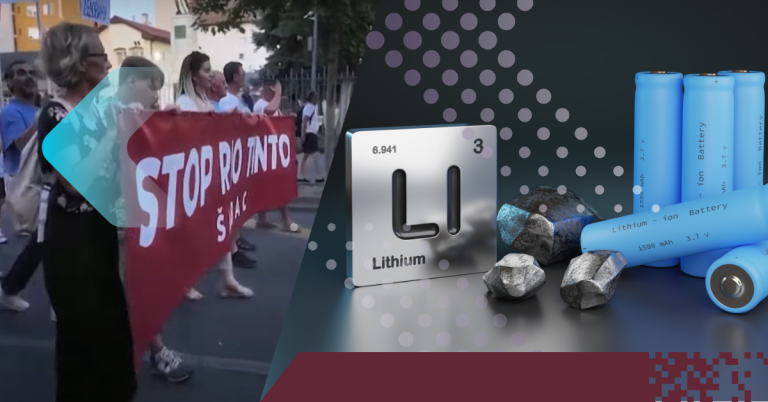
    Belgrade, Serbia – August 2024: Massive protests have erupted in Serbia over the proposed lithium mine in the Jadar Valley, spearheaded by British-Australian mining giant Rio Tinto. Approximately 25,000 people took to the streets of Belgrade, expressing their fury over the project’s potential environmental impact and raising concerns about the nation’s future.

    The controversy stems from the Serbian government’s reversal of a 2022 decision to halt the project, reinstating it two years later. This move has ignited widespread public outrage, with many fearing the mine will devastate local agriculture and natural habitats.

    Environmental and Political Concerns Fuel Opposition

    Climate expert Dr. Peter Tom Jones, director of the KU Leuven Institute for Sustainable Metals and Minerals, traveled to Serbia to investigate the strong opposition. He notes the paradox of Serbia, home to Europe’s largest lithium deposit, resisting a project vital for the continent’s transition to electric vehicles and renewable energy storage.

    Rio Tinto plans to invest $2.4 billion in the Jadar mine, potentially making Serbia a leading lithium producer. However, the project has faced fierce resistance from local groups like NAD Jadar, who cite fears of pollution and environmental destruction.

    Marijanti Babic, Rio Tinto’s country head in Serbia, claims the mine will be an “invisible mine,” operating primarily underground with minimal surface impact. She emphasises the company’s commitment to preserving local farming and utilising modern, electronically controlled operations.

    However, resistance groups allege intimidation and threats, claiming they will “defend this with their lives.” The project has become deeply politicised, with allegations of disinformation campaigns and distrust of both Rio Tinto and the Serbian government.

    Disinformation and Distrust Plague the Project

    Anthropologist Jena Vasilovich from the University of Belgrade points to a lack of transparency and democratic process as key drivers of public distrust. She also highlights past grievances with similar projects and a general dissatisfaction with the current political regime under President Vučić.

    Rio Tinto has established an information center and a “fake news wall” to combat what they claim is an organised disinformation campaign. They deny allegations of radioactivity, excessive acid use, and the existence of a large aquifer beneath the mine.

    The company has engaged in extensive community outreach, holding over 150 events in the Jadar Valley to address local concerns. They emphasize their commitment to environmental, social, and governance (ESG) standards and highlight the project’s potential economic benefits, including the creation of 20,000 jobs in the battery value chain.

    Economic Potential vs. Environmental Risks

    Companies like battery manufacturer 11 ES see the Jadar mine as a crucial step towards establishing a European lithium battery supply chain, reducing reliance on China. They highlight the project’s potential to drive economic growth and support the transition to climate neutrality.

    However, environmental groups remain skeptical, citing past mining industry practices and the potential for long-term environmental damage. They call for stricter regulations and greater transparency.

    The European Union sees the Jadar mine as a strategic asset, aiming to secure its lithium supply and reduce dependence on external sources. However, the project has become entangled with Serbia’s EU membership aspirations, adding another layer of complexity to the debate.

    A Nation Divided

    The Jadar lithium mine has divided Serbia, pitting economic potential against environmental risks and fueling political tensions. As the global demand for lithium surges, Serbia faces a critical decision that will shape its economic and environmental future.

  • Not In My Country: Serbia’s Lithium Dilemma

    Not In My Country: Serbia’s Lithium Dilemma

    On 5 February 2025, the avant-première of the groundbreaking documentary Not in My Country took place at the European Parliament in an exclusive, invitation-only event. This compelling film delves into the heart of the fierce protests in Serbia over the proposed development of Europe’s largest lithium mine in the Jadar Valley. It examines the delicate balance between environmental preservation and the urgent drive for a climate-neutral future powered by lithium-ion batteries for clean mobility and energy storage. The documentary also sheds light on the geopolitical complexities surrounding Serbia’s aspirations for EU membership and allegations of political interference.


    The Film

    In December 2004, exploration geologists from the Anglo-Australian mining giant Rio Tinto made a remarkable discovery in the fertile Jadar Valley of Western Serbia: a unique lithium-boron-silicate mineral later officially named “jadarite.” Dubbed “Serbian kryptonite,” this potent mineral was hailed as a source of immense wealth for the Serbian people, promising to propel the Republic into a cleantech-based, future-proof, climate-neutral economy.

    Fast forward to 2020: Rio Tinto’s land acquisition programme began dividing the villagers of the Jadar Valley, sparking the birth of a local agricultural opposition movement. This quickly evolved into a diverse and determined national movement: Not In My Country! By 2022, mass demonstrations had grown so powerful that they forced the Serbian government to withdraw Rio Tinto’s permits. However, two years later, Serbia’s Constitutional Court reversed the decision, reigniting protests in Belgrade in July 2024 and splitting the nation into two camps—those in favour and those against the project.

    In Not in My Country , the film’s presenter seeks to understand how seemingly unlikely allies—Serbian nationalists, local farmers, urban environmentalists, scientists, and pro-EU, pro-democracy Serbs—have united against the Jadar project. The presenter engages with a multitude of voices from the Jadar Valley, Belgrade, and Brussels, exploring pressing questions:

    • Can Rio Tinto be trusted to uphold the strictest ESG standards?
    • Is Serbia merely an EU mining colony, sacrificing its environment so wealthy Europeans can drive oversized electric vehicles?
    • Is the Jadar project an entry ticket to the European Union?
    • Shouldn’t the EU open its own lithium mines before asking Serbia to open its Jadar mine?

    The Film Producers

    The documentary is co-developed and fully financed by SIM², the KU Leuven Institute for Sustainable Metals and Minerals. Recognising their pivotal role in achieving a climate-neutral society, SIM² is dedicated to advancing the sustainable production and recycling of critical metals and minerals through research, education, and wider-society learning, including the development of science communication documentaries.

    Dr. Peter Tom Jones, director of SIM², states: “When we embarked on producing this film, our goal was to create a ‘science communication’ documentary aligned with the mission of our KU Leuven Institute. However, we quickly realised that the Jadar project is so heavily politicised that it is challenging to separate a fact-based discussion on the intrinsic techno-environmental merits and pitfalls of this mining and refining project from the complex nature of Serbian politics. We discovered firsthand that this story is one of intimidation from all sides, filled with confusion, distrust, and deep-seated historical emotions and suspicions towards external players who come into Serbia and seem to want to dictate terms. With the recent disaster in Novi Sad and the ongoing massive student-led protests against the regime, all of this has become even more explosive. Is it a matter of the right mine at the wrong time and wrong place? Is it a question of not throwing the baby out with the bathwater?”


    The Panel Debate

    After the film’s screening in the European Parliament, David Rose moderated a unique panel discussion. The debate brought together MEPs Hildegard Bentele and Yvan Verougstraete, Julia Poliscanova from Transport & Environment, as well as direct proponents and opponents from Serbia. The aim of this panel was to investigate how to bridge the tensions between environmental preservation and people’s right to object to mining activities in their country, while addressing the pressing need to source metals such as lithium, which are essential enablers of the transition towards climate neutrality.


    Additional Information

    • Trailer : The trailer for Not In My Country is available here . The film will not be made public until all avant-première events have been completed. Journalists may request a protected link for reviewing purposes or obtain images and footage by contacting Journeyman Pictures directly or Peter Tom Jones via his LinkedIn profile.
    • SIM² KU Leuven : This interdisciplinary institute spans fields such as geology, chemistry, metallurgy, engineering, law, and economics. SIM² is one of Europe’s leading academic institutes, dedicated to advancing the sustainable production and recycling of critical metals through research, education, and wider-society learning. Notable examples include the award-winning documentaries Made In Europe: From Mine to Electric Vehicle (2023), The Sami Perspective (2024), and Europe’s Mining Renaissance: A Catalyst for Climate Neutrality (2024).

    For more information, visit https://kuleuven.sim2.be/ .

    • Journeyman Pictures : The film is distributed by Journeyman Pictures, a leading independent supplier of award-winning stories to the global theatrical, broadcast, digital, and educational markets. For more information, visit https://www.journeyman.tv/about/about-us .

    Disclaimer : SIM² has no financial interest in publishing its documentaries. It does not and will not receive royalties or commercial income from the airing of these films. The production of these films is solely part of SIM²’s commitment to “wider-society learning,” as acknowledged by the International Panel evaluating SIM²’s first four years as an official KU Leuven Institute.
  • Europe Sleepwalking into Critical Raw Materials Crisis, Warns Expert

    Europe Sleepwalking into Critical Raw Materials Crisis, Warns Expert

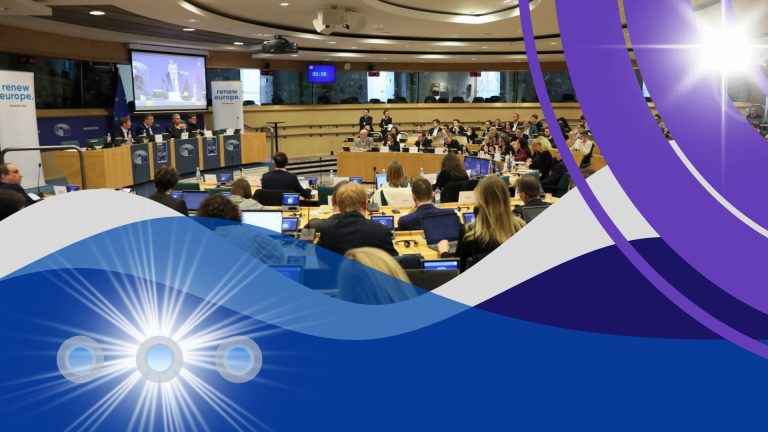
    29 January 20205, Brussels, Belgium — Peter Tom Jones, Director of the KU Leuven Institute for Sustainable Metals and Minerals (SIM2), issued a stark warning to European policymakers yesterday, declaring that failure to secure a self-sufficient critical raw materials (CRM) supply chain would leave Europe at the mercy of China. His remarks came during a high-stakes panel discussion in the European Parliament titled “Supporting the European Automotive Sector to Meet EU Green Transition Goals in Global Competition”, part of a broader event on supporting the EU automotive sector’s green transition.

    Europe’s “Abdication of Responsibility”

    Jones criticised Europe’s historic neglect of upstream mining and refining activities, accusing the bloc of outsourcing CRM production to the Global South while focusing solely on high-value downstream manufacturing. “This has been a significant abdication of our social and environmental responsibilities,” he said, arguing that reliance on external suppliers has left Europe exposed in an era of escalating geopolitical tensions.

    The panel, moderated by MEP Yvan Verougstraete and featuring industry leaders like Julia Poliscanova (Transport & Environment) and Sigrid de Vries (ACEA), highlighted the urgency of addressing supply chain vulnerabilities as the EU races to meet 2030 climate goals.

    China’s Vertical Dominance vs. Europe’s “Siloed Thinking”

    Jones underscored China’s dominance in building a vertically integrated “mine-to-EV” value chain, contrasting it with Europe’s fragmented approach. “While China plans strategically for the long term, Europe remains siloed and reactive,” he said, pointing to the recent shift by European automakers from nickel-manganese-cobalt (NMC) to lithium-iron-phosphate (LFP) batteries. This pivot, he warned, has destabilized Europe’s nascent mining and refining sectors, which lack the infrastructure to support LFP production at scale.

    Compounding these challenges are China’s anticipated export restrictions on magnet and LFP battery technologies—a move Jones called “existential” for Europe’s green transition.

    Call to Action: 15 Mining, Refining, and Recycling Projects by 2030

    Jones urged rapid implementation of the EU’s Critical Raw Materials Act (CRMA), demanding immediate support for at least 15 strategic mining projects, 15 refining facilities, and 15 battery/magnet recycling plants. “With just five years until 2030, we cannot afford delays,” he stressed, warning that opposition from “ideologically driven anti-mining activists” threatens Europe’s energy transition.

    His proposal aligns with calls from industry groups like Eurometaux and Euromines, which have long advocated for streamlined permitting and funding for CRM projects.

    The Path Forward: “Evidence-Based Environmentalism”

    Jones concluded with a plea for pragmatism, advocating “evidence-based environmentalism” that balances ecological concerns with strategic needs. “We must engage companies, governments, and the public to develop an ESG-proof model for responsible metal production in Europe,” he said.

    The event, organised by the Renew Europe faction, signals growing political momentum to secure Europe’s raw materials future. Yet with China’s shadow looming large, the bloc faces a race against time to transform rhetoric into action.

    Key Stakeholders React

    • Judith Kirton-Darling (industriAll Europe): Emphasised the need for “just transition” policies to protect workers in traditional industries.
    • Julia Poliscanova: Warned against repeating fossil fuel-era mistakes by prioritising extraction over circular economy solutions.
    • PROMETIA & Horizon Europe consortia: Highlighted ongoing projects like LITHOS and EXCEED to innovate in sustainable mining and recycling.

    Peter Tom Jones’s full remarks and policy recommendations are available on his LinkedIn profile.

  • “Not In My Country” Documentary Explores Serbia’s Contentious Lithium Project

    “Not In My Country” Documentary Explores Serbia’s Contentious Lithium Project

    A new documentary set to premiere at the European Parliament on February 5th, 2025, delves into one of Europe’s most contested mining projects. “Not In My Country: Serbia’s Lithium Dilemma” examines the complex intersection of sustainable energy ambitions, environmental concerns, and geopolitical tensions surrounding the Jadar Valley lithium project in Serbia.

    The film, directed by Stijn van Baarle and presented by Dr. Peter Tom Jones of KU Leuven, chronicles the discovery of a unique lithium-boron-silicate mineral dubbed “Serbian kryptonite” by mining giant Rio Tinto in 2004. What initially seemed like a promising economic opportunity for Serbia has evolved into a deeply divisive issue, sparking nationwide protests and raising questions about environmental sovereignty.

    A Tale of Two Decades

    The documentary traces the project’s trajectory from its optimistic beginnings to the emergence of fierce local opposition. The turning point came in 2020 when Rio Tinto’s land acquisition program began fracturing local communities. The resistance movement gained such momentum that it led to the withdrawal of Rio Tinto’s permits in 2022. However, the story took another turn when Serbia’s Constitutional Court reversed this decision in July 2024, igniting fresh protests in Belgrade.

    Key Questions Addressed

    The film confronts several crucial questions facing modern resource extraction:

    • Can multinational mining corporations be trusted to maintain rigorous environmental and social governance standards?
    • Is Serbia being reduced to an EU mining colony, sacrificing its environmental heritage for Western Europe’s electric vehicle ambitions?
    • Could the opposition to the project be influenced by pro-Russian interests seeking to impede Serbia’s EU membership prospects?

    Multiple Perspectives

    The documentary features an impressive array of voices from all sides of the debate, including:

    • Local activists from the Ne Damo Jadar movement
    • Rio Tinto executives including Marijanti Babic, Chad Blewitt, and Sinead Kaufman
    • ElevenEs’s CEO Nemanja Mikac
    • Serbia’s Minister of Mining & Energy Dubravka Djedovic Handanovic
    • Environmental and political experts from various institutions

    Premiere Event Details

    The European Parliament premiere will be hosted by MEPs Hildegard Bentele and Yvan Verougstraete, in collaboration with the KU Leuven Institute for Sustainable Metals and Minerals. While the in-person event is invitation-only due to security restrictions, the post-screening interview and panel discussion will be livestreamed to ensure public access to this important debate.

    The documentary, funded by SIM² KU Leuven & KU Leuven, represents a significant contribution to the ongoing discourse about sustainable resource extraction in Europe. It highlights the delicate balance between environmental protection, economic development, and geopolitical interests in an increasingly electrified world.

    For those interested in viewing the documentary’s trailer, it is available through Journeyman Pictures, offering a glimpse into this comprehensive exploration of one of Europe’s most significant environmental and economic debates.