Tag: defense

  • Ukraine’s Titanium Comeback: A Strategic Blueprint for Rebuilding Europe’s Titanium Industry

    Ukraine’s Titanium Comeback: A Strategic Blueprint for Rebuilding Europe’s Titanium Industry

    For decades, titanium has been a cornerstone of aerospace, defense, and high-tech manufacturing — prized for its strength, lightness, and resistance to corrosion. Yet behind this strategic metal lies a highly concentrated global industry, where only a handful of nations control production of titanium sponge, the raw metallic form of the element.

    Among them, Ukraine once stood as a global leader, the industrial backbone of the Soviet titanium complex and one of the few countries that mastered the Kroll process — the key technology for sponge production. Ukraine uniquely combined chemical, metallurgical, and scientific expertise, hosting its own Institute of Titanium and advanced hydrometallurgical facilities capable of extracting not only titanium but also zirconium and hafnium.

    Today, that legacy stands disrupted. The Russian invasion has fractured Ukraine’s heavy industry and halted sponge production since 2021. But it also opened a potential path forward: the chance for Ukraine to reclaim a central role in Western titanium supply chains, as the world scrambles to reduce dependence on Russia and China.


    Global Titanium Landscape

    According to the US Geological Survey, global titanium sponge capacity reached 410,000 tons in 2024, with production steady at around 320,000 tons. The market is heavily consolidated:

    • China accounts for nearly 69% of global output, producing mainly industrial-grade sponge for domestic use.

    • Japan, Saudi Arabia, and Kazakhstan supply almost all of the aerospace-grade sponge imported by the United States and the European Union.

    • Russia remains integrated in its own defense value chain, but sanctions have eroded margins and logistics competitiveness.

    • Ukraine, a former key player, has recorded zero production since 2021.

    While China dominates the midstream segment with state-backed clusters, low-cost energy, and full integration, it lacks certification pathways to access Western aerospace markets. By contrast, Japan and Saudi Arabia occupy the high-quality premium segment, selling sponge at $11,000–13,000 per ton, compared with China’s $7,000 average price.

    The United States and EU remain the largest consumers and stockpilers, offering the most stable and profitable end markets — but they are also the most supply-constrained.


    Why Ukraine Matters

    Ukraine is the only European nation with both a high-grade mineral base and the industrial legacy to re-enter titanium sponge production. Its ilmenite and rutile deposits can support chloride-route Kroll processing, the same route used for aerospace-quality sponge.

    Even a 10,000–15,000 tpa facility could anchor a new Titanium Cluster serving Western markets. The cluster could later expand into VAR smelting (Vacuum Arc Remelting) to produce ingots and billets, especially for Ti-6Al-4V alloys used in aviation and defense.

    Strategically, this would fill a critical gap in the non-Chinese, non-Russian titanium segment, providing Europe with a certified domestic source of titanium metal for the first time in decades.


    Key Enablers and Investment Model

    Rebuilding Ukraine’s titanium metallurgy requires three foundational pillars:

    1. Energy Efficiency and Security:
      Titanium sponge production is power-intensive, with electricity costs accounting for 20–30% of total cash costs. Stable, affordable power — ideally renewable or nuclear — is crucial.

    2. Integrated Clustering:
      A vertically integrated industrial cluster combining mining, sponge, smelting, and by-product recovery (zirconium, hafnium, germanium) would minimize costs and maximize value retention.

    3. Strategic Financing:
      A $400–700 million CAPEX is needed for a 10,000–15,000 tpa sponge facility, with an additional $350–400 million for smelting capacity. Financing could come through long-term offtake contracts with Western aerospace and defense OEMs, supported by instruments such as the U.S.–Ukraine Reconstruction Investment Fund.

    Advanced payments and consortium-based equity could unlock broader project financing, while ensuring certification alignment with Western standards.


    Outlook and Feasibility

    Global titanium sponge output is forecast to reach 400,000–440,000 tons by 2035, driven by:

    • Rising aerospace demand (notably from Airbus A320 and Boeing 737 MAX programs).

    • Global rearmament and stockpiling.

    • Ongoing supply diversification efforts by Western governments.

    Within this framework, Ukraine and India are viewed as the two most promising re-entry markets. Ukraine could restore 5,000–10,000 tons per year of production by 2035, scaling to 15,000 tons under favorable conditions.

    Even modest early-stage output would offer strategic returns: it would anchor a European titanium hub, reduce Western supply risk, and cement Ukraine’s industrial role in the critical minerals value chain.


    Conclusion

    Ukraine possesses the minerals, know-how, and geographic advantage to rebuild a titanium industry that serves Europe’s long-term strategic interests.

    If paired with targeted investment, certification partnerships, and energy reforms, Ukraine could re-establish itself as a core supplier of aerospace-grade titanium, bridging the gap between resource-rich producers and high-tech Western consumers.

    Far from a nostalgic revival, this would mark a new strategic chapter — positioning Ukraine not just as a raw material exporter, but as Europe’s titanium powerhouse.

  • U.S. and Kazakhstan Forge Joint Venture to Secure Global Tungsten Supply

    U.S. and Kazakhstan Forge Joint Venture to Secure Global Tungsten Supply

    Following the announcement of the joint venture between US-based Cove Capital LLC and Kazakhstan’s National Mining Company, JSC Tau-Ken Samruk, further details have emerged regarding the development timeline and scale of the Northern Katpar and Upper Kairakty tungsten projects.

    Cove Kaz Capital Group LLC (“Cove Kaz”), a portfolio company of U.S.-based Cove Capital LLC, will hold a 70 per cent interest, with Tau-Ken Samruk retaining 30 per cent ownership of Severniy Katpar LLP, which owns the Northern Katpar and Upper Kairakty tungsten projects.

    Cove Kaz will oversee marketing of 100 per cent of project output and has entered into a Letter of Intent with the International Trade Administration at the U.S. Department of Commerce to prioritise supply for U.S. government and commercial needs.

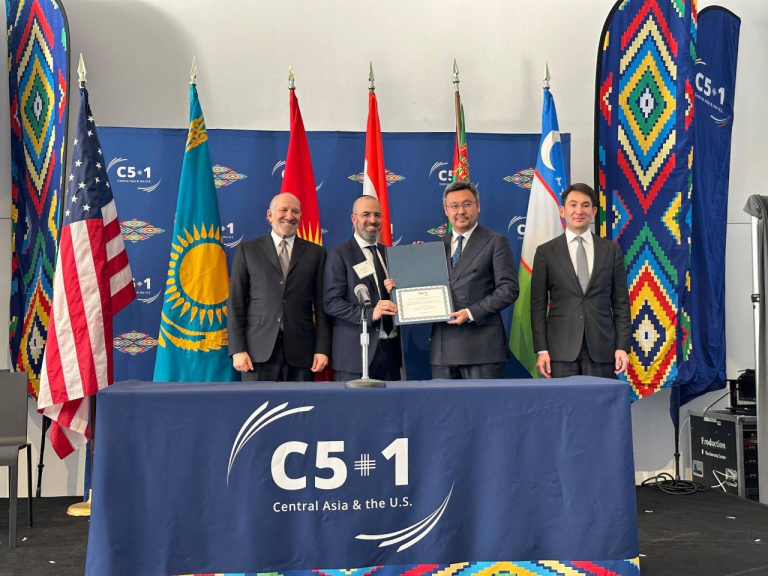
    The announcement was made in Washington, D.C., during the C5+1 Leaders’ Summit by U.S. President Donald J. Trump and Kazakhstan President Kassym-Jomart Tokayev.

    Total development costs for the Northern Katpar and Upper Kairakty projects are estimated at USD $1.1 billion. The Export-Import Bank of the United States has issued a Letter of Interest for USD $900 million in financing, complemented by a similar commitment from the U.S. International Development Finance Corporation.

    Cove Kaz’s project team will be led by Dominic Heaton, who previously oversaw development of the Nui Phao integrated tungsten mine and refinery in Vietnam – the world’s largest tungsten operation outside China. Preparatory work has already commenced to support a Definitive Feasibility Study for Northern Katpar, including the establishment of downstream refining capacity in Kazakhstan to produce ammonium paratungstate (APT) and other tungsten compounds.

    Pini Althaus, Chief Executive Officer of Cove Capital and Cove Kaz Capital, expressed gratitude for U.S. and Kazakh government support:

    “On behalf of Cove Capital and Cove Kaz, I wish to thank President Donald J. Trump, Secretary of Commerce Howard Lutnick, and the U.S. Trade Advocacy Center for their exceptional engagement. Their efforts have aligned financing, offtake pathways, and policy support to deliver a secure, allied tungsten supply for America’s industrial and defence needs.

    “I also wish to thank President Kassym-Jomart Tokayev for his leadership and partnership. This collaboration is a win for both nations—strengthening U.S. supply chains while fostering investment and long-term prosperity in Kazakhstan.”

    Tungsten – A Critical Industrial and Defence Mineral

    Tungsten is ranked by the U.S. Defense Logistics Agency as a “material of interest” and by the European Union as the raw material of highest economic importance due to its unique physical properties: the highest tensile strength at high temperatures, the highest melting point of any metal, and exceptional corrosion resistance.

    Its density and durability make tungsten indispensable in high-performance cutting and drilling tools, aerospace alloys, semiconductor contacts, and radiation shielding. In defence applications, tungsten is used in armour-piercing munitions, missile components, aircraft ballast, and other high-stress environments.

    Currently, China controls over 80 per cent of global tungsten production and processing. In February 2025, China imposed new export restrictions on tungsten and tungsten-containing products to the United States.

    Severniy Katpar LLP

    Severniy Katpar LLP holds licences for two projects—Northern Katpar and Upper Kairakty—located approximately 30 kilometres apart in the established Karaganda mining district of central Kazakhstan, less than 160 kilometres south of the city of Karaganda.

    Feasibility studies completed in April 2023 report total JORC-compliant mineral resources of 1.4 million tonnes of tungsten trioxide (WO₃), accounting for around 70 per cent of Kazakhstan’s total tungsten resources. For comparison, the U.S. Geological Survey estimates China’s reserves at 2.4 million tonnes.

    Combined production from both projects is expected to reach 12,000 metric tonnes per annum (mtpa) of tungsten trioxide—approximately 15 per cent of current global output.

    Cove Capital’s Broader Commitment in Kazakhstan

    Cove Capital’s portfolio company, Kaz Resources LLC, became in 2023 the first U.S. entity to receive critical minerals and rare earth concessions in Kazakhstan. These include licences for 13 minerals such as lithium, tantalum, beryllium, niobium, and rare earth elements.

    In 2024, Cove Capital and Tau-Ken Samruk formalised a joint venture for exploration of rare earths at the Akbulak project in the Kostanay region, with Cove holding 75 per cent and “Qazgeology” JSC 25 per cent. Cove is fully financing exploration activities until reserves are booked.

    About Cove Capital LLC

    Founded in 2015, Cove Capital is a mining-focused investment and development firm headquartered in New York and Melbourne. Since 2018, the company has focused on critical minerals projects that enhance U.S. and allied supply chains. Led by CEO Pini Althaus, Cove Capital brings extensive expertise across exploration, mining, processing, and offtake structuring.

    About Tau-Ken Samruk

    Tau-Ken Samruk, Kazakhstan’s national mining company, manages the sustainable development of the nation’s mineral wealth. Through partnerships with international investors, it aims to strengthen Kazakhstan’s mining sector and support the country’s long-term economic growth.

  • A new report examines the strategic importance of titanium metal for the European Union (EU) economy

    A new report examines the strategic importance of titanium metal for the European Union (EU) economy

    The EU relies heavily on titanium imports, a critical metal used in aerospace, defense, and green technologies. A new European Commission Joint Research Centre (JRC) report highlights the risks of this dependence, exacerbated by global tensions and limited suppliers. The report analyzes the titanium supply chain and proposes strategies to increase circularity and reduce import reliance.

    The EU’s titanium consumption is substantial and expected to grow. Currently, it imports significantly more titanium than it exports, primarily in the form of products and unwrought titanium. Civil aerospace accounts for the majority of this demand, supporting a large number of jobs and contributing significantly to the EU’s GDP. However, the EU faces geopolitical challenges due to its import dependence, especially with the war in Ukraine and the concentration of titanium production in a few countries like China, Japan, Russia, and Kazakhstan.

    The JRC report suggests that increasing circularity, particularly by recycling titanium scrap from aircraft, could significantly reduce import needs and boost the EU’s titanium sector employment. The report recommends several policy actions:

    • Reshoring titanium processing: Re-establishing domestic production capacity.
    • Improving titanium recycling: Addressing barriers to large-scale recycling from decommissioned aircraft.
    • Strengthening international partnerships: Diversifying supply sources through collaborations.
    • Supporting Ukraine’s titanium industry: Integrating Ukraine into the EU’s titanium value chain post-conflict.

    These recommendations align with EU priorities like decarbonization, reshoring, and critical raw materials security, and support existing and upcoming policies such as the Critical Raw Materials Act and the Net Zero Industry Act. The JRC report emphasizes the urgent need for the EU to enhance its strategic autonomy in the titanium supply chain through circularity, reshoring, partnerships, and support for Ukraine. Initiatives like the European Defence Agency’s work on titanium circularity demonstrate practical steps towards achieving these goals.

  • UK Budget to Support Critical Mineral Imports to Strengthen Industry and Reduce Reliance on China

    UK Budget to Support Critical Mineral Imports to Strengthen Industry and Reduce Reliance on China

    The upcoming UK budget, spearheaded by Chancellor Rachel Reeves, will introduce greater financial support for companies importing essential minerals like lithium, graphite, and cobalt. These minerals are vital for sectors such as defense, aerospace, EVs, and renewables, and the initiative aims to reduce the UK’s dependence on China. Importers with long-term contracts with UK exporters can access UK Export Finance, enhancing partnerships with Commonwealth suppliers. This budget will also include broader economic measures, including tax adjustments and increased borrowing to boost public services and infrastructure.