Tag: Czechia

  • Czechia’s Chvaletice Manganese Project Gains Strategic Importance for EU Battery Supply Chains

    Czechia’s Chvaletice Manganese Project Gains Strategic Importance for EU Battery Supply Chains

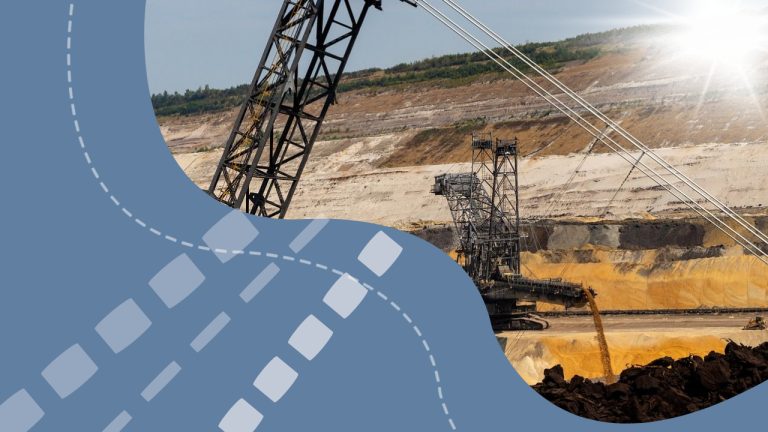
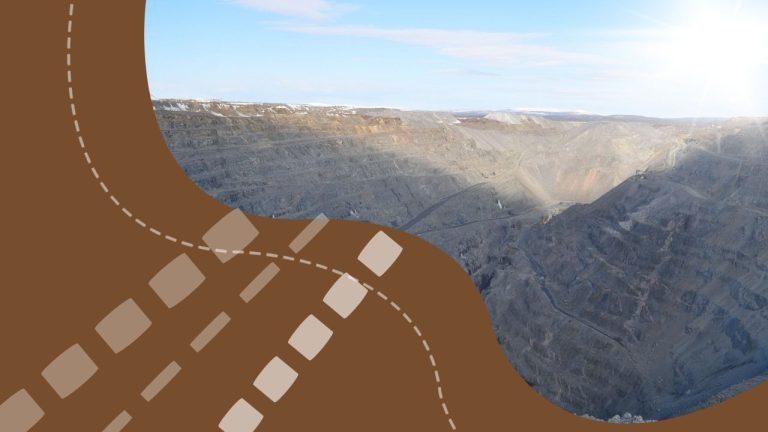
    A major manganese deposit in eastern Czechia is emerging as a key asset in Europe’s push to secure strategic minerals for electric vehicles and renewable energy technologies. The Chvaletice site in the Pardubice region, once a legacy mining area, is now believed to host the largest manganese reserves in the European Union, according to local reporting.

    The project is being advanced by Mangan Chvaletice, which plans to reprocess historic mining tailings accumulated around the former industrial site. What was once considered waste is now viewed as a valuable secondary resource. The company says the project could eventually produce up to 50,000 tonnes of high-purity manganese per year.

    Manganese plays a critical role in lithium-ion battery cathodes, improving performance and safety in electric vehicle batteries. As demand for battery materials accelerates, securing regional supply is increasingly seen as essential for Europe’s economic resilience and industrial autonomy.

    The Chvaletice project has reportedly achieved key permitting milestones, including environmental approvals and mining licences. Preparatory work for a conveyor system and processing plant is expected to begin later this decade, with full commercial production targeted around 2030. The project could create up to 400 jobs.

    The Czech government has designated the Chvaletice deposit as a strategic mineral resource under national legislation, highlighting its importance for supply chain security. Current reserves are estimated to potentially meet up to one quarter of European manganese demand, with a projected mine life of approximately 25 years.

    Manganese and lithium are both listed as critical raw materials by the European Commission. Beyond Chvaletice, Czechia hosts one of Europe’s largest lithium deposits at Cínovec, as well as tungsten reserves and a history of uranium production, reinforcing the country’s growing role in Europe’s advanced technology supply chains.

  • EU Court Advisor Says Commission Wrongly Deducted €68M from Poland Over Turów Mine Dispute

    EU Court Advisor Says Commission Wrongly Deducted €68M from Poland Over Turów Mine Dispute

    The European Commission improperly withheld over €68 million from Poland’s EU funding in connection with the Turów coal mine dispute, according to a preliminary opinion issued Thursday by Advocate General Juliane Kokott of the EU Court of Justice.

    The legal dispute began in 2021 when Czechia filed a case against Poland, citing environmental and public health risks stemming from operations at the Turów coal mine, located near the Czech border. In response, the EU court ordered an immediate halt to mining. When Poland continued operations, the court imposed a daily fine of €500,000, which accumulated between 20 September 2021 and 3 February 2022.

    However, Thursday’s advisory opinion argues that a 2022 bilateral agreement between Poland and Czechia retroactively nullified the interim court measures and, by extension, the financial penalties. Under the agreement, Poland paid €45 million in compensation and agreed to implement environmental safeguards aimed at mitigating the mine’s cross-border impact.

    “The amicable agreement between the Czech Republic and Poland meant that the interim measures were cancelled retroactively,” Kokott wrote. “Therefore, the Commission wrongly offset the penalty payment against Poland’s claims against the EU budget.”

    While Kokott’s findings are non-binding, they are often followed by the Court of Justice in its final ruling.

  • Czechia Commits to Phasing Out Coal by 2033 Amid Clean Energy Transition Debate

    Czechia Commits to Phasing Out Coal by 2033 Amid Clean Energy Transition Debate

    The Czech government has announced plans to phase out coal-fired power generation by 2033, aligning with the European Union’s broader push for cleaner energy. Some of the country’s oldest coal plants, including the Opatovice lignite power plant, are already transitioning, with Opatovice aiming to stop using coal by 2030. However, the shift to natural gas as an alternative has sparked controversy. While natural gas emits fewer greenhouse gases than coal, critics argue that it perpetuates reliance on fossil fuels, undermining efforts to achieve climate neutrality.

    The EU’s ambitious “Fit for 55” policy, which aims to cut emissions by at least 55% by 2030 compared to 1990 levels, is driving this transition. Through emissions trading, coal power is becoming increasingly unprofitable, with funds from the system directed into the EU’s Modernisation Fund. This fund supports lower-income member states in transitioning to cleaner energy. Since 2021, the fund has distributed €15.5 billion, with Czechia, Romania, and Poland receiving the largest shares. In December, Czechia was allocated an additional €130 million, primarily for natural gas projects and waste-to-energy infrastructure.

    Despite these investments, environmental groups have raised concerns. CEE Bankwatch reports that Czech plants near Vrato and Opatovice have received nearly €350 million in subsidies from the Modernisation Fund. Local environmental committee member Robert Hrdina from Pardubice acknowledges that gas is cleaner than lignite but warns of potential energy security risks. “Switching to gas will improve air quality, but it ties us to foreign energy imports,” he said. Hrdina also emphasized the need for greater focus on energy efficiency, noting that many apartment buildings lack proper insulation, which could reduce energy consumption by up to 50%.

    As Czechia moves toward its coal-free future, the debate continues over whether natural gas is a necessary short-term solution or a step in the wrong direction.

  • US aiming to deploy Europe’s first small modular reactor ‘in late 2020s’, official says

    US aiming to deploy Europe’s first small modular reactor ‘in late 2020s’, official says

    The United States, with a firm resolve, is aiming to deploy the first American-made small modular nuclear reactor in Romania and Czechia by the end of the decade. A US official stated that the projected timeline for deployment is 2029.

    Romania is the first country in line for this endeavor, with US company NuScale partnering with the national company Nuclear Electrica to develop the country’s inaugural small modular reactors (SMRs). During a recent visit to Bucharest, US Assistant Secretary of State Geoffrey Pyatt commended the “civil nuclear alliance with Romania” and the plans to construct a small modular reactor in the country.

    Pyatt emphasized that no one has yet deployed such a technology. He stated in a video briefing with journalists that the forecasted deployment timeline is 2029. He expressed confidence in achieving this goal, highlighting the significance of the civil nuclear partnership with Romania.

    SMRs are significantly smaller in size compared to traditional nuclear reactors, with a capacity of up to 300 MW(e) per unit. One of their main advantages is the ability to be factory-assembled and transported to areas with limited grid coverage.

    During his visit, Pyatt announced US funding for the construction of a simulator at Bucharest’s Polytechnic University. This simulator aims to build the necessary capacity so that when Nuclear Electrica’s new SMR becomes operational, Romania will have the skilled technicians required to operate the facility.

    The Romanian SMR project is part of a broader US initiative called “Project Phoenix.” This initiative aims to replace coal-fired power plants in central and eastern Europe with small modular reactors. Project proposals from Czechia, Slovakia, and Poland have been selected to participate in Project Phoenix and will receive support for feasibility studies on transitioning from coal to SMRs.

    Furthermore, Kerry launched the Nuclear Expediting the Energy Transition (NEXT) program, which acts as a one-stop-shop for SMR support, providing training and advice to European and Eurasian countries on deploying SMRs.

    Pyatt emphasized the importance of nuclear power in the energy transition, stating that Project Phoenix demonstrates the repurposing of past infrastructure to support cleaner, greener, and more resilient technologies.

    The US’s commitment to small modular reactors was highlighted during the Three Seas initiative summit in Bucharest. The US announced a $300 million contribution to the Three Seas investment fund, which will be used to enhance connectivity and accelerate the clean energy transition in participating countries. Civil nuclear technology, along with wind, solar, and geothermal, is eligible for support.

    While it is assumed that the funding from the US will be directed towards SMR projects utilizing American technology, Pyatt dismissed the notion that Project Phoenix is solely driven by US interests. He emphasized the international nature of the undertaking and cited interest in SMRs from various countries, including Bulgaria, Ukraine, Japan, Korea, and Ghana.

    Pyatt also mentioned that NuScale is not the only US company developing SMRs. Larger groups like Westinghouse and GE, as well as innovative companies like TerraPower and X energy, are also involved in the development of different SMR concepts.

    While acknowledging the hope that American companies will be chosen for Czechia’s large civil nuclear tender, Pyatt emphasized the enduring commitment of the US to its alliance with the Czech Republic.

    The objective in both Romania and Czechia is to expedite the completion of SMR projects, moving the anticipated deployment from the 2030s to the late 2020s. This acceleration aligns with the urgency demanded by the climate crisis.

  • Protests against expanding moldavite mining near České Budějovice

    Protests against expanding moldavite mining near České Budějovice

    Local inhabitants, environmental associations and the municipal council of Ločenice near České Budějovice are against the expansion of moldavite mining in the area. A private company wants to build a new quarry on thirty hectares of land believed to be rich in moldavite. Locals have been signing a petition against the plan and the Czech Environmental Inspectorate also has reservations. The inspectorate has asked the company MAWE CK, which wants to expand its activities in the area, to commission a study which will, among other things, assess the impact of further mining on the landscape. Moldavites are bottle-green gemstones found almost exclusively in Czechia, with minor deposits in neighboring Germany and Austria.