Tag: Czech Republic

  • Czech Cinovec Lithium Project Nears Critical EIA Verdict as European Metals Holdings Targets Mid-2026 Milestone

    Czech Cinovec Lithium Project Nears Critical EIA Verdict as European Metals Holdings Targets Mid-2026 Milestone

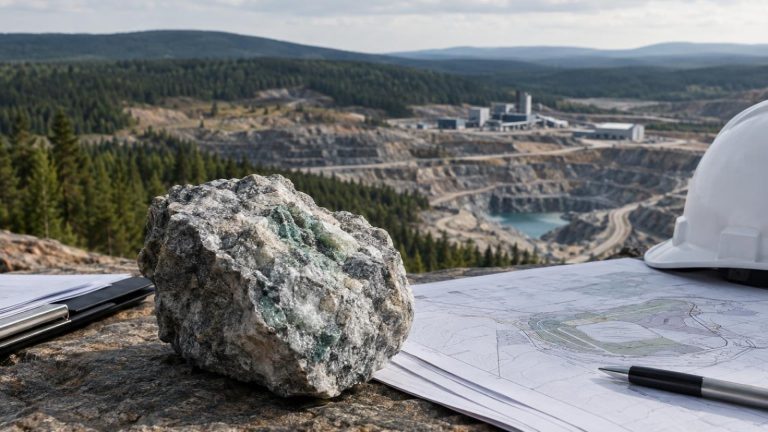
    European Metals Holdings is approaching a defining moment for the Cinovec lithium project in the Czech Republic, with a pivotal environmental ruling expected by the end of June that will determine whether the development — increasingly regarded as central to Europe’s battery supply chain ambitions — can unlock its EU funding and advance toward construction.

    The Czech Ministry of Environment is anticipated to deliver its verdict on the project’s Environmental Impact Assessment by 30 June 2026, a decision that carries significant financial consequences. A positive outcome is a mandatory prerequisite for European Metals Holdings to access grants allocated from the EU Just Transition Fund, making the ruling one of the most consequential regulatory moments in the project’s history. The formal review procedure is currently underway and will be followed by a public consultation phase before a final decision is issued.

    Ahead of that deadline, the company’s Annual General Meeting on 19 May 2026 will provide shareholders with an opportunity to hear updates on project progress, vote on the reappointment of board directors and receive further detail on planned lithium carbonate production targets. The project’s feasibility study envisages output of battery-grade lithium material sufficient to meet a substantial share of Europe’s projected demand by 2030, positioning Cinovec as a key node in the regional electric vehicle supply chain.

    The project has already secured meaningful regulatory momentum in recent months. In February 2026, official approval was granted for the regional rezoning of the project area, legally designating zones for mining operations, processing facilities and utility infrastructure corridors — a significant permitting milestone that builds on the formal submission of the comprehensive EIA documentation in December 2025.

    Cinovec’s strategic significance has been formally acknowledged by both the European Union and the Czech government, with the project classified as a priority resource in the context of the continent’s energy transition. Located in the Erzgebirge mountain region on the Czech-German border, it is considered one of the largest hard-rock lithium deposits in Europe and has drawn growing attention as the bloc seeks to reduce dependence on imported battery raw materials, particularly from China.

  • Czech Cinovec Lithium Project Faces Local Opposition Despite EU Strategic Backing

    Czech Cinovec Lithium Project Faces Local Opposition Despite EU Strategic Backing

    A major lithium mining project in the Czech Republic’s north-west is drawing increasing local opposition even as it gains strategic support from the European Union as part of its efforts to secure critical mineral supplies for the green transition.

    The Cinovec deposit, located near the German border in the Ore Mountains, is considered one of the largest lithium resources in Europe. Developed by Geomet, a company jointly owned by Czech state-controlled energy group CEZ (51%) and European Metals Holdings (49%), the project could become a cornerstone of the EU’s emerging domestic lithium supply chain.

    The deposit is estimated to contain up to three percent of global lithium reserves. Current development plans envisage mining roughly 3.2 million tonnes of ore annually, producing about 37,000 tonnes of battery-grade lithium carbonate each year, enough to supply materials for around 1.3 million electric vehicles.

    The project has been designated a strategic initiative under the EU’s Critical Raw Materials Act, enabling accelerated permitting procedures and financial support. The development has also received a €36 million grant from the EU’s Just Transition Fund and a €360 million subsidy from the Czech government. Total project investment is estimated at around CZK 42 billion (€1.75 billion), with mining potentially beginning by 2030.

    However, residents and local officials in the Usti nad Labem region have raised concerns that the project could reverse years of environmental recovery following the decline of heavy industry and coal mining. The area, which transitioned from large-scale industrial extraction to tourism and spa services, now faces the prospect of renewed mining activity.

    Local leaders warn that lithium extraction could bring environmental and social impacts, including noise and air pollution, groundwater contamination and disruption to landscapes and biodiversity. Critics also point out that parts of the proposed mining area lie within protected Natura 2000 zones and the Ore Mountains UNESCO World Heritage site.

    Activists and environmental researchers argue that large-scale lithium extraction cannot be considered environmentally neutral, even if linked to renewable technologies and electric vehicle production. Concerns have also been raised about transparency, community consultation and the long-term economic benefits for local residents.

    Economic uncertainties further complicate the project’s outlook. Lithium prices have fallen sharply since their peak in 2022, raising questions about the financial viability of large-scale hard-rock lithium mining at Cinovec. Analysts note that the project’s costs may be relatively high due to the ore’s lower lithium concentration, while reliance on public subsidies and volatile global markets adds additional risk.

    Despite these challenges, Czech authorities continue to view the project as strategically important for maintaining the country’s role in the European automotive supply chain and supporting the EU’s broader goal of reducing dependence on imported battery materials.

  • Czech Republic Ends Hard Coal Mining After Nearly 250 Years

    Czech Republic Ends Hard Coal Mining After Nearly 250 Years

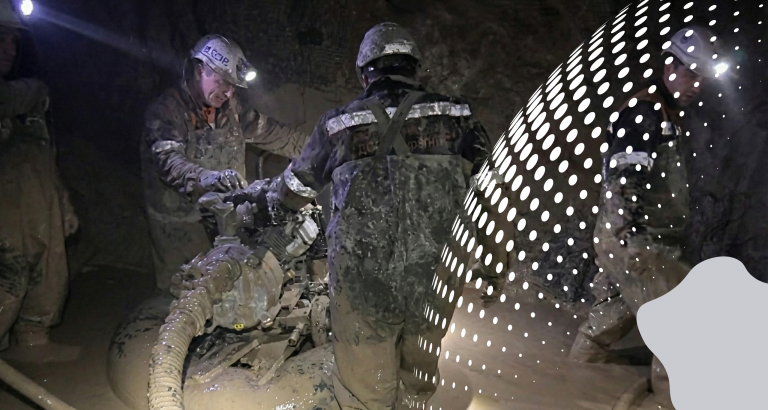
    The Czech Republic has formally brought nearly two and a half centuries of hard coal mining to a close, marking the moment with a symbolic final cart of black coal lifted from a depth of 1300 metres. The ceremony took place on Wednesday at the CSM mine in Stonava, close to the Polish border, and was attended by current and former miners, officials, and invited guests.

    State-owned mining company OKD confirmed that the CSM operation was the country’s last active hard coal mine and said production had become unsustainable due to rising costs. Speaking at the event, OKD general director Roman Sikora described the closure as a historic milestone and paid tribute to generations of miners who shaped the country’s industrial development.

    Over its long history, the CSM mine developed an underground network exceeding one million metres in length and became the setting for several notable moments, including a wedding held almost 900 metres below ground in 1992. The mine was also visited underground by playwright and former Czech president Václav Havel in the early 1990s.

    The shutdown marks the end of an era for the Moravian-Silesian region, long defined by heavy industry and coal production. While around 700 workers will remain involved in decommissioning and closure activities, others are expected to transition into retraining programmes.

    Hard coal, also known as black coal or anthracite, is valued for its high carbon content and energy density. Although underground hard coal mining has now ended in the Czech Republic, lignite extraction in open-cast mines is expected to continue until 2033. Comparable closures have already taken place elsewhere in Europe, including Germany, which shut its last hard coal mine in the Ruhr region in 2018.

  • Czech Republic to close its last black coal mine, ending more than 250 years of deep mining

    Czech Republic to close its last black coal mine, ending more than 250 years of deep mining

    The Czech Republic will shut its final black coal shaft at the end of January, marking the end of more than 250 years of deep coal mining that once underpinned the rise of heavy industry in Central Europe. The last coal is now being extracted from kilometre-deep shafts at the CSM mine in Stonava near the Polish border, as low global coal prices and Europe’s industrial and environmental transition erode demand.

    State-owned miner OKD had planned to close the operation three years earlier, but Russia’s full-scale invasion of Ukraine in 2022 temporarily boosted energy markets and extended the mine’s life. According to OKD director Roman Sikora, increasing mining depth has driven costs higher, making the operation uncompetitive amid weak prices.

    Coal mining in the Ostrava region began in the late 18th century, transforming the area into an industrial hub supported by railways, steelworks and large-scale infrastructure. Employment peaked in the 1980s with more than 100,000 miners and annual output of up to 25 million tonnes. Following the collapse of communist-era heavy industry after 1989, mines closed gradually and employment fell sharply. By October last year, OKD’s output had dropped to 1.1 million tonnes, with its workforce reduced to 2,300 and a further 1,550 jobs set to be cut.

    The region has since diversified its economy, supported by retraining programmes, foreign investment and EU funding. It is set to receive 19 billion Czech crowns from the EU’s Just Transition Fund to support post-coal redevelopment. OKD plans to remain active above ground through coal trading and new projects, including a battery park, data centre and a small methane-powered plant using gas from former shafts.

  • European Metals submits full EIA for Cinovec lithium project in Czech Republic

    European Metals submits full EIA for Cinovec lithium project in Czech Republic

    European Metals Holdings has submitted the full environmental impact assessment (EIA) for its Cinovec lithium project to the Czech Ministry of the Environment, marking a key regulatory milestone and meeting an important condition tied to EU funding. The EIA was formally lodged on 31 December, completing the two-stage environmental assessment process that began with an initial screening submission earlier in the year.

    The filing covers the entire Cinovec development and aligns with the recently completed definitive feasibility study, which outlined a mine life exceeding 26 years and forecast annual production of about 37,500 tonnes of battery-grade lithium carbonate. The ministry will now begin its formal review, with public consultations and hearings expected later in the quarter.

    The submission also satisfies a core requirement of the EU Just Transition Fund grant awarded to the project. In April, Czech authorities approved CZK 800 million, around $36 million at the time, subject to the EIA being filed by the end of 2025 and approved by mid-2026. European Metals said the project remains on track to meet the full timetable.

  • Czech Village Pushes Back Against EU Lithium Mining Plans Amid Fears of History Repeating Itself

    Czech Village Pushes Back Against EU Lithium Mining Plans Amid Fears of History Repeating Itself

    Residents of Cinovec, a remote Czech village near the German border, are mounting growing resistance to a planned lithium mine that the European Union views as a cornerstone of its critical raw materials strategy. The community of roughly 100 people — shaped for generations by the legacy of coal mining — fears that Europe’s renewed appetite for extraction will once again put local health, land and livelihoods at risk.

    Mining was once the foundation of the former Czechoslovakia’s industrial economy, particularly in the Ústí region, where up to 80 coal sites operated between the 1940s and 1960s. But decades of pollution, health hazards and economic decline led to the closure of the final mine in 1993. For residents like Josef Fasmann, childhood memories of coal dust turning a snowman black remain symbolic of what the region endured.

    Three decades later, mining companies have returned — this time pursuing lithium, a metal central to the EU’s strategy for electric vehicles, renewable technologies and defence applications. Geomet, a public-private venture backed in part by Brussels, is overseeing a $1.94-billion lithium project in Cinovec, believed to sit atop one of Europe’s largest untapped deposits. The Czech Geological Survey estimates that the site could hold around 3% of global lithium reserves, making it critical to the EU’s ambition to reduce dependence on imported refined lithium, which today stands at nearly 100%.

    Lithium demand is expected to triple by 2040, according to the International Lithium Association, and the EU’s Critical Raw Materials Act aims to fast-track domestic extraction. Yet residents fear that the environmental and social costs — once familiar from the coal era — are being overlooked. Community groups warn that while the EU promotes the project as essential for energy security and defence, the risks of pollution, industrial damage and disruption to local life remain largely unaddressed.

    The tension encapsulates a broader dilemma for Europe: balancing strategic resource security with public acceptance in regions still scarred by the legacy of extractive industries. As the bloc pushes for mining to power its green transition, Cinovec is emerging as a key test of whether communities will accept a return to the model they thought they had left behind.

  • European Metals Shares Surge After Czech Government Awards €360M Grant for Cinovec Lithium Project

    European Metals Shares Surge After Czech Government Awards €360M Grant for Cinovec Lithium Project

    European Metals Holdings (ASX, AIM: EMH) saw its shares soar on Friday after securing a Czech government grant of up to €360 million ($417 million) for the Cinovec lithium project, one of Europe’s most strategically important critical minerals developments. The funding package is among the largest government commitments ever made to a mining project within the European Union.

    Executive chair Keith Coughlan said the award reinforces Cinovec’s central role in Europe’s efforts to build a domestic electric vehicle (EV) supply chain. Recently designated a strategic asset under the EU’s Critical Raw Materials Act, Cinovec will now benefit from accelerated permitting and enhanced access to financing. The Czech government has also formally classified the site as a strategic deposit, further streamlining regulatory processes.

    Located roughly 100 km northwest of Prague, Cinovec is home to the largest lithium resource in Europe and one of the world’s largest undeveloped tin deposits, according to the company. It previously received a $36 million grant from the EU’s Just Transition Fund as part of regional economic support initiatives.

    Cinovec’s location near major German automotive hubs — home to factories operated by Mercedes-Benz, BMW, Volkswagen and Porsche — has strengthened its strategic appeal. Automakers across Europe are under growing regulatory pressure to expand electric vehicle production, increasing demand for locally sourced lithium for battery manufacturing.

    Following the announcement, European Metals’ stock surged 58% in Sydney to A¢38 and climbed 70% in London by mid-afternoon trading, raising the company’s market capitalization to £46.13 million ($61 million).

  • Czech Republic to Close Final Hard-Coal Mine by 2026, Ending an Era of Coal Mining

    Czech Republic to Close Final Hard-Coal Mine by 2026, Ending an Era of Coal Mining

    The Czech Republic has announced plans to shut down its last operating hard-coal mine by 2026, marking the country’s final step in its transition away from fossil fuels. The move will make Poland the only remaining EU member still producing hard coal, underlining the Czech government’s commitment to achieving climate neutrality and phasing out all coal by 2033.

    The ČSM mine, located in Moravia-Silesia near the Polish border, will be the last to close. Despite remaining profitable, mining company OKD and the Czech government agreed that the phase-out should occur while operations are still financially sustainable, ensuring a managed and economically stable closure.

    The closure, however, has sparked fierce public debate and regional backlash. The government’s plan to transform the area into a green industrial zone, including a proposed lithium battery gigafactory, has drawn criticism from local residents and civil society groups.

    Martin Bohoněk, of the environmental organization Zachovejme Poolší (“Let’s Save Poolší”), said the project risks displacing the community’s identity without adequately addressing social needs:

    “They are building on the last green space in the area, but they will not be building homes, hospitals, or schools for it.”

    The proposed industrial development would cover an area equivalent to 380 football fields, a scale that locals rejected in a 2024 referendum. Many fear the project will attract foreign labor while offering few direct benefits to the existing population.

    The closure also raises concerns about job losses in the region, historically known as the “boiler room of Europe.” Socioeconomic experts warn that young people are likely to migrate to Czech cities in search of better opportunities, deepening the region’s demographic challenges.

    Meanwhile, Poland now accounts for 98% of the EU’s hard-coal output, producing about 48 million tonnes annually and heavily relying on state subsidies estimated at €235,000 per hour to keep its mines running.

    Although controversial, the Czech government views the decision as a strategic and necessary transition. By ending coal mining while introducing new green industries, it hopes to reposition the region as a hub for clean-energy technologies, even as questions remain about social and environmental balance.

  • Czech Republic Declares Manganese Project Crucial for Strategic Independence

    Czech Republic Declares Manganese Project Crucial for Strategic Independence

    Prague, Czech Republic – March 20, 2025 – The Czech Government has officially designated Euro Manganese’s Chvaletice manganese project as a strategic deposit under recent amendments to the Czech Mining Act, signaling the nation’s commitment to securing a reliable supply of this crucial raw material.

    This designation comes as the European Union seeks to strengthen its domestic supply chains for critical minerals, essential for electric vehicle batteries, renewable energy technologies, and various industrial applications.

    The Chromete Deposit at Chvaletice holds significant reserves of manganese, a metal vital for both the burgeoning green energy sector and traditional industries.

    “This is a significant milestone for Euro Manganese, and we appreciate the support and recognition of the importance of the Chvaletice manganese project,” said Martina Blahova, interim CEO of Euro Manganese. “This designation is a major catalyst for our development timeline and reflects the crucial role our project plays in establishing secure, sustainable raw material supply chains within the Czech Republic”.

    The strategic designation of the project is expected to significantly accelerate the permitting process with expedited approvals and streamlined bureaucracy. This will allow Euro Manganese to move forward with development more efficiently and meet the growing demand for manganese.

    Moreover, the classification unlocks access to potential state investment incentives, including grants, which will further bolster the project’s financial sustainability.

    This move signifies the Czech Republic’s proactive approach to addressing potential supply chain disruptions and securing its position in the growing global market for critical minerals.

    “The Chvaletice project is a prime example of how responsible mining can contribute to economic growth, energy independence, and the transition to a more sustainable future,” added Blahova.

    The company, which received Environmental and Social Impact Assessment approval in March 2024 and the Determination of Mining Lease permit in January 2025, is now well-positioned to bring this vital project online.

  • Czech Republic Sets Date for Complete Coal Phase-Out and Transition to Nuclear Power

    Czech Republic Sets Date for Complete Coal Phase-Out and Transition to Nuclear Power

    The Czech Republic has announced plans to completely phase out the use of coal by 2033, as part of its updated national energy plan submitted to the European Commission. By 2040, nuclear power is expected to account for 68% of the country’s electricity generation.

    According to the plan, nuclear power will constitute 44% of the electricity generation mix by 2030, with this figure set to increase to 68% following the commissioning of new reactors. Nuclear energy will form the cornerstone of the country’s energy balance.

    In addition to nuclear power, the Czech Republic will also actively develop renewable energy sources. Natural gas will serve as a transitional energy source to ensure stability in the energy system, complementing the more variable output from renewable sources due to its reliability and efficiency.

    This energy strategy aligns with global targets to reduce carbon emissions and decrease dependence on fossil fuels. Similarly, Ukraine is also pursuing a transition to carbon-free energy, with a focus on nuclear generation as part of its strategy up to 2050.