Tag: Critical Raw Materials Act

  • Euromines Event Highlights Europe’s Urgent Raw Material and Defense Challenges

    Euromines Event Highlights Europe’s Urgent Raw Material and Defense Challenges

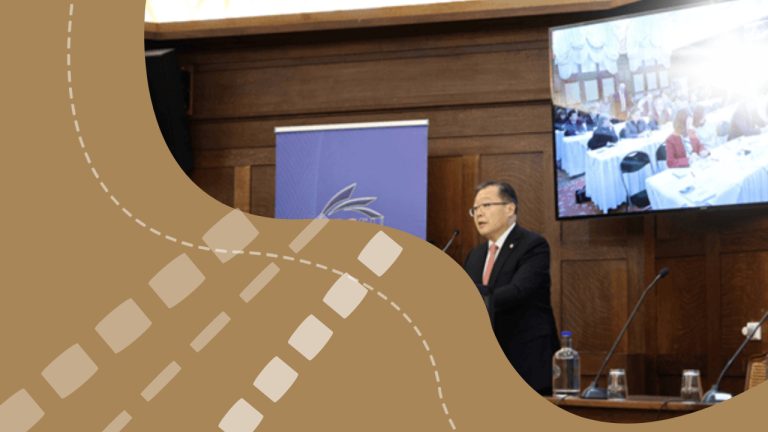
    On April 9, 2025, Euromines hosted a high-level conference in Brussels titled “Geopolitics at Play: The War Below for Europe’s Defense”, bringing together leading policymakers and industry experts to tackle the continent’s growing vulnerabilities in defense, energy security, and raw material supply chains.

    Amid escalating geopolitical tensions and fragile global supply networks, the event addressed how Europe can secure its industrial and strategic autonomy in an increasingly volatile world.

    Six Key Takeaways from the Event:

    1. Securing Critical Raw Materials for Defense
      The EU’s dependence on imports for rare earths, lithium, and titanium poses a serious threat to defense readiness. The Critical Raw Materials Act is a step towards ensuring the EU can access these materials independently and sustainably.

    2. Europe’s Defense Strategy: Readiness 2030
      As part of broader defense initiatives like “Readiness 2030” and “Rearm Europe”, the EU is addressing capability gaps while reinforcing material support to Ukraine and ensuring a sustainable supply of key defense-related inputs.

    3. Strategic Stockpiling and Policy Gaps
      The need for raw material stockpiling during crises was emphasized. However, funding mechanisms and legal frameworks to implement this effectively remain unclear, signaling a critical policy gap.

    4. Energy Security Amid Geopolitical Risk
      With the continued energy standoff involving Russia, Europe must diversify its supply chains and reduce dependence on China and other dominant suppliers by deepening international cooperation.

    5. Global Partnerships and Supply Chain Resilience
      Collaborations with resource-rich nations, including South Africa, and multilateral efforts like the Mineral Security Partnership are seen as pivotal for securing raw material flows and attracting private investment into the sector.

    6. Transatlantic Cooperation Is Key
      A united Europe-North America front remains vital in navigating current and future security challenges. Strengthened transatlantic ties are viewed as a foundation for Europe’s long-term defense and industrial resilience.

    The event underscored that securing Europe’s raw materials is no longer just an economic issue—it’s a matter of defense and strategic survival.

  • Europe Faces Challenges in Reducing Reliance on Russian Titanium

    Europe Faces Challenges in Reducing Reliance on Russian Titanium

    In the wake of Western sanctions against Russia, European policymakers are grappling with the continent’s heavy dependence on Russian-produced titanium, a critical material for the aerospace industry.

    Despite banning or restricting imports of other Russian metals, Europe has yet to take similar action on titanium. This is largely due to the aerospace sector’s significant reliance on supplies from VSMPO-AVISMA, the world’s largest integrated titanium producer, which is based in Russia.

    The issue came to the fore earlier this year when Canada imposed sanctions on VSMPO-AVISMA, prompting a personal intervention by French President Emmanuel Macron to secure waivers for European aerospace firms like Airbus. This underscores Europe’s continued vulnerability to potential Russian retaliation through titanium export restrictions.

    Titanium’s Importance to Aerospace
    Titanium is highly prized in the aerospace industry for its unique properties – it is lightweight, incredibly strong, has a high melting point and is corrosion resistant. It is a crucial material used in aircraft engines, landing gear and fuselage.

    However, the supply of aerospace-grade titanium is limited, as only a handful of producers globally can meet the stringent purity and quality standards required. Prior to the 2022 Ukraine invasion, VSMPO-AVISMA was estimated to have supplied up to a third of the global aviation sector’s titanium needs.

    Europe’s Titanium Dependency
    Europe was the top destination for Russian titanium product exports in 2019, accounting for 45% of the total. Russian titanium, primarily in the form of wrought alloy for aviation, made up 16% of the EU’s imports that year.

    The problem for Europe is that it lacks domestic titanium sponge production, has limited ingot capacity, and virtually no recycling facilities. This leaves the continent heavily reliant on imports, swapping one dependency (Russia) for another (the United States).

    Transatlantic Recycling Loops
    Much of Europe’s titanium scrap is currently processed in the US, where it is used alongside imported Japanese sponge to produce aerospace-grade alloys. This “transatlantic loop” effectively locks Europe into an asymmetric relationship with US suppliers, discouraging investments in domestic recycling capacity.

    Potential Solutions
    Experts argue that Europe’s best short-term solution is to re-shore its scrap processing capabilities, reducing reliance on US suppliers. However, this will require navigating the interests of European aerospace firms and the leverage of their American counterparts.

    Longer-term, integrating Ukraine’s titanium sponge production into the European supply chain could help, but the timeline for this is uncertain. The EU’s Critical Raw Materials Act also sets ambitious targets for domestic extraction, processing and recycling of critical minerals like titanium by 2030 – goals that Europe is currently far from achieving.

    Ultimately, breaking free of Russia’s titanium grip and reducing Europe’s strategic dependencies will require a concerted, multi-pronged effort by policymakers and industry. The stakes are high, as the aerospace sector’s competitiveness and resilience hang in the balance.

  • Europe’s Mining Waste Regulations Found Lacking, Says NGO Report

    Europe’s Mining Waste Regulations Found Lacking, Says NGO Report

    Despite Europe’s reputation for high environmental and social standards, its regulations on mining waste are outdated and insufficient, according to a legal analysis commissioned by the European NGO Transport & Environment (T&E). As Europe plans to ramp up mining activities to meet the 10% benchmark set by the Critical Raw Materials Act, the NGO assessed the adequacy of current regulations. The analysis, conducted by Netherlands-based law firm Hörchner Advocaten, revealed significant shortcomings in the 2006 EU Extractive Waste Directive (EWD). The report highlights issues such as the lack of mandated safest mining waste technologies, inadequate protection for the environment and communities, unclear responsibilities in case of accidents, and uncertain timelines for mine closures. T&E warns that these gaps could lead to inconsistent application of the directive across member states, increasing the risk of environmental and social harm. The NGO is now calling for an urgent revision of the EWD to address these concerns.

  • CRMA targets in Europe: Overcoming challenges for rare earths and lithium

    CRMA targets in Europe: Overcoming challenges for rare earths and lithium

    EU governments have recently approved domestic European mining and extraction of critical raw materials, despite concerns from environmentalists. The Critical Raw Materials Act (CRMA), proposed by the European Commission in March 2023, aims to reduce reliance on foreign suppliers, particularly China, and ensure a diversified supply chain. This move aligns with the European Green Deal, which aims for carbon neutrality by 2050.

    Under the CRMA, 34 critical and 17 strategic raw materials have been identified as crucial for green technologies, digital transitions, and defence and space industries. The new law establishes the following targets for the EU’s annual raw material consumption:

    1. 10% from local extraction
    2. 40% to be processed within the EU
    3. 25% to come from recycled materials

    Extraction projects will receive permits within a maximum of 27 months while recycling and processing projects should receive permits within 15 months. These materials are urgently needed for industries producing essential goods such as wind turbines, solar panels, electric cars, and computer chips. However, some lawmakers expressed concerns about the lack of explicit mention of community consent near mining sites and the need for stronger provisions related to protected areas. Despite these reservations, the CRMA aims to enhance the EU’s strategic autonomy by reducing dependencies on overseas sources.

  • Euro Manganese’s Chvaletice Project Positioned to Support EU’s Critical Raw Materials Act

    Euro Manganese’s Chvaletice Project Positioned to Support EU’s Critical Raw Materials Act

    Euro Manganese Inc. issued follow-up remarks today regarding the European Commission’s recently approved Critical Raw Materials Act (CRMA), aimed at ensuring a sustainable supply of essential materials for the energy transition. With the Council of the EU granting final endorsement to the CRMA, Euro Manganese’s Chvaletice Manganese Project in the Czech Republic emerges as a pivotal asset, poised to become the sole European source of high-purity manganese crucial for the battery supply chain. The Act, officially adopted on March 18, 2024, identifies high-purity manganese as a strategic raw material vital for Europe’s decarbonization objectives and defense applications, while also designating manganese as a critical raw material due to its economic importance and supply risk. Dr. Matthew James, President & CEO of Euro Manganese, hailed the EU’s approval of the CRMA as a significant step towards securing critical materials for the energy transition, underscoring the potential of the Chvaletice Project to address these needs.

  • European Council Boosts Fleets’ Long-Term Access to Electric Vehicles with Critical Raw Materials Act

    European Council Boosts Fleets’ Long-Term Access to Electric Vehicles with Critical Raw Materials Act

    The European Council’s recent adoption of the Critical Raw Materials Act (CRMA) marks a significant step toward enhancing fleets’ sustained access to electric vehicles (EVs) across the continent. Aimed at ensuring a secure and sustainable supply chain for crucial raw materials vital to the green economy, this legislation addresses the growing demand for materials like lithium, cobalt, graphite, manganese, platinum, and tantalum. With the global demand for lithium, essential for EV batteries and energy storage, projected to surge by up to 89-fold by 2050, the CRMA sets out provisions to safeguard the availability and sourcing of such critical resources.

    Under the CRMA, 34 raw materials are designated as critical and 17 as strategic, establishing benchmarks for local extraction, processing within the EU, and utilization of recycled materials. The Act seeks to diversify the EU’s sources of raw materials, ensuring that no single country accounts for more than 65% of its strategic material supply by 2030. This move comes in response to concerns raised by the European Commission regarding supply risks and vulnerabilities stemming from over-reliance on non-EU countries for key materials, exacerbated by recent geopolitical and economic challenges.

    The COVID-19 pandemic, semiconductor crisis, and energy price fluctuations have underscored the EU’s susceptibility to supply chain disruptions, prompting calls for greater self-sufficiency and resilience. Failure to secure a stable supply of critical materials poses significant risks to industries, including automotive manufacturing, and jeopardizes the EU’s ambitious green objectives. Acknowledging the importance of the CRMA, automotive manufacturers represented by ACEA view it as vital support for decarbonizing transportation, particularly as electric propulsion becomes increasingly dominant.

    While the CRMA aims to enhance supply chain resilience, reactions from external stakeholders, such as the China Chamber of Commerce to the EU (CCCEU), suggest concerns about potential disruptions to global supply chains. The CCCEU urges the EU to avoid politicizing economic matters and emphasizes the importance of maintaining open dialogue and collaboration to facilitate a fair and equitable business environment for all stakeholders involved.

  • The China Chamber of Commerce response to the Approval of the Critical Raw Materials Act (CRMA)

    The China Chamber of Commerce response to the Approval of the Critical Raw Materials Act (CRMA)

    The China Chamber of Commerce to the European Union (CCCEU) on Tuesday urged the EU not to disrupt global critical raw materials supply chains and value chains through non-market measures following the bloc’s approval of the Critical Raw Materials Act.

    The Act, adopted by the Council of the EU on Monday, identifies two lists of materials including 34 critical ones and 17 strategic ones. It aims for the EU to extract 10 per cent, recycle 25 per cent, and process 40 per cent of its annual needs for the materials, which notably encompass lithium and nickel, by 2030.

    The CCCEU said that while understanding the EU’s aim to enhance supply chain resilience, it urged the bloc not to disrupt global critical raw materials supply chains and value chains through non-market means to not affect the green and digital economic transformation.

    The chamber highlighted the vast room for cooperation between China and the EU, stressing that “dependence is mutual.”

    It urged the EU to objectively evaluate both sides’ positions in the global supply chain, refrain from politicizing trade issues, reduce market access barriers, encourage dialogue and cooperation, and provide a fair, non-discriminatory business environment for Chinese enterprises.

    The Brussels-based CCCEU represents over 1,000 Chinese companies operating across the EU, with chambers in EU member states.

  • European Union Enacts Critical Raw Materials Act Amid Controversy Over Social and Environmental Impact

    European Union Enacts Critical Raw Materials Act Amid Controversy Over Social and Environmental Impact

    In a move towards achieving strategic autonomy, the European Union has implemented the Critical Raw Materials Act (CRMA) after facing significant delays in the final stages. However, lead legislators from the European Parliament express dissatisfaction with the ultimate provisions governing social and environmental considerations. The CRMA, adopted by the Council of the EU, aims to secure and sustainably diversify critical raw material supplies, aligning with Brussels’ vision of strategic autonomy.

    Critical raw materials, characterized by their economic significance and vulnerability to supply disruptions, are essential for various industrial sectors. The legislation, which includes measures to bolster circularity and recycling, underscores the EU’s ambition for reindustrialization and technological advancement, particularly in areas such as renewable energy and defense.

    While proponents of the CRMA highlight its potential to advance climate and environmental objectives, critics raise concerns about potential ecosystem damage and adverse impacts on local communities, both within the EU and in supplier nations. Despite attempts to incorporate safeguards for community involvement and indigenous rights, certain provisions, such as explicit recognition of free, prior, and informed consent (FPIC), remain contentious due to resistance from the council.

    The CRMA sets ambitious benchmarks for the EU’s consumption, including targets for local extraction, processing within the bloc, and utilization of recycled materials. However, the EU acknowledges its dependence on external sources for critical materials, with some, like heavy rare earth elements, heavily reliant on single countries such as China.

    Notably, the Act streamlines permitting processes for strategic projects, setting a deadline of 27 months for extraction proposals. This expedited timeline contrasts with shorter deadlines for recycling and processing initiatives.

    The CRMA also fosters strategic partnerships with select countries to mitigate reliance on specific suppliers. Already, agreements have been signed with several nations, including Chile, Ukraine, and Canada, while negotiations with others, such as Norway and Serbia, are underway.

  • EU Approves Critical Raw Materials Act to Boost Domestic Mining

    EU Approves Critical Raw Materials Act to Boost Domestic Mining

    In a significant move aimed at securing critical raw materials for green technologies, European Union governments have given their nod to the Critical Raw Materials Act (CRMA), despite some reservations from lawmakers regarding community protection. The CRMA, proposed by the European Commission to lessen reliance on foreign suppliers and propel the European Green Deal, designates 34 critical and 17 strategic raw materials as essential for the EU’s green and digital transitions, as well as for defense and space industries.

    Under the CRMA, extraction projects will be fast-tracked with permits to be issued within a maximum of 27 months, while recycling and processing projects will receive permits within 15 months. While MEPs like Henrike Hahn acknowledge the urgency of securing critical materials for industries producing essential goods, concerns remain over the lack of explicit community consent provisions.

    Lawmakers like Cornelia Ernst express mixed feelings about the final legislation, emphasizing the need to balance domestic mining with environmental and social concerns. Despite these reservations, Flemish Minister Jo Brouns lauds the CRMA as a crucial step towards strategic autonomy, highlighting its potential to bolster the mining sector, create jobs, and align industries with green and digital transitions.

    However, Roger Doome of the Industrial Minerals Association Europe suggests broadening the CRMA’s scope and enhancing permitting procedures to ensure swift implementation. Meanwhile, the European Commission is actively pursuing partnerships with mineral-rich nations like Chile, Greenland, and Ukraine to diversify supply and bolster the continent’s critical raw materials inventory.

  • Navigating Global Geopolitics: Germany and the EU’s Quest for Raw Materials

    Navigating Global Geopolitics: Germany and the EU’s Quest for Raw Materials

    As the demand for energy transition, electromobility, and digitalization surges globally, Germany finds itself at the forefront, recognizing the critical importance of a steady supply of minerals and metals. Essential for sectors like automotive, mechanical engineering, and chemicals, raw materials form the backbone of Germany’s industrial prowess. The complexities of metal supply chains, coupled with the escalating global appetite for these resources, heighten the significance of securing a stable supply.

    Germany’s current reliance on imported raw materials is pronounced, with only a fraction sourced domestically. The German Mineral Resources Agency highlights that in 2022, the country imported metals worth €121.7 billion, reflecting the challenges of achieving self-sufficiency. The geopolitical dimension adds another layer, with China emerging as a central hub in global metal supply chains. China’s role as a major supplier, especially in providing rare earths to the European Union, underscores the vulnerabilities created by high dependencies.

    In response, the European Commission has proposed the Critical Raw Materials Act (CRMA) in March 2023 to address these challenges. The CRMA seeks to boost domestic mining, expand recycling capacities, and diversify imports of critical raw materials. The European Union aims to establish new partnerships and reduce dependency on individual countries to ensure a resilient supply chain.

    Globally, the competition for raw materials is escalating. The United States, through initiatives like the Inflation Reduction Act and the Minerals Security Partnership, actively secures its raw material supply chains. China, on the other hand, extends its influence through industrialization projects in Africa and the solar industry.

    In this race, even Saudi Arabia, with its “Vision 2030,” is investing significantly in mineral resource development. Resource-rich countries in the Global South see the geopolitical competition as an opportunity to move beyond being mere suppliers and establish stages of industrial production within their borders.

    The EU responds by forging strategic raw materials partnerships with various countries, recognizing the need for a coordinated approach among member states. However, the global race necessitates careful navigation of international cooperation complexities.

    While financial resources are crucial, strategic foreign policy decisions take center stage. The EU must engage in meaningful dialogues with potential raw material partners, considering economic and industrial policy interests. The competition for raw materials extends beyond monetary transactions, requiring a nuanced and proactive foreign policy approach to secure Europe’s access to essential resources.