Tag: coking coal

  • JSW Completes Deepening of Shaft III at Pniówek Mine, Enhancing Safety and Efficiency

    JSW Completes Deepening of Shaft III at Pniówek Mine, Enhancing Safety and Efficiency

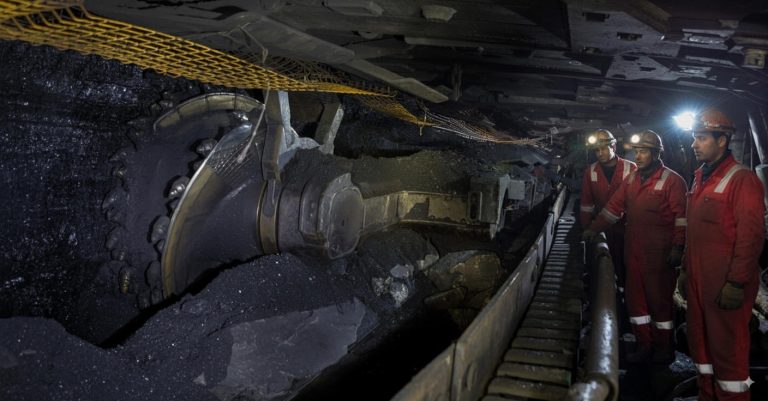
    Jastrzębska Spółka Węglowa (JSW), the European Union’s largest producer of coking coal, has completed a major investment project at its Pniówek mine, finalizing the deepening of shaft III to a depth of 1053 meters and commissioning a new operational horizon at the 1000-meter level. The company announced the milestone in a press release issued in December.

    The project involved extending shaft III from its previous depth of 856 meters and modernizing the hoisting installations in both the eastern and western sections to service the new horizon. Work on the project began in 2020 and was carried out under full operating conditions by a consortium comprising PBSz SA and PPG ROW-JAS.

    According to mine officials, the deepening significantly improves occupational safety, transport logistics, and working conditions for miners. Shaft III, with a diameter of 7.5 meters, performs key ventilation and transport functions, including air extraction, personnel transport, and material handling. Following completion of the project, the shaft now serves three operational levels: 705, 830, and the newly commissioned 1000 level, which has become the mine’s primary horizon. Around 60% of employees now begin their shifts at this level.

    The launch of the 1000 level has allowed the mine to discontinue material transport from the 830 level, directly improving safety and productivity. A new three-deck cage capable of carrying up to 78 people has been installed, while upgraded hoisting machines and new ropes enable the handling of heavier loads. The ventilation system has also been enhanced as part of the investment.

    Mine representatives described the project as a critical step for long-term operations. Management noted that deepening the shaft while maintaining production at the 705 and 830 levels was particularly challenging, requiring the use of an artificial bottom to ensure uninterrupted and safe operations.

    The completion of shaft III comes as JSW moves forward with broader strategic measures. In October 2025, the company announced the start of preparatory work for a large-scale business restructuring aimed at improving liquidity and securing financial stability in the short and medium term.

  • JSW Declares Force Majeure After Fire at Borynia-Zofiówka Mine

    JSW Declares Force Majeure After Fire at Borynia-Zofiówka Mine

    Jastrzębska Spółka Węglowa (JSW), Europe’s largest coking coal producer, has declared force majeure following a fire at its Borynia-Zofiówka mine, forcing the company to revise its 2025 production targets.

    The fire broke out on September 12, 2025, in the Zofiówka section, where endogenous combustion led to the isolation of the C-2 longwall in seam 505/1. This prompted the suspension of operations and an expected shortfall of 156,000 tons of coking coal this year.

    On September 18, JSW’s management board formally announced the force majeure, notifying business partners of potential impacts on contractual deliveries. “As of the date of this report, it is impossible to determine the full impact of the incident on the future prospects of the company and the JSW group,” the company said in a stock exchange filing, adding that further updates will be issued if new information emerges.

    The fire underscores ongoing operational risks for JSW, which remains the EU’s top coking coal supplier to the steel industry. Similar incidents in recent years have raised concerns over production stability and the company’s ability to meet long-term supply commitments.

    Despite the setback, JSW’s future operations received a boost in August when regulators extended its license to extract coal and methane from the Borynia deposit until 2042. The deposit holds nearly 40 million tons of high-quality coking coal and over 80 million cubic meters of methane, ensuring long-term resource security for the mine and the surrounding region.

  • Poland’s JSW Mined 1.01 Million Tons of Coal in August 2025

    Poland’s JSW Mined 1.01 Million Tons of Coal in August 2025

    Jastrzębska Spółka Węglowa (JSW) reported August 2025 coal production of 1.01 million tons, achieving 84% of its monthly target due to operational disruptions, including a fire at the Budryk mine, force majeure declarations, and challenging geological conditions. Despite this, the company’s cumulative January-August output reached 8.44 million tons, exceeding its annual plan by 0.5%.

    Coal sales in August totaled 1.18 million tons (95.3% of the target), with energy coal outperforming expectations at 135.4% of the monthly goal. Coking coal sales, however, dipped to 0.93 million tons against a 1.05-million-ton target. The coke segment proved resilient, with August production hitting 0.30 million tons (116.3% of the plan) and sales reaching 0.29 million tons (110.1%). Year-to-date coke output stands at 2.01 million tons, surpassing annual projections.

    JSW underscored its long-term stability after securing a license extension for the Borynia deposit until 2042, which holds 40 million tons of coking coal reserves. The company attributed its sustained performance to its Strategic Transformation Plan, ensuring operational resilience despite market volatility.

  • JSW Seeks to Delay $345M in Social Security Payments Amid Deepening Cash Crunch

    JSW Seeks to Delay $345M in Social Security Payments Amid Deepening Cash Crunch

    JSW SA, the European Union’s largest producer of coking coal, has requested permission from Poland’s social security office to defer this year’s payments as it struggles with declining coal prices and rising operational costs. The company is asking to postpone the payment of 1.3 billion zloty ($345 million), proposing to settle the amount in installments starting January 2026.

    This marks the second plea for financial relief from the state by the state-controlled miner in a single week. On Monday, JSW also announced plans to seek a 1.6 billion zloty refund from Poland’s power price subsidy fund in a bid to stabilize its finances.

    JSW’s Deputy CEO Remigiusz Krzyzanowski stated during an earnings call that the board is “closely monitoring the financial and liquidity situation” and actively taking steps to prevent a cash shortfall. Despite initiating a cost-cutting and investment-trimming strategy in late 2024, the company has had to draw 2.2 billion zloty from its financial reserve fund this year alone to support cash flow.

    Analysts remain concerned. Erste Group’s Jakub Szkopek warned that JSW’s measures to reduce spending are “definitely too small,” forecasting that the miner will continue consuming significant reserves. He cautioned that if trends continue, JSW may deplete its cash reserves within two to three quarters.

    JSW, which employs over 32,000 people, is due to release its Q1 earnings report on May 20. On Friday, its shares rebounded slightly after an initial 3.6% dip, ending the week with a modest 2.1% gain.

  • Mongolian Mining Corporation Reports Record Revenue of $1.04 Billion in FY2024

    Mongolian Mining Corporation Reports Record Revenue of $1.04 Billion in FY2024

    The Mongolian Mining Corporation (MMC), the largest producer and exporter of washed hard coking coal (HCC) in Mongolia, has announced its annual results for the year ended 31 December 2024, revealing a record-high revenue of USD1,039.9 million, slightly up from USD1,034.8 million in FY2023.

    The Group sold a total of 8.6 million tonnes (Mt) of coal products during the year, including 7.8 Mt of primary products (with 4.7 Mt of HCC) and 0.8 Mt of secondary products. The average selling price for HCC, excluding VAT in China, rose to USD168.4 per tonne, compared to USD160.2 per tonne in 2023.

    Despite market fluctuations, MMC maintained a strong gross profit of USD411.7 million, with profit attributable to shareholders remaining stable at USD242.0 million.

    In addition to its coal operations, the company reported progress on its Bayan Khundii gold mine, where construction and installation works were 67% complete by year-end. Gold production is expected to begin in the second half of 2025, marking a strategic expansion for the Group.

  • Metinvest Announces 2024 Operational Results: Steel and Mining Performance Highlights

    Metinvest Announces 2024 Operational Results: Steel and Mining Performance Highlights

    Metinvest B.V., the parent company of a leading international vertically integrated group of steel and mining companies, has released its operational results for the fourth quarter and the full year ending 31 December 2024.

    In the fourth quarter of 2024, the Group produced 489 thousand tons (kt) of crude steel, reflecting a 14% decrease compared to the previous quarter’s output of 568 kt. Despite this quarterly decline, the annual crude steel production for 2024 reached 2,099 kt, marking a 4% increase from the 2,025 ktproduced in 2023.

    The Group’s iron ore concentrate production showed a positive trend, with 3,493 kt produced in the fourth quarter, a 4% rise from the third quarter’s 3,347 kt. For the full year, iron ore concentrate output surged to 15,733 kt, a significant 42% increase compared to 11,092 kt in 2023.

    However, coking coal concentrate production experienced a decline, with 1,057 kt produced in the fourth quarter, down 7% from the previous quarter’s 1,135 kt. Annually, coking coal concentrate output fell to 4,277 kt, a 22% decrease from 5,455 kt in 2023.

    These results highlight the Group’s resilience in iron ore production despite challenges in steel and coking coal output. Metinvest continues to play a pivotal role in the global steel and mining sectors, adapting to market dynamics and maintaining a strong operational presence.

  • Ukraine’s Steel Industry Faces Crisis After Closure of Last Coking Coal Mine

    Ukraine’s Steel Industry Faces Crisis After Closure of Last Coking Coal Mine

    Ukraine’s steel producers are scrambling for alternatives after the country’s last operating coking coal mine in Pokrovsk shut down on Jan. 13. Metinvest Group, the mine’s owner, halted operations and evacuated workers as Russian forces advanced on the Donetsk Oblast town.

    The Pokrovsk mine, valued at around $1.8 billion before the war, was the last Ukrainian-controlled source of coking coal, a critical raw material for steelmaking. With its closure, domestic steel producers must now rely on costly imports, threatening Ukraine’s global competitiveness in the industry.

    “To produce 7.5 million metric tons of steel in 2024, we would need to import 1.9 million tons of coal. We have doubts whether such quantities can be secured, and import costs will further strain steelmakers,” said Oleksandr Kalenkov, head of Ukraine’s steelmakers’ association.

    Once a global top-10 steel producer, Ukraine has slipped below 20th place since Russia’s full-scale invasion. Annual coke production plummeted from 23.7 million tons in 2013 to just 2.7 million tons in 2023, reflecting the loss of key production sites in occupied territories.

    With no immediate domestic alternative, steelmakers, including Metinvest and ArcelorMittal Kryvyi Rih, will turn to imports from Poland, Australia, and the U.S. However, the added costs—estimated at $50 per ton for Australian coking coal—will raise steel production expenses by 11%, squeezing already thin profit margins.

    Before the war, the Pokrovsk mine supplied 66% of Ukraine’s steel industry with coking coal. Finding a replacement will require nearly 3 million tons of imports, but logistical and economic challenges loom large. Poland, the primary source of Ukraine’s coke imports (85% in 2024), has limited export capacity. Meanwhile, shipping coal from overseas can take over six weeks.

    Despite the industry’s struggles, steel remains a cornerstone of Ukraine’s economy, contributing 5.7% of GDP in 2023. While production grew 21% last year, forecasts for 2025 suggest a sharp decline. Without Pokrovsk, steel output could drop to as little as 2-3 million tons, potentially cutting 1% off GDP.

    Although global coking coal prices are currently low, Ukraine’s reliance on imports will inflate costs, impacting post-war reconstruction efforts. With domestic mining investments unlikely during wartime, Ukraine may eventually be forced to import steel itself, further increasing reconstruction expenses already estimated at nearly $500 billion.

  • Ukraine Loses Vital Coal Mine to Russian Advance

    Ukraine Loses Vital Coal Mine to Russian Advance

    Pokrovsk, Ukraine – A crucial coal mine near the eastern front line city of Pokrovsk has fallen to Russian forces, marking a significant blow to Ukraine’s war effort and economy. The mine, the last operational facility in the country producing coking coal – essential for steel production – was forced to shut down after months of relentless shelling and attacks.

    Despite facing increasing danger, miners continued to work at the facility, even resorting to treacherous journeys through miles of underground tunnels to reach the coal faces. They were offered pay rises and worked under constant threat of shelling, blackouts, and drone strikes.

    The mine’s closure is expected to have a devastating impact on Ukraine’s steel industry, which relies heavily on domestically produced coking coal. Steel production is projected to plummet by over half, affecting exports, tax revenues, and the military’s ability to produce essential armor and other materials.

    The mine’s fall comes after months of Russian advances in the east, which have decimated much of Ukraine’s industrial base. The facility, which employed thousands of workers, was a vital economic lifeline for the region.

    The closure highlights the immense challenges facing Ukraine as it continues to defend itself against Russian aggression. The loss of this critical resource will undoubtedly strain the country’s already fragile economy and impact its ability to sustain the war effort.

  • Poland’s JSW Targets Higher Coal Production in 2025, Not Eyeing New Acquisitions

    Poland’s JSW Targets Higher Coal Production in 2025, Not Eyeing New Acquisitions

    Poland’s largest coking coal producer, JSW, announced that it is not currently considering acquiring any mining assets from Polska Grupa Gornicza (PGG). Adam Rozmus, JSW’s vice-president for technical matters, made the statement during a press conference on Monday, confirming that the company is focused on its own operations rather than new acquisitions.

    Rozmus also reiterated JSW’s coal production target for 2024, set at 12.45 million tonnes. He added that production in 2025 is expected to significantly surpass the 12 to 13 million tonne range, although specific figures were not provided.

    Ryszard Janta, JSW’s CEO, addressed questions about the company’s ongoing restructuring efforts, stating that detailed analyses are underway across all of JSW’s operations. He emphasized that simply returning to annual production levels of 14 to 15 million tonnes would not be sufficient to meet the company’s future goals. Janta also noted that the group is closely examining labor costs as part of its broader strategy.

  • UK Court Rules Approval of New Deep Coal Mine Unlawful

    UK Court Rules Approval of New Deep Coal Mine Unlawful

    The High Court of London has ruled that Britain’s approval of its first new deep coal mine in decades was unlawful. This decision comes after a legal challenge from Friends of the Earth and South Lakeland Action on Climate Change, who contested the 2022 approval by the previous Conservative government for a coking coal mine in northwest England. The ruling follows a Supreme Court decision earlier this year, which clarified that planning authorities must take into account the environmental impact of burning fossil fuels, not just their extraction, when approving projects.

    Despite the British government dropping its defense, West Cumbria Mining, the project’s developer, continued to argue that the mine, intended to extract coking coal for steel manufacturing rather than electricity generation, would be a “unique ‘net zero’ mine.” However, Judge David Holgate rejected this claim, stating that the assumption that the mine would not result in a net increase in greenhouse gas emissions was legally flawed.