Tag: circular economy

  • Metso Partners with GTK to Develop New Pilot Plant for Minerals Processing in Finland

    Metso Partners with GTK to Develop New Pilot Plant for Minerals Processing in Finland

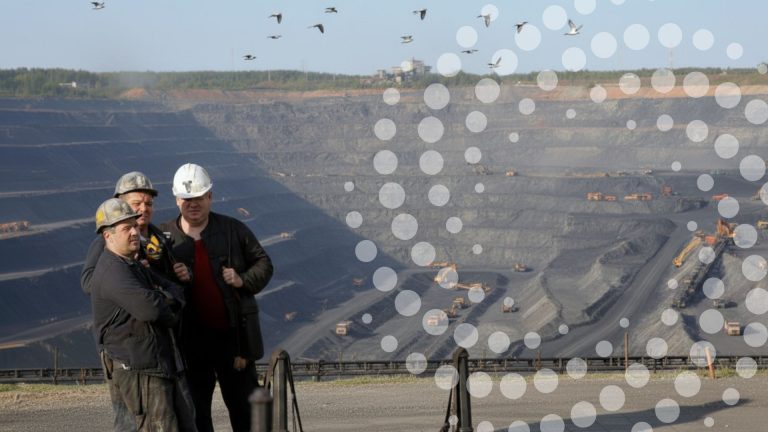
    Metso, a leading industrial machinery and engineering company, has entered into a significant agreement with the Geological Survey of Finland (GTK) to engineer and deliver process technology for GTK Mintec’s new pilot plant located in Outokumpu, Finland. This pilot plant is set to enhance GTK’s research and service offerings for the mining and minerals industry, particularly in the realm of circular economy materials.

    The collaboration between Metso and GTK has been characterised by a long-standing partnership, with the design of the process lines being developed in close cooperation with GTK experts. While the financial details of the order remain undisclosed, it has been recorded in the Minerals segment’s orders for the third quarter of 2026. GTK Mintec aims to have the pilot plant operational by the end of 2028, reinforcing its position as a prominent developer of circular economy and minerals processing solutions on an international scale.

    Saku Vuori, the director-general of GTK, highlighted the importance of this initiative, stating that GTK Mintec is a strategic focus for the organisation. He emphasised that the minerals processing research services are crucial for advancing the circular economy, and this agreement marks a significant advancement in enhancing the services provided to the industry.

    Piia Karhu, president of Metso minerals, echoed these sentiments, noting that the new pilot plant builds upon decades of collaboration between the two entities in developing minerals processing solutions. The facility will serve as an excellent environment for the development and testing of innovative processing and circular economy solutions, aimed at improving resource and energy efficiency within the industry.

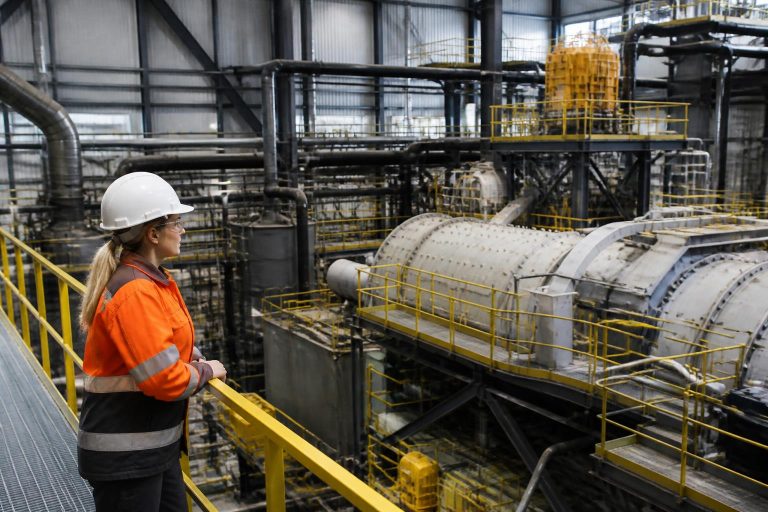
    The pilot plant will feature modern facilities for pilot-scale testing and optimisation of various process technologies. It will not only accommodate conventional beneficiation technologies but also focus on energy-efficient solutions that minimise water and chemical consumption. Key technologies to be tested include high pressure grinding rolls, ore sorting, primary grinding circuits, fine grinding technologies, and flotation applications.

    Moreover, the facility will enable the piloting of advanced solutions for side-stream processing, dry stacking of tailings, and closed-loop process water circuits, utilising cutting-edge water treatment and filtration technologies. Metso has confirmed that two process lines with varying capacities will be constructed, allowing for both large-scale plant testing and smaller-scale test work, such as studies using drill core samples in the early stages of mining projects.

    An advanced digitalisation and automation environment will also be integrated into the pilot plant, where process data will be automatically collected from equipment and measurement points throughout the facility. This innovation is expected to expedite the analysis of test results, enhance data quality, and provide customers with more comprehensive reporting capabilities, ultimately supporting the industry’s goals for sustainable and efficient mineral processing.


  • Europe Advances in Circular Advanced Materials with New Funding Initiatives

    Europe Advances in Circular Advanced Materials with New Funding Initiatives

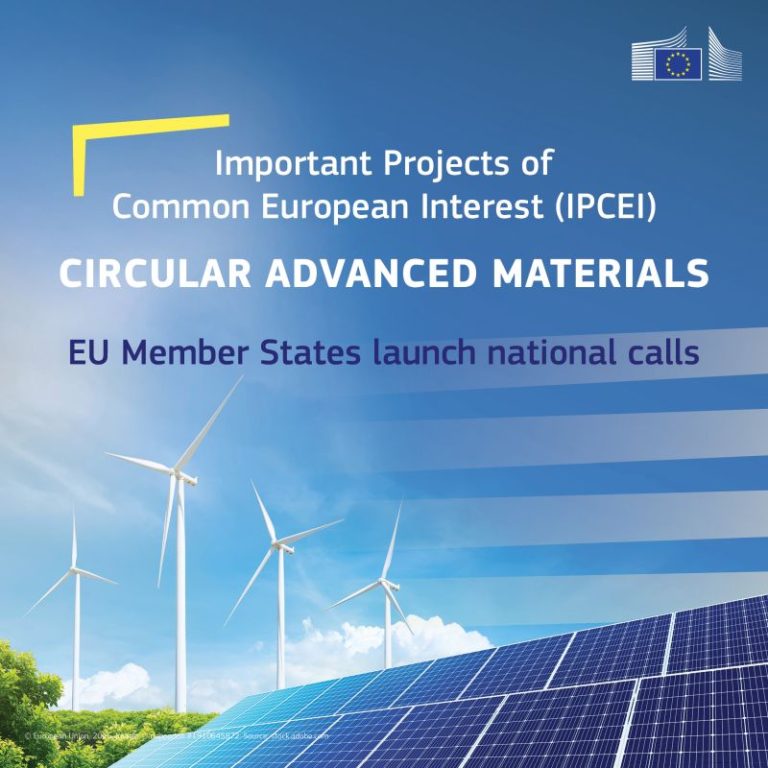
    In a move to enhance its leadership in advanced materials, Europe has initiated several national calls for expressions of interest as part of the Important Projects of Common European Interest (IPCEI) on Circular Advanced Materials. This initiative, launched by multiple EU Member States, aims to foster innovation, sustainability, and circularity across strategic industrial value chains, thereby strengthening European industrial ecosystems. The announcement follows the 2024 EU Strategy on Advanced Materials for Industrial Leadership, which seeks to bolster the continent’s competitiveness and strategic autonomy in the global market.

    The calls for expressions of interest are designed to prepare for the future IPCEI, which will be submitted for notification to the European Commission. Currently, national calls are open in several countries, including Italy, Austria, Spain, and Poland Additionally, Belgium and Slovenia have also launched calls, signalling a broad commitment across the region to enhance capabilities in advanced materials.

    This initiative is expected to play a crucial role in the development of advanced materials that are not only innovative but also sustainable, aligning with the EU’s broader goals of environmental responsibility and economic resilience. By encouraging collaboration among nations and industries, the IPCEI aims to create a robust framework for advancing technology and materials that can meet the demands of a rapidly changing industrial landscape.

    As Europe continues to position itself at the forefront of advanced materials technology, these funding opportunities represent a pivotal step towards achieving a more sustainable and circular economy. Stakeholders in the mining and materials sectors are encouraged to engage with these initiatives to leverage potential funding and collaboration opportunities that can drive innovation and growth in their respective fields.


  • Europe’s Energy Metals Crisis: Between Policy Ambition and Market Reality

    Europe’s Energy Metals Crisis: Between Policy Ambition and Market Reality

    Europe faces an unprecedented raw materials crisis that policy targets systematically underestimate. By 2030, demand for energy metals will explode. Lithium demand will increase five-fold. Cobalt will rise nine-fold. Nickel, manganese, and graphite will need twelve to fifteen times current supply levels. Yet Europe produces zero rare earth elements, controls less than one per cent of global lithium output and depends on a single country (China) for all rare earth processing and 90 per cent of permanent magnets. In February 2026, the European Court of Auditors warned directly: under current plans, Europe’s 2030 critical raw materials targets “appear out of reach.” Many strategically designated projects, the Court found, will struggle to secure supply by 2030.

    The crisis is not geological. Europe possesses abundant ore deposits. The crisis is not financial. The EU has committed 3 billion euros in 2026 alone. The crisis is political, regulatory, and social. It is a crisis of will, not of resources.

    Europe’s Energy Metals Demand: The Trajectory (2025-2035)


    Current Demand (2025) and Forecast Growth:

    Lithium: Current global mining supply is dominated by Australia (approximately 50 per cent), Chile (25 per cent), and China (10 per cent), with additional production from Argentina, Indonesia, and other countries. Europe’s domestic mining share is less than 1 per cent. For EU imports, Chile is the dominant source, accounting for roughly 78 per cent of European lithium needs (2020-2025). European companies with significant lithium projects include Imerys (France-headquartered, EMILI project in France targeting 34,000 tonnes annually), Savannah Resources (UK-listed, operating the strategically designated Barroso Project in Portugal), and Vulcan Energy (developing Direct Lithium Extraction in Germany’s Upper Rhine Valley using geothermal brines, targeting 24,000 tonnes annually).

    Rare Earth Elements: Europe’s domestic production is zero. Global supply shows China at 100 per cent of processing; 98 per cent of magnet demand is met by Chinese imports (as of 2024). Secondary suppliers include Malaysia and Russia. European producers include LKAB (Sweden, largest known European deposit), Rare Earths Norway (Fen Carbonatite Complex), and REMHub project (24-partner Horizon Europe initiative) still in early stage. Geopolitical exposure: China imposed rare earth export controls in 2009, 2012, and expanded controls 2023-2025.

    Cobalt: Current global supply comes from Democratic Republic of Congo (largest, approximately 50 per cent global), Russia, Australia, and China. Europe’s share is less than 1 per cent production. EU import dependency focuses on DRC (major source); refining is concentrated in China. European producers include Boliden’s Harjavalta smelter (Finland, largest nickel/cobalt refinery in Western Europe, 60,000+ tonnes annual output) and Eurobattery Minerals (Hautalampi mine, Scandinavia, development stage).

    Nickel: Current global supply comes from Indonesia and Philippines (laterite ore) and Russia and Australia (sulfide ore). Europe’s share is less than 1 per cent. Refining concentration shows significant Chinese capacity; some European refining at Boliden and Norway’s Glencore Nikkelverk. Chemical shift risk: Low-nickel and cobalt-free battery chemistries (LFP) are gaining share to reduce supply risk, but absolute nickel demand is still rising.

    Copper: Current global supply comes from Chile (23 per cent of EU imports), Democratic Republic of Congo (17 per cent), and Brazil (15 per cent). Europe’s share is approximately 1 per cent production (Boliden’s Aitik mine in Sweden, 90,000+ tonnes annually). Global supply risk shows IEA projects 30 per cent supply deficit by 2035; mined supply from announced projects falls short of 2035 demand, and structural deficit is emerging. Forecast shortfall is 19 million tonnes by 2050 if new mines and recycling capacity are not developed.

    Graphite: Current supply shows China dominates natural graphite (60 per cent) and synthetic graphite (90 per cent). Europe’s share is trace (less than 1 per cent). Future concentration risk: China is expanding synthetic graphite capacity, locking in control. Geopolitical exposure: China has export-restricted graphite since 2023.

    Manganese: Current supply comes from South Africa, Australia, and China. Europe’s share is less than 1 per cent. Dependency is high, concentrated in South Africa with geopolitical instability risk.

    Battery consumption in EU: 2025 shows 400 GWh; 2040 forecasts 4 times more (1,600 GWh). E-mobility share is 60 per cent (2025), rising to 80 per cent (2040).

    Global Demand Growth Rates (2024): Lithium shows 30 per cent annual increase. Nickel, cobalt, graphite, and rare earths show 6-8 per cent annual increase.

    Bottom line: Demand will outstrip supply for all raw materials beyond 2029-2030 unless new capacity is urgently built. Europe’s current domestic production covers less than one per cent of this demand. For copper and lithium specifically, structural deficits are already projected for the early 2030s.

    Europe’s Mineral Dependency: The Uncomfortable Map


    Europe possesses one of the world’s richest geological endowments of energy metals. Yet across the continent, projects representing years of exploration, millions in investment, and genuine transformational potential sit stalled at the threshold of development. The continent has become dangerously dependent on a handful of countries for critical minerals.

    Lithium: Current global supply comes from Australia (53 per cent), Chile (21.5 per cent), and China (10 per cent). Europe’s share is less than 1 per cent. EU import source shows Chile dominates at 78 per cent of 2020 EU lithium needs. Non-European producers with European investment include Imerys (France-headquartered, operates globally), Savannah Resources (UK-listed, Portugal projects), and Vulcan Energy (Germany, Turkish geothermal partnerships).

    Rare Earth Elements: Europe’s domestic production is zero. Global supply shows China at 100 per cent of processing; 98 per cent of magnet demand is met by Chinese imports (as of 2024). Secondary suppliers include Malaysia and Russia. European producers include LKAB (Sweden, largest known European deposit), Rare Earths Norway (Fen Carbonatite Complex), and REMHub project (24-partner Horizon Europe initiative) still in early stage. Geopolitical exposure: China imposed rare earth export controls in 2009, 2012, and expanded controls 2023-2025.

    Cobalt: Current global supply comes from Democratic Republic of Congo (largest, approximately 50 per cent global), Russia, Australia, and China. Europe’s share is less than 1 per cent production. EU import dependency focuses on DRC (major source); refining is concentrated in China. European producers include Boliden’s Harjavalta smelter (Finland, largest nickel/cobalt refinery in Western Europe, 60,000+ tonnes annual output) and Eurobattery Minerals (Hautalampi mine, Scandinavia, development stage).

    Nickel: Current global supply comes from Indonesia and Philippines (laterite ore) and Russia and Australia (sulfide ore). Europe’s share is less than 1 per cent. Refining concentration shows significant Chinese capacity; some European refining at Boliden and Norway’s Glencore Nikkelverk. Chemical shift risk: Low-nickel and cobalt-free battery chemistries (LFP) are gaining share to reduce supply risk, but absolute nickel demand is still rising.

    Copper: Current global supply comes from Chile (23 per cent of EU imports), Democratic Republic of Congo (17 per cent), and Brazil (15 per cent). Europe’s share is approximately 1 per cent production (Boliden’s Aitik mine in Sweden, 90,000+ tonnes annually). Global supply risk shows IEA projects 30 per cent supply deficit by 2035; mined supply from announced projects falls short of 2035 demand, and structural deficit is emerging. Forecast shortfall is 19 million tonnes by 2050 if new mines and recycling capacity are not developed.

    Graphite: Current supply shows China dominates natural graphite (60 per cent) and synthetic graphite (90 per cent). Europe’s share is trace (less than 1 per cent). Future concentration risk: China is expanding synthetic graphite capacity, locking in control. Geopolitical exposure: China has export-restricted graphite since 2023.

    Manganese: Current supply comes from South Africa, Australia, and China. Europe’s share is less than 1 per cent. Dependency is high, concentrated in South Africa with geopolitical instability risk.

    The Geopolitical Chokepoint: How One Country Controls the Transition


    China’s dominance is not a detail in Europe’s minerals story; it is the story. Consider the architecture: Rare earths show 100 per cent of global processing with China holding over 98 per cent of magnet production. Graphite shows 60 per cent of natural graphite and 90 per cent of synthetic graphite capacity. Lithium processing shows substantial refining capacity with Chinese battery makers building supply chains inside the EU (gigafactories in Hungary, Germany, Spain; cell-to-cathode chains in Morocco targeting European carmakers under free-trade terms). Export controls have been weaponised: 2009 rare earth restrictions, 2012 repeat, 2023-2025 minerals and magnets. China’s expanded export controls continue to draw scrutiny from trading partners and may face re-examination. Pricing power is decisive: when the market is concentrated this severely, producers set terms. When one country controls 90+ per cent of processing, it controls supply security, not scarcity.

    Europe’s minerals strategy is not a strategy for independence. It is a strategy for managed interdependence. Yet that interdependence is not being managed. It is being weaponised by others.

    Portugal holds 60,000 tonnes of lithium reserves and hosts Savannah Resources’ strategically designated Barroso Project, poised for final investment decision by end of 2026. France’s EMILI project (Imerys) is positioned to deliver 34,000 tonnes of lithium hydroxide annually. The Cínovec project in the Czech Republic represents Europe’s largest hard-rock lithium resource (7.45 million tonnes) with an annual target of 29,380 tonnes of battery-grade lithium hydroxide. Slovakia has announced a commercial lithium refinery (Volt Resources) for 2026. Norway’s Fen Carbonatite Complex hosts a March 2026 resource upgrade of 15.9 million rare earth oxide tonnes. Sweden is home to Europe’s largest known rare earth deposit (over one million tonnes of oxides) sitting with LKAB. Finland, Norway, and Sweden hold 104 cobalt deposits under exploration, with the Hautalampi mine representing one of Scandinavia’s largest undeveloped cobalt and copper assets. The Balkans, particularly Serbia, contain substantial copper and nickel resources, while Austria and Ukrainian partners are examining titanium and graphite joint ventures.

    This is not a geological problem. It is a political, financial, and social one.

    The Uncomfortable Truth


    The European Commission’s Critical Raw Materials Act (which entered force May 2024) designated 47 strategic projects in its first round. The second wave, closing recently, received over 160 applications, doubling the portfolio. Strategic status promises much: expedited permitting, priority access to RESourceEU financing, single contact points, UNFC classification for bankability. Yet ask developers privately: does the label move money or permitting timelines?

    Germany’s Rock Tech Lithium secured all regulatory approvals and strategic designation. Yet it failed to secure the decisive subsidies from the German government. The pattern repeats across Europe. Policy creates narratives. Reality creates friction.

    Here is what will determine whether Europe builds a minerals industry or assembles a filing cabinet of strategic designations:

    The China Dilemma Will Not Wait. Europe now depends on a single country for all of its rare-earth processing and 90 per cent of its permanent magnets. As of 2026, Europe produces zero rare earth elements domestically; 98 per cent of rare earth magnet demand is met by Chinese imports. RESourceEU projections suggest that even if every strategic project delivers, Europe will sit near 80 per cent dependent on China for magnets in 2030. The bottleneck is not the mine. It is the mill. European ore is shipped to China for refining, for want of domestic capacity, then reimported as finished material. The Rare Earth Industry Association (REIA) and the REMHub Horizon Europe project are building digital platforms and exploring new extraction technologies, but these initiatives are in their infancy. Parallel to this, Chinese battery manufacturers are building the supply chain inside the EU (gigafactories in Hungary, Germany, Spain, and a full cell-to-cathode chain in Morocco aimed at European carmakers under free-trade terms). The timer is running.  China’s expanded export controls on magnets, precursors, and rare-earth materials face re-examination. Easing restrictions invites dependence; narrowing them invites retaliation. This is not a technical problem. It is a strategic choice that Europe has not yet made honestly.

    Social Licence Remains the Real Constraint. It is standard practice in European discourse to blame permitting delays and regulatory ambiguity. The real answer is more uncomfortable. Domestic projects continue to encounter resistance even when policymakers agree that critical raw materials are essential for climate, defence, and industry. Zinnwald, Jadar (Rio Tinto’s Serbian lithium project), and Cínovec have each faced or continue to face organised opposition, environmental scepticism, and community resistance. No permit timeline, no strategic label, no subsidy will materially shift that opposition unless mining regains public legitimacy on the ground. This requires radical rethinking: not communications management, but genuine commitment to shared value, transparency that admits unknowns rather than asserting certainty, and local participation that shapes projects from the earliest stages, not merely absorbs complaints at the end. Some European jurisdictions (Ireland among them) have moved further down this path than others. The question is whether the model can scale.

    Financing Remains the Decisive Test. European mining and processing projects are being evaluated by investors on a fundamentally different calculus than their Australian, Canadian, or Chinese equivalents. Permitting uncertainty, cost inflation, timeline risk, commodity price exposure, power costs, technical complexity, and political durability are all on the table. Does strategic designation reduce that risk enough to attract institutional capital at scale? Evidence suggests it does not, at least not yet. Yet without that capital, without clear offtake agreements or government co-investment, projects advance to pilot stage and stall. The gap between a resource and a mine is not measured in metres of rock. It is measured in billions of euros and the willingness to risk them on European soil.

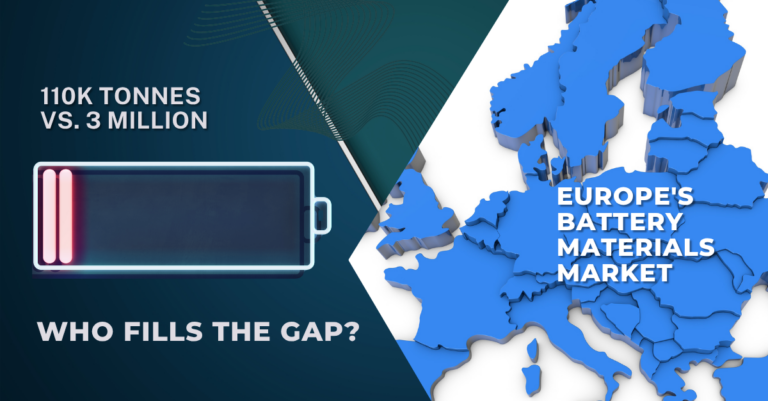
    The Mid-Stream Is the Actual Constraint. Few commentators acknowledge this directly. Europe can develop lithium, cobalt, nickel, copper, and rare earths. It can build the mines. What it has not built, and what the Critical Raw Materials Act, for all its ambition, has not adequately addressed, is the refining, beneficiation, and mid-stream infrastructure. The European Court of Auditors confirmed this gap explicitly: planned European refining capacity will fall dramatically short of demand. Current plans show only 110,000 tonnes of lithium compounds annually on the drawing board, against demand of 3 million tonnes by 2030.

    This gap is the market opportunity. The companies that move fastest on three fronts will dominate European battery material supply through the 2030s: securing permits in 36 months rather than 8 years, reaching cost parity with China through renewable energy or Direct Lithium Extraction, and locking in multi-year ore supplies from Australia and Chile. Green Lithium in the UK has announced UK refinery commissioning for 2026 (50,000 tonnes per year). Volt Resources refinery in Slovakia is timed for 2026. Vulcan Energy’s geothermal DLE project targets first production in 2026-2027. These are beginnings. The developers moving fastest in 2026 and 2027 will capture long-term offtake agreements with European gigafactory planners and build competitive moats that second and third movers cannot replicate. The battery gigafactories ramping across Europe will demand reliable, adjacent processing capacity to hit cost targets. The first wave of refiners that succeed will supply the continent’s entire gigafactory ecosystem for the next decade.

    The Regulatory Trap Europe Is Walking Into

    Europe is simultaneously accelerating mining projects whilst tightening environmental constraints and now proposing chemical hazard classifications that will make those same projects difficult to permit and uncompetitive. This paradox will define the next 18 months.

    The Lithium Toxic Classification Crisis. In April 2026, the European Chemicals Agency (ECHA) released a scientific assessment proposing to classify lithium carbonate, hydroxide, and chloride as Toxic for Reproduction, Category 1A. The International Lithium Association responded publicly that it is “gravely concerned,” having lobbied privately against the proposal for two years. The concern is not scientific pedantry. An overly stringent classification would make EU member states substantially less attractive for lithium mining and refining projects compared with non-EU competitors. Australia, Canada, Chile, Argentina, and the UK have all submitted assessments disagreeing with ECHA’s classification, demonstrating there is no global scientific consensus on the hazard. Yet the public consultation period runs April to June 2026, with ATP 22 implementation post-2026.

    The timing is devastating. European projects have not yet begun production. Capital markets are already sceptical of timelines and costs. A chemical classification that elevates occupational exposure limits or triggers new regulatory requirements for handling and transport could easily tip investment decisions toward non-European sources, especially when competitors offer lower-cost jurisdictions without such restrictions. This is not environmental regulation. This is competitive disadvantage encoded in hazard classification.

    The Battery Regulation Timeline. By February 2027, every battery in the EU market must carry a digital product passport (QR code) containing supply chain information, carbon footprint data, and conflict minerals disclosures. By end of 2027, recycling recovery rates must hit 50 per cent. By 2031, recycled lithium content in new batteries must reach 6 per cent; by 2036, 12 per cent. These targets are mechanically demanding and require supply-chain transparency that many mining projects have not yet built.

    The Self-Sufficiency Illusion. A peer-reviewed study in Nature npj Materials Sustainability (Nykvist, June 2026) assesses Europe’s lithium self-sufficiency targets with rigour. The findings are sobering: recycled batteries will contribute only modestly to self-sufficiency targets, falling far short of policymaker expectations. Even assuming all designated strategic projects commence as planned, by 2036 European self-sufficiency ranges from 31 per cent to 78 per cent, a wide range reflecting sensitivity to battery lifetime assumptions. The implication is uncomfortable: Europe will remain heavily import-dependent, and policy targets on recycling content will not substantially close that gap.

    The Environmental Standards Conflict. The European Commission’s push to accelerate permitting for strategic projects directly conflicts with the strict environmental protections Europe also prizes. The Commission is, in effect, lowering the same environmental standards it built its reputation on. The European Court of Auditors identified “lengthy and complex permitting” as a decisive bottleneck constraining Europe’s minerals strategy. As of 2026, 11 of the EU’s strategic mining projects overlap land within one kilometre of Natura 2000 biodiversity-protected areas, with three projects directly overlapping protected land. Eighty-five per cent of known European mineral deposits lie within or near environmentally protected areas. Strategic designation does not grant permits, weaken environmental standards, or override rights protections. What it does is create expectations that permitting will accelerate, expectations that collide directly with the legal obligations under the Habitats Directive, Birds Directive, and national environmental law.

    Community Opposition as Regulatory Reality. Community opposition has emerged as the decisive constraint on new mining projects, not legislation, not finance, not geology. The Portuguese Barroso lithium project is strategically designated, was granted a mining concession in 2020, and has become the subject of a European Court challenge on environmental grounds. Serbia’s Jadar project, backed by Rio Tinto’s capital and strategic designation, has encountered such sustained resistance that its feasibility is genuinely in question. These are not failures of regulation or finance. They are failures of legitimacy.

    Supply Chain Due Diligence Requirements. By August 2025 (now passed), companies were required to disclose their corporate strategy on social and environmental risks in lithium, graphite, cobalt, and nickel supply chains, aligned with UN Guiding Principles and OECD Due Diligence frameworks. Miners will come under increasing scrutiny regarding operations, water use, tailings management, and community engagement. This is correct policy. It is also the kind of regulatory rigour that makes capital conservative and timelines uncertain.

    The bitter irony: Europe has the geology, the strategic projects, the finance mechanisms, and the regulatory framework to build a domestic minerals industry. What it does not have is a coherent strategy for resolving the collision between the speed required to meet 2030 targets and the environmental rigour that European voters and courts demand.

    Where Technology Might Break the Deadlock


    Direct Lithium Extraction (DLE) offers a potential pathway through this regulatory trap. Unlike evaporation ponds, which consume roughly 500,000 gallons of water per tonne of lithium, DLE technologies aim to reduce water usage by up to 90 per cent, operating in closed-loop systems with zero liquid discharge. Vulcan Energy’s 250 million euro EIB-funded project in Germany’s Upper Rhine Valley exemplifies the model: extracting lithium from geothermal brines whilst co-producing renewable heat and power, lowering both carbon footprint and surface impact.

    Yet DLE carries a critical caveat: the technology remains largely unproven at commercial scale. Fresh water consumption requirements, which some DLE methods may demand in larger volumes than evaporative alternatives, have not been adequately quantified. In water-scarce regions, this could replicate the environmental problems DLE was designed to solve. Projects in Alsace, France, and the Upper Rhine Valley offer early evidence of viability, but evidence alone will not satisfy permitting authorities or community concerns.

    The point for developers is clear: technology can matter. But it matters only when the case for it is made transparently, when uncertainty is acknowledged rather than asserted away, and when communities see benefit in participating in its development. The International Lithium Association (lithium.org), established in 2021 as the industry’s voice on ESG and sustainability, has rightly prioritised uniform standards and sustainable practice across the global supply chain. The question is whether that commitment will translate into the kind of radical transparency and local engagement that European permitting now demands.

    More importantly: the developers who move fastest on three fronts will dominate European battery material supply through the 2030s. These are the companies that simultaneously compress permitting timelines, reach cost parity with China through renewable energy or Direct Lithium Extraction, and secure long-term feedstock from Australia and Chile. The first wave of refiners that succeed in these three domains will capture long-term offtake agreements with European gigafactory planners and build competitive moats that second and third movers cannot replicate.

    These are not comfortable questions. They require intellectual honesty from policymakers, capital providers, and developers alike.

  • China’s East Hope Group Advances $12.6 Billion Aluminium Megaproject in Kazakhstan

    China’s East Hope Group Advances $12.6 Billion Aluminium Megaproject in Kazakhstan

    China’s East Hope Group, one of the world’s largest producers of electrolytic aluminium and alumina, is progressing plans for a colossal $12.6 billion investment in Kazakhstan’s aluminium sector, according to the country’s Ministry of Industry and Construction.

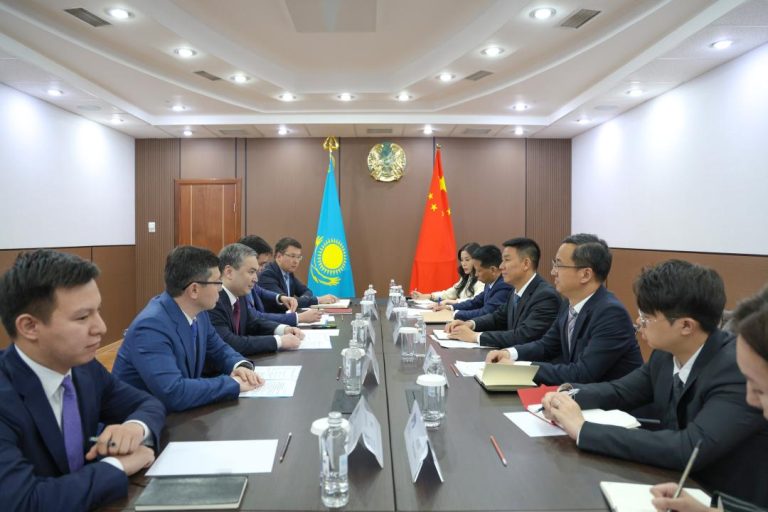
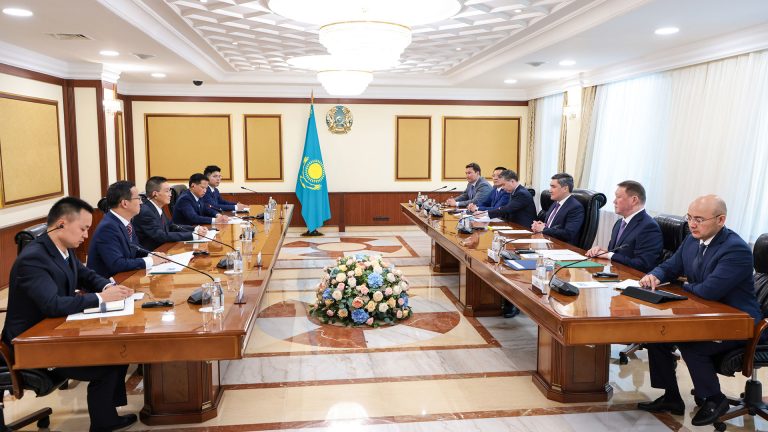
    Kazakhstan’s Industry and Construction Minister Yersayin Nagaspayev held discussions with Chen Lei, East Hope Group’s Director for Strategic Investments. The two sides discussed establishing a full-cycle aluminium cluster within Kazakhstan, spanning the entire process from bauxite extraction through to primary aluminium output.

    Nagaspayev emphasised that full-cycle production projects are in keeping with Kazakhstan’s state industrial policy, which is geared towards deeper processing and the manufacture of high-value-added goods.

    The talks also covered the project’s current status, the formation of a raw materials base, and the development of production capacity and industrial cooperation. The company is currently undertaking geological exploration across multiple blocks in the Aktobe and Kostanay regions. The broader vision encompasses the development of 11 bauxite and coal deposits across the Kostanay and Aktobe regions, with the project expected to generate approximately 10,000 jobs once fully operational. KursivThe Times Of Central Asia

    The initiative has been gathering momentum since February 2025, when East Hope registered a subsidiary in Kazakhstan to serve as the project’s principal operational centre. An investment framework agreement was subsequently signed between East Hope and the Kazakh government. The Times Of Central AsiaMysteel

    As part of the scheme, East Hope Group intends to construct a 1-gigawatt coal-fired power station in the Kostanay region, whilst also exploring potential renewable energy ventures. The project is designed around circular economy principles, with the aim of creating a complete production cycle for green aluminium products. Qazaqgreen

    Both parties reaffirmed their commitment to advancing the project and strengthening investment cooperation.

  • European 2030 Critical Raw Materials targets at risk from ‘implementation bottlenecks’

    European 2030 Critical Raw Materials targets at risk from ‘implementation bottlenecks’

    A new policy brief warns that Europe’s ambitious 2030 targets for critical raw materials are under threat, not from a lack of resources, but from a failure to scale industrial operations quickly enough. With less than five years to go, experts are calling for urgent action to de-risk investment and harmonise regulations across the continent.


    The delivery gap

    A collaborative report from REESOURCE and ten other Horizon Europe projects has highlighted that the EU’s transition to green and digital technologies is currently hampered by significant implementation barriers. Despite the benchmarks set by the Critical Raw Materials Act (CRMA)—which mandates 10% domestic extraction, 40% processing, and 25% recycling by 2030—the window for delivery is rapidly closing.

    The brief identifies that the primary risk to these goals is not geological scarcity, but rather “delayed scale-up, fragmented governance, and investment uncertainty”.

    Key barriers to industrial scale-up

    Stakeholders from across the value chain, including mining companies, research organisations, and SMEs, have identified several critical bottlenecks:

    • The “Valley of Death”: Limited access to finance for pilot and first-of-a-kind (FOAK) plants remains the most significant hurdle. Market volatility and price uncertainty frequently stall projects between the research phase and commercial deployment.

    • Regulatory Red Tape: Fragmented waste classifications and inconsistent cross-border transport rules for raw materials continue to undermine the efficiency of recycling flows.

    • Permitting Delays: While the CRMA introduces “fast-track” timelines, the actual administrative capacity and interpretation varies wildly across Member States, damaging investor confidence.

    • Social Acceptance: The report suggests that failing to engage local communities early can lead to delays that “outweigh financial or regulatory barriers combined,” particularly in primary extraction projects.

    Recommendations for action

    To course-correct, the policy brief recommends moving toward milestone-based funding pathways and introducing mandatory traceability requirements—such as Digital Product Passports—for devices containing rare-earth magnets. Furthermore, it stresses that primary extraction and recycling must be developed in parallel to ensure a resilient European supply chain.

    As the 2030 deadline approaches, the focus must shift from legislative design to the “operational delivery” of industrial facilities.

  • ‘Europe’s Lithium Paradox’: Documentary Highlights Europe’s Struggle Between Green Ambitions and Mining Reality

    ‘Europe’s Lithium Paradox’: Documentary Highlights Europe’s Struggle Between Green Ambitions and Mining Reality

    Europe is facing a “critical crossroads” in its green transition, warns Dr. Peter Tom Jones, director of the KU Leuven Institute for Sustainable Metals and Minerals, whose new documentary Europe’s Lithium Paradox explores the continent’s mounting dilemma over lithium extraction.

    The one-hour film focuses on two key European lithium projects — in Portugal and Serbia — both stalled amid fierce public opposition and political hesitation. As Europe pushes to electrify transport and expand renewable energy, it finds itself torn between the need for raw materials and growing citizen resistance to mining.

    “You can’t recycle your way out of a fossil fuel economy,” Jones says. “You have to mine first — we simply don’t have enough scrap in Europe, and we won’t until at least 2035. That leaves us with a ten-year gap.”

    Europe’s Feedstock Crisis

    Jones argues that Europe’s transition to clean energy is being undermined by a lack of “feedstock” — the raw materials required for batteries, solar panels, and electric vehicles. While recycling giants like Umicore have proven high-level battery recovery is possible, the continent’s reliance on imported lithium remains a major vulnerability.

    He estimates that lithium mined in Serbia alone could power at least one million electric vehicles, potentially creating a “new ecosystem” including a refinery, battery recycling hub, and full supply chain infrastructure.

    “With ten or more industrial-scale mining sites — compared to just four today, one of which is idle — Europe could achieve self-sufficiency in lithium,” he insists. “We need to act now to avoid sleepwalking into the abyss.”

    A “Minerals Cold War”

    In the film, Jones warns that the geopolitical race for critical minerals is intensifying.

    “China and the U.S. aren’t playing by the rules — they’re making their own,” he says. “Donald Trump is pushing a capitalist model with minimum price floors for lithium, while China is restricting exports of technology metals. Europe is a bystander in this minerals cold war.”

    He argues that Europe’s regulatory delays, public protests, and political indecision risk leaving it strategically dependent on foreign supply chains — with devastating consequences for its industrial competitiveness.

    Between Industry and Activism

    Europe’s Lithium Paradox aims to spark informed debate, but its reception has been polarized. In both Serbia and Portugal, local communities refused to speak on camera, accusing the filmmakers of promoting mining interests. Ironically, mining companies also distanced themselves from the project, with some reportedly banning employees from watching it for being “too critical.”

    Jones acknowledges the tension but maintains that the documentary is “grounded in science, not politics.”

    “We’re trying to balance innovation with real-world concerns. I’ve heard the phrase ‘you can’t fight feelings with facts’ — but we can at least try to change the narrative,” he says.

    The film is currently touring European universities, R&D institutes, and industry conferences, and is also available on Amazon Prime.

    “Europe must move beyond entrenched positions and forge a united front,” Jones concludes. “This is not about taking sides — it’s about survival.”

  • Chinese Firm East Hope Group to Invest in Major Green Aluminium Project in Kazakhstan

    Chinese Firm East Hope Group to Invest in Major Green Aluminium Project in Kazakhstan

    Kazakhstan’s Prime Minister Olzhas Bektenov met with Liu Yongxing, Chairman of the Board for China’s East Hope Group, to discuss an ambitious project aimed at establishing a vertically integrated industrial park for “green” aluminium production in Kazakhstan. This initiative is designed around the principles of a circular economy, marking a significant step in the nation’s drive to diversify its economy.

    The proposed project encompasses the entire production cycle of “green” aluminium, from raw material extraction to the deep processing of high value-added materials. The initial phase includes constructing an ore dressing plant capable of processing 2 million tonnes of alumina annually, alongside an electrolysis plant to produce 1 million tonnes of aluminium per year. Crucially, the plan integrates renewable energy sources for electricity generation. East Hope Group estimates the project will create over 10,000 permanent jobs.

    “President Kassym-Jomart Tokayev has set the task of building a more diversified and future-oriented economy,” stated Prime Minister Bektenov. “We are gradually reducing our dependence on the raw materials sector and developing high value-added production. The creation of a vertically integrated aluminium production in Kazakhstan is a unique project that will ensure the comprehensive development of this sector within our domestic industry. The Government of Kazakhstan is ready for long-term cooperation.”

    Liu Yongxing highlighted Kazakhstan’s strategic importance as a logistical hub in Eurasia, noting its unique geographical advantages and development potential within the context of the “Belt and Road” initiative. He emphasised that Kazakhstan’s rich mineral resources and ongoing industrial modernisation strategy align perfectly with East Hope Group’s global priorities in “green” aluminium, modern agriculture, and renewable energy.

    Following the meeting, relevant ministries were instructed to provide the necessary support for the project’s implementation. East Hope Group has committed to certain obligations, including the training of local personnel and a phased increase in the proportion of Kazakhstani workers.

    East Hope Group is a global leader in the aluminium industry and is also active in polysilicon, “green” energy, agribusiness, and high-tech sectors.

  • Europe’s Green Transition Driving Demand for Critical Raw Materials

    Europe’s Green Transition Driving Demand for Critical Raw Materials

    The surge in demand for raw materials is primarily propelled by Europe’s commitment to transitioning to a green economy, with a focus on achieving climate neutrality. This push towards sustainability has been further fueled by Russia’s conflict with Ukraine, prompting a rapid shift away from fossil fuels towards renewable energy sources.

    The European Union (EU) established a methodology in 2010 to identify critical raw materials (CRMs), based on supply risk and economic importance. Materials are deemed critical if they face high supply risks and are economically significant. These CRMs, including lithium and rare earth elements (REE), play pivotal roles in various sectors, particularly in green and digital transitions.

    Lithium, for instance, is indispensable for battery production, with demand projected to skyrocket in Europe and globally. Similarly, REE are vital for manufacturing electric motors, wind turbines, and energy-efficient lighting. However, the EU’s heavy reliance on a few supplier countries, notably China, poses significant supply chain vulnerabilities.

    To address these challenges, the EU emphasizes material efficiency, substitution, and circularity. Circular economy strategies, such as recycling and promoting alternatives, are crucial for reducing import dependencies and ensuring a resilient supply chain for CRMs.

  • Report Urges Increased Circularity in EU’s Critical Raw Materials Market

    Report Urges Increased Circularity in EU’s Critical Raw Materials Market

    A report unveiled by CLG Europe’s Materials & Products Taskforce and the Wuppertal Institute underscores the imperative for heightened circularity within the European Union’s critical raw materials sector. Titled “Embracing Circularity: A Pathway for Strengthening the Critical Raw Materials Act,” the document directly addresses deficiencies in the EU’s Critical Raw Materials Act (CRMA) issued in March 2023.

    Circularity, the report argues, transcends mere recycling and underscores the necessity of effectively retaining materials within the system for extended periods. Critiquing the current CRMA proposal for its inadequate treatment of this aspect of circularity, the report focuses on aluminum (bauxite and magnesium), lithium, and rare earth elements (REE), drawing on evidence-based research and industry case studies to offer actionable recommendations to policymakers.

    Eliot Whittington, Chief Systems Change Officer at CISL, accentuated the potential of a more circular economy in Europe to simultaneously tackle challenges related to key materials and climate change. The report posits that embracing circularity during CRMA negotiations could accelerate the region’s progression toward climate neutrality and strategic autonomy.

    Integral to the green transition, the demand for raw materials profoundly affects the manufacturing of solar panels, wind turbines, and electric vehicles. With 24 materials listed in the CRMA imported from China and concerns regarding the environmental and societal ramifications of domestic mining, the report stresses the EU’s strategic autonomy.

    Advocating for a shift toward a reuse model, the report proposes that a circular economy in the EU could fortify the security of supply for critical raw materials. Prof. Dr. Manfred Fischedick, President and Scientific Managing Director of the Wuppertal Institute, champions a circular economy as a more sustainable alternative to mitigate environmental impact.

    The report’s recommendations encompass a more comprehensive circular approach within the CRMA, advocating for flexibility, forward-looking infrastructure, a coherent European Industrial Strategy, sustainable supply chains, and incentives for green technologies.

  • The Antwerp Declaration for a European Industrial Deal

    The Antwerp Declaration for a European Industrial Deal

    The Antwerp Declaration for a European Industrial Deal was recently presented on 20th February 2024 to the Belgian Presidency of the Council of the EU and Commission.

    Endorsed by 447 signatures across 20 sectors, emphasises the urgent need for clarity, predictability, and confidence in Europe’s industrial policy. The declaration asserts that a European Industrial Deal is essential to complement the Green Deal and ensure the retention of high-quality jobs for European workers.

    Outlined in the declaration are ten key calls to action directed towards Member State Governments, the European Commission, and Parliament:

    1. Put the Industrial Deal at the core of the new European Strategic Agenda for 2024-2029.
    2. Include a strong public funding chapter with a Clean Tech Deployment Fund for Energy Intensive Industries.
    3. Make Europe a globally competitive provider of energy by prioritizing new projects for abundant and affordable low-carbon renewable and nuclear energy.
    4. Focus on the infrastructure Europe needs by targeting recovery funds to build world-class EU Energy, digital, CCUS, and recycling infrastructures.
    5. Increase the EU’s raw materials security through scaling up domestic mining, sustainable processing, and recycling capacity for crucial raw materials.
    6. Boost demand for net-zero, low-carbon, and circular products through consumer empowerment and public procurement initiatives.
    7. Leverage, enforce, revive, and improve the Single Market to transition integrated value chains and address fragmentation.
    8. Make the innovation framework smarter by fostering high-quality science, technological innovation, and collaborative policies.
    9. Promote a new spirit of law-making that fosters entrepreneurship, avoids over-regulation, and ensures coherence.
    10. Ensure the structure allows to achieve results by installing a First Vice-President responsible for the delivery of the European Industrial Deal.

    The declaration underscores the importance of keeping industry in Europe to deliver the climate solutions needed, emphasizing that only with a strong industrial fabric and strengthened social dialogue can the green transition be achieved in a just manner. It emphasizes the need for a European approach to support industry throughout the transition, maintaining the integrity of the internal market while considering global competition.

    The declaration concludes by inviting companies, organisations, and associations to support the Antwerp Declaration and join the efforts to strengthen Europe’s industrial landscape.

    For more details and updates on the Antwerp Declaration, visit the official website: https://antwerp-declaration.eu/