Tag: China mining dominance

  • China Is Winning the Critical Minerals Great Game — and Writing Cheques Alone Won’t Be Enough for the West to Catch Up

    China Is Winning the Critical Minerals Great Game — and Writing Cheques Alone Won’t Be Enough for the West to Catch Up

    China has built a commanding lead in the global competition for critical minerals that its rivals are only beginning to take seriously, and the strategies required to challenge that dominance will need to go well beyond capital deployment, according to an analysis by Veridicor that frames the contest as a “Great New Game” of geopolitical rivalry over strategic resource access.

    The scale of China’s position is striking. The country controls 60% of global rare earth mining and 87% of refining, 64% of graphite mining and 100% of its refining, 65% of cobalt refining and 40% of copper refining. This dominance has been built deliberately over 25 years through a strategy that understands critical minerals as integrated value chains — combining mining, refining and infrastructure — rather than isolated extraction activities. The integration of critical minerals policy with broader industrial strategy has delivered additional competitive advantages, including global leadership in solar power and electric vehicle manufacturing.

    The macroeconomic context driving urgency is severe. Demand projections point to significant supply gaps in the medium and longer term. Estimates suggest the world needs to mine as much copper in the next 50 years as it has in the last 5,000 years — a challenge that Wood MacKenzie estimates will require $2.3 trillion in net new mining investment globally to address. The pattern repeats across most critical minerals, with supply gaps both looming and material.

    The analysis argues that for the US, Europe and others to challenge China’s dominance, differentiation rather than imitation is the key strategic imperative. “Writing checks won’t be enough to change the critical minerals balance that China has earned,” the paper states. The proposed differentiator is excellence in responsible mining practices — an area where Western actors can build genuine competitive advantage in ways that China’s state-driven model has not prioritised.

    The logic operates through several mechanisms. Communities, Indigenous nations and other stakeholders in mining regions can accelerate or obstruct permitting processes depending on the trust relationships developed with project operators. Responsible practices that earn genuine social licence reduce conflict risk and improve the stability and predictability of mineral flows from operating mines. Artisanal and small-scale miners represent a particularly underutilised opportunity: these operators are often early exploration indicators, can be integrated into formalised supply chains through professionalisation and offtake agreements, and their collaboration with large mines reduces conflict risk while boosting aggregate productivity.

    The financing model proposed — Stakeholder Prosperity Bonds, developed as a subset of the broader sustainability bond market — combines artisanal mining professionalisation, improvements to large mine operations, infrastructure development, small-scale processing facility construction and regional capacity building into a single regional investment vehicle. The approach is framed not as a cost centre but as a generator of bankable value through productivity gains, risk reduction and regional development.

  • The Great Green Game: 5 Surprising Shifts Redrawing the Map of Critical Minerals

    The Great Green Game: 5 Surprising Shifts Redrawing the Map of Critical Minerals

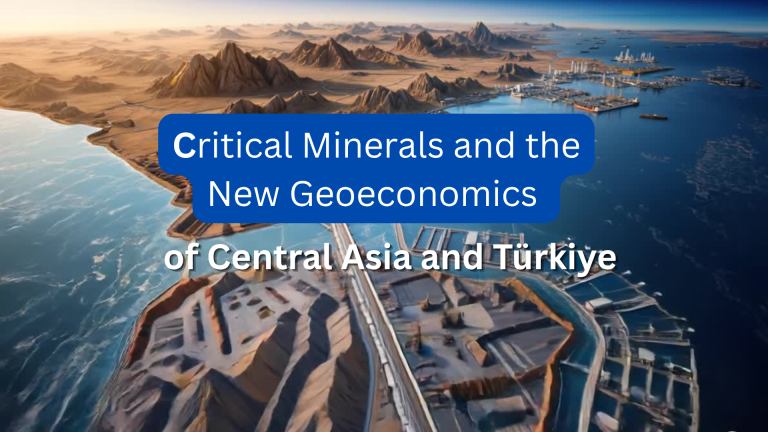
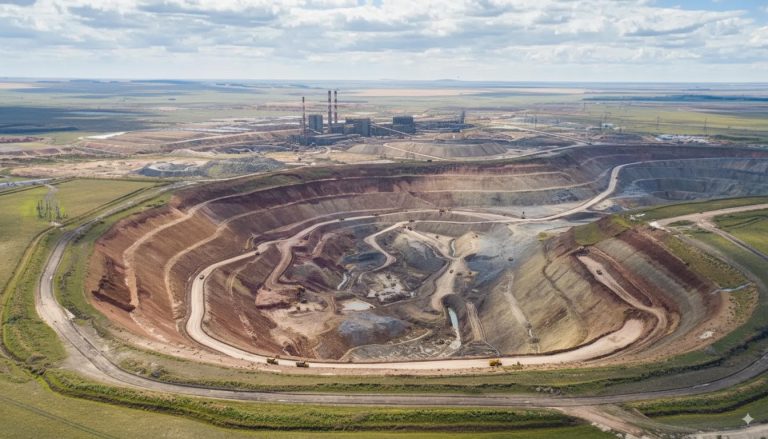
    Your smartphone, the electric vehicle in your driveway, and the massive GPU clusters training the next generation of AI share a common, humble lineage. Their origins aren’t found in Silicon Valley labs, but in the dust of the Alatau and Tien Shan mountains. For decades, these remote ranges in Central Asia and the Caucasus were the silent, overlooked providers of raw dirt. Today, however, the world’s desperate hunger for Critical Raw Materials (CRM) – the lithium, antimony, and rare earth elements (REE) essential for the energy transition – has turned these landscapes into the most contested real estate on the planet.

    Currently, the global economy is tethered to a dangerous single-source monopoly. China controls approximately 60% of global mining for these materials and a staggering 85% of processing capacity. But a massive, counter-intuitive shift in global power is underway. The upcoming MINEX Asia 2026 forum in Ankara is more than just a conference; it is the official unveiling of a new geo-economic axis—a “Middle Corridor” that aims to break the monopoly and redefine the 21st-century economy.

    1. Beyond the “Raw Deal”: Escaping the 5x Revenue Trap

    The traditional arrangement has been a “Raw Deal” for Central Asia: roughly 70% of the region’s minerals currently flow into China as unprocessed ore or primary concentrate. Strategists call this the Value-Added Trap.” By exporting dirt instead of refined metal, regional players lose out on roughly five times the potential revenue.

    This paradigm is shattering. Driven by “multi-vector” foreign policies, countries like Kazakhstan and Uzbekistan are no longer satisfied with being the world’s quarry. They are leveraging the European Union’s Critical Raw Materials Act (CRMA), which mandates that by 2030, the EU must not depend on a single third country for more than 65% of any strategic material. This regulatory limit has turned Western desperation into Central Asian leverage: the West is now funding the factories they once refused to build.

    “China controls about 60% of the world’s production of critical minerals and more than 85% of the world’s capacity for their processing and refining… turning the market for strategic raw materials into a tool of geopolitical influence.”

    To finalise this shift, Türkiye preparing to launch a National Mining Exchange in 2026, creating a transparent marketplace that links Central Asian minerals with Western capital, effectively bypassing the opaque, monopoly-driven pricing of the past.

    Article content

    2. The $15.7 Billion Lithium Haul: Kazakhstan’s “Ghost” Mines

    One of the most startling breakthroughs in battery metals occurred not at a new site, but at the Bakennoye field in East Kazakhstan. During the Soviet era, Bakennoye was a tantalum mine, largely forgotten after the Union’s collapse. However, in 2024, the Korea Institute of Geoscience and Mineral Resources (KIGAM) used modern South Korean exploration tech to “rediscover” the site as a lithium powerhouse.

    The discovery is valued at a staggering $15.7 billion. Under a Comprehensive Development Plan running through 2028, Kazakhstan is using this haul to jumpstart four priority industrial clusters, ensuring they produce more than just raw concentrate:

    • Battery Materials: Domestic production of EV battery components.
    • Semiconductors: High-purity metals for the next generation of chips.
    • High-Temperature Alloys: Essential for aerospace and defense.
    • Permanent Magnets: Critical components for wind turbines and electric motors.
    Article content

    3. The Antimony Shock and the Turkmenistan “Liquid Gold”

    In September 2024, China sent shockwaves through the defense industry by imposing rigid export controls on antimony—a metal critical for everything from ammunition to flame retardants. Prices doubled overnight. In response, the US is aggressively pivoting to Tajikistan, where American firm Comsup Commodities Inc. has invested over $300 million to modernize the Anzob plant, aiming to secure a Western-aligned supply of this vital metal.

    Simultaneously, a second “liquid” shift is happening in the desert. Turkmenistan, long considered a pure gas play, has revealed massive lithium potential in the Garabogazköl Bay. With lithium concentrations in underground brines reaching 15–20 mg/l—well above the industrial threshold—the region is eyeing Direct Lithium Extraction (DLE) technology. This could transform one of the world’s most isolated economies into a pillar of the green energy transition.

    Article content

    4. The “TRIPP” Route: A 99-Year Corridor for Prosperity

    Geopolitics and logistics have converged in the most surprising breakthrough of 2025: the Trump Route for International Peace and Prosperity (TRIPP). Born from a peace agreement between Armenia and Azerbaijan, this 43km corridor through Armenia’s Megri region creates a land bridge linking the mineral-rich Caspian directly to the Mediterranean.

    The TRIPP route utilises a sophisticated “front office – back office” model to solve a centuries-old security dilemma. While Armenia retains absolute sovereignty over the land, the infrastructure (rail, road, and fiber optics) is managed by Western private operators. This provides the “security of management” needed to unlock billions in funding.

    • The Financial Muscle: The US MSP Finance Network and the DFC are already mobilising up to $700 million for regional projects tied to this corridor.
    • The 99-Year Anchor: The United States has secured 99-year infrastructure development rights, signaling a long-term commitment to bypassing Russian and Iranian influence.
    • The Efficiency Dividend: Transit times from Central Asian mines to European markets will be slashed by 25%.
    Article content

    5. Uzbekistan’s $3 Trillion “Open House”

    Uzbekistan is undergoing a rapid metamorphosis from a gold-and-gas economy to a “minerals of the future” powerhouse. At the 2025 Tashkent International Investment Forum, the government revealed a staggering $3 trillion valuation of its mineral reserves.

    Under President Shavkat Mirziyoyev, 76 massive projects have been launched to extract 28 types of strategic metals. To win the race for capital, Uzbekistan has introduced a uniquely aggressive fiscal policy: 10-year tax holidays on royalties (rent payments) for any investor building a “full-cycle” production line. This is a clear invitation for Western tech firms to build their factories directly at the mouth of the mine.

    The ESG Paradox: Mining for the Planet in a Drying Land

    The “Green Great Game” masks a visceral conflict. The very materials required to decarbonize the planet require immense amounts of water to process—in a region where climate change is melting the glaciers of the Tien Shan at twice the global average. This is the FWE Nexus (Food-Water-Energy).

    The industry is reaching a tipping point where environmental stewardship is no longer optional; it is a market requirement. The EU’s Carbon Border Adjustment Mechanism (CBAM) and the introduction of Digital Product Passports mean that any lithium or copper produced through water-wasteful or carbon-intensive methods will be legally locked out of the world’s most lucrative markets. To survive, the region is adopting the concept of the “water dividend”:

    “States must undertake to reinvest a portion of the excess profits from critical mineral sales into water-saving technologies, desalination, and the modernization of crumbling irrigation systems.”

    Article content

    The New Silk Road for the Green Deal

    We are witnessing the birth of a new geo-economic axis. This corridor stretches from the lithium-rich steppes of Kazakhstan and the $3 trillion reserves of Uzbekistan, through the “front-office” transit points of the Caucasus, into the industrial heart of Turkey. It is, in effect, the New Silk Road for the Green Deal.

    As the race for the 21st century’s most vital resources accelerates, a fundamental question remains: Will Central Asia become the new “Silicon Valley” of heavy industry, or will the environmental stakes of this high-speed extraction prove too high to pay? The map of global power is being redrawn in real-time. Look toward MINEX Asia 2026 in Ankara; that is the moment this new map becomes official.

    Article content