Tag: Bulgaria

  • DPM Metals to Relocate Ada Tepe Processing Plant to Serbia’s Čoka Rakita Gold Project

    DPM Metals to Relocate Ada Tepe Processing Plant to Serbia’s Čoka Rakita Gold Project

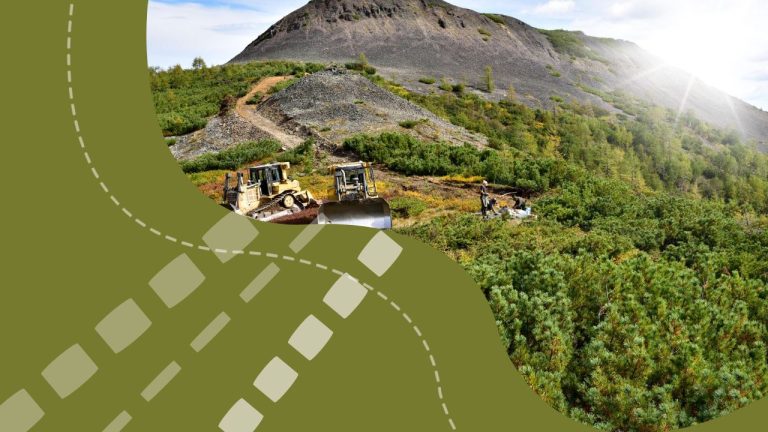
    DPM Metals Inc. (Dundee Precious Metals) has announced that processing equipment from its Ada Tepe gold mine in Bulgaria will be dismantled and relocated for use at the company’s Čoka Rakita gold project in eastern Serbia.

    According to the company’s latest quarterly report, ore processing at Ada Tepe will cease on 15 July 2026, following the final blasting activities completed in mid-April. After operations end, selected processing equipment will be dismantled, refurbished and prepared for installation at the Serbian project.

    DPM expects construction of the Čoka Rakita mine to begin in early 2027. Reusing proven processing infrastructure from Ada Tepe is intended to reduce capital costs, shorten development timelines and lower execution risks as the project advances toward production.

    Alongside the closure of the Bulgarian operation, the company said it will carry out mine rehabilitation in line with European environmental standards. Following reclamation, approximately 95% of the Ada Tepe site is expected to be returned to the Natura 2000 protected area network.

    In its second-quarter update, DPM also reported stable financial performance supported by higher gold-equivalent production from its operating Chelopech mine in Bulgaria and the Vareš operation in Bosnia and Herzegovina.

    The company noted that its strong financial position, supported by a share buyback programme that exceeded US$49 million during the quarter, provides a solid foundation for continued investment and project development across the Balkans.

    DPM Metals plans to publish its full operating and financial results for the second quarter after the close of trading on 30 July 2026.

  • EBRD Considers €55 Million Loan for Bulgaria’s Asarel Medet Copper Mine

    EBRD Considers €55 Million Loan for Bulgaria’s Asarel Medet Copper Mine

    The European Bank for Reconstruction and Development (EBRD) is reviewing a proposal to provide a loan of up to €55 million to Bulgarian copper producer Asarel Medet to support a major sustainability and renewable energy project.

    According to documents published on the lender’s website, the financing is expected to be considered for approval on 11 March. The funds would partially finance a €109.5 million investment programme focused on the development of captive solar power installations and the implementation of more sustainable copper mining practices at the company’s operations.

    The project also aims to bring the mine’s environmental and social standards in line with international best practices, reinforcing its long-term operational resilience and ESG performance.

    Part of the loan is expected to be backed by the InvestEU Fund, the European Union’s financial instrument that consolidates multiple centrally managed EU funding mechanisms, including the European Fund for Strategic Investments.

    Asarel-Medet operates near the town of Panagyurishte in southern Bulgaria and is the country’s leading open-pit copper mining company. The group employs around 1,200 people directly, along with an additional 400 staff in subsidiary companies.

    Ownership of the company is concentrated in VA Copper Invest Limited, a Malta-based investor holding a 63% stake as of September 2025, according to Trade Registry data.

    Financial results for 2024 show that the Asarel Medet Group generated revenues of 929.8 million levs, equivalent to approximately €480.8 million, and recorded an after-tax profit of 223.9 million levs. During the year, the company extracted 45.8 tonnes of ore mass and processed 15.03 tonnes of ore.

  • DPM Metals Extends Chelopech Mine Life to 2036 as Reserves Jump 42%

    DPM Metals Extends Chelopech Mine Life to 2036 as Reserves Jump 42%

    DPM Metals Inc. (TSX: DPM, ASX: DPM) has updated its Mineral Resource and Mineral Reserve estimate and revised the life-of-mine plan for its Chelopech mine in Bulgaria, extending the operation’s mine life to 2036 and maintaining average production of about 160000 gold equivalent ounces per year.

    The company reported a significant increase in Proven and Probable Mineral Reserves to 23.2 million tonnes, representing a 42% net rise in tonnage compared with the previous reserve estimate. DPM said the updated reserve model reflects the inclusion of the Sharlo Dere prospect, revised design and modelling parameters, and updated cut-off assumptions. In metal terms, the new reserve estimate shows higher contained gold and copper, with gold content up 12% and copper up 10% versus the prior estimate.

    Beyond reserves, DPM said its Measured and Indicated Mineral Resource base, excluding Mineral Reserves, increased by 20% to 15.3 million tonnes, with grades of 1.96 g/t gold and 0.57% copper, broadly consistent with reserve grades. The company noted that part of the year-on-year shift in resource figures was driven by conversion of resources into reserves and updates to cut-off assumptions.

    DPM highlighted additional upside potential from exploration, including the Wedge Zone Deep discovery, which is not yet included in the current MRMR estimate. The Wedge Zone Deep target is located within the Chelopech mine concession and around 300 metres below existing reserves and current infrastructure. DPM plans an additional 10000 metres of drilling, expected to be completed in the first quarter of 2026, with an update on drilling results anticipated in the second quarter of 2026.

    The revised life-of-mine plan maintains a 2.2 million tonne per year mining rate through to 2032, following schedule optimisation aimed at meeting production goals and maximising value within development constraints. DPM said the updated plan will form the basis of its 2026 guidance and refreshed three-year outlook, due to be released on February 10, 2026 alongside fourth quarter and full-year 2025 financial results.

    In parallel, the company is progressing permitting and tenure expansion around Chelopech, including efforts to convert the Chelopech North and Brevene licences toward mining concessions, with Chelopech North expected in 2026.

  • Bulgaria to Invest Over €1.38 Billion in Green Transition for Coal Regions

    Bulgaria to Invest Over €1.38 Billion in Green Transition for Coal Regions

    Bulgaria’s coal regions are set to receive BGN 1.58 billion (€808 million) through the European Union’s Just Transition Fund (JTF) to support projects in renewable energy, green hydrogen, and the redevelopment of former mining areas. Combined with an existing €598 million program, total investment in Bulgaria’s post-coal transformation will reach €1.38 billion, according to the Ministry of Regional Development and Public Works.

    The funds will target the coal-producing regions of Stara Zagora, Kyustendil, and Pernik, along with municipalities such as Nova Zagora, Yambol, Simeonovgrad, Harmanli, Topolovgrad, Dimitrovgrad, Haskovo, Elhovo, Sliven, and Tundzha. The JTF grants aim to help communities close coal mines and coal-fired power plants, rehabilitate degraded land, promote energy efficiency, and support a shift toward a climate-neutral economy while reducing energy poverty.

    Deputy Minister Yura Vitanova announced that three new grant procedures will be launched by the end of the year:

    • €153.4 million for energy efficiency and energy communities in public buildings,

    • €72.6 million to help small and medium-sized enterprises install solar panels and energy storage systems, and

    • €242.9 million for socio-economic transformation projects, including converting former mining areas into business and industrial zones.

    In addition, €134.5 million will support the development of green hydrogen infrastructure in Stara Zagora. The initiative includes a hydrogen production complex, charging stations, hydrogen vehicles and trailers, and supporting photovoltaic and energy storage systems.

    The current JTF program is already funding the renovation of residential buildings, industrial and logistics park development, and training and retraining programs for workers affected by the energy transition. It also supports production investments in large enterprises to diversify regional economies.

    “Bulgaria’s coal regions are poised to become hubs for clean energy and sustainable industry,” said Deputy Minister Vitanova. “These investments will not only reduce emissions but also create new opportunities for local businesses and communities.”

  • Bulgaria and University of North Dakota to Research Rare Earth Metals

    Bulgaria and University of North Dakota to Research Rare Earth Metals

    The Bulgarian Energy Holding has signed a Memorandum of Understanding (MoU) with the University of North Dakota, USA, to conduct joint research on rare earth metals in Bulgaria. The agreement was formalized during Prime Minister Rosen Zhelyazkov’s visit to the United States for the 80th session of the UN General Assembly.

    “Today’s signing is extremely important for the development not only of the Bulgarian mining industry, but also for the technological progress of Bulgaria and the USA,” said Zhelyazkov. He emphasized that by leveraging the scientific potential of the University of North Dakota, Bulgaria can unlock new opportunities offered by its natural resources.

    The government press service noted that the collaboration marks a significant step in strengthening ties between the two countries in science, mining, and technology.

  • Krumovgrad’s Ada Tepe Gold Mine Seen as Model for Sustainable Mining in Protected Areas

    Krumovgrad’s Ada Tepe Gold Mine Seen as Model for Sustainable Mining in Protected Areas

    In southeastern Bulgaria, near the borders with Turkey and Greece, the Ada Tepe gold mine in Krumovgrad has become a showcase for how modern technology and strict environmental standards can align mining with community development. Operated by Canada’s Dundee Precious Metals, the mine is located within the Natura 2000 Protected Area — an unusual setting for industrial activity — but is widely recognized in Europe as one of the region’s most environmentally responsible mining projects.

    Local officials say the mine has revitalized the Krumovgrad area, creating jobs, supporting small businesses, and financing local infrastructure. “At first we faced protests from green activists,” explained Mayor Sebihan Mehmed. “But we clarified the question: do we not want a mine at all, or do we want one with the most advanced technology? Instead of cyanide, which would have meant 95% ore recovery, the company uses flotation with 75%, reducing environmental risk.” The mine also applies parallel reclamation methods for tailings and provides real-time water quality data online from multiple monitoring points.

    Beyond mining, Dundee has established a development fund for small businesses, offering a mix of grants and soft loans. More than 70 projects have been approved, including a local canning factory to process the region’s abundant peppers. Investments have also been directed toward healthcare, education, and municipal infrastructure.

    The Ada Tepe mine is expected to close in 2026, after which Dundee plans to hand over the land to Krumovgrad for transformation into a tourist zone by 2032. Plans include camping facilities, eco-trails, sports grounds, and educational areas.

    For Bulgaria’s neighbors, including North Macedonia, the project is an important case study. A Macedonian delegation of officials, engineers, and journalists recently visited the site to learn best practices for sustainable mining. “This mine is recognized in Europe as one of the most environmentally friendly,” said Filip Petrovski, Macedonia’s State Secretary for Mining. “We want to learn how responsible cooperation with local communities and clear regulations can build a sustainable sector.”

    Debates over mining remain heated in Macedonia, particularly regarding cyanide use, which will soon be prohibited under new regulations. Activists in Strumica have long opposed concessions for gold mines in fertile farmland, citing environmental and health concerns.

    The example of Ada Tepe suggests that with strong regulation, advanced technology, and community engagement, mining can deliver economic and social benefits while laying the groundwork for sustainable post-mining development.

  • Kazakhstan Expands Uranium Exports to Bulgaria’s Nuclear Industry

    Kazakhstan Expands Uranium Exports to Bulgaria’s Nuclear Industry

    Kazakhstan is set to supply uranium to Bulgaria’s nuclear power stations, according to Nurlan Zhakupov, the head of the Samruk-Kazyna Fund, who spoke to journalists at the Akorda presidential residence.

    Bulgaria operates a nuclear power plant with two 1,2 MW units, presenting a significant opportunity for cooperation in uranium supplies, Zhakupov explained. However, details regarding the volume of supplies remain confidential.

    Zhakupov also revealed that Kazakhstan Atomic Energy Stations (KAES), currently a subsidiary of Samruk-Kazyna, will transition to the newly established Agency for Atomic Energy. KAES will focus on the construction of nuclear power plants within Kazakhstan.

    Earlier reports indicated that Kazatomprom would supply uranium concentrate to the Czech Republic. This deal aligns with Kazatomprom’s global strategy to diversify its sales channels.

    Last year, Kazatomprom produced over 23,000 tonnes of uranium. Since 2022, Kazakhstan has been supplying uranium fuel to China’s nuclear power plants and, in December, completed a uranium shipment to Canada via the Trans-Caspian International Transport Route.

    In February of this year, Kazakhstan agreed to collaborate in the uranium sector with Jordan and to supply uranium to Switzerland.

  • Bulgaria Grants Exploration Permit to Technostroy-Engineering 99

    Bulgaria Grants Exploration Permit to Technostroy-Engineering 99

    Bulgaria’s caretaker government has approved an industrial minerals exploration permit for the Malomir-2 area. The permit has been awarded to Technostroy-Engineering 99, a Yambol-based construction company, which plans to invest a minimum of 47,000 levs (approximately $25,285 or 24,031 euro) in exploration activities. The permit is valid for a one-year period, according to an official statement from the government.

    The Malomir-2 area is situated near the villages of Malomir and Tenevo, in the southeastern Yambol region, highlighting the area’s potential for industrial mineral resources.

  • Bulgarian President Radev: Metallurgy and Heavy Industry Are Key to Europe’s Economic Future

    Bulgarian President Radev: Metallurgy and Heavy Industry Are Key to Europe’s Economic Future

    Bulgarian President Rumen Radev emphasized the critical role of the metallurgy, mining, and heavy industries in shaping Europe’s economic resilience during the Metallurgist’s Day celebration in Sofia, which he attended under his official patronage. He urged Bulgaria to leverage this opportunity to strengthen its economic position within Europe’s industrial landscape. Reflecting on recent global challenges, including the pandemic, the energy crisis, and the Ukraine conflict, Radev argued that these events revealed Europe’s overreliance on external energy resources and the limitations of a solely green-tech focus, advocating instead for a balanced industrial strategy.

  • Kazakhstan and Bulgaria Strengthen Educational Ties in Mining and Geology

    Kazakhstan and Bulgaria Strengthen Educational Ties in Mining and Geology

    Viktor Temirbayev, the Ambassador of Kazakhstan to Bulgaria, recently met with Ivaylo Koprev, the Rector of the University of Mining and Geology “St. Ivan Rilski,” to discuss expanding collaborations between higher education institutions in the two countries, particularly in the mining and geological fields. The discussions centered on the exchange of experience, best practices, and the implementation of joint projects in academic mobility.

    Ambassador Temirbayev highlighted the Kazakh government’s efforts to develop the scientific system and incorporate advanced technologies in natural resource extraction, emphasizing the importance of geological science given Kazakhstan’s rich mineral resources. He also noted the celebration of the 125th anniversary of academician Kanysh Satpayev, a key figure in Kazakhstan’s industrial development.

    Ivaylo Koprev shared the University of Mining and Geology’s best practices and teaching methods, expressing a desire to deepen cooperation with Kazakh universities to exchange advanced solutions and facilitate student exchanges under academic mobility programs. The University “St. Ivan Rilski” is recognized as Bulgaria’s sole state educational and scientific institution specializing in the mineral resources industry.

    Both parties agreed to maintain ongoing communication to explore the potential collaboration areas discussed during the meeting. Notably, since the Cooperation Agreement between the Rudny Industrial Institute and the University of Mining and Geology in 2020, two academic mobility programs have been successfully implemented, with a third group of Kazakh students expected in September 2024.