Tag: battery production

  • Europe’s Race for Lithium: An EIB Group Documentary on Strategic Raw Materials and the Clean Tech Era

    Europe’s Race for Lithium: An EIB Group Documentary on Strategic Raw Materials and the Clean Tech Era

    As the world pivots towards renewable energy and electric vehicles, one critical material has emerged as the linchpin of this transformation: lithium. This soft, silvery metal powers the batteries that drive electric cars, store renewable energy, and fuel the technologies of tomorrow. Yet Europe – the continent that ignited the green energy revolution – finds itself in an unexpected position: dangerously dependent on distant suppliers for a resource it urgently needs. The stakes are high, and Europe’s response could reshape global supply chains for decades to come.

    The Lithium Imperative: Why This Element Matters

    Clean technologies are revolutionising global economies. Solar panels harness the sun’s energy, wind turbines spin on hillsides, and electric vehicles replace combustion engines on roads worldwide. Behind each of these innovations lies lithium, the critical raw material that makes energy storage possible.

    The scale of Europe’s ambition is staggering. The continent has committed to becoming carbon neutral by 2050 – a target that requires unprecedented quantities of lithium. According to projections, Europe’s demand for lithium could increase more than 20-fold by mid-century compared to current levels. This surge in demand reflects the sheer volume of batteries needed for electric vehicles, renewable energy storage systems, and grid stabilisation.

    However, this explosive growth in demand has created a crisis of supply. Global prices for lithium have become highly volatile, swinging wildly with market sentiment and geopolitical tensions. For Europe to achieve its climate goals, it must solve a fundamental challenge: how to secure access to lithium when other countries have already locked in their supply chains?

    Understanding Critical Raw Materials

    The concept of “critical raw materials” emerged gradually in European policy circles. In 2011, the European Commission adopted its first list of 14 materials and material groups that merited close monitoring. Every three years, regulators revisited this list as global circumstances shifted.

    The turning point came around 2019. Critical raw materials – once relegated to technical spreadsheets in Brussels – suddenly became a political priority of the highest order. The timing was significant: by 2020, lithium was added to the critical raw materials list just as Europe was launching its most ambitious climate initiative yet.

    Modern economies run on raw materials. But some resources are so essential to maintain and so risky to secure that their absence could cripple entire industries. These are the materials that now define strategic competition in the 21st century.

    The European Green Deal: Ambition Meets Reality

    The European Green Deal represented a transformative vision: to reconcile Europe’s economy with its planet. Launched with the promise of turning the transition to a climate-neutral economy into Europe’s “next engine of growth,” the initiative encompassed everything from renewable energy investments to algorithmic innovations.

    But the Green Deal revealed an uncomfortable truth: building clean technology at scale requires enormous quantities of raw materials. To power the continent’s clean energy future, Europe needs substantial amounts of lithium, copper, cobalt, and rare earth elements. The irony became starkly apparent – Europe, the champion of climate action, barely produces most of these materials itself.

    Lithium exemplifies this predicament. While Europe excels in many sectors, lithium mining and processing remain almost entirely absent from the continent. Currently, Europe accounts for less than 0.1% of global lithium mine production, making it almost entirely dependent on imports.

    The Global Lithium Landscape: Who Holds the Power?

    Understanding Europe’s vulnerability requires examining the global lithium supply chain. Three countries dominate upstream production, each controlling different segments of the market.

    Australia leads in hard rock mining, shipping most of the world’s spodumene concentrate – concentrated lithium extracted from mining ore. Chile dominates the production of lithium carbonate through massive evaporation ponds in the Atacama Desert, where vast salt flats are transformed into lithium repositories. And China, perhaps most significantly, controls approximately 70% of global battery-grade lithium hydroxide refining – the processed form essential for electric vehicle batteries and energy storage systems.

    This concentration creates dangerous dependencies. When one country controls such a large portion of a critical supply chain, geopolitical risks multiply. Supply disruptions, trade disputes, or policy changes in any one nation can reverberate across the entire global economy.

    For years, Europe overlooked an obvious solution: its own lithium deposits. Deep beneath European soil lie resources that were long considered economically unviable or technically challenging to extract. But as competition for lithium intensified, Europe began reconsidering these deposits. New extraction methods and new mine projects – ones that experts believe could cut Europe’s lithium imports by half – suddenly moved from the margins to the centre of strategic planning.

    Project Lionheart: Europe’s Flagship Lithium Initiative

    In December 2025, Cris Moreno, Managing Director and CEO of Vulcan Energy, announced a historic moment for the continent: comprehensive financing to fully fund the construction of Project Lionheart. This facility represents more than just another mining project – it embodies Europe’s determination to reshape its relationship with critical raw materials.

    Located in Germany’s Palatinate region, Lionheart sits atop Europe’s largest lithium resource: a vast underground reservoir of lithium-rich, hot geothermal brine. The project’s brilliance lies not merely in the resource beneath the ground, but in how it extracts that resource.

    Innovation in Extraction

    The Lionheart process represents a significant leap forward in sustainable lithium production. Rather than simply pumping brine and abandoning it, Vulcan Energy operates an elegant closed-loop system:

    1. Geothermal Energy Extraction: Hot brine is pumped to the surface, and the thermal energy is harvested as a renewable energy product.
    2. Heat Distribution: This renewable heat feeds into local district heating grids, providing genuine utility beyond lithium extraction.
    3. Lithium Concentration: Only after energy extraction does the lithium separation process begin. The brine passes through extraction columns where lithium is concentrated into a 40% lithium chloride concentrate.
    4. Brine Reinjection: Crucially, the brine is re-injected into the reservoir, creating a closed-loop system with minimal waste.
    5. Final Processing: The lithium chloride concentrate travels to downstream facilities where green power converts it into battery-quality lithium hydroxide suitable for electric vehicle batteries.

    This process is revolutionary because it achieves dual benefits: generating renewable energy while extracting lithium, all with a minimal environmental footprint. When fully operational by 2028, Lionheart will produce 24,000 tonnes of battery-grade lithium annually – enough to power approximately half a million electric vehicles per year.

    Europe’s Broader Resilience Strategy

    Project Lionheart represents one crucial piece of Europe’s larger strategic puzzle. The continent’s approach to critical raw materials extends far beyond a single project or even domestic extraction.

    Regional Cooperation

    The financing structure of Lionheart exemplifies European cooperation. Germany’s raw materials fund acted as a minority investor, attracting additional equity investors to the project. Simultaneously, the European Investment Bank provided a substantial debt portion, demonstrating how public and private capital can align around strategic objectives.

    Industrial Partnerships

    Companies like Umicore, a Belgian battery materials leader and one of Europe’s largest battery players, have become off-takers for Lionheart’s lithium. Umicore’s commitment reflects three compelling reasons for a European supply chain:

    1. Cost Competitiveness: Local sourcing reduces transportation costs and improves margin efficiency in the battery supply chain.
    2. Geopolitical Risk Reduction: Diversified, local supply chains insulate Europe from political disruptions in distant suppliers.
    3. Sustainable Sourcing: A European supply chain enables transparent oversight of environmental and labor standards, ensuring low-carbon, responsibly sourced lithium.

    International Partnerships

    Europe also recognizes that complete autonomy in raw materials is neither achievable nor necessary. Instead, the strategy emphasizes risk management through diversification. The European Investment Bank, for example, provides technical assistance to a lithium mining project in Namibia, creating secured supply chains for European manufacturers while supporting development in Africa.

    The Critical Raw Materials Act: Policy Framework for Action

    The turning point in European policy came with the Critical Raw Materials Act, which entered into force in 2024. Built on decades of analysis starting with the original 14-material list from 2011, this legislation translates strategic thinking into legal reality.

    The Act’s core principle is straightforward yet powerful: reduce dependency to build resilience and competitiveness. Specifically, the regulation states that Europe should not rely on any single supplier for more than 65% of any critical raw material.

    To operationalise this vision, the European Commission designated 47 strategic projects across the EU, with 18 specifically focused on lithium. These projects receive concrete benefits:

    • Accelerated Permitting: Regulatory timelines are compressed, allowing faster project development.
    • Improved Financing Access: Projects gain preferential access to European investment capital.
    • Comprehensive Scope: Initiatives span the entire value chain – extraction, processing, recycling and substitution technologies.

    Project Lionheart stands as one of these designated strategic projects, recognized as “the first green mine in Europe.” The European Commission has committed to ramping up support for critical raw materials to €2 billion annually, with additional funding rounds already underway.

    Impact on Europe’s Electric Vehicle Revolution

    The timing of Lionheart’s development aligns perfectly with Europe’s electric vehicle boom. In 2025 alone, close to 1.9 million fully electric cars were sold across the EU—a figure that reflects the continent’s genuine shift away from internal combustion engines.

    Each of these vehicles requires a battery, and each battery requires lithium. Without securing domestic or closely-partnered sources of lithium, Europe risks becoming a captive consumer, dependent on suppliers who may not prioritize European interests.

    By providing 24,000 tonnes of battery-grade lithium annually, Lionheart removes this vulnerability. The lithium produced can be woven directly into European battery supply chains, powering the next generation of electric vehicles manufactured in German, French and Swedish factories.

    Lessons in Strategic Resilience

    Europe’s approach to lithium offers important lessons in strategic thinking for the 21st century:

    First, diversification matters. Rather than seeking 100% autonomy – an impossible goal – Europe embraces multiple sources: domestic extraction, international partnerships and investments in processing capabilities.

    Second, policy must align with industrial realities. The Critical Raw Materials Act did not emerge from theoretical exercises; it reflected genuine business needs articulated by manufacturers and investors. Government policy created conditions that entrepreneurs could seize.

    Third, innovation becomes strategic. Lionheart’s success depends on novel extraction technologies that previous generations dismissed as uneconomical. As climate urgency mounts, what was once marginal becomes central.

    Fourth, finance follows frameworks. Once the European Commission established strategic designations and committed public capital, private investors followed. The project attracted equity investors, bank financing and international development partners because policy created certainty.

    Looking Forward: Momentum Building

    The momentum is undeniable. Projects are breaking ground across the continent. Financing deals are taking shape. The second call for critical raw materials projects has closed, with the pipeline full of new initiatives spanning extraction, processing, and recycling.

    Recycling deserves particular attention as an emerging opportunity. As electric vehicles reach end-of-life, their batteries represent not waste but resources. Recovering lithium, cobalt, and other materials from spent batteries can significantly reduce dependence on virgin extraction while creating new industrial capabilities within Europe.

    Conclusion: The Green Supply Chain Revolution

    The clean energy transition requires more than renewable power and efficient vehicles. It requires secure, sustainable supply chains for the materials that make this transition possible. For decades, Europe outsourced this responsibility, concentrating on technology and consumer markets while others controlled raw materials.

    The lithium story represents Europe’s course correction. Through Project Lionheart and initiatives like it, Europe is building a different future: one where clean technology and responsible sourcing go hand in hand, where geopolitical resilience aligns with climate commitments, and where a continent leads not just in environmental vision but in strategic execution.

    With €2 billion annually supporting critical raw materials development, with the first green mine in Europe approaching completion, and with companies like Umicore securing local supply for their batteries, Europe is gaining genuine momentum. The clean tech era will be built on critical raw materials, and increasingly, those materials will have a European origin.

    This is not just about lithium. It is about whether Europe can translate its climate ambitions into economic reality – and whether it can build the resilient, sustainable supply chains that future generations will depend upon.

    About This Documentary

    This article is based on a documentary-style video produced by the European Investment Bank Group (EIB Group) as part of a new series exploring the topics driving Europe’s biggest conversations. The EIB Group is actively supporting Europe’s transition to a competitive, resource-secure future through strategic investments in critical raw materials and clean technology infrastructure.

    To stay competitive globally and strengthen its tech leadership, Europe is investing in the resources needed for the technologies of tomorrow. Critical raw materials, especially lithium, are key to powering this transition. The documentary features interviews with key industry and policy leaders shaping Europe’s lithium strategy.

    Featured Contributors

    The video includes insights from industry and policy experts who are driving Europe’s critical raw materials agenda:

    • Cris Moreno, Managing Director and Chief Executive Officer of Vulcan Energy, discussing the innovative geothermal extraction methods at Project Lionheart
    • Francis Wedin, Founder and Executive Chair of Vulcan Energy, sharing the strategic vision behind Europe’s first green lithium mine
    • Dr. Jan Klasen, Director of the KfW German Raw Materials Fund, explaining how public investment catalyses private sector participation in strategic projects
    • Stephan Jannis, Chief Operating Officer of Battery Cathode Materials at Umicore, detailing why European battery manufacturers are prioritising local lithium supply chains

    These contributions highlight the collaborative effort between private enterprises, government institutions and development banks working to secure Europe’s raw materials future.

    More episodes in this documentary series are available on the EIB Group’s YouTube channel, exploring additional topics central to Europe’s economic and environmental transformation.

  • Greater Sudbury Hosts Hungarian Delegation to Strengthen Ties in Critical Minerals and Clean Technology

    Greater Sudbury Hosts Hungarian Delegation to Strengthen Ties in Critical Minerals and Clean Technology

    The City of Greater Sudbury welcomed a high-level delegation from the Consulate General of Hungary in Toronto last week at Tom Davies Square, marking what city officials described as an important step toward deepening international collaboration and innovation.

    Mayor Paul Lefebvre, joined by members of the city’s economic development team, met with János Jákó, Consul General of Hungary; Máté Árpád Igaz, Deputy Head of Mission; and Gábor Péter Markocsány, Consul and Diaspora Liaison Diplomat. The discussions centered on battery production, critical minerals supply chains, and partnerships between Canadian and Hungarian universities.

    Hungary is quickly emerging as a European hub for electric vehicle (EV) battery production, attracting major global investments. By 2030, the country is projected to hold the second-largest planned battery manufacturing capacity in the world — despite not mining critical minerals domestically. This dependency on imports creates new opportunities for cooperation with resource-rich regions such as Greater Sudbury, which is internationally recognized for its responsibly sourced minerals and clean technology innovation.

    Following the meeting, the Hungarian delegation toured several local organizations to learn more about Sudbury’s mining expertise, sustainability practices, and innovation ecosystem.

    “The visit laid the foundation for a growing partnership between Greater Sudbury and Hungary,” the city said in a statement, highlighting shared priorities of sustainability, innovation, and economic development. It also reaffirmed Sudbury’s position as a leader in clean technology, mining innovation, and international collaboration.

  • Kazakhstan Targets Economic Growth with Rare-Earth Expansion and SEZ Reforms

    Kazakhstan Targets Economic Growth with Rare-Earth Expansion and SEZ Reforms

    Kazakhstan is launching a comprehensive strategy to boost economic growth by strengthening special economic zones (SEZs) and expanding rare-earth metal production, as announced by Industry and Construction Minister Yersayin Nagaspayev during a government meeting chaired by Prime Minister Olzhas Bektenov

    To improve SEZ efficiency, the government will conduct a comprehensive review of their performance and strengthen monitoring mechanisms to ensure investors fulfill their obligations. The country also plans to introduce a framework for foreign companies to manage certain SEZs, while local authorities will intensify efforts to attract new investors.

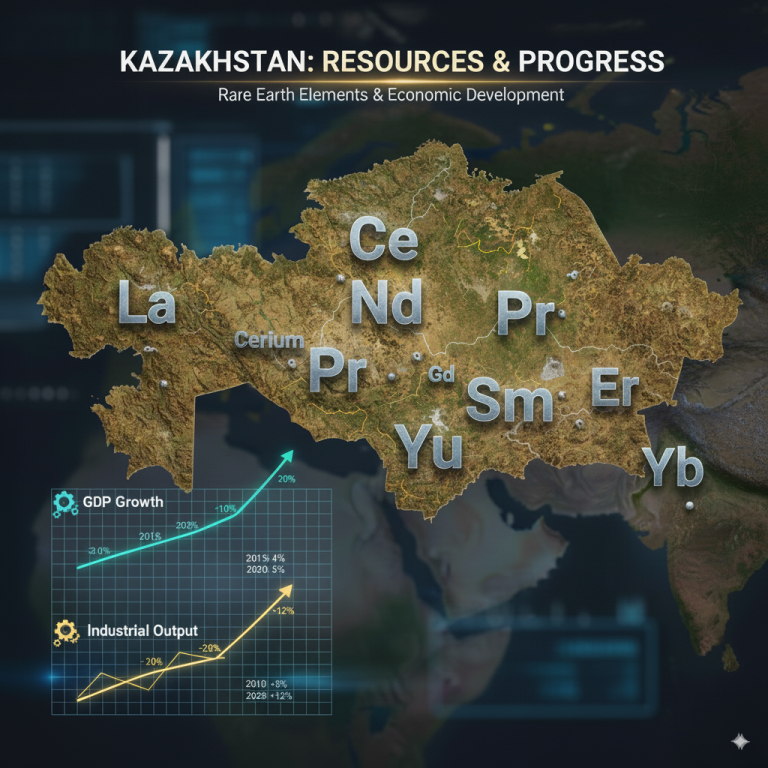
    In addition to SEZs, the government has identified rare-earth metal production as a key area for development. Kazakhstan plans to implement at least three major projects in this field, focusing on the production of battery materials, recycling and manufacturing heat-resistant alloys for jet engines, developing semiconductor components, and reprocessing permanent magnets.

    The country has already established strategic partnerships with leading players from the European Union, the United States, Japan, South Korea, and China. Upcoming projects include the launch of gallium production with an annual capacity of 15 tons, the manufacturing of high-purity manganese sulfate, and the production of graphite for battery components.

    Kazakhstan is also taking significant steps to modernize its geological exploration and mapping. A next-generation geological map will be developed using advanced digital tools, with project preparations already underway and fieldwork scheduled to begin in 2026. The government has allocated funding for new surveying methods, including aerogeophysics, geochemistry, spectral imaging, and high-resolution satellite data analysis.

    Furthermore, the country is introducing a unified digital platform to consolidate all processes related to construction and housing management. The platform will be introduced by the end of 2025 and is expected to enhance efficiency and transparency in the sector.

    The reforms are part of Kazakhstan’s efforts to diversify its economy and reduce its dependence on oil exports. The country aims to become a major player in the global rare-earth market and to attract foreign investment in its SEZs.

  • Northvolt Faces Financial Struggles and Redundancies Amid Cashflow Crisis

    Northvolt Faces Financial Struggles and Redundancies Amid Cashflow Crisis

    Northvolt, Sweden’s flagship battery manufacturer, is grappling with serious financial issues, leading to 1,600 job cutsand the suspension of expansion at its Skellefteå gigafactory. Initially hailed as a critical player in Europe’s green industrial revolution, the company attracted major investments from automakers like BMW, Volkswagen, and Volvo. However, BMW recently cancelled a $2.5bn contract, adding to Northvolt’s growing difficulties.

    Rumors of potential bankruptcy have circulated, although Northvolt has dismissed such claims as speculation. The situation has raised significant concerns among employees, with many uncertain about their future, particularly foreign workers who may face deportation. Additionally, the Swedish government has ruled out providing a bailout, despite the potential political implications if Northvolt collapses.

    Sweden’s Energy and Industry Minister, Ebba Busch, has confirmed that the government is working to support the company but will not intervene financially. Meanwhile, Ulf Kristersson, Sweden’s Prime Minister, is seeking new backers to help the company survive. Critics argue that Northvolt’s crisis signals the difficulties of large-scale battery production and highlights the risks associated with Sweden’s green transition plans.

  • Northvolt to Cut 1,600 Jobs Amid Challenges in the Electric Car Industry

    Northvolt to Cut 1,600 Jobs Amid Challenges in the Electric Car Industry

    Swedish battery manufacturer Northvolt is set to eliminate 1,600 jobs as it faces significant challenges in the electric car industry. The company announced the cuts across three of its locations, with 1,000 jobs being lost at its Skellefteå site in northern Sweden, where it is halting the expansion of Northvolt Ett, Europe’s first battery gigafactory. Another 400 jobswill be cut in Västerås, home to Northvolt Labs, and 200 at its Stockholm headquarters.

    CEO Peter Carlsson emphasized that while the overall momentum for electrification remains strong, “tough decisions” are necessary to secure the company’s future. The announcement follows weeks of uncertainty for Northvolt employees, who have been dealing with reports of financial difficulties and halted spending.

    The electric vehicle market in Europe has been struggling with slower-than-expected growth in consumer demand. Industry figures recently showed that EU car sales fell to 643,000 in August. Carlsson noted the importance of focusing on Northvolt’s core business and scaling up operations at the Skellefteå site to meet a planned 16GWh production capacity, which could eventually expand to 30GWh annually.

    The layoffs are part of a wider trend in the industry, following job cuts at companies like Tesla and Volkswagen. Additionally, Northvolt addressed a recent incident involving chemical leaks at its Skellefteå plant, insisting that safety protocols were in place and that the leaks were not related to the building’s design.

  • Rock Tech Lithium Receives Full Permits for Guben Refinery

    Rock Tech Lithium Receives Full Permits for Guben Refinery

    Rock Tech Lithium Inc. has announced the receipt of full permits for its planned lithium refinery in Guben, Germany. The Brandenburg State Office for the Environment granted final approval after an extensive review under the federal immission control act. This refinery is set to produce 24,000 tons of battery-grade lithium hydroxide annually.

    Dirk Harbecke, Rock Tech’s Chairman and CEO, highlighted the significance of this achievement, noting that it marks the first full-scale lithium refinery in Europe to be permitted without any appeals. He credited the team’s efforts and the support from Brandenburg authorities for this milestone.

    Rock Tech is a cleantech company operating in Canada and Germany, focusing on producing lithium hydroxide for electric vehicle batteries. The company plans to build lithium converters near its customers to ensure supply-chain transparency and just-in-time delivery. The Guben facility is the first, with a second converter planned for Red Rock, Ontario, Canada. Rock Tech sources raw material from its Georgia Lake spodumene project in Ontario and other responsible mines, aiming to include discarded batteries in the future. The company is committed to strict environmental, social, and governance standards and is developing a proprietary refining process for greater efficiency and sustainability.

  • Over €4 billion secured for European battery production

    Over €4 billion secured for European battery production

    ACC has taken out a loan of 4.4 billion euros, increasing the funding for the construction of three gigafactories for lithium-ion battery cell production in France, Germany, and Italy, and for R&D. Shareholders Stellantis, Total, and Mercedes-Benz will also inject additional capital, leading to a change in ownership structure. 

    Automotive Cells Company says the €4.4 billion secured is “one of Europe’s largest-ever debt raisings in this industry” to develop four “blocks of production” in addition to the one in operation in Billy-Berclau/Douvrin in France. ACC will reportedly build a second block in Douvrin and plans another in the German town of Kaiserslautern and another in Italy in Termoli.

    By 2030, the joint venture of Stellantis, Total, and, since September 2021, Mercedes-Benz will aim for total battery cell capacities of at least 120 GWh. The Termoli plant will have a capacity of 40 GWh, while ACC is working towards upgrading the French and German sites to 40 GWh each to complete the bill.

    The current production capacity at Douvrin is set at more than 13 GWh per year and is due to be completed by the end of 2024. With five of these blocks, ACC would have an annual capacity of 65 GWh; thus the previously announced expansion with additional production blocks.

    The debt package will contribute to financing these capacities and is fully underwritten by a consortium of commercial banks, BNP Paribas, Deutsche Bank, ING, Intesa Sanpaolo, and supported by Bpifrance, Euler Hermes, and SACE.

    Stellantis, Mercedes-Benz and Total subsidiary Saft also participated in a capital increase (of undisclosed value). By the end of March 2024 and with the subsequent capital injection, Stellantis will own 45% of ACC’s shares, Mercedes-Benz 30% and Saft 25%.

    Both carmakers behold, this confirmed their “commitment as leading shareholders and customers of ACC’s battery modules”. Saft will continue working with ACC as a long-term shareholder and for technological know-how.

    Commenting on the loan, Yann Vincent, CEO of ACC, said this was “clear evidence of the confidence that is placed in the ACC project. Beyond this operation, we will determine our needs as and when we conclude additional contracts.”

    ACC was created by Total and Stellantis in 2020, with Mercedes joining one year later. Apart from the Gigafactory in France, ACC also runs an R&D center operational since 2020 in Bruges, near Bordeaux, and an Industrial Excellence Center in Nersac, in the New Aquitaine region. The company employs more than 1,500 people in France, Germany, and Italy. It also has received support from all three states and the European Union.

  • Ukraine, despite possessing considerable lithium deposits, has come close to missing out on the lithium rush

    Ukraine, despite possessing considerable lithium deposits, has come close to missing out on the lithium rush

    Ukraine possesses 1% of the world’s lithium reserves, a key component in battery production. In 2022, lithium prices surged to record levels of $80,000 per tonne, only to drop by half in 2023. In Ukraine, two companies are getting close to lithium mining, though years and hundreds of millions of dollars in investments separate them from the first tonne sold. What are entrepreneurs counting on?

    “Ukraine has the largest lithium reserves in Europe, as well as significant deposits of other minerals,” wrote Yulia Svyrydenko, the First Vice Prime Minister and Minister of Economy of Ukraine, on Facebook during the London URC summit.

    Lithium is a vital component in the production of batteries for smartphones and electric vehicles. In 2022, electric car production increased by 55% to 10.5 million units, according to the consulting firm EV volumes.

    The electric car boom is driving the lithium market upwards. Lithium production is expected to increase sevenfold from 2021 to 2030, according to BloombergNEF. However, the price peak in the market likely occurred in 2022. As of July 2023, the price per ton of lithium carbonate had fallen to $40,000, half of the peak price in November 2022, according to Trading Economics. Nevertheless, current prices remain significantly higher than in previous years.

    According to the U.S. Geological Survey, 70% of global enriched lithium production comes from Australia and Chile.

    “Ukraine’s lithium reserves are sufficient to supply batteries for almost 20 million electric vehicles,” says Roman Opimakh, the head of the State Service of Geology and Subsoil of Ukraine. According to him, Ukraine’s lithium ore reserves account for 1% of the world’s total or one-third of Europe’s reserves. “Exact volumes are classified as ‘secret,’” he adds.

    However, no one in Ukraine has yet mined lithium. Who in Ukraine has a chance to benefit from the lithium fever, which could end within the next 10 years?

    Challenges of Ukrainian lithium In 2017, “Ukrlitidobycha,” owned by Sergei Tabalov, the son of Kirovograd businessman and former MP Alexander Tabalov, acquired a license for the development of the Polohivsky deposit in the Kirovograd region for UAH 119 million. “I was able to convince other family members that this was a promising idea,” says Sergei Tabalov.

    There are four lithium ore deposits explored in Ukraine. Two are in the Kirovograd region – Polohivsky and the Dobro site. Another two are located in the territories temporarily occupied by Russia – the Shevchenkivsky and Krutaya Balka deposits in the Zaporizhzhia and Donetsk regions.

    The last centralized assessment of Ukrainian deposits was carried out in the 1980s, says Yegor Perelygin, a member of the Board of the United Mining and Chemical Company. In Soviet times, exploration of these deposits was not thorough, as lithium was only used for glass production and had little demand, says Mikhail Zhernov, the executive director of the Australian company European Lithium.

    Lack of accurate data is not the only problem with lithium mining in Ukraine. Not all Ukrainian lithium can be used for battery production because the ore is poorer than in Australia or Chile, says Zhernov.

    From 2017 to 2023, “Ukrlitidobycha,” according to Tabalov, invested $20 million in the exploration of the Polohivsky deposit. The deposit’s reserves are 75 million tonnes, but the company still doesn’t have exact data on how much enriched lithium carbonate, used for batteries, can be produced from this ore. “The share of lithium is sufficient,” Tabalov assures.

    Currently, “Ukrlitidobycha” is at the Prefeasibility Study stage. Tabalov is assisted by consultants from Finland, South Africa, Brazil, the UK, and Australia.

    The final project for the development of the deposit is planned to be prepared in 2024. “Ukrlitidobycha” is in negotiations with several potential investors, which it does not disclose. By the beginning of 2025, “Ukrlitidobycha” plans to attract $700 million, half of which will go to the construction of a mine and processing plant (GOK), while the rest will be allocated to a plant for the production of enriched lithium carbonate.

    According to “Ukrlitidobycha’s” plans, the plant will be able to produce 20,000 tonnes of lithium carbonate per year and will be located in one of the EU countries. “Potential investors insist that the plant can only be in Europe, even after the war,” says Denis Aleshin, the Director of Strategic Development at “Ukrlitidobycha.”

    Since 2019, Mikhail Zhernov of European Lithium has been trying to start lithium mining in Ukraine. His company MillStone&Co had a license for the Shevchenkivsky deposit and wanted to obtain another license for the Dobro site. However, the court revoked the company’s first special permit, and Roman Opimakh, the head of the State Service of Geology and Subsoil, denied the second permit due to rule changes, according to the specialized publication Nadra.info.

    However, Zhernov is not giving up. In 2021, he acquired a stake in the Australian company European Lithium, which mines lithium in Austria and has an ore processing plant. According to Zhernov’s plan, the Australian company should help defend the right to the Dobro site in Ukrainian courts.

    “We are ready to invest $10-15 million in exploration,” says Zhernov, “and build a processing plant if the reserves are confirmed at more than 12.88 million tonnes.”

    Time is not on the side of Zhernov and Tabalov. In 10 years, demand and prices for lithium will decline, predicts Alexey Falkovich, the Director of the Geological Service Company. “Technologies for battery production without using lithium are developing rapidly,” Falkovich says.

    Zhernov predicts the end of the lithium era in 15 years. Graphene, for example, could replace lithium.

  • Cornish Lithium secures £53.6m to open first mine for the metal in Britain

    Cornish Lithium secures £53.6m to open first mine for the metal in Britain

    The startup opening Britain’s first lithium mine in Cornwall has secured $67m (£53.6m) of investment led by the UK Infrastructure Bank, in a much-needed boost to efforts to extract the metal that is used for making vehicle batteries.

    Cornish Lithium is to receive the funds from the Treasury-funded bank and other investors as part of a larger funding package of up to $210m (£168m).

    The funding package is expected to speed up progress towards British mining of battery-grade lithium compounds, which are key to production of batteries for electric vehicles and renewable energy storage.

    The investment is part of a push to boost financing for climate crisis-related infrastructure projects, and to create a hub for supplies of lithium to Europe from Cornwall.

    The initial investment is led by the UKIB alongside the Energy & Minerals Group (EMG), a US private investment firm focused on energy and minerals, and TechMet, which invests in clean energy and electric vehicle technologies and counts the US government’s development finance corporation among its backers.

    The UKIB and EMG will each put in £24m while TechMet, Cornish Lithium’s largest shareholder, is investing a further £5.6m, bringing its total investment in the business to £30m.

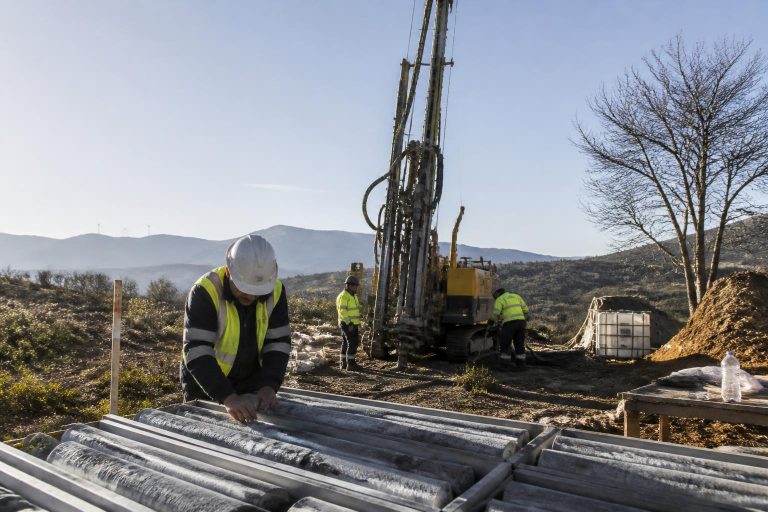
    Core samples from Cornish Lithium’s exploratory drilling at its research site, August 2022.
    Core samples from Cornish Lithium’s exploratory drilling at its research site, August 2022. Photograph: Jim Wileman/The Guardian

    Cornish Lithium aims to increase its 70-strong workforce to more than 300 people once it is in commercial production. It had warned in its annual accounts in June that there would be material uncertainty over its future if it did not raise bridge funding by July to buy it time before its next fundraising round. The company plans to raise a further £6.9m by selling shares to small shareholders through Crowdcube, with a focus on existing investors.

    Lithium is a vital ingredient in the current generation of batteries used in portable devices ranging from mobile phones to electric toothbrushes. But vastly more lithium will be needed for electric vehicles as combustion engines are phased out around the world.

    Cornish Lithium is one of several projects that seek to revive Cornwall’s 4,000-year-old mining heritage. Another company, British Lithium, has teamed with the French mining firm Imerys to start a mine in Cornwall and to extract enough lithium to power 500,000 electric cars a year by the end of the decade.

    Jeremy Wrathall, founder and chief executive of Cornish Lithium, said it was “essential to secure funding from institutional investors with the financial muscle to bring our projects into commercial production”.

    He said the funds would enable the company to advance its project at Trelavour, near St Austell, to “construction-ready status” and allow it to “complete the engineering design work required to build a demonstration-scale geothermal waters extraction facility”.

    John Flint, chief executive of the UKIB, said: “Globally the supply of lithium is far outpaced by demand, and yet in the UK it remains a nascent market.”

    He said the investment would “greatly accelerate domestic production of a mineral which is critical to the future of electric vehicle battery production and decarbonisation of the transport sector”.

    Andrew Griffith, economic secretary to the Treasury, who visited Cornish Lithium on Tuesday, said the investment would improve the domestic supply of lithium, helping “the UK’s transition towards net zero whilst also boosting local and regional economic growth”.

    Kemi Badenoch, business and trade secretary, said that, coupled with Tata Group’s recent pledge to build a £4bn electric car battery gigafactory in Somerset last month, the investment would ensure the UK automotive sector is “well set for the future”.