Tag: AGMK

  • Pipeline Burst at Almalyk Copper Processing Plant Triggers Environmental Investigation

    Pipeline Burst at Almalyk Copper Processing Plant Triggers Environmental Investigation

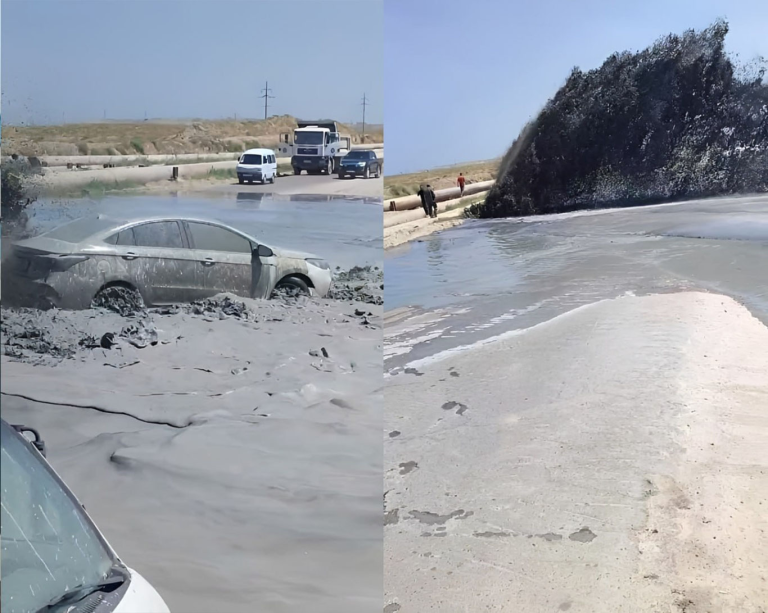
    On 5 August, a major pipeline burst occurred at the Almalyk Mining and Metallurgical Complex (AGMK) in Almalyk, Uzbekistan. The incident involved a pipeline leading to the tailings storage facility of the copper processing plant, which has raised environmental concerns. Videos of the rupture circulated widely on social media, prompting immediate attention from both the public and authorities.

    In response to the incident, AGMK’s press service reported that the malfunction was swiftly addressed by the plant’s specialists, with repair works completed shortly after the incident. However, the situation has drawn scrutiny from environmental regulators. The Main Department of Ecology and Climate Change of the Tashkent region initiated an investigation into the incident, focusing on potential environmental impacts.

    Environmental monitoring staff collected samples from the site for laboratory analysis. The results of these analyses will determine the necessary actions to be taken in accordance with existing legislation regarding environmental protection and management. This incident highlights the ongoing challenges faced by mining operations in ensuring environmental safety and compliance with regulatory standards.

    As the situation develops, stakeholders in the mining industry are urged to remain vigilant about environmental practices and the potential repercussions of such incidents on local ecosystems and communities. The AGMK has committed to transparency and adherence to environmental regulations as they navigate the aftermath of this incident.


  • Uzbekistan Launches Major Copper Plant at AGMK to Boost Industrial Growth

    Uzbekistan Launches Major Copper Plant at AGMK to Boost Industrial Growth

    Uzbekistan has launched Copper Processing Plant No. 3 at the Almalyk Mining and Metallurgical Complex (AGMK), marking one of the largest industrial projects in the country’s mining sector.

    The $2.7 billion facility, built on a 196-hectare site as part of the development of the Yoshlik-1 deposit, is designed to significantly strengthen Uzbekistan’s industrial capacity and deepen domestic processing of mineral resources.

    🏗️ A megaproject in every sense
    The plant is capable of processing 60 million tonnes of ore annually and producing about 900000 tonnes of copper concentrate. This makes it not only one of the largest copper processing facilities in Central Asia, but also among the largest globally.

    The scale is almost cinematic:

    • Steel structures used equal roughly 10 Eiffel Towers

    • Reinforced concrete volume comparable to 2.5 Burj Khalifas

    International engineering leaders including Wood (Italy) and Worley (UK) were involved in the project, while technologies from Metso, FLSmidth, Weir Minerals and Siemens have been implemented.

    ⚙️ Smart factory powered by AI
    The plant is built as a fully digitalised operation:

    • Unified AI-based control system

    • 10% reduction in energy consumption

    • 15% lower production costs

    • 10% increase in labour productivity

    Daily copper concentrate output at AGMK will double from 2400 tonnes to 5000 tonnes once the plant reaches full capacity.

    🌍 Resource base for a century
    Uzbekistan’s leadership highlighted the long-term resource strength underpinning the project. The Yoshlik-1 and Kalmakyr deposits contain:

    • 45 million tonnes of copper

    • Over 5000 tonnes of gold

    These reserves are expected to support the industry for at least 100 years. The deposits also include valuable by-products such as molybdenum, selenium, tellurium and rhenium — metals critical for high-tech and emerging industries.

    📈 From raw materials to value chains
    President Shavkat Mirziyoyev emphasised a strategic shift from exporting raw materials to building full value chains.

    Today, Uzbekistan already processes about 100000 tonnes of copper domestically, with plans to reach 240000 tonnes in the near term and continue expanding through new projects.

    “Whoever builds a high value-added chain in copper will create the industry of the future,” the president said.

    🚀 What comes next
    The project is just one piece of a much larger industrial expansion:

    • A new $2.5 billion copper smelter is under construction

    • Copper cathode production will rise from 148500 to 300000 tonnes per year

    • Gold output will increase from 20 to 33 tonnes

    • Silver from 161 to 203 tonnes

    • Molybdenum from 850 to 1700 tonnes

    A fourth processing plant is already in early planning, which could boost these figures by another 50%.

    By 2030, Uzbekistan aims to reach:

    • 500000 tonnes of copper

    • 175 tonnes of gold

    • 500 tonnes of silver

    • 15000 tonnes of uranium

    💼 Economic and social impact
    The new plant alone will create over 6000 high-paying jobs, while the broader $22 billion pipeline of mining projects is expected to generate nearly 40000 jobs nationwide.

    At the same time, environmental measures such as green landscaping and drip irrigation systems are being implemented under the “Yashil Makon” initiative, aiming to balance industrial growth with sustainability.

    🎯 Big picture
    Uzbekistan is clearly shifting gears from a resource exporter to an industrial powerhouse — turning copper from a rock in the ground into a backbone of future industry, from energy grids to AI infrastructure.

  • Uzbekistan to Boost Copper Processing Capacity to 240000 Tonnes

    Uzbekistan to Boost Copper Processing Capacity to 240000 Tonnes

    Uzbekistan’s copper processing capacity is expected to reach 240000 tonnes this year, President Shavkat Mirziyoyev announced during the inauguration of Copper Processing Plant No. 3 at the Almalyk Mining and Metallurgical Complex (AGMK).

    According to the president, processing volumes are set to continue growing over the next two to three years as new investment projects in the mining and metallurgical sector are implemented.

    Mirziyoyev emphasised that global demand for copper is increasing rapidly as the metal becomes increasingly important for modern industry. Copper plays a critical role in sectors such as energy, electrical engineering, digital technologies, artificial intelligence and the development of green energy systems.

    “Those who create a high value-added chain in the copper industry will effectively create the industry of the future,” the president said.

    As an example of the country’s expanding mining potential, Mirziyoyev highlighted the Yoshlik-1 deposit. The project was previously considered technically complex and difficult to develop, but production is now rapidly ramping up.

    The president said the mine is expected to produce around 20 million tonnes of ore this year. Over the next two years, output from the deposit is planned to increase to approximately 60 million tonnes.

    The expansion of processing capacity at AGMK forms part of Uzbekistan’s broader strategy to strengthen its position as a major producer of copper and other strategic metals, while building higher value-added industrial supply chains.

    Earlier, Kursiv Uzbekistan reported that Mirziyoyev officially launched the new copper processing plant at AGMK as part of the country’s industrial development programme.

  • Uzbekistan Reports Major Copper and Gold Reserves at Yoshlik-1 and Qalmoqqir

    Uzbekistan Reports Major Copper and Gold Reserves at Yoshlik-1 and Qalmoqqir

    Uzbekistan has identified major mineral reserves at the Yoshlik-1 and Qalmoqqir deposits, including an estimated 45 million tonnes of copper and more than 5,000 tonnes of gold, President Shavkat Mirziyoyev announced during the launch ceremony of Copper Processing Plant No. 3 at the Almalyk Mining and Metallurgical Complex (AGMK).

    According to the president, the scale of these reserves is sufficient to supply Uzbekistan’s industrial sector with raw materials for at least the next 100 years.

    In addition to copper and gold, the deposits also contain rare metals such as molybdenum, selenium, tellurium and rhenium, which could support the development of new high-tech and innovative industrial projects.

    Mirziyoyev said the commissioning of the new processing facility significantly increases AGMK’s production capacity. Daily output of copper concentrate is expected to rise from 2,400 tonnes to approximately 5,000 tonnes.

    The plant incorporates modern technologies supplied by companies from the United States, Germany, Russia, China and Finland. Operations will be managed through an integrated digital control system using artificial intelligence.

    According to officials, the use of AI-driven monitoring and optimisation systems will reduce energy consumption by around 10%, lower production costs by 15% and increase labour productivity by roughly 10%.

    The expansion of AGMK’s processing capacity forms part of Uzbekistan’s broader strategy to strengthen its mining and metallurgical sector while increasing value-added production from its domestic mineral resources.

    Earlier, Kursiv Uzbekistan reported that the country’s gold and foreign exchange reserves recently exceeded $77 billion for the first time.

  • Almalyk Mining and Metallurgical Combine Strengthens International Ties with Czech Company Draslovka

    Almalyk Mining and Metallurgical Combine Strengthens International Ties with Czech Company Draslovka

    Almalyk Mining and Metallurgical Complex (AGMK), one of Uzbekistan’s leading industrial enterprises, is not only a cornerstone of the nation’s economy but also a key player in expanding international industrial ties. The complex is actively collaborating with foreign companies, embracing modern technologies, boosting production efficiency, and committing to environmental sustainability.

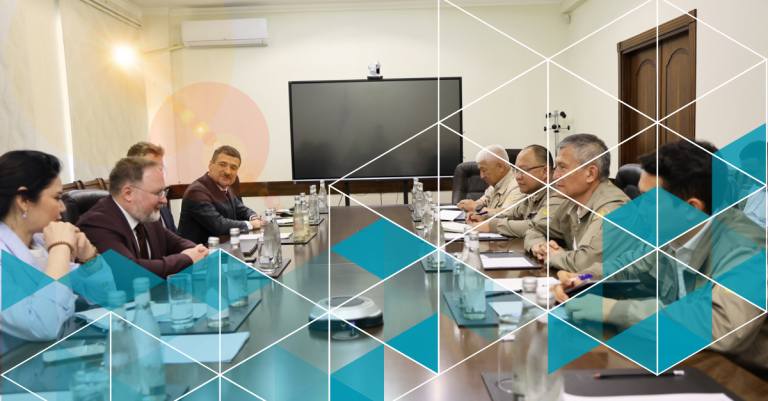
    On May 29, AGMK hosted a significant meeting with representatives from the Czech company Draslovka to explore mutually beneficial cooperation.

    Draslovka, a family-owned company founded in 1906, specialises in chemical technologies, products, and services that enhance efficiency and sustainability across the mining, agricultural, and processing industries. With business units in seven countries and a presence in over 80 nations, Draslovka is the world’s largest producer of sodium cyanide, a chemical essential for gold extraction.

    However, the company’s most notable contribution to the industry is its patented glycine leaching technology. This innovative method offers a more stable and economical approach to the leaching process. Draslovka also produces other speciality chemicals and reagents, provides leading chemical application services for mining and pest control, and offers AI-powered support services.

    During their visit, the Draslovka representatives presented an overview of their operations to AGMK’s management. Discussions focused on the potential application of glycine leaching technology at AGMK’s facilities, culminating in an agreement to commence cooperation.

    The Czech delegation also had the opportunity to visit the viewing platforms of the Kalmakyr and Yoshlik I mines.

  • Uzbekistan’s AGMK Unveils Nation’s Largest Industrial Project in Copper Mining Sector

    Uzbekistan’s AGMK Unveils Nation’s Largest Industrial Project in Copper Mining Sector

    Uzbekistan’s Almalyk Mining and Metallurgical Complex (AGMK) recently hosted journalists on an exclusive press tour to showcase progress on the largest investment project in the country’s history, signaling a major leap in industrial development.

    The tour began at AGMK’s Engineering School, which trains specialists in geology, mining, metallurgy, and automation using methodologies from world-leading institutions like Germany’s Freiberg University of Technology. “We’re not just building factories—we’re cultivating the talent to run them,” said Behzod Salimov, the school’s director.

    Reporters then visited the Kalmakyr deposit, one of the world’s largest copper reserves, followed by the Yoshlik I mine, a gold-rich copper deposit spanning 4 km long and 235 meters deep. The site employs 400 heavy machines and has introduced an innovative conveyor system, cutting ore transport costs by 30%.

    A highlight was Copper Processing Plant No. 3, under construction since 2021 on a 200-hectare site. Once operational, it will process 60 million tons of ore annually, producing 894,000 tons of copper concentrate. Plans are also underway for Plant No. 4 and a new metallurgical complex, expected to create thousands of jobs.

    Tashkent Region Governor Zoir Mirzaev emphasized the project’s global significance, noting rising copper demand. AGMK Chairman Abdulla Khursanov added that the $multibillion investment is boosting Uzbekistan’s economic appeal, with several countries expressing interest in partnerships.

    The project is also spurring growth in auxiliary industries, including six new metalworks plants and a lime factory in Jizzakh to supply reagents.

    Sherzodkhon Kudratkhodja, head of Uzbekistan’s National Media Association, remarked: “This proves Uzbekistan can build its industrial future independently.”

  • Almalyk Mining and Metallurgical Complex Begins Granulated Production of Gold, Silver, and Copper

    Almalyk Mining and Metallurgical Complex Begins Granulated Production of Gold, Silver, and Copper

    The Almalyk Mining and Metallurgical Complex (AGMK) has recently commenced the production of gold, silver, and copper in granulated form. According to company information, granulated gold is extensively used in the jewelryindustry, medicine, radioelectronics, microelectronics, the chemical industry, and the manufacturing of measuring instruments.

    In the jewelry industry, losses increase during the melting of bars and other mechanical processes, leading to financial losses for jewelers. The use of gold and silver granules helps reduce the cost of jewelry items and improve their quality. Moreover, raw materials in granulated form are a key requirement of leading manufacturers in the modern jewelry industry.

    In addition, AGMK specialists have also established the production of granulated copper. After analyzing the market, the company plans to start producing granules from other non-ferrous metals.

  • Measures will be taken to further accelerate the deep processing of copper raw materials.

    Measures will be taken to further accelerate the deep processing of copper raw materials.

    A Presidential Decree “On measures to further accelerate the deep processing of copper raw materials in the republic” (Decree No. 77 of February 19, 2024) has been adopted.

    According to the Decree, it is permitted to make 25 percent of payments for copper raw materials purchased through exchange trading in the form of an advance, while the remaining 75 percent should be paid within 90 days after receiving the copper raw materials.

    At the same time, the amount of payments subject to installment payment for each day of providing the opportunity to pay in installments for copper raw materials is established in the following amounts:

    – for payments made within 30 days, no interest is calculated;
    – for payments made from the 31st day within 60 days, interest is calculated at a rate of 50 percent of the Central Bank’s base rate;
    – for payments made from the 61st day within 90 days, interest is calculated at the Central Bank’s base rate.

    The Decree comes into force on April 1, 2024, and its requirements do not apply to contracts concluded before April 1, 2024.

  • The future of the plant. How AGMK is implementing a major investment project to increase copper production

    The future of the plant. How AGMK is implementing a major investment project to increase copper production

    Environmental trends create potential demand for copper, which is one of the main components of all these innovations. Today, the “new economy” already consumes 1.6 million tons of this metal. Against the backdrop of energy crises and the rising cost of energy resources, analysts argue that the demand, and consequently the prices for copper, will only continue to rise. They forecast that by 2030 the world will need 40% more copper than is mined today. All this adds up to an excellent opportunity for copper mining companies. Global leaders in this industry are actively modernizing their production, introducing advanced technologies that allow working with poor ores and copper slag to meet this growing demand with supply. The domestic copper producer, the Almalyk Mining and Metallurgical Combine, also has grand plans. Today, four investment projects are successfully being implemented here. One of the key projects is the development of the “Yoshlik” deposit worth almost $5 billion. The project involves the implementation of a whole complex of measures that will enable the enterprise to produce 400,000 tons of cathode copper per year by 2030 and become one of the world’s leading producers of this metal. This will not only secure the company’s future but also provide a powerful impetus for the development of the domestic economy: new production facilities will provide jobs for tens of thousands of people, increase tax revenues to the budget, while the combine already ranks as the second-largest taxpayer in the republic. As part of the investment project, the construction of three new copper beneficiation plants, a copper smelting complex, modernization of existing facilities, and the consolidation of two deposits of the combine – “Kalmakyr” and “Yoshlik” are planned. This project is considered one of the top 10 largest global projects in the metallurgy sector. Intensive open-pit mining operations are currently underway at the “Yoshlik” deposit. To reach the ore layer and prepare the quarry for further mining, around 180 million cubic meters of rock mass have been removed from here. To carry out massive mining works, new mining equipment has been acquired, and some transportation has also been outsourced. “We recently received two new locally assembled dump trucks with a payload of over 220 tons. In total, under the contract with a domestic company, the delivery of five such machines is expected, the rest will be delivered by March. We will use them for open-pit mining operations, and then for ore mining,” said Kamoliddinjon Marahimov, deputy chief engineer for mining operations. In addition, the combine is introducing a new cyclic-flow technology (CFT) for transportation. Several crushing-conveyor complexes will be built on the quarry site. In particular, two will be involved in transporting empty rock to the dumps, and two more – in shipping ore to the concentrator plants No. 3 and 4. It is worth reminding that in November of last year, the combine already launched one of the crushing and loading nodes for the third factory in test mode. Crushing units and 4-kilometer conveyors from Denmark, which have repeatedly proven their reliability and efficiency at numerous enterprises around the world, are installed here. These technologies will be used for primary crushing and transporting ore via conveyors instead of railway transport to ore warehouses. Overall, this solution will triple transportation costs and operational expenses. The third in line The investment project involves the construction of three copper beneficiation plants (CBP). Since 2021, active work has been underway to erect CBP-3. Today, this truly grandiose facility is at the stage of final construction and installation works. It is worth noting that Wood (Italy) and UZLITI Engineering (Uzbekistan) were involved in the design of CBP-3, Technip Energies (France) conducted the technical evaluation and acceptance of the basic project documentation, and Worley (UK) is supervising the construction. To ensure the timely launch of the factory, today, on the construction site of CBP-3 with a total area of 196 thousand square meters, more than 1000 pieces of equipment are involved, and a 15-thousand-strong international team of the general contractor Enter Engineering is working daily. The new facility will be equipped with the most modern equipment from leading manufacturers of mining and beneficiation equipment, such as AUMUND (Germany), Thyssenkrupp (Germany), Weir Minerals (UK), Sepro Minerals-Falcon (Canada), Metso (Finland), and others. In particular, for the first time at AGMK, the HPGR (High-Pressure Grinding Rolls) technology of semi-autogenous mills will be applied. This will reduce operating costs by 30% and achieve the minimum payback period for the introduced technology. Most of the large-sized equipment has already been installed and is ready for commissioning. The remaining part is at the stage of completing installation works. The activity of the factory will be fully automated, which will reduce the impact of the human factor on production processes, increase the quality of the products, and reduce emergency situations. The automation of the technological process will be based on modern software and hardware used in the practice of global manufacturers like ABB (Switzerland) and Siemens (Germany). The technological process at CBP-3 will be controlled from a centralized dispatch center, the construction of which is currently being completed. 1200 automation cabinets will be installed in the factory’s units. According to Alexander Kuznetsov, the head of the production facilities of the CBP-3 project, the first production lines of the factory will start operating soon. “We are making every effort to commission the facility on time. The commissioning of the facility will be carried out step by step. By the end of the year, we plan to obtain the first commercial concentrate. When reaching the full design capacity, the factory will process 60 million tons of ore annually,” he noted. It is worth noting that today the combine processes more than 40 million tons of ore annually. Thus, the capacities of the enterprise will soon increase to 100 million tons of processed rock. And this is just in a few years – it took decades to achieve the current level! And there are still the fourth and fifth copper beneficiation plants in the pipeline. Also, with the commissioning of the new facility, about 3.5 thousand new jobs will be created. Thus, this huge modern factory will become a strategically important object, having great significance for the socio-economic development of our country, for our youth, and for future generations. Copper Smelting Complex With the acquisition of additional volumes of concentrated ores, the capacities of the current copper smelting plant, which currently produces 148 thousand tons of cathode copper annually, will be insufficient. “At the first stage, we face the task of producing 300 thousand tons of copper per year. To accomplish this, a decision has been made to expand the capacities of the copper smelting plant to a metallurgical complex. Studying the experience of other countries, we decided to purchase flash smelting and flash converting furnaces for it, as well as modern sulfuric acid plant technologies from the leading company Metso. The contract will be signed shortly,” shared the chief engineer of the smelting plant, Zhasur Ergashev. This is practically fully automated equipment and the most optimal solution, both financially and environmentally. For example, the new furnace will be able to process several times more concentrate than other similar analogs allow. This provides greater production efficiency, reduces processing time, and consequently, the payback period of the equipment. And the closed gas discharge system from the copper production will reduce emissions and establish production with a capacity of 1.8 million tons of sulfuric acid per year. A slag beneficiation plant will also be built at the copper smelting complex, which will process by-products at a capacity of over 1.5 million tons per year. The project includes the construction of a department for slow cooling of slags, which will allow for maximum waste-free production. “Previously, the slags were taken to dumps, where they cooled naturally. Now, after undergoing the slow cooling process, they will be sent to the slag beneficiation plant for further processing. This way, we can increase copper recovery from 93% to 98%. Thus, less valuable material will go to waste. This is a fairly good indicator,” explained the director of the future complex department, Alisher Shanasirov. Currently, the basic engineering of the project is being completed, preliminary site preparation for construction is underway, and infrastructure relocation is ongoing. It is expected that specific actions will begin by the end of this year. It should be noted that to transport the finished concentrate, cyclic-flow technology will also be used. A tubular conveyor, 4.7 kilometers long, will be stretched from CBP-3 to the copper smelting complex. Its construction is scheduled to start in the summer and be completed by the beginning of 2027. Technical services and infrastructure In addition, work is actively underway on the construction and development of infrastructure. For example, at the CBP-3 base, technical water supply complexes are being built for the factory’s own needs, with a capacity of 23.5 thousand cubic meters per hour. The growing production will also require more electricity. Therefore, to meet the needs of the new facilities in electricity, AGMK has built a new technological substation with a capacity of 650 megawatts and is completing the construction of two transformer substations. They will provide electricity to the “Yoshlik” deposit, CBP-3, and the cyclic-flow technology. It is worth noting that this will be the first substation in the CIS with full digital control. The construction of an explosive materials plant is nearing completion. It will produce 90 thousand tons of explosives per year. Also, a new laboratory will be built for the needs of the quarry, which will be engaged in sample analysis. The expanding production complex will require more technical service capabilities. Therefore, expanding and modernizing the Central Repair and Mechanical Plant (CRMP) is one of the key tasks within this investment project. The CRMP is being supplemented with new equipment, production of new products is being established to ensure that there are no problems with servicing and supplying spare parts for new units at new facilities. In parallel, construction of assembly areas is underway, where maintenance and technical servicing of large-scale automotive equipment will take place. Thus, if today AGMK produces 148 thousand tons of copper, by 2025 the above measures will allow the production of 300 thousand tons of metal annually. By increasing production, by 2030 the enterprise plans to extract 400 thousand tons of copper from the deposit. In addition, the combine is not only focused on increasing the volume of copper production but also actively works to increase the volume of production of high value-added products and export not just raw materials but finished products. This will increase the company’s revenue to 8 billion dollars. International recognition In implementing such a large investment project, AGMK, in particular, relies on the experience of leading international companies. The project is financed from the funds of the combine itself, as well as loans from domestic and foreign banks. German and French financial institutions show great interest in it. “If before we independently sought financing for our projects, now banks, both local and foreign, are themselves at our doors, offering more convenient lending terms,” noted the director of the project office for the implementation of the “Yoshlik” investment project, Zokirkhuja Ishankhojaev. This interest can be explained by the fact that the combine has great development prospects. The large British company SRK Consulting confirmed the presence of 45 million tons of copper reserves and more than 5 thousand tons of gold at the “Yoshlik” deposit. According to the director of the consulting company, Mike Beer, today no state in the world can boast of such reserves. “Data on the reserves of the Almalyk deposit were published according to the JORC code, which is recognized at the international level. This is truly the future of our enterprise,” concluded the AGMK representative.

  • AGMK continues to storm the foreign market with its products

    AGMK continues to storm the foreign market with its products

    According to the information service of the Almalyk Mining and Metallurgical Combine, for 10 months of this year, products were exported for a total amount of 557,230,000 US dollars, the forecast was fulfilled by 102.1%.

    47,057 tons of copper products (+6%), 36,573 tons of zinc products (+2.7%) were exported.

    The forecast indicators for the export of rhenium, cadmium, copper sulfate, palladium powder, molybdenum products, lead concentrate, selenium and tellurium were also met.

    Today, AGMK exports more than 20 types of products to more than 20 countries.

    The plant’s products are exported mainly to countries such as Turkey, the Russian Federation, Belarus, Kazakhstan, Bulgaria, Azerbaijan, Kyrgyzstan, Ukraine, Poland, Tajikistan, Indonesia, the Netherlands, China, Turkmenistan, Afghanistan.

    Products are also supplied to new markets: Suriname, Kenya, Australia, Lithuania, Georgia, Portugal, Canada, Austria, Spain, Finland, Morocco and Singapore, the information says.