Tag: secondary raw materials

  • EU Research Project Maps Europe’s “Urban Mine” as 6 Million Tonnes of Critical Minerals Could Be Recovered Annually by 2050

    EU Research Project Maps Europe’s “Urban Mine” as 6 Million Tonnes of Critical Minerals Could Be Recovered Annually by 2050

    A major EU-funded research initiative has produced the first comprehensive map of Europe’s secondary critical raw materials potential, revealing that advanced recycling systems could recover between 4.5 and 6.2 million tonnes of critical raw materials annually by 2050 — enough, under a full circular economy scenario, to substitute up to 56% of Europe’s primary resource needs.

    The FutuRaM project mapped 42 critical raw materials across 31 European countries, tracking materials buried in discarded electronics, end-of-life vehicle batteries, demolished buildings and decommissioned wind turbines. Results are now accessible through a publicly available digital tool called the Urban Mine Platform.

    The findings expose a severe structural gap in Europe’s current industrial strategy. In 2022 alone, 5.2 million tonnes of critical raw materials were embedded in products entering the European market, yet only 1.4 million tonnes were recovered. The remainder was lost to illegal waste flows, misaligned recycling systems or exported abroad as second-hand goods — a leakage that researchers describe as a significant economic vulnerability at a time when Europe is almost entirely dependent on foreign suppliers for the building blocks of its clean energy and digital economies.

    The recovery potential by 2050 is substantial across specific materials. Annual lithium recovery could grow from less than 1,000 tonnes today to over 50,000 tonnes. Cobalt recycling could expand forty-fold. Nickel recovery could exceed 171,000 tonnes annually. The climate dividend is equally striking: replacing mining with recycling at scale could prevent up to 273 million tonnes of CO2 emissions per year by mid-century — roughly equivalent to eliminating Spain’s entire annual carbon footprint.

    Realising this potential requires addressing structural weaknesses in collection infrastructure, tracking systems and domestic refining capacity. Europe currently exports partially processed materials such as battery black mass, losing both the resource value and the processing jobs that come with it. The FutuRaM project has also developed a decision-making tool called SARA4UNFC, adapted from the UN Framework Classification for mining, to provide standardised evaluation of waste streams across technical, economic, social and environmental criteria — bringing the rigour of mining project assessment to recycling.

  • Over 3 Million Tonnes of Secondary Resources Processed in Karaganda

    Over 3 Million Tonnes of Secondary Resources Processed in Karaganda

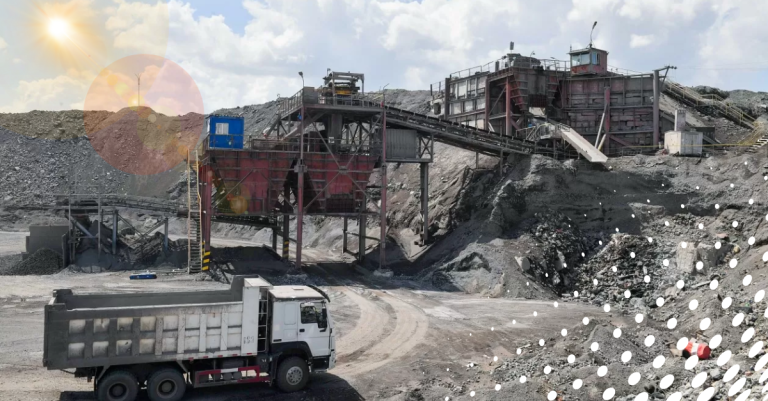
    In early 2024, Qarmet established a new specialised department—the Recycling Department—with the primary goal of managing the processes of recycling secondary resources.

    As of the end of May 2025, the company has processed over 3.1 million tonnes of secondary raw materials, which is more than three times the figure for the same period last year. Based on these achievements, the forecast for 2025 is 7.6 million tonnes of processed materials, equivalent to a 95.2% increase compared to the results of 2024.

    Significant results have also been achieved in the processing of steelmaking slag. At the beginning of 2024, the monthly output of metallic scrap did not exceed 4,000 tonnes. However, by the third quarter, thanks to the modernisation of equipment operation approaches and improvements in internal processes, this figure increased to 20,000 tonnes per month.

    Additional impetus for the development of steelmaking slag processing came from contracts with subcontractor organisations, which completed commissioning and start-up work by the end of the year and transitioned to industrial operation of the equipment. This not only significantly increased processing volumes but also became a driver for creating new jobs in related industries, ensuring additional employment and the development of production cooperation.

    For Qarmet, the recycling of secondary resources is not just a technological direction but a crucial element of sustainable development.