Region: Poland

  • JSW presents its integrated report for 2022

    JSW presents its integrated report for 2022

    JSW has been publishing integrated reports since 2018 in response to the growing needs of the Group’s stakeholders, who require detailed information beyond the traditional set of operational or financial indicators to fully understand the directions of JSW’s development.

    It is worth adding that in 2022 JSW won first place in “The Best Annual Report” competition organized by the Institute of Accountancy and Taxes in the 2021 integrated report category. This confirms the Company’s great contribution to the creation of value in use for shareholders and investors and the promotion of best practices in non-financial reporting in the area of sustainable development.

    The 2022 integrated report will familiarize readers with the context of the Group’s market environment, explaining the unique status of the Group’s core products, i.e. coking coal and coke, against the backdrop of the changes taking place in the economy in light of the energy transition and the pursuit of climate neutrality. Both financial and non-financial data were presented using interactive tools to facilitate analysis and allow references to indicators recorded in previous years.

    Link to the report: www.jsw.pl/raportroczny-2022/en

  • Moratorium on the open-pit mine in the Polish-German-Czech border region of Turow reapealed

    Moratorium on the open-pit mine in the Polish-German-Czech border region of Turow reapealed

    A decision by Poland’s Supreme Administrative Court to repeal a moratorium on the open-pit mine in the Polish-German-Czech border region of Turow has irked policymakers from the neighbouring eastern German state Saxony. Anna Cavazzini, member of the EU Parliament for the Green Party in Saxony, criticised the court for overturning an interim junction by a local Polish court, which in late May had ordered to stop mining at the site due to negative impacts on building stability in nearby regions in Germany and Czechia. Cavazzini said the decision was “not a good sign” for cross-border relations after the German town of Zittau and a Czech NGO had sued the mine’s operators. In contrast, Polish prime minister Mateusz Morawiecki expressed joy at the supreme court’s decision, saying that Poland has “not allowed themselves to be blackmailed by eco-terrorists from the West, particularly those from Germany”, reports the newspaper taz. The court had made the decision on the grounds that the Polish population has a right to a steady supply of energy.

    Greenpeace subsidiaries in Germany and Czechia, as well as Zittau authorities, litigated against the mine, arguing the consequences on Germany and the Czech Republic have not been properly considered. Concerns include noise pollution and a reduction of the groundwater level could result in damaging buildings. In 2021, the European Court of Justice temporarily ordered the mine to cease digging, which Poland ignored, reported German public broadcaster ARD. Morawiecki said Poland will not allow the mine to be closed and his government will do everything to ensure it can function as planned until 2044. Cavazzini, on the other hand, said the area could be a leader for Europe as a cross-border example of phasing out coal. Germany aims to phase-out the fossil fuel by 2038, though the coalition government hopes to bring that forward to 2030.

  • Urban mining is putting Poland on the path to a greener future

    Urban mining is putting Poland on the path to a greener future

    A paradigm shift is underway in Poland. Traditionally one of the European Union’s heaviest polluters and lowest recyclers, Poland now has the second-highest increase in recycling rates among EU countries over the last decade— new data shows. This is down in part to the work of Pawel Jarski, CEO and Founder of Elemental Holding, and his team. The company’s work is repositioning Poland at the forefront of Europe’s circular economy, a sector that puts eliminating pollution as one of its foundation principles.

    Elemental’s hub of operations lies 40km southwest of Poland’s capital Warsaw. The site is one of energy and contrast. A modern office of floor-to-ceiling glass sits adjacent to a bustling urban mining operation processing electronic waste. A hum of workers busily sort through metal, plastic and cables from massive bags. An assembly line dismantles aging refrigerators, methodically stripping away layers to reveal valuable raw materials. Amidst the ordered chaos, trucks unload circuit boards, adding to the growing heaps.

    It is this well-coordinated mix of hands-on labor and mechanical processing that has powered Elemental’s growth. Founded in Poland in 2010, the company expand into an urban mining and recycling trailblazer with a footprint extending across 15 nations, spanning three continents: Europe, Asia, and North America. They are at the forefront of a new industry dedicated to extracting value from the metal components in disposed electronics and other waste – urban mining.

    IFC is investing $90 million to ramp up the firm’s ability to extract valuable materials from electronic waste while also expanding the firm’s scope to refine them for resale and reuse. At its most fundamental, urban mining seeks to harness electronic materials of untapped and overlooked value – the aluminum, cobalt, and gold in your old mobile phones for example – and transform them back into raw valuable resources. This can quickly add up. A new study in Switzerland puts an estimated $10 million worth of embedded gold in the country’s seven million unused phones. The US throws out $60 million in gold and silver contained in used phones every year based on e-waste disposal rates. While back in 2016, researchers at United Nations University were already estimating the raw materials contained in e-waste to be worth roughly $61 billion on a global scale.

    The financial backing will pave the way for new metal recycling and refining facilities in Poland. Elemental is building one of its most innovative and ambitious projects – a facility to recycle spent lithium-ion batteries from electric vehicles and other products – in the city of Zawiercie in southern Poland, while also employing onsite solar generation and sustainable water management.

    Transforming waste into valuable metals ripe for reuse is challenging. The process of recycling electronic scrap and lithium-ion batteries into valuable resources is still crude and does not always realize the potential recyclable amount. But Elemental’s track record and ambitious vision – environmentally sound and socially responsible mining that can catalyze long-term economic growth – goes beyond driving sustainable growth for one company. It illustrates a viable blueprint for how large businesses can integrate circular economy principles into their operations for the most impact. And it underpins the essence of circular waste management – where every waste stream is a valuable resource waiting to be harnessed.

  • State aid: Commission approves amendments to Polish scheme to support closure of coal mines

    State aid: Commission approves amendments to Polish scheme to support closure of coal mines

    The scheme was originally approved by the European Commission in November 2016 (SA.41161), after which amendments were approved in February 2018 (SA.46891) and in July 2019 (SA.52832), and is due to expire by the end of 2023. Since 2019, the aim of the scheme has been limited to cover only the exceptional social and environmental costs resulting from the closure of uncompetitive coal mines that ceased operations by the end of 2018, such as the costs of social welfare benefits or early retirement, or costs incurred in safety or in site decommissioning and rehabilitation.

    The amendments to this scheme that were approved today include

    • its prolongation until the end of 2027
    • a budget increase by €1 billion (PLN 5 billion) to cover exceptional costs, bringing the overall budget to €3.7 billion (PLN 17 billion)
    • the inclusion of two additional mines that ceased coal production in 2020 (Ruch Jastrzębie III) and 2021 (Ruch Pokój II)

    The Commission assessed the amended scheme under EU State aid rules, and in particular Council Decision 2010/787/EU on State aid to facilitate the closure of uncompetitive coal mines. The Commission found that the amended scheme continues to be necessary and appropriate to support the closure process of mines that ceased operations, by (i) providing financial support to workers who have lost, or will lose, their jobs due to the closure of the mines, and (ii) helping to secure mine shafts and decommission mine infrastructure, repair damage to the environment caused by mining and re-cultivate land after the mine closures. Furthermore, the Commission found that the aid amounts do not exceed the exceptional social and environmental costs incurred. On this basis, the Commission approved the amended Polish scheme under EU State aid rules.
    The non-confidential version of the decision will be made available under case number SA.100533 in the State Aid Register on the Commission’s competition website once any confidentiality issues have been resolved.

  • Złoty Stok historic mine, Poland

    Złoty Stok historic mine, Poland

    Visit to Złoty Stok Medieval Gold Mine near Wroclaw, Poland

    Photos>>>

    Date: 19 October 2023

    Location:  Situated approximately 100 kilometres south of Wroclaw, it lies close to the Czech border in Lower Silesia.

    Highlights:

    • This historic mine dates back over 1000 years and has been an important site for gold mining since medieval times.
    • Today, it serves as a popular tourist attraction offering guided tours through its underground tunnels and a museum exhibition showcasing the history and techniques of gold mining.
    • Tourists can explore the mine by foot or boat. The mine also offers educational programs for groups. Other attractions include a medieval village and a restaurant.

    One of the key objectives of the MINEX Europe Forum is to share best practices in mineral resources management, mining and post-mining reconciliation and redevelopment of mining areas. The MINEX Europe 2023 Forum delegates will have an opportunity to visit one of the most prominent cases of the repurposing of the old mine turned into a grand tourist attraction in Poland which has in 2022 won the prestigious European Heritage Award.

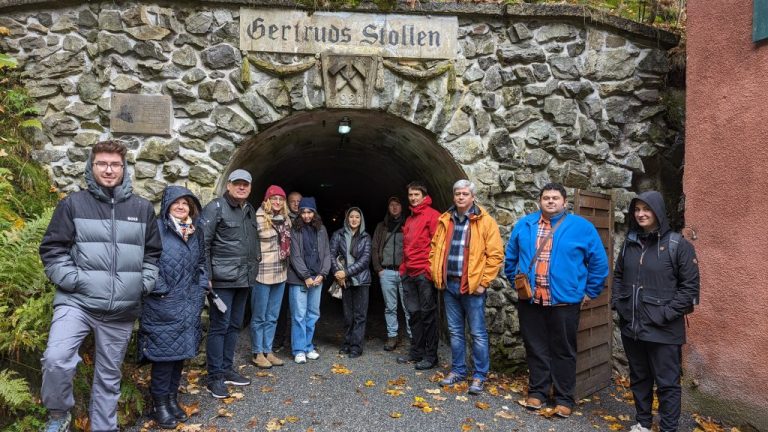
    Visit to a Medieval Gold Mining Village at Złoty Stok became an unforgettable experience showcasing post-mining reconciliation and redevelopment of mining areas, turning an abandoned mine town into a thriving tourist attraction and Polish-German heritage centre. 

    Złoty Stok is the oldest mining and metallurgical centre in Poland. Arsenic and gold deposits were mined in these areas as early as the 13th century. Mining activity flourished in the 16th century. In the golden age of mining, there could be as many as 150 small and larger mines in the area In 1962, the mine in Złoty Stok ceased its activity, and later it was completely flooded. It is estimated that during 700 years of exploitation, 16 tonnes of pure gold were obtained from local deposits.

    On May 28, 1996, the Underground Tourist Route “Gold Mine” was launched. Extremely interesting tunnels were made available: “Gertuda Adit”, and “Black Upper Adit” with the only underground waterfall in Poland (8 m high) and the newest section, open to the public since 2008, the Lower Black Adit.

  • Polish government outlines offer to buy coal assets from state energy firms

    Polish government outlines offer to buy coal assets from state energy firms

    [vc_section][vc_row][vc_column width=”1/6″][/vc_column][vc_column width=”1/2″][vc_row_inner][vc_column_inner][vc_empty_space][vc_column_text]

    Poland’s government has outlined details of the billions of zloty it is proposing to pay state energy firms to buy their coal assets.
    [/vc_column_text][/vc_column_inner][/vc_row_inner][vc_empty_space][vc_separator][vc_empty_space height=”10px”][vc_row_inner][vc_column_inner width=”2/3″][widget-SocialWidget][/vc_column_inner][vc_column_inner width=”1/3″][link url=”https://notesfrompoland.com/2023/07/17/polish-government-outlines-offer-to-buy-coal-assets-from-state-energy-firms/” content_text=”News source”][/vc_column_inner][/vc_row_inner][vc_empty_space][vc_column_text]The move is part of a process to create a new separate entity to gradually wind down the use of coal and allow other energy firms to focus on developing lower-emission sources.

    The four firms – PGE, Tauron, Energa and Enea – on Friday received a proposal from the state assets ministry on behalf of the state treasury. It outlined purchase prices and debt settlement mechanisms that will now be negotiated further.

    Enea would receive almost 2.5 billion zloty (€560 million) for its shares in Enea Wytwarzanie – Poland’s largest producer of electricity from hard coal – and 632 million zloty for Enea Elektrownia Połaniec, a coal power plant. The state treasury will also provide guarantees covering up to 70% of 2.4 billion zloty in debts owed to Enea by the subsidiaries.

    A similar purchase amounting to 849 million has been proposed to PGE, 153 million to Energa and a symbolic 1 zloty to Tauron. PGE and Tauron have also been offered deals relating to debt owed by their subsidiaries.


    The state assets ministry notes that the offer made on Friday is part of the “final phase” in setting up an entity called the National Energy Security Agency (NABE), which was approved by the government last year.

    NABE is being created to take control of state energy firms’ coal assets, which in turn is supposed to help those firms more easily obtain financing for investment in cleaner forms of energy.

    Poland still produces around 70% of its electricity from coal, by far the highest proportion in the European Union. While the government still sees coal remaining the main source of energy for some time, it has taken steps to transition towards renewables and nuclear, which together will generate three quarters of power by 2040.


    “NABE will guarantee energy security in the transformation process,” wrote the ministry on Saturday. It noted that, as a result of EU climate policies, “financial institutions have been limiting their involvement in financing entities with coal assets”.

    Wojciech Dąbrowski, the CEO of PGE, said that he welcomed the ministry’s proposal, which would help his firm with “obtaining financing for investments in line with the strategic direction that we – as a leader of the energy transformation in Poland – have set for ourselves”.

    Shares in the four state energy firms subject to the proposal rose this morning – 30% for Enea, 24.7% for Tauron, 20% for PGE and 4% for Energa – notes financial news service Bankier.pl


    Under plans being developed by the government and state energy firms, Poland’s first nuclear power plant is due to open by 2033, with two more to subsequently follow.

    A number of state and private firms are also developing plans to launch so-called small modular reactors (SMRs) to produce nuclear energy.

    Recent years have seen a rapid expansion in renewables, especially solar, in Poland. The government and state energy firms are also planning to develop both offshore and onshore wind in the coming years.


    Main image credit: Enea press materials[/vc_column_text][vc_empty_space][epic_post_tag compatible_column_notice=”” font_size=”17px”][/vc_column][vc_column width=”1/6″][vc_text_separator title=”LATEST NEWS” color=”juicy_pink”][vc_empty_space height=”10px”][widget-LatestPosts post_number=”4″][vc_empty_space height=”10px”][vc_text_separator title=”MOST POPULAR” color=”juicy_pink”][vc_empty_space height=”10px”][widget-popular-posts post_count=”4″][vc_empty_space][vc_wp_search title=”Search”][vc_empty_space][lvs display_like=””][/vc_column][vc_column width=”1/6″][/vc_column][/vc_row][/vc_section][vc_section][vc_row][vc_column][distance desktop_type=”50″][/vc_column][/vc_row][vc_row][vc_column width=”1/2″][epic_block_28 compatible_column_notice=”” number_post=”6″ post_offset=”0″ first_title=”You may also like”][/epic_block_28][vc_empty_space][/vc_column][vc_column width=”1/2″][epic_hero_5 compatible_column_notice=”” hero_margin=”0″ content_filter_number_alert=”” post_offset=”0″][/vc_column][/vc_row][/vc_section]

  • Polish top court overturns decision to suspend environmental approval for Turów coal mine

    Polish top court overturns decision to suspend environmental approval for Turów coal mine

    [vc_section][vc_row][vc_column width=”1/6″][/vc_column][vc_column width=”1/2″][vc_row_inner][vc_column_inner][vc_empty_space][vc_column_text]

    In a ruling welcomed by Poland’s government, the Supreme Administrative Court (NSA) has overturned the recent decision by a lower court to suspend environmental approval for a coal mine that helps produce 7% of the country’s electricity.

    [/vc_column_text][/vc_column_inner][/vc_row_inner][vc_empty_space][vc_separator][vc_empty_space height=”10px”][vc_row_inner][vc_column_inner width=”2/3″][widget-SocialWidget][/vc_column_inner][vc_column_inner width=”1/3″][link url=”https://notesfrompoland.com/2023/07/18/polish-top-court-overturns-decision-to-suspend-environmental-approval-for-turow-coal-mine/” content_text=”News source”][/vc_column_inner][/vc_row_inner][vc_empty_space][vc_column_text]Last month, the provincial administrative court in Warsaw – ruling on a legal challenge filed, among others, by a German city located near the mine and the Czech and German branches of Greenpeace – found that Turów open-cast lignite mine causes a risk of significant damage to the environment.

    That ruling was condemned by the government, which said it threatened Poland’s energy security. “A court ruling that doesn’t take into account the interest of Poles but does take into account foreign interests is unlawful,” said Prime Minister Mateusz Morawiecki.


    An appeal was filed against the lower court’s decision by the General Director for Environmental Protection, a government appointee who reports to the environment ministry; by PGE, the state-owned energy firm that runs the mine; and by the national prosecutor’s office.

    A ruling on that appeal was issued today by the NSA, which is the highest court on administrative issues. It agreed with the government’s argument, finding that the lower court had not properly taken account of the consequences of its ruling for the public interest.

    “The [NSA] emphasised that there is no doubt that energy security is a constitutional value, because it is one of the guarantees of state independence and security of citizens,” said the top court’s spokesman, Sylwester Marciniak, quoted by broadcaster TVN.

    “The Supreme Administrative Court has accepted our complaint,” celebrated climate and environment minister Anna Moskwa, outlining a list of deficiencies they had identified in the lower-court ruling.


    However, one of the organisations involved in the original legal complaint against Turów notes that the NSA ruling does not bring the case to an end.

    “Today’s ruling means only that the interim measure of suspending the enforceability of the environmental decision for the Turów mine was refused,” said Agnieszka Stupkiewicz of the Frank Bold Foundation.

    “The [lower] court will [still] decide at the end of August whether the environmental decision was issued in accordance with the law,” she added. Her group and the other complainants argue that the environmental decision, which allowed the mine to continue operating beyond 2026, was issued illegally.


    Main image credit: Anna Uciechowska/Wikimedia Commons (under CC BY-SA 3.0)[/vc_column_text][vc_empty_space][epic_post_tag compatible_column_notice=”” font_size=”17px”][/vc_column][vc_column width=”1/6″][vc_text_separator title=”LATEST NEWS” color=”juicy_pink”][vc_empty_space height=”10px”][widget-LatestPosts post_number=”4″][vc_empty_space height=”10px”][vc_text_separator title=”MOST POPULAR” color=”juicy_pink”][vc_empty_space height=”10px”][widget-popular-posts post_count=”4″][vc_empty_space][vc_wp_search title=”Search”][vc_empty_space][lvs display_like=””][/vc_column][vc_column width=”1/6″][/vc_column][/vc_row][/vc_section][vc_section][vc_row][vc_column][distance desktop_type=”50″][/vc_column][/vc_row][vc_row][vc_column width=”1/2″][epic_block_28 compatible_column_notice=”” number_post=”6″ post_offset=”0″ first_title=”You may also like”][/epic_block_28][vc_empty_space][/vc_column][vc_column width=”1/2″][epic_hero_5 compatible_column_notice=”” hero_margin=”0″ content_filter_number_alert=”” post_offset=”0″][/vc_column][/vc_row][/vc_section]

  • Poland files legal complaints against “authoritarian” EU climate policies

    Poland files legal complaints against “authoritarian” EU climate policies

    [vc_section][vc_row][vc_column width=”1/6″][/vc_column][vc_column width=”1/2″][vc_row_inner][vc_column_inner][vc_empty_space][vc_column_text]

    The Polish government has submitted four complaints against EU climate policies, calling them “authoritarian” and pledging that it “will not allow Brussels’ diktat”.
    [/vc_column_text][/vc_column_inner][/vc_row_inner][vc_empty_space][vc_separator][vc_empty_space height=”10px”][vc_row_inner][vc_column_inner width=”2/3″][widget-SocialWidget][/vc_column_inner][vc_column_inner width=”1/3″][link url=”https://notesfrompoland.com/2023/07/18/poland-files-legal-complaints-against-authoritarian-eu-climate-policies/” content_text=”News source”][/vc_column_inner][/vc_row_inner][vc_empty_space][vc_column_text]The Polish government has submitted four complaints against EU climate policies, calling them “authoritarian” and pledging that it “will not allow Brussels’ diktat”.

    Three new cases filed to the Court of Justice of the European Union (CJEU) relate to a ban on the registration of new internal combustion vehicles after 2035, an increase in the EU’s greenhouse gas reduction target, and a reduction of free emission allowances under the EU Emissions Trading System (ETS).

    They follow another complaint filed last week against EU rules on land use, land use change and forestry (LULUCF), which Poland says infringes the competences of member states.

    “Does the [European] Union want to decide in an authoritarian manner what kind of vehicles Poles will drive and whether energy prices will rise in Poland?” tweeted climate minister Anna Moskwa on Monday. “The Polish government will not allow Brussels’ diktat.”

    This morning, the minister added in an interview with Polskie Radio that the government would also file a fifth complaint this week concerning 35,000 tonnes of rubbish that it says has illegally entered the country from Germany.


    Poland’s current national-conservative government has regularly criticised the EU’s climate and environmental policies. Ruling party leader Jarosław Kaczyński has called them “madness and theories without evidence” and “green communism”.

    “At every EU council, we have been against and voted as a government against every single document in the Fit for 55 package,” said Moskwa, referring to the EU’s programme to reduce emissions by at least 55% by 2030.

    “It is no secret that we were against the whole package, we are against increasing climate ambition and the way [these efforts] are carried and forced [upon member countries],” added the minister.


    A recent EU-funded study found Poland to be the bloc’s least green country. It still relies on coal to produce around 70% of its electricity, by far the highest figure in the EU. Poland is Europe’s second-largest producer of brown coal after Germany and the largest producer of hard coal.

    In March, Poland was the only member state to oppose the introduction of a ban on the sale of new petrol and diesel cars from 2035. In an interview today, Moskwa argued that unanimity should have been required for this decision as its impact is heavily dependent on member countries’ energy mix.

    “In our case, [banning combustion engines] is absolutely contrary to climate policy, because it will lead to an increase in coal consumption in the short term if we want to increase electricity production [to power electric vehicles],” she said.

    Asked about the other complaints, Moskwa said Poland was challenging most of them on the same grounds as the ban on the sale of combustion cars.

    “The argument in most of these complaints is the same, mainly concerning the legal basis and unanimity, the impact on the energy mix,” she said.

    One of the EU policies opposed by Poland is changes to ETS stipulating that sectors already covered by the system will be obliged to reduce their greenhouse gas emissions by 62% by 2030 compared to 2005 levels. The reform also envisages a gradual phase-out of free emission allowances between 2026 and 2034.

    Another regulation concerns the provisions on the new EU Carbon Border Adjustment Mechanism (CBAM), which will cover commodities such as iron, steel, cement, aluminium, fertilisers, electricity and hydrogen.

    Importers of these commodities will have to pay the difference between the emission fee in the country of production and the price of emission allowances in the EU ETS. CBAM will be phased in between 2026 and 2034, as free emission allowances in the ETS are phased out.

    Moskwa argues that Poland is pursuing a “very consistent energy transition” focused on creating incentives rather than restrictions. She cited government subsidies for clean energy sources such as the “My Electricity” and “Clean Air” programmes, which have led to a boom in solar micro-installations and heat pumps.

    Data from the European Environment Agency published last month showed that Poland recorded the EU’s largest overall fall in emissions in 2022. However, in proportional terms, Poland’s decline was, though above the EU average, not among the highest in the bloc.

    Main image credit: ETIENNE ANSOTTE | EUROPEAN COMMISSION

    [/vc_column_text][vc_empty_space][epic_post_tag compatible_column_notice=”” font_size=”17px”][/vc_column][vc_column width=”1/6″][vc_text_separator title=”LATEST NEWS” color=”juicy_pink”][vc_empty_space height=”10px”][widget-LatestPosts post_number=”4″][vc_empty_space height=”10px”][vc_text_separator title=”MOST POPULAR” color=”juicy_pink”][vc_empty_space height=”10px”][widget-popular-posts post_count=”4″][vc_empty_space][vc_wp_search title=”Search”][vc_empty_space][lvs display_like=””][/vc_column][vc_column width=”1/6″][/vc_column][/vc_row][/vc_section][vc_section][vc_row][vc_column][distance desktop_type=”50″][/vc_column][/vc_row][vc_row][vc_column width=”1/2″][epic_block_28 compatible_column_notice=”” number_post=”6″ post_offset=”0″ first_title=”You may also like”][/epic_block_28][vc_empty_space][/vc_column][vc_column width=”1/2″][epic_hero_5 compatible_column_notice=”” hero_margin=”0″ content_filter_number_alert=”” post_offset=”0″][/vc_column][/vc_row][/vc_section]

  • Deepest in Poland – KGHM has a mining pit at 1348 meters level

    Deepest in Poland – KGHM has a mining pit at 1348 meters level

    [vc_section][vc_row][vc_column][distance desktop_type=”30″][lvs][distance desktop_type=”30″][vc_btn title=”Source – MarketScreener” color=”sky” i_type=”material” i_icon_material=”vc-material vc-material-perm_device_information” add_icon=”true” link=”url:https%3A%2F%2Fwww.marketscreener.com%2Fquote%2Fstock%2FKGHM-POLSKA-MIED-S-A-1413331%2Fnews%2FDeepest-in-Poland-KGHM-has-a-mining-pit-at-1348-meters-level-44253282%2F|target:_blank”][distance desktop_type=”30″][vc_column_text]1348 meters is the deepest mining pit in Poland – KGHM Polska Miedz’s GG-1 shaft in Kwielice is one of the most important investments in the copper giant’s history and the largest underground project in the non-ferrous metals industry in Europe.

    In June, the key connection between the shaft and the Rudna Mine was made.

    The technical connection, i.e. the merge of excavations from the Rudna Mining Plants to the GG-1 shaft, was successfully carried out on June 14 this year. Work is now underway there, which will allow new amounts of fresh air to be supplied to the mine workings. This will definitely improve working conditions underground.

    The shaft is ready to build reinforcement and equip with the necessary installations and equipment for the target period. A three-meter layer of concrete has been poured on the bottom. The two basic parameters of the GG-1 shaft are: depth – 1,348 meters, and the diameter in the light of the casing, which is 7.5 meters. It is an intake-air shaft that will be used to transport people and materials.

    KGHM is a jewel in the crown, and the GG-1 shaft is an amazing project that will affect the safety of miners. I am full of admiration for all those who undertook this project. Everything is done so that miners can work in the best possible conditions. The GG-1 shaft is also a business, industrial, economic project. These are copper deposits that can be mined for decades to come,’ said Elzbieta Witek, Speaker of the Polish Parliament.

    The GG-1 shaft is a strategic investment by KGHM. It will provide the air that will enable us to exploit the Glogow Gleboki-Przemyslowy deposit at depths that were previously inaccessible to us. We are a global company, but domestic production is of fundamental importance to the company. The completed shaft, first of all, ensures safety, but also promotes more efficient work by miners,’ said Tomasz Zdzikot, Chairman of the Management Board of KGHM Polska Miedz S.A., during a press conference.

    The GG-1 shaft is of fundamental importance for the development of KGHM Polska Miedz S.A.. It will make it possible to open up new areas of the copper deposit and prolong the operation of the Polkowice-Sieroszowice and Rudna mines. The investment will also improve ventilation and air-conditioning conditions for miners and will shorten the routes of crews’ access to the pits.

    Shaft in numbers

    The GG-1 shaft complex is being built as part of the Deposit Opening Program conducted by the Department of Mining Structure Development at KGHM Headquarters. The work was carried out by a KGHM Group company, PeBeKa. The GG-1 shaft is one of the most important facilities that will serve to open up the Glogow Gleboki-Przemyslowy Mining Area

    The estimated industrial copper ore resources are nearly 265 million tons, with an average copper content of 2.40 %. This represents about 25 % of copper resources and more than 30 % of silver resources in all KGHM license areas in Poland. Access to these resources will secure the continuity of copper ore mining for many years to come.

    According to investment plans, in the years 2028-35, i.e. during the period of the greatest intensity of mining work, production from the Glogow Gleboki-Przemyslowy area is expected to be 10-11 million tons of ore, from which it will be possible to obtain about 200-220 thousand tons of electrolytic copper per year.

    History of the investment

    Construction of the GG-1 shaft began in 2010. Two years later, the shaft tower, which is one of the tallest ever erected by KGHM, began to be built. It is 45.5 meters high and weighs 1,100 tons. The equipment used in pilling the shaft includes a complex hoisting system with more than a dozen steel cables. Each more than 1,500 meters long, some weighing as much as 20 tons.

    In 2013, one of the key stages of construction began: the freezing of the rock mass preceding the shaft pilling. Brine was then flowed into 40 freezing holes. The first bucket of excavated material left GG-1 on December 11. A year later, specialists reached layers of solid rock at a depth of 393 meters. It was then that the method of shaft pilling was changed from mechanical excavation of the rock mass to the blasting method.

    To build up the first section of GG-1, PeBeKa employees used 466 iron rings, which protected the shaft from flooding with water from Tertiary and Triassic layers. To comprehensively protect GG-1 from the effects of water inflow, a modern so-called cascade drainage system was installed in the shaft. In subsequent years, as work progressed on further pilling the shaft, further elements of the drainage system were added. A total of eight stations were built there, pumping water cascading from the bottom of the shaft to the surface.

    This year, March also marks the 60th anniversary of the mining of the first cup of copper ore in the Copper Belt. It happened on March 20, 1963, in the L-III shaft belonging to the Lubin mine. One of the pioneers of Polish Copper, the late Jan Urlich recalled, ‘among the ore, we noticed a large chunk of dolomite, in which large veins of copper sulfides were visible. The joy was enormous. I thought: at last we have reached the deposit.’

    Shaft GG-1 is the company’s thirty-first shaft in the Copper Belt. Meanwhile, preparatory work has begun on the construction of another important facility in the Deposit Opening Program in the Glogow Gleboki-Przemyslowy and Gaworzyce mining areas. The GG-2 shaft, located in the municipality of Zukowice, will have an exit-material function.[/vc_column_text][distance desktop_type=”30″][/vc_column][/vc_row][/vc_section]

  • Korea reacts to nuclear demand with plans for 10 overseas plants

    Korea reacts to nuclear demand with plans for 10 overseas plants

    [vc_section][vc_row][vc_column][distance desktop_type=”30″][lvs][distance desktop_type=”30″][vc_btn title=”Source – Korea JoongAng Daily” color=”sky” i_type=”material” i_icon_material=”vc-material vc-material-perm_device_information” add_icon=”true” link=”url:https%3A%2F%2Fkoreajoongangdaily.joins.com%2F2023%2F06%2F29%2Fbusiness%2Findustry%2Fnuclear-plant-nuclear-plant-export-KHNP%2F20230629174521090.html|target:_blank”][distance desktop_type=”30″][vc_column_text]Korea is looking to become a powerhouse in nuclear power plant exports with government plans to export 10 nuclear plants by 2030. Poland, the Czech Republic, Turkey and Romania are potential candidates to host Korea’s second-ever nuclear plant export.

    The first nuclear power plant export deal was to construct a plant in Barakah, the United Arab Emirates, which began operations earlier this year. However, Korea is yet to ink its second export deal.

    Separate from these full nuclear power plant export agreements, Korea sealed a 195-million-euro ($212.4 million) nuclear facility deal with Romania Tuesday, securing Korea’s biggest-ever deal for a single nuclear facility and the Yoon Suk Yeol government’s second nuclear facility export following the El-Dabaa project in Egypt from August last year.

    The Patnow nuclear power plant project in Poland is the most likely destination for the second full nuclear power plant export, according to sources from the Ministry of Trade, Industry and Energy and Korea Hydrogen & Nuclear Power (KHNP) Wednesday.

    The Patnow project will build two nuclear plants using the homemade APR1400 reactor technology. KHNP signed a letter of intent with Poland’s Zespol Elektrowni Patnow-Adamov-Konin and state-owned Polska Grupa Energetyczna (PGE) for the 1.4-gigawatt project.

    Korean and Polish officials are undertaking working-level talks to seal a service contract for a feasibility study of the Patnow plant.

    The Czech Republic’s 1.2-gigawatt Dukovany nuclear plant project, a deal estimated to be worth 6 billion euros, is another project the Korean government is eyeing. KHNP submitted its bid in November and is competing with France’s EDF and U.S. Westinghouse. The Eastern European country plans to select the winner by next year.

    Korea Electric Power Corporation in January submitted a preliminary bid to the Turkish government for a $30 billion project building four APR1400 plants, delivering 1.4 gigawatts of electricity apiece, in the northern region of the country. The two parties plan to begin a feasibility study next year, after which a memorandum of understanding to break ground could be signed.

    Romania recently rose as a possible export target following KHNP’s agreement with Romania’s Nuclearelectrica to build a tritium removal facility in Romania.

    Nuclearelectrica CEO Cosmin Ghita said during Tuesday’s signing ceremony in central Seoul that KHNP may be involved in future Romanian projects considering its technology.

    President Yoon has placed nuclear power plant export deals high on his political agenda, making an effort for a comeback from the previous Moon Jae-in administration’s nuclear phase-out scheme.

    Korea will have to overcome some of the variables lying ahead, such as its legal disputes with the United States over nuclear power plant exports.

    Pittsburgh-based Westinghouse filed a lawsuit against KHNP for intellectual property infringement in October claiming that KHNP needs U.S. government approval to sell APR1400 plants overseas because APR1400 reactors are created based on Westinghouse technology.

    KHNP argued that APR1400 is free from U.S. export restrictions because its core technology is domestically developed.

    “The Westinghouse lawsuit is about to obstruct nuclear power plant export plans one after the other […] settling this issue is a top priority,” a source from the nuclear plant industry told the JoongAng Ilbo on condition of anonymity.[/vc_column_text][distance desktop_type=”30″][/vc_column][/vc_row][/vc_section]