[vc_section][vc_row][vc_column][distance desktop_type=”30″][lvs][distance desktop_type=”30″][vc_btn title=”Source – Reuters” color=”sky” i_type=”material” i_icon_material=”vc-material vc-material-perm_device_information” add_icon=”true” link=”url:https%3A%2F%2Ffinance.yahoo.com%2Fnews%2Fpolands-pge-sees-no-risk-155106269.html%3Fguccounter%3D1%26guce_referrer%3DaHR0cHM6Ly93d3cuZ29vZ2xlLmNvbS8%26guce_referrer_sig%3DAQAAAFs_VP5HWD-Z7cvJt2CqocCNwQCVfi-y3Wg3N76zm0GWNWSDvxlkfkHr-oPoql_ZNx4XUWHMYBHTPGeLdO5Td-4CQChIUftt-TT98Qv6uaRB-dyEjWxYvKYXR3L6lAxS0eDflNLcDSPIxbfic-BeuvyagimWlDfMbj2g9GAqHo0u|target:_blank”][distance desktop_type=”30″][vc_column_text]WARSAW, June 27 (Reuters) – Poland’s largest utility PGE SA said on Tuesday it saw no risk to timely deliveries of Siemens Gamesa wind turbines for the offshore farm in the Baltic set for commissioning in 2027.
Troubles at Siemens Gamesa do not concern turbines already installed at wind farms owned by PGE, the company said.
Last week, Siemens Energy unveiled issues at Siemens Gamesa more recent onshore wind turbine models, including faulty components and possible design flaws, that caused its shares to plummet by more than 37%.
In April, Siemens Gamesa Renewable Energy agreed to tie up with PGE and Denmark’s Orsted to supply 107 wind turbines for the Baltica 2 offshore wind project in the Baltic Sea.
“Currently, there are no indications that there will be delays in the delivery schedule of 107 wind turbines for Baltica 2,” PGE spokesman Konrad Mroz said in a response to Reuters questions.
“The problems indicated in the media coverage do not apply to wind turbines installed on farms owned by PGE.”
(Reporting by Marek Strzelecki; editing by David Evans)[/vc_column_text][distance desktop_type=”30″][/vc_column][/vc_row][/vc_section]
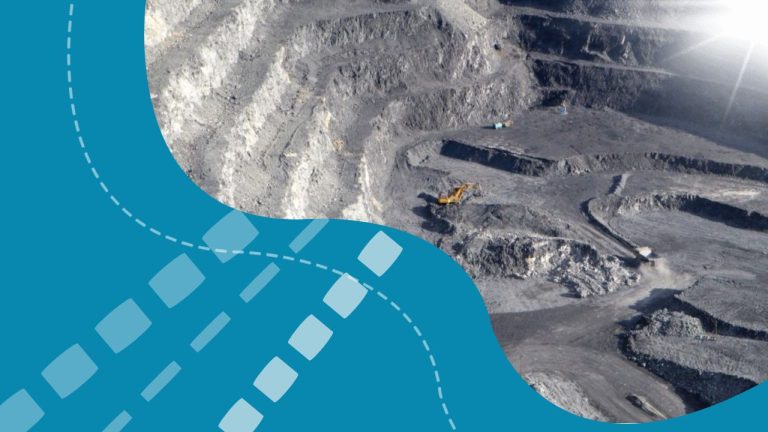
The Together for Water non-governmental organization (NGO) issued a press release Tuesday that mining activities at the Turów coal mine in Poland are causing serious environmental harm in neighboring Czechia.
Better measuring needed
The group highlighted decreasing water levels in a borehole in the Czech village of Uhelná as evidence. The NGO argues that the measurements in Uhelná do not match those in four control boreholes on the Polish side, which are crucial for evaluating the effectiveness of the mine’s underground barrier.
Together for Water also stated that the effectiveness of the barrier – intended to prevent water from disappearing from the Czech border area – needs to be measured in Czechia, rather than in Poland.
The NGO fears that the Czech government may be using inadequate data to assess the ecological damage caused by the mine. It is calling for the Czech Environment Ministry to release all information received since the signing of the Turów agreement, including groundwater data and the amount of water in the Uhelná borehole.
Earlier this year, the Czech division of the Greenpeace activist organization protested in Prague for the government to fully release water-quality data near the Czech-Polish border of the affected area.
Together for Water further urges Czechia to engage in negotiations with Poland, requesting an extension of the underground barrier or a reduction in mining operations due to the continuously declining water level in Czech territory. The group also suggests that Poland should develop an updated hydrogeological model, and propose preventive and corrective measures to mitigate environmental damage.
A tense history
In February 2021, Czechia took Poland to the EU Court of Justice over the expansion of mining at Turów, and the court ruled in May 2021 that Poland must cease mining immediately.
Poland refused to comply, leading to a daily fine of EUR 500,000 imposed by the court in September 2021, which Poland objected to paying. Subsequent negotiations between Prague and Warsaw resulted in the signing of the Czech-Polish agreement in February 2022.
Under the February 2022 agreement, Poland committed to compensating for the damage caused by the mine. However, local communities claim that the compensation has not reached them.
In February this year, Poland authorized prolonging coal mining in Turów until 2044. Czech environmentalists were angered by this, and also deeply frustrated with the government’s decision to extend Czech coal-mining activities at a separate mine, in the northern town of Bílina.
Modern computer stations for analysis using artificial intelligence methods – the company has funded the equipment and became the sponsor of the KGHM Analytical Laboratory at the University of Zielona Góra. The laboratory is located in the newly constructed building of the Institute of Mechanical Engineering and Physics. Thanks to the support received from KGHM, the KGHM Analytical Laboratory has
Lubelski Węgiel Bogdanka has published a new strategy for 2023-2030 with an outlook until 2040. The document outlines the key directions of development and transition for Bogdanka. The Company aims to create an innovative multi-commodity concern to drive green transition and secure the economic development of the Lublin region.
Lubelski Węgiel Bogdanka’s new strategy is based on 5 pillars. The first is a strong coal foundation, in which Bogdanka remains the efficiency leader in coal mining until the end of the mine’s existence. The four others are: Multi-commodity Concern, Sustainable Energy Guarantor, Green Transition and Future of the Lublin Region.
Through consistent implementation of the strategy to maintain a high level of production, by 2030 Bogdanka wants to generate funds that will allow for investments related to the multi-commodity area. The Company plans to invest PLN 8.6 billion over the next 8 years, almost half of which will be in new business areas.
We want a strong multi-commodity concern to be established here, in the Lublin region, in the coming years, so that Bogdanka can remain the driving force of the region for the next 40 years. Our new strategy is primarily a response to the challenges posed by the broader energy transition. We want to naturally take advantage of the fact that we are an efficiency leader in coal production. This foundation will allow us to finance our transition projects. We will use our mining competencies to diversify Bogdanka’s operations towards the extraction of critical raw materials not only in the region, but also in Poland. By investing in renewable energy sources, Bogdanka will also become a guarantor of sustainable energy supply, both for its own needs and for the entire region. We will undertake all these activities with respect and care for the environment. We are driven by concern for the development of the region and care for the people. Because people are Bogdanka’s strength and greatest asset. With this strategy, we want to provide a place to work for the next generations of the Lublin region.
said Kasjan Wyligała, President of the LW Bogdanka Management Board.
Bogdanka’s strategic role makes the Company a guarantor of energy security and sovereignty not only for the region, but also for central and eastern Poland. Despite the fact that we are a leader among all Polish coal companies, we are nevertheless still working to optimize our operational efficiency. We are constantly making sure to strengthen the efficiency and profitability of our core business. This will provide us with stable financing for planned strategic initiatives. We will continue to invest in innovative solutions, in particular in the areas of rock mass monitoring, improved safety and ergonomics, and smart mine management systems. Cash flows will allow us to implement Strategic Initiatives with constant monitoring of available support mechanisms, as well as to remain a dividend company with payment of up to 50% of the Company’s net profit as is the case now. We estimate that the Company’s cumulative revenues will reach almost PLN 100 billion by 2040.
said Artur Wasilewski, Vice-President of the Management Board for Economic and Financial Affairs at LW Bogdanka.
Bogdanka estimates that nearly PLN 20 billion will be generated by the areas related to production, installation and recycling of RES components.
The prospect of 2049 means that there are currently no plans for investment in new coal-based generating units in Poland. This necessitates the search for new non-coal sources of income for Bogdanka. Given that approx. 70% of energy in our country still comes from coal, one should assume that only large-scale renewable energy sources can bring about a significant change in the energy mix and significant decarbonization of the Polish economy in the relatively near term. Therefore, one of the important new pillars of the Company’s development is investment in renewable energy installations, i.e.: windmills, photovoltaic farms, energy storage, as well as in the entire value chain – from component production, through energy generation, energy storage to recycling of waste photovoltaic and electric batteries. We believe that the areas of production, installation and recycling of RES components will generate up to PLN 20 billion by 2040. We plan to develop RES in several stages. A 3MW photovoltaic farm near Bogdanka will soon be put into operation, while tender processes for another 27MW have already been launched. Our goal is to meet 10% of the Lubelskie Voivodeship’s annual electricity consumption by 2030.
said Dariusz Dumkiewicz – Vice-President of the Management Board for Sales and Investments at LW Bogdanka.
The Company wants to capitalize on its experience in mining and the growing potential of the commodity market, particularly critical raw materials. This makes Bogdanka see the multi-commodity approach as an attractive path to diversification. The Company plans to spend PLN 50 million in the coming years on exploration, appraisal drilling and other work to arrive at an investment decision. Currently, after expert analysis in this area, Bogdanka has tentatively identified 11 raw materials and more than 20 potential locations where it will carry out advanced analyses.
As part of the Multi-commodity Concern, the Company also plans to establish a Fund to invest in new technology projects related to our current and future operations. In addition, Bogdanka wants to tap the intellectual potential of Lublin’s universities and entrepreneurs.
Bogdanka’s new strategy is not just focused on the “here and now.” Preserving jobs and economic potential in the region – this is the essence of our plan in the context of the future of the workforce and the entire region of Central and Eastern Poland. We want to do it wisely, through business diversification, acquisitions and development projects. We want to create stable jobs in the region in the future. As part of the new strategy, we will launch programs aimed at attracting and retaining our best employees. But in parallel, we will implement new measures that are so important for any mine, namely investments to increase the level of occupational safety. We want to implement re-branding programs to successively and friendly prepare employees for the distant but imminent closure of hard coal mines. Implementing responsible business practices and ESG issues throughout the value chain will also be a our priority in the new strategy. Our goal is to maintain a stable level of employment in the core business until 2042. As of today it is almost 5,000 people.
said Adam Partyka Vice-President of the Management Board for Social and Labor Affairs.
Bogdanka is synonymous with stability and development. The Company’s new strategy is an effective response to the challenges of our times and will allow Bogdanka to be the region’s leader for the next 40 years.
[vc_section][vc_row][vc_column][distance desktop_type=”30″][lvs][distance desktop_type=”30″][vc_btn title=”Source – The Korea Economic Daily” color=”sky” i_type=”material” i_icon_material=”vc-material vc-material-perm_device_information” add_icon=”true” link=”url:https%3A%2F%2Fwww.kedglobal.com%2Fesg%2FnewsView%2Fked202306260008|target:_blank”][distance desktop_type=”30″][vc_column_text]DABROWA GORNICZA, Poland – It was not long ago that Dabrowa Gornicza in Silesia Province struggled to bring back the old glory of a vibrant coal mining and steel production center.
But the ninth biggest city in Poland, 300 kilometers from the capital Warsaw, does not have to dwell on its old fame anymore after it has revived as an electric vehicle industrial hub in Europe thanks to SK IE Technology Co. (SKIET), a South Korean electric vehicle material maker that broke ground on Europe’s first EV battery separator plant in the city with a population of about 120,000 in 2021.
“The old mining town is being reborn as a green economic mecca centered around the EV battery,” Marcin Bazylak, mayor of Dabrowa Gornicza, recently told to The Korea Economic Daily at the city hall in the Polish city. “SKIET laid the groundwork for our city’s transformation into an eco-friendly economy.”
A separator is one of three key ingredients of batteries, together with cathodes and anodes, and makes up 10-15% of battery manufacturing costs.
It electronically isolates layers between cathodes and anodes in a battery and serves as a channel where lithium ions move between positive and negative electrodes.
(Graphics by Sunny Park)
The Korean company is currently running its first LiBS plant with an annual production capacity of 340 million square meters in the southwestern city of Poland.
It aims to commence the commercial production of its second separator plant in the European country with a capacity of 340 million square meters by the end of this year while adding two more plants with a total capacity of 430 million square meters, slated for mass production in the end of 2024.
When the fourth plant starts operating, SKIET will be able to churn out up to 1.54 billion square meters of separators from the facility, the largest separator output in Europe and equivalent to power about 2.05 million electric vehicles, according to the company.
“We are proud of SK’s advance into our city, which is comparable to Neil Armstrong’s planting of an American flag on the moon,” said Mateusz Rykała, vice president of the Katowice Special Economic Zone near Dabrowa Gornicza. “Silesia Province is now famous for the automotive industry among Europeans.”
CENTRAL BUSINESS AND COMMUNITY PARTNER
Since its setup, SKIET Poland (SKBMP), SKIET’s Polish entity, has grown into a core business partner of the southwestern city in Poland.
It has donated about 330 million won to three local vocational schools in Silesia Province as part of its community services.
It has been a sponsor of the Michał Spisak International Music Competition organized by the Municipality of Dabrowa Gornicza and Zagłębie Palace of Culture for three years in a row.
The company also donated about 120 books related to Korean culture, music, art and drama to a public library in Dabrowa Gornicza as part of the Public Library Supporting project.
It has been actively participating in various other community services such as the donation of physical therapy equipment to senior care centers in the city and food and gifts to local orphanages on special days like Christmas.
Of all, SKBMP’s blood donation drive in July 2021, when the Polish city grappled with a blood shortage in the face of the COVID-19 pandemic, made a specially good impression on the company, making the people in the city embrace the Korean company as a member of its community.
“We have built trust among villagers as the company that can stand by them during hardship,” said Park Byoung_chul, CEO of SKBMP.
“SK not only enhances the sustainability of the city but also plays a leading role in improving the image of Korean companies,” said Bazylak.[/vc_column_text][distance desktop_type=”30″][/vc_column][/vc_row][/vc_section]
[vc_section][vc_row][vc_column][distance desktop_type=”30″][lvs][distance desktop_type=”30″][vc_btn title=”Source – Focus Taiwan” color=”sky” i_type=”material” i_icon_material=”vc-material vc-material-perm_device_information” add_icon=”true” link=”url:https%3A%2F%2Ffocustaiwan.tw%2Fbusiness%2F202306210025|target:_blank”][distance desktop_type=”30″][vc_column_text]Taipei, June 21 (CNA) Taiwan and Poland have signed two memorandums of understanding (MOUs) on electric vehicles and hydrogen energy, the Ministry of Economic Affairs (MOEA) said Wednesday.
According to the MOEA’s Department of International Cooperation, the MOUs were signed by both sides during the 11th Taiwan-Poland Economic Consultations meeting in Warsaw Tuesday.
The meeting was attended by Taiwan’s Deputy Minister of Economic Affairs Chen Chern-chyi (陳正祺) and Polish Secretary of State for Economic Development and Technology Grzegorz Piechowiak.
The department said that under the MOUs, Taiwan and Poland would systematically enhance cooperation in the two fields.
During the event, Piechowiak called for a Taiwan-Poland work team to further two-way collaboration on hydrogen energy development. He noted that bilateral trade grew 4.2 percent year-on-year to hit US$1.72 billion in 2022, the MOEA said in a statement.
For his part, Chen touted Taiwan’s key position in the global supply chain and foresaw great potential for a strong economic partnership between the two countries based on their respective R&D strength and talent pools, the MOEA added.
According to Chen, Taiwan hopes to cement its economic relations with Poland in part to diversify its market exploration efforts, while in part seeking to pave the way for it to initiate a mechanism with the European Union to push for trade and investments.[/vc_column_text][distance desktop_type=”30″][/vc_column][/vc_row][/vc_section]
US chipmaker Intel joined forces with the Polish Government on 16 June to announce a €4.2bn investment in the Lower Silesian region, in the west of the country close to the Czech Republic/Germany border. This comes as the EU ramps up its efforts to become self sufficient in the manufacturing of semiconductors in light of the shortage that occurred during the Covid-19 pandemic.
Why it matters
All foreign direct investment (FDI) projects are of value to the host country, but certain sectors are particularly sought after in the 2020s. Last week we highlighted Morocco’s announcement of Gotion High Tech’s $6.4bn EV battery plant– one such area that most countries in the world are looking to achieve ‘hub’ status – and this week we look at the semiconductor industry, the source of myriad government initiatives and countless trade visits. Intel’s announcement in Poland – one of the world’s FDI stars of the past couple of decades even before this project – is a big one for the country, and for the EU more widely.
Of the deal, Investment Monitor chief economist Glenn Barklie says: “In 2021, we correctly predicted that Intel would put a new fab plant in Germany. We also suggested that it may choose several locations in Europe (which has been the case given investments in France, Ireland, Italy and Spain), with a more cost-sensitive operation being placed in eastern Europe.
“The location of the new facility is a strategic choice. Miekinia, a small city located 26km to the west of Wrocław, allows access to Intel’s fabs in Magdeburg in Germany and its R&D facility in Gdańsk.
“Although incentives are generally seen as the icing on the cake in terms of site selection, for Intel it is much more of a driving factor. The company has (re)negotiated further incentives to build its Magedburg operation – $11bn up from $7.4bn, due to rising construction and energy costs.”
The incentives offered as part of this new announcement are as yet unknown, but they are expected to be substantial. Poland set out to win the deal in a way that evidently impressed the Intel hierarchy. “Poland was just a little bit hungrier to win this site,” were the worlds used by Intel CEO Pat Gelsinger at a news conference announcing the project.
However, amid the fanfare there are still issues that will have to be addressed. Barklie continues: “With Poland still largely reliant on coal for its energy, it will be interesting to see how quickly the country can make the switch to renewables given Intel’s commitments to use 100% renewable energy by 2030. On this front, we have seen strong, recent growth in inbound renewables FDI in Poland, particularly onshore wind and solar power.
“More generally, Poland is the leading location in central and eastern Europe for greenfield investments. It accounted for about 25% of FDI projects in the region in 2022. Therefore, it would be expected to at least make the shortlist for such a large-scale investment.
“Other key drivers for semiconductor investments include skilled labour, both existing and incoming (via graduates from universities), innovation, infrastructure (transportation, IT, land/facilities) and utilities. The chosen location will have had to meet these factors.”
This investment in Miekinia should also bring additional investment and job creation to the region as Intel’s suppliers follow.
This Intel activity isn’t just a win for Poland, however. Barklie concludes: “In a wider context, the project is a huge win for Europe. Intel’s investments in Europe (more so the EU) offer at least some indication that the EU’s Chips Act is working. Many European countries will be hoping that several more tier-one chip manufacturers establish similar operations in the near future.”
The detail
Details of the deal are still emerging, particularly with regards to the public money used to entice Intel, but the company says the project will bring with it 2,000 jobs, with thousands more being created indirectly. As for the date when the site will be operational, the company’s statement says: “This facility will help meet critical demand for assembly and test capacity that Intel anticipates by 2027.” The deal continues a busy 2023 for Intel, as it has just invested $25bn in a new chip plant in Israel, also expected to be operational by the end of 2027.[/vc_column_text][distance desktop_type=”30″][/vc_column][/vc_row][/vc_section]
Poland’s planned curve-out of coal assets from its utilities would attract new investors, Amundi’s Marcin Fiejka said in Warsaw on Tuesday.
“Energy transformation is a low-hanging fruit,” Fiejka, head of EM CEEMEA Equity at Amundi, said at the Bloomberg Capital Market Forum. “Planned carve-out of coal assets should make Polish utilities attractive for new group of investors.”
The government seeks to spin off coal-fired power plants from the country’s biggest state-controlled utilities later this year. The plan, which has been delayed by several months, will allow power companies to focus on green energy generation. It would also given them better access to international financial markets, where funding for carbon-heavy investments has been in decline.
PGE SA, Tauron Polska Energia SA and Enea SA plan to spend tens of billions of zloty in the coming decade. Poland has said it needs to invest more than 1 trillion zloty ($245 billion) in the energy sector through 2040 to replace aging coal plants, which currently produce about 70% of its electricity.
Coal-exposed companies, which also include PKN Orlen SA and JSW SA have 18% share in Warsaw’s benchmark WIG20 equity index. For Amundi, Polish capital market needs more blue-chips to attract capital inflows.
(By Maciej Martewicz and Konrad Krasuski, with assistance from Maria Tadeo)
A group of EU countries are fighting attempts by Poland to extend subsidies for coal plants, with Luxembourg’s energy minister describing the proposal as “astonishing”.
Luxembourg’s energy minister, Claude Turmes, said he could not believe the proposal, which was made on Friday, days before a planned summit of energy ministers from across the bloc, was even on the table given the EU’s commitment to combating the climate emergency.
“Friday, the Swedish presidency did something really astonishing which is weakening our climate policy by … reopening the possibility to subsidise coal power plants,” he told reporters before the summit in Luxembourg.
Some countries consider this a measure to help Poland, which uses coal to produce about 70% of its energy.
Poland is expected to soon surpass Germany as Europe’s top power polluter due to aggressive planned reductions in fossil fuel use across Germany, creating assumptions that Poland will have no choice but to remain Europe’s most coal-reliant nation for years to come.
So far this year, Poland has defied expectations by cutting coal use and pollution to the lowest level since at least 2014, and by raising clean power output to record highs just as Germany cut its clean generation by shutting nuclear reactors.
“We have a big bloc of countries that will reject the proposal of the Swedish presidency … so it’s a clear no,” Turmes said ahead of the summit on Monday.
Spain’s minister for ecological transition, Teresa Ribera, said some thought had to be given to Poland, which is heavily reliant on coal, while the French energy minister, Agnès Pannier-Runacher, said extending support to Poland was an “ambitious approach” – a hint Paris was more open towards the move than other member states like Germany.
“We need to take into account the reality of each country to ensure their capacity to provide energy to their people and to their industries,” she said.
Belgium sided with Luxembourg, describing such a move as “unacceptable”.
Tinne van der Straeten, the energy minister, said: “In Belgium we already have in our national legislation the obligation to become climate neutral and to have a steep decline in emission by 2030 and 2040. So [the proposal] is something that we cannot accept,” she told reporters.
WARSAW, June 13 (Reuters) – Poland has deferred a plan to cut its reliance on coal by changing the status of its energy policy update to a consultation ahead of elections later this year, following pressure from mining unions.
The climate ministry published in April a document it began working on after Russia invaded Ukraine in February last year, causing major disruption in energy markets.
It called for a doubling of renewable capacity to 50 gigawatts (GW) by 2030 and a further increase to 88 GW by 2040, but the climate ministry website said it will now feed into an all-industry strategy update.
“It has been decided that the work put into the document will be used to prepare a broader energy strategy encompassing other industries,” the ministry spokesman Aleksander Brzozka told Reuters on Tuesday.
Earlier this month, Prime Minister Mateusz Morawiecki signed an agreement with the biggest trade union that calls for more consultations on strategy for the Polish energy industry.
In 2021, the government said the country will continue mining coal, which is used to generate some 70% of Poland’s power, until 2049.
Michal Hetmanski, head of Instrat, a Warsaw-based independent think tank, said the change of status ruled out the plan’s being adopted before elections due in October or November, adding it “yet again questions the government mandate to plan an energy transition at all”. “It is peculiar that the government wants to consult the strategy soon after proposing it due to the pressure from powerful coal mining unions,” Hetmanski told Reuters.