Region: Europe

  • EBRD Considers €55 Million Loan for Bulgaria’s Asarel Medet Copper Mine

    EBRD Considers €55 Million Loan for Bulgaria’s Asarel Medet Copper Mine

    The European Bank for Reconstruction and Development (EBRD) is reviewing a proposal to provide a loan of up to €55 million to Bulgarian copper producer Asarel Medet to support a major sustainability and renewable energy project.

    According to documents published on the lender’s website, the financing is expected to be considered for approval on 11 March. The funds would partially finance a €109.5 million investment programme focused on the development of captive solar power installations and the implementation of more sustainable copper mining practices at the company’s operations.

    The project also aims to bring the mine’s environmental and social standards in line with international best practices, reinforcing its long-term operational resilience and ESG performance.

    Part of the loan is expected to be backed by the InvestEU Fund, the European Union’s financial instrument that consolidates multiple centrally managed EU funding mechanisms, including the European Fund for Strategic Investments.

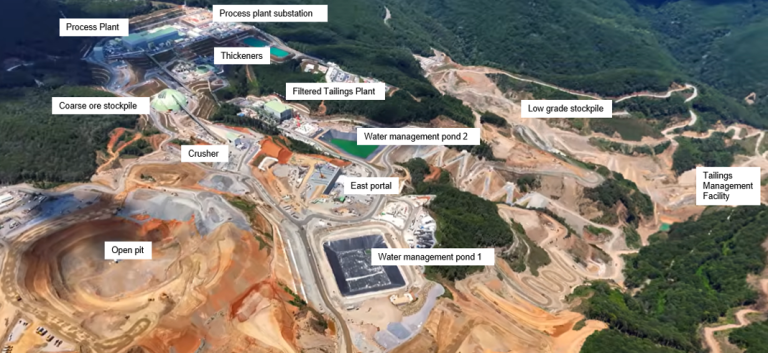
    Asarel-Medet operates near the town of Panagyurishte in southern Bulgaria and is the country’s leading open-pit copper mining company. The group employs around 1,200 people directly, along with an additional 400 staff in subsidiary companies.

    Ownership of the company is concentrated in VA Copper Invest Limited, a Malta-based investor holding a 63% stake as of September 2025, according to Trade Registry data.

    Financial results for 2024 show that the Asarel Medet Group generated revenues of 929.8 million levs, equivalent to approximately €480.8 million, and recorded an after-tax profit of 223.9 million levs. During the year, the company extracted 45.8 tonnes of ore mass and processed 15.03 tonnes of ore.

  • Ukraine Reviews PSA Tenders for Four Uranium Deposits Linked to BGV Group

    Ukraine Reviews PSA Tenders for Four Uranium Deposits Linked to BGV Group

    Ukraine’s interagency commission on production-sharing agreements (PSAs) is reviewing a request to launch competitive tenders for uranium development at four deposits in Mykolaiv and Kirovohrad oblasts, according to Nadra.Info.

    The initiative was submitted by Atomic Energy Systems of Ukraine LLC (AESU), part of businessman Hennadii Butkevych’s BGV Group Management. Butkevych is also a co-owner of the ATB retail chain. AESU is seeking to initiate PSA tenders for the Safonivska site, the Sadova area, the Severynske deposit and the Pidhaitsivske deposit.

    The application was formally submitted in late November 2025 and considered at a commission meeting on Dec. 15, 2025, the same day authorities opened applications for a PSA tender for the Dobra lithium deposit. However, as of January, no final decision had been taken.

    “But so far, they’re saying nothing. The ball is in their court, and it has been for a long time,” Butkevych said, commenting on the delay. He attributed the slow progress to a degree of state caution toward private-sector initiatives in uranium mining.

    The four subsoil plots are included on Ukraine’s list of strategically important deposits to be developed through competitive PSA mechanisms. The Pidhaitsivske and Severynske deposits are located in Kirovohrad Oblast’s Kropyvnytskyi district, while the Sadova area and Safonivska site are situated in Mykolaiv Oblast.

    BGV Group Management plans to develop the projects in partnership with foreign investors, although potential partners have not yet been disclosed. Butkevych has stated that, once permits are granted, uranium production could begin within 1.5 to 2 years.

    The review comes amid broader activity in Ukraine’s strategic minerals sector. On Jan. 12, the Cabinet of Ministers selected Dobra Lithium Holdings JV, LLC — backed by TechMet and The Rock Holdings — as the winner of the PSA tender for the Dobra lithium deposit in Kirovohrad Oblast.

    According to Butkevych, uranium development has also been discussed at the highest political level, including with President Volodymyr Zelenskyy.

  • European Industry Coalition Pushes for Smarter and Faster Permitting Across the EU

    European Industry Coalition Pushes for Smarter and Faster Permitting Across the EU

    Euro Mines announced that 18 organisations have joined forces to establish an informal Coalition on Permitting, a cross-sector platform aimed at improving and accelerating project approval processes across the European Union.

    The move comes amid growing concern that lengthy and complex permitting procedures have become a structural bottleneck for Europe’s industrial revival, delaying investments across mining, energy and manufacturing.

    According to the coalition, permitting reform should be treated as a strategic enabler of Europe’s competitiveness, resilience and industrial value chains. The group is calling on EU policymakers to streamline and align permitting requirements stemming from EU legislation, particularly for cross-border projects, in order to reduce duplication and legal uncertainty.

    Among the proposed measures are enforceable time limits for permit decisions, digital tracking systems, clearer accountability mechanisms and stronger resourcing of permitting authorities.

    Coalition Co-Chair Gabrielle van Melkebeke said the initiative seeks to ensure Europe can deliver the projects required to meet net-zero targets while remaining an attractive destination for investment. She noted that the coalition combines diverse expertise to propose reforms that are both ambitious and practical.

    Co-Chair Florian Anderhuber stressed that Europe cannot meet its industrial, defence and climate objectives without modern and predictable permitting systems. By pooling cross-sector insights, the coalition aims to provide policymakers with evidence-based recommendations on where reforms are most urgently needed.

    The announcement follows mounting pressure on Europe’s industrial base. While the region initially led the early phase of the steel transition away from coal, momentum has slowed. The  reports that China has taken the lead in green steel production and has surpassed its 2025 green hydrogen capacity target of 200,000 tonnes.

    Financial challenges have also emerged. Swedish green steel developer  is facing a funding shortfall of more than $1 billion to complete its plant under construction. Stegra is also a key investor in , which is experiencing financial strain partly linked to limited government support.

    The coalition represents European and national trade associations, technology providers, project developers and supply chain partners. Its goal is to serve as a unified industry voice in support of modernising Europe’s permitting systems and restoring industrial momentum.

  • Lithuania Signals Willingness to Strike Bilateral Critical Minerals Deal With US

    Lithuania Signals Willingness to Strike Bilateral Critical Minerals Deal With US

    Lithuania may pursue a bilateral agreement with the United States on critical minerals if the European Union fails to move swiftly on a joint partnership, the country’s foreign minister has said.

    Speaking on the sidelines of the Munich Security Conference, Kestutis Budrys emphasized that while Vilnius prefers a coordinated European approach, time is becoming a decisive factor. “We have the intention to go forward at the European level,” he said, adding that if consensus within the EU proves too slow, “the way forward is bilaterally.”

    The EU has been working on a critical minerals partnership with the United States and other like-minded countries to reduce dependence on China, which dominates global supply chains for many rare earth elements and strategic materials essential for advanced technologies. Member states have granted the European Commission a mandate to negotiate on behalf of the bloc. However, some capitals, including Vilnius, have voiced concerns over the pace of negotiations.

    At the same time, the administration of Donald Trump has encouraged individual EU member states to consider direct bilateral agreements.

    The urgency of securing alternative supply chains has intensified amid ongoing trade tensions between Washington and Beijing. China’s export restrictions on rare earths last year heightened concerns among Western governments about supply-chain vulnerabilities and the risk of political leverage through mineral exports.

    Last week, the United States and 55 other countries agreed to introduce new policy tools, including price floors, aimed at stabilizing supply chains and countering market distortions.

    For Lithuania, the issue carries particular strategic weight. The country’s engineering sector and rapidly expanding defense industry rely on stable access to critical minerals. According to Budrys, Vilnius seeks to diversify imports and reduce exposure to what it considers unreliable suppliers, particularly China, which Lithuania accuses of using trade as a political instrument.

    As geopolitical competition over strategic resources deepens, Lithuania’s position highlights growing pressure within the EU to balance collective action with national urgency in securing critical mineral supply chains.

  • Germany Deepens Strategic Partnership With Kazakhstan on Energy and Critical Resources

    Germany Deepens Strategic Partnership With Kazakhstan on Energy and Critical Resources

    Germany considers Kazakhstan one of its key partners in Central Asia and a reliable supplier of energy resources, according to statements cited by the Kazakh Ministry of Foreign Affairs. German Foreign Minister Johann Wadephul described Kazakhstan as “an economically, politically, and strategically pivotal country in Central Asia.”

    For Astana, cooperation with Western partners is primarily aimed at attracting investment and implementing modern technologies, while for Berlin, the partnership ensures stable resource supplies and access to Central Asian markets. Kazakhstan’s mineral resource base includes more than 5,000 deposits, with an estimated value in the tens of trillions of dollars. The country ranks first globally in proven reserves of zinc, tungsten, and barite; second in silver, lead, and chromite; third in copper and fluorite; fourth in molybdenum; and sixth in gold. It also ranks ninth in proven oil reserves, eighth in coal, and second in uranium.

    Energy cooperation remains central to bilateral ties. Kazakh oil supplies to the Schwedt refinery in Germany reached approximately 1.5 million tons in the first nine months of 2025. In 2026, monthly shipments are expected to increase from 100,000 to 130,000 tons.

    Discussions are also under way on exporting green hydrogen from Kazakhstan to Germany and other EU countries. For Germany, this supports energy security and decarbonisation goals, while for Kazakhstan it represents an opportunity to build a new high value-added export sector and attract long-term investment.

    Trade turnover between the two countries reached $3.9 billion from January to November 2025, with Kazakh exports rising by 7.9 percent and imports of German goods increasing by 6.1 percent. By January 2026, 36 investment projects involving German capital had been implemented in Kazakhstan, with total investments amounting to approximately €49.7 billion. Many of these projects are already operational. Cooperation is expanding in mechanical engineering, chemicals, and the mining and metallurgical sector, alongside the introduction of German technologies and management practices.

    In February 2026, Kazakh Foreign Minister Yermek Kosherbayev took part in the “Central Asia – Germany” foreign ministers’ meeting in Berlin. During talks with Katherina Reiche, he emphasised Kazakhstan’s intention to expand economic cooperation both bilaterally and within broader EU–Central Asia frameworks.

    The development of the Trans-Caspian International Transport Route is further strengthening Kazakhstan’s role as a transit hub between Europe and Asia. Germany views the corridor as a reliable alternative supply route, while Kazakhstan benefits from infrastructure development and increased industrial cooperation.

    Overall, the partnership reflects mutual strategic interests: Germany seeks stable access to energy and raw materials, and Kazakhstan aims to diversify its economy through investment, technology transfer, green energy development, and expanded transport connectivity.

  • Romania Claims EU Leadership in Critical Raw Materials as US Partnerships Advance

    Romania Claims EU Leadership in Critical Raw Materials as US Partnerships Advance

    Romania holds 16 of the 32 critical raw materials designated at EU level and ranks first in the bloc in terms of subsoil resources for rare earths and strategic minerals, Energy Minister Bogdan Ivan has said.

    Speaking to local media, Ivan stated that Romania possesses half of the critical elements Europe considers essential, with some found only in Romania and at most one other EU member state. The minister argued that this positions the country as a key pillar of Europe’s resource security strategy.

    Romania is already working with what Ivan described as an “extremely important” American company in efforts to reduce dependence on Chinese critical minerals. According to local reports, this partner is likely Critical Metals Corp, which has links to investor Frank Timiș.

    Ivan acknowledged, however, that Romania currently lacks an integrated processing and refining chain for these materials. Developing such infrastructure would, he said, create the first fully integrated rare earth processing chain in the western hemisphere, potentially supplying strategic industries including aerospace and advanced technology manufacturers such as SpaceX.

    Discussions are also reportedly under way regarding cooperation between Critical Metals Corp and Nuclearelectrica (BVB: SNN). The proposal involves transforming the uranium processing facility at Feldioara into a plant capable of refining rare earth elements sourced from Greenland.

    In parallel, Ivan highlighted three Romanian projects included under the EU’s Critical Raw Materials Act, with a combined value of around EUR 615 million. According to European Commission data, these projects are being developed by Euro Sun Mining (copper), Salrom (graphite), and Verde Magnesium (magnesium). One of the projects, Euro Sun Mining’s copper development, currently lacks a valid environmental permit.

    The minister’s remarks come as the European Union intensifies efforts to diversify supply chains and reduce reliance on external suppliers amid geopolitical tensions and rising demand from the energy transition and defense sectors.

  • Finland Launches First Lithium Mine to Boost Europe’s Battery Supply Chain

    Finland Launches First Lithium Mine to Boost Europe’s Battery Supply Chain

    Finland has officially opened its first lithium mine, marking a milestone in Europe’s push to secure domestic battery raw materials and reduce reliance on imports.

    Mining company Keliber has begun lithium extraction in western Finland, initiating what is described as Europe’s first integrated battery-grade lithium production chain. According to Finnish broadcaster Yle, the project is designed not only to mine lithium ore but also to process it into battery-grade lithium chemicals within Europe.

    CEO Hannu Hautala said the operation gives Europe a strategic advantage by shortening supply routes compared to shipments from China. The company expects that local production will strengthen Europe’s battery manufacturing ecosystem, particularly as electric vehicle demand continues to grow.

    The project spans three municipalities — Kaustinen, Kokkola and Kronoby — forming a regional industrial cluster that links mining operations with processing facilities. The lithium concentrate will be refined into battery-grade material at a dedicated plant in Kokkola.

    The launch comes amid intensifying efforts across the European Union to develop domestic sources of critical minerals essential for electric vehicles and renewable energy technologies. By establishing a local lithium supply chain, Finland aims to position itself as a key contributor to Europe’s broader energy transition and industrial resilience strategy.

  • France Takes Minority Stake in Imerys’ €1.8bn Emili Lithium Project

    France Takes Minority Stake in Imerys’ €1.8bn Emili Lithium Project

    France will invest €50 million in a minority stake in Imerys’ flagship Emili lithium project, marking a significant step in the country’s strategy to secure domestic battery raw materials.

    The investment, announced on Wednesday, will support feasibility studies ahead of a final investment decision. Production is currently targeted for 2030. Imerys CEO Alessandro Dazza said additional investors are expected to join the project as financing discussions progress.

    First unveiled in 2022, the Emili project aims to produce 34,000 tonnes of lithium hydroxide annually, enough to supply batteries for around 700,000 electric vehicles each year. The project involves developing an underground lithium mine beneath an existing kaolin site in central France, alongside a dedicated processing facility.

    Imerys has revised its total project cost estimate upward to €1.8 billion from an initial €1 billion forecast. However, Dazza indicated the final capital requirement is likely to come in significantly below the updated estimate.

    While the company may not retain a majority stake once new investors enter, Dazza stated that Imerys considers itself the natural operator of the future mine.

    The production timeline was pushed back from 2028 to 2030, partly due to public debate surrounding environmental concerns. The project is widely seen as a cornerstone of France’s efforts to reduce reliance on imported lithium and strengthen Europe’s battery supply chain.

  • NGOs Challenge EU ‘Strategic Project’ Status for Covas do Barroso Lithium Mine

    NGOs Challenge EU ‘Strategic Project’ Status for Covas do Barroso Lithium Mine

    Environmental organisations have launched legal proceedings against the European Commission before the Court of Justice of the European Union over Brussels’ decision to classify the proposed lithium mine in Covas do Barroso as a “strategic project” under the EU’s Critical Raw Materials Act.

    The action has been brought by the Association United in the Defence of Covas do Barroso (UDCB) and environmental law group ClientEarth. The groups argue that the Commission failed to properly assess the sustainability of the open-pit mining project, despite detailed submissions outlining environmental, social and safety concerns.

    According to the applicants, the Commission declined to revisit its designation even after evidence was presented highlighting risks related to water scarcity, biodiversity loss, impacts on protected species and the safety of planned tailings storage infrastructure. The NGOs contend that by limiting its review to identifying “manifest errors” in project applications, Brussels effectively sidestepped its broader obligations under EU environmental law and the Critical Raw Materials Regulation.

    In its earlier response, the Commission reportedly maintained that core environmental concerns fall primarily within national jurisdiction. The NGOs argue this interpretation weakens environmental safeguards and marginalises affected local communities, particularly in rural regions such as Covas do Barroso.

    By bringing the case to Luxembourg, the organisations are asking the Court to annul the Commission’s decision and clarify that projects labelled as “strategic” must demonstrably comply with sustainability standards and EU environmental principles.

    Opposition to the lithium project has persisted for more than eight years, with local residents and civic groups repeatedly challenging permitting decisions. The latest legal move marks a significant escalation in a long-running dispute over how Europe balances critical mineral supply ambitions with environmental protection and community rights.

  • Czechia’s Chvaletice Manganese Project Gains Strategic Importance for EU Battery Supply Chains

    Czechia’s Chvaletice Manganese Project Gains Strategic Importance for EU Battery Supply Chains

    A major manganese deposit in eastern Czechia is emerging as a key asset in Europe’s push to secure strategic minerals for electric vehicles and renewable energy technologies. The Chvaletice site in the Pardubice region, once a legacy mining area, is now believed to host the largest manganese reserves in the European Union, according to local reporting.

    The project is being advanced by Mangan Chvaletice, which plans to reprocess historic mining tailings accumulated around the former industrial site. What was once considered waste is now viewed as a valuable secondary resource. The company says the project could eventually produce up to 50,000 tonnes of high-purity manganese per year.

    Manganese plays a critical role in lithium-ion battery cathodes, improving performance and safety in electric vehicle batteries. As demand for battery materials accelerates, securing regional supply is increasingly seen as essential for Europe’s economic resilience and industrial autonomy.

    The Chvaletice project has reportedly achieved key permitting milestones, including environmental approvals and mining licences. Preparatory work for a conveyor system and processing plant is expected to begin later this decade, with full commercial production targeted around 2030. The project could create up to 400 jobs.

    The Czech government has designated the Chvaletice deposit as a strategic mineral resource under national legislation, highlighting its importance for supply chain security. Current reserves are estimated to potentially meet up to one quarter of European manganese demand, with a projected mine life of approximately 25 years.

    Manganese and lithium are both listed as critical raw materials by the European Commission. Beyond Chvaletice, Czechia hosts one of Europe’s largest lithium deposits at Cínovec, as well as tungsten reserves and a history of uranium production, reinforcing the country’s growing role in Europe’s advanced technology supply chains.