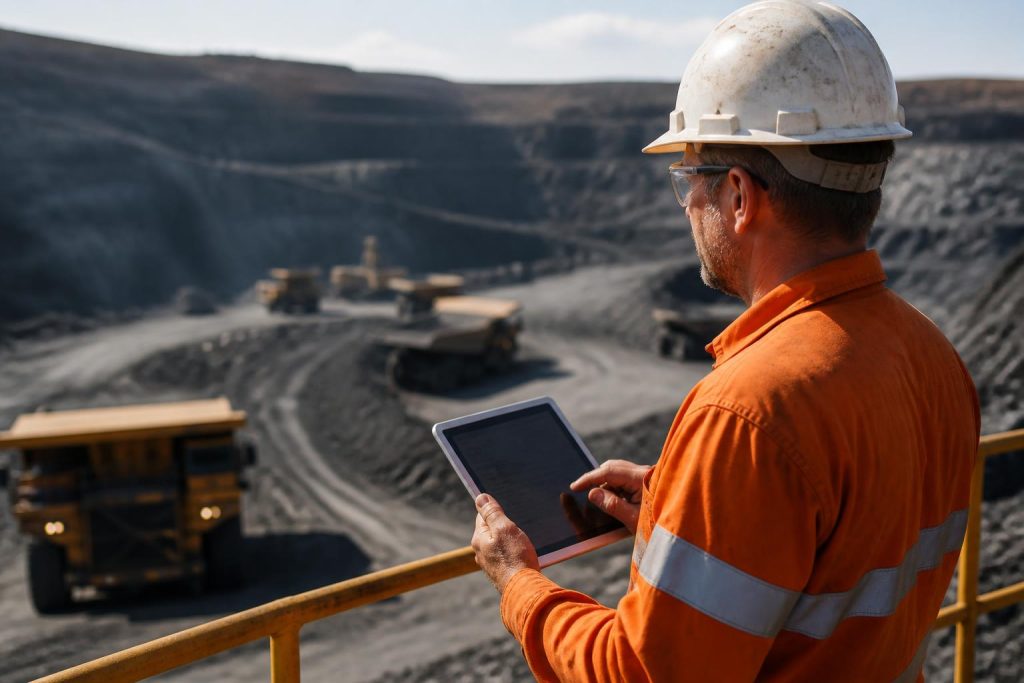
In the mining sector, vast amounts of data are processed daily from various sources such as task orders, shift reports, instrument readings, and accounting logs. Any discrepancies—be it a measurement error, a missed event, or an incorrectly recorded downtime—can distort the operational picture, leading to misguided management decisions and unplanned downtimes that can result in significant financial losses for mining companies. Automation of reporting is emerging as a vital solution to streamline data handling, transforming disparate metrics into reliable summaries.
Tim Zinin, managing partner at ‘Zinin, Shturbin and Partners’, a firm specialising in the implementation of AI in industrial documentation, elaborates on the tools available for automating reports. One of the critical issues in shift reporting is that the final report rarely reaches management in a complete form. Zinin points out that the same shift hour may be described differently in various documents, creating confusion. For instance, one employee may note a ‘conveyor stop’, while another might refer to it as ‘loading unit downtime’. This inconsistency, along with variations in recording times and measurement units, leads to reports that lack a direct link to the original source, rendering the aggregated data unreliable.
The data processing begins with collecting primary sources such as scanned documents, photographs of forms, data exports from accounting systems, and Excel spreadsheets. The digital system structures these documents by identifying the site, shift, equipment, and relevant metrics. It extracts events from free text, such as specific equipment stoppages or complaints about safety conditions. Handwritten notes and illegible scans require additional steps for recognition, ensuring that errors are flagged for human verification before being included in the summary.
The automation process culminates in a comprehensive report that can be generated daily, weekly, or by site. When management poses a question, they receive an answer linked to the specific document and the relevant line within it, allowing for rapid verification of claims. Zinin emphasises that every figure and statement must trace back to the original report, enhancing accountability and transparency in data reporting.
However, Zinin cautions that AI should not replace human oversight in certain situations. When discrepancies arise between two versions of a report, the system prompts human intervention to determine the correct version. Moreover, the system must also account for access rights, as different employees may have varying permissions to view specific documents. Critical incidents, such as accidents or safety issues, must always be reviewed by a human, ensuring that the decision-making process remains robust and informed.
To successfully implement automated reporting, several conditions must be met: a unified list of equipment and sites for data comparison, a documented version of regulations and instructions, and a designated individual responsible for resolving disputes. The effectiveness of automation can be measured through metrics such as the time taken from the end of a shift to the completion of a report, the percentage of reports processed without manual adjustments, and the frequency of disputes flagged for human review.
Prominent companies in Central Asia are already digitising their documentation processes and automating report handling. For instance, the Almalyk Mining and Metallurgical Complex has implemented a business process management system that has reduced paper reports by 92%. Similarly, the Eurasian Resources Group has automated 47 business processes, resulting in a 40% reduction in approval times and saving $50,000 annually in processing costs. These examples highlight how digital transformation is simplifying production management in the mining industry, paving the way for more efficient operations and improved decision-making.