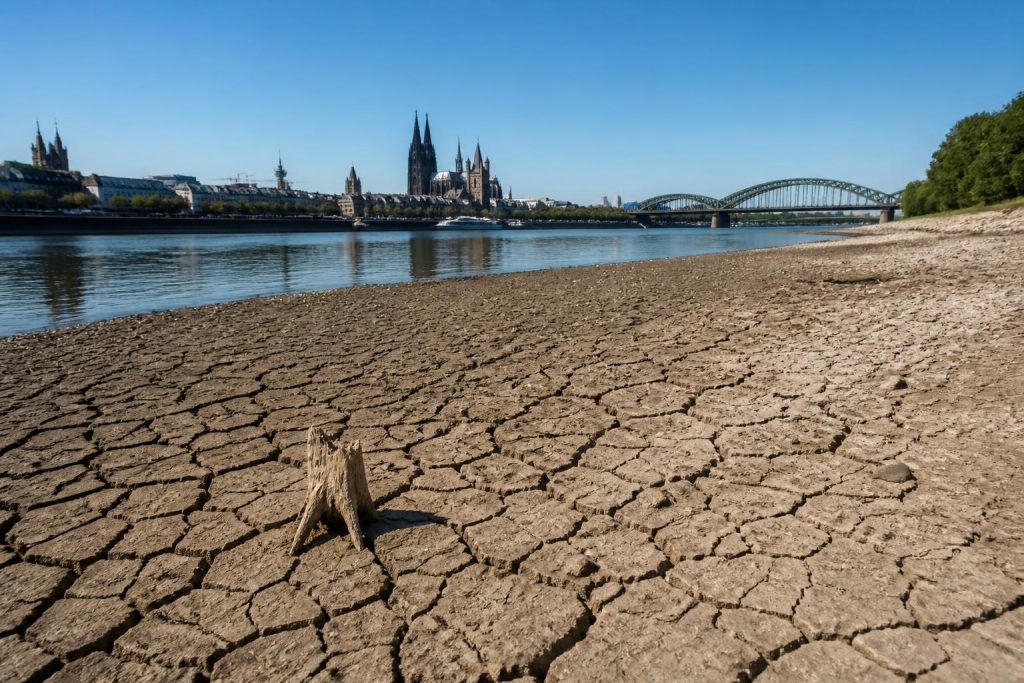
Europe is grappling with a severe drought as its major rivers, including the Rhine and Danube, experience unprecedented low water levels due to a series of extreme heat waves. This situation poses significant challenges for the region’s heavy industries, which rely heavily on these waterways for the transportation of essential goods such as chemicals and oil products. As water levels drop, freight costs are rising, and power generation at riverside nuclear reactors is being curtailed, leading to increased energy prices and economic strain, particularly in Eastern Europe.
The Rhine, a critical shipping route, has seen water levels at key chokepoints like Kaub plummet to 25 centimeters, matching the lows recorded during the drought of 2018. Experts predict that levels could fall even further, potentially reaching historic lows not seen since records began in 1880. Companies like BASF, which were forced to reduce production during past droughts, are now seeking alternative transport methods, albeit at higher costs. The situation has prompted discussions among industry leaders about the long-term implications for supply chains and the competitiveness of European industries against global rivals.
As the drought continues, countries like Hungary and Romania are facing severe energy challenges, with Hungary shutting down its only nuclear plant for the first time in its history due to insufficient cooling water. The Hungarian government has called for more prudent energy and water consumption, while Romania remains on alert as it seeks support from neighbouring Ukraine during peak demand. The ongoing heat waves and drought conditions are not only impacting industrial operations but also threatening agricultural practices, as rivers like the Po in Italy dwindle below historic lows, raising concerns about irrigation and saltwater intrusion. With forecasts indicating continued high temperatures and limited rainfall, the outlook for Europe’s rivers remains bleak, underscoring the urgent need for adaptation to the realities of climate change.