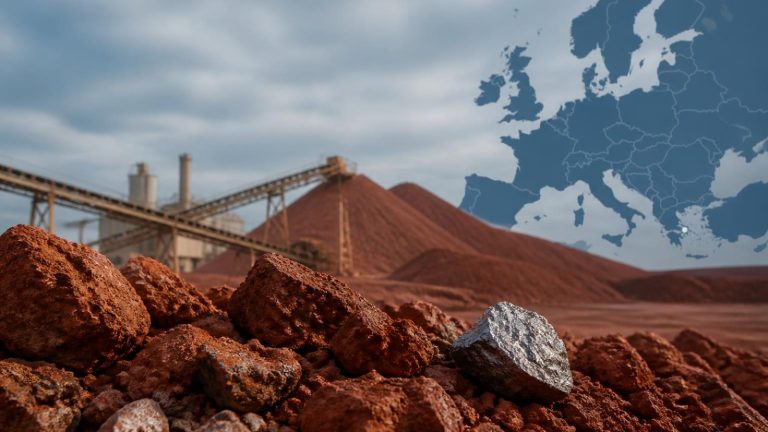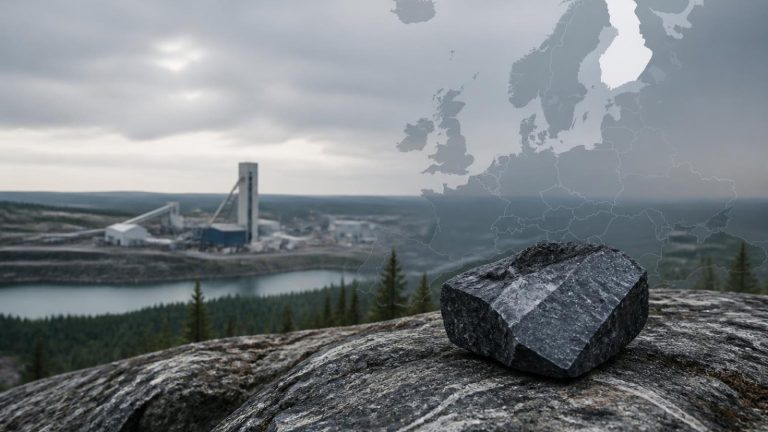
Recent drilling results from the Korsnäs rare earth project in Finland are drawing attention to Europe’s geological potential in critical minerals, but they also highlight a deeper challenge for the continent: the lack of domestic processing capacity.
Exploration company European Resources reported its strongest rare earth intercept to date at the project, including a 31.5-metre interval averaging 4,902 parts per million total rare earth oxides (TREO). The mineralisation also contains a relatively high proportion of neodymium and praseodymium (NdPr), accounting for roughly 28–30% of the rare earth mix.
While encouraging, the results represent only an early stage of resource development. The next phase will require additional drilling and modelling to confirm the continuity and scale of the deposit.
NdPr is particularly important because it forms the foundation of permanent magnets used in electric vehicles, wind turbines, defence systems and other advanced technologies. These magnet rare earth elements are considered among the most strategically important minerals for Europe’s industrial and energy transition.
However, experts note that discovering deposits alone does not guarantee supply security. In the rare earth sector, the most complex and capital-intensive stage of development typically occurs after mining, during chemical processing, separation and waste management.
The Korsnäs project benefits from its location in Finland, a country with strong mining institutions, established infrastructure and relatively stable regulatory systems. This reduces certain development risks compared with projects in more uncertain jurisdictions.
Early mineralogical studies suggest the deposit contains monazite and apatite minerals, which can support certain processing routes. However, monazite often contains trace amounts of thorium or uranium, which can introduce stricter regulatory requirements related to residue handling and environmental protection.
Industry analysts say processing plants typically account for the largest share of capital expenditure in rare earth projects, often exceeding the cost of the mining operation itself. Complex processing flowsheets and environmental permitting requirements can significantly affect project economics and timelines.
European Resources has already begun metallurgical testing and downstream processing studies with the Australian Nuclear Science and Technology Organisation (ANSTO) to evaluate potential separation technologies and processing pathways.
Another notable feature of the Korsnäs results is the relatively high proportion of NdPr within the deposit. While TREO measures total rare earth content, economic value is usually concentrated in magnet elements such as neodymium and praseodymium, with smaller contributions from dysprosium and terbium. Deposits dominated by cerium and lanthanum, which are more abundant but less valuable, often face weaker economics.
The development of projects such as Korsnäs also intersects with broader European industrial policy. Under the EU’s Critical Raw Materials Act, the bloc aims by 2030 to extract at least 10% of its annual demand for strategic minerals domestically, process 40% within the EU and source 25% from recycling.
Achieving those targets will require major investment not only in mining but also in separation facilities, refining plants and downstream manufacturing. At present, China dominates the global rare earth processing sector, giving it significant influence over supply chains.
Analysts say that even if Europe develops new mines, the continent will remain vulnerable to supply disruptions unless it builds domestic separation and refining capacity.
The Korsnäs discovery therefore represents more than a geological milestone. It highlights Europe’s growing recognition that securing critical mineral supply will depend not only on discovering deposits, but also on developing the industrial infrastructure needed to process them.