Website: Europe.com

  • Sinkholes sow fear in former Polish mining town

    Sinkholes sow fear in former Polish mining town

    [vc_section][vc_row][vc_column][distance desktop_type=”30″][lvs][distance desktop_type=”30″][vc_btn title=”Source – the Peninsula” color=”sky” i_type=”material” i_icon_material=”vc-material vc-material-perm_device_information” add_icon=”true” link=”url:https%3A%2F%2Fthepeninsulaqatar.com%2Farticle%2F15%2F02%2F2023%2Fsinkholes-sow-fear-in-former-polish-mining-town|target:_blank”][distance desktop_type=”30″][vc_column_text]Photo by Wojtek RADWANSKI / AFP

    Kazakhstan ranks 108th out of 139 countries in terms of energy intensity of GDP, with its most energy-intensive sector being the mining industry. As the demand for solid minerals grows worldwide, experts predict a further increase in the energy intensity of metal production. This presents an opportunity for the country to capitalize on renewable energy sources (RES), as the mining industry turns to greener energy solutions.

    During the 13th MINEX Kazakhstan Mining and Exploration Forum, environmentalist Elena Borovikova highlighted the potential for alternative energy development in the mining industry. The use of wind, solar, and biomass energy is on the rise, along with emerging green hydrogen projects. The mining industry, being one of the most energy-intensive sectors, can greatly benefit from adopting renewable energy sources.

    Gold production is the most energy-intensive industry, with the highest greenhouse gas emissions per million tons produced. In 2017, over 3.5 tons of gold were produced globally, requiring approximately 250 terawatts of energy and resulting in about 75 million tons of carbon dioxide equivalent emissions. Switching to renewable energy sources can significantly reduce direct and energy emissions from production.

    There are already successful examples of alternative energy development in the global mining industry. Centamin’s Egyptian Sukari mine reduced its direct emissions by commissioning a 26-megawatt solar power plant with a battery system in 2022, saving 70,000 litres of diesel fuel per day. Similarly, Polyus Gold International managed to reduce its energy emissions by almost 100% by switching to hydroelectric power supplied by Russian companies.

    Renewable energy use in mining projects has grown significantly since 2015, with most of the projects launched in 2018-2019 being hybrid, combining solar and wind energy with batteries. Kazakhstan has substantial potential for renewable energy development, with 130 alternative energy facilities already operating in the country by the end of 2022, boasting an installed capacity of 2,400 megawatts.

    The renewable energy sector’s growth will lead to increased demand for metals such as copper, lithium, nickel, and neodymium, which are essential for creating solar and storage batteries and wind turbines. This provides additional opportunities for Kazakhstan, a country rich in mineral resources.

    In 2022, Kazakhstan generated 112.8 billion kWh of electricity, with 4.5 billion kWh coming from renewable energy facilities. The country’s government aims to increase the share of renewable energy in total electricity generation to 5% in 2023. As part of its commitment to achieving carbon neutrality by 2060, Kazakhstan is also considering building a nuclear power plant.

    Kazakhstan has all the prerequisites for developing nuclear power plants, such as significant uranium reserves, processing products, and a strong scientific base. The country is also focusing on cooperation with Total, Masdar, and ACWA Power for implementing joint investment projects in renewable energy.

    By embracing the green economy and focusing on renewable energy, Kazakhstan’s mining industry can greatly benefit from reduced emissions, cost savings, and sustainable growth. This shift will also contribute to the country’s commitment to achieving carbon neutrality by 2060, ensuring a cleaner and more prosperous future for all.[/vc_column_text][distance desktop_type=”30″][/vc_column][/vc_row][/vc_section]
  • Ukraine was poised to become an important rare earths exporter. Then came the invasion

    Ukraine was poised to become an important rare earths exporter. Then came the invasion

    [vc_section][vc_row][vc_column][distance desktop_type=”30″][lvs][distance desktop_type=”30″][vc_btn title=”Source – Coda Story” color=”sky” i_type=”material” i_icon_material=”vc-material vc-material-perm_device_information” add_icon=”true” link=”url:https%3A%2F%2Fwww.codastory.com%2Fwaronscience%2Fukraine-lithium-export%2F|target:_blank”][distance desktop_type=”30″][vc_column_text]Before Russia invaded Ukraine in February 2022, Ukraine, home to approximately 500,000 tons of high-quality lithium and vast quantities of rare earth elements, was poised to be a key player in the global transition to green technology. But as Russia has seized territory in Ukraine’s east and south, the future of the country’s critical raw materials has been thrown into question.

    Even before the war, Ukraine was at least 10 years away from reaping the financial rewards for some of its in-demand raw materials, vital ingredients in many products from iPhones to fighter jets. Most rare earths are, in fact, not all that rare. But extracting and purifying the lightweight elements is expensive, dangerous and environmentally damaging. Almost all of Ukraine’s critical materials and rare earths can be easily found elsewhere. International investors might seek less risky alternatives.

    As the war grinds into its second year, the European Union, the United States and other Western powers are making strategic investments around the world to diversify away from their dependence on Chinese and Russia-sourced critical raw materials — investments that will translate into mines and infrastructure in places other than Ukraine and greatly undermine Ukraine’s ability in the future to compete in the critical raw materials market.

    “Most of the foreign natural resource development is probably off the table,” said Chris Berry, an analyst on critical raw materials at House Mountain Partners in Washington, D.C. Even after the war, investor confidence is likely to be deeply shaken. The demining process alone will take approximately ten years according to Ukrainian officials. Russia has contaminated vast swathes of territory with landmines and other unexploded ordnance.

    The total value of Ukraine’s deposits is believed to be astronomical, a prospective loss to add to the estimated $138 billion worth of damage caused so far by Russian strikes on Ukrainian infrastructure.

    Ukraine and the European Commission had signed a strategic partnership agreement on raw materials in 2021, heralded as a significant step forward for Ukraine in the renewables space. It was an accord that also boosted the confidence of foreign mining companies moving to secure Ukrainian exploration permits, the first step in the mining process.

    The Ukrainian government has not publicly announced how many lithium fields and promising areas are now under Russian occupation. Before the invasion, no lithium was being extracted from Ukraine. But several licenses were in various stages of development, including the Shevchenkivske field in the Donetsk region, the Kruta Balka block in the Zaporizhzhia region and the Dobra block and the Polokhivske field in the Kirovohrad region. Both the Shevchenkivske field and the Kruta Balka have danced along the war’s ever-moving frontlines.

    Despite this, Ukrainian officials have presented an image of a stalwart critical materials partner to the EU, and last month Ukraine and the EU reaffirmed the strategic importance of their alliance. In December, Ukraine’s parliament passed mining reform legislation to increase the attraction of the country’s extraction industries.

    The invasion coincided with the EU’s quest to seek alternatives from China in order to meet its ambitious goal of achieving carbon neutrality by 2050. The pandemic established the need to move away from single suppliers like China, while the Ukraine invasion underscored the geopolitical vulnerabilities for Europe that exist close to home.

    China supplies Brussels with 98% of the EU’s supply of rare earth elements. It’s a supply chain that Olivia Lazard, a fellow at the Carnegie Endowment for International Peace, said needs to be reviewed.

    In fact, the issue of raw materials tops Brussels’ political agenda. Last September, the president of the European Commission, Ursula von der Leyen, announced the European Critical Raw Materials Act. “Lithium and rare earths are already replacing gas and oil at the heart of our economy,” said von der Leyen in a speech, adding that Europe has to “avoid falling into the same dependency as with oil and gas.”

    While Europe has been moving away from reliance on Russian oil and gas, Russia continues to hold many of the essential elements for the West’s green transition. Russia accounts for approximately 7% of the global supply of nickel, a vital ingredient in solar panels. It is also a leader in the global supply of aluminum, palladium, potash and vanadium. The EU imports approximately $7.4 billion a year in Russian raw materials.

    Russian metals and minerals have escaped the same kind of scrutiny that oil and gas exports have encountered. Norilsk Nickel, the world’s largest producer of palladium and high-grade nickel, owned by the Putin-supporting oligarch Vladimir Potanin, has not come under Western sanctions. Russian nickel exports to the U.S. and the EU actually saw a boost in 2022. “If you look into the sanctions, you will see that the EU has been more cautious on certain types,” said Vasileios Rizos, the head of sustainable resources and circular economy at CEPS, a think tank. “The whole raw materials agenda comes from a more strategic perspective at the EU level.”

    In 2020, Russia pledged $1.5 billion for mining rare earth minerals with the goal of becoming the biggest producer after China. Capturing raw materials on Ukrainian land will redound to Russia’s benefits, allowing the Kremlin to keep the materials off world markets.

    Russia’s Wagner paramilitary group is believed to collect raw material deposits to shore up its finances. “This tells us something about the nature of the Russian approach now regarding security and defense,” said Lazard, the Carnegie fellow. “Geology is now an asset and geological exploration is a competency to wield in the global geopolitical competition.”[/vc_column_text][distance desktop_type=”30″][/vc_column][/vc_row][/vc_section]
  • Lithium Mines In Europe? A New World Of Supply-Chain Sovereignty

    Lithium Mines In Europe? A New World Of Supply-Chain Sovereignty

    [vc_section][vc_row][vc_column][distance desktop_type=”30″][lvs][distance desktop_type=”30″][vc_btn title=”Source – World Crunch” color=”sky” i_type=”material” i_icon_material=”vc-material vc-material-perm_device_information” add_icon=”true” link=”url:https%3A%2F%2Fworldcrunch.com%2Fbusiness-finance%2Flithium-mines-in-europe%23toggle-gdpr|target:_blank”][distance desktop_type=”30″][vc_column_text]It is one of the great paradoxes of our time: in order to overcome some of our dependencies and vulnerabilities — revealed in crises like COVID and the war in Ukraine — we risk falling into other dependencies that are no less toxic. The ecological transition, the digitalization of our economy, or increased defense needs, all pose risks to our supply of strategic minerals.

    The European Commission published a plan this week to escape this fate by setting realistic objectives within a relatively short time frame, by the end of this decade.

    This plan goes against the dogmas of globalization of the past 30 or 40 years, which relied on just-in-time supply chains from one end of the planet to the other — and, if we’re being honest, outsourced the least “clean” tasks, such as mining or refining minerals, to countries in the developing world.

    But the pendulum is now swinging in the other direction, if possible under better environmental and social conditions. Will Europe be able to achieve these objectives while remaining within the bounds of both the ecological and digital transitions? That is the challenge.

    EV batteries

    The plan presented Thursday in Brussels lists these critical or strategic minerals, which are found in so-called clean technologies, such as electric vehicle batteries or solar panels, but also in satellites, computer equipment, or weapons. Demand is only growing: for example, lithium for electric vehicle batteries is expected to be multiplied by 12 by 2030, and the rare earths needed for wind turbines are expected to be multiplied by four or five.

    The EU is asking its member states, in order to ensure the sovereignty of the continent, to plan to extract 10% of the needs from European soil by 2030. A lithium mine project is planned in France, after years of the country having abandoned any mining ambitions.

    It is also asking for 15% of needs to be met through recycling, a rapidly growing and virtuous sector. Another objective is to limit the share of a single third country in the supply of a critical mineral to 65%, so as not to end up, as in the case of Russian gas, in the hands of a single supplier.

    Caught between U.S. and China

    We can truly question the ability of the 27 EU countries to succeed in both transitioning their model, creating new supply chains, reintroducing sectors of activity that Europe had turned its back on, and protecting their sovereignty. This is a dizzying challenge.

    China has monopolized a good part of the mining resources in Africa and Latin America.

    This notably involves the relationships that Europe will be able to build with the countries producing these minerals, because the current situation is problematic. First, because China has increasingly monopolized a good part of the mining resources in Africa and Latin America, with a real vision that the West did not have. China has also been willing to pay the price for the degradation of its environment, for example, to exploit rare earths that the rest of the world no longer wanted.

    Europe has faced multiple major challenges in recent months, such as the future plans for electric vehicle batteries plan or semiconductors. Caught between the attractiveness of the United States with their cheaper energy and generous subsidies, and the hegemonic risk posed by China, Europe is also betting on the future in a real way.

    [/vc_column_text][distance desktop_type=”30″][/vc_column][/vc_row][/vc_section]

  • Ukraine’s coal miners dig deep to power a nation at war

    Ukraine’s coal miners dig deep to power a nation at war

    [vc_row][vc_column][/vc_column][/vc_row][vc_row][vc_column][lvs][distance desktop_type=”30″][vc_column_text]

    Deep underground in southeastern Ukraine, miners work around the clock extracting coal to power the country’s war effort and provide civilians with light and heat.

    Coal is central to meeting Ukraine’s energy needs following the Russian military’s campaign to destroy power stations and other infrastructure, the chief engineer of a mining company in Dnipropetrovsk province said.

    Elevators carry the company’s workers underground to the depths of the mine. From there, they operate heavy machinery that digs out the coal and moves it above ground. It is hard work, the miners say, but essential to keep the country going.

    “Today, the country’s energy independence is more than a priority,” said Oleksandr, the chief engineer, who, like all the coal miners interviewed, spoke on the condition of giving only his first name for security reasons.

    Russia’s attacks on Ukraine’s nuclear, thermal and other power stations continue to disrupt electricity service as the war grinds on for a second year.

    Before the war, the Ukrainian government planned to reduce the country’s reliance on coal-fired power stations, which contribute to global warming, and to increase nuclear energy and natural gas production. But when Russian attacks damaged thermal plants in the middle of winter, it was coal that helped keep Ukrainian homes warm, Oleksandr said.

    The work of the coal miners cannot fully compensate for the loss of energy from nuclear power plants, but every megawatt they had a role in generating reduced gaps.

    While many miners from the area joined the armed forces when Russian troops invaded and are now fighting at the front in eastern Ukraine, nearly 150 displaced workers from other coal-producing regions in the east joined the team in Dnipropetrovsk.

    A man named Yurii left the embattled Donetsk province town of Vuhledar, where he worked as a coal miner for 20 years. “The war, of course, radically changed my life,” he said. “It is now impossible to live there and the mine where I used to work.”

    “Life begins from scratch,” he said.[/vc_column_text][/vc_column][/vc_row]

  • Spac Copper Mine, Albania

    Spac Copper Mine, Albania

    On 7 July 2022, a group of the MINEX Euope’22 Forum participants visited the Spac Copper mine operated by Tete Albania. Delegates visited two underground mines and a copper enrichment plant.  Spac Copper is one of the most productive mines of the area with an active tunnel of 12 km and around 3 million tons of recoverable reserves to be mined. TETE Albania plans to mine 3.6 million tons of ore with SPAC Project.

    Photos>>>

    Date: 7 July 2022

    Location: The SPAC project is at a very important spot logistically, located at a 90-km distance from Tirana.

    Highlights:

    • Spac copper mine (the second largest copper mine after Munella copper in Albania) has 3.6 million tons geologic reserve with 2.8 million tons (with 0.88% Cu grade) recoverable reserve.  
    • The Spac Deposit was discovered in 1954, with the initial exploration being carried out by Russian geologists up until 1960. Underground development began in 1966. Albanian Government invested in the mine for more than 81.000 meters of drilling, excavation of 140 m deep internal shaft and 12.000 meters of drifting during the communist regime. 
    • The mine was used as a political prison camp from 1966 until 1991, with much of the mine development and production being carried out manually by prison workers.  

  • Ellatzite Med, Bulgaria

    Ellatzite Med, Bulgaria

    MINEX Europe 2019 Forum participants visited Ellatzite-Med to explore the latest developments and opportunities in the Bulgarian mining industry.

    Photos>>>

    Date: 27 June 2019

    Location: located near the village of Mirkovo east of Sofia, Bulgaria

    Ellatzite-Med AD, part of GEOTECHMIN GROUP, is among the leading mining companies in Bulgaria, dealing mainly with open-pit mining and primary processing of porphyry copper gold-bearing ores from the Ellatzite deposit.

    Highlights:

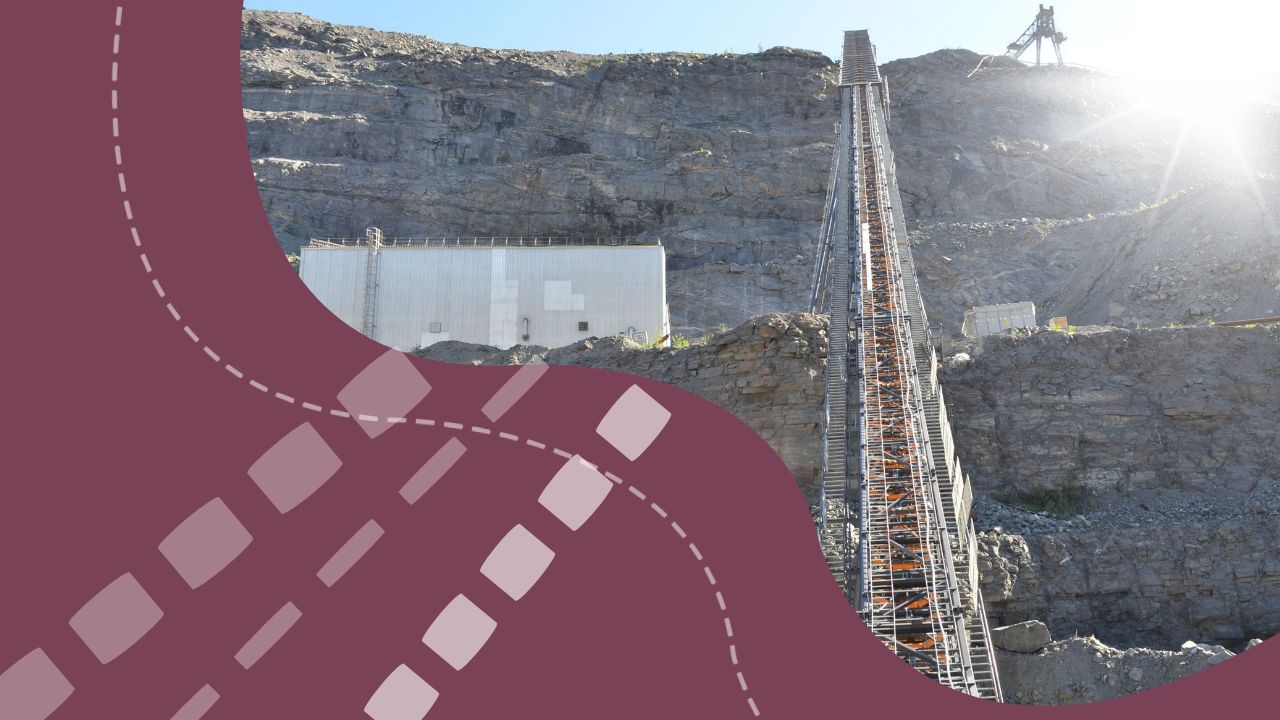
    • Ellatzite-Med AD is one of the largest copper mining companies in Bulgaria, dealing mainly with the extraction and processing of copper porphyry gold-bearing ores from the Ellatzite deposit. The extracted ore is transported from the Ellatzite open-pit mine located near the town of Etropole to the Flotation Complex in Mirkovo village on a 6.5 km underground rubber-belt conveyor line which was driven beneath Stara Planina Mountain.
    • It is a structural-determinant enterprise in the Bulgarian economy and one of the largest investors and taxpayers. The company employs about 1,770 staff, most of whom are residents.
    • Over the years, various programmes have been elaborated to ensure the long-term operation of the company and to improve the financial and technical parameters of copper ore extraction and processing. Ellatzite mine ranks among the top copper-producing companies with the largest production capacities in Europe. The implementation of new projects and substantial investments in capital construction and technological equipment guarantee the sustainable operation of the mine complex in strict compliance with the relevant health, safety and environmental regulations.
  • Assarel-Medet Mining and Processing Complex, Bulgaria

    Assarel-Medet Mining and Processing Complex, Bulgaria

    The MINEX Europe 2019 Forum participants visited Assarel-Medet Mining and Processing Complex in Bulgaria.

    Assarel-Medet JSC Mining and Processing Complex is the first, biggest and leading Bulgarian company for open pit mining and processing of copper and other types of ores. The company has at its disposal mining machines which are unique for the country and state-of-the-art flotation equipment of leading world manufacturers. The main mining equipment of Assarel Mine includes modern 250-mm bit drilling units, 130-tonne trucks and 17 cubic meter shovels. The first in the North Hemisphere 160-m3 flotation cells of the latest generation are operational at the Assarel Concentrator Plant. Automated systems for technological process management and control have been implemented at the Assarel Mine and Concentrator Plant which ensure high efficiency and throughput.

    Photos >>>

    Date: 27 June 2019

    Location: 11 km northwest of the town of Panagyurishte and 90 km east of the capital Sofia, Bulgaria

    Highlights:

    The Assarel-Medet Mining and Processing Complex is the foremost mining operation in Bulgaria, specializing in open-pit mining and processing of copper ores.

    Formation and Scope: Established in 1986 through the merger of Assarel and Medet, it’s Bulgaria’s largest mining enterprise.

    Production Capacity: Processes approximately 14.5 million tons of ore annually.

    Infrastructure: Features modern equipment such as 250-mm bit drilling units and 130-ton trucks.

    Corporate Importance: Integral to Bulgaria’s industrial sector, known for its scale and technological advancements.

    Environmental and Economic Impact: Plays a crucial role in local employment and economic stability, ensuring sustainable resource management.

  • Bucim Mine, North Macedonia

    Bucim Mine, North Macedonia

    On 14 June 2018, the MINEX Europe’18 Forum delegates visited Buchim Mine operated by Solway Group.

    The Bucim mine, located in Radovish, North Macedonia, is a significant copper and gold mining operation. Bucim is an open pit mine which produces a concentrate containing copper and gold. It processes over 4.5 million tonnes of ore annually. Buchim operations in Macedonia have been granted complex, integrated environmental permits, as well as international certificates of environmental management systems ISO 14001 and production system management ISO 9001.

    Photos>>>

    Date: 14 June 2018

    Location: Radovish Municipality in southeastern North Macedonia

    Highlights:

    Mineralization: It is an actively mined porphyry copper-gold deposit associated with Tertiary subvolcanic intrusions.

    History: Operational since 1978, it employs both open-pit and underground mining methods.

    Ownership: Managed by Bucim DOO Radovish, a part of the Solway Group, it is the only operating copper and gold mine in North Macedonia.

    Significance: Bucim mine plays a crucial role in the local economy and has been pivotal in the mining sector of North Macedonia for several decades.

    History: The construction of the Buchim mine, located in Southeastern Macedonia, began in 1976 and the plant became operational in 1979 as a conventional open-pit copper and gold mine and flotation mill. The mine went bankrupt around the year 2000, due to depletion of the high-grade portion of the mine during the Yugoslavian era, combined with inefficient management, rendering the facility ill-equipped to deal with prolonged periods of low metal prices.  Solway acquired Buchim in 2005, winning the Macedonian government’s international tender.  Within a short period, Solway had repaired or replaced the mining fleet and implemented upgrades to the flotation circuit.

    Production: Buchim is an open pit mine that produces clean flotation concentrate containing copper, gold, and silver. It processes over 4.5 million tons of ore per year. Over 40,000 tons of copper concentrate containing gold and silver are produced per year. In 2012, Solway built a small SXEW plant to process the oxidized portions of that mineralization and extract the copper from waste dumps that remained from previous decades of Buchim’s history. Today, the SXEW plant has a capacity of over 2,000 tons of 99.99% cathode copper per year. The new operation makes a significant contribution to the profitability of the mine. It also reduces the mine’s impact on the environment.

    Buchim’s ore contains 0.2–0.3% of copper and 0.2–0.3 grams per ton (g/t) of gold. The copper concentrate does not contain any significant impurities and, due to its quality, is highly sought after by European smelters; the end product was transported to the copper smelters in Bulgaria.

    Since 2005, the Solway Investment Group has invested over €32.6 million into the Buchim mine. This investment has supported the modernization and development of the mine, including the instalment of automated processing operations, flotation circle upgrades, the construction of a new tailings dump and reagents workshop, the recultivation of an old tailing dump, and the introduction of a closed water consumption cycle. In 2011, the Group invested €12 million and launched a new SXEW (copper leaching) plant and started producing cathode copper. When in full capacity, the new SXEW facility is able to produce up to 2,000 metric tons of copper per year (t/yr). The €12 million investment into the copper leaching plant construction not only increased Buchim’s economic efficiency but also decreased the plant’s impact on the environment.

    With 600 employees, the mine is the biggest local employer in the region and is fully committed to its social and environmental responsibilities.

    Since 2005, Solway has invested over US $2.5 million in the development of civic infrastructure and environmental protection in the towns neighbouring the Macedonian mine of Buchim. This includes, but is not limited to the maintenance of local athletic, cultural, and educational facilities; the purchase of medical equipment for local hospitals; the construction of local roads and other infrastructure; the implementation of a closed loop and environmental management control systems.

  • Čukaru Peki deposit, Serbia

    Čukaru Peki deposit, Serbia

    On 16 June 2017, MINEX Europe Forum visited the Čukaru Peki deposit managed by Rakita Exploration in Serbia. Zijin Mining secured a 100% interest in the Čukaru Peki Copper-Gold Mine through two transactions in 2018 and 2019.

    Photos>>>

    Date: 16 June 2017

    Location: Eastern Serbia, central Timok Magmatic Complex

    Highlights:

    • Čukaru Peki is a world-class copper-gold mine in Bor, Serbia.
    • Cukaru Peki site was discovered in July 2012 by Rakita, a local company through which the project was managed, headed by the geologist Dejan Kozelj.
      The Čukaru Peki deposit, located in Serbia’s Bor District, is a significant copper-gold deposit within the Timok Magmatic Complex. Discovered in 2012, it consists of the Upper Zone and Lower Zone, with the Upper Zone containing high-grade copper-gold ore. This deposit is considered world-class due to its substantial mineral resources and economic potential.
      The geological setting of Čukaru Peki is characterized by porphyry-type mineralization. Ongoing exploration and development efforts indicate its importance in Serbia’s mining sector, with trials underway to assess its operational viability. This deposit plays a crucial role in Serbia’s mineral resource strategy, contributing significantly to its economic growth and mining industry development. The Cukaru Peki deposit is subdivided into an Upper Zone (“UZ”) of high-sulphidation epithermal mineralization and the underlying Lower Zone (“LZ”) of porphyry type mineralization.
    • The Cukaru Peki UZ Mineral Resource comprises an Indicated Mineral Resource of some 1.7 Mt above a cut-off grade of 0.75% copper, with average grades of 13.5% copper, 10.4 g/t gold and 0.23% arsenic and an Inferred Mineral Resource of some 35.0 Mt above a cut-off grade of 0.75% copper, with average grades of 2.9% copper, 1.7 g/t gold and 0.17% arsenic.
    • Zijin Mining secured a 100% interest in the Čukaru Peki Copper-Gold Mine through two transactions in 2018 and 2019.
    • In addition to Čukaru Peki, Zijin Mining operates another world-class copper asset in Serbia, the Bor Copper Mine. Their combined output was 240,000 tonnes of copper in 2023, making Zijin the second-largest copper miner in Europe.  The two mines in Serbia are undergoing de-bottlenecking and expansion, scheduled for completion by 2025. Once complete, their combined production capacity is expected to reach 300,000 tonnes per annum.