Website: Europe.com

  • Polish expert calls for partnership with China for e-mobility

    Polish expert calls for partnership with China for e-mobility

    [vc_section][vc_row][vc_column][distance desktop_type=”30″][lvs][distance desktop_type=”30″][vc_btn title=”Source – MNA China International” color=”sky” i_type=”material” i_icon_material=”vc-material vc-material-perm_device_information” add_icon=”true” link=”url:https%3A%2F%2Fworldcrunch.com%2Fbusiness-finance%2Flithium-mines-in-europe%23toggle-gdpr|target:_blank”][distance desktop_type=”30″][vc_column_text]A Polish expert said that he would see China, which accounts for 77 percent of global battery cells production output, as a partner than a competitor for Poland in this field.

    Poland had overtaken the United States with the world’s second-largest lithium-ion battery production capacity, behind only China, according to a report published last month by the Polish Alternative Fuels Association (PSPA).

    “I think the European and Polish e-mobility value chain is pursuing partnerships in all areas. So wherever there is a technological partnership, a partnership that leads to zero emission transport, then it’s definitely on the table,” said Aleksander Rajch, a board member of the PSPA told Xinhua in a recent interview.

    Rajch said that he attributes China’s success in the automotive battery industry to its big internal market, technological competitiveness, and access to resources.

    “China holds huge access and deposits of lithium and other critical raw materials. So China’s self-sustaining. It has a huge market, a huge potential,” he said. “The Chinese lithium-ion battery companies are coming to Europe, so the innovation is coming to Europe as well.”

    Rajch, also the external affairs director of PSPA, Poland’s largest NGO promoting e-mobility, said that in addition to good economic conditions and low cost to start businesses, Poland also has a “skilled workforce and proximity to the largest automotive market in the European Union (EU) — the German market.”

    Poland produces e-buses, components for charging infrastructure, software solutions, and lithium-ion batteries. “It’s a very good value chain,” Rajch said.

    Poland’s production capacity rose to 73 GWh, or 6 percent of the world’s total in 2022, according to the report. The value of exports in the battery sector increased 38-fold over the last six years from around 1 billion zloty (240 million U.S. dollars) in 2017 to 38.6 billion zloty in 2022, according to the Central Statistical Office of Poland.

    Noting that the electric vehicles (EV) industry has grown exponentially in China in recent years, Rajch said he is expecting more Chinese EVs on the roads in Europe.

    “With this new technology — electric mobility and everything that entails — China’s coming in as a very big and equal, if not dominating, contender to this (domain),” he said.

    “The market will change, and roads will change … There’ll be more mixed offers in Europe,” Rajch said. (1 Polish zloty = 0.24 U.S. dollar)[/vc_column_text][distance desktop_type=”30″][/vc_column][/vc_row][/vc_section]

  • Svec: Slovakia Supports EU’s Plan to Step Up Extraction of Raw Materials

    Svec: Slovakia Supports EU’s Plan to Step Up Extraction of Raw Materials

    [vc_section][vc_row][vc_column][distance desktop_type=”30″][lvs][distance desktop_type=”30″][vc_btn title=”Source – TASR” color=”sky” i_type=”material” i_icon_material=”vc-material vc-material-perm_device_information” add_icon=”true” link=”url:https%3A%2F%2Fwww.tasr.sk%2Ftasr-clanok%2FTASR%3A2023052200000289|target:_blank”][distance desktop_type=”30″][vc_column_text]Brussels, May 22 (TASR-correspondent) – Slovakia supports the EU’s plans to increase its own extraction of valuable raw materials, stated Economy Ministry State Secretary Peter Svec following a session of the EU Competitiveness Council in Brussels on Monday.

    The session focused on how to maintain the EU’s long-term competitiveness in the transition to a digital and green, zero-emission economy as well as how to deal with unnecessary textile waste.
    The ministers and state secretaries discussed the Net-Zero Industry Act, which aims to increase the Union’s share in the production of emission-neutral technologies such as solar panels, heat pumps, wind farms and hydrogen electrolysers, which are currently mostly produced in China and other Asian countries.

    “The act stipulates that at least 40 percent of these technologies must be produced in the EU,” Svec explained.

    Directly related to this regulation is a directive on critical raw materials, which are needed for zero-emission energy production. Svec noted that the EU has set a number of policy targets, for example, to ensure that at least 10 percent of the demand for raw materials is met from domestic European sources. However, he said, this requires a balance to be struck between increasing extraction in some countries and the impact of this process on the environment and population.

    Svec remarked that Slovakia does not have large oil and gas deposits, but it has access to several types of mineral resources. He stressed that the essence of the directive is that the EU, having learnt from its dependence on energy carriers from Russia, should not be dependent from other countries when it comes to key raw materials either.

    “We support this trend of simplifying various permits and resuming the extraction of these types of raw materials. In Slovakia’s case, we are curtailing coal mining, but Slovak mining has an opportunity to resume activities in the extraction of new types of raw materials that could be suitable in the transition to a zero-emission economy,” the secretary said.[/vc_column_text][distance desktop_type=”30″][/vc_column][/vc_row][/vc_section]
  • Svec: Slovakia Supports EU’s Plan to Step Up Extraction of Raw Materials

    Svec: Slovakia Supports EU’s Plan to Step Up Extraction of Raw Materials

    [vc_section][vc_row][vc_column][distance desktop_type=”30″][lvs][distance desktop_type=”30″][vc_btn title=”Source – TASR” color=”sky” i_type=”material” i_icon_material=”vc-material vc-material-perm_device_information” add_icon=”true” link=”url:https%3A%2F%2Fwww.tasr.sk%2Ftasr-clanok%2FTASR%3A2023052200000289|target:_blank”][distance desktop_type=”30″][vc_column_text]Brussels, May 22 (TASR-correspondent) – Slovakia supports the EU’s plans to increase its own extraction of valuable raw materials, stated Economy Ministry State Secretary Peter Svec following a session of the EU Competitiveness Council in Brussels on Monday.

    The session focused on how to maintain the EU’s long-term competitiveness in the transition to a digital and green, zero-emission economy as well as how to deal with unnecessary textile waste.
    The ministers and state secretaries discussed the Net-Zero Industry Act, which aims to increase the Union’s share in the production of emission-neutral technologies such as solar panels, heat pumps, wind farms and hydrogen electrolysers, which are currently mostly produced in China and other Asian countries.

    “The act stipulates that at least 40 percent of these technologies must be produced in the EU,” Svec explained.

    Directly related to this regulation is a directive on critical raw materials, which are needed for zero-emission energy production. Svec noted that the EU has set a number of policy targets, for example, to ensure that at least 10 percent of the demand for raw materials is met from domestic European sources. However, he said, this requires a balance to be struck between increasing extraction in some countries and the impact of this process on the environment and population.

    Svec remarked that Slovakia does not have large oil and gas deposits, but it has access to several types of mineral resources. He stressed that the essence of the directive is that the EU, having learnt from its dependence on energy carriers from Russia, should not be dependent from other countries when it comes to key raw materials either.

    “We support this trend of simplifying various permits and resuming the extraction of these types of raw materials. In Slovakia’s case, we are curtailing coal mining, but Slovak mining has an opportunity to resume activities in the extraction of new types of raw materials that could be suitable in the transition to a zero-emission economy,” the secretary said.[/vc_column_text][distance desktop_type=”30″][/vc_column][/vc_row][/vc_section]

  • Poland boosts its gold reserves by 15 tonnes, biggest increase in nearly 3 years

    Poland boosts its gold reserves by 15 tonnes, biggest increase in nearly 3 years

    [vc_section][vc_row][vc_column][distance desktop_type=”30″][lvs][distance desktop_type=”30″][vc_btn title=”Source – Kitco News” color=”sky” i_type=”material” i_icon_material=”vc-material vc-material-perm_device_information” add_icon=”true” link=”url:https%3A%2F%2Fwww.kitco.com%2Fnews%2F2023-05-22%2FPoland-boosts-its-gold-reserves-by-15-tonnes-biggest-increase-in-nearly-3-years.html|target:_blank”][distance desktop_type=”30″][vc_column_text]Polish central bank bought 14.8 tonnes of gold in April, which was the biggest purchase since June 2019.

    According to the National Bank of Poland, the country’s gold reserves rose to 7.828 million fine troy ounces (243.5 metric tonnes) last month from 7.352 million. This was the largest increase since June 2019, when Poland’s reserves rose by 94.9 tonnes.

    The value of gold, including gold deposits and gold swapped, climbed to $15.52 billion in April from $14.55 billion.

    The April purchase also comes after the Bank’s Governor Adam Glapinski’s said in 2021 that Poland was planning to add 100 tonnes to its gold holdings to prepare for “the most unfavorable circumstances.”

    “Why does the central bank own gold? Because gold will retain its value even when someone cuts off the power to the global financial system,” Glapinski told local newspaper. “Of course, we do not assume that this will happen. But as the saying goes – forewarned is always insured. And the central bank is required to be prepared for even the most unfavorable circumstances. That is why we see a special place for gold in our foreign exchange management process.”

    This means that more buying could follow, said BMO Capital Markets managing director Colin Hamilton. “We expect central bank buying to remain robust this year (+596t), an ongoing tailwind for gold prices and sentiment,” Hamilton said.

    Central bank gold buying has been one of the driving forces behind higher gold prices this year.

    According to the World Gold Council, other central banks that bought gold in April included the People’s Bank of China, the Czech National Bank, and the Central Bank of Mongolia, with 8.1 tonnes, 1.8 tonnes, and 1 tonne, respectively.

    On the other hand, the Central Bank of Turkey is estimated to have sold a staggering 80.8 tons of gold in April to meet surging domestic demand. After buying the most gold than any other central bank last year, Turkey turned to selling in March and April to meet growing domestic demand, the WGC said. This was in an attempt to limit the need to import gold, which has been weighing on Turkey’s current account deficit.

    Turkey has seen a surge in gold demand as citizens embraced the precious metal as a hedge against inflation, which ran at a pace of over 85% at one point last year, and local currency devaluation.

    To get the latest WGC numbers on central bank gold buying from the first quarter, click here.[/vc_column_text][distance desktop_type=”30″][/vc_column][/vc_row][/vc_section]
  • DTEK officially opens 114-MW wind farm in Ukraine

    DTEK officially opens 114-MW wind farm in Ukraine

    [vc_section][vc_row][vc_column][distance desktop_type=”30″][lvs][distance desktop_type=”30″][vc_btn title=”Source – Renewables Now” color=”sky” i_type=”material” i_icon_material=”vc-material vc-material-perm_device_information” add_icon=”true” link=”url:https%3A%2F%2Frenewablesnow.com%2Fnews%2Fdtek-officially-opens-114-mw-wind-farm-in-ukraine-823733%2F|target:_blank”][distance desktop_type=”30″][vc_column_text]Ukrainian private energy group DTEK announced on Monday that it has finalised the 114-MW Phase I of the Tyligulska Wind Power Plant (WPP) in the southern region of Mykolaiv.

    DTEK said in a statement that this is the world’s only wind farm being built in a major conflict zone, with staff working in bullet-proof vests, as the site is located just 60 miles (100 km) from the frontline. The construction process had to be halted in February 2022 when Russia’s invasion of Ukraine began. At the time, only six of the 19 turbines were erected.

    The company has invested USD 200 million (EUR 185m) in the construction of the facility, which is powered by 6-MW Vestas hardware. In Phase II of the project, DTEK intends to add up to 64 turbines to increase the plant’s capacity to 500 MW but those plans are dependent on its ability to obtain an additional USD 450 million in funding from foreign investors and state-backed international financial institutions, it said.

    “Today I want to say: we made a decision to resume the construction of the wind power plant and the first stage of the station started working at full capacity. The war will not stop us,” stated Rinat Akhmetov, investor at SCM and DTEK shareholder.

    (USD 1.0 = EUR 0.926)[/vc_column_text][distance desktop_type=”30”][/vc_column][/vc_row][/vc_section]
  • German coal exit requires “heroic effort” – utility chief

    German coal exit requires “heroic effort” – utility chief

    [vc_section][vc_row][vc_column][distance desktop_type=”30″][lvs][distance desktop_type=”30″][vc_btn title=”Source – Montel” color=”sky” i_type=”material” i_icon_material=”vc-material vc-material-perm_device_information” add_icon=”true” link=”url:https%3A%2F%2Fwww.montelnews.com%2Fnews%2F1500606%2Fgerman-coal-exit-requires-heroic-effort–utility-chief|target:_blank”][distance desktop_type=”30″][vc_column_text]This was because Germany still needed to put forward its subsidy plans to spur investment in reliable power capacity and the EU still needed to decide on these subsidies, while decisions for the post-coal era strategy were outstanding, Andreas Feicht told a group of energy industry leaders in Essen.

    To keep the lights on without coal, Germany would need to build up its renewables capacity, as well as 20-25 GW of adjustable generating capacity to provide security of supply and maintain its single pricing zone, he said.

    It would be clear by 2026 or 2027 if the goal was still attainable, he added.

    Feicht, who was an economics ministry undersecretary until 2021 under the previous coalition government of centre-right and centre-left parties, said he could not see the market providing the necessary pricing signals to spur that kind of build-up.

    “That’s why it’s really important that the proper signals are given,” he said, adding that meeting these goals would probably mean moving Germany to a capacity market, in which some power generators were paid whether they produced or not and were on standby when needed.

    However, he said that would not be possible without constructing the 20-25 GW of capacity so the economy ministry must quickly unveil its plan of how to get there.

    Germany aims to have 80% of its gross energy consumption from renewable sources by 2030 and to become carbon neutral by 2045.[/vc_column_text][distance desktop_type=”30″][/vc_column][/vc_row][/vc_section]
  • How will the Critical Raw Materials Act impact Europe?

    How will the Critical Raw Materials Act impact Europe?

    [vc_section][vc_row][vc_column][distance desktop_type=”30″][lvs][distance desktop_type=”30″][vc_btn title=”Source – Innovation News Network” color=”sky” i_type=”material” i_icon_material=”vc-material vc-material-perm_device_information” add_icon=”true” link=”url:https%3A%2F%2Fwww.innovationnewsnetwork.com%2Fhow-will-critical-raw-materials-act-impact-europe%2F33099%2F|target:_blank”][distance desktop_type=”30″][vc_column_text]Europe’s raw materials sector has huge economic potential that needs to be realised. The Critical Raw Materials Act will strengthen Europe’s technological advantage and allow Europe to compete globally in the raw materials sector.

    Critical raw materials are essential for a number of strategic industries including the renewable energy, digital, and defence sectors. The actions outlined in the Critical Raw Materials Act ensure that the EU can access a secure and diversified yet affordable supply of sustainable critical raw materials.

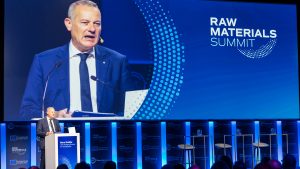
    At EIT RawMaterials’ 2023 Raw Materials Summit, Kerstin Jorna, Director-General for Internal Market, Industry, Entrepreneurship, and SMEs, Hildegard Bentele, Group of the European People’s Party, MEP, and Bernd Schäfer, CEO and Managing Director of EIT RawMaterials, discussed how the Act will increase Europe’s resilience, security, and ultimately benefit society as a whole.

    Why is the Critical Raw Materials Act important for Europe’s growth?

    As demand for critical raw materials grows, it is important that Europe reduces its reliance on imports from quasi-monopolistic third country suppliers.

    The Russian Invasion of Ukraine and nearing energy deployment targets highlighted the need for the Act to be created. Without a secure supply of raw materials, the EU’s transition to clean energy is put in jeopardy.

    The Critical Raw Materials Act will give the EU the tools to gain access to a secure supply of raw materials. The Act includes clear benchmarks for domestic capacities along the entire supply chain:

    • At least 10% of the EU’s annual consumption for extraction;
    • At least 40% of the EU’s annual consumption for processing;
    • At least 15% of the EU’s annual consumption for recycling; and
    • Not more than 65% of the Union’s annual consumption of each strategic raw material at any relevant stage of processing from a single third country.

    At the Summit, Jorna emphasised the idea that the Critical Raw Materials Act is a revolution compared to other single market Acts.

    The Act focuses on the business case for raw materials, looking particularly at access to land, creating a bridge between public and private sources of financing, the importance of skills academies, and ensuring that there will be a market for the raw materials.

    Bernd Schäfer, CEO and Managing Director of EIT RawMaterials, at the 2023 Raw Materials Summit

    There is still room for improvement within the Act

    However, as discussed at the Summit, the leaders posed that there is room for improvement within the Critical Raw Materials Act.

    Bentele argued that the Act requires more coherence. Particularly, more emphasis needs to be put on the strategic importance of the Act which will give leverage for the interpretation of existing legislation on critical raw materials.

    Schäfer added that what is missing within the Act is ensuring that the actions are operational. The Act must be tangible, and it is important that major stakeholders are included.

    What does Europe need to look towards for 2030?

    The discussion was rounded up with an outlook on Europe in 2030.

    Jorna emphasised the importance of reducing permitting times, and targeted that mine permitting should take no longer than two years. She also argued that a highly competitive skills engine should be developed which will help fill the gap of the 1.2 million jobs needed in the future.

    The raw materials sector should be made more attractive to further help fill this skills gap, added Schäfer. If raw materials are rebranded, it will play a role in attracting the huge workforce that is required from the younger generation.

    Bentele underlined that political will is urgently needed. If a secure supply of raw materials is not sourced for the green energy transition now, it will never be done. She argued that more strategic mining projects need to happen across Europe to facilitate movement within the sector.

    The Critical Raw Materials Act has the potential to help secure sustainable supply chains to ensure that the EU can transition to a green and digital future.[/vc_column_text][distance desktop_type=”30″][/vc_column][/vc_row][/vc_section]
  • How will the Critical Raw Materials Act impact Europe?

    How will the Critical Raw Materials Act impact Europe?

    [vc_section][vc_row][vc_column][distance desktop_type=”30″][distance desktop_type=”30″][vc_column_text]Europe’s raw materials sector has huge economic potential that needs to be realised. The Critical Raw Materials Act will strengthen Europe’s technological advantage and allow Europe to compete globally in the raw materials sector.

    Critical raw materials are essential for a number of strategic industries including the renewable energy, digital, and defence sectors. The actions outlined in the Critical Raw Materials Act ensure that the EU can access a secure and diversified yet affordable supply of sustainable critical raw materials.

    At EIT RawMaterials’ 2023 Raw Materials Summit, Kerstin Jorna, Director-General for Internal Market, Industry, Entrepreneurship, and SMEs, Hildegard Bentele, Group of the European People’s Party, MEP, and Bernd Schäfer, CEO and Managing Director of EIT RawMaterials, discussed how the Act will increase Europe’s resilience, security, and ultimately benefit society as a whole.

    Why is the Critical Raw Materials Act important for Europe’s growth?

    As demand for critical raw materials grows, it is important that Europe reduces its reliance on imports from quasi-monopolistic third country suppliers.

    The Russian Invasion of Ukraine and nearing energy deployment targets highlighted the need for the Act to be created. Without a secure supply of raw materials, the EU’s transition to clean energy is put in jeopardy.

    The Critical Raw Materials Act will give the EU the tools to gain access to a secure supply of raw materials. The Act includes clear benchmarks for domestic capacities along the entire supply chain:

    • At least 10% of the EU’s annual consumption for extraction;
    • At least 40% of the EU’s annual consumption for processing;
    • At least 15% of the EU’s annual consumption for recycling; and
    • Not more than 65% of the Union’s annual consumption of each strategic raw material at any relevant stage of processing from a single third country.

    At the Summit, Jorna emphasised the idea that the Critical Raw Materials Act is a revolution compared to other single market Acts.

    The Act focuses on the business case for raw materials, looking particularly at access to land, creating a bridge between public and private sources of financing, the importance of skills academies, and ensuring that there will be a market for the raw materials.

    Bernd Schäfer, CEO and Managing Director of EIT RawMaterials, at the 2023 Raw Materials Summit

    There is still room for improvement within the Act

    However, as discussed at the Summit, the leaders posed that there is room for improvement within the Critical Raw Materials Act.

    Bentele argued that the Act requires more coherence. Particularly, more emphasis needs to be put on the strategic importance of the Act which will give leverage for the interpretation of existing legislation on critical raw materials.

    Schäfer added that what is missing within the Act is ensuring that the actions are operational. The Act must be tangible, and it is important that major stakeholders are included.

    What does Europe need to look towards for 2030?

    The discussion was rounded up with an outlook on Europe in 2030.

    Jorna emphasised the importance of reducing permitting times, and targeted that mine permitting should take no longer than two years. She also argued that a highly competitive skills engine should be developed which will help fill the gap of the 1.2 million jobs needed in the future.

    The raw materials sector should be made more attractive to further help fill this skills gap, added Schäfer. If raw materials are rebranded, it will play a role in attracting the huge workforce that is required from the younger generation.

    Bentele underlined that political will is urgently needed. If a secure supply of raw materials is not sourced for the green energy transition now, it will never be done. She argued that more strategic mining projects need to happen across Europe to facilitate movement within the sector.

    The Critical Raw Materials Act has the potential to help secure sustainable supply chains to ensure that the EU can transition to a green and digital future.[/vc_column_text][distance desktop_type=”30″][/vc_column][/vc_row][/vc_section]

  • Where there is digging, there are raw materials | Economy | DW

    Where there is digging, there are raw materials | Economy | DW

    [vc_section][vc_row][vc_column][distance desktop_type=”30″][lvs][distance desktop_type=”30″][vc_btn title=”Source – Breaking Latest News” color=”sky” i_type=”material” i_icon_material=”vc-material vc-material-perm_device_information” add_icon=”true” link=”url:https%3A%2F%2Fwww.breakinglatest.news%2Fbusiness%2Fwhere-there-is-digging-there-are-raw-materials-economy-dw%2F|target:_blank”][distance desktop_type=”30″][vc_column_text]Anyone who plants a tree in their garden can, in the simplest case, use the excavated earth in the immediate vicinity. However, when Deutsche Bahn (DB) builds a tunnel, such masses accumulate – several million tons per year – that they usually end up in landfills. But sand, gravel, clay and natural stone could in many cases be used elsewhere, which is why DB sells the mineral raw materials from construction projects on a digital marketplace with its in-house start-up Erdpool.

    On the one hand, it’s about bringing the material into the economic cycle and stuff like that to conserve resources , says civil engineer Katrin Fischer, who developed the project with a team. “We also face the problem that we can’t get the material disposed of,” says Fischer. Many landfills are full. On the other hand, the railway saves high disposal costs. So the whole thing is not selfless.

    Procedure for large projects

    In the case of the large-scale Karlsruhe-Basel project, you can clearly see how it works. These would be done anyway to analyze the soil, says Fischer. The samples are examined from an environmental point of view to determine how high the arsenic content is. “Bad material has to go to the landfill.”

    Tunnel construction in Munich

    The experts can use the drill cores to identify the material they are dealing with: a few meters are very loamy, the layer underneath consists mainly of stones. The soil along the Karlsruhe-Basel route is not polluted, says Fischer. It was different at Stuttgart 21. “It wasn’t marketable.”

    “Material flow management for cost reasons alone”

    In principle, the idea is known. “For cost reasons alone, our large companies operate material flow management on their different and possibly even on the same construction site,” explains a spokeswoman for the German Construction Industry Association.

    During the construction of Berlin Airport BER, for example, excavated material was removed from one location and reused elsewhere in order to be able to make flat runways out of the hilly terrain.

    Autobahn GmbH, which, like Deutsche Bahn, is responsible for large construction projects, states that the top priority is to use the excavated and drilled material within the planned construction project.

    Germany | Stuttgart Central Station

    Stuttgart Central Station is to be used underground


    Environmental issues, transport and disposal costs

    According to the 13th monitoring report of the Circular Economy Construction Initiative, almost 86 percent of the “soil and stones” area is recycled – mainly for filling excavations and in landfill construction. According to the association spokeswoman, whether and how the material can be recycled also depends on whether it is possible at all in terms of environmental law and structural engineering and whether it can be presented at “reasonable” transport and disposal costs.

    Because the disposal of mineral construction waste is becoming more and more complicated and expensive, construction is becoming more expensive, according to a position paper by the Baden-Württemberg construction industry. In addition, the association complained, among other things, that there was too little planning, especially with regard to the disposal of the material, too few recycling options and landfills, and that public clients refused to use recycled building materials.

    Marketing platforms for excavation

    The Erdpool railway project has been in existence for almost two years. From the point of view of the construction industry, it is a marketing platform like those offered by others – such as Mineral Waste Manager and Schüttflix. About 15 to 20 percent of the excavation is marketable across all earth pool projects, explains co-initiator Fischer. According to the DB, it has over 150 customers in an international network.

    Tesla Work in Berlin-BrandenburgNew construction of the Tesla Gigafactory Berlin/Brandenburg

    These are, for example, the brick and cement industry, says Fischer. Sometimes old gravel pits could also be filled up or renatured terrain could be paved, such as banks. According to DB, more than eight million tons of offers are advertised on the platform. They are currently faced with requests for around 600,000 tons.

    Question of compensation for delivery bottlenecks not yet clarified

    Fischer and her team discuss with the customer whether, in the best case, the material can be delivered directly from the construction site by train and what types of wagons can be unloaded on site. It must be clarified with the authorities that the excavated earth may also be used. “First of all, that’s rubbish,” Fischer makes clear. Depending on the customer, the Erdpool people also carry out burning tests, for example, so that a cement manufacturer can find out more about the quality.

    When asked, the Association of German Cement Works did not want to comment on whether, for example, delivery bottlenecks could be compensated for. Autobahn GmbH, on the other hand, explains that as a public client it is not possible for it to market “excess masses”. But: “Alternative procedures based on the Deutsche Bahn Erdpool project are currently being examined.”[/vc_column_text][distance desktop_type=”30″][/vc_column][/vc_row][/vc_section]

  • Uniprom Ending Aluminium Smelting After 53 Years

    Uniprom Ending Aluminium Smelting After 53 Years

    [vc_section][vc_row][vc_column][distance desktop_type=”30″][lvs][distance desktop_type=”30″][vc_btn title=”Source – Aluminium Insider” color=”sky” i_type=”material” i_icon_material=”vc-material vc-material-perm_device_information” add_icon=”true” link=”url:https%3A%2F%2Faluminiuminsider.com%2Funiprom-ending-aluminium-smelting-after-53-years%2F|target:_blank”][distance desktop_type=”30″][vc_column_text]Montenegro’s aluminium producer Uniprom announced this week that it will be shuttering aluminium smelting operations after over half a century in production.

    Local media said the final dozen electrolysis cells will begin the process of ceasing production presently at KAP smelter. Production of aluminium logs and alloys will continue, but the plant will transition to third-party feedstock upon closure of the on-site aluminium smelter.

    For its part, Uniprom cast the blame on the Montenegrin government for making it impossible to go on.

    “The government illegally took emission credits from Uniprom and assigned them to EPCG, contrary to an EU directive. The European Energy Community has already started the procedure, and the damage is worth tens of millions of euros. After the EU report arrives, we will continue with further activities. Production at other factories at KAP remains uninterrupted.”

    The majority of the aluminium cells at the site were shuttered at the end of 2021 upon Elektroprivreda Crne Gore’s (EPCG) decision to stop providing the plant with electricity for €44/MWh (US$48/MWh), as wholesale power prices rose significantly since the previous power arrangement.

    About 50 workers will be laid off as a result of the closure.

    KAP entered bankruptcy a decade ago and was sold to Uniprom a year later. The company accounts for around one-fifth of Montenegro’s exported goods.[/vc_column_text][distance desktop_type=”30″][/vc_column][/vc_row][/vc_section]