Website: Europe.com

  • Germany will present security strategy this week, including focus on raw materials

    Germany will present security strategy this week, including focus on raw materials

    [vc_section][vc_row][vc_column][distance desktop_type=”30″][lvs][distance desktop_type=”30″][vc_btn title=”Source – Clean Energy Wire” color=”sky” i_type=”material” i_icon_material=”vc-material vc-material-perm_device_information” add_icon=”true” link=”url:https%3A%2F%2Fwww.cleanenergywire.org%2Fnews%2Fgermany-will-present-security-strategy-week-including-focus-raw-materials|target:_blank”][distance desktop_type=”30″][vc_column_text]

    Clean Energy Wire

    Germany’s government will present the long-awaited National Security Strategy on Wednesday (14 June), with critical raw materials as one focus, said chancellor Olaf Scholz at the East German Economic Forum. “Raw materials play a central role in the diversification of our supply chains,” said Scholz, adding that the European Union was working to secure a reliable supply of strategically important raw materials for Europe with the Critical Raw Materials Act. “Next Wednesday, we will adopt our National Security Strategy in Cabinet. It will also focus on precisely this issue,” said the chancellor.

    Germany’s ruling coalition had agreed to present a “comprehensive national security strategy” – the first of its kind – within the first year in office but the drafting was delayed due to discussions within the coalition. Russia’s invasion of Ukraine underlined the importance of a consistent strategy which can be followed by all ministries – from defence to energy. It forced Germany to radically rethink many fundamental policy fields, such as its energy policy, given that the country used to be heavily dependent on Russian fossil fuels.

    The media reported that the government would use the strategy to enshrine a vow to spend 2 percent of Germany’s economic output on defence, which is a NATO target. However, climate change is also set to play a major role. In a speech in March 2022, foreign minister Annalena Baerbock said that the strategy would be aimed at “securing our livelihood, including its foundations”. The climate crisis and its effects on people’s lives around the world would be at the heart of the strategy, she said, calling climate change “the security policy question of our time”. The government is also working on a China Strategy and a Climate Foreign Policy Strategy, which are both intertwined with the National Security Strategy.

    [/vc_column_text][distance desktop_type=”30″][/vc_column][/vc_row][/vc_section]
  • Germany Warns of Industry Shutdown If Russian Gas Stops Flowing

    Germany Warns of Industry Shutdown If Russian Gas Stops Flowing

    [vc_section][vc_row][vc_column][distance desktop_type=”30″][lvs][distance desktop_type=”30″][vc_btn title=”Source – Yahoo (bloomberg)” color=”sky” i_type=”material” i_icon_material=”vc-material vc-material-perm_device_information” add_icon=”true” link=”url:https%3A%2F%2Fuk.style.yahoo.com%2Fgermany-warns-industry-shutdown-russian-092102943.html%3Fguccounter%3D1%26guce_referrer%3DaHR0cHM6Ly93d3cuZ29vZ2xlLmNvbS8%26guce_referrer_sig%3DAQAAAD1STxqbbjfccM0EuUuVX7lQDI6Lh10JGaPJeWYXx_IR–BA5KJIto6lBkCqCzh_TXXSKckdNIyaa_ZFeMKdDaYRtqo6hx1MrhmvKybYU5Kq-tama2hL3QZZRH7u_Za0XDGuX-DmPaUgUZnjUbRFCOdeR1QDJSmmd9heqQkPXs_n|target:_blank”][distance desktop_type=”30″][vc_column_text](Bloomberg) — Germany may be forced to wind down or even switch off industrial capacity if Ukraine’s gas transit agreement with Russia isn’t extended after it expires at the end of next year, according to Economy Minister Robert Habeck.

    Habeck, who is also the vice chancellor, issued the stark warning Monday at an economic conference in eastern Germany, saying that policymakers should avoid “making the same mistake again” of assuming that the economy will be unaffected without precautions to secure energy supplies.

    Rules on sharing the burden of potential gas shortages in Eastern Europe would have to be respected, meaning Germany would have to export gas there to offset the deficit and manufacturers in Europe’s biggest economy could have their supply restricted or cut, he added.

    “There is no secure scenario for how things will turn out,” Habeck said at the forum in Bad Saarow. Additional capacity — including a planned LNG terminal on Germany’s north coast that has provoked opposition from locals and environmental groups — will therefore be essential to maintain supply to both Eastern Germany and Eastern Europe, he said.

    Despite the full-scale invasion of the country by Kremlin forces in February last year, Ukraine is still earning transit fees by allowing Russian gas to flow through its territory to countries like Austria, Slovakia, Italy, and Hungary.

    Even if some supply continues beyond 2024, it’s unlikely that the current transit agreement will be extended under similar conditions, given the lack of political support, according to a report by the Center on Global Energy Policy published last week.

    “Direct negotiations between Ukraine and Russia on the extension of the transit contract look highly implausible in the current environment,” according to the reports authors, Anne-Sophie Corbeau and Tatiana Mitrova.[/vc_column_text][distance desktop_type=”30″][/vc_column][/vc_row][/vc_section]
  • EBRD mulls up to 35 mln euro decarbonisation loan to Bulgaria’s Stomana Industry

    EBRD mulls up to 35 mln euro decarbonisation loan to Bulgaria’s Stomana Industry

    [vc_section][vc_row][vc_column][distance desktop_type=”30″][lvs][distance desktop_type=”30″][vc_btn title=”Source – SeeNews” color=”sky” i_type=”material” i_icon_material=”vc-material vc-material-perm_device_information” add_icon=”true” link=”url:https%3A%2F%2Fseenews.com%2Fnews%2Febrd-mulls-up-to-35-mln-euro-decarbonisation-loan-to-bulgarias-stomana-industry-825547|target:_blank”][distance desktop_type=”30″][vc_column_text]June 12 (SeeNews) – The European Bank for Reconstruction and Development (EBRD) said it is reviewing a project for a loan of up to 35 million euro ($37.6 million) to Bulgaria’s Stomana Industry in support of medium-term investments in decarbonisation, including the installation of a solar photovoltaic system for own use.

    The proposed senior secured loan, with a tenor of up to seven years, would come in two tranches, namely a committed 25 million euro first tranche, with a further 10 million to be offered at the bank’s sole discretion, EBRD said in a project document on Friday.

    The total project cost is 57.3 million euro, according to the document.

    Stomana Industry, a Pernik-based steel mill, part of Belgium-based corporation Viohalco, will use the loan to finance its decarbonisation strategy, in the areas of energy and water efficiency, quality and cost optimisation measures as well as to rid itself of production bottlenecks. Production equipment and related infrastructure are to be modernised to lower energy consumption, while improvements to the plant’s water sourcing, treatment and recirculation infrastructure are also planned.

    Stomana Industry will deploy some of the funds for the construction of a 10 MW solar PV array at its production site, the document also showed.

    Founded in 1953, Stomana Industry manufactures flat and long steel products, and promotes the circular economy by exclusively using recycled ferrous scrap for the production of hot rolled plates. Stomana Industry is part of Sidenor Group, the steel production, processing and trading arm of Greece-founded Viohalco.[/vc_column_text][distance desktop_type=”30″][/vc_column][/vc_row][/vc_section]
  • Norway opens vast ocean area to deep-sea mining

    Norway opens vast ocean area to deep-sea mining

    [vc_section][vc_row][vc_column][distance desktop_type=”30″][lvs][distance desktop_type=”30″][vc_btn title=”Source – Miningdigital.com” color=”sky” i_type=”material” i_icon_material=”vc-material vc-material-perm_device_information” add_icon=”true” link=”url:https%3A%2F%2Fminingdigital.com%2Farticles%2Fnorway-opens-vast-ocean-area-to-deep-sea-mining|target:_blank”][distance desktop_type=”30″][vc_column_text]

    Norway is planning to obtain government position to deep-sea mine for battery metals, sparking debates and calls for caution across NGO organisations

    Norway is preparing to open an area of ocean nearly the size of Germany to use for deep-sea mining, as it becomes one of the first countries to extract battery metals from the sea floor. In the race for critical mineral sourcing, Norway wants to get ahead of the curve and is preparing plans to submit to the Norwegian parliament, pending approval.

    Polymetallic nodules have been found on the seafloor at depths of around 3,500-6,000m containing base metals used in energy transition technologies including batteries. The nodules contain materials like copper, manganese, nickel sulphate and cobalt sulphate.

    Debates over the global impact of deep-sea mining continue

    Those that support the expansion of deep-sea mining believe that the action is central to meeting the increasing demand of mineral growth. The demand for copper and rare earth metals is predicted to grow by 40%, according to the International Energy Agency (IEA), which also expects the demand for nickel, cobalt and lithium to grow by 60%, 70% and 90%, respectively.

    Amund Vik, State Secretary in the Norwegian Ministry of Petroleum and Energy, told the Financial Times that the government would take “a precautionary approach.” He also stated that deep-sea mining is essential in order to fill the “desperate need for more minerals, rare earth materials to make the transition happen”.

    The Deep Sea Conservation Coalition, which includes international NGOs such as WWF, Fauna & Flora and Greenpeace have recently called out claims by the Norwegian Prime Minister, Jonas Gahr Støre, that deep-sea mining can be done in a way which does not harm natural diversity in the ocean, as published in Norwegian newspaper Bergens Tidende.

    These groups have asked for a pause on deep-sea mining plans as a precaution so that scientists can weigh up the risks that this type of mining may pose to both ecosystems and the global climate.

    From a geopolitical perspective, Norway is positioned to spark debate if it agrees to begin mining near the Arctic Circle. The International Seabed Authority, as part of the UN, has the deadline of 9th July to put regulation in place before deep-sea mining will be permitted to begin across the industry.

    [/vc_column_text][distance desktop_type=”30″][/vc_column][/vc_row][/vc_section]
  • Russian invasion increases challenges, risks for Ukraine coal mines

    Russian invasion increases challenges, risks for Ukraine coal mines

    [vc_section][vc_row][vc_column][distance desktop_type=”30″][lvs][distance desktop_type=”30″][vc_btn title=”Source – reuters.com” color=”sky” i_type=”material” i_icon_material=”vc-material vc-material-perm_device_information” add_icon=”true” link=”url:https%3A%2F%2Fwww.reuters.com%2Fworld%2Feurope%2Frussian-invasion-increases-challenges-risks-ukraine-coal-mines-2023-06-09%2F|target:_blank”][distance desktop_type=”30″][vc_column_text]EAST UKRAINE, June 9 (Reuters) – Russia’s invasion has thrown up huge challenges for Ukraine’s coal mines, from the danger posed by air strikes to the departure of miners for the front to fight.

    But pits are still producing coal in parts of eastern Ukraine that are not occupied by Russia, an act of defiance that the miners see as vital to the war effort.

    “We are faced with new challenges, new problems…Last year there were several times when we had to stop production,” Viktor Kuznetsov, chief engineer at a large mine in east Ukraine, told Reuters. He asked for the mine not to be named for security reasons.

    “But nevertheless … we plan to increase coal production at our enterprise, even in relation to the past (before the war).”

    Kuznetsov said that more than 400 staff had been mobilised since Russia’s full-scale invasion in February 2022, and a total of about 700 since just before the start of hostilities involving Russian separatist proxies in eastern Ukraine in 2014.

    Some, he said, had been replaced by other workers, including 436 displaced by the war.

    Other problems caused by the war included difficulties with supplies of equipment, missile strikes and the damage caused by Russian attacks.

    On one occasion, work at the mine was halted because a local substation was struck during a Russian attack and power to the area was lost while miners were underground.

    “During one of the shifts, when we were working underground, there was a hit on the power plant, and the mine lost power. And we had to go out through emergency exits,” said miner Andrii Yurkov.

    Yurkov worked in another mine in the Donetsk region before fleeing his home in the city of Maryinka last year with his pregnant wife.

    “Well, as they say, the war has come here too…No matter how we try to get away from the war, it slowly gets here,” he said.

    He underlined the need to keep working to prevent the mine coming to a standstill.

    “Despite the shelling, we continued to work, because we understand that the enterprise will not work without (our) work. And, of course, there will be no light and energy, which is very necessary for our country.”

    Kuznetsov said the mine had managed to keep going because it had prepared for various scenarios including the loss of power when miners were underground.

    “We were preparing for this. That is, from the moment the war began, probably literally the first two months were just spent on developing all those measures, possible situations that could somehow affect the work of our enterprise because of the hostilities,” he said.

    Reporting by Vitalii Hnidyi; Writing by Timothy Heritage; Editing by Christina Fincher[/vc_column_text][distance desktop_type=”30″][/vc_column][/vc_row][/vc_section]

  • Lykos Metals finds new gold deposits at Bosnia project

    Lykos Metals finds new gold deposits at Bosnia project

    [vc_section][vc_row][vc_column][distance desktop_type=”30″][lvs][distance desktop_type=”30″][vc_btn title=”Source – Ьining.com” color=”sky” i_type=”material” i_icon_material=”vc-material vc-material-perm_device_information” add_icon=”true” link=”url:https%3A%2F%2Fwww.mining.com%2Fweb%2Flykos-metals-finds-new-gold-deposits-at-bosnia-project%2F|target:_blank”][distance desktop_type=”30″][vc_column_text]Lykos Balkan Metals, part of Australian battery metals explorer Lykos Metals Ltd, said on Thursday it had found new large gold deposits at its Sinjakovo project in northwestern Bosnia, where gold quantities have been already discovered.

    “The continuation of geological exploration … has confirmed the existence of new gold geological formations, this time at the location of Zekilova Kosa,” the company said in a statement.

    It added that the most recent analysis conducted in world renowned laboratories has confirmed that the concentration of gold at some parts of the location was 4.89 grams/tonne.

    The exploration has been done in an area of 1.2 square kilometres but it would expand further northwest, where even better results are expected, the statement said.

    In February, Lykos Metals said it had found significant quantities of gold at the Otomalj location of its Sinjakovo project, with concentration of gold at some locations of even 27.5 grams/tonne in a continuous line of 60 metres.

    It had announced it would allocate a major part of its 60 million Bosnian marka ($32.8 million) investment in Bosnia this year in further exploration.

    Lykos Balkan Metals has been given a permit for geological exploration at the site in the municipality Jezero by the industry ministry of the Serb Republic, one of Bosnia’s two autonomous regions, but the Jezero assembly and citizens had opposed the research, fearing environmental damage.

    “Our company conducted geological exploration consulting all key stakeholders, i.e representatives of local communities and geological experts, focusing on extremely important practice of environment protection,” Mladen Lujić, the company’s executive director, said in the statement.[/vc_column_text][distance desktop_type=”30″][/vc_column][/vc_row][/vc_section]
  • UkrInvest presented mining opportunities to foreign investors

    UkrInvest presented mining opportunities to foreign investors

    [vc_section][vc_row][vc_column][distance desktop_type=”30″][lvs][distance desktop_type=”30″][vc_btn title=”Source – ukraineinvest.gov.ua” color=”sky” i_type=”material” i_icon_material=”vc-material vc-material-perm_device_information” add_icon=”true” link=”url:https%3A%2F%2Fukraineinvest.gov.ua%2Fnews%2F06-06-2023-3%2F|target:_blank”][distance desktop_type=”30″][vc_column_text]Interest in Ukrainian mining companies has grown rapidly in recent years. Ukraine’s own mineral and raw materials base allows the country to reduce its dependence on imports in strategic sectors of the economy, develop new competencies in innovative industries, and almost completely satisfy the needs of the national industry, as well as contribute to the development of its export potential.

    Yevhenii Shakotko, Deputy Executive Director of UkraineInvest, and Stefan Khrystenko, Head of Legal Affairs and Regulatory Policy at UkraineInvest, held a workshop for mining companies on obtaining state support for the implementation of investment projects.

    They spoke about state support for investment projects with significant investments, including exemption from income tax, land lease, exemption from payment of import duties on new equipment and components, and exemption from land tax.

    Investors who decide to invest in the extractive industry will receive special conditions from the state in the form of compensation of up to 30% of the planned amount of investment within the project, namely: exemption from payment of VAT and customs duties on import of new equipment, provision of preferential land use rights, as well as the possibility of construction or reconstruction of communications, power and water supply facilities, etc. at the expense of the state or local budgets.

    The event was attended by managers and specialists from international and Ukrainian mining companies and business associations.[/vc_column_text][distance desktop_type=”30″][/vc_column][/vc_row][/vc_section]
  • Livista plans German lithium refinery for EV batteries

    Livista plans German lithium refinery for EV batteries

    [vc_section][vc_row][vc_column][distance desktop_type=”30″][lvs][distance desktop_type=”30″][vc_btn title=”Source – Mining.com” color=”sky” i_type=”material” i_icon_material=”vc-material vc-material-perm_device_information” add_icon=”true” link=”url:https%3A%2F%2Fwww.mining.com%2Fweb%2Flivista-plans-german-lithium-refinery-for-ev-batteries%2F|target:_blank”][distance desktop_type=”30″][vc_column_text]Livista Energy said on Thursday it plans a lithium refinery for electric vehicles (EV) batteries in Germany that should launch production in 2026 and has partnered with French oil and gas services provider Technip Energies to design the plant.

    Luxembourg-based Livista said it initially aims to refine 40,000 tonnes of lithium annually at the plant, or enough for batteries for around 850,000 EVs, with the potential to double capacity over time.

    The European lithium refiner said that recycled lithium from batteries should make up 50% of the plant’s capacity by 2030.

    “The capacity of our plants to accept recycled battery materials will make us a key part of the circular economy and will support our customers in sourcing lithium directly in Europe,” Livista chief operating officer Jean-Marc Ichbia said in a statement.

    Livista did not specify a location for the plant.

    Technip will design the plant and prepare construction plans – including for a potential expansion – and design a second plant in another, undisclosed location, the two companies said. Technip will also provide a cost estimate for constructing the refinery.

    China is by far the world’s largest lithium producer and refiner, and the European Union has been pushing for its own homegrown lithium industry to support the transition to EVs.

    Last week mining company Savannah Resources said Portuguese authorities had approved its environmental impact assessment (EIA) for what could become Western Europe’s largest lithium mine.

    The EU’s plans for battery independence also include recycling battery materials like lithium.

    As lithium mines and refineries take years to develop, building out European supply will be a lengthy process.

    (By Nick Carey; Editing by David Evans)[/vc_column_text][distance desktop_type=”30″][/vc_column][/vc_row][/vc_section]
  • Polish prime minister says government will keep Turow mine open

    Polish prime minister says government will keep Turow mine open

    [vc_section][vc_row][vc_column][distance desktop_type=”30″][lvs][distance desktop_type=”30″][vc_btn title=”Source – Reuters” color=”sky” i_type=”material” i_icon_material=”vc-material vc-material-perm_device_information” add_icon=”true” link=”url:https%3A%2F%2Fwww.reuters.com%2Fworld%2Feurope%2Fpoland-will-not-implement-court-ruling-suspending-turow-mine-says-pm-2023-06-07%2F|target:_blank”][distance desktop_type=”30″][vc_column_text]

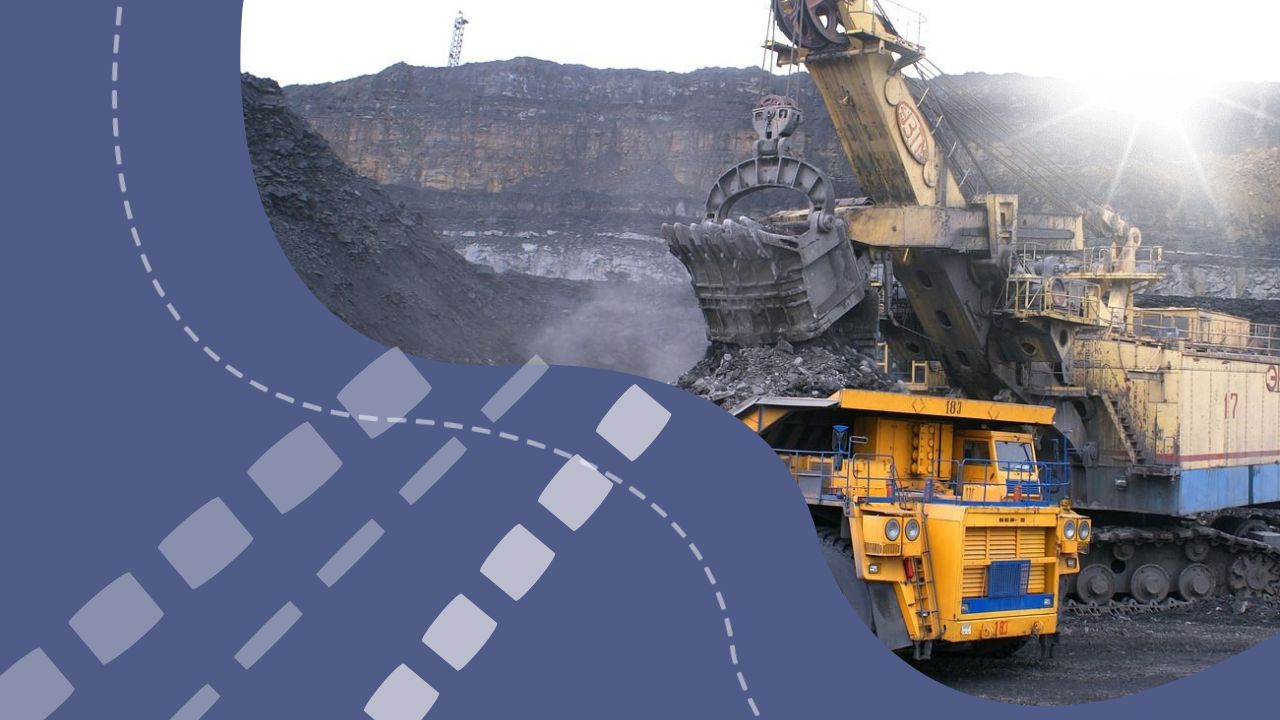
    WARSAW, June 7 (Reuters) – Poland’s prime minister on Wednesday vowed to resist attempts to close the Turow lignite mine, likening a court ruling that work at the site should be suspended over environmental concerns to an assault on the country’s sovereignty.

    Environmental groups the Frank Bold Foundation, Greenpeace and the EKO-UNIA Ecological Association said in a statement on Tuesday that a Warsaw court had suspended a decision to allow the coal mining concession at Turow to be extended because it could cause significant damage to the environment.

    “We will definitely not let this mine close, we will do everything to make it function normally until 2040,” Morawiecki told workers in Bogatynia, where the mine is located. “No courts, whether from Brussels or Warsaw, will dictate to us what is meant by Poland’s energy security, the security of families.”

    “Once they tried to conquer Poland in the 18th century, and today see that it is enough to control the elites, that the elites somewhere in Warsaw serve foreign interests.”

    Poland’s ruling nationalists Law and Justice (PiS) regularly depict the opposition as elitists who take the side of foreign powers against Poland.

    Poland says that as much as 8% of its energy is supplied by the mine. Morawiecki had earlier said in a Facebook post that if implemented, the court’s ruling would mean suspending a concession that allows mining at Turow after 2026.

    Environmental groups have long criticised the environmental impact of the open-pit mine, located just across the border from the Czech Republic.

    “We have an ongoing climate crisis, which is why Turow, like other obsolete coal-fired power plants, should be shut down by 2030 at the latest,” said Anna Meres from Greenpeace.

    The mine was at the centre of a dispute between Warsaw and Prague, as the Czechs said it caused air and noise pollution as well as a loss of underground water.

    Poland agreed to pay the Czech Republic 45 million euros in compensation to settle the row, but Warsaw has had European Union funding withheld over a failure to pay fines related to the dispute.

    The judgement regarding environmental permission for the extension of the concession is not final and the government and the mine’s owner state-controlled energy company PGE (PGE.WA) can appeal.

    [/vc_column_text][distance desktop_type=”30″][/vc_column][/vc_row][/vc_section]

  • Aramine opens new subsidiary in Poland

    Aramine opens new subsidiary in Poland

    [vc_section][vc_row][vc_column][distance desktop_type=”30″][lvs][distance desktop_type=”30″][vc_btn title=”Source – Global Mining Review” color=”sky” i_type=”material” i_icon_material=”vc-material vc-material-perm_device_information” add_icon=”true” link=”url:https%3A%2F%2Fwww.globalminingreview.com%2Fmining%2F05062023%2Faramine-opens-new-subsidiary-in-poland%2F|target:_blank”][distance desktop_type=”30″][vc_column_text]After Mexico, Niger, Burkina and Armenia, this strategic expansion demonstrates the company’s ongoing commitment to meet the proximity needs of its international customers and to strengthen its presence in the European market.

    Aramine Poland will be led by Piotr Bakowski, an expert in the mining sector for almost 20 years. Immersed in the mining industry from an early age thanks to his father, he opened his own company F.H.U. ATLAS in 2012 and supplies major mines such as ZGH Boleslaw and KGHM with spare parts, and provides maintenance and repair services.

    Christophe Melkonian, Aramine co-president, comments:

    “As a loyal Aramine customer for almost 10 years, it is natural that his experienced profile and in-depth knowledge of the Polish market has seduced us. We have great confidence in Mr. Bakowski and are convinced that he will provide Aramine Poland with the necessary energy for sustainable growth and long-term success in the region.”

    The new subsidiary, located in Przemkow, has 200 m2 of offices and nearly 500 m2 of workshop and storage. The company will manage a local stock and a team of technicians who will intervene in the neighbouring mines, remanufacture machines and components, and ultimately assemble the Aramine machines.

    Beyond creating local jobs, Aramine promotes the transfer of its skills, innovations, and technical knowledge within its Polish subsidiary.

    Aramine Poland will therefore, within a short period, offer the full range of the company’s products and services and will be active on a territory that will certainly not be limited to its country of establishment.

    Indeed, Poland was chosen for its central geographical position in Europe, its active economy and its growing market. With its good transport infrastructure, Poland is a strategic place for export to other countries of the European Union and beyond.

    The opening of this subsidiary is an important step in the French company’s expansion strategy, allowing Aramine to establish closer relationships with existing customers in Eastern Europe and to explore new business opportunities.[/vc_column_text][distance desktop_type=”30″][/vc_column][/vc_row][/vc_section]