Website: Europe.com

  • Beowulf Mining sees first-quarter loss widen as expenses rise

    Beowulf Mining sees first-quarter loss widen as expenses rise

    [vc_section][vc_row][vc_column][distance desktop_type=”30″][lvs][distance desktop_type=”30″][vc_btn title=”Source – Shares Magazine” color=”sky” i_type=”material” i_icon_material=”vc-material vc-material-perm_device_information” add_icon=”true” link=”url:https%3A%2F%2Fwww.sharesmagazine.co.uk%2Fnews%2Fmarket%2F1685550363248261100%2Fbeowulf-mining-sees-first-quarter-loss-widen-as-expenses-rise|target:_blank”][distance desktop_type=”30″][vc_column_text]Beowulf Mining PLC on Wednesday said its loss widened in the first quarter of 2023, as a result of increasing expenses.

    The Sweden, Finland and Kosovo-focused mining company reported pretax loss of £600,437 in the first quarter, widening from £225,907 the year prior.

    The increased loss was partly due to rising administrative costs, the firm said. Administrative expenses widened to £405,557, from £225,913.

    Loss per share was 0.07 pence, widening from a loss of 0.03p a year ago.

    The company did not generate revenue in the first quarter, unchanged from a year ago, as its focus continues to be on the exploration and evolution of natural resource assets.

    Acting Chief Executive Johan Rostin said: ‘We are also currently reassessing our timelines for advancing our projects and look forward to a busy schedule ahead. In the short term, we will ensure the continuing advancement of the company’s key projects, Kallak, Mitrovica, and GigaVaasa.

    ‘I am looking to drive the company forward in alignment with its strategy of being a responsible and innovative company that creates value for our shareholders, wider society and the environment through its diversified asset portfolio by commodity, geography and the development stage of its various projects.’

    Beowulf Mining shares closed 1.4% higher at 1.80 pence each in London on Wednesday.[/vc_column_text][distance desktop_type=”30″][/vc_column][/vc_row][/vc_section]

  • Portugal gives environmental green light for Savannah’s lithium mine

    Portugal gives environmental green light for Savannah’s lithium mine

    [vc_section][vc_row][vc_column][distance desktop_type=”30″][lvs][distance desktop_type=”30″][vc_btn title=”Source – reuters.com” color=”sky” i_type=”material” i_icon_material=”vc-material vc-material-perm_device_information” add_icon=”true” link=”url:https%3A%2F%2Fwww.reuters.com%2Fmarkets%2Fcommodities%2Fsavannah-says-portugal-gives-environmental-green-light-lithium-mine-2023-05-31%2F|target:_blank”][distance desktop_type=”30″][vc_column_text]LISBON, May 31 (Reuters) – Mining company Savannah Resources said on Wednesday Portuguese authorities had approved its environmental impact assessment (EIA) for what could become Western Europe’s largest lithium mine, calling the step a “major milestone” for the project.

    London-based Savannah received preliminary approval for the EIA for its Barroso open-pit mine from Portugal’s APA environment regulator in 2021, but had to make changes demanded by the authority and resubmitted it earlier this year.

    APA had 50 business days to review it and issue a decision, known as a DIA.

    In a statement, APA said it had given the company a “favourable” DIA but there were a wide range of measures Savannah had to comply with, such as limiting the removal of vegetation from the project area, not taking water from a nearby river and carrying out landscaping once extraction has ended.

    APA said the project must also include a “socio-economic compensation package”, such as royalties to the municipality where the mine is set to be located.

    “This represents a major milestone for the project,” Savannah said in a statement, adding it had agreed with the conditions associated with the DIA.

    Portugal is Europe’s biggest lithium producer, but its miners sell almost exclusively to the ceramics industry and are only now preparing to produce the higher-grade lithium that is used in electric cars and to power electronic appliances.

    Savannah has said its mine could be at the centre of Europe’s lithium value chain.

    However, lithium projects in Portugal face strong opposition from environmentalists and local communities, who are demanding stronger regulation and more transparency.

    Barroso, a world heritage site for agriculture, is one of many lithium-rich areas in northern Portugal and Savannah already mines feldspar, quartz and pegmatites in the mountainous region.

    A positive DIA allows the company to progress to the next stages of the process, including the publication of a new scoping study and a social impact assessment, Savannah said.

    The company expects the remaining steps of the environmental licensing process to take nine-12 months to complete. It hopes to receive its final environmental licence in 2024.

    Reporting by Catarina Demony Editing by Helen Popper and Mark Potter[/vc_column_text][distance desktop_type=”30″][/vc_column][/vc_row][/vc_section]

  • EU pushes alternative model to China in global race for raw materials

    EU pushes alternative model to China in global race for raw materials

    [vc_section][vc_row][vc_column][distance desktop_type=”30″][lvs][distance desktop_type=”30″][vc_btn title=”Source – euractiv.com” color=”sky” i_type=”material” i_icon_material=”vc-material vc-material-perm_device_information” add_icon=”true” link=”url:https%3A%2F%2Fwww.euractiv.com%2Fsection%2Fcircular-economy%2Fnews%2Feu-pushes-alternative-model-to-china-in-global-race-for-raw-materials%2F|target:_blank”][distance desktop_type=”30″][vc_column_text]The European Commission is looking to forge “win-win partnerships” with raw material-producing countries in a bid to develop new mining projects across the globe and reduce the bloc’s dependence on China.

    Trade is “part of the solution” to the rise in demand for critical raw materials like cobalt, lithium and rare earths, that are needed for the green transition, said Leopoldo Rubinacci, deputy director general at the European Commission’s trade department.

    Although necessary, EU efforts to increase mining at home “will never be enough” to meet all the demand coming from Europe, he told an event in Brussels hosted by the Friedrich Ebert Foundation, a think-tank affiliated with Germany’s Social Democratic Party (SPD).

    “We will never be self-sufficient,” Rubinacci acknowledged, saying the EU would be wrong to close its market to protect its domestic mining industry. “On the contrary, we absolutely have to continue being open,” he said at the event, which took place on 24 May.

    At the same time, Europe cannot be naïve and must also “act decisively against any attempt to restrict trade” in critical raw materials, the EU official added, referring to a recent OECD paper that found export duties rising “exponentially” over the past years.

    Published in April, the OECD paper cited China, India, Argentina, Russia, Viet Nam, and Kazakhstan as the top six countries in the world regarding new export restrictions on critical raw materials in the period 2009-2020.

    “And that creates a fundamental threat for us,” Rubinacci said.

    The EU won a first case against China over raw materials at the World Trade Organisation (WTO) in 2012 and launched a second case the same year – alongside the United States and Japan – in reaction to Beijing’s export restrictions of rare earth metals.

    But Rubinacci rejected accusations that the European Union was seeking to decouple from China.

    “We have never said that decoupling was a good idea, never,” the official said. Instead, the EU is “talking about de-risking, not decoupling,” he added in reference to a March speech by European Commission President Ursula von der Leyen, which clarified the EU’s stance on China.

    “Decoupling would be a mistake,” Rubinacci declared.

    Providing an alternative to China

    Europe has grown increasingly nervous as China tightened its stranglehold on global raw materials value chains and related green technologies such as solar panel manufacturing.

    In the past decades, Beijing developed its domestic mining industry and acquired mines in Africa to expand its dominance in raw materials like cobalt and copper.

    But China also suffered setbacks due to accusations of child labour in mines it operates in the Democratic Republic of Congo. Last year, a court suspended the Chinese owner of one of the world’s largest copper and cobalt mines in there in a dispute involving billions of unpaid royalty fees amid reports of declining worker safety and attempted bribery by the Chinese owners to cover up incidents.

    What the EU is looking for, Rubinacci said, is to promote an alternative model for African countries and other raw material producers that makes European investors more attractive than Beijing.

    That approach was laid down in the EU’s Critical Raw Materials Act, presented in March, which seeks to build a “win-win partnership” with resource-rich countries that is beneficial for both sides.

    This includes the selection of “strategic projects” for raw materials mining, processing or recycling in Europe and foreign countries that will benefit from streamlined permitting processes and easier government financing under EU state aid rules.

    “We have to propose something new – a new partnership that is not just about seeking to have access to the materials, then extract and leave,” Rubinacci explained, saying the EU was looking to ensure there is “local value addition” to mining activity for host countries.

    For instance, the European Commission is currently working on a new strategic partnership with Chile for raw materials such as copper and lithium, which both appear on the EU’s list of critical raw materials, he said.

    “And here, trade rules matter enormously,” Rubinacci added, saying those deals add legal security, transparency and enforceability to contracts in the area of raw materials mining, refining, and processing, which is “extremely risky”, with “huge capital” requirements and long lead times from inception to market.

    Claude Chanson, general manager of Recharge, the European battery manufacturers association, said the industry welcomes the Commission’s focus on partnerships bringing added value to host countries.

    “We are aiming to generate a new dimension of competition, which is a sustainability dimension,” he said, referring to the European battery regulation, which imposes sustainability and transparency standards for batteries including the origin of raw materials used in the manufacturing process.

    The industry’s hope, he said, is that those standards will become worldwide so that European manufacturers can compete on a level playing field. And the sustainability dimension could be a way of making European manufacturers more competitive, he added.

    ‘Colonial greenwashing’

    Yet, there are plenty of questions as to how these new partnerships and standards will be enforced.

    Diego Marin, a green campaigner at the European Environmental Bureau (EEB), praised the EU’s Critical Raw Materials Act for its comprehensive approach to new mining projects, which includes a development dimension involving countries in the Global South.

    However, he also slammed the EU’s approach as “colonial greenwashing” because it doesn’t resolve the more fundamental issue of sovereign debt in the Global South, which is held by European and American banks.

    “These countries are forced to sell their raw materials on the cheap because they have to service this foreign debt,” Marin said, criticising the role of Export Credit Agencies for fueling indebtedness in poor countries.

    “There is a lack of transparency on how we’re going to fund these projects,” Marin said, questioning the benefits that new mining projects will actually bring to the Global South. “Is it even in their interest to provide these materials to the European market?” he wondered.

    Chanson acknowledged issues related to poverty and child labour in the cobalt supply chain but said new transparency and traceability requirements for batteries in Europe “at some point will eliminate this type of business”.

    The challenge for Europe, he said, will be to enforce those standards on imported goods and not only its home production. “We are worried that the custom controls will not be able to verify” the origin of raw materials, he said.

    [Edited by Zoran Radosavljevic][/vc_column_text][distance desktop_type=”30″][/vc_column][/vc_row][/vc_section]

  • Glencore a big winner of Germany’s Colombian coal binge

    Glencore a big winner of Germany’s Colombian coal binge

    [vc_section][vc_row][vc_column][distance desktop_type=”30″][lvs][distance desktop_type=”30″][vc_btn title=”Source – dw.com” color=”sky” i_type=”material” i_icon_material=”vc-material vc-material-perm_device_information” add_icon=”true” link=”url:https%3A%2F%2Fwww.dw.com%2Fen%2Fglencore-gains-from-germanys-colombian-coal-imports%2Fa-65770170|target:_blank”][distance desktop_type=”30″][vc_column_text]The war in Ukraine has forced Germany to boost coal imports from Colombia even as it seeks to phase out fossil fuels at home. Glencore is benefiting the most from the high demand, but the local people not nearly as much.

    The German and Colombian governments both have detailed decarbonization strategies to take on climate change. Still, the real beneficiary of this green transition is actually based in Switzerland.

    Almost a year ago, when Gustavo Petro and Francia Marquez were on the verge of their election victory in Colombia, they made a historic promise to their voters during the election campaign.

    The program of the left-wing Historic Pact for Colombia, a political and electoral coalition, stated that the South American country would phase out fossil fuels under their leadership.

    Previously, the then environmental activist and current Vice President Marquez drew attention to the El Cerrejon coal mine with a Twitter post.

    “El Cerrejon is the largest coal mine in Latin America. Still, children in La Guajira are dying from hunger and the people are not getting any help from them during the pandemic. This is so-called development,” she wrote.

    Profiting from the energy transition

    It is precisely from this mine that Germany has been getting coal since the start of the Russian war of aggression against Ukraine to partially compensate for the loss of Russian gas supplies and the embargo on Russian coal imports.

    The German government’s decision to phase out nuclear power and to boost electricity generation — at least temporarily — with coal-fired power generation is currently creating additional demand for coal.
    The Glencore group is a major beneficiary of this development. The Swiss company had completely taken over the mine just a few weeks before the Russian invasion of Ukraine. Since then, coal exports have shot upward. While a Glencore spokesperson said the company doesn’t comment on “individual markets,” the figures speak for themselves.

    According to German coal importers, 7.3 million tons of hard coal came from Colombia in 2022. Coal imports from the South American country are likely to have at least doubled during the first year of the war in Ukraine — and they could just keep going up.

    In mid-July last year, the price of coal on the world market reached a record price of almost $400 (€373) a ton. In the meantime, it has fallen sharply. In mid-May this year, it was around $117 per ton, back to the level seen in 2021.

    Big global deals in coal

    Glencore is thus benefiting from global political developments. On the one hand, shareholders of rival miners pushed to sell stakes in coal mines because of their impact on climate change. On the other hand, at the time of Glencore’s boosting of its stake in the El Cerrejon mine, only Ukrainian politicians were warning about the possibility of a Russian invasion.

    In June 2021, Glencore bought the remaining 66% stake in the mine from its competitors BHP Group and Anglo American for a total of $588 million, making it the sole owner.

    BHP and Anglo American shareholders welcomed the deal in light of their emission reduction goals.

    For Glencore, the world’s leading mining and commodities trading group, the deal meant all the controversial mine’s profits would flow their way

    And where does all the money go?

    Critics who live around the coal pits complain that far too little of the enormous profits that the company is making remain in the region.

    “The money generated from the coal doesn’t even stay here in La Guajira,” Leobardo Sierra, a spokesperson for the Indigenous Wayuu community who live in El Rocio, told DW.

    Activist Jakeline Romero Epiayu from a Wayuu women’s rights organization sees it similarly. “Today, after decades of mining activity in La Guajira by Cerrejon, which is fully owned by Glencore today, the impacts on the regional economy, and cultural and social life of these areas are devastating,” she told DW.

    Among other things, the mine has led to increased water shortages in a region where water is already scarce.

    The mine operator countered the allegations.

    “Cerrejon makes a positive contribution to the development of La Guajira and currently generates around 46% of the regional gross domestic product,” said the Glencore spokesperson. “With more than 61% of the 12,000 employees from the region, Cerrejon also makes an important contribution to local employment.”

    This article was originally published in German.

    Germany has been importing coal from the El Cerrejon mine to compensate for the loss of Russian fossil fuelsImage: Tobias Käufer/DW

    [/vc_column_text][distance desktop_type=”30″][/vc_column][/vc_row][/vc_section]

  • Poland wants to start up its first nuclear power plant in 2033

    Poland wants to start up its first nuclear power plant in 2033

    [vc_section][vc_row][vc_column][distance desktop_type=”30″][lvs][distance desktop_type=”30″][vc_btn title=”Source – Ruetir” color=”sky” i_type=”material” i_icon_material=”vc-material vc-material-perm_device_information” add_icon=”true” link=”url:https%3A%2F%2Fwww.ruetir.com%2F2023%2F05%2Fpoland-is-going-to-develop-its-nuclear-industry-and-has-set-eyes-on-a-country-that-wants-to-put-an-end-to-its-own-spain%2F|target:_blank”][distance desktop_type=”30″][vc_column_text]Poland needs to reduce its dependence on coal. Currently, almost 80% of the electricity produced by this European country comes from fossil energy sources, a figure that places it well above the 35.9% average that prevails in Europe. Besides, does not have nuclear power; Its commitment to photovoltaic installations is anecdotal (barely touching 1.4% of total electricity production) and its wind farms only produce a little more than 10% of the electricity it needs.

    The challenge facing Poland is not trivial. This country is an important wagon on the European train, which prevents it from staying on the sidelines of the commitments that Europe has adopted in environmental matters. However, the Polish government has a plan. Its purpose is to develop its nuclear industry quickly and what is necessary to drastically reduce its dependence on fossil fuels in a short time. The problem is that it starts from scratch.

    At this juncture, the Polish Administration has no choice but to count on the complicity of other European countries that they have much more experience in the field of nuclear energy, and one of the states in which it has set its sights is Spain. In fact, a meeting between Spanish and Polish companies is currently taking place in Madrid with the aim of establishing the links that are necessary to help Poland develop its nuclear industry.

    Poland wants to start up its first nuclear power plant in 2033

    The itinerary that the Polish government has set is ambitious. Its goal is for its first nuclear power plant to come into operation in 2033, so it will be necessary to start construction no later than 2026. This plant will be in Choczewo, a town of approximately 5,000 inhabitants located in the extreme north of the country, in the Baltic sea coast. When the first reactor is ready, more units will be put into operation with a periodicity of two or three years for each of them.

    Poland needs to invest more than 30,000 million euros in the development of its nuclear industry

    Ultimately, Poland’s plan is for its future nuclear facilities to be capable of providing 23% of the electricity it needs no later than 2040. And to achieve this, it needs to invest more than 30,000 million euros in the development of this industry. This is precisely the gateway for Spanish companies. What both countries are seeking is to cooperate so that Poland can carry out its strategy, and the Spanish companies that will contribute to this objective will receive, as is logical, a part of that money.

    Curiously, we know some of the best located ones. At the end of 2019 we had the opportunity to visit the fuel rod factory that ENUSA Industrias Avanzadas has in Salamanca, and a few weeks later we were in one of the control room simulators that Tecnatom has developed in the Madrid town of San Sebastian de los Reyes. Ensa and Newtesol are other Spanish companies that have a lot of experience in the manufacture of equipment for nuclear power plants, and they will probably also participate in this project.

    In a way, it is paradoxical that Poland is determined to forge technological and business links with Spain in the field of nuclear energy. For the moment, the Spanish Government maintains the itinerary set for the nuclear blackout, so that if everything continues its course, the last Spanish nuclear power plant that will remain active, that of Trillo, will cease in 2035. In any case, this plan in no way invalidates Spanish companies with experience in the nuclear sector. In all probability its activity will continue beyond 2035 even though all its clients are hosted abroad.

    [/vc_column_text][distance desktop_type=”30″][/vc_column][/vc_row][/vc_section]

  • Foreign Minister Szijjártó Inaugurates New German-owned Factory

    Foreign Minister Szijjártó Inaugurates New German-owned Factory

    [vc_section][vc_row][vc_column][distance desktop_type=”30″][lvs][distance desktop_type=”30″][vc_btn title=”Source – Hungary Today” color=”sky” i_type=”material” i_icon_material=”vc-material vc-material-perm_device_information” add_icon=”true” link=”url:https%3A%2F%2Fhungarytoday.hu%2Fforeign-minister-szijjarto-inaugurates-new-german-owned-factory%2F|target:_blank”][distance desktop_type=”30″][vc_column_text]Foreign Minister Péter Szijjártó (2nd right), Managing Director Michael Seiferling (left), Walter Sennebogen, owner of the Sennebogen Group (2nd left), and Károly Kontrát, Fidesz Member of Parliament (right) at the inauguration of the new plant of Termelés-Logistic-Centrum GmbH in Litér.

    On Friday, the Hungarian Foreign Minister announced that the 21 billion forint (56 million euro) investment by the German Sennebogen Group’s Termelés-Logistic-Centrum GmbH in Litér in the production of structural steel elements will create 80 new jobs.

    At the inauguration of the plant, Péter Szijjártó said that the investment was supported by the Hungarian state to the tune of 2.2 billion forints (5.9 million euros). He stressed that the production of metallic raw materials and processed products in Hungary reached a record high last year, with the sector, which employs some 120,000 people, already having a production value of more than 4,000 billion forints (10.7 billion euros).

    In his speech, the minister stressed that the project proves that Hungary can continue to offer an attractive investment environment in Europe and that companies are attracted by the continent’s lowest taxes, political stability,, and skilled workforce.

    The politician also recalled that the global economy had been turned upside down twice in three years in an unprecedented way. The government’s most important task in recent years, he said, has been to avoid a recession, and the best way to prevent that is to invest more and more. The government’s economic policy response to both crises was therefore the same: It had launched an investment promotion program. In doing so, the government focused on preventing unemployment rather than financing it, the foreign minister said.

    “I think the result speaks for itself, because while 2022 was one of the black years for the global economy, it was a record year for the Hungarian economy,” Szijjártó said, adding that last year saw record levels of investment, employment, and exports. He added that

    more investments have already been made in Hungary this year than in all of last year, which was also a record year.

    “And the result of the investment record is that we can secure jobs, avoid recession, and keep the economy on a growth path,” the politician underlined. He stressed that the investment decisions of the past period also show that despite the political excitement and hysteria, the confidence of German companies in Hungary has not diminished.

    In Hungary we guarantee the principle of equal treatment of all German companies, and we are pleased that German companies still represent the largest investor community,”

    underlined the minister, concluding by noting that the Hungarian government has provided substantial financial support to 183 major German corporate investments in the last nine years.[/vc_column_text][distance desktop_type=”30″][/vc_column][/vc_row][/vc_section]
  • DTEK manufactures seven mining machines in four months

    DTEK manufactures seven mining machines in four months

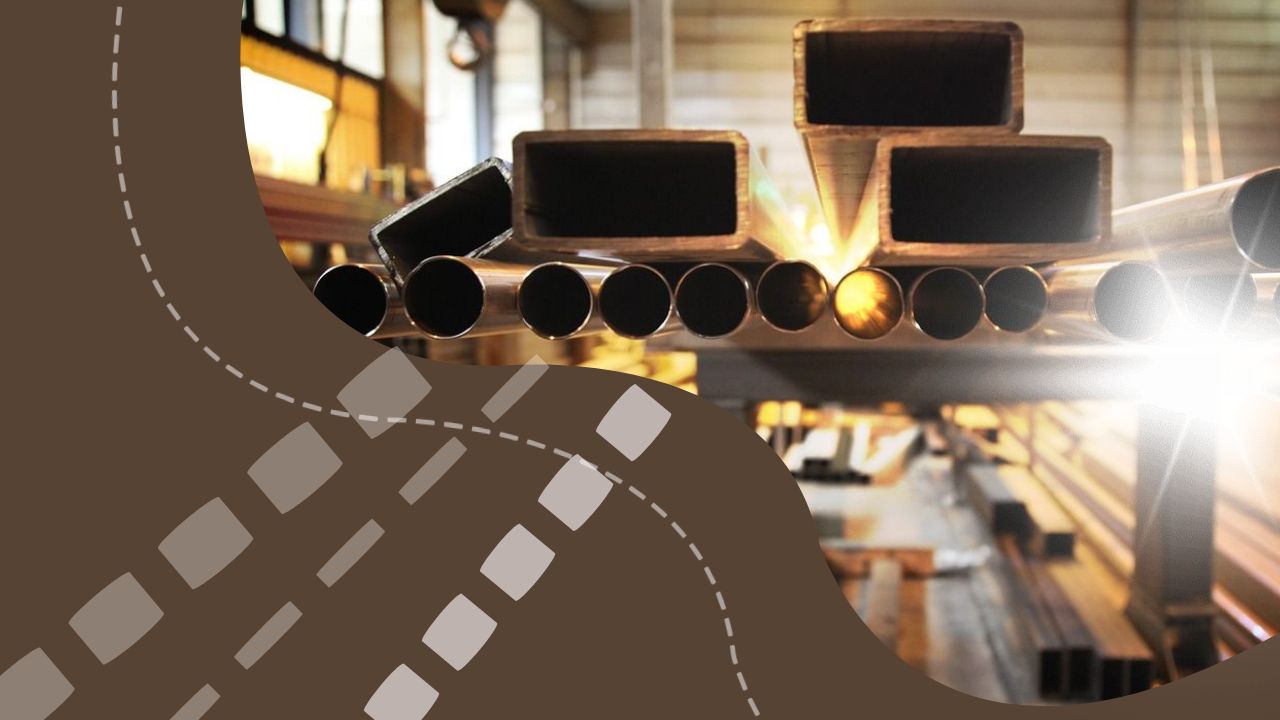
    [vc_section][vc_row][vc_column][distance desktop_type=”30″][lvs][distance desktop_type=”30″][vc_btn title=”Source – interfax.com.ua” color=”sky” i_type=”material” i_icon_material=”vc-material vc-material-perm_device_information” add_icon=”true” link=”url:https%3A%2F%2Fen.interfax.com.ua%2Fnews%2Feconomic%2F913400.html|target:_blank”][distance desktop_type=”30″][vc_column_text]In the first four months of 2023, the machine builders of the DTEK energy holding manufactured seven new combines and almost 300,000 spare parts to support Ukrainian coal mining.

    “DTEK Energy machine builders continue to meet the needs of Ukrainian miners for equipment. In wartime conditions, this makes it possible to maintain the pace and volume of coal production necessary for the sustainable operation of Ukrainian thermal power plants,” the energy holding said in a press release.

    In total, in January-April, DTEK Energy machine-building enterprises manufactured 290 units of mining equipment and almost 292,000 spare parts and components.

    “One of the key ones for miners and meeting the needs of Ukrainian coal mining is the RH220 tunneling machine of the ultra-modern technical level. This is the first such model made this year, and the second in general,” the company noted.

    As DTEK said, the new equipment is more powerful and reliable than its predecessors and is equipped with a remote control for the safe work of miners.

    “In the near future, the newest roadheader will meet the needs of one of the DTEK Energy mines in Dnipropetrovsk region,” the energy holding informed.[/vc_column_text][distance desktop_type=”30″][/vc_column][/vc_row][/vc_section]
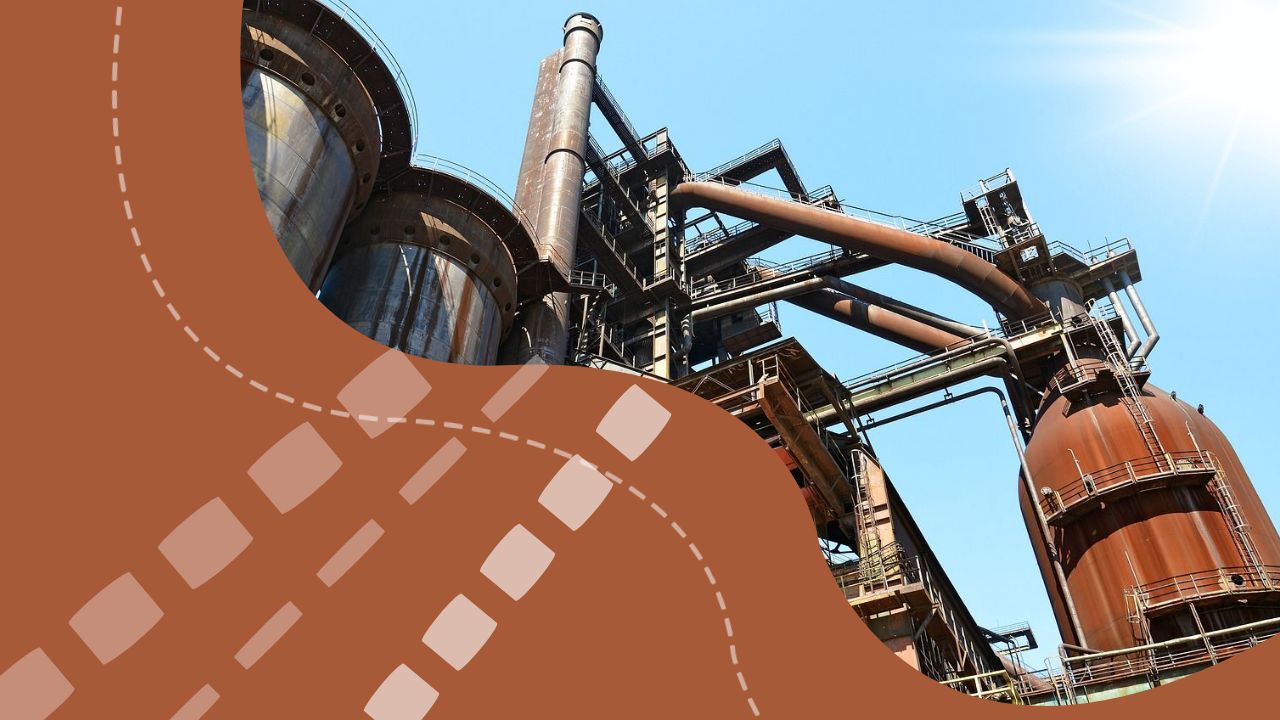
  • Miners of the Production Plants of the Brown Coal Mine gathered

    Miners of the Production Plants of the Brown Coal Mine gathered

    [vc_section][vc_row][vc_column][distance desktop_type=”30″][lvs][distance desktop_type=”30″][vc_btn title=”Source – Sarajevo Times” color=”sky” i_type=”material” i_icon_material=”vc-material vc-material-perm_device_information” add_icon=”true” link=”url:https%3A%2F%2Fsarajevotimes.com%2Fminers-of-the-production-plants-of-the-brown-coal-mine-gathered%2F|target:_blank”][distance desktop_type=”30″][vc_column_text]Bosnia and Herzegovina

    Pit workers of both production plants of the Zenica Brown Coal Mine (RMU) gathered this morning in front of the entrance to the “Stara Jama” plant, i.e. the Administration of the RMU Zenica, in order to once again point out their problem and demand the payment of their April salary – said the president of the Trade Union of the “Raspotočje” Plant, Nedžad Durakovic.

    “We no longer have ideas or guidelines for what and how to proceed, since none of the authorities are advertising. We decided on this gathering to, perhaps for the last time, point out our problem,” said Duraković for Fena news agency, who once again confirmed that the miners of the first shift did not go down to the pits even this morning.

    The workers’ disobedience has been going on since Thursday, May 25, when the miners of the second shift did not go down to the pits.

    “This morning I spoke with the president of the Independent Union of Mineworkers of the Federation of Bosnia and Herzegovina, Sinan Husić, who informed me that today at 1 p.m., after our letter yesterday, a meeting will be held in the FBiH Government,” says the president of the Zenica Mines Union, Elvedin Avdić.

    He adds that today he will wait for the outcome of the announced meeting, which should result in the unblocking of the company’s account and the payment of salary.

    Director Hukić, who addressed the gathered workers around 8:10 a.m., once again pointed out that the smallest problem is whether he will continue to be a director.

    “You must understand my position. I resigned yesterday. That’s the least of the problems, I’ll leave here. I know, and time will tell, that the problem we have is a big one. By suspending production, we are only creating a problem for the mine, that is, for us,” Hukić said.

    After his presentation, the president of the Trade Union, Avdic, said that it was obvious that “all directors of the mine are directors of Elektroprivreda BiH, not of the mine”.[/vc_column_text][distance desktop_type=”30″][/vc_column][/vc_row][/vc_section]

  • Ørsted, Polish Electrical Engineering Institute Partner on Recycling Wind Turbine Blades

    Ørsted, Polish Electrical Engineering Institute Partner on Recycling Wind Turbine Blades

    [vc_section][vc_row][vc_column][distance desktop_type=”30″][lvs][distance desktop_type=”30″][vc_btn title=”Source – offshorewind.biz” color=”sky” i_type=”material” i_icon_material=”vc-material vc-material-perm_device_information” add_icon=”true” link=”url:https%3A%2F%2Fwww.offshorewind.biz%2F2023%2F05%2F29%2Forsted-polish-electrical-engineering-institute-partner-on-recycling-wind-turbine-blades%2F|target:_blank”][distance desktop_type=”30″][vc_column_text]On the basis of the concluded agreement, Ørsted will provide Łukasiewicz – Instytut Elektrotechniki with research material i.e. samples of used offshore wind turbine blades which the Institute will use to conduct research on the circular economy of offshore wind turbines, launched in 2022.

    Ørsted, together with PGE Polska Grupa Energetyczna, is currently developing the 2.5 GW Baltica offshore wind farm in the Polish part of the Baltic Sea.

    As part of the research direction “Green, Low-Emission Economy” and the “Offshore Wind Energy” programme, Łukasiewicz – Institute of Electrical Engineering is working on the recycling of wind turbine blades. The project is an implementation of the idea of ​​sustainable development.

    “In 2022, we started a research project aimed at developing a method for circular management of waste generated from post-operational wind turbine blades. At present, blades are disposed of by incineration with the emission of toxins or by landfilling. Both ways have a detrimental effect on the environment and are by no means profitable”, said Sebastian Wydra, General Manager of Łukasiewicz – Institute of Electrical Engineering.

    “The project implemented in Łukasiewicz – IEL focuses on the method of waste-free recycling of blades and the development of secondary raw material for the production of service products and equipment for newly built units or units still in operation“.

    In 2021, Ørsted announced that no worn-out wind turbine blade will be landfilled, but will be reused or recycled. Currently, the company said it recovers 95 per cent of the materials from end-to-life turbines.[/vc_column_text][distance desktop_type=”30″][/vc_column][/vc_row][/vc_section]

  • France presents ‘first step’ €2bn fund for critical metals

    France presents ‘first step’ €2bn fund for critical metals

    [vc_section][vc_row][vc_column][distance desktop_type=”30″][lvs][distance desktop_type=”30″][vc_btn title=”Source – InfraVia Capital Partners ” color=”sky” i_type=”material” i_icon_material=”vc-material vc-material-perm_device_information” add_icon=”true” link=”url:https%3A%2F%2Finfraviacapital.com%2Finfravia-launches-a-critical-metals-fund%2F|target:_blank”][distance desktop_type=”30″][vc_column_text]France presented a plan to launch a €2 billion investment fund for critical metals on Wednesday (11 May), which according to former industry boss Philippe Varin is just a starting point, with more to come.

    InfraVia Capital Partners revealed its plan to launch a dedicated Critical Metals Fund with a target amount of €2 billion1. The purpose of this fund is to invest in critical metals that support the energy transition and secure supply chains for French and European industries. This marks the third investment strategy for InfraVia, an investment firm founded 15 years ago with a strong presence in the infrastructure and technology sectors.

    The energy transition calls for extensive electrification, including batteries, electric motors, renewable energy, and smart grids. These developments continue to drive an increasingly massive impact on the demand for specific metals. InfraVia is convinced that the economy is transitioning from a carbon-based model to a metal-based one. Securing these metals represents not only a major sovereignty challenge but also an exceptional investment opportunity, similar to those experienced in infrastructure and technology in recent decades.

    Capitalizing on these opportunities, the fund will concentrate on investments that meet the demands of the energy transition while reinforcing French and European sovereignty in this field and more broadly across various industrial sectors. The fund will allocate investments both within France and globally, targeting the supply chains of critical metals such as lithium, nickel, and cobalt. Investments will span projects that encompass the entire value chain, from extraction to processing and recycling.

    InfraVia anticipates the fund’s initial closing at €1 billion by the end of 2023, with a target size of €2 billion, allowing investments to be made on an industrial scale. With an initial term of 25 years, the fund is also geared towards long-term “industrial time” objectives.

    The State has committed to supporting this initiative by allocating €500 million through the France 2030 plan, overseen by the General Secretariat for Investment. Since 2021, France 2030 has been accelerating the emergence, industrialisation and growth of companies, in particular through funds and funds of funds that focus on priority sectors, particularly industries and sustainable development, that stimulate growth and create jobs nationwide. The Caisse des Dépôts will act as the operator for this investment on behalf of the State.

    In addition to the State, the Fund’s investors will include industry stakeholders who are most directly concerned, as well as numerous institutional investors eager to contribute to the energy transition.

    Vincent Levita, Founder and CEO of InfraVia, stated: “We are extremely proud to launch this highly strategic fund and that benefits from the support of the State. This fund will address two key challenges: generating long-term financial returns linked to the surging demand for these metals and securing supply for French and European industries. The availability of critical metals is necessary to enable the ongoing energy transition and to ensure our sovereignty within this shift. The launch of this fund, which brings together public and private project financing actors, strengthens our commitment and investment in the energy transition and all its implications.“

    The Fund will integrate the strictest ESG standards in the projects it supports, addressing environmental factors, social considerations, and governance practices. These will be aligned with the industry’s highest standards to foster progress across the entire sector.

    [/vc_column_text][distance desktop_type=”30″][/vc_column][/vc_row][/vc_section]