Website: Europe.com

  • Ministers to block plans to ban new coal mines

    Ministers to block plans to ban new coal mines

    [vc_section][vc_row][vc_column][distance desktop_type=”30″][lvs][distance desktop_type=”30″][vc_btn title=”Source – BBC” color=”sky” i_type=”material” i_icon_material=”vc-material vc-material-perm_device_information” add_icon=”true” link=”url:https%3A%2F%2Fwww.bbc.co.uk%2Fnews%2Fuk-politics-65950291.amp|target:_blank”][distance desktop_type=”30″][vc_column_text]

    The government is planning to remove a ban on opening new coal mines from a bill that is going through Parliament.

    The ban was added to the Energy Bill by peers in the House of Lords.

    Ministers also plan to drop changes to the bill which would have enabled small community energy projects to sell electricity directly to local homes.

    Green MP Caroline Lucas called the decision “reckless” and said the amendments should be reinstated “immediately”.

    A government spokesperson said it was made after “careful consideration” and they would continue to engage with parliamentarians.

    The amendment to ban the opening of new coal mines was approved by the House of Lords in April by a majority of just three with 197 peers voting in favour of the motion and 194 against.

    Introducing his amendment Liberal Democrat Lord Teverson said he had previously believed a ban was not necessary because it was “totally and absolutely obvious” that building a new coal mine “would be a really stupid thing for a country to do”.

    However, he told peers he had changed his mind after the government’s decision to allow a new mine to be built in Whitehaven, Cumbria.

    “If that happens once, it can happen again – that is why this amendment is so important,” he said.

    Opposing the amendment, minister Lord Callanan said the government was committed to phasing out coal but argued that an outright ban could cause a “severe weakening of our security of supply”.

    Shadow energy secretary Ed Miliband had said Labour would back the ban, but the government plans to remove the amendment from the bill at committee stage, where a bill is examined in detail, before it reaches a vote of the whole House of Commons.

    Community projects

    The government also intends to ditch measures put in by the House of Lords which would enable small community energy projects to sell electricity directly to local consumers.

    For example, a group which has installed solar panels on a school roof would be able to sell electricity directly to neighbouring homes.

    Currently, projects tend to sell their energy to other, larger utilities because the cost and burdens of setting up as a supplier in their own right are too high.

    More than 60 organisations – including the National Grid and the Church of England – have written to Energy Secretary Grant Shapps urging him to reconsider.

    In the letter, the organisations say community energy schemes have seen “almost no growth for six years, despite renewable technologies being cheaper than ever”.

    They say this is “largely due to the prohibitive costs they face in accessing local markets” and suggest the current rules are holding back the possibility of a big expansion in community schemes.

    ‘Bewildering’

    The government may also be heading for a run-in with some of its own backbenchers.

    More than 120 Conservative MPs had previously pledged to support a private members’ bill, which had the exact same wording as the clauses added in the House of Lords.

    Speaking in a debate about the bill in May, Conservative MP for North Devon Selaine Saxby spoke in favour of community schemes, telling MPs: “It is still bewildering to me, as someone who lives somewhere sunny, windy and with a huge tide, why this has not progressed sooner.”

    Responding to the debate Energy Minister Andrew Bowie said he agreed community energy schemes had “a role to play in tackling climate change” and that the department was looking into what further support could be given to the sector.

    Green MP Ms Lucas said the government’s approach was “well and truly stuck in the last century”.

    She said that “after endlessly repeating the importance of no new coal at COP26, its words have proved to be meaningless – and when hundreds of MPs from across the House have thrown their weight behind innovative community energy schemes to generate clean electricity at low cost, ministers rip them to shreds and offer up no alternative”.

    [/vc_column_text][distance desktop_type=”30″][/vc_column][/vc_row][/vc_section]

  • EU split over subsidies for coal plants as Poland seeks extension

    EU split over subsidies for coal plants as Poland seeks extension

    [vc_section][vc_row][vc_column][distance desktop_type=”30″][lvs][distance desktop_type=”30″][vc_btn title=”Source – the Guardian” color=”sky” i_type=”material” i_icon_material=”vc-material vc-material-perm_device_information” add_icon=”true” link=”url:https%3A%2F%2Fwww.theguardian.com%2Fworld%2F2023%2Fjun%2F19%2Feu-split-over-subsidies-for-coal-plants-as-poland-seeks-extension|target:_blank”][distance desktop_type=”30″][vc_column_text]

    A group of EU countries are fighting attempts by Poland to extend subsidies for coal plants, with Luxembourg’s energy minister describing the proposal as “astonishing”.

    Luxembourg’s energy minister, Claude Turmes, said he could not believe the proposal, which was made on Friday, days before a planned summit of energy ministers from across the bloc, was even on the table given the EU’s commitment to combating the climate emergency.

    “Friday, the Swedish presidency did something really astonishing which is weakening our climate policy by … reopening the possibility to subsidise coal power plants,” he told reporters before the summit in Luxembourg.

    Some countries consider this a measure to help Poland, which uses coal to produce about 70% of its energy.

    Poland is expected to soon surpass Germany as Europe’s top power polluter due to aggressive planned reductions in fossil fuel use across Germany, creating assumptions that Poland will have no choice but to remain Europe’s most coal-reliant nation for years to come.

    So far this year, Poland has defied expectations by cutting coal use and pollution to the lowest level since at least 2014, and by raising clean power output to record highs just as Germany cut its clean generation by shutting nuclear reactors.

    “We have a big bloc of countries that will reject the proposal of the Swedish presidency … so it’s a clear no,” Turmes said ahead of the summit on Monday.

    Spain’s minister for ecological transition, Teresa Ribera, said some thought had to be given to Poland, which is heavily reliant on coal, while the French energy minister, Agnès Pannier-Runacher, said extending support to Poland was an “ambitious approach” – a hint Paris was more open towards the move than other member states like Germany.

    “We need to take into account the reality of each country to ensure their capacity to provide energy to their people and to their industries,” she said.

    Belgium sided with Luxembourg, describing such a move as “unacceptable”.

    Tinne van der Straeten, the energy minister, said: “In Belgium we already have in our national legislation the obligation to become climate neutral and to have a steep decline in emission by 2030 and 2040. So [the proposal] is something that we cannot accept,” she told reporters.

    [/vc_column_text][distance desktop_type=”30″][/vc_column][/vc_row][/vc_section]
  • EU moves forward with Critical Minerals Agreement negotiations with the US

    EU moves forward with Critical Minerals Agreement negotiations with the US

    [vc_section][vc_row][vc_column][distance desktop_type=”30″][lvs][distance desktop_type=”30″][vc_btn title=”Source – European Commission” color=”sky” i_type=”material” i_icon_material=”vc-material vc-material-perm_device_information” add_icon=”true” link=”url:https%3A%2F%2Fec.europa.eu%2Fcommission%2Fpresscorner%2Fdetail%2Fen%2Fip_23_3214|target:_blank”][distance desktop_type=”30″][vc_column_text]Today, the European Commission has adopted its negotiating directives for a Critical Minerals Agreement (CMA) with the United States. The objective is to foster EU-US supply chains in critical raw materials needed in the production of electric vehicle batteries. In 2022 alone, the EU exported €8.3 billion worth of critical raw materials relevant to this industry.

    Concluding an EU-US CMA will ensure that as an ally, the EU is granted a status equivalent to US free trade agreement partners pursuant to the US Inflation Reduction Act. EU firms will then be able to compete on a level playing field with US and third country competitors on the US market, such as Chile, the Republic of Korea, and Japan.

    An EU-US CMA will also help boost EU production capacities in industrial sectors of strategic importance. Strong environmental and labour provisions will help ensure greater supply of sustainably sourced critical raw materials.

    In addition, the deal will help reinforce the Commission’s proposed Net Zero Industry Act and Critical Raw Materials Act, which aim to scale up EU manufacturing of key carbon neutral technologies.

    The authorisation and the accompanying directives, once adopted by the Council, will empower the Commission to negotiate an agreement containing provisions on:

    • trade facilitation, so that critical raw materials extracted or processed in the EU can be used in vehicles eligible for the US’ Clean Vehicle Credit subsidies;
    • cooperation to make the critical raw material sector more sustainable by encouraging high environmental protection, international technical standards and circular economy approaches;
    • promotion of labour rights in the critical raw materials sector;
    • strengthening sustainable and equitable supply chains through common standards, working together with allies and partners.

    Next steps

    The Council will now consider and decide on the proposal. The Commission will then be able to engage in formal negotiations with the US with a view to swiftly concluding the agreement.

    Background

    In August 2022, the US enacted the Inflation Reduction Act (IRA), introducing the Clean Vehicle Credit. This is a subsidy for the purchase of qualifying battery or fuel cell operated vehicles in the form of a tax credit. To qualify for the full subsidy, a vehicle must, among others, be equipped with a battery that has at least some of its critical mineral content either recycled in North America or extracted and processed in the US or a country with which the US has a Free Trade Agreement or a CMA.

    Without an EU-US CMA, EU firms are at risk of being excluded from US automotive supply chains, reducing EU export possibilities.

    The EU and the US announced their intention to negotiate a Critical Minerals Agreement in the Joint Statement on 10 March 2023 between President von der Leyen and President Biden as well as in the EU-US Trade and Technology Council Joint Statement of 31 May.[/vc_column_text][distance desktop_type=”30″][/vc_column][/vc_row][/vc_section]

  • Berlin risks water shortages in fallout from Germany’s coal exit

    Berlin risks water shortages in fallout from Germany’s coal exit

    [vc_section][vc_row][vc_column][distance desktop_type=”30″][lvs][distance desktop_type=”30″][vc_btn title=”Source – Straits Times” color=”sky” i_type=”material” i_icon_material=”vc-material vc-material-perm_device_information” add_icon=”true” link=”url:https%3A%2F%2Fwww.straitstimes.com%2Fworld%2Feurope%2Fberlin-risks-water-shortages-in-fallout-from-germany-s-coal-exit|target:_blank”][distance desktop_type=”30″][vc_column_text]BERLIN – On extremely hot and dry summer days, water in Berlin’s Spree River gets sucked upstream by an array of pumps to ensure the German capital has enough to drink. Reversing the natural flow is set to become more frequent as the country’s exit from coal means a key source of water is lost.

    With Berlin already facing less rainfall due to the climate crisis, the end of lignite mining in nearby regions means groundwater pumped out to extract the fossil fuel will no longer feed the Spree.

    On top of that, old mines are being flooded to create man-made lakes, further draining resources.

    As a result, the critical artery for the city of 3.6 million could end up with 50 per cent to 75 per cent less water in dry summer months, according to a study released this week by the German Environment Agency.

    “This is a very serious situation,” Mr Dirk Messner, president of the government agency, said in an interview. “The majority of water that Berlin is using for drinking comes exactly from this river.”

    Surrounded by lakes and swamps, Berlin wouldn’t automatically seem at risk for water shortages, but its ecosystem is finely balanced and is losing a key pillar.

    For more than a century, water from lignite mines fed the Spree and supported the marshy Spreewald, a Unesco-protected biosphere.

    But as soon as 2030, Germany will end the use of coal and lignite and that source will cease, making the region more dependent on rainfall.

    Plans to prevent erosion and landslides in the massive open-pit mines will add to the problem by soaking up water resources.

    The dilemma reflects the ripple effects of climate change. Even measures to unwind the world’s reliance on fossil fuels can have unintended consequences.

    Around two hours south of Berlin, the “Cottbuser Ostsee” is under development by LEAG, Germany’s second-largest mining company.

    Planned as a recreation area, the former Cottbus-Nord mine is being flooded with 84 million cu m of water – equivalent to 40 per cent of the city’s annual water consumption.

    After it is finished around 2025, Germany’s largest man-made lake will boast five beaches, a yacht harbour, and the country’s largest floating solar plant.

    The flooding will not only reduce inflows into the Spree, but vast amounts of water will be lost through evaporation, according to the government’s study, urging the Cottbuser Ostsee to be used as storage that can be tapped in the hot summer.

    But that would be high season for bathers and boaters, and LEAG is pushing back.

    Using the lake as a drinking-water reservoir “was not the subject of the application” for redevelopment, a spokesman said, adding that “viable and sustainable concepts for dealing with the water-management consequences resulting from the coal phase-out” are now needed.

    Despite being one of the few major cities with a self-sufficient water system, Berlin has historically been relatively arid, with some of the lowest rainfall rates in Germany.

    Due to climate change, it will get worse. A study from Zurich’s ETH estimated that cities in the northern hemisphere will develop conditions equivalent to locations that are now 1,000km to the south. That would make Berlin more like southern France.

    Berlin’s growth – the city forecasts nearly 4 million residents by 2040 – is adding to the strain.

    A particular sore spot is Tesla’s factory in the suburb of Grünheide.

    During construction in 2021, Chief Executive Officer Elon Musk enraged local activists by belittling their concerns.

    The plant – located in a protected water area – is estimated to use as much as 60,000 people. Tesla didn’t respond to requests for comment.

    One of the solutions is a huge concrete pool under construction in Schönerlinde, a small town on Berlin’s northern rim.

    Here, a new facility is being built to further purify treated sewage.

    The city’s water supplier Berliner Wasserbetriebe will invest €2 billion (S$2.9 billion) by 2031 to upgrade its six wastewater treatment plants – including an ultraviolet system that’s likely to become Germany’s largest solarium.

    Projects aimed at climate-proofing the entire municipal water system total €6 billion.

    Instead of letting treated wastewater flow down the Spree into the North Sea, the utility would like to pump it to the city’s so-called blue pearls, but that’s currently prohibited by national legislation.

    About half of the roughly 350 ponds in Berlin are under “severe” stress, according to a report from environmental group BUND.

    “Berlin’s water bodies, woods and swamps are already in the intensive care unit,” said Mr Christian Schweer, a water expert from BUND’s Berlin chapter. “If there’s even less water coming in the next years, the situation will become dramatic.”

    To prepare for a hotter future, Berlin is also seeking to keep more of its rain, according to Ms Darla Nickel, head of Berlin’s Rainwater Agency. The “sponge city” concept calls for more planted roofs, storage tanks and fewer sealed ground surfaces to prevent run-off. The city is trying everything to head off scarcity, “but we can by no means compensate the causal problem”, she said.

    That means that when it’s hot and dry, a sluice near the central Alexanderplatz will stop the flow of water in the Spree. Then pumps will reverse the river’s course diverting it into the city’s largest facility for treating drinking water. One way out is a water-management system that connects the regions via storage, reservoirs and redirects streams to Berlin.

    “This is a different scenario from doing little or nothing,” the Environment Agency’s Mr Messner said. But there’s a catch: “These other rivers are also running out of water.” BLOOMBERG

    Berlin’s legislature is working on a “master plan” to secure supplies for homes and businesses. It calls for demand reduction especially in peak times and more strategic planning between Berlin and other nearby states.[/vc_column_text][distance desktop_type=”30″][/vc_column][/vc_row][/vc_section]

  • Late push to extend coal subsidies upsets EU deal on energy reforms

    Late push to extend coal subsidies upsets EU deal on energy reforms

    [vc_section][vc_row][vc_column][distance desktop_type=”30″][lvs][distance desktop_type=”30″][vc_btn title=”Source – Business Standard” color=”sky” i_type=”material” i_icon_material=”vc-material vc-material-perm_device_information” add_icon=”true” link=”url:https%3A%2F%2Fwww.business-standard.com%2Fworld-news%2Flate-push-to-extend-coal-subsidies-upsets-eu-deal-on-energy-reforms-123061900189_1.html|target:_blank”][distance desktop_type=”30″][vc_column_text]It is one of the great paradoxes of our time: in order to overcome some of our dependencies and vulnerabilities — revealed in crises like COVID and the war in Ukraine — we risk falling into other dependencies that are no less toxic. The ecological transition, the digitalization of our economy, or increased defense needs, all pose risks to our supply of strategic minerals.

    The European Commission published a plan this week to escape this fate by setting realistic objectives within a relatively short time frame, by the end of this decade.

    This plan goes against the dogmas of globalization of the past 30 or 40 years, which relied on just-in-time supply chains from one end of the planet to the other — and, if we’re being honest, outsourced the least “clean” tasks, such as mining or refining minerals, to countries in the developing world.

    But the pendulum is now swinging in the other direction, if possible under better environmental and social conditions. Will Europe be able to achieve these objectives while remaining within the bounds of both the ecological and digital transitions? That is the challenge.

    EV batteries

    The plan presented Thursday in Brussels lists these critical or strategic minerals, which are found in so-called clean technologies, such as electric vehicle batteries or solar panels, but also in satellites, computer equipment, or weapons. Demand is only growing: for example, lithium for electric vehicle batteries is expected to be multiplied by 12 by 2030, and the rare earths needed for wind turbines are expected to be multiplied by four or five.

    The EU is asking its member states, in order to ensure the sovereignty of the continent, to plan to extract 10% of the needs from European soil by 2030. A lithium mine project is planned in France, after years of the country having abandoned any mining ambitions.

    It is also asking for 15% of needs to be met through recycling, a rapidly growing and virtuous sector. Another objective is to limit the share of a single third country in the supply of a critical mineral to 65%, so as not to end up, as in the case of Russian gas, in the hands of a single supplier.

    Caught between U.S. and China

    We can truly question the ability of the 27 EU countries to succeed in both transitioning their model, creating new supply chains, reintroducing sectors of activity that Europe had turned its back on, and protecting their sovereignty. This is a dizzying challenge.

    China has monopolized a good part of the mining resources in Africa and Latin America.

    This notably involves the relationships that Europe will be able to build with the countries producing these minerals, because the current situation is problematic. First, because China has increasingly monopolized a good part of the mining resources in Africa and Latin America, with a real vision that the West did not have. China has also been willing to pay the price for the degradation of its environment, for example, to exploit rare earths that the rest of the world no longer wanted.

    Europe has faced multiple major challenges in recent months, such as the future plans for electric vehicle batteries plan or semiconductors. Caught between the attractiveness of the United States with their cheaper energy and generous subsidies, and the hegemonic risk posed by China, Europe is also betting on the future in a real way.

    [/vc_column_text][distance desktop_type=”30″][/vc_column][/vc_row][/vc_section]
  • Norsk Hydro produces world’s first aluminum using green hydrogen

    Norsk Hydro produces world’s first aluminum using green hydrogen

    [vc_section][vc_row][vc_column][distance desktop_type=”30″][lvs][distance desktop_type=”30″][vc_btn title=”Source – mining.com” color=”sky” i_type=”material” i_icon_material=”vc-material vc-material-perm_device_information” add_icon=”true” link=”url:https%3A%2F%2Fwww.mining.com%2Fweb%2Fnorsk-hydro-produces-worlds-first-aluminum-using-green-hydrogen%2F|target:_blank”][distance desktop_type=”30″][vc_column_text]Norsk Hydro ASA has made the world’s first batch of aluminum using green hydrogen in a step toward decarbonizing the production of the metal.

    The Norwegian producer replaced natural gas with green hydrogen during a test at its extrusion plant in Navarra, Spain, it said in a statement on Thursday. Hydro’s renewable hydrogen company, Hydro Havrand, conducted the trial in partnership with Fives North America Combustion, an engineering firm with expertise in hydrogen burner technology.

    For more than a century, Hydro has been searching for new uses for the vast amounts of hydroelectric power that Norway generates each year. The company first found success making artificial fertilizers via a pioneering electrochemical process, and later focused its attention on aluminum, which is one of the world’s most energy-intensive industrial commodities to make. Now, it’s betting that hydrogen could prove even more lucrative.

    “Green hydrogen can remove hard to abate emissions from fossil fuels in processes where electricity is not an alternative, both in the aluminum industry and in other heavy industries,” Per Christian Eriksen, head of Hydro Havrand, said. “This test is part of developing commercial fuel switch solutions and to demonstrate that hydrogen can be used in aluminum production.”

    Hydro will publish a final report from the test in the fall. The aluminum produced in the test will be utilized to make the world’s first extruded profiles using hydrogen.

    “It’s a very powerful message to our customers rather than a powerpoint on net zero 2050 which everyone has,” Paul Warton, executive vice president for Hydro Extrusions, said in an interview. “We can say this is how we will do it.”

    [/vc_column_text][distance desktop_type=”30″][/vc_column][/vc_row][/vc_section]
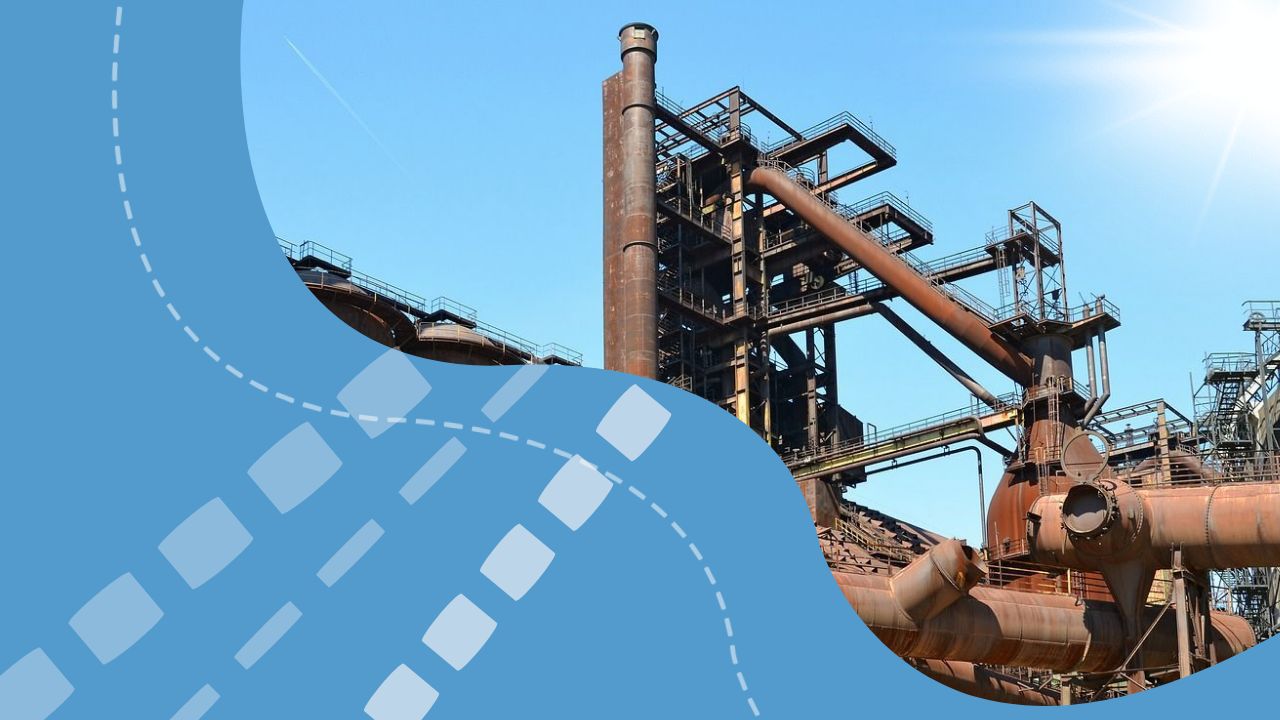
  • Zaporizhzhia steel plant refuses to bend to Russian attacks

    Zaporizhzhia steel plant refuses to bend to Russian attacks

    [vc_section][vc_row][vc_column][distance desktop_type=”30″][lvs][distance desktop_type=”30″][vc_btn title=”Source – Washington Post” color=”sky” i_type=”material” i_icon_material=”vc-material vc-material-perm_device_information” add_icon=”true” link=”url:https%3A%2F%2Fwww.washingtonpost.com%2Fworld%2F2023%2F06%2F15%2Fzaporizhzhia-steel-plant-ukraine-war%2F|target:_blank”][distance desktop_type=”30″][vc_column_text]

    urnace is blowing.

    So when the siren sounds warning of a missile attack, which is often, Oleksii Klashnik doesn’t run down to one of Zaporizhstal’s 14 underground bunkers. Instead, he and a few key workers don protective vests along with their heatproof outfits. Then they continue working with the molten metal at temperatures up to 1,100 degrees Celsius.

    Zaporizhzhia city is less than 30 miles from the front line in Ukraine’s high-stakes counteroffensive and has been frequently targeted by Russian forces. The air alarm signals real danger. But stopping a blast furnace in the middle of smelting molten iron used to create steel could be even riskier.

    “People just adapted to it,” Klashnik, 29, said with a shrug. Despite the war, lives and livelihoods must go on — and Zaporizhstal, one of the largest steel mills in Ukraine, is a symbol of resilience in one of the core sectors of the country’s battered economy.

    The plant has never been hit, Klashnik added, but “you can definitely hear the explosions in the city.”

    Oleksii Klashnik, 29, wears a fireproof suit at the furnace of the Zaporizhstal steel plant on May 29. (Heidi Levine for The Washington Post)

    Founded in 1933, Zaporizhstal is one of few mills that produces cold-rolled sheets of steel, vital for car manufacturers. It is a regional giant and workers describe its mammoth scale in abstract terms — you can fit two-and-a-half Monacos in here, they say, or 777 soccer pitches.

    More than that, however, they describe it as evidence of Ukraine’s refusal to surrender to Russian aggression. The plant closed for 33 days at the start of the war but has operated ever since, retooling to help Ukraine’s national war effort despite the risk.

    Because of the war, the giant Zaporizhstal has effectively shrunk. Roughly 10,000 people worked at the plant before the invasion. Last year, a thousand left to become soldiers. Another thousand, mostly women or men with families, moved away. Zaporizhstal has not operated at more than 70 percent capacity since the war began. Currently, just two of four furnaces are working, so production is even lower.

    “We lost a lot of our clients,” Roman Slobodianiuk, acting general director, said in an interview.

    One of the many bomb shelters at Zaporizhstal. (Heidi Levine for The Washington Post)

    The struggles in the steel industry in many ways mirror the broader hardship wrought on Ukrainian industry since the invasion.

    Ukraine’s economy shrank by 30 percent in 2022. Though the decline has stabilized this year, it is not clear when growth will return. Many in Ukraine’s steel industry worry they are falling behind as global production transitions to “green” steel, which uses hydrogen rather than fossil fuels and requires a different type of iron ore.

    For many, it’s a personal struggle, too. Steel mills typically dominate their home cities, connecting families and serving as mainstays of the tax base. Several generations of a family might work together in hot, potentially dangerous conditions.

    “Ukraine has a steel production culture,” said Stanislav Zinchenko, chief executive of GMK, a Kyiv-based economic think tank.

    Steel culture
    Oleksii Klashnik samples molten metal at the furnace of the Zaporizhstal steel plant. (Heidi Levine for The Washington Post)

    That culture took hundreds of years to build up. In the 19th century, British investors began working with the Russian empire to tap the country’s enormous reserves of iron ore. Later, during the Soviet Union, much of this iron ore was used in steel designed for manufacturing in the domestic market.

    When the Soviet Union collapsed, the industry pivoted, making use of the wide Dnieper River and the nearby Black Sea to export products as far away as North America and Asia. It became one of Ukraine’s largest industries, second only to the vast fields of agriculture like those that are just outside the city in the Zaporizhzhia region.

    Before the Russian invasion, Ukraine was one of the world’s largest suppliers of iron and steel, with metals making up roughly a third of Ukraine’s exports. It contributed one dollar out of every 10 to Ukraine’s prewar economy and more than 560,000 people were directly or indirectly employed by the industry.

    It can be tough work. New employees on the production line at Zaporizhstal were warned that they would sweat out 10 kilograms, or 22 pounds, in their first month on the job.

    A control room at the Zaporizhstal steel plant. (Heidi Levine for The Washington Post)

    Aside from the heat, there are carcinogenic fumes that coat much of the plant in rust-colored dust. Workers carry carbon monoxide meters because of fatal accidents during Soviet times.

    The impact of the war on the steel industry was highlighted by the scenes at Azovstal Steel Plant in occupied Mariupol last year. That plant, as Zaporizhstal, is part of Metinvest, the metals giant owned by Rinat Akhmetov, Ukraine’s richest man.

    Metinvest, Ukraine’s largest employer before the war, had about 35,000 workers in Mariupol alone. The Azovstal mill and its web of underground bunkers became an iconic holdout of Ukrainian military resistance before Russia took over the city more than a year ago. It is now decimated.

    For the steel mills still operating in Ukrainian-held territory, there were other problems. They were cut off from the iron ore mines that once supplied them and they suffered rolling blackouts as Russian airstrikes targeted the electrical grid.

    The Zaporizhstal steel plant in Zaporizhzhia, Ukraine, on May 29. (Heidi Levine for The Washington Post)

    The recent collapse of the Kakhovka dam farther down the Dnieper River added a new problem: water. On Tuesday, a giant steel plant in Kryvyi Rih owned by metals giant ArcelorMittal announced that it would halt production indefinitely because of water supply issues.

    Even when steel could be produced, the Russian blockade of Ukrainian ports meant lost access to international shipping that helped Ukraine thrive. Exports now travel via rail to Eastern Europe at a significant cost, limiting sales.

    “What the Russians are doing now, it’s called by a very simple word: piracy,” Yuriy Ryzhenkov, chief executive of Metinvest, said.

    Bending or breaking
    A worker in the control tower as a block of molten metal moves through the production line at the Zaporizhstal plant. (Heidi Levine for The Washington Post)

    For workers such as Klashnik, the biggest change isn’t the sirens: It’s the hours.

    The shifts were lengthened from eight hours to 12 last year. The aim was to fit around the city’s nightly curfew, which keeps Zaporizhzhia residents indoors at night. It meant four more hours a day of hot, sweaty work at the furnace.

    In the long run, staffing will probably be a major concern at Zaporizhstal, pointing to bigger issues surrounding the future of Ukraine’s heavy industry. Plant officials say that they are struggling to fill some specialist vacancies as that kind of skilled worker no longer lives in the area.

    Only 100 or so Metinvest workers from Mariupol were transferred to Zaporizhstal. Metinvest originally hoped to find jobs across the company for 6,000 workers displaced from its facilities in Mariupol, but only half that number applied. Many opted to remain in Russian-held territory for personal reasons or even take a job in Russia’s much larger industry itself.

    “It was a bit surprising for us,” said Ryzhenkov, adding that the limited number of jobs in Ukraine and language barriers in Europe were a factor. “So they chose Russia.”

    Slobodianiuk, who is 34 himself, admits it is hard to convince young people that they should go for a job in a steel mill rather than, say, information technology, even though steel jobs pay well. “It’s hard physical labor,” said Slobodianiuk. “Not a lot of people are ready to commit to it.”

    Roughly 7 million people have left Ukraine since the war began, compounding a long-standing demographic problem. Millions more have moved to Ukraine’s west, away from traditional industrial hubs such as Zaporizhzhia. And with military spending expected to remain high for years, hundreds of thousands of soldiers will be taken out of the job market.

    A block of molten metal at the Zaporizhstal steel plant. (Heidi Levine for The Washington Post)

    The war has also meant that Metinvest and other steel producers in Ukraine have fallen behind in the industry-wide race to move away from traditional steel, fed by coal and a major source of carbon emissions, to green steel. Countries such as China, India and South Africa have taken Ukraine’s place in international steel markets. Though Russian steel is sanctioned, its iron ore is not.

    “Today the main supplier for Europe’s steel industry is Russia,” said Zinchenko, referring to the sponge iron and other special ore produced by Metalloinvest, a Russian producer whose largest shareholder is the sanctioned oligarch Alisher Usmanov. “Amazing, right? It should be Ukraine.”

    The fame of Azovstal made Ukraine’s steel industry a source of national pride. But keeping the industry alive will require grappling with what sort of country Ukraine wants to be after the war.

    “I was proud to work here before the war,” said Klashnik as he stood back from the furnace. “And now, it’s the same.”

    [/vc_column_text][distance desktop_type=”30″][/vc_column][/vc_row][/vc_section]

  • Argentina, EU chiefs sign climate-focused MoU on raw materials

    Argentina, EU chiefs sign climate-focused MoU on raw materials

    [vc_section][vc_row][vc_column][distance desktop_type=”30″][lvs][distance desktop_type=”30″][vc_btn title=”Source – Nasdaq” color=”sky” i_type=”material” i_icon_material=”vc-material vc-material-perm_device_information” add_icon=”true” link=”url:https%3A%2F%2Fwww.nasdaq.com%2Farticles%2Fargentina-eu-chiefs-sign-climate-focused-mou-on-raw-materials|target:_blank”][distance desktop_type=”30″][vc_column_text]BUENOS AIRES, June 13 (Reuters) – Argentina’s president and the chief of the European Union signed a memorandum of understanding focused on sustainable raw materials value chains on Tuesday during an event in Buenos Aires.

    The partnership, signed by EU Commission President Ursula von der Leyen and Argentina’s Alberto Fernandez, will see cooperation on climate-friendly infrastructure projects as well as new research on raw materials value chains.

    “It is a big step forward for the EU’s climate ambitions and it is beneficial to Argentina as a key global player in the clean energy transition,” von der Leyen said in the statement shortly after.

    The agreement also “aims to develop a sustainable raw materials industry, and to support the creation of local added value, quality employment and sustainable and inclusive economic growth.”[/vc_column_text][distance desktop_type=”30”][/vc_column][/vc_row][/vc_section]

  • JV Article: Ericsson’s NEXGEN SIMS EU project brings 5G collaboration to Europe’s biggest underground mines

    JV Article: Ericsson’s NEXGEN SIMS EU project brings 5G collaboration to Europe’s biggest underground mines

    [vc_section][vc_row][vc_column][distance desktop_type=”30″][lvs][distance desktop_type=”30″][vc_btn title=”Source – MINING.COM and Ericsson” color=”sky” i_type=”material” i_icon_material=”vc-material vc-material-perm_device_information” add_icon=”true” link=”url:https%3A%2F%2Fwww.mining.com%2Fjoint-venture%2Fjv-article-ericssons-nexgen-sims-eu-project-brings-5g-collaboration-to-europes-biggest-underground-mines%2F|target:_blank”][distance desktop_type=”30″][vc_column_text]A European Union (EU) backed NEXGEN SIMS project with a global sustainability focus is making strides in communications networks in some of Europe’s biggest underground mines.

    Funded by the EU’s Horizon 2020 research and innovation program, the $16 million next-generation carbon-neutral pilots for Smart Intelligent Mining Systems project is being coordinated by mining and infrastructure equipment manufacturer Epiroc, in cooperation with  Ericsson, K+S, Boliden, Agnico Eagle, OZ Minerals, KGHM Polska, AFRY, LTU Business, Mobilaris, RWTHAACHEN University and Luleå University of Technology.

    Kicked off in May 2021, the three year project is helping mining companies automate and digitalize their operations for improved efficiency and sustainability as an enabler for the global green energy transition.

    The project envisions more sustainable and efficient production of raw material with minimized environmental impact for economic growth. NexGen SIMS can support the next production paradigm shift in the global mining industry through deployment in North American markets.

    The Canadian government has awarded C$364 million to fund digitalization of operations to reduce carbon emissions as it aims to become a leader in the greener production of critical minerals. Canadian Natural Resources recognizes this and is already deploying enterprise cellular networks.

    NexGen SIMS focus areas include improved production efficiency; lowered energy consumption; reduced environmental impact and improved worker safety.

    Now in year three, the collaboration has led to the development of a robust and reliable cellular-based communication concept for the mining industry.

    The Smart Intelligent Mining Systems project’s eight demonstration sites in Europe include Agnico Eagle’s Kittilä mine in northern Finland, the largest primary gold producer in Europe, KGHM’s copper mines in Poland: Lubin, the oldest mine in the Polish copper belt, and Rudna, one of the largest deep copper ore mines in the world.

    Tests of the latest products for industrial private networks are also being performed at Boliden’s Kankberg and Kristineberg gold-copper mines in Sweden, at LTU Luleå facilities, Epirocs’ Kvarntorp test mine and K+S-operated Werra room-and-pillar potash plant in Germany.

    In NEXGEN SIMS, Ericsson is taking the next step in the mining collaboration journey, using its Private 5G solution for the pilot demonstrations of autonomous loading and hauling.

    Ericsson Private 5G networks solutions are providing improved versatile on-site connectivity infrastructure and supporting battery powered machines, autonomous material handling, and cross-machine fleet control on these sites.

    Next level communication for the mining industry

    With networks all over the world, Ericsson’s research and demonstrations have reached the next level with NEXGEN SIMS through discoveries and advancements for the mining industry.

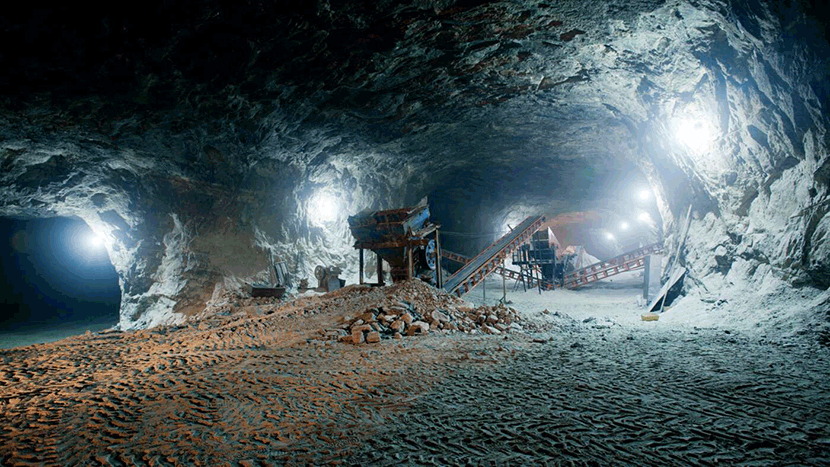
    Work in underground tunnels. Image submitted by Ericsson.

    “We have deployed the Ericsson private 5G network (EP5G) first at Epiroc’s Kvarntorp test mine, where they are evaluating 3GPP communication devices for mining machines,” says Anders Nordenson, Ericsson’s project manager for NEXGEN SIMS.

    “In Germany, we tested and demonstrated ease of installation of our new EP5G product and performed exhaustive tests of support for sensors and long-range communication,” says Nordenson.

    Nordenson says the team is investigating how deep within underground tunnels devices can reach Ericsson networks, and are testing 4G and 5G throughput, signal strength and behavior.

    “The goal of the project will be realized in different pilot demonstrations, and we are entering into that phase where we will start these demos.”

    This fall, the team will start demonstrating autonomous bucket loading, hauling, and dumping for operations at Kittilä mine in Finland.

    “Mines are a bit of unknown territory when it comes to radio propagation, but we are very good at deploying macro networks all over the world – we have special tools for planning radio networks,” Nordenson notes.

    “Private network connectivity for autonomous vehicles can significantly improve efficiency through increased scheduling of optimized routes, reduce emissions and enhance safety.”

    The communication infrastructure is one of the critical pillars needed for digitalized mining, where autonomous machines and traffic management can reduce emissions and energy consumption by enhancing the working schedule of the machines, reducing idle times and even the number of machines needed.

    Improved communications networks also further enable more advanced sensor networks, enabling the optimization of ventilation, which can greatly reduce energy consumption in underground mines, notes Tomas Jönsson, Ericsson’s research and development lead for radio performance.

    “A big part of the energy spending for a mine is ventilation even to the extent that it’s a significant part of the overall whole country’s energy spend,” says Jönsson. “And that means that even small savings for a mine is big savings in energy.”

    “The backbone of digitalising a mining site is to have good communication,” says Jönsson. “Companies clearly see that in the long run, they need a very stable backbone in communication, and they need to start working with 3GPP telecom communication, which hasn’t been available for industries due to the business models. But with the digitalization of industries, a journey for us is to supply products in a scalable and affordable way for industry sites.”

    “Miners very clearly know the value of reliable infrastructure and they know very well how to put the price on reliability and efficiency,” he says.

    “Mining companies that are leading in efficiency like Boliden, need to be investing in something that will hold for the continuation of the digitization process because if they are not on top in efficiency, they will be out of business because those low fractions on metals and minerals won’t be profitable.”

    Jönsson says that with increased communications network efficiency, underground mines will be able to target deposits that are not profitable today – but could be in the future with this technology investment.[/vc_column_text][distance desktop_type=”30″][/vc_column][/vc_row][/vc_section]

  • Vulcan on target for lithium extraction plant completion

    Vulcan on target for lithium extraction plant completion

    [vc_section][vc_row][vc_column][distance desktop_type=”30″][lvs][distance desktop_type=”30″][vc_btn title=”Source – West Australian” color=”sky” i_type=”material” i_icon_material=”vc-material vc-material-perm_device_information” add_icon=”true” link=”url:https%3A%2F%2Fthewest.com.au%2Fbusiness%2Fpublic-companies%2Fvulcan-on-target-for-lithium-extraction-plant-completion-c-10986192|target:_blank”][distance desktop_type=”30″][vc_column_text]

    Vulcan Energy Resources has entered the final stage of development of its lithium extraction optimisation plant in Germany, with the company on target for the mechanical completion of its operation in August.

    The extraction plant forms a key part of the company’s Zero Carbon lithium project as it aims to become the world’s first integrated lithium chemicals and geothermal energy producer with net-zero greenhouse gas emissions.

    Once the plant reaches mechanical completion, Vulcan is targeting commissioning during September ahead of the full operation that will produce the first-ever tonnes of lithium chloride concentrate produced domestically in Europe.

    Vulcan’s fully-operational plant will also produce the first tonnes of lithium using the commercially-proven method of sorption-type direct lithium extraction, using renewable heat instead of fossil gas. The completed extraction plant will supply lithium chloride to a second downstream optimisation facility that will produce the final lithium hydroxide product.

    It will herald the beginning of Europe’s new lithium era.

    Once the optimisation process has been completed, Vulcan will supply its automotive and battery customers, including carmaker giants Stellantis and Volkswagen, with a final product for testing and qualification. The completed plants will also serve as a training ground for the company’s production team to prepare for the first commercial phase of it Zero Carbon lithium project, that is also progressing.

    It will allow management to optimise the process parameters for the commercial plant while it is being constructed.

    Completing our Optimisation Plant and starting operations in the coming weeks and months will represent the culmination of over 5 years’ work on the Zero Carbon Lithium Project, and the birth of an entirely new domestic lithium industry in Germany and Europe, which we are very excited to share with our stakeholders.

    Vulcan Energy Resources managing director and chief executive officer Dr Francis Wedin

    Uniquely, the company will produce clean geothermal power for its own use and for sale into the market, in addition to producing lithium hydroxide. Vulcan’s model seeks to extract the sought-after battery metal from its lithium-laden hot brines percolating deep below in the picturesque Upper Rhine Valley that extends across France, Germany and Switzerland.

    While more than 60 per cent of global lithium production is sourced from such brines, Vulcan’s competitive – and green – edge is that the heat at which these brines bubble to the surface is capable of generating power, courtesy of standard geothermal technology, with zero carbon emissions.

    After extraction of geothermal energy and lithium, the brine is reinjected back into the bedrock to make a closed-loop process with minimal impact on the surrounding environment.

    Significantly, Vulcan has also made a raft of senior appointments as its extraction plant draws nearer to operation, including Carsten Bachg as senior director of programs, Cedric Adam as director of construction and commissioning and Neil Davey as director of the project management office and project services. It also plans to leverage its strong cash position of about $270 million to negotiate early works agreements and place orders for key commercial plant equipment as its projects continue to gain momentum.

    The company finds itself in the unique position of potentially becoming a major supplier of key battery components without the additional overhead of energy costs. In fact, it looks as if the company will be in a position to offset additional costs by selling off excess energy into the local grid.

    With the world heavily-focused on zero-carbon energy production, Vulcan’s lithium project has the potential to become a game-changer in the battery production market.

    [/vc_column_text][distance desktop_type=”30″][/vc_column][/vc_row][/vc_section]