Website: Europe.com

  • Eastern German coal phase-out threatens regional water supply – report

    Eastern German coal phase-out threatens regional water supply – report

    [vc_section][vc_row][vc_column][distance desktop_type=”30″][lvs][distance desktop_type=”30″][vc_btn title=”Source – Clean Energy Wire” color=”sky” i_type=”material” i_icon_material=”vc-material vc-material-perm_device_information” add_icon=”true” link=”url:https%3A%2F%2Fwww.cleanenergywire.org%2Fnews%2Feastern-german-coal-phase-out-threatens-regional-water-supply-report|target:_blank”][distance desktop_type=”30″][vc_column_text]

    The planned coal phase-out in eastern Germany could threaten water supply in and around the country’s capital, as significantly less groundwater will be pumped into the river Spree with the end of lignite mining in the area, a report by the Federal Environmental Agency (UBA) found. After the coal phase-out in Lusatia, the river Spree – which flows in the states of Berlin, Saxony and Brandenburg – could have up to 75 percent less water in certain areas during dry summer months, with consequences for lakes, canals and drinking water supply, according to the report. Since the beginning of lignite mining in the 19th century, around 58 billion cubic metres of groundwater – more than the volume of Lake Constance – have been pumped to allow mining, and fed into the Spree, said UBA. A good half of the water that the Spree carries today near Cottbus comes from pumped groundwater. The coal phase-out in the country is scheduled for 2038, but the government aims to push it forward to 2030 if possible. The report’s authors say it will fundamentally change the water balance in the entire region and, if water demand increases or remains the same, there is a threat of increasingly frequent and prolonged water shortages in the region. However, this is no reason to cancel the phase-out, the UBA head Dirk Messner said. “Coal mining has been harmful to the environment for decades. I am absolutely in favour of continuing to target the phase-out for Lusatia for 2030, otherwise we will hardly be able to achieve our climate targets.”

    The authors recommend that households, industry and agriculture save water, and that the states find ways to pump water into the river from other regions through new pipe systems. Additionally, water storage should be expanded by upgrading existing reservoirs and creating new ones in mining lakes, for example. A short-term, emergency solution could be the continued operation of the mining pumps, but this would come with ecological consequences and is an expensive solution to prevent water shortage problems compared to other measures, the authors say. UBA also recommends that Saxony, Brandenburg and Berlin develop a cross-state master plan for water management in the region. The capital’s water supplier, Berliner Wasserbetriebe, and the state’s senate are already working on corresponding concepts.

    [/vc_column_text][distance desktop_type=”30″][/vc_column][/vc_row][/vc_section]

  • Dundee Precious Metals to earn stake in Velocity’s Iglika licence

    Dundee Precious Metals to earn stake in Velocity’s Iglika licence

    [vc_section][vc_row][vc_column][distance desktop_type=”30″][lvs][distance desktop_type=”30″][vc_btn title=”Source – Mining Technology” color=”sky” i_type=”material” i_icon_material=”vc-material vc-material-perm_device_information” add_icon=”true” link=”url:https%3A%2F%2Fwww.mining-technology.com%2Fnews%2Fdundee-stake-velocitys-iglika%2F|target:_blank”][distance desktop_type=”30″][vc_column_text]

    Canadian-based mining company Dundee Precious Metals (DPM) has signed a binding letter agreement to acquire a 75% interest in the Iglika copper-gold prospecting licence in Bulgaria from gold exploration and development company Velocity Minerals.

    Under the agreement, DPM will have the exclusive option to acquire a 75% interest in the Iglika licence by making an initial cash payment of $250,000 (C$333.94m) to Velocity and funding the 40,000m drilling work on the property.

    DPM is required to make the cash payment to Velocity within five business days from the signing of the letter agreement, while 10,000m of drilling must be completed prior to the first anniversary of the effective date.

    The company will also fund and deliver a mineral resource estimate on a deposit located within the property; fund and deliver the deposit’s pre-feasibility study; and make an additional $1.5m cash payment to Velocity during a five-year period.

    In a press statement, Velocity Minerals said: “DPM will be under no obligation to fulfil any of the remaining earn-in requirements and may accelerate the satisfaction of the earn-in requirements without penalty, at its election.”

    DPM has started a drilling programme at the Iglika licence to test copper–gold porphyry, skarn and epithermal targets defined by geochemical and geophysical anomalies. The programme comprises 24 drill holes for 10,000m.

    The Canadian company plans to complete detailed mapping, soil sampling and geophysical surveys to further refine drill targets at the property.[/vc_column_text][distance desktop_type=”30″][/vc_column][/vc_row][/vc_section]

  • Poland delays green energy plan as election nears

    Poland delays green energy plan as election nears

    [vc_section][vc_row][vc_column][distance desktop_type=”30″][lvs][distance desktop_type=”30″][vc_btn title=”Source – Reuters” color=”sky” i_type=”material” i_icon_material=”vc-material vc-material-perm_device_information” add_icon=”true” link=”url:https%3A%2F%2Fwww.reuters.com%2Fbusiness%2Fenergy%2Fpoland-delays-green-energy-plan-election-nears-2023-06-13%2F|target:_blank”][distance desktop_type=”30″][vc_column_text]

    WARSAW, June 13 (Reuters) – Poland has deferred a plan to cut its reliance on coal by changing the status of its energy policy update to a consultation ahead of elections later this year, following pressure from mining unions.

    The climate ministry published in April a document it began working on after Russia invaded Ukraine in February last year, causing major disruption in energy markets.

    It called for a doubling of renewable capacity to 50 gigawatts (GW) by 2030 and a further increase to 88 GW by 2040, but the climate ministry website said it will now feed into an all-industry strategy update.

    “It has been decided that the work put into the document will be used to prepare a broader energy strategy encompassing other industries,” the ministry spokesman Aleksander Brzozka told Reuters on Tuesday.

    Earlier this month, Prime Minister Mateusz Morawiecki signed an agreement with the biggest trade union that calls for more consultations on strategy for the Polish energy industry.

    In 2021, the government said the country will continue mining coal, which is used to generate some 70% of Poland’s power, until 2049.

    Michal Hetmanski, head of Instrat, a Warsaw-based independent think tank, said the change of status ruled out the plan’s being adopted before elections due in October or November, adding it “yet again questions the government mandate to plan an energy transition at all”. “It is peculiar that the government wants to consult the strategy soon after proposing it due to the pressure from powerful coal mining unions,” Hetmanski told Reuters.

    [/vc_column_text][distance desktop_type=”30″][/vc_column][/vc_row][/vc_section]

  • EU industry’s green transition in spotlight at ECON meeting

    EU industry’s green transition in spotlight at ECON meeting

    [vc_section][vc_row][vc_column][distance desktop_type=”30″][lvs][distance desktop_type=”30″][vc_btn title=”Source – European Commitee of the Regions” color=”sky” i_type=”material” i_icon_material=”vc-material vc-material-perm_device_information” add_icon=”true” link=”url:https%3A%2F%2Fcor.europa.eu%2Fen%2Fnews%2FPages%2FEU-industry%25E2%2580%2599s-green-transition-in-spotlight-at-ECON-meeting.aspx|target:_blank”][distance desktop_type=”30″][vc_column_text]The impact on regions and cities of the EU’s policy to reduce reliance on imports of critical raw materials, reducing dependency on net-zero industry technologies and the achievement of a just transition in the automotive industry were amongst the main topics discussed during the meeting of the commission for Economic Policy (ECON) on 7 June. ECON members also adopted a draft opinion on the reform of the EU Stability and Growth Pact, calling for European fiscal rules to be more effective and have greater democratic legitimacy. 

    Members of the ECON Commission voiced support for the more country-specific approach of the recent European Commission proposal for new economic governance rules. However, they insisted that the involvement of local and regional authorities in the definition of the new national mid-term fiscal plans must be mandatory. The adoption by the CoR commission comes just one week before national ministers assess the proposed reform of the economic governance framework at the Economic and Financial Affairs Council.   

    The rapporteur Elio Di Rupo (BE/PES), Minister-President of the Wallonia Region, said: “The status quo is not an option. Reform of the EU’s economic governance is inevitable given the impact of the COVID-19 pandemic and the war in Ukraine. There is a need for investments into the green and digital transitions of €650 billion per year over the next decade and almost €200 billion per year for social infrastructure. To strengthen public investment, the very least would be to exempt all expenditure incurred by Member States and local and regional authorities as part of Cohesion funds co-financing and Union programmes from fiscal surveillance.“ 

    The opinion will be voted upon at the Plenary session of the CoR in October. For more information, please consult the related press release here. 

    During the meeting, ECON members debated on the draft opinions “Net Zero Industry Act“, prepared by Mark Speich (DE/EPP), State Secretary for Federal, European and International Affairs and Media of the State of North Rhine Westphalia, and “Critical Raw Materials Package“ drafted by Isolde Ries (DE/PES), Mayor of West Saarbrücken District. Members supported reducing dependency on net-zero energy technologies through the circular use of resources, but stressed that regional dependencies should be identified, as well as the consequent need for regions to take action to build sustainable and innovative value chains. Moreover, rising demand for raw materials also means growing dependence on countries rich in such materials. Many producer countries do not meet the EU’s environmental and social standards. At local level, this can lead to poorer mining conditions for people and the environment, and even military conflicts and corruption. It is therefore crucial to strengthen the preparedness of local and regional authorities for possible disruptions in supply chains and to develop reserves in the European Union to achieve strategic autonomy for critical raw materials.  

    ECON members further discussed the just and sustainable transition for automotive regions which is the key concern of the Automotive Regions Alliance. They highlighted that political and financial support from the EU for the automotive regions is needed in order to ensure a just and socially sustainable transition to a climate-friendly economy. The Alliance calls for the establishment of a European mechanism for the automotive regions comparable to the Just Transition Fund which is particularly important for the upskilling of workforce in this industry. On Monday, the Chair of the Automotive Regions Alliance and Saxon State Minister for Regional Development, Thomas Schmidt (DE/EPP), was invited by Thierry Breton, Commissioner for the Single Market, and Nicolas Schmit, Commissioner for Jobs and Social Rights, to discuss the social impact of the ongoing transition in the automotive industry and made clear the demands of the Alliance.  

    Finally, members of the ECON commission had a first exchange of views on the draft opinions “EU Cyber Solidarity Act and Digital Resilience“, by Pehr Granfalk (SE/EPP), Member of Solna Municipal Council, and “2022 Annual Report on Competition Policy“, prepared by Antonio Mazzeo (IT/PES), President of the Regional Council of Tuscany.  

    Background:  

    The Automotive Regions Alliance is a political network of regions committed to the successful transition of the European automotive and supply industry. The CoR is currently preparing a draft opinion on the just and sustainable transition for automotive regions, by rapporteur Sven Schulze (DE/EPP), Minister for Economic Affairs, Tourism, Agriculture and Forestry of Saxony-Anhalt, which aims to contribute to the ongoing transition process and to develop strategies on how these regional processes can be supported through a multi-level dialogue and EU Cohesion Policy. 

    As a response to the American Inflation Reduction Act, the European Commission published its proposal for a Net-Zero Industry Act (NZIA) on 16 March. The proposal is part of the Green Deal Industrial Plan with the overall goal of enhancing the competitiveness of Europe’s net-zero industry and supporting the fast transition to climate neutrality. The NZIA aims to scale-up clean tech manufacturing in the EU with the ambition that the EU’s strategic net-zero tech manufacturing capacity should reach at least 40% of the Union’s annual deployment needs by 2030. 

    The Critical Raw Materials Act, proposed by the Commission on the same day, leverages the strengths and opportunities of the Single Market and the EU’s external partnerships to diversify and enhance the resilience of EU critical raw material supply chains. The Critical Raw Materials Act also improves the EU capacity to monitor and mitigate risks of disruptions and enhances circularity and sustainability. 

    ​[/vc_column_text][distance desktop_type=”30″][/vc_column][/vc_row][/vc_section]

  • EIB and EC instruments to support a just transition in mining regions

    EIB and EC instruments to support a just transition in mining regions

    [vc_section][vc_row][vc_column][distance desktop_type=”30″][lvs][distance desktop_type=”30″][vc_btn title=”Source – European Investment Bank” color=”sky” i_type=”material” i_icon_material=”vc-material vc-material-perm_device_information” add_icon=”true” link=”url:https%3A%2F%2Fwww.eib.org%2Fen%2Fpress%2Fall%2F2023-208-just-transition-conference|target:_blank”][distance desktop_type=”30″][vc_column_text]

    • The European Investment Bank (EIB), the European Commission and the Silesian Region have held a conference on loan and grant instruments that can be used under the Just Transition Mechanism.
    • This financing can aid public and private investment in regions hardest hit by Europe’s ongoing transition to a climate-neutral economy.

    The Just Transition Mechanism is one of the key elements of the European Green Deal — the European Union’s plan to achieve climate neutrality in Europe by 2050.  The mechanism consists of non-repayable funds (grants) from the first pillar, the Just Transition Fund, as well as repayable and combined instruments from the second pillar, the Just Transition scheme under InvestEU, and funds from the third pillar — the Public Sector Loan Facility. The instruments are supported by a wide range of advisory support.

    Under the Just Transition Mechanism, the European Commission provides support to Member States that have identified territories which are already affected or will soon be hardest hit by the transition to climate neutrality. The Just Transition Fund is the first pillar of the mechanism. It supports the economic diversification and reconversion of areas undergoing transition through, among others: the up- and re-skilling of workers, investment in small and medium-sized enterprises (SMEs), the creation of new businesses, research and innovation, improving the environment, investment in clean energy, job-search assistance, and the transformation of existing carbon-intensive installations.

    The second pillar of the mechanism is the Just Transition scheme under the InvestEU programme. The goal of the programme, thanks to EC guarantees, is to mobilise both private and public investment, characterised by higher levels of risk, in just transition regions. The InvestEU programme focuses on four areas that reflect key EU policy priorities: (a) sustainable infrastructure; (b) research and development, innovation and digitalisation; (c) SMEs and (d) social investment and skills.

    Thanks to an agreement between the European Commission and the EIB, regions most affected by Europe’s transition to a climate-neutral economy will be able to take advantage of the grants and loans available under the Public Sector Loan Facility, the third pillar of the Just Transition Mechanism. This facility aims to support the transition away from fossil fuels in a way that is fair and beneficial to all — including communities whose livelihoods have previously relied primarily on mining or on other industries with a negative impact on the environment.

    The Public Sector Loan Facility allows public entities that plan to implement investment projects in affected regions to benefit simultaneously from EIB loans and EU grants, thereby reducing the financial burden on state budgets. The projects that are eligible for funding are those located in or benefiting territories which, in accordance with the Just Transition territorial plans presented by Member States and approved by the Commission, face the greatest challenges in terms of moving away from fossil fuels and carbon-intensive industries. In Poland, the following districts can expect to receive support under the Just Transition Mechanism: Konin, Wałbrzych, Piotrków, Sieradz, Rybnik, Bytom, Gliwice, Sosnowiec, Tychy, Katowice, Bielsko and Oświęcim.

    The EIB will make available up to €10 billion in funding by 2027 to spur investment to reduce the socioeconomic costs of the transition, thereby facilitating the creation of new businesses, jobs and infrastructure.

    EIB Vice-President Teresa Czerwińska explained, ”Moving away from fossil fuels is essential to curb global warming and should be a priority regardless of the difficult macroeconomic conditions and the war in Ukraine and its aftermath. Funds from the Just Transition Mechanism are meant to streamline this process and to bring financial relief to those EU regions where these funds are needed the most. Several regions in Poland are eligible, and we hope that this funding will support the transition and local development.”

    During her speech, Commissioner Elisa Ferreira of the European Commission stressed that “Poland is one of the most carbon-intensive countries in Europe. This puts Poland at the forefront of the ongoing energy and climate revolution. It is also the reason why Poland receives the highest share of support among EU countries under the Just Transition Mechanism. Several regions of Poland — including Silesia, where we are meeting today — are particularly vulnerable.”

    “Issues related to the disbursement of funds from the Just Transition Fund are no longer a matter of discussion, but of implementation. We have held meetings with representatives of the trade unions and have had another meeting with the Vice-President of the European Commission, Frans Timmermans. Step by step, we are indicating the areas where money from the JTF will be invested — and let me remind you that the sum involved is €2.2 billion. In a sense, our transition must be ‘smart’: We must be able to create new branches and areas within industry whose common denominator will be environmentally friendly technologies. It is highly likely that the mining sector will be gradually closed down over the coming years. The trade unions have signed a social agreement in which they have consented to this scenario. With this in mind, therefore, we need to create completely new industries. An important challenge is the revitalisation of post-industrial and former mining areas, which must be given a new lease on life. New jobs will be created there in the future. The Silesian Region, in cooperation with the Central Mining Institute, has completed the important task of carrying out an inventory of these areas, which has been under way since 2019. The region has approximately 330 former mining areas, and 270 post-industrial sites. Their ownership status varies. As a local government official, I would certainly prefer it if these areas were handed over to local governments, but it is nevertheless a very clear map for investors. What the future holds for these areas, only time will tell,” said Marshal of the Silesian Region Jakub Chełstowski.

    “Now, even more than five years ago — when we proposed in the European Parliament the establishment of the Just Transition Fund — it is clear why such instruments are so needed in the European Union. Today, they are no longer just tools to fight smog or, more broadly, to protect the climate and the environment and to ensure that everyone receives adequate assistance during these essential transformations. Today, with Russia’s criminal attack on Ukraine and — finally! — our disconnection from Russian energy supplies, thanks to which Putin built his empire, the Just Transition Mechanism not only translates into economic and energy security, but also preserves our very existence. That is why it is also so important that the EIB is not only a climate bank, but above all an energy transformation bank, and that the funds it provides are used properly and efficiently in the EU regions in greatest need, such as Poland’s Silesian Region,” said Jerzy Buzek, Member of the European Parliament.

    Just Transition Mechanism

    The abandonment of coal mining and industrial production and energy generation using methods that generate large amounts of CO2 entails a number of changes, namely:

    • energy transformation, the aim of which is to find new sources of heat and electricity generation;
    • ecological transformation, which involves, for instance, the cleaning up former mining areas;
    • socioeconomic transformation, which is aimed at attracting new businesses and thus compensating for job losses and declining tax revenues;
    • infrastructure transformation, which is a prerequisite for attracting new industries to the regions concerned.

    The Just Transition Mechanism, which is a key element of the European Green Deal, addresses the social and economic costs associated with the transition to a climate-neutral economy. The mechanism supports projects located in  Just Transition Mechanism regions identified by Member States and the Commission in Just Transition territorial plans or in areas where the implementation of projects will benefit JST regions.

    The mechanism consists of three financial pillars: (a) the Just Transition Fund, (b) the Just Transition scheme under InvestEU, and (c) the Public Sector Loan Facility. The EIB supports all three pillars as described in the study entitled “Supporting the Just Transition Mechanism – comprehensive proposal of the EIB Group”. The InvestEU Advisory HUB, JASPERS, Target, and the Just Transition Platform also provide extensive advisory support.[/vc_column_text][distance desktop_type=”30″][/vc_column][/vc_row][/vc_section]
  • Geological Service for Europe

    Geological Service for Europe

    [vc_section][vc_row][vc_column][distance desktop_type=”30″][lvs][distance desktop_type=”30″][vc_btn title=”Source – GSEU” color=”sky” i_type=”material” i_icon_material=”vc-material vc-material-perm_device_information” add_icon=”true” link=”url:https%3A%2F%2Fwww.geologicalservice.eu%2F|target:_blank”][distance desktop_type=”30″][vc_column_text]Under the five-year Coordination and Support Action, The GSEU Project will develop a plan for a sustainable Geological Service for Europe as a permanent collaborative network of European geological surveys. GSEU will serve European society and support sound policies on water, energy, raw materials, hazards and all other areas requiring subsurface data and expertise.

    GSEU will contribute to environmental sustainability and social prosperity in Europe through this service, supported by a powerful and comprehensive digital infrastructure. The overall objectives of GSEU are to develop pan-European harmonised data and information services across Europe with a focus on critical raw materials, geothermal energy resources and subsurface storage capacities for sustainable energy carriers and CO2 sequestration, groundwater dynamics and quality, geological and climate change information for coastal vulnerability assessment and geological baseline information.

    The European Centre of Excellence on Sustainable Resource Management will be established under the project to support the implementation of the United Nations Framework Classification of Resources (UNFC) and the United Nations Resource Management System (UNRMS).

    The geological data infrastructure will be developed on the basis of the existing European geological data infrastructure (EGDI) to provide permanent access to and dissemination of data and information services. The common European Geological Knowledge Base Platform will be provided as a single open access portal to the project results and the underlying data and information collections and infrastructures of the partners at national and regional level.  The subsurface field touches the experiences of every European citizen and the stakeholder community of the GSEU project is diverse and broad at European, national and regional levels. There will be different types of continuous stakeholder engagement ranging from social media for online communication, online consultations, face-to-face workshops, round table discussions and conferences.

    A comprehensive information and communication campaign will be carried out throughout the project.

    For more information, visit:

    GSEU: www.geologicalservice.eu
    EGDI: www.europe-geology.eu
    EGS: www.eurogeosurveys.or[/vc_column_text][distance desktop_type=”30″][/vc_column][/vc_row][/vc_section]
  • Coking coal – the invisible fuel of green transition: Experts discuss at the European Financial Congress

    Coking coal – the invisible fuel of green transition: Experts discuss at the European Financial Congress

    [vc_section][vc_row][vc_column][distance desktop_type=”30″][lvs][distance desktop_type=”30″][vc_btn title=”Source – JSW” color=”sky” i_type=”material” i_icon_material=”vc-material vc-material-perm_device_information” add_icon=”true” link=”url:https%3A%2F%2Fwww.jsw.pl%2Fen%2Fpress-office%2Fnews%2Farticle%2Fcoking-coal-the-invisible-fuel-of-green-transition-experts-discuss-at-the-european-financial-congress|target:_blank”][distance desktop_type=”30″][vc_column_text]From the perspective of one thousand meters underground – the place where the real green transition begins – the debate organized by Jastrzębska Spółka Węglowa (JSW) at the European Financial Congress in Sopot brought unique insights and expert voices on financing mining companies that reduce emissions.

    “Many people think of windmills or solar panels when they hear ‘green transition.’ But the truth is that it starts 1,000 meters underground,” said Robert Ostrowski, Vice-President of the Management Board for Financial Matters at JSW. He stressed that the steel industry, crucial to the green economy, is heavily dependent on coking coal, the raw material that JSW mines. It is a raw material that is included in the European list of critical raw materials, highlighting its strategic importance.

    Tomasz Ślęzak, from ArcelorMittal, emphasized the role of steel in our daily lives. “It is impossible to imagine the modern world without steel. To produce 1 MW of solar power, 40 tons of steel are needed,” Ślęzak added. Thus, steel, a raw material invisible to many, is absolutely crucial for a green future world.

    BGK’s Radosław Kwiecień noted that banks are increasingly open to decarbonization projects, while emphasizing the strategic importance of steel production in the supply chain.

    The discussion showed that Jastrzębska Spółka Węglowa not only takes responsibility for the energy transition, but also designates a path to achieve carbon neutrality by 2050. JSW’s continued mining of coking coal is therefore crucial to the future of Europe’s green economy.[/vc_column_text][distance desktop_type=”30″][/vc_column][/vc_row][/vc_section]
  • Second German region selected for geological studies

    Second German region selected for geological studies

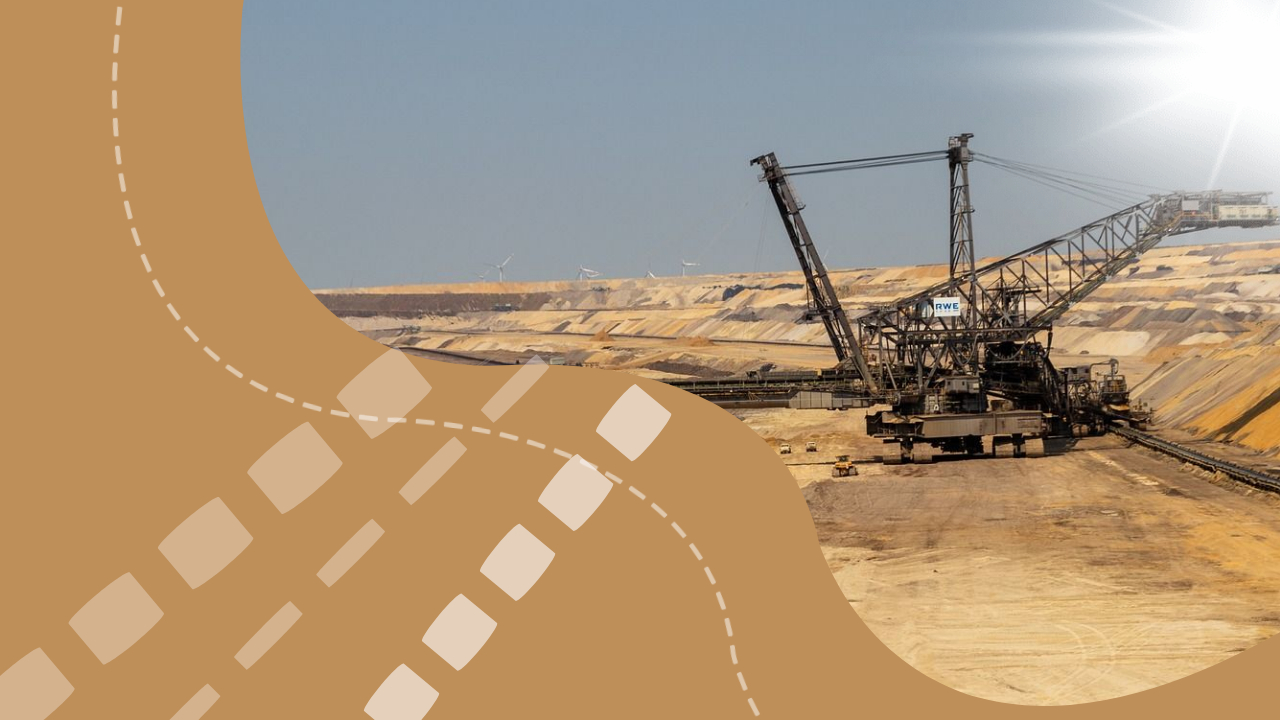
    [vc_section][vc_row][vc_column][distance desktop_type=”30″][lvs][distance desktop_type=”30″][vc_btn title=”Source – World Crunch” color=”sky” i_type=”material” i_icon_material=”vc-material vc-material-perm_device_information” add_icon=”true” link=”url:https%3A%2F%2Fworldcrunch.com%2Fbusiness-finance%2Flithium-mines-in-europe%23toggle-gdpr|target:_blank”][distance desktop_type=”30″][vc_column_text]A second research area has been identified by Germany’s Federal Company for Radioactive Waste Disposal (Bundesgesellschaft für Endlagerung, BGE) for investigating terrestrial and airborne geophysical exploration methods that can provide reliable information for identifying a suitable site for hosting a high-level radioactive waste repository.

    The GeoMetEr research project has been running since March and is being implemented by BGE together with eight other research partners. The goal of the EUR8.8 million (USD9.5 million) project, which will run until the end of 2028, is to develop and investigate geophysical measuring methods for above-ground exploration programmes in two research regions. The new measuring methods are aimed at achieving minimally invasive exploration of the site regions.

    Two geologically different research regions, which had already been excluded from the site selection process, have now been named for testing the exploration methods.

    An area located near the municipality of Langenweissbach, Saxony, in the Ore Mountains had earlier been selected for the examination of the crystalline host rock, building on a previous research project at the Technical University Bergakademie Freiberg. The region was excluded from the repository site search due to active fault zones and influences from current or previous mining activity.

    Now an area covering around 150 square kilometres has been chosen in the south of Baden-Württemberg for investigating the overburden of a mountain area. The area extends over the municipality of Sauldorf and the neighbouring municipalities of Wald, Herdwangen-Schönach, Messkirch, Pfullendorf, Leibertingen in the district of Sigmaringen, Mühlingen and Hohenfels in the district of Konstanz and Neuhausen ob Eck in the district of Tuttlingen. The region was excluded from the site selection process because of seismic activity.

    In the selected regions, the suitability and informative value of various geophysical measuring methods and method combinations are to be examined more closely. The focus is on three measurement methods: seismic, magnetic and electromagnetic measurements from the air, and one research well per research region.

    Various geophysical measuring methods are to be tested in the Sauldorf research region by 2027. These include 2D seismic, airborne magnetic and electromagnetic measurements. In addition, in a next step, BGE and its project partners are planning to determine an area of ​​25 hectares in which high-resolution 3D seismics and a research borehole of up to 600 metres depth are to be carried out. In addition, testing of magnetic and electromagnetic measurements with helicopters and drones is planned for autumn 2023.

    The first magnetic and electromagnetic measurements from the air as well as the first seismic measurements are planned in the Langenweissbach research region from winter 2023.

    The experiences and results collected will then be brought together in order to develop and optimise exploration strategies for the two research regions.

    In September 2020, BGE published a list of potential storage sites in Germany for radioactive waste. It identified 90 areas covering 54% of the country’s surface area as potentially geologically suitable. The report excluded a site at a former salt mine in Gorleben that was previously thought suitable. The selected site would store about 1900 containers of waste, which account for 5% of Germany’s total nuclear waste but 99% of its radioactivity. A final decision is scheduled for 2031 with the aim to start using the selected site in 2050.[/vc_column_text][distance desktop_type=”30″][/vc_column][/vc_row][/vc_section]
  • Analysis: Decarbonisation Plan of Bosnia and Herzegovina

    Analysis: Decarbonisation Plan of Bosnia and Herzegovina

    [vc_section][vc_row][vc_column][distance desktop_type=”30″][lvs][distance desktop_type=”30″][vc_btn title=”Source – Sarajevo Times” color=”sky” i_type=”material” i_icon_material=”vc-material vc-material-perm_device_information” add_icon=”true” link=”url:https%3A%2F%2Fsarajevotimes.com%2Fanalysis-decarbonisation-plan-of-bosnia-and-herzegovina%2F|target:_blank”][distance desktop_type=”30″][vc_column_text]The National Energy and Climate Plan of BiH, the draft of which was recently promoted, aims to prepare the country for smooth decarbonization starting in 2030. Its implementation is considered a development opportunity with regard to natural potentials. Procrastination and non-implementation can lead to the collapse of the existing economic concept. The BiH Council of Ministers should adopt this plan by the end of the year.

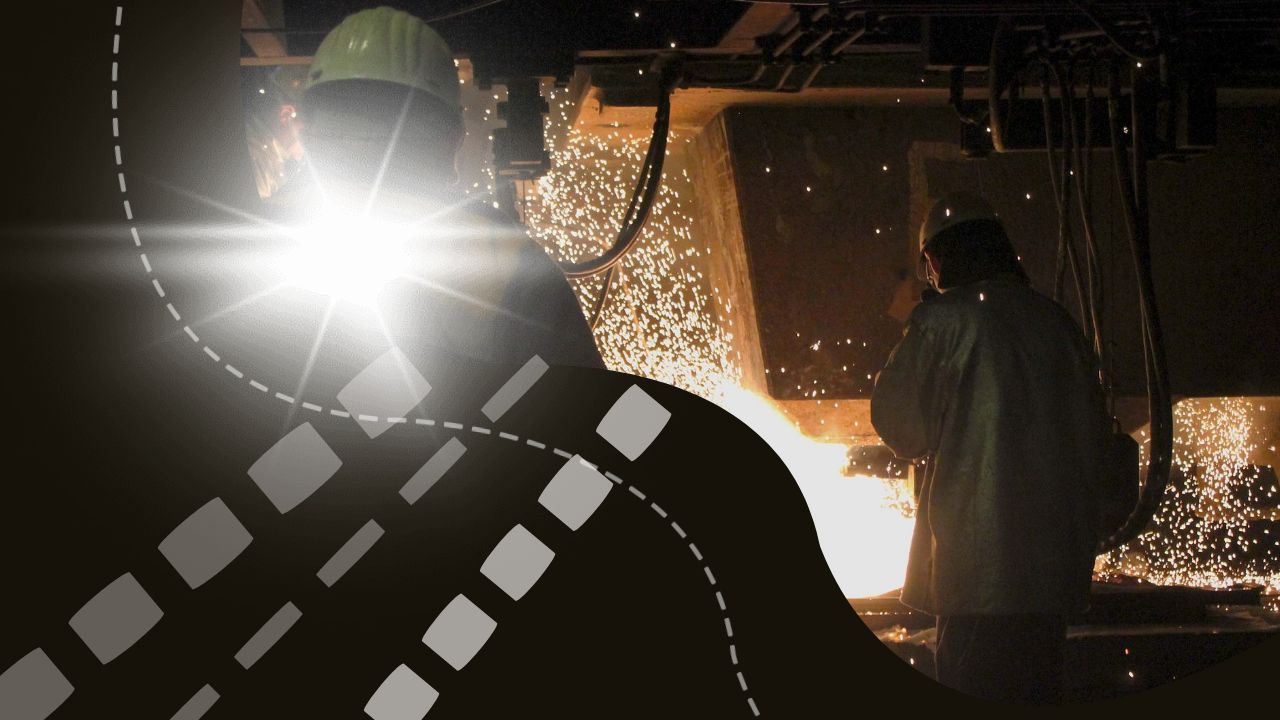
    Sikulje. Surface mine of the Kreka mine. 700 thousand tons of coal per year from this mine are burned by TPP Tuzla. So far, they have exploited about 35 percent of the coal reserves. 1,800 mine workers were engaged in this, as well as the Dubrave mine and the Mramor pit. However, coal mining is coming to an end.

    “We have heard that it is being talked about and no one is in a position to behave calmly and easily, it is difficult for everyone that it would be closed today or tomorrow, it does not matter,” says the shift supervisor of the Kreka mine, Šikulje miner, Sabahudin Kurtić.

    The plan of the mine is to make the most of the coal, as long as possible. Action plans after the closure of the mine are at the level of ideas.

    “I see the perspective of the mine that it will work in the coming years. The next 15-20 years,” Kreka mine director Hasan Bleković briefly stated.

    The holding that manages mines and thermal power plants in the Federation of Bosnia and Herzegovina will start shutting down mines and reducing the production of electricity from coal in five to eight years.

    “By the year 30, roughly, it is planned that pit exploitation will end. There will remain surface exploitation and some pit exploitation will remain where the coal is of good quality,” said Assistant General Director for Development of Elektroprivreda BiH Mustafa Musić.

    At the same time, two TPP units in Tuzla and one in Kakanj with a total capacity of 450 MW will also cease operation. The reduction of greenhouse gas emissions by 41 percent compared to the reference year 1990 is only part of the National Energy and Climate Plan.

    The NECP also includes measures to increase the share of RES and energy efficiency, energy stability, establishment of the internal energy market, and encouragement of research, innovation and competitiveness.

    “Through the negotiations with the EC and the EEC, we have agreed that coal is a transition fuel for us and we will use coal until we switch to renewable energy sources,” said Admir Softić from the Ministry of Foreign Trade and Economic Relations of Bosnia and Herzegovina.

    The authorities do not understand the process that many call the new industrial revolution, experts for a sustainable energy transition claim. Poor planning, a weak economy and an expensive decarbonisation process require support.

    “Among other things, we think that the EU must show much more solidarity with the countries of the region, first of all, in restructuring the mining regions and solving the problem of energy poverty, and in a much more structured way than they are doing so far,” says Mirza Kušljugić from the Center for Sustainable Energy Transition RESET.

    The introduction of taxes on CO2 emissions will make the production of electricity from coal unprofitable, our interlocutors assure. A key transitional tool could be the decision for Bosnia and Herzegovina to develop an internal emissions market according to the ETS model and use that money to develop green projects. The CBAM export tax model is much less favorable, because the money goes to the funds of the importing countries.

    “With the introduction of CBAM, harmonization at the borders of Europe regarding the payment of taxes on CO2 emissions, i.e. with the introduction of the ETS, the profitability of operating coal-fired thermal power plants will practically decrease, that is, they will not exist and our thermal power plants will be closed by 2035 at the latest,” says Denis Žiško from Center for Ecology and Energy.

    Acting on time is becoming an increasingly expensive currency of the energy transition. A politically and institutionally complicated country like Bosnia and Herzegovina spends years fulfilling various prerequisites. The last train has left.[/vc_column_text][distance desktop_type=”30″][/vc_column][/vc_row][/vc_section]

  • Geomet to buy land for lithium plant in Czech Republic

    Geomet to buy land for lithium plant in Czech Republic

    [vc_section][vc_row][vc_column][distance desktop_type=”30″][lvs][distance desktop_type=”30″][vc_btn title=”Source – Mining Technology” color=”sky” i_type=”material” i_icon_material=”vc-material vc-material-perm_device_information” add_icon=”true” link=”url:https%3A%2F%2Fwww.mining-technology.com%2Fnews%2Fgeomet-buy-land-lithium-plant-czech-republic%2F|target:_blank”][distance desktop_type=”30″][vc_column_text]

    European Metals’ subsidiary Geomet has agreed to acquire land at the Dukla industrial site in Újezdeček municipality in the Czech Republic, where it intends to build a lithium processing facility.

    Geomet owns the Cinovec project, which is claimed to hold one of the largest lithium deposits in Europe and is also one of the largest underdeveloped tin resources in the world.

    Geomet will purchase the Dukla site for $43.96m.

    The site has an existing industrial usage permit and is owned by four private companies. Peripheral and adjacent land relevant to the site is held by the Czech state and/or by local public bodies.

    Geomet will acquire one of the land packages and has entered into an exclusive option agreement to acquire the other three.

    The Dukla site is an appropriate location to build a lithium plant for the mineral processing of the ore from Cinovec and to produce battery-grade lithium.

    The company applied for the rezoning of the land around the Dukla site, the ore transport corridor and the Cinovec mine portal area in April 2022.

    The result of the application is anticipated in the final quarter of 2023.

    Once the firm secures the rezoning application, it plans to use the option and acquire the three land packages.

    CEZ and European Metals own a 51% and a 49% stake in Geomet respectively.

    Geomet also owns mineral exploration licences issued by the Czech Republic for the Cinovec lithium/tin project.

    It secured a preliminary mining permit from the country’s ministry of environment and ministry of industry.

    Cinovec holds significant hard rock lithium deposits with a total measured mineral resource of 53.3Mt at 0.48% of lithium oxide (Li2O) and 0.08% tin (Sn).

    The indicated mineral resources stand at 360.2Mt at 0.44% Li2 O and 0.05% Sn. Inferred mineral resources were 294.7Mt at 0.39% Li2O and 0.05% Sn, containing a combined 7.39 million tonnes of lithium carbonate equivalent and 335.1kt of tin.

    [/vc_column_text][distance desktop_type=”30″][/vc_column][/vc_row][/vc_section]