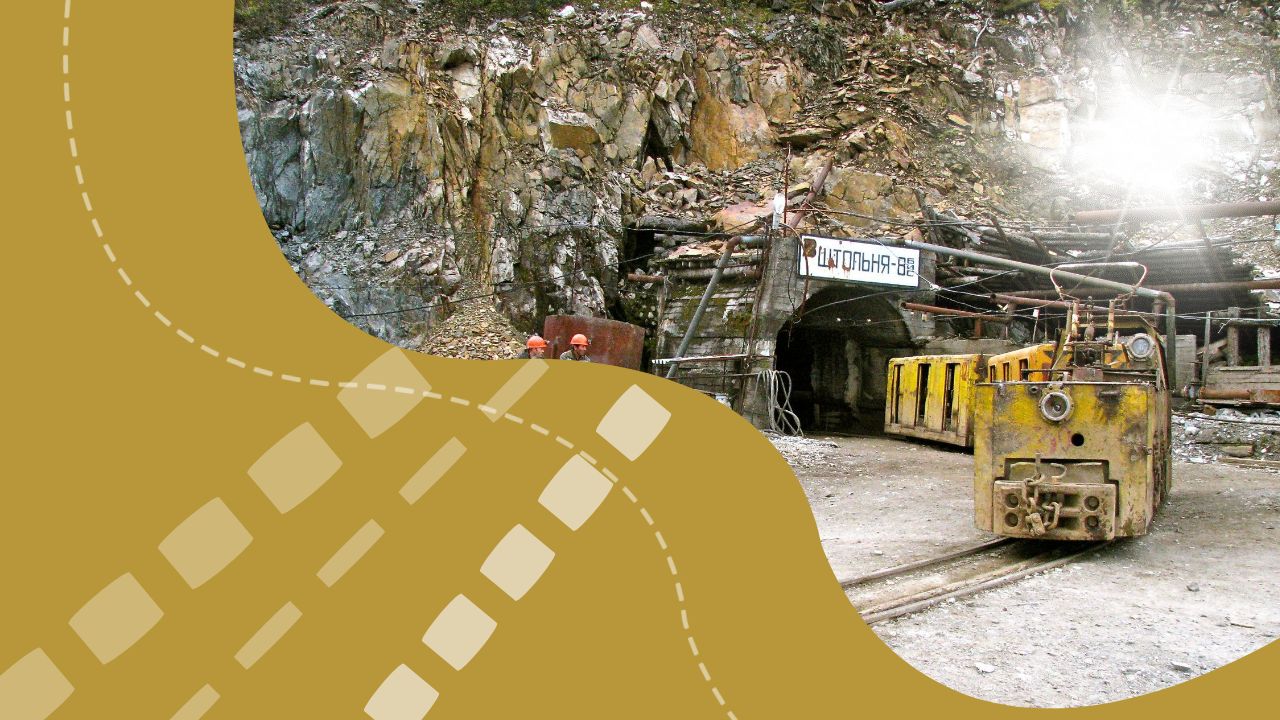
[vc_section][vc_row][vc_column][distance desktop_type=”30″][lvs][distance desktop_type=”30″][vc_btn title=”Source – Interfax Ukraine” color=”sky” i_type=”material” i_icon_material=”vc-material vc-material-perm_device_information” add_icon=”true” link=”url:https%3A%2F%2Fen.interfax.com.ua%2Fnews%2Feconomic%2F914984.html|target:_blank”][distance desktop_type=”30″][vc_column_text]PJSC ArcelorMittal Kryvyi Rih (Dnipropetrovsk region) has suspended steel production due to the blowing up of the dam of the Kakhovka hydroelectric power plant (HPP) by the invaders in order to reduce water consumption in critical conditions.
“Due to the undermining and destruction of the Kakhovka HPP by the aggressor, ArcelorMittal Kryvyi Rih limited water consumption and paused a number of metallurgical production processes. The operation of virtually all water-cooled equipment was temporarily suspended. In this way, the enterprise will maintain production units and reduce water consumption until the situation normalizes,” the plant said.
At the same time, the company will suspend steel smelting, and the production of rolled products. Only blast-furnace and coke production, and mining and processing plants, will remain in operation.
“The company’s supply chain is stable and customer satisfaction is our constant priority. All orders will be fulfilled in full to avoid any inconvenience to them,” the company said.
How quickly the company will be able to return to normal operation will be clear within the next three or four days after analyzing the depth of the water level drop in the Kakhovka reservoir, the company added.
The company said that in connection with the aggressor’s attack on the dam of the Kakhovka reservoir on June 7, the limitation of water supply at the enterprise will continue tomorrow, and the lack of water supply in the plant management. Therefore, those employees of the plant management who have laptops will work remotely on Wednesday.
Other employees of the plant management, who do not have laptops, were asked by the management, in agreement with their supervisor, to take leave on this day without pay.
The administration will inform about the operation schedule for June 8 and the following days.[/vc_column_text][distance desktop_type=”30″][/vc_column][/vc_row][/vc_section]
[vc_section][vc_row][vc_column][distance desktop_type=”30″][lvs][distance desktop_type=”30″][vc_btn title=”Source – trend news agency” color=”sky” i_type=”material” i_icon_material=”vc-material vc-material-perm_device_information” add_icon=”true” link=”url:https%3A%2F%2Fen.trend.az%2Fazerbaijan%2Fpolitics%2F3758692.html|target:_blank”][distance desktop_type=”30″][vc_column_text]SHUSHA, Azerbaijan, June 7. Mines are a common problem for Azerbaijan and Croatia, ex-president of Croatia Kolinda Grabar-Kitarovic said at an international event themed “Reconstruction, peace and integration: energy, economy, environment and capital” in Azerbaijan’s Shusha, Trend reports.
“Azerbaijan has taken the right steps in the field of de-mining. Croatia is ready to share its experience in this area with Azerbaijan,” she noted.
The event has been organized by the Nizami Ganjavi International Center. Up to 30 former Heads of State and Government are participating in the event.
The first day of the two-day event is being held in Shusha, and the second will be held in Ganja.
Following the liberation of its lands from Armenian occupation in the second Karabakh war, Azerbaijan from Nov. 2020 started carrying out operations on clearing its lands from mines, booby traps, and various weapons left behind by the Armenian troops.
The estimates done following the end of the war, have shown that over 300 Azerbaijani citizens have become victims of the mines, 57 of the citizens were killed, and 247 were injured.[/vc_column_text][distance desktop_type=”30″][/vc_column][/vc_row][/vc_section]
[vc_section][vc_row][vc_column][distance desktop_type=”30″][lvs][distance desktop_type=”30″][vc_btn title=”Source – Spiegel International” color=”sky” i_type=”material” i_icon_material=”vc-material vc-material-perm_device_information” add_icon=”true” link=”url:https%3A%2F%2Fwww.spiegel.de%2Finternational%2Fbusiness%2Fthe-global-competition-for-raw-materials-europe-at-risk-of-losing-the-lithium-race-a-bcbb3566-36ed-491d-bfac-3756ffee638e|target:_blank”][distance desktop_type=”30″][vc_column_text]Europe’s future smells like scorched metal. Sparks are flying, workers wearing protective goggles cut with unwavering focus through metal pipes. Here in the industrial park in Bitterfeld-Wolfen, just north of Leipzig, where AGFA once developed the first functioning color film in the world, a new German industrial miracle is taking shape: Europe’s first lithium refinery.
The man hoping to realize the project is named Dr. Heinz C. Schimmelbusch, a 78-year-old known lovingly as “Schibu” in the world of raw materials. Schimmelbusch is far from being an unknown: He is the former director of the legendary German industrial conglomerate Metallgesellschaft, once one of the country’s largest. Born in Vienna, he has bright blue eyes, carefully parted hair and a larger-than-life ego to match his reputation. The executive, whose career had actually seemed to come to an end 30 years ago, wants to build a final monument to himself with this latest project. And already, his refinery is being viewed as a key piece in Germany’s economic puzzle going forward.
Schibu’s company, called Advanced Metallurgical Group, or AMG for short, hopes to begin producing lithium hydroxide this year. It is the stuff that ecological dreams are made of, a metallic salt that is necessary for car batteries, wind turbines and solar facilities, the key to electromobility. The United Nations calls it “a pillar for a fossil fuel-free economy.” Approximately 10 kilograms of the stuff can be found in the battery of an electric SUV, such as BMW’s iX.
Soon, Schimmelbusch is hoping to refine 20,000 tons of lithium hydroxide per year in Bitterfeld, enough for half a million electric cars. Within just a few years, the plan calls for the total to increase to 100,000 tons annually. The raw material necessary is to initially come from Schimmelbusch’s own mine in Brazil, but might one day even be sourced from mines in Germany itself. The executive is currently investing hundreds of millions of euros to make that happen. “We have to act now. Otherwise, we’ll run out of time,” he says.
Reliable supplies of the raw materials necessary for the economy of the future is currently one of the most important challenges facing the global economy. Whether at the industry’s premier trade fare Hannover Messe, in European Parliament, at company headquarters or in lobbying discussion in Berlin, everyone sees the accelerating exploitation of metals, ores and minerals as inescapable for the salvation of the planet – for clean energy and the transportation revolution. Millions of jobs, fighting climate change, Germany’s future geopolitical independence: All that hinges on the availability of lithium, cobalt, nickel and graphite – and on rare earths like neodymium and praseodymium.
“The race for the raw materials is also a race for our future prosperity,” says Peter Buchholz, head of the German Mineral Resources Agency (DERA), a state-run informational and consultancy platform.
Were the global competition for raw materials a horse race, the odds would currently favor China. No country is home to larger mineral deposits and no country has been more active, more successful and more ruthless in exploiting them. The European Union Intelligence and Situation Center (INTCEN) recently warned that Beijing could seek to take advantage of its market position on batteries and solar cells. The European Center of Excellence for Countering Hybrid Threats (Hybrid CoE) has noted that China is increasingly turning to “economic coercion” as an instrument of geopolitical power.
As if a reminder were needed, Beijing recently targeted the American semiconductor manufacturer Micron, issuing a warning against using the company’s chips. Officially, the Chinese cited security concerns, but experts believe it was a response to U.S. sanctions.
Buchholz describes the current situation as a “systemic competition,” and says it is long past time for German companies to finally invest significant amounts of money into guaranteeing future supplies of raw materials. Instead of simply buying what they need on global markets, Buchholz says they must invest in exploitation and refinement, including buying ownership stakes in mines. “The best projects are currently being divvied up,” Buchholz says, and competitors from China are already in position. If the Germans don’t hurry, the DERA analyst says, the best deposits will all be gone.
The fact that Schimmelbusch, approaching his 80th birthday, has had to jump into the breach says a lot about the failure of German industry. For many years, senior German executives showed little interest in the issue of critical natural resources, with vital corporations like Siemens, BMW, Daimler, Thyssen and BASF largely unconcerned. The world, says one chemical industry executive, “was free, the markets were open, and prices were low.” Why bother devoting valuable capital to company-owned raw materials storage facilities? Why take the risk of exploiting resources oneself? Why take direct responsibility for environmental degradation and for provoking the anger of locals? Indeed, why submit to all that stress when the model of just-in-time purchases, mostly from China, was working just fine? “It was a huge advantage for use,” the chemical industry executive says. “We didn’t have to deal with the environmental mess and were able to receive quality products at reasonable prices.”
Periodic price fluctuations did little to change that approach – particularly since things were going rather well for the Germans, aside from a few shortages that were likely provoked by Beijing.
But the supply-chain breakdowns produced by the pandemic, the Russian invasion of Ukraine and China’s more aggressive stance toward Taiwan have combined to cast doubt on age-old assumptions that raw materials will always be accessible from somewhere. China has become far too irreplaceable, far too powerful as a supplier.
The European Commission now admits that Europe is “heavily dependent” on raw materials from China, leading to a “vulnerability” in the EU economy.
Depending on the material, a maximum of 7 percent of European demand is met by production facilities in Europe. In other words, in the best case, 93 percent of demand for the vitally important metals must be met through imports – and 100 percent in the worst case.
Concerns have become so great that raw material supplies were a major focus of the recent G-7 summit in Japan. Though the heads of state and government were unable to agree on the establishment of a “Critical Raw Materials Club,” as the European Commission had recently proposed, a five-point plan was devised for the identification and exploitation of sources for critical metals and minerals.
“We want to change the situation,” German Chancellor Olaf Scholz said recently at the opening of the Hannover Messe. But how?
China – Domination Everywhere
Our destination is Bayan Obo, a once sacred place, the name of which means “rich mountain.” These days, though, the area has little to do with the spirituality of untouched nature. Rather, it is home to the largest rare earths mine in the world. The minerals have been exploited here, on the outermost fringe of China just before the Mongolian border, since 1958, and the site is home to at least a third of the world’s reserves. It is also one of very few mines in the world where all 17 of the coveted metals can be found in the rock belowground. Between 70 and 80 percent of the amount produced by China comes from here – equating to more than half of global production.
The drive to the mine leads along well-constructed roads through hills and past fields where sheep and cattle are grazing. But the landscape grows more austere the closer one gets to the mine. Mining companies have completely dug up the region, felling all the trees. Cranes and earthmovers are everywhere, as are the cars belong to state security. First three, then four and finally five dark-colored VW sedans with tinted windows begin following our taxi.
The road is blocked precisely 10 kilometers from the mine, with a police van parked across the traffic lanes. A uniformed officer blows vigorously into his whistle before then yelling so loud that it is audible through the closed windows: “Turn around!”
There is a second approach to the mine as well, requiring a detour of several hours through the scraggy landscape. Shortly before sundown, the second roadblock comes into view. Again, an official state security vehicle is present. And again, all cars are sent away.
There are many reasons for why China is making its best-known export into a state secret. The raw materials business is rather filthy. Dynamite and heavy machinery is used to extract elements out of the earth or rock that have been there for millions of years. It must be blasted to bits, pulled to the surface and washed, a process that requires vast amounts of energy and water – and sometimes also releases radioactivity.
In Western countries, strict environmental regulations govern such operations, sometimes making them unprofitable. In China, by contrast, market leadership is the goal, and the environment is a secondary consideration, if it even enters the equation at all.
In Baotou, located 150 kilometers south of the mine, the material pulled out of the ground is processed, with the waste produced by the refinery dumped into the lake next door. Officials have built a two-meter high, concrete wall – several kilometers long – around the cesspool and nobody is allowed close to the water. Immersion would likely be deadly.
Baotou is essentially the global capital of raw materials, and the lake has turned into a tailings pond for 40, perhaps even 50, industrial operations that have set up shop in the region to process the metals. They have names like China North Rare Earth, Baotou Jinmeng Rare Earth and Baotou Dapeng Metal. Hundreds of factory chimneys just into the sky, beneath which extremely toxic chemicals are used to separate the 17 coveted rare earths from each other. From the lake, the toxic soup seeps into the groundwater, and likely also into the nearby Yellow River, one of the most important waterways in China, the basin of which is home to more than 100 million people.
The cancer rate in towns located along the lakeshore is high. Almost every family here, say residents, has lost at least one member to cancer. The tap water that comes out of the faucet in a restaurant next to the lake shimmers, with metal residuals visible to the naked eye. Locals say that they used to boil the water and then drink it, and some elderly residents still do so, though younger people who live in the region have come to understand that doing so does not lessen the amount of metal residue the water contains. Factories have also pumped fluoride-laden water into the lake, which can make bones brittle and leads to abnormal teeth growth.
It was Deng Xiaoping, who led China from 1978 to 1989, who launched China on a path to becoming the world leader in raw materials. “The Middle East has oil, China has rare earths,” he said in 1992. The difference, however, is that while the OPEC cartel occasionally adjusts production to keep prices high, China’s rare-earths lever is incomparably larger, allowing the country to exert political influence around the world.
When Beijing 13 years ago suddenly reduced rare earth exports by 72 percent, it triggered an earthquake on the raw materials markets. For years, China had practiced aggressive price dumping to run its competitors into the ground, forcing mines in the U.S., Australia and Africa to close because they were unable to keep up with the low prices the Chinese were charging. But in the second half of 2010, the country’s leadership ordered that instead of the normal export total of 28,000 tons, only half be sent abroad. Officially due to environmental concerns.
The German government, then under the leadership of Christian Democrat Angela Merkel in coalition with the business-friendly Free Democrats, produced its first raw materials strategy in response – which was never really implemented, in part because China quickly returned to its more liberal export policy. But the lesson from that episode should have been: China won’t shy away from leveraging its raw materials to promote its interests.
And the country’s goal of dominating the world market has long since expanded far beyond national borders.
One of the few who is attempting to stand up to Beijing’s market domination is Schimmelbusch. Right in the middle of the verdant hills of the Brazilian state of Minas Gerais, among the coffee plantations and cattle grazing lands, is a 180-meter-deep crater. Bulldozers and excavators are digging up the earth, while forklifts are loading up gigantic trucks with plastic bags. They contain spodumene, a mineral ground down into a white powder – and one of the primary commodities from which lithium can be extracted.
Schimmelbusch’s decision to get into the lithium business, which is now responsible for the majority of his 300-million-euro pre-tax profits, was something of a fortuity. As he was flying above his tantalum mine in Brazil in a helicopter several years ago, he looked down, he recalls, “and everything was white.” The mine workers had thrown the white, spodumene ore onto waste heaps, tailings for which they had no use. At some point, he says, “up there on the waste heaps, I decided to get involved in lithium.”
In order to turn a profit, though, he needed help from China – and it came in the form of “Doctor Li,” as Schimmelbusch calls him. Li Nanping is head of General Lithium, one of the market giants from China. Schimmelbusch says that the company immediately bought the largely unprocessed blocks of lithium ore – “and thus took on the associated risk.”
Since 2018, the AMG mine has been producing 90,000 tons of spodumene per year, a total that will be boosted to 130,000 tons starting this summer. The trucks rumble some 20 kilometers across dusty, unpaved roads, bouncing through potholes to a highway. From there, they travel a bit more than 500 kilometers to an industrial port in the state of Rio de Janeiro, where the sacks are loaded onto ships and sent to Shanghai. Once in China, the spodumene is processed into a lithium compound.
That is the cheapest route. But Schimmelbusch’s clients like Mercedes are increasingly prepared to pay a bit more if it means greater supply security. As soon as Schimmelbusch’s facility in Bitterfeld is finished, the ore from Brazil will all be sent to Germany for processing, leaving China out of the equation.
U.S. – Standing Up to China
For now, U.S. President Joe Biden is still in a good mood. “I am impressed. Thank you for not canceling on us,” California Governor Gavin Newsom says into the camera. “Are you kidding me?” Biden fires back. “We don’t have much going on, you know, other than Russia and Ukraine.” It’s February 22, 2022, two days before Moscow’s invasion of Ukraine, and the president is hosting politicians and industry representatives for a virtual round table to discuss critical raw materials.
The issue is tops on Washington’s priority list. In order to build a truly strong economy, says Biden, “we need a future that’s made in America.” He says that he would like to see entire supply chains for numerous products brought back to the country, including the raw materials that go into them. Mobile phones, kitchen appliances, electric vehicles: “Without these minerals, they can’t function.”
To achieve that goal, Biden says it is necessary to invest taxpayer money in domestic industry, and during the virtual meeting, he announces the first such expenditure: The company MP Materials is to receive $35 million to build the first and only refinery for heavy rare earth elements in the U.S. “This is not anti-China … it’s pro-America.”
The border between California and Nevada is home to an austere landscape of red rock that makes up the Mojave National Preserve. Deep inside the park is Mountain Pass Mine. Aside from a few desert tortoises and stray campers, though, nobody is particularly disturbed by the din coming from the mine’s outsized machinery. Once or twice a week is “blast day” at Mountain Pass, when explosives are detonated in the red rock inside the crater. The chunks produced by the blasts are then brought to the surface by gigantic dump trucks and emptied into the crusher: Large boulders are broken up into smaller rocks, the rocks are turned into gravel and the gravel is ultimately pulverized into a powder. The mine is in operation around the clock, seven days a week.
The Mountain Pass mine has been producing rare earths for more than 70 years, but it has never been as active as it is now, says Matt Sloustcher, chief lobbyist for MP Minerals. Into the 1990s, the mine was the largest producer of rare earths in the world, says Sloustcher. But then, China took over the global industry. Now, says Sloustcher, it’s time to begin taking it back.
As recently as 2015, just 6,000 tons of material per year was coming out of Mountain Pass. The mine operators only extracted those minerals that could be quickly and easily sold, with the stones being sent from the Port of Los Angeles to China for processing – never to be seen again.
Today, MP Minerals has boosted annual production almost eight-fold, increasing staff from eight to 550 and investing a billion dollars in order to bring the entire value chain back to the U.S. From mining to rare-earth refinement to magnet production, everything is to take place on the North American continent.
A finishing facility was built right next to the mine, producing highly purified light rare earth elements. The green and purple shimmering liquids are to be sent from here to Texas, where they will be transformed into the magnets required by every electric motor. Mountain Pass expects that by the end of the year, it will receive the required certification to process heavy rare earth elements at the site as well – making it the only such facility in the entire Western hemisphere.
MP Minerals is particularly proud of its “environmentally conscious” processes. The water used in processing, says Sloustcher, is recycled and reused. There are no polluted lakes of the kind seen in Baotou. The mine, says Ryan Corbett, the chief financial officer of MP Minerals, is proof that the valuable raw materials can be produced in the West as well. The company, he says, is able to earn money in a competitive market while adhering to Western values and laws in an environmental and sustainable fashion.
But the Americans are paying an extremely high price for their independence. Biden’s Inflation Reduction Act (IRA) comes at a cost of $500 billion. The program is designed to put the U.S. on the path toward a “green economy,” and to push China out wherever possible. If they want to benefit from tax relief, companies are required to procure their raw materials from domestic deposits or allied countries wherever possible.
One example is the $7,500 tax credit for electric vehicles, which came into effect in mid-April. It requires carmakers to source 40 percent of the critical minerals they need for their batteries either from the U.S. or from countries linked to the U.S. through a free-trade agreement. That level is to climb to 80 percent by 2027. Furthermore, half of battery components must be assembled in North America, a share that will rise to 100 percent by 2029.
Corporate America is responding. From General Electric to General Motors, large and small industrial companies in the U.S. are investing billions in mines, refineries and battery factories. New projects are under development across the continent for lithium, copper, nickel and rare earths. The raw materials industry is experiencing a regular gold rush. Since the IRA entered force, more than $60 billion have been invested in more than 130 projects. Automaker GM, for example, has reserved the majority of the production from MP Minerals for itself in addition to sinking $650 million into production as well, through an investment in Lithium Americas, located near Winnemucca, Nevada. For the next 10 years, GM will be purchasing the entirety of the relatively young company’s production, with an option for extending the deal by another five years.
There is an incredible race currently underway for the best deposits around the world, says the CEO of Lithium Americas, Jonathan Evans, who used to work for Bayer in Düsseldorf. Every carmaker currently needs lithium, he says, since they are all jumping into the electric vehicle production. The market, he says, is unbelievably “tight,” and prices are rising.
Separating from China, Evans believes, will mean five to 10 “bumpy years” for the West. But, he points out, it was no different with the interstate highway system in the U.S.: It took 35 years for President Dwight D. Eisenhower’s plan to become reality. Getting started in the important thing, he says, something that Europe needs to do quickly if it doesn’t want to fall hopelessly behind. All the technology and mining know-how, he says, once came from the Old Continent. China then made it big. Now, he says, it’s time to turn things around again.
Europe – The Blame Game
Germany’s response to this impressive business savvy receives her guest in a slightly rundown office on the outskirts of Dresden. Franziska Lederer of the Helmholtz Institute for Resource Technology is hoping to help solve Germany’s raw material problems – with the help of viruses. Between flasks and vials, crucibles and cans of powder, the scientist explains her process for extracting rare earths from old compact fluorescent lights. In a completely environmentally friendly way, without the use of chemicals.
To make that happen, Lederer uses the bacteriophage M13, a virus that exclusively infects bacteria – and, oddly enough, also likes metals. In Lederer’s lab, the virus is currently devouring the rare earths lanthanum, cerium, terbium, europium and yttrium, which are in the luminescent powder of the discarded light bulbs.
The bacteriophages can be stapled onto microscopic magnets. Lederer uses them to “fish” the rare earths out of the luminescent powder in a procedure known as “biofishing.” It’s a method that also works for lithium and cobalt, which are found in old electric car batteries. The method can even be used to extract gallium, the metal from the service water of solar companies.
Mathematically, the potential is huge. By 2020, around 25,000 tons of old fluorescent powder had been collected in the European Union. Because it contains toxic mercury, it is stored as sulfide in old tunnels underground. It could be “easily procured in large quantities and exploited using biofishing,” Lederer says. According to her calculations, just under 4,800 tons of rare earths could be recovered in this way – theoretically enough to supply Germany for years to come.
But the process still isn’t ready for the market yet. And it’s also expensive. Just over 10 percent of Germany’s raw material requirements can currently be met through recycling. Overall, says Christoph Helbig, who models global material cycles at the University of Bayreuth, the circular economy is likely to be a similar tour de force to Germany’s “Energiewende” transition to green energies. “It will take at least 10 to 20 years” before more than 50 percent of demand for lithium and rare earths can be met through recycling, he says.
Nevertheless, Lederer is certain of a broad coalition of supporters. No strategy paper from Berlin or Brussels and no gathering of ideas from industry to combat the raw materials crisis can get around the circular economy. Germany and Europe, the strategy papers state, have a good chance of becoming world leaders in recycling technology and of securing a degree of self-sufficiency, at least in the long term, through the reprocessing of electronic waste.
The fact that Germany is so keen on recycling has to do with a narrative that starts in schools. Germany, it is taught in this country, is poor in raw materials, but rich in bright minds. The country’s exceptional engineers, avant-garde physicians and world-class chemists are what gave it its economic strength and environmental power – and not, for the last several years, the mineral resources of the Ruhr region, the Lausitz region or the Upper Rhine Plain.
In fact, this is only partly true. There are also reserves of lithium, rare earths and tin under Europe’s soils. Sweden’s state-owned mining company LKAB, for example, announced at the beginning of the year that it had discovered Europe’s largest deposit of rare earths north of the Arctic Circle. In the Upper Rhine Plain, an Australian-German consortium has plans to filter lithium from underground thermal springs. And Schimmelbusch’s AMG recently acquired a 25-percent stake in the so-called Zinnwald project on the German-Czech border. Lithium is also to be dredged there. So far, the European Commission has assumed that only 5 percent of the demand for critical raw materials can be met from domestic sources. However, the higher the price of raw materials becomes, the more attractive their exploration and extraction grows.
But even then, domestic mining will remain much more difficult and, most importantly, more expensive than importing for the foreseeable future. There is a lack of capital, at this point even a lack of know-how and a lack of companies that are willing to take risks themselves. Since former mine operator Preussag was transformed into the tourism-focused corporation TUI and the old metals company ceased operations, Germany no longer has a real raw materials multinational in the country. No big companies have been willing to take the risk because operations would be too dirty, too expensive and too unreliable.
Because regardless whether in Chile or eastern Germany, the risk of failure is immense in the raw materials business. It can take up to 10 years to develop a new deposit. That means that before a ton of metal or mineral arrives at the factories in Stuttgart, Wolfsburg or Munich, a decade of investments has to be made. All kinds of things can go wrong on the way: The deposits can prove to be smaller than expected.
The political framework can change, global market prices can fall and, with them, the financing.
And then there’s popular resistance. If the erection of a wind turbine or the construction of a power line is accompanied by decades of protests in many places, large-scale mining in Germany are likely to be even more unpopular. The same applies elsewhere in Europe, where important raw material treasures often lie under the very soils that are also valuable for tourism, possibly even appearing more valuable in the short term. Places like the Portugal’s Algarve or Italy’s Po Valley.
Instead of promoting greater acceptance, the industry simply ignored the problem. German carmakers long refused to accept that the era of the internal combustion engine was coming to an end and that in the era of e-mobility, completely different primary products and raw materials would suddenly determine success or failure. Only the pandemic, the Russian invasion of Ukraine and the geostrategic confrontation with China have made it clear to the auto bosses that they will be crushed in the marketplace if they don’t gain control of the new key raw materials. “The energy transition has now given way to the materials transition,” reads one report on raw materials from Brussels. According to a study by the German Institute for International and Security Affairs (SWP), the world will soon be more dependent on critical raw materials such as rare earths than it is on oil today.
And a horror scenario is already making the rounds: deindustrialization. In the future, the greatest value creation will take place in regions that are rich in raw materials, some automobile industry executives are warning. Trade agreements and raw materials partnerships are needed quickly to secure access to resources Mercedes CEO Ola Källenius recently said, expressing the urgency of the situation.
The industry is crying out for help from the government in Berlin. “The market is no longer functioning, and the shortages will increase,” says Matthias Wachter, a raw materials expert at the German Federation of Industries (BDI). “We need political support.”
In one paper, BDI’s lobbyists seek to blame the German raw materials disaster not on their own members, but on politicians. In other places, BDI argues, there is “targeted government support” for the mining and processing of raw materials.
The German government isn’t interested in shouldering the blame. Franziska Brantner, the parliamentary state secretary in the Economics Ministry responsible for raw materials, is astonished by the chutzpah of the corporations. Of course, China is the world’s largest supplier of processed critical raw materials and rare earths, she says. “But that has nothing to do with the fact that these substances don’t exist elsewhere.”
Brantner has been tasked by her boss, German Economics Minister Robert Habeck, with reducing Germany’s dependency on key materials. Her many travels on that mission have taken her to Latin America, the United States, Canada and Africa. And before Easter, she was in Australia.
Parliamentary State Secretary Franziska Brantner: “Many were only concerned about getting the cheapest price.”
Foto: Dominik Butzmann / DER SPIEGEL
A member of the Green Party, Brantner says China also owes its rise to a blend of thoughtlessness, specialization and the division of labor at German companies. “Many were only concerned about getting the cheapest price,” says Brantner. And China, she says, has always offered that, thanks to low wages and state subsidies. If the business community is now calling for help, it shouldn’t “be a matter of the state assuming all the risk, but of supporting the companies.” Industry, she says, can’t go by the principle of privatizing the profits while making taxpayers carry the risks.
Brantner likes to illustrate just how recklessly industry has relinquished control of the issue of raw materials by pointing to the example of gallium production in Germany. The mineral is essential for the semiconductor industry, and it can also be used in the manufacture of light-emitting diodes. Domestic production continued until 2015, the 43-year-old says. But the plant was no match for much cheaper Chinese production and was therefore abandoned.
In an attempt to ensure that history doesn’t repeat itself, Brantner presented a paper at the beginning of the year outlining pathways to a sustainable and resilient supply of raw materials. She also believes that policymakers can do some of the work themselves by, for example, providing financial support for feasibility studies and geological investigations and accelerating processes. A commodity fund is also being discussed with which the state-owned KfW development bank could hedge the risks of exploration in a similar manner to Hermes export guarantees. Berlin is even considering differential contracts under which the German government would assume part of the higher costs associated with raw materials that are produced domestically, fairly and sustainably.
But it is first and foremost the business community that must step up. The European Commission has proposed that large corporations be subject to a kind of audit for particularly critical and strategic raw materials in order to identify their own vulnerability. Brantner also wants to encourage companies to stockpile more critical raw materials. So far, this hasn’t been worthwhile for companies for tax reasons, because it requires space and also ties up capital. The latter problem could be mitigated if companies didn’t have to pay import duties until the materials were actually processed.
German Finance Minister Christian Lindner would have to implement such a tax break, which companies are strongly pushing for. Lindner appears to be skeptical in light of Germany’s tight budget situation, but particularly given that stockpiling can help with short-term supply chain disruptions, like when a ship gets stuck in the Suez Canal, but does nothing to end strategic dependencies.
For the time being, Brantner’s only option is to push for government-level raw materials partnerships like the one Economics Minister Habeck recently concluded with Colombia. These partnership agreements promise the mining companies not only fair payment for the use of their raw materials, but also sustainable mining in accordance with German environmental and social standards. More importantly, though: a share of the value added.
It’s a more humane counter-design to the neo-colonial style used by China. And an approach that might actually catch on. Chilean President Gabriel Boric recently announced that all private companies in the country wanting to mine lithium in the future must partner with the state in joint ventures. Chile, Boric said, simply cannot afford not to take advantage of its lithium deposits.
In the past, there had been little talk in Germany’s raw materials strategy of the country truly being on level-footing with the countries doing the mining. But that’s now set to change. With a focus on local value creation, increased sustainability and human rights, you would have a unique selling point, argues Viktoria Reisch of Germanwatch, an NGO promoting sustainability, climate action and global equity in Berlin. “Now it is a matter of linking that approach with the European raw materials strategy,” she says.
So far, though, little headway has been made on the latter. It is true that the European Commission just presented its Critical Raw Materials Act (CRMA), with which it intends to tackle the industry’s supply bottlenecks and respond to the American offensive. But the paper offers little by way of concrete measures. It doesn’t include fixed quotas for the recycling of raw materials or the extraction of metals from domestic soil. Nor does it provide any timetable. “Many had hoped for considerably more,” says a German government official.
So, What Comes Next?
On the edge of the city center in Essen, in building Q6 of Thyssenkrupp headquarters, Martin Stillger formulates an answer that many of his customers might not like to hear at all. Stillger presides over a seemingly endless raw materials empire at Thyssenkrupp Materials Services. If the industry is the junkie and China is the drug cartel, then Stillger is the dealer. The man has pretty much everything on offer that creation provides. Steel, stainless steel, aluminum. But also gases and rare earths, precisely the critical raw materials Europe so urgently needs. A quarter of a million customers worldwide buy 16 billion euros worth of goods each year from Stillger.
Of course, Stillger says, China is an important supplier for many products. Sometimes, it’s the only one. Nevertheless, there are alternatives, and the pandemic, with all the distortions it brought, has even accelerated their development. The problem: Domestic metals, ores and primary products may be cleaner and safer, but they are also far more expensive.
For 15 years, Stillger steered the fortunes of a medium-sized mechanical engineering company that was once a pioneer in China. In other words, he knows the enemy – at least that’s how he might put it. Stillger sees a need for a fundamental change – in the minds of management. The executive has identified a huge management failure on the part of domestic industry, saying that the very people who are now calling most loudly for help from politicians on the issue of raw materials are often the same ones who “always made the decision on the basis of cost alone” in the past. For decades, buyers have been “trained and incentivized to negotiating the lowest price,” he says. Everyone thought: Peace and freedom are prevailing. So they bought from China, he says. “Now they are realizing that we’re at a dead end and there is no way of turning around.”
“We’re at a dead end and there is no way of turning around.”
Martin Stillger, CEO of Thyssenkrupp Materials Services
He argues that executives are needed “who can withstand the cycles of the commodities industry” and buy outside China even when “the price gap widens.” Governments, Stillger says, should only step in and help where corporations are making an honest effort to become less dependent. Otherwise, everything would remain the same. The parallels to the gas and oil supply crunch following Russia’s invasion of Ukraine, and the moves made to reduce reliance on Moscow, are clear. It’s a principle Stillger calls: “Learning through pain.”
In the small town of Zimmern ob Rottweil in Baden-Württemberg, people know what a learning curve of this sort feels like. Predicting growing demand early on, entrepreneur Wolfgang Schmutz entered into a joint venture in 2018 with Bolivian state-owned lithium company YLB to extract tens of thousands of tons of lithium brine from the famous Uyuni salt lake. Schmutz wanted to use it to supply the domestic auto industry. Even then, German Economics Minister Peter Altmaier of the center-right Christian Democratic Union (CDU) party traveled to the signing of the contract for the project, called ACISA.
But things started heading south from there. In the fall of 2019, Bolivian President Evo Morales scrapped the ACISA program, with Schmutz learning about it on the radio one morning. The Bolivians hadn’t even informed him. The German government and the Baden-Württemberg state government in Stuttgart were just as surprised as Schmutz, and they were ultimately unable to find a solution. “It wasn’t meant to be,” he says, dourly. Schmutz has since shifted his focus back to mechanical and plant engineering.
The Economics Ministry in Berlin says the company got involved with the wrong partners. But it also seems clear that the South Americans would almost certainly have dealt differently with a multinational corporation like Mercedes-Benz or Siemens.
The project has since been given to another party. In January, a foreign consortium led by the CATL Group was awarded the contract by the Bolivian government. The treasure in the Uyuni salt lake will now be exploited for decades to come – by a Chinese, state-owned company.
[vc_section][vc_row][vc_column][distance desktop_type=”30″][lvs][distance desktop_type=”30″][vc_btn title=”Source – SeeNews” color=”sky” i_type=”material” i_icon_material=”vc-material vc-material-perm_device_information” add_icon=”true” link=”url:https%3A%2F%2Fseenews.com%2Fpress_release%2Fview%2Fresponsible-environmental-stewardship-leads-to-resilient-ecosystem-services-824909|target:_blank”][distance desktop_type=”30″][vc_column_text]Dundee Precious Metals is an international mining company engaged in the acquisition, exploration, development, mining and processing of precious metal properties. The company has operations in Bulgaria and Namibia as well as exploration projects in Bulgaria, Serbia and Ecuador. Iliya Garkov is Senior Vice President, European Operations.
Mr. Garkov, Dundee Precious Metals is reporting to the S&P Global Corporate Sustainability Assessment since 2021 and is ranking among the leaders in the mining industry. Can you tell us a bit more about the initiatives which land you the score of 65 out of 100?
DPM entered the Global Corporate Sustainability Assessment in 2021 and scored in the 91st percentile for ESG performance among companies in the metals and mining industry. As a first-time reporter to the S&P Global Corporate Sustainability Assessment, we received a score of 65 out of 100, compared to the industry average score of 34. DPM was included in the S&P’s 2022 Global Sustainability Yearbook recognising the top companies committed to sustainability. Unlike ESG datasets that rely simply on publicly available information, S&P Global ESG Scores are informed by a combination of verified company disclosures, media and stakeholder analysis, and in-depth company engagement via the S&P (CSA). 2022 saw the company included in The Sustainability Yearbook 2023 for the second consecutive year, repeating its ranking in the 2022 S&P Global Corporate Sustainability Assessment.
What landed the company to this score is the continuous focus on corporate governance and efforts in the economic dimension, our environmental performance as well as the social aspect of our activities. We are also committed to ensuring that the company is managed in the interest of our stakeholders, applying industry best practices in environmental management and climate change initiatives, waste management innovations, human capital management and community engagement. Throughout the company we achieved a decrease in the total recordable injury frequency rate, a zero industrial wastewater discharge, an over 10% reduction in our total freshwater consumption across all sites, a 10% reduction in our total operational greenhouse gas (GHG) emissions, and a 4% reduction in our electricity consumption.
Looking ahead, what are the company’s goals, both at group and national level, to further improve this sustainability score?
Our approach to sustainability is focused on generating a net positive impact from our operations – minimising environmental impact; maximising socio-economic value; nurturing trusted stakeholder relationships; and building sustainable livelihoods to ensure local communities thrive well beyond the life of our mines. Effective May 4, 2022, DPM announced the company’s GHG emissions reduction targets, which include commitments to reduce absolute scope 1 and 2 emissions by 37.5% by 2035, to achieve net zero emissions by 2050 and to develop a scope 3 emissions target by 2025. To that end, we started a pilot project at the Chelopech underground operation helping to pave the way for the electrification of our mines. In 2022, we collaborated with Sandvik, a Swedish multinational engineering company specialising in products and services for the mining sector, and introduced the first electrified heavy vehicle at our mines in Bulgaria. Two more electric heavy-duty vehicles are expected later in 2023. By replacing some of our corresponding diesel equipment we expect to reduce GHG emissions by approximately 1,600 t CO2 per year. The pilot is a big step in achieving our scope 1 and 2 decarbonisation targets, and will help build valuable experience that will be transferred to other existing and new sites.
Using green technologies in production processes is an obvious choice for any energy-intensive industry and Dundee Precious Metals is also betting on that. However, ESG goes way beyond “green” and also concerns community impact and social responsibility. Dundee Precious Metals has been especially active with regard to that in the municipality of Chelopech where it operates a mine. Can you tell us in what areas have you concentared your efforts there?
Delivering leading ESG performance will further contribute to better returns in the long-term and maximise the value our company generates for all stakeholders. Responsible environmental stewardship leads to resilient ecosystem services, so we can all benefit from what the environment provides to us, now and in the future. It is, however, the people and their capacities that are key to community sustainability. Achieving a net positive impact goes beyond just financial returns and includes a broader perspective that takes into account our social impact, as well as our relationship to intellectual and human capital. We are committed to maximising our socio- economic impact, not only by creating direct employment and investment in our mines in Chelopech and Krumovgrad but also by supporting local businesses through the SME funds DPM established, building knowledge with the DPM-owned language school in Chelopech and transferring know-how with our Krumovgrad mine innovations. We believe that our success is intertwined with the success of the communities in which we operate, and we will continue to work towards ensuring a sustainable and thriving future for all.[/vc_column_text][distance desktop_type=”30″][/vc_column][/vc_row][/vc_section]
[vc_section][vc_row][vc_column][distance desktop_type=”30″][lvs][distance desktop_type=”30″][vc_btn title=”Source – Morningstar” color=”sky” i_type=”material” i_icon_material=”vc-material vc-material-perm_device_information” add_icon=”true” link=”url:https%3A%2F%2Fwww.morningstar.co.uk%2Fuk%2Fnews%2FAN_1685963380205128800%2Fin-brief-first-tin-submits-documents-for-tin-mine-permit-in-germany.aspx|target:_blank”][distance desktop_type=”30″][vc_column_text]First Tin PLC – tin project development in Germany and Australia – Submits complete documentation to the Saxonian Mining Authority of the mine permit application for its 100%-owned Tellerhauser tin project in Germany. Says a decision expected prior to the end of the third quarter of 2024. Says it will update shareholders with further progress on permitting once the process has been completed.
Chief Executive Officer Thomas Buenger says: “This submission to the authorities is an important next step in advancing our mining activities at our Tellerhauser asset. The application describes in detail our plan to build a tin mine which sets a new standard for mining operations worldwide in terms of sustainability…in the meanwhile, we are focused on building additional value in the asset with an updated JORC compliant resource, which is expected in the coming months.”
Current stock price: 7.00 pence, down 3.5%
12-month change: down 64%
By Greg Rosenvinge, Alliance News reporter[/vc_column_text][distance desktop_type=”30″][/vc_column][/vc_row][/vc_section]
[vc_section][vc_row][vc_column][distance desktop_type=”30″][lvs][distance desktop_type=”30″][vc_btn title=”Source – SeeNews” color=”sky” i_type=”material” i_icon_material=”vc-material vc-material-perm_device_information” add_icon=”true” link=”url:https%3A%2F%2Fseenews.com%2Fnews%2Fchinas-naipu-mining-machinery-plans-to-build-factory-in-serbia-824899|target:_blank”][distance desktop_type=”30″][vc_column_text]June 5 (SeeNews) – China’s Naipu Mining Machinery is planning to build a factory in Serbia’s eastern city of Zajecar, the local government said.
Local government officials agreed on the next steps on the implementation of the project, following a meeting with Naipu representatives and the Development Agency for Serbia (RAS), the Zajecar city government said in a statement on Friday, without elaborating.
The investment in the factory, which will employ more than 350 workers, is worth 25 million euro ($26.7 million), Zajecar mayor Bosko Nicic said earlier.
Established in 2005, Shangrao-headquartered Naipu Mining Machining and New Materials specialises in developing products and rubber wear parts geared towards the ferrous and non-ferrous mining industry, according to the company’s LinkedIn profile.[/vc_column_text][distance desktop_type=”30″][/vc_column][/vc_row][/vc_section]
[vc_section][vc_row][vc_column][distance desktop_type=”30″][lvs][distance desktop_type=”30″][vc_btn title=”Source – mining.com” color=”sky” i_type=”material” i_icon_material=”vc-material vc-material-perm_device_information” add_icon=”true” link=”url:https%3A%2F%2Fwww.mining.com%2Fworlds-first-marketplace-for-authenticated-recycled-metals-has-launched%2F|target:_blank”][distance desktop_type=”30″][vc_column_text]While demand for secondary metals is predicted to overtake primary metals within the next 20 years, and with 400 million tonnes of metal recycled annually, there is still no globally recognized, standardized authentication process to verify the origin of recycled metal and track its use through the supply chain.
While demand for secondary metals is predicted to overtake primary metals within the next 20 years, and with 400 million tonnes of metal recycled annually, there is still no globally recognized, standardized authentication process to verify the origin of recycled metal and track its use through the supply chain.
This can prevent companies from accurately accounting environmental impact in their ESG reporting, and with the European Union (EU) corporate sustainability reporting directive taking effect in 2024, nearly 50,000 companies subject to mandatory sustainability reporting, including non-EU companies with subsidiaries operating within the EU or are listed on EU regulated markets – could be staring straight into a blind spot.
This can prevent companies from accurately accounting environmental impact in their ESG reporting, and with the European Union (EU) corporate sustainability reporting directive taking effect in 2024, nearly 50,000 companies subject to mandatory sustainability reporting, including non-EU companies with subsidiaries operating within the EU or are listed on EU regulated markets – could be staring straight into a blind spot.
London and Chicago based trading platform Orbex, recognizing this gap in the market, launched in May the world’s first marketplace for globally recognized authenticated recycled metals.
To do this, Orbex partnered in an open-source initiative with the Organization for the Advancement of Structured Information Standards (OASIS), a global independent non-profit standards body and developer of the original XML code.
“The platforms are built; the technology is built. And what we’re doing is convening the standards, we’re starting off with the number one attribute we’re focused on – the certificate of origin,” Orbex CEO Thomas Buchar told MINING.com.
The venture was built in partnership with SA recycling, which has 125 locations – the largest network of scrap metal facilities in the United States – and is one of the world’s largest recyclers.
“We look at environmental commodities, most relate that to carbon credits, and then the up and coming biodiversity credits, and we took lessons from that — you’ve got a lot of pricing vulnerability, because there’s no global standards that are really applied,” Buchar said.
The Orbex marketplace began by looking at what the big holes are and engaged with a multinational bank that was putting together an ESG rating platform, which included scope three strict compliance issues, Buchar said.
“We believe that the carbon markets are so volatile because nobody started with asking how are you going to recognise carbon credits? How are we going to standardise this?”
“How do you follow through the entire value chain when it comes to recycled commodities or environmental commodities, and then that enhances the brand accountability? We’re playing consumer advocate. We’re also playing corporate advocate — we’re eliminating greenwashing. We’re bringing supply chain integrity to the system,” he said.
Orbex is developing its own lexicon of who or what should qualify as an authenticated recycled commodity, or recycled commodity originator and will provide them with a certificate of origin to achieve proof of provenance for mined products.
Buchar said that with its proprietary authentication and traceability programs, the platform provides the mining community with independent verification of ESG attestations, giving global stakeholders more confidence in their claims.
Specifically for the mining industry, ESG data such as fair labor, land and water use, biodiversity, GHG emissions and sustainability reporting, alternative energy sources used during processing and corporate governance claims can all be reported, tracked, and traced along with their materials, downstream through their customers’ entire supply chains.
“It’s a matter of organising the market, bringing more transparency to the market, but also providing additional tools, such as a proof of provenance -certificate of origin that is going to be able to follow that throughout the entire value chain and make it much easier for companies to keep track of their specific claims, reporting of GHG emissions, coming into compliance with the EU corporate sustainability reporting directive,” Buchar said.
“We saw a huge opportunity because the voluntary carbon market currently is $2 billion dollars — secondary metals market is almost $500 billion — it wasn’t hard to figure out that this is a much larger addressable market, a market that needs structure brought to it,” he said.
“Orbex is driving needed change by bringing globally recognized standardization to an enormous market which until now has sat untapped and unimpeded… the first piece of critical trading infrastructure.”[/vc_column_text][distance desktop_type=”30″][/vc_column][/vc_row][/vc_section]
[vc_section][vc_row][vc_column][distance desktop_type=”30″][lvs][distance desktop_type=”30″][vc_btn title=”Source – mining.com” color=”sky” i_type=”material” i_icon_material=”vc-material vc-material-perm_device_information” add_icon=”true” link=”url:https%3A%2F%2Fwww.mining.com%2Fglobal-production-of-critical-metals-unlikely-to-meet-eus-demand%2F%23%3A~%3Atext%3DA%2520recent%2520study%2520by%2520Sweden’s%2Ceven%2520when%2520accounting%2520for%2520recycling.|target:_blank”][distance desktop_type=”30″][vc_column_text]A recent study by Sweden’s Chalmers University of Technology found that the current global production levels of raw materials will not match the demand of the European Union’s EV industry, not even when accounting for recycling.
The paper points out that the metals that are highly sought after, such as dysprosium, neodymium, manganese and niobium, are of great economic importance to the EU, while their supply is limited and it takes time to scale up raw material production.
“The EU is heavily dependent on imports of these metals because extraction is concentrated in a few countries such as China, South Africa and Brazil. The lack of availability is both an economic and an environmental problem for the EU, and risks delaying the transition to electric cars and environmentally sustainable technologies,” Maria Ljunggren, lead author of the study, said in a media statement.
“In addition, since many of these metals are scarce, we also risk making access to them difficult for future generations if we are unable to use what is already in circulation.”
Together with the Swiss Federal Laboratories for Materials Science and Technology, EMPA, Ljunggren has surveyed the metals that are currently in use in Europe’s vehicle fleet. The assignment has resulted in an extensive database that shows the presence over time of 11 metals in new vehicles, vehicles in use and vehicles that are recycled.
The survey, which goes back as far as 2006, shows that the proportion of critical metals has increased significantly in vehicles, a development the researchers believe will continue. Several rare earth elements are among the metals that have increased the most.
“Neodymium and dysprosium usage has increased by around 400% and 1,700% respectively in new cars over the period, and this is even before electrification had taken off,” Ljunggren said. “Gold and silver, which are not listed as critical metals but have great economic value, have increased by around 80%.”
According to the researcher, the idea behind the survey and the database is to provide decision-makers, companies and organizations with an evidence base to support a more sustainable use of the EU’s critical metals. A major challenge is that these materials, which are found in very small concentrations in each car, are economically difficult to recycle.
“If recycling is to increase, cars need to be designed to enable these metals to be recovered, while incentives and flexible processes for more recycling need to be put in place. But that’s not the current reality”, Ljunggren noted.
“It is important to increase recycling. At the same time, it is clear that an increase in recycling alone cannot meet requirements in the foreseeable future, just because the need for critical metals in new cars is increasing so much. Therefore there needs to be a greater focus on how we can substitute other materials for these metals. But in the short term, it will be necessary to increase extraction in mines if electrification is not to be held back.”[/vc_column_text][distance desktop_type=”30″][/vc_column][/vc_row][/vc_section]
[vc_section][vc_row][vc_column][distance desktop_type=”30″][lvs][distance desktop_type=”30″][vc_btn title=”Source – SeeNews” color=”sky” i_type=”material” i_icon_material=”vc-material vc-material-perm_device_information” add_icon=”true” link=”url:https%3A%2F%2Fseenews.com%2Fnews%2Fbosnias-coal-miner-banovici-seeks-255-mln-euro-loan-823645|target:_blank”][distance desktop_type=”30″][vc_column_text]May 22 (SeeNews) – Bosnian coal mining company Banovici [SAJ:RMUBR] said it launched a public call for a one-year overdraft loan in the amount of 5 million marka ($2.8 million/2.55 million euro).
The estimated value of the loan contract is 303,022 marka, tax excluded, the company said in a tender posted on Bosnia’s e-Procurement portal on Friday.
The deadline for submitting offers is June 9.
The government of Bosnia’s Federation entity owns a 69.5% stake in Banovici, according to the most recent data published by the Sarajevo Stock Exchange.
The Federation is one of two autonomous entities forming Bosnia and Herzegovina. The other one is the Serb Republic.[/vc_column_text][distance desktop_type=”30″][/vc_column][/vc_row][/vc_section]
[vc_section][vc_row][vc_column][distance desktop_type=”30″][lvs][distance desktop_type=”30″][vc_btn title=”Source – Reuters” color=”sky” i_type=”material” i_icon_material=”vc-material vc-material-perm_device_information” add_icon=”true” link=”url:https%3A%2F%2Fwww.reuters.com%2Fbreakingviews%2Fchinese-battery-cash-will-fuel-europes-ev-drive-2023-05-31%2F|target:_blank”][distance desktop_type=”30″][vc_column_text]HONG KONG, May 31 (Reuters Breakingviews) – Chinese cash is set to fuel Europe’s green mobility challenge. More than one in five cars sold in the continent last year was electric, making the region the world’s second largest market for e-vehicles after China. That offers an enticing new opportunity for the battery makers from the People’s Republic, which already supply European brands such as Volkswagen (VOWG_p.DE), BMW (BMWG.DE) and Stellantis (STLAM.MI), as well as globetrotting compatriots like Volvo-owner (VOLVb.ST) Geely. Over-reliance on Chinese market leader CATL (300750.SZ) and its peers could be a risk. But rival European battery groups are still scarce, and global carmakers have more to gain than lose.
Chinese battery suppliers like Contemporary Amperex Technology (CATL), SVOLT, Envision, and most recently EVE Energy (300014.SZ), are shaking up Europe’s e-mobility supply chains. The Asian country’s global investments in batteries quadrupled to 14.2 billion euros last year from the year before, Rhodium data show. At 4.5 billion euros, investments in projects to build new plants in Europe overtook spending on mergers and acquisitions. It’s not just battery makers. Suppliers such as Shanghai Putailai New Energy Technology (603659.SS), which produces anodes – a key component allowing current to flow through a battery – are also moving west.
The influx will transform Europe’s fledgling electric-car industry. Firstly, the Chinese newcomers can control costs. In April, prices for cells – modules which are piled together to create battery packs – were often more than a quarter lower in China than in Europe, according to a survey by segment specialist Benchmark Mineral Intelligence.
European battery makers will struggle to compete. They lack the sheer size of rivals like the $140 billion CATL, which accounted for more than a third of global battery sales in the first quarter of the year, according to Bernstein. Its $7.6 billion Hungarian facility, scheduled to start mass production in 2025, will be Europe’s biggest ever, with an annual capacity of 100 gigawatt hours. Likewise, Putailai’s $1.3 billion Swedish plant will be Europe’s largest anode factory.
Affordable access to raw materials is another advantage. Scale helps companies from the People’s Republic negotiate more favourable contracts. Also, Chinese car and component makers seem to be leading the race to buy into miners and producers of key cell ingredients: 40% of such deals in the last five years have involved a Chinese buyer, Dealogic data show. Companies from the Asian country have spent around $4.5 billion to acquire stakes in nearly 20 lithium mines in the past two years, according to the Wall Street Journal.
Last but not least, the Chinese manufacturers offer more advanced technology, such as lithium-iron-phosphate chemistries, which render batteries cheaper and safer and are yet to be manufactured at a commercial scale by European or South Korean rivals like LG Chem (051910.KS) and Samsung SDI (006400.KS).
WINNERS AND LOSERS
Not everyone will win though. By setting down roots in the relatively young European market, Chinese competitors could make it harder for up-and-coming stars such as Sweden-based Northvolt to mature. That might also invite unwanted regulatory attention. While watchdogs have traditionally found it harder to scrutinise greenfield investments such as factories, new policies and growing geopolitical tensions give European Union authorities a bigger toolbox.
Europe’s Foreign Subsidies Regulation, which came into force in January, lets the European Commission examine both EU and international investments for potential benefits gained through government grants. Those powers extend to greenfield sites. Another initiative, provisionally agreed by the European Parliament and EU governments in December, will set stricter standards specifically for battery supply chains, mandating responsible sourcing of raw substances, and recycling to recover key materials. Although the rules will apply to all companies, not just Chinese groups, they could complicate the process of setting up shop in the 27-nation bloc. Meanwhile, the large subsidies unleashed by the United States’ Inflation Reduction Act have sparked a debate about whether other countries should do more to support local companies. Earlier this month, French President Emmanuel Macron argued that non-EU players should not access incentives paid for by French taxpayers.
More exacting EU restrictions could be bad news for carmakers such as Mercedes-Benz (MBGn.DE), which already plans to buy batteries from CATL’s Hungary plant. A crackdown could also raise the possibility of EU carmakers facing tit-for-tat measures in the Chinese car market, the world’s largest.
European companies will have to hope bureaucrats take a leaf out of China’s own playbook. When Tesla (TSLA.O) first announced its mega factory in Shanghai in 2018, the plant’s mooted output of 500,000 vehicles per year was equivalent to nearly half of the entire country’s annual electric-car sales at the time, making it a formidable competitor for smaller Chinese brands. Indeed by 2020, a year after the first car rolled off its new production line, Elon Musk’s company sold more than twice that target and its flagship Model 3 was China’s best-seller. But Tesla’s giant factory also offered benefits for China. It created a critical production mass, kickstarting the nascent industry’s supply chains and shrinking costs for domestic and international rivals.
Given the chance, Chinese battery makers can power up Europe’s own supply chains, and its auto companies too.