Website: Asia.com

  • Azerbaijan Commences Gold Mining at Soyudlu Deposit Previously Controlled by Armenia

    Azerbaijan Commences Gold Mining at Soyudlu Deposit Previously Controlled by Armenia

    AzerGold, Azerbaijan’s state-owned mining company, has initiated drilling and blasting operations at the Soyudlu gold deposit located in the Kalbajar District, near the border with Armenia. This development marks a significant step in the complex legal and political history surrounding the deposit, which was under Armenian control until the Second Nagorno-Karabakh War in 2020. The Soyudlu deposit, discovered in 1951, contains a substantial portion of its gold reserves—75% or 17 out of 25 gold veins—within Azerbaijani territory. Commercial exploitation of the deposit began in 1976, but following the dissolution of the Soviet Union, it was operated by the Russian company GeoProMining Gold until Azerbaijan regained control in 2020.

    The Azerbaijani government has made strides to restructure the legal framework surrounding the deposit, designating AzerGold as the representative under a production sharing agreement originally signed with the US company RV Investment Group Services in 1997. Following a series of geological surveys and planning operations that commenced in August 2025, the recoverable reserves at Soyudlu are estimated at 1 million ounces (approximately 28 tons) of gold.

    Currently, 236 individuals, including contractor employees, are engaged in the Soyudlu project, with expectations to increase employment to over 1,300 once full-scale production is achieved. The initial development phase is projected to span from 2026 to 2029, during which approximately 700 jobs are anticipated to be created directly and indirectly.

    However, the project has not been without controversy. AzerGold has faced allegations of corruption linked to President Ilham Aliyev’s family, particularly regarding the granting of mining rights to offshore companies owned by his daughters. An investigation by the Organized Crime and Corruption Reporting Project (OCCRP) in 2016 revealed that the mining operations under this consortium were largely unsuccessful, leading to a state buyout of the consortium in an effort to salvage the investment. The terms of this deal remain undisclosed, leaving questions about the financial implications for the Aliyev family.

    As Azerbaijan moves forward with the Soyudlu gold deposit, the intersection of mining, politics, and allegations of corruption will continue to be closely scrutinised, reflecting the broader challenges and opportunities within the region’s mining sector.


  • Kazakhstan’s Rare Earth Metals: Investment Opportunities and Strategic Challenges

    Kazakhstan’s Rare Earth Metals: Investment Opportunities and Strategic Challenges

    The global rare earth metals (REM) market exceeded $7.2 billion in 2025 and, according to World Bank analysts, is projected to reach $12.6 billion by 2035—and this is not the most optimistic forecast. Over just five years, from 2020 to 2025, global demand for rare earths grew by nearly half (46%). China accounts for the lion’s share of this demand. China’s long-term strategic successes, which have elevated it to the status of a key player in global supply chains for this critical raw material, are motivating lithium- and lanthanoid-rich Kazakhstan and other Central Asian countries to take decisive action.

    Playing to Win: Which Critical Minerals Projects in Kazakhstan are Attracting Investment?

    According to the State Committee for Geology, Kazakhstan’s forecasted reserves of rare earth metals total approximately 28.2 million tonnes, though much of this resource base remains to be refined or confirmed. The state balance sheet includes more than 9,000 mineral deposits, of which around a hundred contain rare and rare earth elements.

    An extensive raw materials base represents good potential, but realising it amid fierce global competition whilst lacking the necessary technologies and capital is challenging. What is required is not simply isolated steps or breakthroughs, but a well-orchestrated mechanism in which all stages and links—exploration, investment attraction, state support measures, scientific research, extraction and processing—are carefully balanced.

    “Critical minerals are becoming one of the key resources of a new industrial era. Kazakhstan possesses significant mineral and raw materials potential and is capable of securing a worthy place in these processes. We view the development of this sector as a strategic priority within the country’s new industrial policy,” said Kazakhstan’s Prime Minister Olzhas Bektenov, speaking in June at the XVI International Mining and Metallurgy Congress Astana Mining & Metallurgy—2026 (AMM).

    Two months earlier, experts had discussed how Kazakhstan could extract maximum benefit from growing international interest in critical minerals, China’s experience, and strategic proposals from investors in other countries at another significant industry platform—the Minex Kazakhstan—2026 mining and geology forum.

    China’s Experience and Its Significance for Kazakhstan

    China made deliberate preparations for the global rush surrounding rare earths well in advance. The Middle Kingdom became the world’s key supplier of REM by the early 2000s and consolidated that position by 2010. By strategically deploying the world’s largest confirmed reserves of this raw material, Chinese authorities employed tax incentives, budgetary financing and state control over production and exports, created conditions for scientific research and high-tech manufacturing development, whilst simultaneously building expansive logistics networks.

    By 2020, China was independently conducting up to 90% of rare earth processing operations and producing alloys for magnets utilising neodymium and other lanthanoids. To this day, the government finances state corporation China Rare Earth Group, subsidising up to 70% of rare earth production costs, which keeps prices in check. Such is the path of industry champions.

    This experience, along with Chinese investment, has traditionally held significance for Kazakhstan. In 2025, the republic became a record holder for funds attracted under the “Belt and Road Initiative,” receiving up to $25.8 billion, of which approximately 35% represented investments in mining and metals. However, since 2025, China has introduced restrictions on the export of technologies related to rare earth extraction, smelting and separation, production of magnetic materials, and the processing and use of secondary resources. The moratorium also extends to installation, commissioning, servicing, repair and modernisation of corresponding production lines. All of this can only be obtained by partners from other countries through special permission (essentially “manual” regulation).

    The specificity of Kazakhstan’s raw materials base lies in the fact that the predominant share of rare and rare earth elements is obtained as by-products during uranium, non-ferrous and precious metals extraction, which requires precisely calibrated extraction and separation technologies. This remains a bottleneck, as Kazakhstan currently lacks quality in-house expertise in this area. Meanwhile, these very processes determine production costs and investment project profitability.

    Therefore, the question involves not only attracting foreign capital to develop the sector, but also technology imports. At the same time, the public and political elites advocate maintaining a balance of forces and national interests. The overall conclusion is clear: Kazakhstan’s critical raw materials industry must not become wholly dependent on foreign innovation and investment. To achieve this, internal state support institutions are necessary (the kind that works so effectively in China). Examples exist.

    “In 2025, Baiterek invested more than $20 billion into the Kazakhstan economy, deploying various instruments: equipment leasing, concessional credit lines, share capital acquisition through subsidiary companies. Approximately 2.5% of this sum was directed towards mining. Since 2022, sector financing has increased tenfold.

    In November 2025, Kazakhstan Development Bank launched a specialised five-year programme for critical minerals with total investment of $1 billion. For now, we are concentrating efforts and resources on exploration and extraction. However, in the long term, we aim to develop processing operations and ultimately produce finished goods in Kazakhstan,” explained Aidyn Akan, managing director of the national investment holding Baiterek, during a strategic session at the Minex Kazakhstan—2026 forum.

    Foreign Investment and Strategic Partnerships

    The comprehensive national development plan for rare and rare earth metals for 2024–2028, adopted in the country, accounts for various directions of strategic partnership, including the acquisition of the most effective foreign technologies. Kazakhstan has already established business relationships concerning rare metals extraction and processing with production companies from the European Union, the United Kingdom, the United States and the Republic of Korea. And in 2025–2026, Kazakhstan’s authorities convincingly demonstrated how multi-vector policy in the critical raw materials sector would function.

    “Of course, we continue collaborating with China, but are keen to attract capital from other countries, which will allow us to diversify investments in the sector,” emphasised Azat Kabdrashitov, adviser to the chairman of Kazakh Invest, during the strategic session on critical minerals at Minex Kazakhstan—2026.

    On the same platform, one of his interlocutors, Michael Weitz, head of the metals and mining division at IPEX-Bank (Germany), noted that agreements will only develop into real projects if certain conditions are met.

    “Sustainability means we want to secure alternative sources for critical materials supply. To this end, the German government has established a special fund, which I represent. This programme is open to Kazakhstan and other Central Asian countries.

    I believe expectations exist on both sides. We operate to international standards. This concerns not only geology, where we require data conforming to NI43 or JORC standards (Canadian and Australian geological information disclosure standards). On the technical side, we also need to know that everything is transparent from the outset, the project is sound and will generate returns. For this reason, we want to see audit reports, and we are prepared in turn to provide comprehensive information on financing details. We often meet with new clients from among junior companies. They are excellent geologists, but may initially lack understanding of our requirements,” considers the German expert.

    American partners are prepared to introduce cutting-edge exploration and mining development technologies for rare metals and rare earth metals in Kazakhstan on their own terms.

    “Capital fears not risk, but misunderstanding. Central Asia possesses first-rate resource bases, yet remains limited in access to the global investment market, which is reluctant to commit greater funds due to lack of systematisation. Kazakhstan and Uzbekistan have major national companies with successful cases of mining cluster creation.

    However, comprehensive sector development requires a language investors understand, partnerships structured around specific supply chains, and infrastructure resilience. Only under such conditions can one assemble strong international teams and manage not individual projects, but portfolios of assets with deep expertise,” shared the view Vasily Starozhuk, managing partner of VSSC consultancy (USA), who presented a paper titled “From Local Champions to Global Players: The Next Stage of Central Asian Mining Company Development” at the forum.

    Another strategic partner for Kazakhstan has become Saudi Arabia. Khalid ibn Saleh Al-Mudaifer, Deputy Minister of Industry and Mineral Resources of the kingdom responsible for mining, participated in a session titled “Strategic Dialogue on Developing Mining and Metallurgical Sector Cooperation,” which took place during the AMM congress. According to him, aluminium, steel, titanium and rare earth elements rank among the most promising areas for joint investment by Saudi Arabia and Kazakhstan. He also noted that both countries share strategically advantageous geographical positions, which will facilitate the development of global mineral supply chains and realisation of long-term joint initiatives in the mining sector.

    The influx of foreign capital to Kazakhstan’s mining and metals sector since 2025 is well illustrated by statistics. Whilst foreign investment in mining contracted by nearly a third in 2024, it grew substantially in 2025 and proved the highest across Central Asian countries, partly through major transactions with foreign companies. In 2026, rating agency S&P confirmed the republic’s sovereign credit rating at “BBB-“, maintaining a positive outlook.

    Key Extraction and Processing Projects

    However, current results are not yet impressive: rare and rare earth metals account for merely around 0.3% of industrial production in the republic. Will this situation change within the next five years? According to forecasts, growth will not be dramatic.

    Real prospects for launching new production facilities are particularly linked to collaboration between Cove Capital and JSC “National Geological Company ‘Tau-Ken Samruk’”. The American side has invested in geological surveys, supplied technology and equipment for these purposes, and is prepared to develop deposits in two regions of the republic and establish production with a closed-loop chain “Ore—Magnet—Technology”. Geological exploration of the Akbulak site in Kostanay Region has revealed the presence of neodymium, dysprosium and terbium. Forecasted reserves of this valuable material total 349,000 tonnes.

    “With Cove Capital, besides Akbulak, we conducted exploration over several years on the Northern Katpar and Upper Kairakty sites in Karaganda Region. This is our second major joint project. Last November we signed an agreement to develop these deposits, which contain tungsten with ore reserves exceeding 410,000 tonnes. For both sites, reserve reports conforming to international JORC standards have already been prepared, and a feasibility study has been developed. Planned investment stands at $1.1 billion.

    Our company has conducted geological surveys since its establishment in 2009. Over this period, we have created more than 20 joint ventures, including with foreign companies. We independently managed ten projects and, as a result, placed 8 solid mineral deposits on the balance sheet. Total investments amounted to 72 billion tenge,” explained Nariman Abasmetov, chairman of JSC National Geological Company Tau-Ken Samruk, during his presentation at Minex Kazakhstan—2026.

    Exploration and Production Assets

    Specialists at Tau-Ken Samruk have compiled a list of rare earth metals whose extraction and processing will, from a business perspective, yield positive economic returns, and have already identified a foreign partner for one of the projects. This concerns mineral resources in Rwanda and the search for rare and base elements, including tantalum, beryllium and niobium. An agreement has been signed with Ngali Holdings. According to Nariman Abasmetov, this represents entry at the international level and the opportunity to expand the mineral and raw materials base in the interests of the republic.

    The Ust-Kamenogorsk Metallurgical Plant (UMP), a subsidiary of JSC National Atomic Company Kazatomprom, produces articles from tantalum, beryllium and niobium, yet has experienced a deficit in its own raw materials for several years. This full-cycle enterprise has, since 2023, received several licences for conducting geological surveys for rare and rare earth metals, including at the Kardzhal deposit in Abai Region and the Upper Irgiz deposit in Aktau Region.

    “One of our primary tasks is the rational use of our resource base and its replenishment. However, any business is fundamentally about profit. Accordingly, in the near term we plan to develop all directions that can generate maximum returns. Any decisions, including those involving rare and rare earth metals, will be made based on economic viability and guaranteed markets,” explained Dastan Kosherbaev, chief director for strategy and international development at JSC National Atomic Company Kazatomprom, another Minex Kazakhstan—2026 speaker.

    This national company operates its own scientific and technological development programme for rare and rare earth metals for 2022–2029, which envisages the creation of new product types, improvement of by-product recovery technologies at enterprises, and establishment of science-intensive manufacturing.

    Besides the UMP, Kazakhstan has other enterprises capable of becoming a foundation for establishing the basic industrial infrastructure so necessary for producing rare and rare earth metals products.

    The Ust-Kamenogorsk Metallurgical Combine specialises in titanium and magnesium production. The enterprise Zhezkazganredmet produces rhenium and osmium, which are used in high-temperature alloys and the chemical sector. However, as experts correctly noted at the MINEX Kazakhstan—2026 forum, attracting investors will require establishing a reliable system connecting all links, one that will secure Kazakhstan’s access to global capital and a position as a key player in global critical raw materials supply chains.

    By Maria Kuznetsova
  • BASS Gold Expands Portfolio with 51% Stake in Alashpai Polymetallic Project in Ulytau

    BASS Gold Expands Portfolio with 51% Stake in Alashpai Polymetallic Project in Ulytau

    Kazakhstan’s gold mining company BASS Gold has made a significant move to diversify its resource base by acquiring a 51% stake in the Alashpai polymetallic project located in the Ulytau region. This acquisition involves Sary Arka Resources Ltd., which operates the project through its subsidiary, LLP ‘Saryarka Polymetals’. The deal marks a strategic expansion for BASS Gold as it seeks to enhance its mining portfolio beyond gold.

    The Alashpai site has seen extensive exploration activity, with over 60,000 linear meters of drilling conducted between 1991 and 2020. The project boasts substantial reserves, with balance estimates indicating over 5.5 million tonnes of ore categorized as C1 and C2. The mineral composition of the Alashpai deposit includes approximately 260,650 tonnes of lead, 11,000 tonnes of zinc, and 42,830 tonnes of barite, alongside silver, although specific quantities of silver were not disclosed in the company’s announcement.

    BASS Gold has swiftly transitioned from the acquisition phase to practical operations at the site. Preparatory work is currently underway, focusing on site preparation, infrastructure development, and the establishment of production processes. The company aims to incrementally increase its operational capacity as it progresses.

    This new project complements BASS Gold’s existing asset, the Ushshoky mine, where the company has already established an administrative and living centre, a refuelling complex, and a central warehouse. Construction is ongoing for a crushing and sorting complex, which will incorporate automation systems and artificial intelligence technologies to enhance ore sorting efficiency.

    The strategic acquisition of the Alashpai project underscores BASS Gold’s commitment to expanding its mining operations and diversifying its mineral portfolio, positioning the company for future growth in the competitive mining sector.


  • Solidcore Resources Reports Strong Half-Year Performance with Increased Gold Production and Revenue

    Solidcore Resources Reports Strong Half-Year Performance with Increased Gold Production and Revenue

    Solidcore Resources plc has released its half-year report for the six months ending 30 June 2026, showcasing significant growth in production and revenue. The company reported no fatal accidents among its employees and contractors during the second quarter of 2026, although one lost-time injury was recorded in April. The injured employee received appropriate medical treatment, and their health is not at risk.

    In terms of production, Solidcore achieved a remarkable 56% year-on-year increase in gold equivalent (GE) production, reaching 86 Koz in Q2 2026 and a total of 210 Koz for the first half of the year, marking a 71% increase. This surge in production was largely attributed to the successful recovery from third-party concentrate processing. The mine-level metal output remained stable, with 145 GE Koz produced in Q2 and 267 GE Koz in H1 2026, reflecting operational consistency across the company’s assets.

    Sales figures mirrored production growth, with GE sales for the quarter amounting to 82 Koz—24% higher than the previous year—and half-year sales soaring by 97% to 205 Koz. This increase in sales was driven by robust production results and favourable gold prices. However, the company faced temporary delays in doré shipments due to new Russian gold export regulations, which caused a backlog at the Amursk POX facility. Fortunately, shipments to Kazakhstan resumed successfully in early July.

    Financially, Solidcore reported a substantial increase in revenue, with figures rising by 71% to US$ 369 million for Q2 and a staggering 199% to US$ 972 million for the first half of 2026. This growth was propelled by strong gold prices and enhanced production and sales performance. Despite this positive trend, net cash decreased by 7% to US$ 648 million compared to US$ 699 million at the end of Q1 2026.

    The company’s Ertis POX project is progressing as planned, with the project design documentation receiving state construction approval and the necessary environmental permits issued. In July, Solidcore secured a US$ 600 million financing package for the project’s construction, which includes a US$ 300 million loan from the European Bank for Reconstruction and Development and a US$ 300 million syndicated facility arranged by leading banks.

    Looking ahead, the Syrymbet project is nearing a construction decision, with the feasibility study nearing completion and site preparations underway. Solidcore is set to publish its detailed half-year financial results on 8 September 2026, which will provide further insights into the company’s performance and future outlook.


  • Norterra Resources Identifies Promising Copper-Zinc Exploration Asset in Kazakhstan

    Norterra Resources Identifies Promising Copper-Zinc Exploration Asset in Kazakhstan

    Norterra Resources, a mining exploration company, emphasises the importance of strategic partnerships and meticulous project selection in the mining sector. The company has been actively reviewing Kazakhstan’s extensive geological data, integrating internationally recognised evaluation standards with cutting-edge digital exploration technologies to pinpoint opportunities with significant long-term potential. To date, Norterra has meticulously examined over 165 geological map sheets and evaluated more than 1,000 exploration targets, with only a select few making it to their priority portfolio.

    One standout project is a copper-zinc exploration asset located in East Kazakhstan, within the renowned Rudny Altai metallogenic belt, known for its rich base-metal deposits. Historical exploration efforts have revealed a mineralised system extending up to 2 km at the surface, with multiple drill holes indicating promising grades of up to 2.35% zinc and 1.36% copper. Norterra’s interest in this project stems not solely from isolated figures but from a comprehensive assessment of scale, grade, geological context, and further exploration potential.

    The asset has undergone rigorous screening and independent verification through VEDART RS® digital geological prospecting technology, underscoring Norterra’s disciplined approach to project evaluation. The company believes that robust opportunities in the mining sector begin with thorough analysis, technical validation, and the establishment of the right partnerships. For those seeking carefully curated early-stage mining opportunities in Kazakhstan and Central Asia, Norterra Resources is open to connections and discussions about potential collaborations.


  • Solidcore Achieves Top Decile Ranking in Mining Industry for ESG Performance

    Solidcore Achieves Top Decile Ranking in Mining Industry for ESG Performance

    Solidcore has made significant strides in environmental, social, and governance (ESG) performance, ranking in the top decile of the Mining & Integrated Production industry as of 28 August 2026. The company boasts an overall Performance Score of 59, complemented by a ‘Very High’ transparency level. This recognition is particularly notable as it reflects Solidcore’s commitment to sustainability and responsible mining practices, which are increasingly important in today’s industry landscape.

    The designation of ‘Prime’ status is awarded to companies whose ESG performance meets or exceeds a sector-specific threshold, and for the mining sector, this threshold is set by ISS STOXX at its highest level. Solidcore’s achievement of this status underscores its dedication to maintaining high standards in sustainability and corporate responsibility.

    In addition to its impressive ranking, Solidcore participates in the S&P Corporate Sustainability Assessment, where it scored 63, placing it among the top 10% of mining companies globally. This assessment evaluates companies based on their sustainability practices and performance, further solidifying Solidcore’s position as a leader in the mining industry.

    Moreover, Solidcore actively discloses its sustainability efforts through the Carbon Disclosure Project (CDP), achieving a ‘B’ rating for Water Security and Supplier Engagement, and a ‘C’ rating for Climate Change. These scores reflect the company’s proactive approach to managing environmental impacts and engaging with suppliers on sustainability issues, which are critical components of responsible mining operations.

    As the mining industry faces increasing scrutiny over its environmental and social impacts, Solidcore’s achievements in ESG performance serve as a benchmark for other companies in the sector. The company’s commitment to transparency and sustainability not only enhances its reputation but also contributes to the broader goal of promoting responsible mining practices worldwide.


  • ACG Metals Acquires Keşkek Gold Project to Extend Production Profile

    ACG Metals Acquires Keşkek Gold Project to Extend Production Profile

    ACG Metals Limited has announced a significant step in its growth strategy by entering into a binding agreement with Meta Nikel Kobalt Madencilik Sanayi ve Ticaret A.Ş. to acquire 100% of mining licence 60926, which encompasses the Keşkek gold project in Türkiye. The acquisition, valued at an initial cash consideration of US$4 million, along with potential contingent payments, is set to enhance ACG’s gold production capabilities and extend the operational life of its existing facilities.

    The Keşkek project, located approximately 70 km from ACG’s Gediktepe mine, covers an area of 666 hectares and is expected to provide a new source of oxide ore. This is particularly beneficial as it will allow ACG to utilise its heap leach facility for several more years, thereby maintaining gold production levels. The initial oxide feed is anticipated to come from the defined Keşkek pit, which contains approximately 300,000 tonnes grading 0.90 g/t Au, with an estimated waste-to-ore strip ratio of 1:1.

    ACG’s technical team has estimated that the Keşkek Licence contains a mineral resource of 1.5 million tonnes grading 0.65 g/t Au, with further exploration potential for an additional 5–10 million tonnes of mineralisation grading 0.7–1.0 g/t Au. This potential is subject to further drilling, which could significantly enhance the project’s value. Metallurgical testwork conducted by ACG has shown promising gold recoveries of 75–80%, which could increase to approximately 85% when using the existing patented recovery process from Gediktepe.

    The acquisition terms stipulate that ACG will pay a total of US$7.85 million for the Licence, with US$4 million due upon the execution of the definitive agreement and the remaining US$3.85 million contingent on the completion of the Environmental Impact Assessment permitting process, expected by mid-2027. Additionally, META will receive a 1% gross revenue royalty on gold mined from the Licence area, along with a payment of US$60 per ounce for any additional gold discovered outside the defined Keşkek pit.

    Mining and gold production at the Keşkek project are targeted to commence in mid-2027, following the completion of residual leaching of material currently on the heap. This timeline aligns with ACG’s strategy to ensure a seamless transition in gold production, leveraging existing infrastructure and operational capabilities. The project exemplifies ACG’s disciplined approach to growth, focusing on value-accretive opportunities that generate additional cash flow and extend the company’s production profile.

    Overall, the Keşkek acquisition not only secures a vital source of oxide feed for ACG’s operations but also positions the company for future exploration and resource expansion, enhancing its standing in the competitive gold mining sector.


  • Kazakhstan Advances Geological Survey Initiatives in the Ulytau Region

    Kazakhstan Advances Geological Survey Initiatives in the Ulytau Region

    Kazakhstan’s Minister of Industry and Construction, Yersayin Nagaspaev, recently inspected the progress of geological exploration initiatives in the Ulytau region, as part of the government’s strategy to enhance the geological understanding of the country’s mineral resources. Under the directives of President Kassym-Jomart Tokayev, geological surveys are being conducted across 20 sites nationwide this year, covering an area exceeding 100,000 square kilometres across 11 regions.

    In Ulytau, comprehensive geological studies are taking place over an area of 36,000 square kilometres across seven sites. During his visit, Minister Nagaspaev was introduced to innovative approaches in aerogeophysical and geological exploration methods. These include the interpretation of remote sensing data, the use of unmanned aerial vehicles (UAVs) for aerogeophysical surveys, and high-precision geochemical methods such as Ionic Leach.

    Nagaspaev emphasised that thorough geological studies are a key strategic objective set by the President for the Ministry and the industry. He stated that the primary goal is to ensure the acquisition of high-quality geological information, which directly influences investment flows into geological exploration and the development of various industrial sectors.

    As part of the State Geological Exploration Programme (GosGIN), a group of geological exploration companies has been formed under the leadership of the National Geological Service. Kazakhmys Barlau LLP is conducting advanced aerogeophysical studies in Ulytau, employing methods such as aeromagnetic surveys, aerogamma spectrometry, and aerogravimetry. These techniques enable rapid acquisition of geophysical data over extensive areas, allowing for quick assessments of the potential of the surveyed sites.

    Additionally, Kazgeologia JSC, part of the Tau-Ken Samruk group, is undertaking similar studies using modern UAV systems equipped with high-precision RTK navigation. Digital technologies facilitate real-time monitoring of UAV flights and continuous data acquisition across the study areas, ensuring accuracy and quality in geological exploration.

    Furthermore, a unified digital cadastre of subsoil resources is being developed, which will include electronic passports for each prospective site. This initiative aims to enhance the transparency and accessibility of geological information, reducing processing times and preparation efforts. The first promising areas are expected to be auctioned to investors by 2027.

    During his visit to the Geological Cluster, the minister reviewed the establishment of a full cycle of operations, including core reception and storage, laboratory and geophysical studies. This cluster is one of the largest scientific, production, and educational complexes in Central Asia. Following his working trip, Nagaspaev issued several directives to ensure the quality and timeliness of the ongoing projects.


  • Celebrating 30 Years of Kazakhstan-France Joint Venture at KATCO

    Celebrating 30 Years of Kazakhstan-France Joint Venture at KATCO

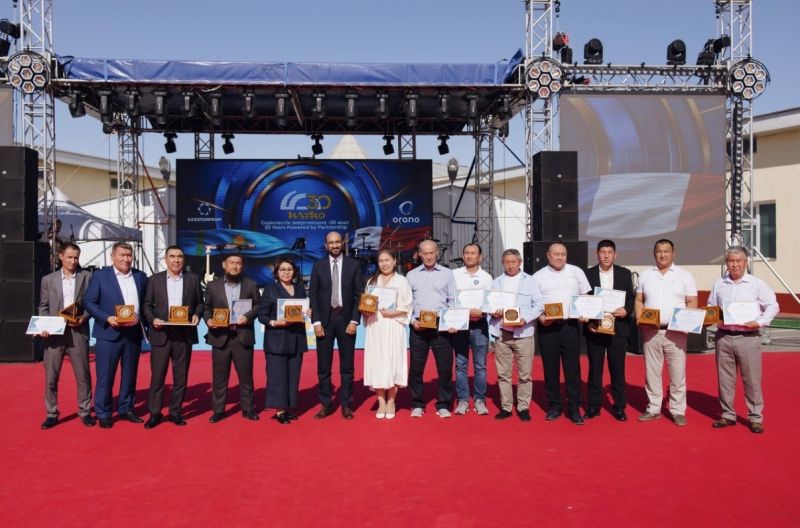
    On 2 September, the Kazakhstan-France joint venture celebrated its 30th anniversary at the Shanyrak basecamp in the Sozak District of the Turkestan Region. The event was attended by a range of dignitaries, including Zulfukhar Zholdassov, First Deputy Akim of Turkestan Region, and Sylvain Guiaugue, the French Ambassador to Kazakhstan, alongside key figures from the mining industry and local government.

    The venture, known as KATCO, has made significant strides since its inception, transforming from a landscape of exploration wells and open steppe into a thriving uranium production facility. In 2026, KATCO achieved a milestone by producing its 60,000th tonne of uranium, reaching a nominal capacity of 4,000 tonnes per year. This achievement underscores the company’s commitment to growth and sustainability within the mining sector.

    Financially, KATCO has contributed KZT 460 billion to Kazakhstan’s national budget since 2008 and has engaged with 2,695 suppliers, investing KZT 836 billion in local orders. The company has also directed KZT 8.2 billion towards over 500 social projects in the Turkestan Region and Sozak District, reflecting its dedication to community development.

    The workforce behind KATCO is predominantly local, with 99% of employees being citizens of Kazakhstan, and around 70% hailing from the Turkestan Region. Notably, approximately 60% of the staff have been with the company for over a decade, showcasing a strong commitment to employee retention and safety. The company has proudly reported over two years without a lost-time injury, a testament to its focus on workplace safety.

    During the anniversary celebrations, long-serving employees were recognised with state and regional awards, as well as KATCO Certificates of Honour. The event included a screening of an anniversary film and concluded with festivities for the teams working on site. The leadership expressed gratitude to all those who contributed to the company’s success over the past three decades, highlighting the collaborative efforts of partners and local communities since 1996.


  • Zijin RG Gold Unveils New Gold Processing Plant Project in Akmola Region

    Zijin RG Gold Unveils New Gold Processing Plant Project in Akmola Region

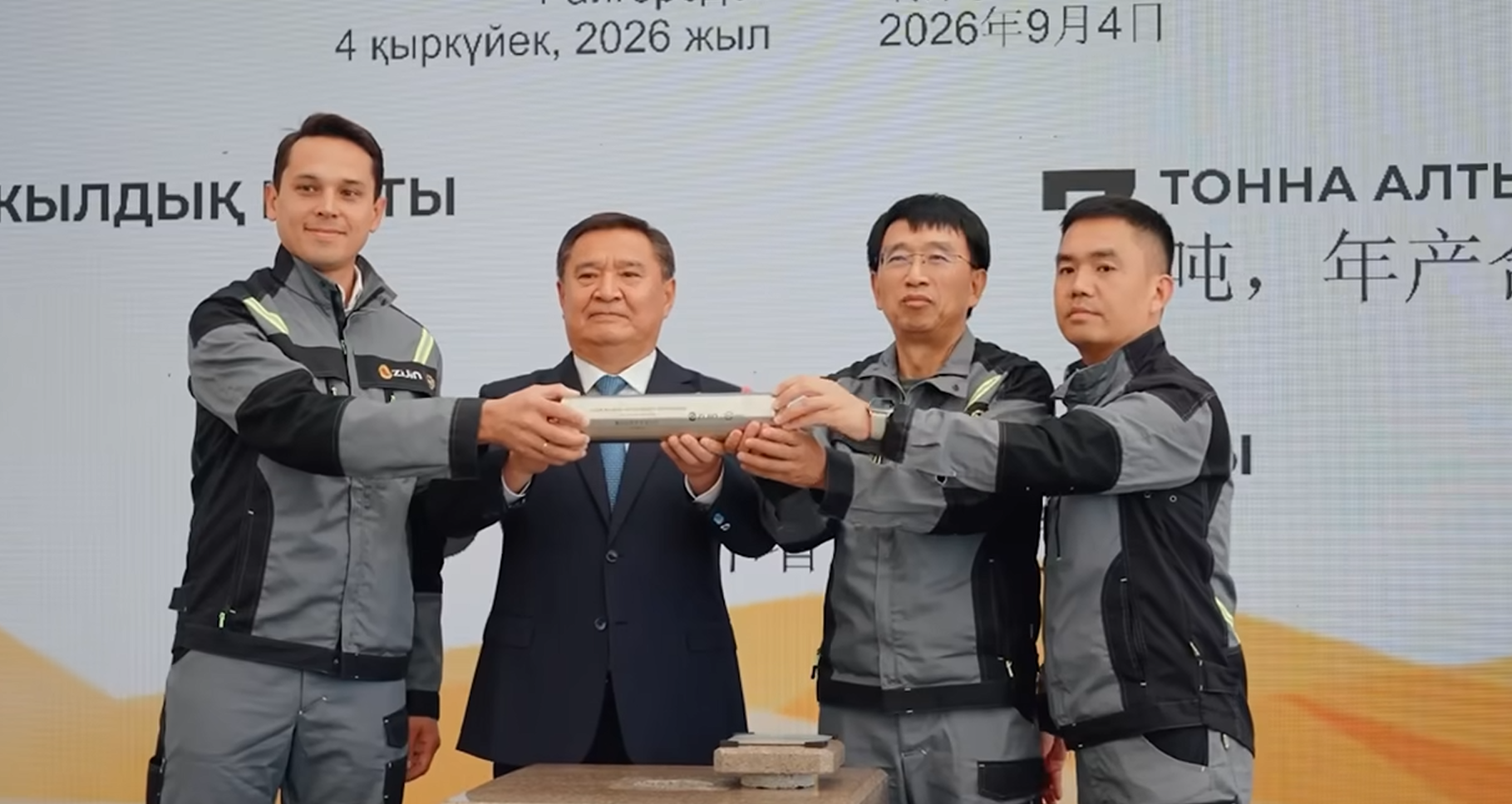
    Zijin RG Gold has announced plans for a new gold processing plant at the Raygorodok deposit located in the Burabay District of Akmola Region, Kazakhstan. The proposed facility will have a processing capacity of 10 million tonnes of ore annually, significantly enhancing the overall mining and processing capabilities of the site. Upon completion, the total capacity of the production complex at Raygorodok will reach 16 million tonnes per year.

    The announcement follows the successful commissioning of an initial processing plant in 2022, which operates at a capacity of 6.5 million tonnes per year. This earlier project has allowed Zijin RG Gold to develop essential production and engineering expertise, setting the stage for the new plant’s construction and operation.

    The new processing facility is expected to yield an additional 7 tonnes of gold in doré alloy each year, bringing the total annual gold production from the complex to over 12 tonnes. This increase in output is anticipated to bolster the company’s position in the gold mining sector and contribute positively to the local economy.

    The project was officially introduced during a ceremonial capsule-laying event at the future plant site, marking a significant milestone for Zijin RG Gold. The company currently employs more than 1,800 individuals, with 51% of its workforce being residents of the Akmola Region. The expansion is expected to create additional job opportunities, further supporting the local community and economy.