Website: Asia.com

  • Concerns Arise Over Trump-Backed Kazakh Mining Project Amid Financing Issues

    Concerns Arise Over Trump-Backed Kazakh Mining Project Amid Financing Issues

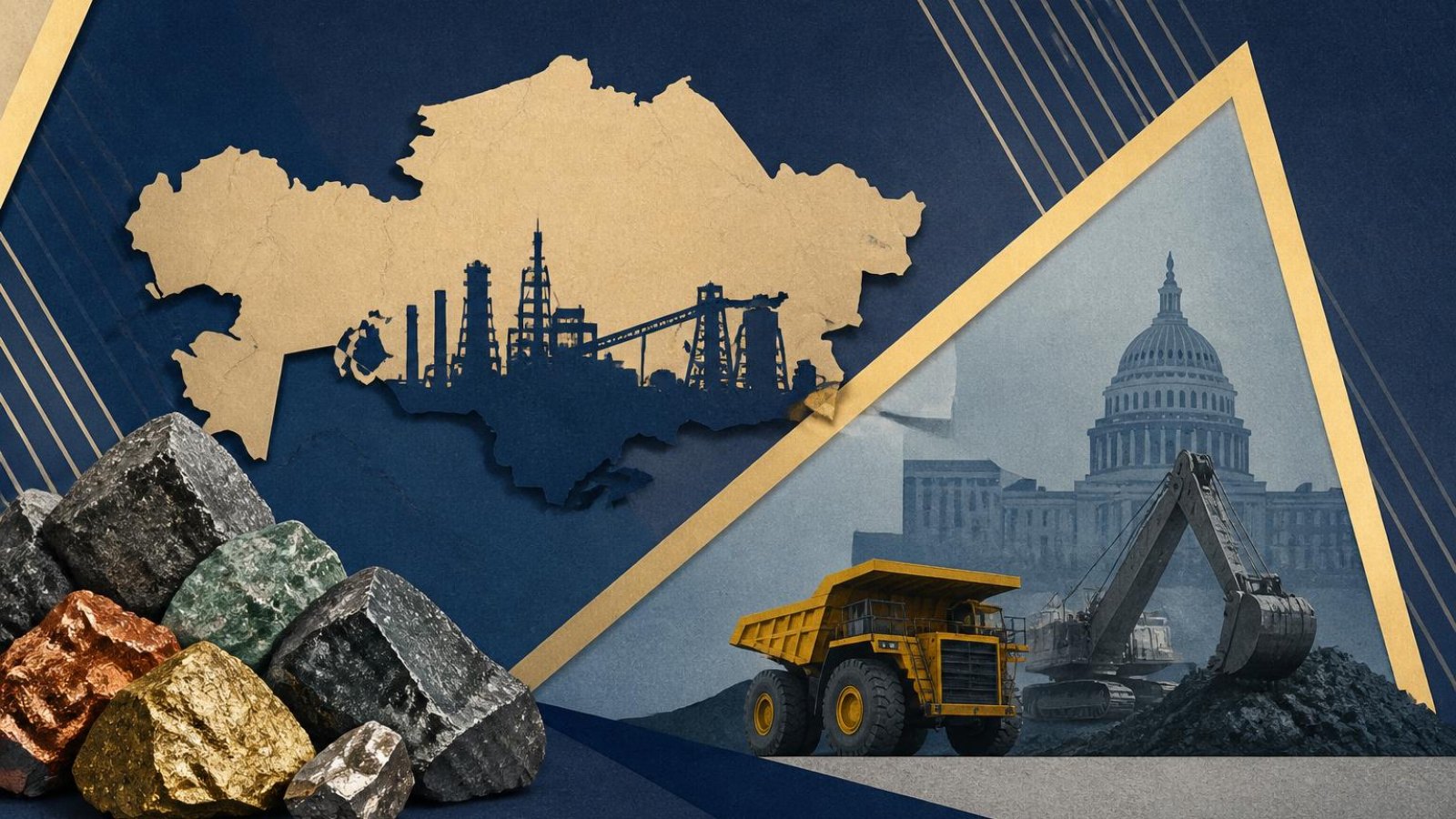
    A recent report has unveiled significant concerns regarding a mining project in Kazakhstan backed by Donald Trump’s sons, Eric and Donald Jr. The project, brokered during the Trump administration, was expected to receive substantial financing from US government lenders, but recent developments indicate that these lenders are now hesitant to approve the necessary funds. The Export-Import Bank of the United States and the US International Development Finance Corporation have both signalled that they will not move forward with financing the tungsten-mining venture, which was initially projected to cost between $1 billion and $1.2 billion and span a timeline of 42 to 48 months.

    The project, known as “Project Wolt,” is part of a broader effort by the Trump administration to reduce China’s dominance in the critical minerals sector. Cove Kaz Capital Group LLC, the company behind the project, announced plans for a public listing under the name Kaz Resources, Inc. Despite the Trump family’s involvement, their stake in the venture is reported to be less than 1%. The geopolitical implications of the project, particularly given Kazakhstan’s strategic position between China and Russia, have raised alarms among potential investors and government officials alike.

    Democratic Senator Elizabeth Warren has expressed concerns about potential conflicts of interest and the lack of transparency surrounding the project. In a recent letter to the Export-Import Bank, she highlighted the troubling nature of the deal and called for greater scrutiny. The documents obtained through a Freedom of Information Act request revealed that the project’s viability is under question, with bank officials citing concerns over its prospects and the associated geopolitical risks.

    As the situation unfolds, it remains to be seen how these financing challenges will impact the future of the mining project and the Trump family’s financial interests in Kazakhstan. The scrutiny surrounding this deal exemplifies the complexities and risks involved in international mining ventures, particularly when they intersect with political interests and global power dynamics.


  • Kazakhstan’s Copper Controversy: Turkish Investor Takes Legal Action Over Mine Rights Dispute

    Kazakhstan’s Copper Controversy: Turkish Investor Takes Legal Action Over Mine Rights Dispute

    Kazakhstan is facing scrutiny as Turkish billionaire Robert Yüksel Yıldırım prepares to file for arbitration with the World Bank’s International Centre for Settlement of Investment Disputes (ICSID) over the government’s controversial decision to transfer mining rights for two copper deposits to a newly established local company. Yıldırım’s Turkish-Dutch firm, CoreX Holding, invested approximately $200 million into the Koktaszhal and Kyzylshoky copper mines, only to find that after two years of waiting for government approval, the rights were handed to Altyndara Ltd., a company that had been registered just a week prior to the decision.

    The situation has raised serious concerns about Kazakhstan’s commitment to foreign investment and its promise to move away from the cronyism that characterised the previous Nazarbayev administration. CoreX’s investment included covering operational costs, paying miners’ wages, and settling debts, all while awaiting the government’s approval for the acquisition of the mines. The abrupt decision to award the rights to Altyndara, which lacks a track record and visible funding, has been described as an expropriation by CoreX, prompting the company to seek legal recourse.

    The backdrop to this dispute involves the Kazakh government’s efforts to attract foreign investment and modernise its mining sector. However, the actions taken by the Council for Attracting Investments, have raised questions about the integrity of the investment climate in Kazakhstan. The council’s decision to prioritise Altyndara’s application has been perceived as a move that undermines the interests of established investors like CoreX, who have already committed significant resources to the projects.

    Altyndara’s director has connections to Kazakh oligarch Andrey Lavrentyev, further complicating the narrative of a fair investment process. The close ties between government officials and private interests have led to speculation about the motivations behind the decision to reallocate the mining rights. As the situation unfolds, CoreX is expected to leverage its past experiences in Kazakhstan, where Turkish investors have successfully challenged the government in international arbitration, to seek a resolution that protects its investments.

    Kazakhstan’s reputation as a destination for foreign investment is at stake, particularly as it seeks to position itself as a reliable source of critical minerals in a global market increasingly focused on securing supply chains. The outcome of this arbitration could have significant implications for the country’s investment landscape and its ability to attract further foreign capital in the future.


  • Solidcore Resources Partners with Tajikistan’s Government for Geology and Mineral Exploration

    Solidcore Resources Partners with Tajikistan’s Government for Geology and Mineral Exploration

    Solidcore Resources has entered into a memorandum of cooperation with the Main Department of Geology under the Government of the Republic of Tajikistan, aimed at enhancing geological exploration activities within the country. This memorandum, which will be effective for five years, establishes a framework for collaboration without imposing legal or financial obligations on either party.

    The agreement outlines several key areas of cooperation, including joint geological studies to identify and assess promising deposits of precious and polymetallic ores. Additionally, it facilitates the exchange of information and collaboration on historical geological data, as well as the sharing of advanced techniques for processing and interpreting geological information. The memorandum also emphasizes mutual assistance in the training and professional development of specialists in exploration and resource assessment, adhering to international standards.

    Vitaly Nesis, the CEO of Solidcore Resources, expressed optimism about the partnership, highlighting Tajikistan’s significant geological potential. He noted that geological exploration is a cornerstone of Solidcore’s long-term development strategy. By collaborating with the relevant government authority, Solidcore aims to combine its expertise and modern technologies with the unique knowledge of the country’s resources. Nesis also mentioned that the newly established subsidiary, Solidcore Tajikistan, will serve as the operational platform for building relationships with government bodies and partners in the region.

    This partnership is expected to bolster Tajikistan’s mining sector, which has been under-explored despite its rich mineral resources. The cooperation reflects a growing trend of international investment in the region’s mining industry, as companies seek to tap into the untapped potential of Central Asia’s mineral wealth. With Solidcore’s expertise and commitment, the collaboration could pave the way for significant advancements in mineral exploration and development in Tajikistan over the coming years.


  • Exploring Kazakhstan’s Mining Opportunities: Insights from Canadian Experts

    Exploring Kazakhstan’s Mining Opportunities: Insights from Canadian Experts

    On 10 November 2023, the British-Kazakh Society (BKS), in collaboration with the UK Department for Business and Trade and the Embassy of Kazakhstan in London, hosted a webinar titled “Mining in Kazakhstan – A View from Canada.” This event aimed to delve into the developments and opportunities within Kazakhstan’s mining sector, featuring insights from key representatives of the Prospectors & Developers Association of Canada (PDAC) network. The discussion highlighted the latest activities in Kazakhstan and Central Asia, focusing on companies such as Arras Minerals Corporation and Kazakhstan Xcalibur Smart Mapping, as well as the exploration of tin districts across the region.

    David Skeels, Director of BKS, opened the session, emphasising the significant potential for international collaboration and investment in Kazakhstan’s mining sector. The webinar was moderated by Mike Beare of Mike Beare & Associates, who has extensive experience in the mining industry, particularly in Kazakhstan. The panel included Matt Booth, Vice President of Arras Minerals Corporation, who provided an update on their flagship project, the LMS project, located in the northeastern region of Kazakhstan. Booth detailed the exploration activities, including soil sampling and drilling, which have revealed promising copper and gold mineralisation.

    Said Sultanov, Managing Director of Kazakhstan Xcalibur Smart Mapping, also presented updates on their activities, discussing the integration of airborne geophysical data into mineral exploration. Sultanov highlighted the importance of modernising Kazakhstan’s mining sector and the ambitious plans to enhance production and value chains. He noted that the national airborne geophysical mapping programme has already surveyed over 89,000 kilometres, providing a valuable resource for geologists and investors alike.

    The webinar concluded with insights from Anna Fonseca, a geological consultant, who discussed the tin exploration districts in Central Asia, particularly focusing on the Zerabulak district in Uzbekistan. Fonseca emphasised the need for detailed structural analysis to identify fluid pathways that could host mineralisation, advocating for a modern approach to mineral systems analysis.

    The webinar underscored Kazakhstan’s rich mineral exploration landscape and the collaborative efforts between UK and Kazakh entities to foster growth and investment in the mining sector. The event served as a platform for sharing knowledge and fostering partnerships, with the potential to unlock significant opportunities for international stakeholders in Kazakhstan’s mining industry.


  • OECD presents 2026 report on Central Asia’s Critical Mineral Potential

    OECD presents 2026 report on Central Asia’s Critical Mineral Potential

    As global demand for critical minerals is projected to surge in the coming decades, Central Asia stands out as a region with significant yet largely untapped potential. This OECD policy paper provides a comprehensive overview of the current state of critical minerals in Central Asia, highlighting the unique challenges and opportunities that the region faces in developing its mining sector. The paper emphasizes the importance of critical minerals in supporting green and digital transitions, as well as their strategic relevance in global geopolitics.

    Central Asia is endowed with substantial reserves of critical minerals, including uranium, lithium, and various base metals. Kazakhstan, for instance, is already the world’s largest uranium producer and has significant reserves of chromium, zinc, and lead. Meanwhile, the Kyrgyz Republic and Tajikistan are home to some of the largest antimony reserves globally, and Uzbekistan boasts the eleventh-largest copper reserves. Despite this wealth, the region’s mining sector has historically suffered from under-investment and lacks the necessary infrastructure and regulatory frameworks to attract foreign investment effectively.

    The paper outlines several key challenges facing Central Asia’s critical minerals sector. These include environmental concerns, such as the impact of mining on water resources and greenhouse gas emissions, as well as social issues related to labour rights and community engagement. The dominance of state-owned enterprises (SOEs) in the mining sector complicates governance and transparency, while the region’s landlocked geography and proximity to countries under international sanctions pose logistical hurdles for developing new supply chains.

    To address these challenges, the OECD paper offers targeted policy recommendations for Central Asian governments. These include enhancing geological mapping and exploration efforts, clarifying legislation to attract foreign investment, promoting responsible business conduct, and integrating environmental and social governance (ESG) considerations into mining practices. By implementing these strategies, Central Asian countries can position themselves as reliable partners in global critical mineral supply chains, ultimately contributing to sustainable economic development in the region.

    In conclusion, while Central Asia’s critical mineral potential remains largely untapped, the region’s governments are beginning to recognize the strategic importance of these resources. With ongoing reforms and international cooperation, there is a significant opportunity for Central Asia to emerge as a key player in the global critical minerals market, provided that the necessary investments and policy frameworks are put in place.


  • Kazakhstan Showcases Mining and Processing Strengths at Washington B20 Summit

    Kazakhstan Showcases Mining and Processing Strengths at Washington B20 Summit

    On 10 November 2026, Kazakhstan’s mining and processing capabilities were prominently highlighted at the B20 USA Summit in Washington, where Kanat Sharlapayev, chairman of the presidium of Kazakhstan’s Atameken National Chamber of Entrepreneurs, outlined the country’s critical role in the U.S. supply chains for essential minerals. Sharlapayev emphasized that Kazakhstan is not only rich in resources but also a processing hub, making it an attractive destination for U.S. investments. He identified four key advantages for potential investors: a wealth of mineral resources, robust investor protections, well-established transport infrastructure, and a skilled domestic workforce.

    Kazakhstan is a leading producer of uranium, copper, zinc, lead, and ferroalloys, with Sharlapayev noting that approximately 25% of the uranium used in U.S. nuclear power plants is sourced from Kazakhstan. In 2025, Kazakh-origin uranium accounted for 28% of deliveries to American civilian nuclear operators, ranking second only to Canada. Additionally, Kazakhstan holds a significant position in the global aerospace titanium market, supplying around 20% of the demand, with its Ust-Kamenogorsk Titanium and Magnesium Plant being a certified supplier for major manufacturers like Boeing and Airbus.

    During the summit, Sharlapayev also mentioned Kazakhstan’s production of high-purity manganese sulfate, a crucial component in battery manufacturing, further diversifying its mineral offerings. At a preceding Kazakhstan-U.S. business roundtable, he cited successful manufacturing investments from companies such as PepsiCo and Wabtec, which extend beyond traditional commodity sectors.

    The framework for mining operations in Kazakhstan has been bolstered by the Subsoil and Subsoil Use Code, adopted in 2017, which introduced a licensing system inspired by Western Australian practices. Sharlapayev stressed the importance of safeguarding exploration rights to encourage investment in mineral deposits. With an extensive railway network of 23,000 kilometers, Kazakhstan facilitates efficient transportation of extracted minerals to processing facilities and export markets.

    Chawla, representing the U.S. State Department, acknowledged Kazakhstan’s mining regulations while underscoring the necessity for reliable contracts and predictable licensing to attract investment in Central Asia. He pointed out that capital is not the primary barrier to developing critical minerals projects; instead, stable pricing and long-term purchasing commitments are essential for making investments viable.

    Chawla highlighted the Orion Critical Mineral Consortium, a $1.8 billion initiative supported by the U.S. International Development Finance Corporation, aimed at targeting mineral assets that are already in production or nearing production. He also mentioned the importance of the Trans-Caspian corridor and the proposed Trump Route for International Peace and Prosperity as routes that could enhance access to European markets for Central Asian minerals.

    Wilson, from the Center for International Private Enterprise, identified several challenges facing mining investment in the region, including outdated geological data and financing difficulties for smaller mining companies. He advocated for improved regional coordination on processing and transport, emphasizing the need for timely government decisions and stable fiscal terms.

    Sharlapayev concluded by asserting that reliability and sustainability should be prioritized in developing diversified mineral supply chains, stating, “Mining is a slow business. But if you don’t start today, there’s zero expectation that we’re going to get something out of it tomorrow.” He called for accelerated exploration, financing, and production over the next year, urging stakeholders to act promptly to realise Kazakhstan’s mining potential.


  • Arras Minerals Reports Significant Copper-Gold Intersections in Kazakhstan

    Arras Minerals Reports Significant Copper-Gold Intersections in Kazakhstan

    Arras Minerals Corp. has announced promising results from its ongoing drilling at the Berezski Central target within the Elemes Project in Kazakhstan. The company reported significant copper-gold mineralization from drill holes EL26045 and EL26046, with notable intersections including 338 metres at a grade of 0.44% CuEq starting at a depth of 415 metres in hole EL26046. This hole also revealed multiple zones of mineralization, including a deeper interval of 184 metres grading 0.52% CuEq. Meanwhile, drill hole EL26045 showcased continuous mineralization from the surface to the end of the hole, returning 705 metres grading 0.23% CuEq, which included a higher-grade section of 366 metres grading 0.36% CuEq starting at 339 metres depth.

    The results from these drill holes indicate a significant expansion of the Berezski Central footprint, now defined over an area of 1,000 metres by 600 metres and extending to depths greater than 700 metres. The company’s CEO, Tim Barry, expressed excitement over the potential for further expansion, noting that the recent KGK drilling results suggest that the mineralized zone could extend significantly beyond the current dimensions, potentially by an additional 50-100%.

    In the past year, Arras has made substantial progress at Berezski Central, with initial drill results announced in Q1 2025 highlighting wide zones of mineralization just below the surface. The ongoing exploration efforts have targeted various anomalies, with visual observations from recent drilling suggesting the presence of multiple porphyry systems along the Berezski Trend. Although assay results from some drill holes are still pending, the visual data is encouraging and supports the model of a potentially large epithermal gold system along the eastern margin of the trend.

    Currently, four diamond drill rigs are operational at the Elemes Project, with approximately 39,000 metres of drilling completed in 2026. The drilling programme is expected to continue into early December, potentially extending the total to around 44,000 metres. The company anticipates releasing further drill results over the next five weeks, continuing into Q1 2027. The Elemes Project, which spans 531 square kilometres in northeastern Kazakhstan, is strategically located near significant regional deposits, enhancing its exploration potential. Arras Minerals is committed to advancing its copper and gold assets in the region, with a focus on expanding the Berezski Central deposit.


  • Pasinex Resources Resumes Exploration Drilling at Pinargozu Zinc Mine in Turkiye

    Pasinex Resources Resumes Exploration Drilling at Pinargozu Zinc Mine in Turkiye

    Pasinex Resources Ltd. (CSE: PSE; FSE: PNX), a Toronto-based mining company focused on zinc exploration and development, has announced the resumption of exploration drilling at its Pinargozu Zinc Mine in Turkiye. This marks the first drilling activity in approximately two years, following the dissolution of the previous joint-venture that managed the mine. On 7 October 2026, drilling commenced at the +410 underground development level, which is progressing towards an area identified through earlier drilling that contains significant mineralization similar to that previously mined.

    As of 5 November 2026, the company reported that 207.5 metres of drilling had been completed. The current drilling program is extensive, with plans for approximately 4,000 metres of underground drilling from three stations as the +410 development continues. This initiative aims to test the deeper, down-dip continuation of the sulphide mineralization that has historically supported production at Pinargozu, as well as to follow up on previous drill intersections at the +410 metre level.

    The +410 Project is a critical component of Pasinex’s strategy to enhance zinc sulphide production at Pinargozu over time. The planned underground development includes a 700-metre main drift, along with additional drill-station drifts and raises, totalling around 1,000 metres. The first drill station has been prepared, and drilling has been underway since early October. The second and third drill stations will be accessed progressively as development continues.

    Additionally, a Teksomak Explorer drill rig has been set up at the +570 level of the +541 Adit to conduct short-hole drilling around previously mined zones. This drilling aims to support production operations by targeting narrow veins and their extensions that have not yet been tested. The results of this drilling will provide valuable insights into the mineralization geometry and aid in the planning of further exploration.

    Pasinex Resources, through its subsidiary Horzum A.Ş., operates the Pinargozu mine, which is known for its high-grade zinc production. The company also holds a 100% interest in Aydın Teknik A.Ş., which possesses the Sarıkaya Group IV lead-zinc operating licence in Kayseri Province, Turkiye, and a 51% interest in the Gunman Project, a high-grade zinc exploration project in Nevada. The ongoing exploration and development efforts at Pinargozu are expected to bolster the company’s production capabilities and contribute to its growth in the zinc mining sector.


  • Hayasa Metals Pursues Strategic Alliances Amidst Teck’s Departure from Armenian Project

    Hayasa Metals Pursues Strategic Alliances Amidst Teck’s Departure from Armenian Project

    In a recent address at the Armenia Mining Forum in Tsaghkadzor, Joel Sutherland, the chief executive of Hayasa Metals, discussed the under-explored potential of Armenia’s subsoil and the company’s strategic plans following the departure of Teck Resources from its Vardenis project. Teck has officially terminated its option on the Vardenis property, citing that the project did not meet its advancement criteria. This decision follows a limited drilling programme that covered only a fraction of the 93 km² licence area, which Hayasa claims remains largely unexplored. Despite the setback, Sutherland expressed optimism about the future, highlighting the importance of forming a strategic alliance with a major mining company, which he hopes to finalise this year.

    On 17 September, Hayasa signed a non-binding term sheet with an unnamed major mining company for exploration in southern Armenia. This agreement allows the partner to earn a significant stake in the projects by investing a total of US$4 million over five years. While the financial commitment appears modest for a company of its stature, it provides Hayasa with operational control, crucial for a junior company with limited resources. The partnership with Franco-Nevada, which acquired a 1.25% royalty over the Urasar project for US$1 million, further illustrates Hayasa’s strategy to leverage external funding while maintaining operational oversight.

    The context of these developments is critical, as Armenia’s mining landscape is evolving. The country has seen significant investments, such as the US$750 million in the Amulsar gold mine, which serves as a benchmark for overcoming challenges in the sector. However, the Vardenis project is not without its controversies, as highlighted by ongoing legal disputes regarding its approvals. Sutherland is advocating for improved licensing terms, seeking longer initial terms and faster approval processes to facilitate exploration activities.

    Geopolitically, Armenia’s mining sector is gaining attention, particularly for its low-value concentrates and critical minerals like selenium and tellurium. The recent US-Armenia critical minerals framework aims to modernise permitting processes, indicating a potential shift in the regulatory landscape. However, questions remain regarding the future of the Vardenis project and the identity of the unnamed major partner. As Hayasa navigates these challenges, the company’s ability to secure funding and partnerships will be pivotal in realising Armenia’s mining potential.


  • Kazzinc bets $802m on a gold mine its owner has tried to sell

    Kazzinc bets $802m on a gold mine its owner has tried to sell

    Altyntau Kokshetau, part of Kazzinc, has put a mining plan for the Vasilkovskoye deposit, 17 km from Kokshetau, to public hearings. The plan envisages 17 years of underground mining from 2027, with 22.4 Mt of ore yielding 40.5 t of gold. Capex is $802m, net cash flow $951m and projected revenue about $4.4bn. Output ramps from 7,000 t of ore in 2027 to 2.5 Mt a year by 2033, then declines. A regulatory filing indicates open-pit mining ends in 2026, so this is a replacement for the pit’s production. ecoportal

    What the numbers imply. 40.5 t is about 1.3m oz, so $4.4bn implies roughly $3,400/oz. Spot gold was about $4,066/oz on 6 November, so the plan looks conservative on price, or its revenue includes by-products. The $951m net cash flow is about a fifth of revenue and is presumably undiscounted. The plan recovers about a fifth of the 190.4 t resource. pricegold

    Why it matters to Kazzinc. Kazzinc is Kazakhstan’s largest gold producer. It earned $771.3m in 2025, up 67%, so the capex is close to a year’s profit. Own-sourced zinc output fell 5% in January–September 2026, which raises gold’s weight in the group. Kazzinc cuts zinc, boosts silver production +2

    The sale. Bloomberg reported that Shakhmurat Mutalip was discussing the purchase of Glencore’s 70% stake for roughly $4bn–4.5bn. The FT put it at about $3.5bn. That implies $5bn–6.4bn for the whole company. A costed mine plan helps the seller, but Vasilkovskoye’s nominal $951m is a small part of that valuation. mining

    The other shareholder: Tau-Ken Samruk. The state holds the 29.82% that matters most to any deal. Tau-Ken Samruk, the mining arm of the sovereign fund Samruk-Kazyna, has owned the stake since 2013. It cost $1.65bn and was reportedly bought with borrowed money, which implies about $5.5bn for 100%. That is within the range now being discussed, so the state’s investment has not gained value in 13 years of high gold prices. Its pro rata share of 2025 profit is about $230m (my calculation, not a cash dividend). kapitalmoneyweek

    Tau-Ken said in January 2026 that it does not plan to sell its stake. Earlier it said it had no information on any talks between Glencore and third parties. In July Samruk-Kazyna’s chief executive, Nurlan Zhakupov, met Glencore’s chief executive, Gary Nagle, to discuss Glencore’s operations and prospects for expanding cooperation. That signals that the state is part of any negotiation. kursivsk

    Marketing rights are a second point of leverage. Kazzinc is reported to be opening its metal sales to rival traders, with Glencore holding a right to match the best bid. A new owner, a funding trader or the state could each seek different terms. Tau-Ken did not respond to requests for comment on that report. One local analyst argues that the state should demand environmental improvements before it lets Glencore exit. miningkursiv