Website: Asia.com

  • Allied Nations to Meet in Washington on Critical Minerals Strategy as De-Risking from China Accelerates

    Allied Nations to Meet in Washington on Critical Minerals Strategy as De-Risking from China Accelerates

    Ministers from the United States, the European Union, the United Kingdom, Japan, Australia and New Zealand will gather in Washington this week to discuss the creation of a closer strategic alliance on critical minerals, as governments intensify efforts to reduce dependence on China-dominated supply chains.

    The meeting, convened by United States Department of State and led by Secretary of State Marco Rubio, will also include around 20 countries such as G7 members, India, South Korea, Mexico and potentially Argentina. It marks the second such summit in less than a month and is widely seen as part of a broader attempt to repair strained transatlantic relations and coordinate non-China sourcing strategies for minerals essential to energy transition, defence and advanced manufacturing.

    Australia underscored the urgency of the talks last week by announcing plans to establish a A$1.2 billion strategic reserve of critical minerals considered vulnerable to supply disruption from China. Canberra’s move follows Beijing’s decision last April to restrict rare earth exports in response to trade measures introduced under US President Donald Trump.

    A key issue on the Washington agenda will be whether the United States should guarantee minimum prices for critical minerals and rare earths to support investment in alternative supply chains. Reports this week that Washington may have ruled out such guarantees triggered a sell-off in Australian mining stocks, highlighting the sensitivity of the sector to policy signals. Australia has positioned itself as a major alternative supplier to China and plans to stockpile minerals such as antimony and gallium regardless of US pricing decisions.

    “Strengthening critical mineral supply chains with international partners is vital for the US economy, national security, technological leadership, and a resilient energy future,” the State Department said ahead of the summit.

    The European Union is expected to use the meeting to push for progress on broader trade irritants, including US tariffs on steel derivatives. EU officials argue that new levies on products containing steel, from bicycles to wind turbines, undermine trust following a tariff deal agreed last year. Brussels hopes the talks could pave the way for a joint statement that would signal a shift toward closer coordination with Washington on de-risking from China rather than recurring trade disputes.

    The European Commission has repeatedly warned that Europe remains highly exposed to Chinese supply chains, particularly for rare earth permanent magnets. According to Commission officials, the EU consumes around 20,000 tonnes of permanent magnets annually, with roughly 17,000–18,000 tonnes sourced from China and only about 1,000 tonnes produced domestically.

    Japan, which has long maintained strategic mineral stockpiles to guard against supply disruptions, is often cited by policymakers as a model for resilience. European and UK officials say closer alignment with partners such as Japan and Australia will be essential if Western economies are to secure stable access to minerals critical for everything from smartphones and electric vehicles to fighter jets and renewable energy systems.

  • Deccan Gold Begins Pre-Commissioning Trials at Altyn Tor Project in Kyrgyzstan

    Deccan Gold Begins Pre-Commissioning Trials at Altyn Tor Project in Kyrgyzstan

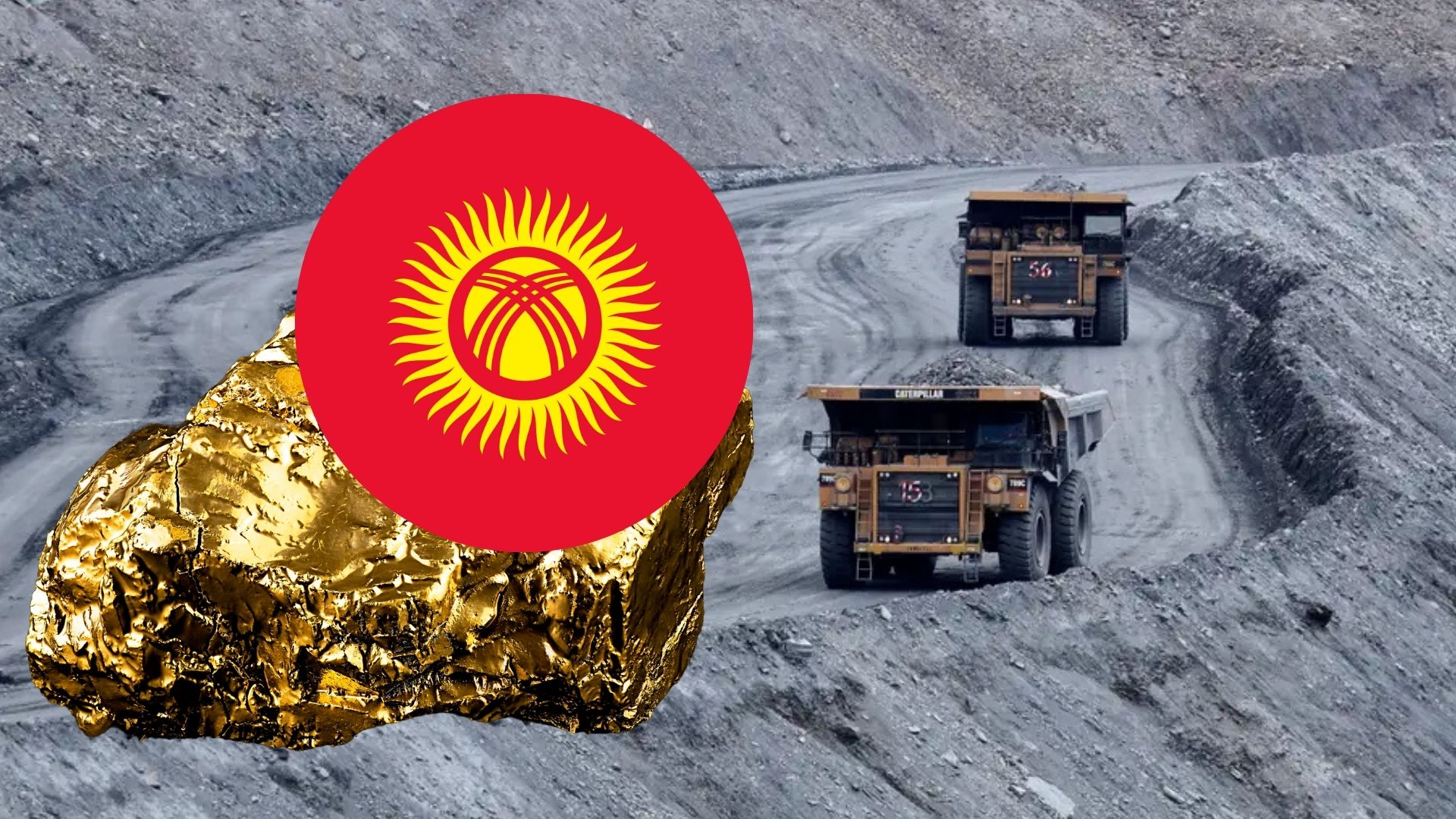
    Deccan Gold Mines Ltd. has launched pre-commissioning trials at its Altyn Tor Gold Project in Kyrgyzstan, moving the asset closer to full-scale production and marking a key milestone for India’s only listed gold and critical minerals exploration company.

    The company said the pre-commissioning programme will be rolled out in stages, starting with the crushing, grinding and gravity concentration circuits, before progressing to the leaching circuit, subject to weather conditions. During this phase, Deccan Gold plans to process between 20,000 and 30,000 tonnes of ore, with an average grade slightly above 1.0 grams of gold per tonne.

    Gold recovered during the trials will be produced as saleable concentrate or doré bars, allowing the company to validate processing performance ahead of full commissioning. Deccan Gold added that its mining team has already completed the planned mined volume for the year, while assay results from a recently completed resource drilling programme are expected in the coming weeks and could support further optimisation and planning.

    Managing Director Dr. Hanuma Prasad Modali described the start of pre-commissioning as both an operational and strategic milestone, highlighting the project as India’s first direct gold mining presence in Kyrgyzstan. He said Altyn Tor reflects a model of responsible mining and cross-border collaboration, with the goal of building a globally credible asset that strengthens India’s international footprint while delivering long-term benefits to local communities.

  • Central Asia’s Uranium Endowment Turns Into a Strategic Test of Governance and Geopolitics

    Central Asia’s Uranium Endowment Turns Into a Strategic Test of Governance and Geopolitics

    Central Asia occupies a pivotal position in the global uranium market, combining vast geological resources with a legacy of extraction that continues to shape policy, public trust and international interest. The region holds one of the world’s largest concentrations of economically recoverable uranium, with Kazakhstan alone accounting for roughly 12–15% of known global resources and producing about 40% of annual world output. Uzbekistan ranks among the top ten global producers and holds the second-largest uranium reserves in the post-Soviet space, while smaller but sensitive deposits remain in Kyrgyzstan and Tajikistan.

    This resource wealth is inseparable from history. Uranium mining under the Soviet nuclear program was carried out with minimal environmental safeguards or community consultation. Sites such as Taboshar in northern Tajikistan and Mailuu-Suu in southern Kyrgyzstan remain contaminated decades after closure, with exposed tailings posing long-term health and environmental risks. These legacies continue to influence public attitudes toward new uranium projects, making transparency, safety and governance as critical as geology itself.

    As nuclear power regains prominence in the global energy transition, uranium has shifted from a technical commodity to a strategic asset. This transformation has intensified great-power competition in Central Asia, where Russia, China and Western actors pursue distinct strategies across the uranium and nuclear value chain.

    Russia remains the most deeply embedded external player. Through Rosatom, it offers a vertically integrated model that spans mining partnerships, reactor construction, fuel supply and long-term operation. In Kazakhstan, Rosatom is leading the consortium for the country’s first nuclear power plant, while discussions on a second plant could further entrench Russian technical standards. In Uzbekistan, agreements to build small modular reactors would significantly increase domestic uranium demand and lock in long-term reliance on Russian technology and fuel services. While this turnkey approach offers speed and financing, it also creates structural dependence and exposes projects to sanctions and governance risks.

    China has taken a more upstream-focused approach, prioritizing access to uranium resources rather than immediate reactor exports. Chinese state-owned firms hold stakes in Kazakh uranium ventures and maintain long-term offtake agreements to supply China’s rapidly expanding nuclear fleet. Beijing has also revisited uranium potential in Tajikistan, reflecting a patient, resource-first strategy tied to broader infrastructure investments. For Central Asian governments, Chinese involvement offers diversification and capital, but raises concerns over transparency, environmental oversight and debt exposure.

    Western engagement follows a different path. Rather than dominating mining or reactor construction, the United States and its allies focus on diversifying global supply chains, supporting high environmental and governance standards, and strengthening downstream and regulatory capacity. Companies such as France’s Orano and Japan’s ITOCHU have partnered with Uzbekistan’s uranium sector, emphasizing international safety norms. Western and allied reactor vendors have also participated in tenders and discussions in Kazakhstan and Uzbekistan, while broader cooperation extends to nuclear safety regulation, workforce training and remediation of legacy sites.

    For Central Asian states, this competition offers leverage rather than inevitability. By sequencing projects, maintaining competitive procurement and separating mining decisions from reactor build-outs, governments can avoid exclusive dependence and negotiate better terms. The primary risk lies not in geopolitical rivalry but in weak governance. Fragmented regulation, limited institutional independence, opaque licensing and underfunded remediation frameworks threaten to recreate the long-term liabilities of the past.

    Globally, uranium demand is rising as more than 60 reactors are under construction and over 100 additional units are planned. In this context, Central Asia is not a marginal supplier but a systemically important pillar of the nuclear fuel cycle. Kazakhstan’s low-cost in-situ leaching operations place it at the bottom of the global cost curve, while Uzbekistan’s expansion plans could further consolidate the region’s role.

    The economic upside, however, depends on moving beyond mining alone. International experience shows that the greatest benefits come from integrating across the value chain, supported by strong regulation and openness to high-standard investors. Without this, new projects risk repeating Soviet-era mistakes: environmental damage, social opposition and fiscal burdens that persist long after production ends.

    Ultimately, uranium development in Central Asia is a governance challenge as much as a geological one. Independent regulators, transparent licensing, enforceable financial guarantees for closure and remediation, and regional cooperation on transboundary risks are essential. Aligning national frameworks with international safety and ESG standards would not only protect communities and ecosystems, but also expand access to long-term, high-quality investment. In a sector where reputational risk is high and capital is mobile, governance quality is not a constraint on growth, it is the condition for sustainable participation in the global nuclear economy.

  • Critical Mineral Stockpiles Would Last Only Weeks in a Global Supply Shock

    Critical Mineral Stockpiles Would Last Only Weeks in a Global Supply Shock

    Most economies would struggle to keep industry running for more than a few weeks if global supplies of critical minerals were suddenly disrupted, highlighting a major vulnerability at the heart of the modern economy.

    Critical minerals underpin everything from electric vehicles and renewable energy systems to electronics and defence equipment. Yet their production and processing are highly concentrated in a small number of countries, leaving supply chains exposed to geopolitical tensions, trade restrictions and conflict, according to the International Energy Agency.

    In response, governments have begun building strategic stockpiles intended to buffer industries against shocks. However, a review of publicly disclosed reserves shows that most countries remain poorly prepared. Outside a small group of exceptions, stockpiles are generally insufficient to sustain even priority sectors for more than a few months during a major disruption. In several cases, governments do not publish data at all, citing national security concerns.

    China stands out as the most resilient player. It not only dominates mining and processing for many critical minerals but also holds the world’s largest known state reserves. Industry estimates suggest China could support domestic demand for months in minerals such as rare earths and battery metals. Recent export controls on materials including gallium, germanium and graphite demonstrated how quickly this leverage can be exercised.

    Among major importers, Japan and South Korea are the most advanced. Japan overhauled its approach after a rare earth supply crisis in 2010 and now maintains reserves covering several months of demand for minerals such as cobalt and nickel. South Korea has built stockpiles equivalent to roughly two months of consumption, with systems designed for rapid release during emergencies.

    By contrast, the United States and Europe appear more exposed than commonly assumed. US reserves are largely focused on defence needs and would likely cover only weeks of broader economic demand in a large-scale disruption, despite recent efforts to rebuild stocks of rare earths, cobalt and antimony. Europe is still debating coordinated stockpiling under the Critical Raw Materials Act, leaving its industrial base vulnerable in the near term.

    Australia is pursuing a producer-led strategy, developing reserves based on domestically mined materials such as rare earths, antimony and gallium, both to improve national resilience and support allied supply chains. India, meanwhile, has acknowledged the need for stockpiles in its critical minerals strategy but remains at an early stage of implementation.

    The reality is stark: if global production halted tomorrow, most economies would be counting their remaining buffer in weeks rather than years. Governments would be forced to prioritise defence, energy and essential manufacturing, while other sectors would face immediate shortages.

    Stockpile size alone, however, does not determine resilience. Effectiveness depends on how well reserves match real demand, how quickly they can be released, and whether alternative supplies or substitutes are available. Small but targeted stockpiles, combined with diversified sourcing, can sometimes offer more protection than large but poorly aligned reserves.

    For mining companies and investors, this shift underscores a broader change. Critical minerals are no longer viewed solely as commodities but as strategic assets, with their value increasingly shaped by geopolitics, security and resilience as much as by traditional supply and demand dynamics.

  • Uzbekistan’s mining sector marks a year of major discoveries, expansions and digital upgrades

    Uzbekistan’s mining sector marks a year of major discoveries, expansions and digital upgrades

    The past year brought several landmark developments for Uzbekistan’s extractive industry, ranging from new discoveries to large-scale industrial expansion and digital transformation.

    In September, President Shavkat Mirziyoyev announced the discovery of a giant gas deposit on the Ustyurt Plateau. For the first time in the country’s history, exploration drilling in the area reached depths of 6.5 km. While technical details of the find have not yet been disclosed, exploration work in the region is being carried out by Uzbekneftegaz in partnership with Azerbaijan’s SOCAR.

    Industrial expansion was led by Almalyk Mining and Metallurgical Complex, one of the country’s largest resource producers. In October, the company launched the first processing line of its new MOF-3 concentrator. Once all lines are commissioned by 2026, the facility is expected to process up to 60 million tonnes of ore annually, producing 894,000 tonnes of copper concentrate and 1,500 tonnes of molybdenum concentrate. AMMC says MOF-3 will become the largest copper production facility in Central Asia.

    The company also commissioned its own emulsion explosives plant with a capacity of 90,000 tonnes per year, supporting expanded drilling and blasting operations at the Yoshlik I deposit. In addition, AMMC became the first producer in Uzbekistan to introduce an automated fleet management system at the Kalmakyr and Yoshlik I open pits.

    Another key milestone came in April, when Navoi Mining and Metallurgical Company put into operation a new mine shaft at the Zarmitan gold deposit. The “Skipovoy” shaft, 6.5 meters in diameter and 1 km deep, will increase ore transport to Hydrometallurgical Plant No. 4 by 1.4 million tonnes per year.

    At the policy level, the government also announced plans to implement 76 projects focused on rare and rare earth metals, with total investments estimated at $2.6 billion.

  • Battery storage boom lifts lithium demand outlook for 2026 despite lingering oversupply risks

    Battery storage boom lifts lithium demand outlook for 2026 despite lingering oversupply risks

    Rapid growth in battery energy storage is strengthening the outlook for lithium demand in 2026, raising expectations of a faster recovery for an industry that has struggled with oversupply since late 2022. Analysts say reforms in China’s power sector and surging global investment in data centres have driven stronger-than-expected demand for lithium used in stationary storage systems.

    China’s energy storage market expanded sharply in the second half of 2025, supported by policy changes and rising power system needs. According to analysts, demand growth from energy storage has already exceeded earlier forecasts, helping to offset weaker momentum in electric vehicle sales. Battery storage systems have become China’s most valuable clean-tech export, generating nearly $66 billion in sales in the first ten months of 2025, ahead of EV exports.

    Major banks now expect a tightening lithium market next year. Morgan Stanley forecasts a deficit of 80,000 tonnes of lithium carbonate equivalent (LCE) in 2026, while UBS projects a smaller shortfall of 22,000 tonnes, compared with a surplus of 61,000 tonnes expected in 2025. Global lithium demand is projected to grow by 17% to 30% in 2026, broadly in line with supply growth of 19% to 34%, according to analysts.

    Prices rebounded sharply in the second half of 2025 after hitting multi-year lows earlier in the year, aided by Beijing’s pledge to rein in overcapacity and a temporary production halt at a major Chinese mine operated by CATL. Lithium carbonate prices on the Guangzhou Futures Exchange rose to their highest level since November 2023 by the end of December. Analysts expect prices to range between 80,000 and 200,000 yuan per tonne in 2026.

    Energy storage is forecast to account for 31% of total lithium demand next year, up from 23% in 2025, gradually reducing the dominance of electric vehicle batteries. However, analysts caution that faster adoption of sodium-ion batteries for storage and a slowdown in EV sales could cap demand growth and limit further price increases.

  • Tajikistan highlights key mining contracts and projects announced over the past year

    Tajikistan highlights key mining contracts and projects announced over the past year

    The past year was marked for Tajikistan’s extractive industry not by major new discoveries, but by a series of significant contracts and project announcements shaping development plans for the coming years. Several large initiatives across antimony, iron ore, gold, coal and lithium were either launched or confirmed.

    In July 2025, construction began on a mining and processing plant at the Pakhandara antimony deposit in the Sughd region, located at an altitude of about 3,000 meters above sea level. The project is scheduled for completion by 2027. The license for both open-pit and underground mining is held by Pakhandara Mining, while HKSkyline Development Limited is acting as the contractor. Once operational, the plant is expected to process more than 150,000 tonnes of ore annually and produce around 5,000 tonnes of antimony.

    The same month also saw the commissioning of several other facilities, including a new antimony processing plant operated by ARB Minerals Group, the second phase of the TVEA Dushanbe gold mining enterprise, and the Angishti Takht coal beneficiation plant.

    In December, the Tajik Metallurgical Plant signed an agreement with the government to build an iron ore mining and processing facility, using deposits located in the Sughd region as its raw material base. The first phase of the project is set to be launched in 2027, with the second phase planned for 2031. The design capacity of the complex is 2.5 million tonnes of ore and 1.1 million tonnes of iron ore concentrate per year.

    At the International Mining and Metallurgical Forum of Tajikistan held in Dushanbe in December, officials also announced the construction of a lithium plant in the country, although further details of the project have not yet been disclosed. During the same event, it was stated that around 800 prospective mineral deposits have been identified nationwide, while just over 100 sites covering 50 types of mineral raw materials are currently involved in active development.

  • Kyrgyzstan reviews major mining projects launched over the past year

    Kyrgyzstan reviews major mining projects launched over the past year

    At the start of the new year, Kyrgyzstan is taking stock of major mining projects implemented by domestic companies over the past period. One of the most significant developments came in August, when Kumtor Gold Company, one of the country’s largest subsoil users, launched underground gold mining at the Kumtor deposit in the Issyk-Kul region.

    At the same time, 147 tonnes of gold were added to the company’s balance sheet, providing enough reserves for 17 years of underground operations, which are being carried out alongside open-pit mining. Overall, the Kumtor mine is expected to remain in operation for at least another 40–50 years. The underground project is designed to minimize waste rock extraction and reduce environmental impact, including protecting local glaciers.

    Last year, Kumtor Gold Company also began processing tailings from the Kumtor tailings storage facility, expanding resource utilization. In August, several other mining enterprises were launched, including the Shah Tal gold mine in the Naryn region and the Kozho Kelen and Besh-Burkhan coal mines in the Osh region.

    In October, Kyrgyzgeology obtained a license to develop the Nasonovskoye polymetallic deposit in the Chui region, which is estimated to contain 751,000 tonnes of ore, 5.6 tonnes of gold and 4,600 tonnes of copper.

    Projects related to strategically important metals have received less public attention, though local media reported that a Kyrgyz-Chinese company for rare metals development was registered in April. At the INFOCM 2025 international forum on critical minerals in May, a representative of the Ministry of Natural Resources said Kyrgyzstan has 11 rare earth deposits, with Kutessay II among the largest, holding reserves of 63,300 tonnes.

  • China Lithium Prices Surge After Yichun Plans to Revoke Mining Licences

    China Lithium Prices Surge After Yichun Plans to Revoke Mining Licences

    Lithium prices in China jumped sharply after authorities in the country’s main lithium-producing hub announced plans to revoke dozens of mining licences, triggering investor concerns about future supply.

    The most actively traded lithium carbonate contract on the Guangzhou Futures Exchange rose to 109860 yuan per metric ton on Wednesday, its highest level since June 2024, before closing up 7.61% at 108620 yuan.

    The Bureau of Natural Resources of Yichun, a major lithium center in Jiangxi province, said it intends to cancel 27 mining permits following a public consultation period that will end on January 22. The announcement was published on the bureau’s official website on Friday.

    According to the published list, all of the licences have already expired, with some dating back more than a decade. Most were originally issued for ceramic clay or limestone mining. One permit related to a lithium-bearing ceramic stone mine was held by Jiangxi Special Electric Motor, which said it has filed an objection with local authorities. The permit expired on September 15 2024.

    Analysts at Galaxy Futures said the licence revocations are unlikely to have a direct impact on current lithium supply, as none of the affected permits cover operating mines. Nevertheless, the announcement heightened market anxiety about longer-term availability, pushing lithium carbonate prices higher.

    The move is part of a broader clean-up of mining licences in Yichun that began in September. The bureau previously revoked six permits on November 27. Lithium prices have been rising since August, after CATL suspended mining at its Jianxiawo site following the expiry of its mining licence, with strong demand from the energy storage sector providing additional support.

  • China Lithium Prices Jump After Yichun Moves to Revoke Mining Licences

    China Lithium Prices Jump After Yichun Moves to Revoke Mining Licences

    Lithium prices in China rose sharply after authorities in the country’s main lithium-producing hub announced plans to revoke dozens of mining licences, fuelling investor concerns over future supply.

    The most actively traded lithium carbonate contract on the Guangzhou Futures Exchange climbed as high as 109860 yuan per metric ton on Wednesday, its highest level since June 2024, before closing up 7.61% at 108620 yuan.

    The Bureau of Natural Resources of Yichun, a key lithium centre in Jiangxi province, said it intends to cancel 27 mining permits following a public consultation period ending on January 22. The notice was published on the bureau’s official website last week.

    According to the published list, all of the licences have already expired, in some cases more than ten years ago. Most were originally issued for ceramic clay or limestone mining. One permit linked to a lithium-bearing ceramic stone mine was held by Jiangxi Special Electric Motor, which said it has lodged an objection with local authorities. The permit in question expired on September 15 2024.

    Analysts at Galaxy Futures noted that the cancellations are unlikely to have a direct impact on current lithium supply, as none of the revoked licences relate to operating mines. Nevertheless, the announcement heightened market anxiety over longer-term availability, pushing lithium carbonate prices higher.

    The latest move follows a broader clean-up of mining permits in Yichun that began in September. The bureau previously revoked six licences on November 27.

    Lithium carbonate prices have been trending upward since August, after mining at CATL’s Jianxiawo mine was suspended due to the expiry of its mining licence. Strong demand from the energy storage sector has provided additional support to the market.