Website: Asia.com

  • Uzbekistan and Mongolia Plan Joint Uranium Exploration Projects

    Uzbekistan and Mongolia Plan Joint Uranium Exploration Projects

    Uzbekistan’s state uranium company Navoiyuran and Uzbek Overseas Geology Company have begun discussions with Mongolia’s uranium producer Mon-Atom to launch joint geological exploration projects in the country.

    During a visit to Mongolia, the Uzbek delegation held meetings with Mon-Atom’s management to explore cooperation in uranium exploration on prospective sites. According to reports, the partners may begin exploration activities as early as this year.

    A strategic intergovernmental agreement between the geological ministries of Uzbekistan and Mongolia is expected to be signed during an upcoming meeting scheduled for April. The agreement will establish a framework for joint exploration and development initiatives in the uranium sector.

    Following the negotiations, Uzbek Overseas Geology Company and Mon-Atom agreed to proceed with a service contract that will support the preparation of project documentation and licensing materials required for subsoil use.

    At the initial stage of the exploration programme, the partners plan to carry out approximately 60,000 metres of integrated drilling across selected sites. After evaluating the uranium resource potential, the companies will determine further steps for detailed geological assessment.

    The initiative forms part of Uzbekistan’s broader strategy to expand its international exploration activities. Last month, Uzbek Overseas Geology Company launched a two-year geological expedition in Afghanistan, where it is exploring for hydrocarbons, iron and copper across three licence areas.

    Uzbekistan’s Ministry of Geology has also signed a cooperation agreement with Afghanistan’s Ministry of Mines and Petroleum, granting Uzbekistan priority rights to develop hydrocarbon resources discovered during exploration activities.

  • At PDAC’s “Uzbekistan Day,” the “Mine-Metal-Market” Model is Presented to the International Community

    At PDAC’s “Uzbekistan Day,” the “Mine-Metal-Market” Model is Presented to the International Community

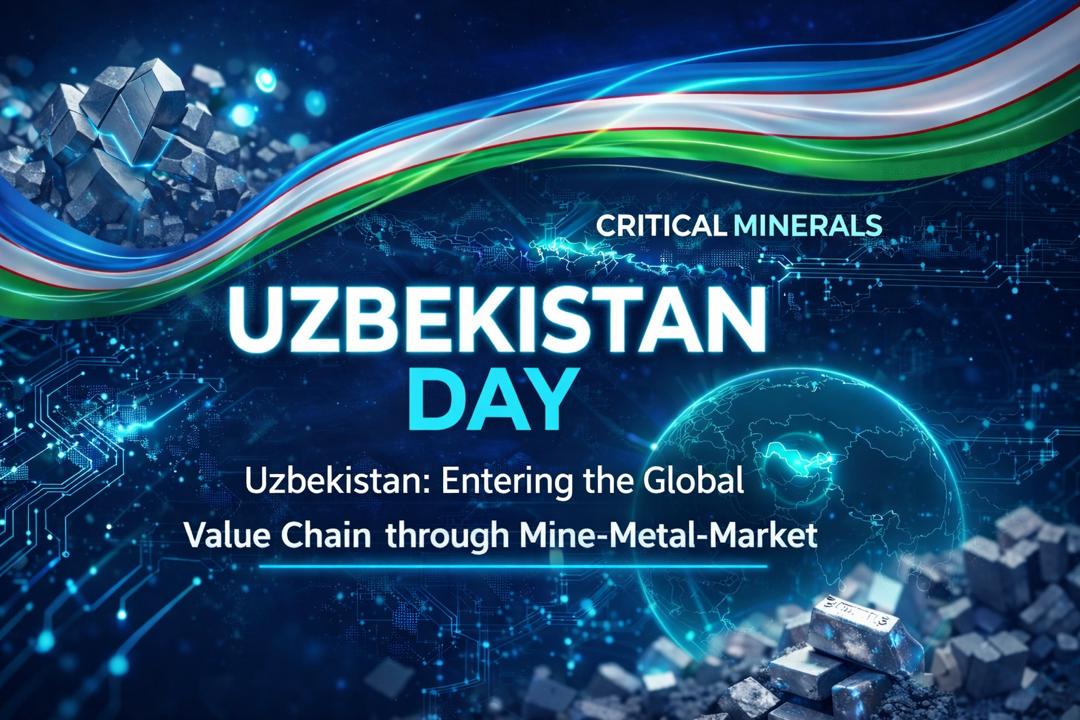
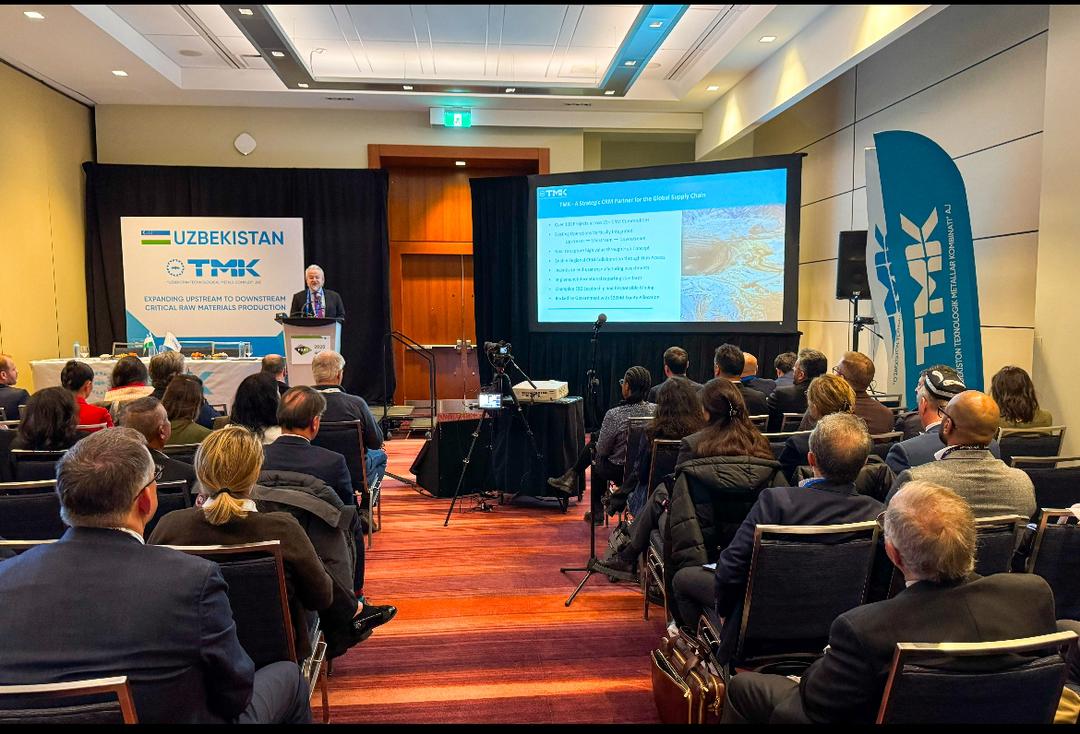
    At the “Uzbekistan Day” event, organized in Toronto, Canada, as part of the prestigious PDAC-2026 global mining and geological conference, Uzbekistan’s potential in critical minerals was showcased to an international audience.
    During this event, held under the auspices of the Ministry of Mining Industry and Geology of the Republic of Uzbekistan, the country’s geological capabilities, investment potential, and an industrial model based on the complete “Mine-Metal-Market” value chain were presented to the global community.
    The event was attended by the Ambassador Extraordinary and Plenipotentiary of Uzbekistan to the USA, representatives from the Ministry of Foreign Affairs, as well as the management, consultants, and international experts of the Uzbek Technological Metals Complex – the country’s first and only industrial operator focused on critical minerals, established at the initiative of President Shavkat Mirziyoyev.
    “Uzbekistan Day” was met with great interest by representatives of the global mining and metallurgical industry. The event drew representatives from nearly 200 companies and institutions, including leadership from major firms such as Alpha Bronze, international engineering giant AtkinsRéalis, AGT Systems NA, aerogeophysical services leader Xcalibur, Speyside, Global Mining Capital Corp, and Freedom Capital Markets, as well as representatives from the US Geological Survey (USGS) and the European Commission’s critical raw materials policy division.
    Scott Sutherland, Managing Director of the Society of Exploration Geophysicists:
    “I participated in the Uzbekistan Day session at PDAC and was very impressed by the geological and mining potential presented by Uzbekistan. By the end of this year, the Society of Exploration Geophysicists plans to hold an international conference in Uzbekistan, specifically in Tashkent, dedicated to the mining industry.We are pleased with the fruitful cooperation we have established with the Government of Uzbekistan and intend to work even more actively in the country in the future, contributing to the realization of its resource potential and extensive opportunities.”
    The event highlighted the large-scale reforms underway in our country, promising projects for developing new deposits and the deep processing of rare and technological metals, and initiatives aimed at expanding international cooperation.
    Additionally, during the event, the Uzbek Technological Metals Complex signed a memorandum with the Canadian company OMAD International Inc. aimed at attracting investment and developing industrial cooperation.
    Furthermore, a memorandum of cooperation was signed with Erdenes IT LLC, which entails the creation of technology parks, the implementation of joint research and development initiatives, and collaboration in mining, geology, and international marketing.
    These agreements reflect a consistent strategic approach to the international promotion of the “Mine-Metal-Market” model, which aims to transform Uzbekistan’s geological potential into globally competitive industrial products with high added value and establish the country as a key link in the global critical minerals value chain.

  • Uzbekistan to Showcase Mining and Investment Opportunities at PDAC 2026 in Toronto

    Uzbekistan to Showcase Mining and Investment Opportunities at PDAC 2026 in Toronto

    We look forward to seeing you at Uzbekistan Day!

    As part of PDAC 2026 — one of the world’s most prestigious mining and geology conventions held in Toronto, Canada — the Ministry of Mining Industry and Geology of the Republic of Uzbekistan is organizing the “Uzbekistan Day” event.

    The event will be attended by the Ambassador Extraordinary and Plenipotentiary of Uzbekistan to the United States, as well as representatives of the Ministry of Foreign Affairs, the Ministry of Investments, Industry and Trade, and leading national companies.

    “Uzbekistan Day” serves as a key platform to present Uzbekistan’s geological potential, investment opportunities, and its integrated industrial model based on the full value chain under the “Mine–Metal–Market” principle.

    📅 March 1, 2026
    ⏰ 08:00–12:00
    📍 PDAC North Building, Meeting Room 202B

    We also invite you to attend the “Uzbekistan Global Roundtable” session, held as part of the PDAC Global Roundtables organized by Canada’s Trade Commissioner Service (TCS).

    📅 March 2, 2026
    ⏰ 14:30–16:00 (EST)
    📍 MTCC, North Building, Room 104A

    During this session, participants will gain deeper insight into Uzbekistan’s investment potential in the technological metals sector and its new industrial model focused on value-added processing and downstream development.

    Please note that seating is limited. To register, kindly contact:
    📩 anna.ilhan@uztmk.uz

    Throughout PDAC, we also welcome you to visit our booth #7523N in the North Building, where you will have the opportunity to engage in direct B2B discussions on project development and partnership opportunities with the Uzbekistan Technological Metals Complex.

  • India Set to Strengthen Critical Minerals Cooperation with Germany and Canad

    India Set to Strengthen Critical Minerals Cooperation with Germany and Canad

    India’s Cabinet is expected to approve new international cooperation agreements with Germany and Canada aimed at strengthening partnerships in the critical minerals sector, as New Delhi accelerates efforts to secure resources essential for clean energy technologies and advanced manufacturing.

    According to government sources, the Cabinet meeting chaired by Prime Minister Narendra Modi is likely to clear a Joint Declaration of Intent with Germany focused on joint mineral exploration, sustainable mining practices, supply chain resilience and technology transfer. A similar agreement with Canada is also expected to receive approval.

    The proposed partnerships come amid intensifying global competition for critical minerals such as lithium, cobalt, nickel and rare earth elements, which are key inputs for electric vehicles, renewable energy systems and high-tech industries.

    India has been expanding its international engagement to diversify supply sources and reduce import dependence as part of its broader Atmanirbhar Bharat strategy aimed at strengthening domestic industrial and energy security.

    The agreements are aligned with India’s Critical Minerals Mission launched in 2025, alongside ongoing reforms under the Mines and Minerals (Development and Regulation) Amendment Act, which has enabled new auctions of mineral blocks to attract investment and accelerate resource development.

    Officials view cooperation with resource-rich and technologically advanced partners as a strategic step toward building resilient supply chains and supporting India’s long-term energy transition objectives.

  • Sweden’s Per Geijer Deposit Emerges as One of Europe’s Largest Rare Earth Discoveries

    Sweden’s Per Geijer Deposit Emerges as One of Europe’s Largest Rare Earth Discoveries

    A major rare earth discovery linked to Sweden’s long-established Kiruna iron mining district is positioning northern Europe as a potential future supplier of critical minerals essential for electric vehicles, renewable energy and advanced technologies.

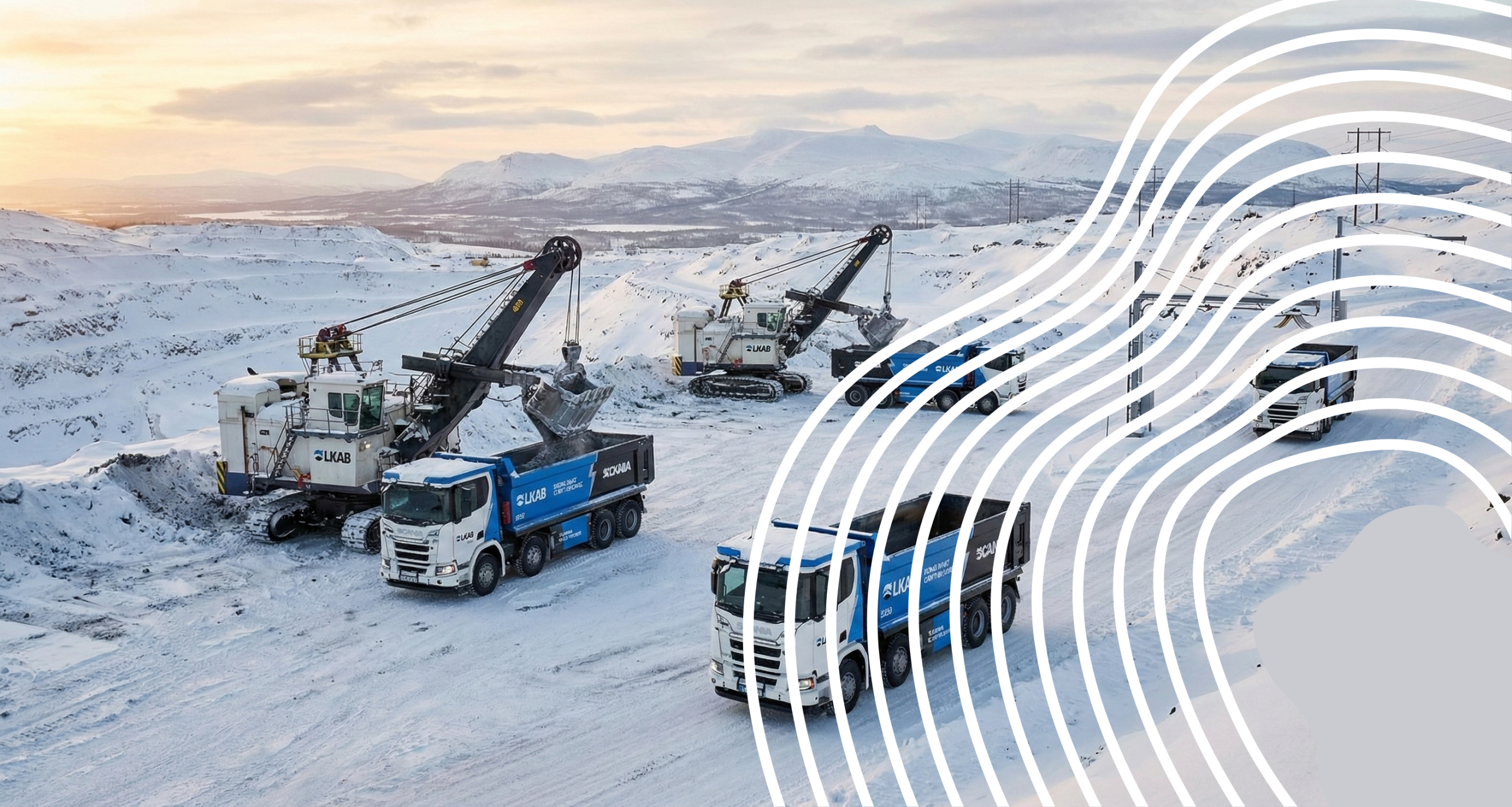
    State-owned miner LKAB has confirmed that the Per Geijer deposit, located near Kiruna above the Arctic Circle, contains an estimated 2.2 million tonnes of rare earth oxides alongside substantial volumes of iron ore and phosphorus. The updated resource estimate places the site among the largest known rare earth deposits in Europe.

    Rare earth elements are vital components in permanent magnets used in electric vehicle motors, wind turbines and consumer electronics. Europe currently relies heavily on imports, with China responsible for processing nearly 90 percent of global rare earth supply, creating strategic vulnerabilities across industrial and energy transition supply chains.

    LKAB estimates that once fully developed, Per Geijer could eventually meet up to 18 percent of Europe’s rare earth demand. The deposit also contains approximately 1.2 billion tonnes of iron ore and phosphorus, with rare earth minerals primarily hosted in apatite, allowing recovery alongside existing iron mining operations.

    The project forms part of a broader European effort to strengthen domestic raw material production under the EU Critical Raw Materials Act, which aims to reduce reliance on single external suppliers and expand regional mining and processing capacity by 2030. Per Geijer, together with LKAB’s related developments in Malmberget and Luleå, has received strategic project status, enabling accelerated permitting procedures and improved access to financing.

    Rather than developing a standalone rare earth mine, LKAB plans an integrated industrial chain linking iron ore extraction in Kiruna with downstream processing facilities. Concentrates produced at Malmberget would be transported to a new industrial hub in Luleå, where hydrometallurgical processing will separate rare earth oxides, phosphoric acid for fertiliser production and gypsum by-products.

    To support final separation of individual rare earth elements, LKAB has also invested in Norwegian technology company REEtec, which is developing alternative refining methods aimed at reducing dependence on Chinese processing technologies.

    Despite its strategic importance, the project faces social and environmental challenges. Mining activity has already forced the gradual relocation of Kiruna due to ground subsidence, while Indigenous Sámi communities have raised concerns that expanded mining could disrupt traditional reindeer herding routes and fragile Arctic ecosystems.

    LKAB emphasises that Per Geijer remains a mineral resource rather than an approved mining reserve, with further exploration, technical studies and permitting required. Industry analysts expect large-scale rare earth production to take between 10 and 15 years before material from the project reaches European manufacturing supply chains.

    Even at full capacity, experts note that the deposit will complement rather than replace global supply networks. However, the presence of a major domestic rare earth source marks a significant shift in Europe’s long-term strategy to secure materials underpinning the green and digital transition.

  • Kazakhstan Investment Day in Frankfurt

    Kazakhstan Investment Day in Frankfurt

    Analysis of the Germany-Kazakhstan Strategic Partnership

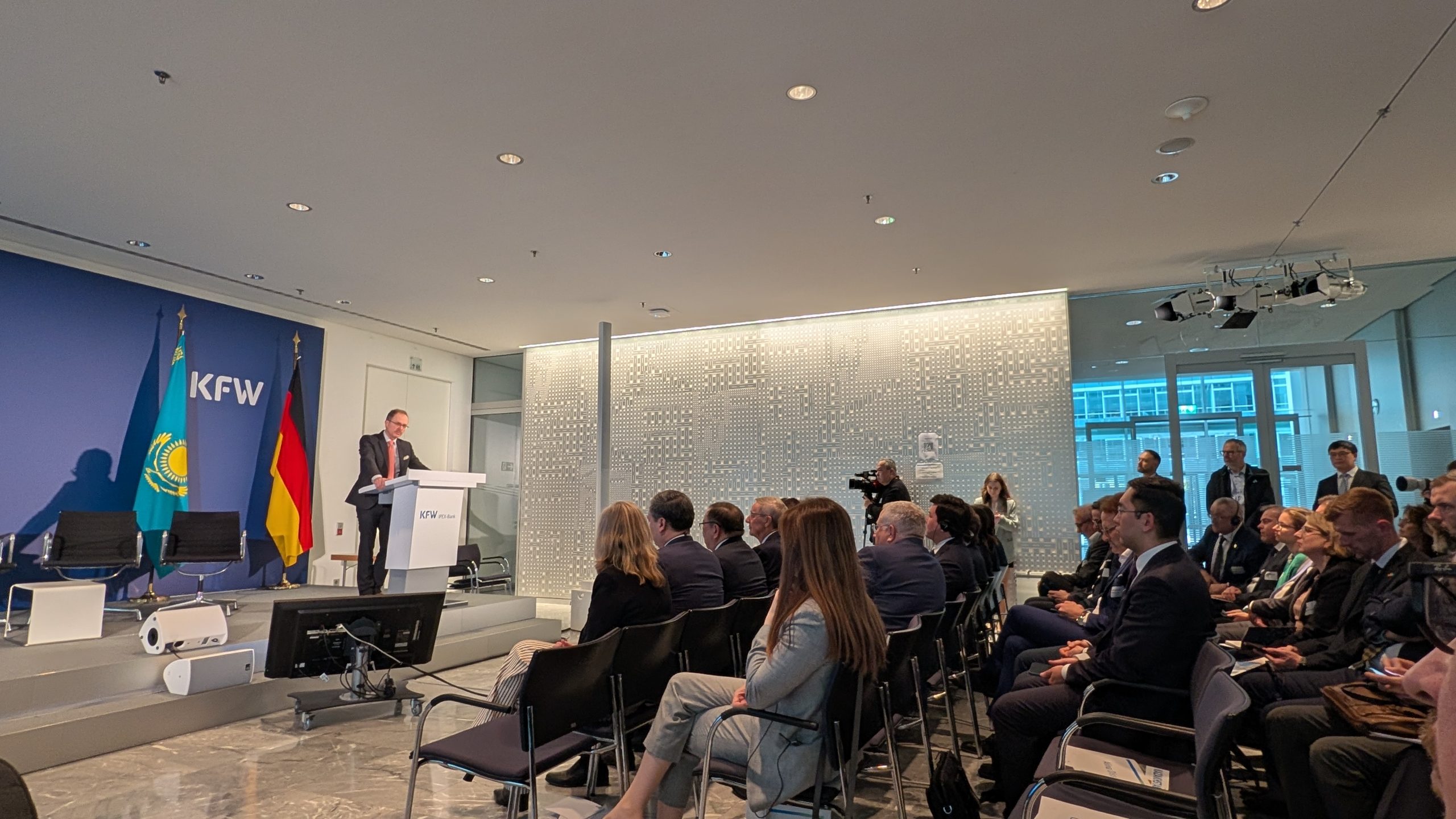
    The Kazakhstan Investment Day, held on 24 February 2026, at the KfW Bankengruppe headquarters in Frankfurt, highlighted a pivotal shift in Eurasian trade dynamics. The event centered on the deepening energy and mining alliance between Germany and Kazakhstan, a relationship that has gained strategic urgency as Kazakhstan effectively replaces Russian oil volumes and leverages deep-rooted cultural ties to strengthen bilateral cooperation.

    Financial and Strategic Framework

    The scale of this partnership is substantial, with bilateral trade recently seeing a 10% increase to reach €4 billion. Kazakhstan is currently positioned to supply 21 of the 34 critical raw materials (CRMs) identified on the EU’s strategic list.

    To facilitate this, several financial and logistical mechanisms have been established:

    • The Development Bank of Kazakhstan (DBK): A $1 billion financing program (2025–2030) has been launched, specifically dedicated to the extraction and processing of rare and critical materials.

    • Foreign Direct Investment (FDI): Kazakhstan aims to attract $400 billion in FDI by 2029, supported by Germany’s raw materials fund and backing from institutions like KfW IPEX and DEG.

    • The Middle Corridor: The Trans-Caspian International Transport Route is being developed as a highly efficient logistical artery connecting Central Asia to Europe, bypassing sanctioned territories.

    Operational Success vs. Bureaucratic Hurdles

    There is a notable contrast between engineering achievements and administrative delays. Industry leaders from Thyssen Schachtbau and Qazaq Kalium have demonstrated successful deep-shaft mining projects, proving that German technology is effectively unlocking Kazakh resources. Furthermore, the German development agency GIZ is pivoting its strategy by forming a dedicated in-country team focused exclusively on CRM partnerships.

    However, several impediments remain:

    • The “Bearocracy”: Despite the strategic need, Kazakh businesses face extreme delays and bureaucratic hurdles regarding German visa regimes, a point acknowledged by German officials.

    • Sanction Compliance: German leadership maintains a hard line, stating there will be zero support for any trade or logistics involving Russia or sanctioned companies.

    • Implementation Lag: While the financial architecture is in place, the actual development of new mining projects remains slowed by EU-wide bureaucratic processes.


    A Shifting Global Context

    The global competition for resources is accelerating. Coinciding with these discussions in Frankfurt, China introduced a supply ban of critical minerals to 40 major Japanese industrial firms over “remilitarisation” concerns. This geopolitical shift forces Japan to seek immediate alternative suppliers, placing Kazakhstan and the broader Central Asian region directly in their sights. The consensus is clear: while the foundations for a Euro-Kazakh partnership are solid, the slow pace of European administration may cause the EU to lose ground in an increasingly aggressive global race for resources.

  • Uzbekistan’s Critical Minerals Move to the Center of US Geoeconomic Strategy

    Uzbekistan’s Critical Minerals Move to the Center of US Geoeconomic Strategy

    Uzbekistan’s critical mineral resources have become part of a broader US geoeconomic strategy aimed at reducing dependence on China, according to analysis by the Bloomsbury Intelligence & Security Institute (BISI).

    The recently signed memorandum between Tashkent and Washington coincided with a US-hosted ministerial meeting on critical minerals attended by more than 40 countries. At the same time, Washington announced the launch of two new mechanisms: FORGE (Forum on Resource Geostrategic Engagement) and Project Vault, a $12 billion strategic reserve fund for purchasing and stockpiling critical minerals.

    BISI assesses that the agreement with Uzbekistan fits into a wider network of bilateral partnerships designed to diversify supply chains away from China.

    Uzbekistan holds reserves of tungsten, lithium, vanadium, titanium, germanium and graphite — materials considered essential for defense industries, battery technologies and advanced manufacturing. According to BISI, the country could become a “preferred partner” for the United States within the emerging global raw materials architecture.

    However, analysts caution that diplomatic engagement must translate into tangible investment. Without financing mechanisms through institutions such as EXIM, the US International Development Finance Corporation (DFC), and private capital channels, the memorandum risks remaining largely symbolic.

    China’s role remains a critical variable. While experts consider it unlikely that Beijing will escalate tensions directly, increased commercial competition and diplomatic pressure cannot be ruled out. For Tashkent, this creates the need to position cooperation with Washington as commercial and non-exclusive, preserving existing economic ties with China.

    BISI also highlights potential sensitivities in relations with Russia, which could view deeper US-Uzbek cooperation through a geopolitical lens. Possible pressure points may include migration policy or information campaigns.

    In the short term, attention will focus on defining concrete projects and operational rules under the FORGE platform. Over the longer term, the success of the initiative will depend on Uzbekistan’s regulatory environment — including licensing stability, tax predictability and investor protection.

    Ultimately, these factors will determine whether Uzbekistan becomes an integrated player in a new global minerals system or remains primarily a raw material supplier outside major capital flows.

  • First Meeting of the Eurasian Critical Minerals Organisation (ECMO)

    First Meeting of the Eurasian Critical Minerals Organisation (ECMO)

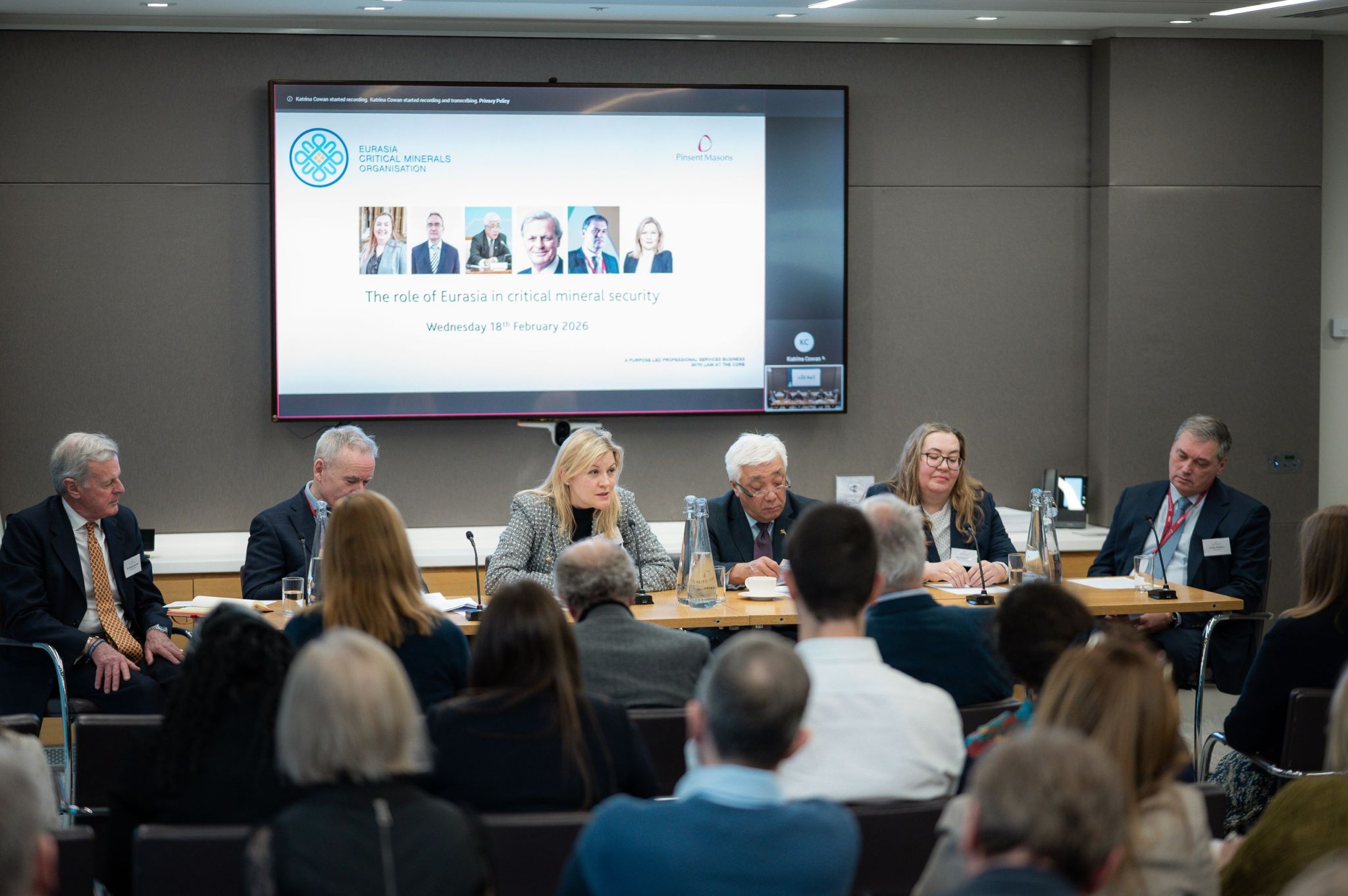
    The panel discussion marked the first public engagement of the Eurasian Critical Minerals Organisation and focused on the growing strategic importance of Eurasia in global critical mineral supply chains. Particular attention was given to Kazakhstan, Uzbekistan, Mongolia, Kyrgyzstan and Tajikistan, set against a backdrop of geopolitical change, supply-chain vulnerability and rising global demand for responsibly sourced critical raw materials.

    Speakers highlighted the diversity of investment environments across the region. Mongolia was cited as a leading example of transparency, due to its publicly accessible national geological database, which provides information on licences, ownership, geological data and environmental conditions. This level of openness was seen as a strong advantage for investors. Other countries in the region were described as having extensive geological data inherited from the Soviet period, much of which has yet to be fully digitised or made widely accessible.
    The panel agreed that improving geological data transparency across the region would significantly strengthen investor confidence and support new exploration.

    Kazakhstan was recognised as the most established mining jurisdiction in the region, with a long history of production and a diverse mineral base. Uzbekistan was described as an increasingly important emerging player, combining significant mineral potential with ongoing economic and regulatory reforms aimed at attracting international investment.

    Kyrgyzstan and Tajikistan were discussed as highly prospective but more constrained environments, where progress on governance, infrastructure and regulatory consistency will be important to unlocking long-term, sustainable investment.

    Mongolia was noted for its openness to mining investment, alongside the need to balance development with environmental and social considerations.

    The discussion also addressed the region’s strategic geography. Positioned between Russia and China, Eurasian countries are increasingly integrated into regional transport and infrastructure corridors, including those associated with China’s Belt and Road Initiative. While such investment was recognised as important, speakers stressed the shared objective among regional governments of diversifying their international partnerships.

    A broad and balanced investor base was described as being firmly in the national interest, strengthening resilience and reducing over-reliance on any single partner.

    Panellists also highlighted the growing link between critical minerals, industrial strategy and security. Recent geopolitical developments, including the war in Ukraine, have sharpened European focus on supply-chain resilience and strategic autonomy. Minerals found across Central Asia and Mongolia were described as essential inputs for clean energy technologies, advanced manufacturing and defence-related applications.

    From a geological perspective, the panel emphasised that large parts of the region remain underexplored, despite extensive historic discoveries. Many critical minerals occur as by-products of major commodities or within historic mine tailings. Advances in extraction and processing technologies, alongside the digitisation of legacy data and the use of modern analytical tools, were identified as key opportunities to unlock this potential.

    The political context was discussed through the lens of expanding C5+1 engagement formats between Central Asia and major global partners, including the EU, the UK, the US and others. These frameworks reflect growing recognition of Central Asia as a coherent region and a constructive partner in global economic and resource security discussions. However, speakers agreed that the priority now is to translate dialogue into practical outcomes and investable projects.

    The role of ECMO


    The panel concluded that ECMO has an important role to play as a practical, delivery-focused platform. Rather than duplicating existing diplomatic initiatives, ECMO aims to support implementation by bringing together governments, state-owned enterprises, investors, technology providers and financial institutions. By promoting transparency, best practice and ESG-aligned development, ECMO can help reduce investment risk, support responsible project development and unlock international capital. In doing so, ECMO seeks to help Kazakhstan, Uzbekistan, Mongolia, Kyrgyzstan and Tajikistan turn their significant mineral endowments into resilient, diversified and sustainable supply chains .
  • Atameken Committee Reviews Constitutional Reform, Mining Roadmap and Rail Tariff Risks

    Atameken Committee Reviews Constitutional Reform, Mining Roadmap and Rail Tariff Risks

    Kazakhstan’s Committee for Geology, Mining, Coal and Metallurgical Industry under the Presidium of the National Chamber of Entrepreneurs “Atameken” convened to review key policy issues, including constitutional reform, implementation of the Mining and Metallurgical Complex (MMC) Roadmap, and risks linked to a proposed new rail tariff model. The meeting was chaired by Committee Head Nikolai Radostovets and attended by Atameken Presidium Chairman Kanat Sharlapayev and Deputy Chair of the Management Board Gulnara Bizhanova.

    Outlining priorities for 2026, Sharlapayev said the Committee’s agenda was shaped through consultations with industry associations and businesses and would be refined as sector challenges evolve. Among the top priorities is resolving legal inconsistencies between subsoil use and land use rights, an issue affecting companies of all sizes. He also stressed the need to consolidate the MMC’s position in discussions around the new Tax Code, including royalty mechanisms, and to preserve export potential through predictable customs regulation.

    Sharlapayev emphasized that Atameken remains the principal platform for dialogue between business and government and called for greater industry unity. He urged companies to avoid fragmentation into parallel negotiation platforms, highlighting the importance of presenting a consolidated position during a period of political transformation.

    Radostovets described the constitutional reform as part of broader state modernization aimed at strengthening institutions and building a competitive economy. He noted that Kazakhstan’s economy has grown at around 6% annually and underlined the importance of reinforcing rule of law, property rights and predictable conditions for long-term investment.

    The Committee also examined progress on the MMC Development Roadmap prepared by the Ministry of Industry and Construction. According to Rustam Shuntukov, Managing Director of Atameken’s MMC Department, the roadmap includes 15 measures, though only about five of 42 business proposals were reflected in the final document. Positive elements include support for processing technogenic mineral formations, SME development, improved subsoil liquidation procedures, and preparation of a Critical Minerals Strategy to 2030.

    Participants further discussed concerns regarding a new rail tariff methodology being developed for Kazakhstan Temir Zholy. Business representatives warned that key proposals from Atameken had not been incorporated and supported commissioning an independent expert review.

    The Committee concluded the meeting by approving its 2026 work plan.

  • Kazakhstan Advances National Geological Digitalisation Programme

    Kazakhstan Advances National Geological Digitalisation Programme

    Kazakhstan continues the implementation of a national programme aimed at accelerating the digitalisation and systematisation of geological information, in line with the instruction of the Head of State. The initiative is designed to increase the level of geological exploration of the country’s territory, enhance investment attractiveness, and ensure open access to geological data.

    The scanning and digitisation of geological materials form the foundation for the introduction of modern digital and analytical tools, including artificial intelligence-based solutions. The programme is expected to significantly improve transparency and accessibility of geological information for government bodies, investors, and the professional community.

    To date, 66,180 secondary geological reports have been structured, with access to their first volumes available through the Unified Subsoil Use Portal. This enables users to review the general sections of materials online and free of charge, without the need to visit physical geological archives. Work on digitising secondary reports began in the early 2000s.

    Overall, nearly 4.7 million units of geological information have been digitised, representing 97.5% of the total volume of primary geological data. Of this amount, 2,728,620 units were digitised in 2023–2024, and 1,969,216 units in 2025.

    The total volume of priority primary geological information stored in geological archives amounts to approximately 5 million units. These materials are currently held in paper format, graphic appendices, magnetic tapes, and cartridges.

    The full cycle of geological data digitisation is scheduled for completion by the end of 2026, ensuring 100% coverage of archival materials.