Website: Asia.com

  • Kazakhstan Tightens Oversight of Gold Mining Sector as Six Extraction Permits Are Revoked in 2025

    Kazakhstan Tightens Oversight of Gold Mining Sector as Six Extraction Permits Are Revoked in 2025

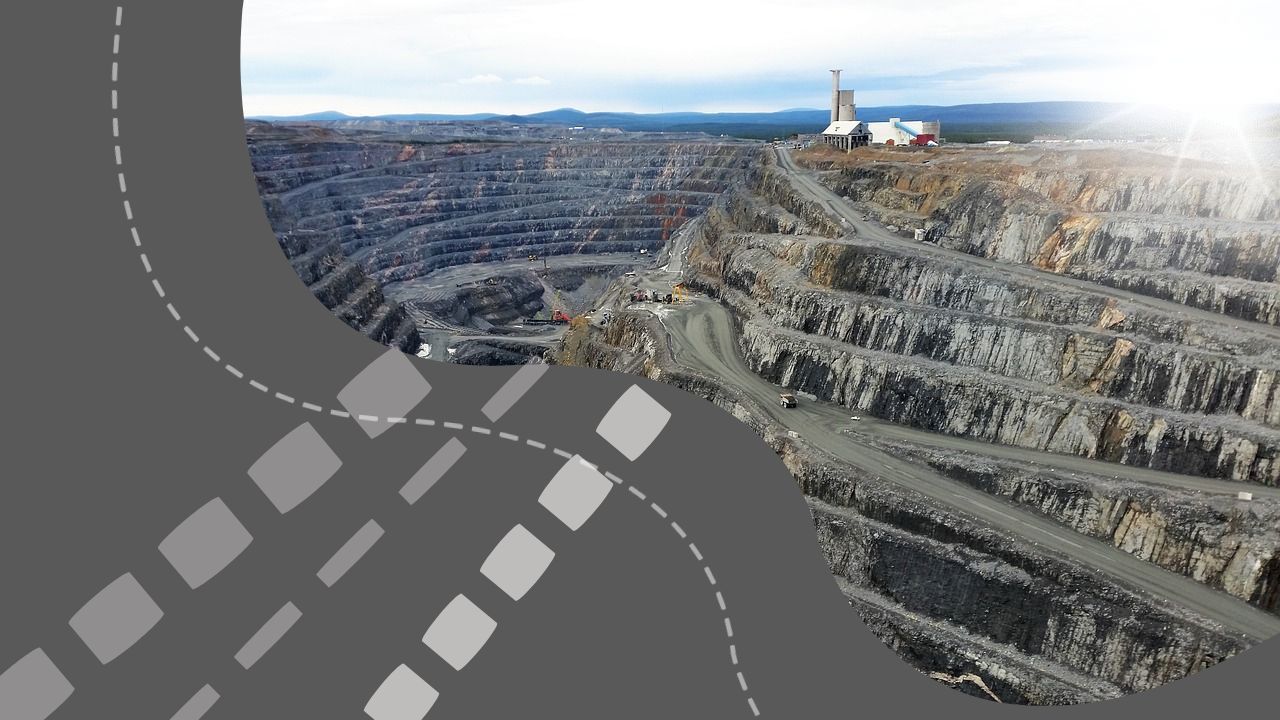
    Kazakhstan has revoked six gold mining permits so far in 2025 across the Aktobe, Turkistan, East Kazakhstan, and Abai regions, according to the Ministry of Industry and Construction. Although significant, the figure is lower than in 2024, when the government annulled twice as many contracts for gold-bearing ore extraction. Authorities say the revocations stem from violations of legal requirements and breaches of land-use and lease conditions.

    Members of Parliament argue that punitive measures must be strengthened further. Lawmakers are calling for tougher criminal penalties for illegal mining and the creation of a “blacklist” of irresponsible subsoil users who would face obstacles when seeking new contracts. Deputies believe such steps would reduce environmental risks and increase accountability for land rehabilitation at mining sites, LSM.kz reports.

    Earlier, the Mazhilis introduced amendments to the existing Subsoil Code. The draft legislation would require auction winners to pay their signing bonuses before receiving a subsoil licence. Those who fail to make the payment would be banned from using subsoil resources for five years and prohibited from acquiring related rights through third parties.

    These reforms reflect Kazakhstan’s broader effort to enforce stricter compliance, improve environmental protections, and ensure responsible resource development across the mining sector.

  • Uzbekistan’s Akfa Group Launches Construction of $600 Million Manufacturing Complex in the United States

    Uzbekistan’s Akfa Group Launches Construction of $600 Million Manufacturing Complex in the United States

    Uzbekistan’s Akfa Group has begun construction of a major manufacturing facility in Kentucky, marking one of the largest US industrial investments by a Central Asian company to date. Founder and former Tashkent mayor Jakhongir Artikkhodjayev said the project, developed jointly with a Turkish partner, will produce aluminum goods, automotive components, and parts for solar panels and window systems.

    Artikkhodjayev confirmed that $105 million will be invested during the first year of construction, with total project funding expected to reach $600 million. The Kentucky complex is intended to strengthen Akfa’s industrial footprint abroad while supporting US demand for specialized aluminum and renewable energy components.

    The businessman, who leads a diversified portfolio including Artel Electronics, Akfa Aluminium, Akfa Logistics and other companies, has been expanding domestic and international projects since leaving his post as Tashkent mayor in 2023. In Uzbekistan, he recently announced plans to launch six new hotels and develop a large medical clinic in partnership with a US healthcare provider.

  • EU Industry Chief Urges Faster Action and Greater Recycling to Curb Critical Mineral Dependence on China

    EU Industry Chief Urges Faster Action and Greater Recycling to Curb Critical Mineral Dependence on China

    EU industry chief Stéphane Séjourné has warned that the bloc must accelerate its efforts to reduce dependence on Chinese critical raw materials, stressing that large-scale recycling will be essential. Speaking at a conference in Brussels, Séjourné highlighted that under the Critical Raw Materials Act, the EU aims to meet 25% of its demand for key minerals through recycling by 2030 — a major challenge given that less than 1% of rare earths are currently recycled in Europe.

    Séjourné also called for faster deal-making on critical raw materials, arguing that the EU cannot afford to wait for lengthy multi-year trade agreements. He noted that EU production of gallium and rare earth permanent magnets is expected to increase sixfold by 2030, but that progress must speed up across all 17 strategic materials identified by the bloc.

    On regulation, Séjourné acknowledged that overly complex permitting rules have caused too many mining and processing projects to be abandoned, and said simplification is urgently needed. He also cautioned that companies must revisit their procurement strategies, as a recent U.S.–China “stop-the-clock” agreement delaying further export restrictions on rare earths is unlikely to last long. The commissioner is expected to present the EU’s new economic security doctrine and resource package on December 3.

  • TMK and KU Leuven Launch Official Cooperation at EU Critical Raw Materials Week 2025

    TMK and KU Leuven Launch Official Cooperation at EU Critical Raw Materials Week 2025

    TMK (Uzbekistan Technological Metals Complex) and KU Leuven formally launched a landmark scientific-industrial partnership during the EU’s Critical Raw Materials Week 2025 in Brussels. The high-level session, organized by the European Commission and dedicated to investment opportunities in Uzbekistan’s critical minerals sector, featured detailed presentations on the country’s mining potential and expanding processing capabilities.

    Han Ilhan, Advisor to TMK’s Chairman, outlined new investment opportunities in Uzbekistan’s critical minerals sector, while Deputy Chairman Amir Abidov presented the company’s major ongoing and future industrial projects.

    The event’s central outcome was the signing of a cooperation agreement between TMK and KU Leuven’s SOLVOMET R&I Centre — recognized globally as the leading hydrometallurgy research institution. The partnership will enable TMK to integrate advanced hydrometallurgical technologies to expand production of rhenium metal salts and improve extraction of rare and rare-earth elements.

    This collaboration marks the beginning of TMK’s systematic adoption of European scientific expertise and aligns with President Shavkat Mirziyoyev’s national strategy to build a modern science-industry-education ecosystem. TMK’s participation in Raw Materials Week 2025 reinforced Uzbekistan’s position as a stable and reliable long-term partner for European industry.

  • Navoi Mining & Metallurgical Combinat Expands Modernisation Drive with Major Shaft Development at Zarmitan

    Navoi Mining & Metallurgical Combinat Expands Modernisation Drive with Major Shaft Development at Zarmitan

    Navoi Mining & Metallurgical Combinat (NMMC) is accelerating its modernisation strategy with a series of major investment projects designed to boost ore production, improve mining efficiency, and create new employment opportunities across the region. The company’s latest achievements highlight its growing role as a technological leader in Central Asia’s mining sector.

    A key milestone is the “Lower Horizons Development of the Zarmitan Deposit” project. In April 2025, NMMC commissioned the new “Skipovoy” shaft — a 6.5-metre-diameter, 1,000-metre-deep vertical shaft enabling the hoisting of 1,500 tonnes of ore per day. This high-capacity shaft has already generated 90 new jobs and provides critical new infrastructure for accessing deeper ore reserves.

    The parallel “Glavny” shaft has also reached the 1,000-metre mark. Once completed, it will support essential functions including ore hoisting, personnel and equipment transport, groundwater pumping, and ventilation of the underground mine network.

    The project has benefited from international cooperation: NMMC engineers worked with the Czech firm Mine Construction Alliance s.r.o. to link the “Skipovoy” and “Glavny” shafts at the 0.00 m level. This connection improves underground air circulation and establishes a secondary access route, strengthening operational safety and resilience.

    Key outcomes of these advancements include enhanced mining efficiency, expanded access to deeper ore bodies, and greater economic opportunities for local communities.

    Construction of the “Glavny” shaft is expected to be finished by the end of this year, marking another major step in NMMC’s comprehensive modernisation programme.

  • Uzbekistan Moves Forward With Landmark UzNIF IPO in London as Navoi Mining Listing Slows

    Uzbekistan Moves Forward With Landmark UzNIF IPO in London as Navoi Mining Listing Slows

    Uzbekistan is preparing to launch its first-ever initial public offering in London, with the national investment fund UzNIF expected to proceed ahead of other major state-owned companies, according to people familiar with the matter. The offering — planned for both London and Tashkent — could begin as early as the first quarter of next year, marking a significant milestone in the country’s push to attract foreign capital.

    Work on the parallel IPO of Navoi Mining & Metallurgical Co., one of the world’s largest gold producers, has slowed, the sources said. Despite an April presidential decree calling for Navoi to list in London by the end of this year, officials now view that timeline as unlikely given ongoing internal discussions and the strategic sensitivity of the company.

    The IPO programme is a central component of President Shavkat Mirziyoyev’s broad privatization agenda aimed at deepening capital markets and drawing international investors. The April decree outlined an ambitious listing calendar for state-owned assets, while several private firms — including fintech platform Uzum and logistics operator Centrum — are also weighing public offerings. Uzbekistan’s debut listing in London is expected to establish a valuation benchmark for future issuers.

    UzNIF, managed by Franklin Templeton, has already chosen banks to arrange its IPO and has undergone a portfolio restructuring to improve its investor appeal. The fund’s holdings have been streamlined from 18 to 15 companies after the government reclaimed stakes in Uzbekistan Post, Uzbekistan Airports, and two regional lenders. In exchange, UzNIF received additional shares in existing portfolio companies and a 30% stake in Uzpromstroybank, the country’s second-largest bank. These adjustments lifted total assets under management to $1.93 billion, according to official data.

    A Franklin Templeton representative confirmed that UzNIF continues to target a first-half listing, noting that an update of the fund’s net asset value will be completed soon. Uzbekistan’s Ministry of Economy and Finance and the Presidential Office declined to comment.

    Meanwhile, the Navoi Mining IPO has encountered major concerns within the government, particularly over the potential impact on state revenue. Navoi is strategically vital: gold accounts for roughly 80% of Uzbekistan’s foreign reserves, and the company’s dividends — $1.7 billion in 2024 alone — contribute about 7.5% of annual government income. In the first half of 2025, Navoi’s profits nearly doubled to $1.5 billion as gold prices surged to record highs.

    Officials worry that taking the company public could reduce its dividend flows. President Mirziyoyev is expected to decide on the final timeline, but has not yet indicated when — or if — the sale will move forward. Navoi Mining has been working with Citigroup, JPMorgan, and Morgan Stanley on the potential offering and is seeking a valuation of around $20 billion including debt.

    At a recent conference in Tashkent, UzAssets CEO Bobur Abdinazarov said the state must carefully evaluate “optimal timing and market conditions,” noting that some major banks expect gold to reach between $5,000 and $6,000 an ounce.

    Market analysts say the government is likely to proceed cautiously. “Navoi is the crown jewel of Uzbekistan — strategically and politically — so they’ll likely keep it for later, when market depth and valuation visibility improve,” said Luis Saenz of Roemer Capital. “UzNIF, on the other hand, fits better as an earlier test case: it’s a cleaner, forward-looking growth story with less sensitivity, and it helps build the track record.”

  • EU Plans Centralized Critical Minerals Purchasing Body to Counter U.S. Global Stockpiling

    EU Plans Centralized Critical Minerals Purchasing Body to Counter U.S. Global Stockpiling

    The European Union is preparing to establish a central authority to co-ordinate the purchasing and stockpiling of critical minerals in an effort to prevent the United States from securing global supplies ahead of the bloc, according to Stéphane Séjourné, the EU’s executive vice-president for industrial strategy.

    Séjourné told the Financial Times that Europe has become “collateral damage” in the intensifying U.S.–China rivalry over access to rare earth minerals, which are essential for defense systems, renewable energy technologies, and advanced electronics.

    Tensions escalated after China imposed export controls on 17 rare earth metals in April, a reaction to U.S. restrictions on advanced technology sales to Chinese companies. The Chinese measures forced several EU manufacturers to halt production lines and lay off workers due to shortages of critical inputs. Although Beijing agreed last month to delay broader export curbs for a year following a temporary easing of tariff disputes with Washington, the EU remains exposed.

    In response, the European Commission accelerated efforts to diversify and secure supplies of critical raw materials—including rare earths, lithium, and copper—beyond China. Beijing currently dominates the market, accounting for 88% of global rare earth refining, more than 75% of refined germanium and gallium, and roughly 70% of processed lithium, according to EU data.

    Séjourné said Brussels intends to create a critical minerals “center” equipped with dedicated funding to conduct purchases, coordinate procurement across member states, build strategic reserves, and encourage EU companies to factor economic security into their supply chains. He acknowledged that Europe is “late” to adopt such mechanisms compared with the U.S., which has invested heavily in domestic mining and struck numerous supply agreements with foreign governments.

    “The Americans have a business department that buys stocks of critical materials before us everywhere in the world. They often buy them from under our noses,” Séjourné said.

    The proposal—still subject to approval by all 27 commissioners—also calls for rapidly signing supply partnerships with countries such as Brazil and South Africa. Séjourné is scheduled to visit both nations in the coming weeks to advance negotiations.

    He further suggested that the EU could consider price floors to guarantee access to domestic reserves, noting that European miners and processors hesitate to invest because cheaper Chinese products can undermine the market at any time. Many companies maintain only a few weeks’ worth of inventory, leaving them vulnerable to supply shocks.

    The Commission is expected to issue recommendations to prioritize stockpiling and diversify supply routes, with possible legislation to follow if industry practices do not shift.

    Industry voices say urgency is critical. Victor van Hoorn, director at Cleantech for Europe, warned that the recent Chinese export controls were a “wake-up call,” urging the EU to map its vulnerabilities and aggressively de-risk its supply chain.

    While the EU set domestic production goals for critical minerals in 2023, new projects face delays due to lengthy permitting processes and environmental resistance.

    Séjourné also backed the Dutch government’s decision to seize chipmaker Nexperia from its Chinese owner, calling it an action taken “in the European interest,” despite Beijing’s anger and subsequent disruptions to EU chip supplies.

    Looking ahead, the EU’s plan will also support research into technologies that require fewer or no rare earths. “The best way to become independent is not to have to use the raw material,” Séjourné said.

  • Tau-Ken Samruk Begins Exploration of Rare and Rare-Earth Metals in Rwanda and Afghanistan

    Tau-Ken Samruk Begins Exploration of Rare and Rare-Earth Metals in Rwanda and Afghanistan

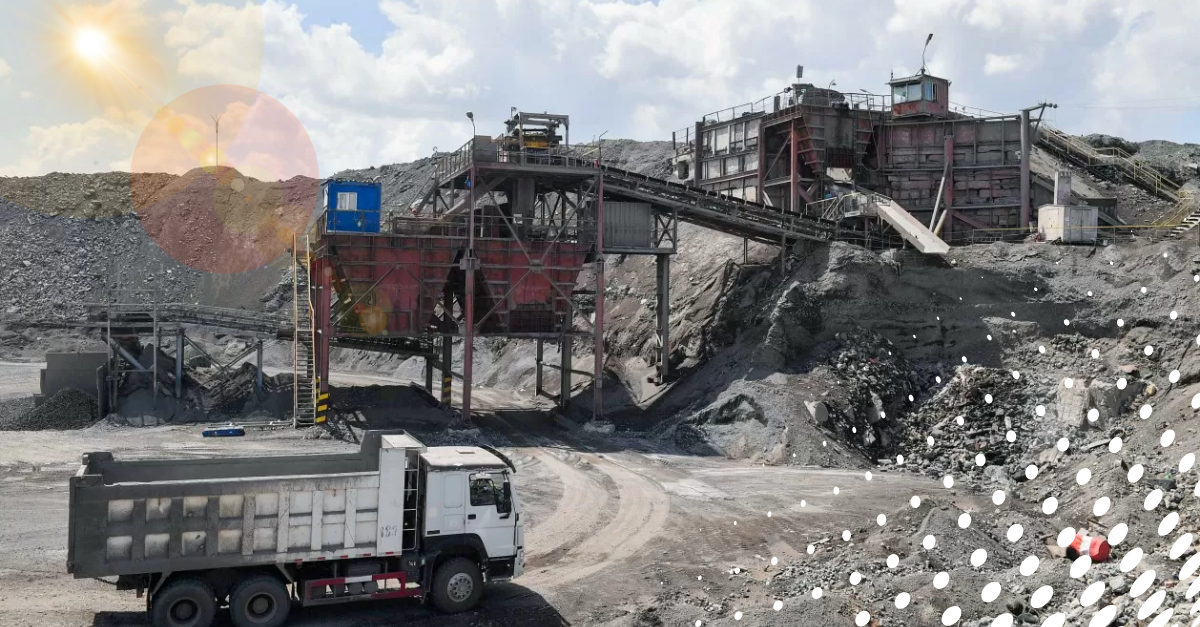
    Kazakhstan’s state-owned mining company Tau-Ken Samruk has launched geological exploration efforts for rare and rare-earth metals in Rwanda and Afghanistan, according to Nurlan Zhakupov, Chairman of the Board of Samruk-Kazyna. The initiatives are viewed as strategically important for strengthening Kazakhstan’s resource security and expanding its processing capabilities.

    In Rwanda, the national company has already signed a cooperation agreement that will pave the way for establishing a joint venture with the country’s state enterprise. Once the joint company is formed, exploration activities will begin, eventually leading to the extraction of strategic minerals.

    Work in Afghanistan remains at an early evaluation stage. Specialists collected and analyzed geological samples in July and reported promising results. However, joint mining is not yet under consideration, as licensing and resource assessment procedures still need to be resolved.

    Zhakupov noted that these international exploration projects will help Kazakhstan develop deeper processing of raw materials sourced from third countries. The government has declared its intention to process rare and rare-earth metals domestically, and the Ministry of Industry and Construction has prepared a development program for the sector covering 2024–2028.

    Tau-Ken Samruk continues to focus on gold, copper, and lead-zinc deposits while also identifying strong potential in the extraction of strategic resources, including rare and rare-earth elements.

  • Uzbekistan Opens First National Center for Critical Minerals Research

    Uzbekistan Opens First National Center for Critical Minerals Research

    Uzbekistan has launched a new scientific center dedicated to critical minerals, established on the initiative of the Technological Metals Combine (TMK) and located inside the National Library. According to the company, this is the country’s first innovation hub designed to connect science with industrial development and serve as a national analytical platform for critical raw materials.

    The center will operate as an open-access facility for researchers, students, and industry specialists. TMK plans to implement more than 50 projects related to strategic minerals between 2025 and 2027, including 13 new production facilities.

    The Ministry of Mining and Geology reports that Uzbekistan holds deposits containing 28 types of critical minerals, including copper, lithium, graphite, germanium, tungsten, vanadium, tantalum, niobium, and rare-earth elements.

    By 2028, the country aims to complete 70 projects focused on developing strategically important mineral resources, with a total investment portfolio exceeding $1.6 billion.

  • Kazakhstan and Uzbekistan Strengthen Cooperation with New Agreements on Geology, Rare Metals and Energy Projects

    Kazakhstan and Uzbekistan Strengthen Cooperation with New Agreements on Geology, Rare Metals and Energy Projects

    Kazakhstan’s President Kassym-Jomart Tokayev and Uzbekistan’s President Shavkat Mirziyoyev met on November 15 at the Kuksaroy residence near Tashkent, where the two leaders advanced bilateral cooperation across key industrial sectors. According to lsm.kz, the talks focused on joint initiatives in the oil and gas industry, as well as mining and metallurgy.

    Among the signed documents was a decision by the Higher Interstate Council to establish a bilateral working group on geology and the extraction of rare and rare earth metals. The presidents also endorsed a Memorandum of Understanding between Kazakhstan’s Ministry of Industry and Construction and Uzbekistan’s Ministry of Mining and Geology to expand collaboration in the sector.

    The countries additionally approved a framework agreement to launch joint projects in the oil and gas chemical industry. One of the major initiatives under consideration is a partnership between KazMunayGas and Uzbekneftegaz to build a new linear alkylbenzene production complex in Uzbekistan’s Kashkadarya region, with a planned output capacity of up to 50,000 tonnes per year. A final investment decision will be made after completion of the project design phase.