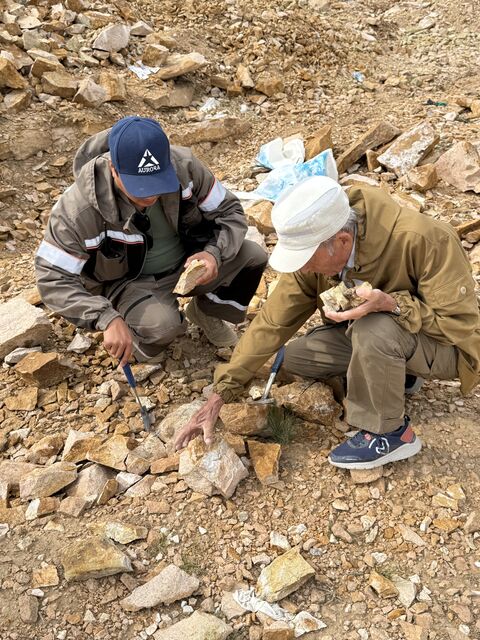
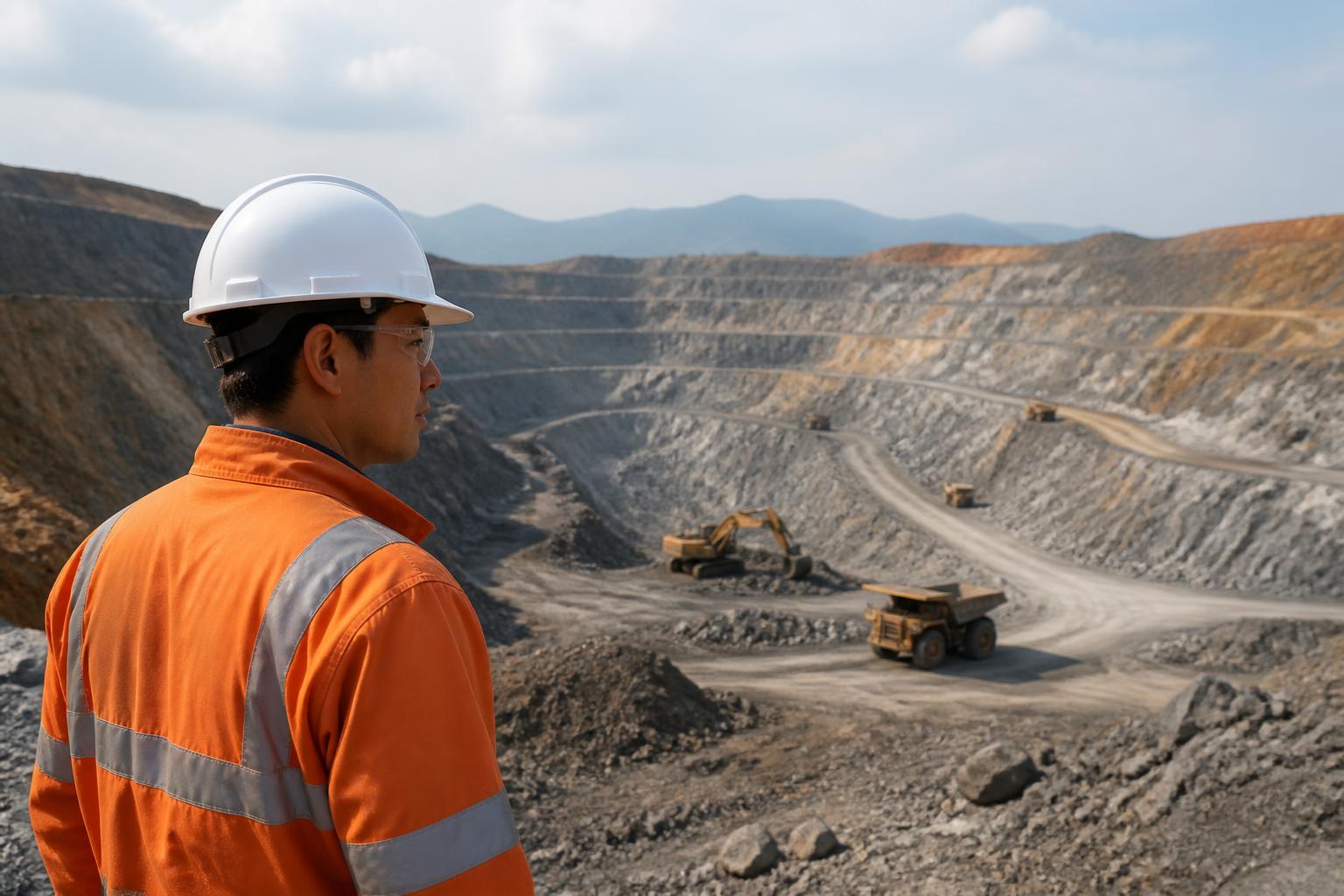
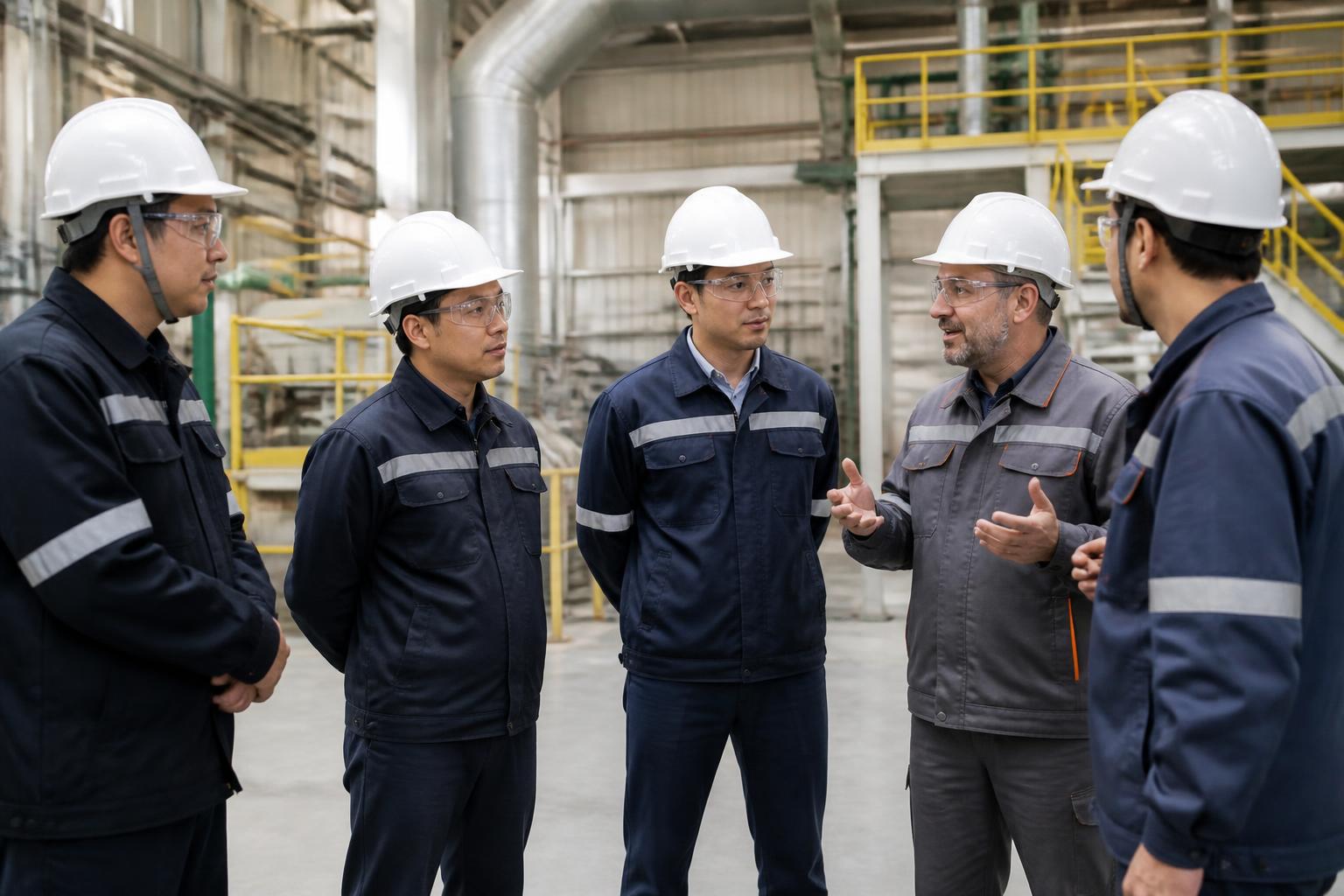
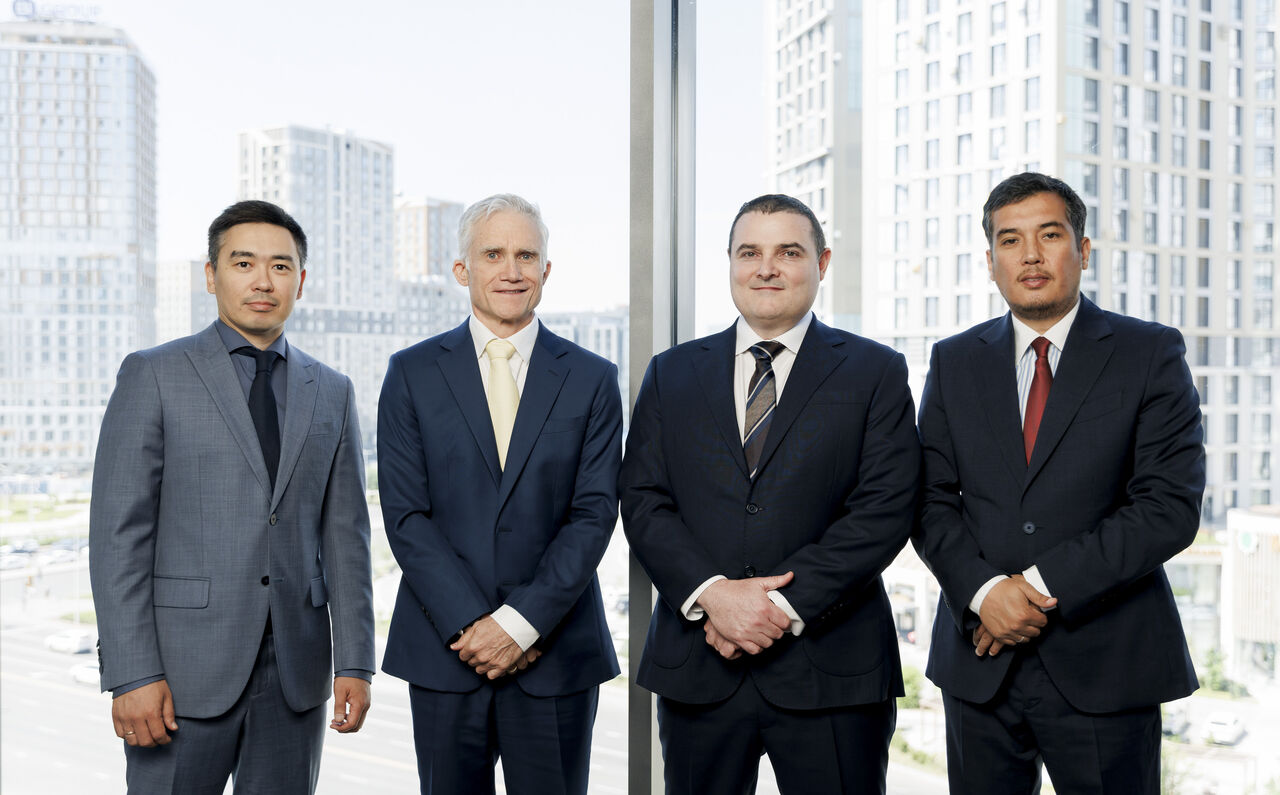
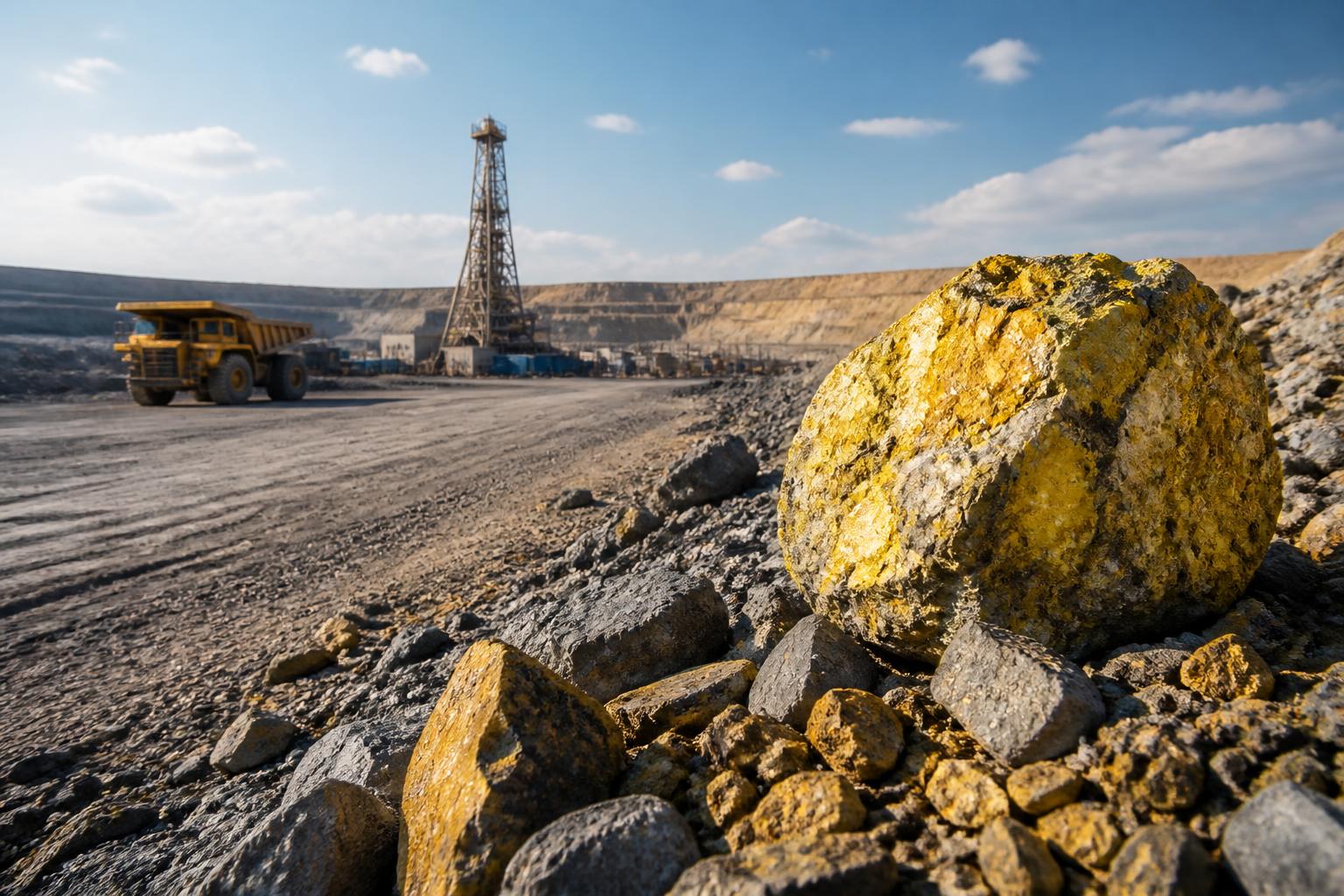
In a recent visit to the Globmine Resources gold project located in the Sayak district of Northern Balkhash, a team of geologists, including two of Kazakhstan’s most esteemed exploration experts, Yerlan Nabiev and Daulet Muratbekov, highlighted the importance of experience and innovation in mineral exploration. Major mineral discoveries are seldom the result of luck; they stem from decades of accumulated knowledge, disciplined exploration, and a synergy between experience, capital, and cutting-edge technology.
Yerlan Nabiev, a veteran geologist with over fifty years of experience in the Sayak region, has played a pivotal role in the discovery and evaluation of numerous mineral deposits. His extensive knowledge has earned him recognition as a ‘Discoverer of Mineral Deposits’ in Kazakhstan. Alongside him, Daulet Muratbekov brings decades of field experience across Northern Balkhash, contributing to a rich understanding of the area’s geology.
During the site visit, the team engaged in discussions about mineralisation, structural controls, and future exploration phases. A notable remark from Nabiev resonated with the team: ‘I have worked in this region for fifty years. At best, we have explored only about thirty percent of it. There are still many discoveries waiting to be made.’ This statement underscores the vast potential that remains untapped in the region, serving as a roadmap for future exploration efforts.
Aurora, the company behind the project, is committed to building a world-class exploration enterprise by preserving and transferring geological knowledge across generations. This commitment goes beyond traditional methods of documentation; it involves hands-on engagement in the field with seasoned geologists who have significantly contributed to Kazakhstan’s mineral discovery landscape.
By integrating the expertise of local geologists with modern techniques such as geophysics, remote sensing, 3D modelling, and adherence to CRIRSCO reporting standards, Aurora aims to enhance its exploration capabilities. The Sayak copper-gold district has already yielded some of Kazakhstan’s most significant mineral discoveries, and Aurora believes that this is just the beginning of a new chapter in the region’s geological narrative. With a focus on innovation and collaboration, the company is poised to uncover further valuable resources in the Sayak district.
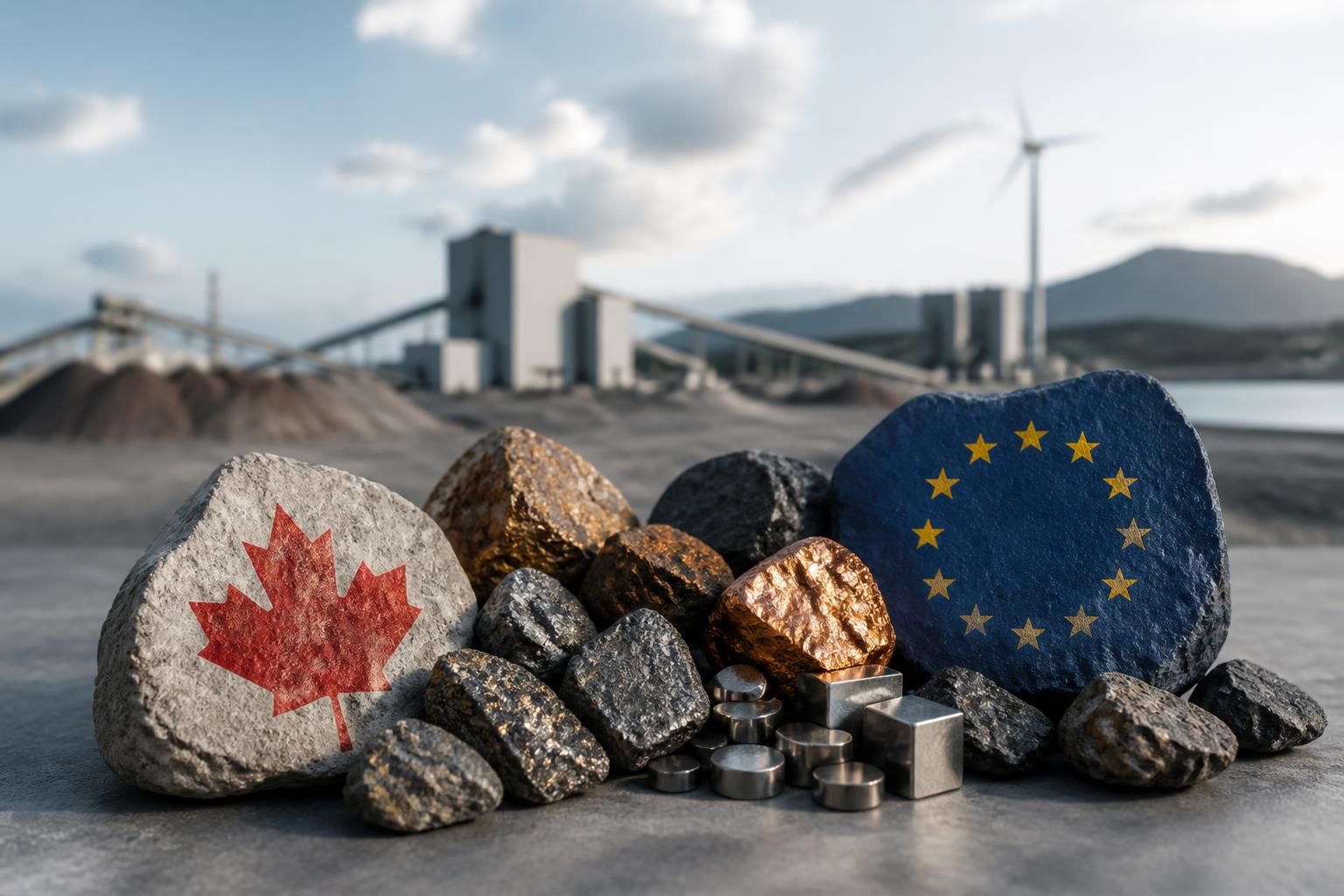
In recent years, Canada and the European Union have significantly enhanced their transatlantic relationship, particularly in the realm of critical minerals supply chains. This collaboration gained momentum following the implementation of the EU’s Critical Raw Materials Act (CRMA) in May 2024, which set ambitious targets for the EU to meet its own strategic raw materials needs. By 2030, the EU aims to ensure that at least 40% of its annual consumption of these materials is processed within its borders, alongside goals for domestic extraction and recycling. This benchmark highlights the importance of the midstream sector, where processing and refining activities bridge the gap between raw mining and manufacturing.
The EU’s heavy reliance on imports for refined materials, which rose from 83% in 2011 to 90% by 2023, underscores the urgency of developing a more resilient supply chain. China’s dominance in the processing of critical minerals, controlling 19 out of 20 energy-transition minerals, has raised concerns in Europe, particularly as Chinese export controls have led to production stoppages in European factories. Despite these challenges, Europe possesses a robust base of metals smelters that can be modernised and expanded with targeted investments.
The CRMA aims to foster economic and social development by encouraging processing in developing countries, while also ensuring that Europe can source value-added materials directly from its partners, rather than relying on Chinese processing. The EU’s strategy includes prioritising essential materials for future technologies, streamlining project permitting, facilitating finance, and establishing strategic partnerships with non-EU countries.
While the 40% benchmark is not legally binding, it serves as a guiding principle for the EU’s efforts to enhance its refining capacity. Progress has been mixed, with notable advancements in lithium and nickel refining, but significant gaps remain in areas like magnesium and titanium. Canada, with its own Critical Minerals Strategy, is well-positioned to become a leader in the global mining sector, leveraging its processing capabilities and access to low-cost, low-carbon energy.
The bilateral relationship between Canada and the EU is further strengthened by the Comprehensive Economic and Trade Agreement (CETA) and the 2021 strategic partnership on critical raw materials. However, both parties must focus on solidifying projects and co-investments to secure minerals and refined metals. Collaborative efforts, such as the G7 Critical Minerals Production Alliance and NATO’s initiative on critical raw materials, highlight the potential for Canada and the EU to work together in building resilient supply chains.
As the global landscape evolves, Canada and the EU must address the challenges posed by export controls and price volatility in the critical minerals market. By focusing on midstream cooperation, shared projects, and predictable offtake agreements, they can establish a stable foundation for the materials essential to clean technology, digital innovation, and defence industries. The midstream sector represents a crucial area for building resilience and ensuring secure supply chains, where Canada’s strengths in extraction and Europe’s processing expertise can create a mutually beneficial partnership.
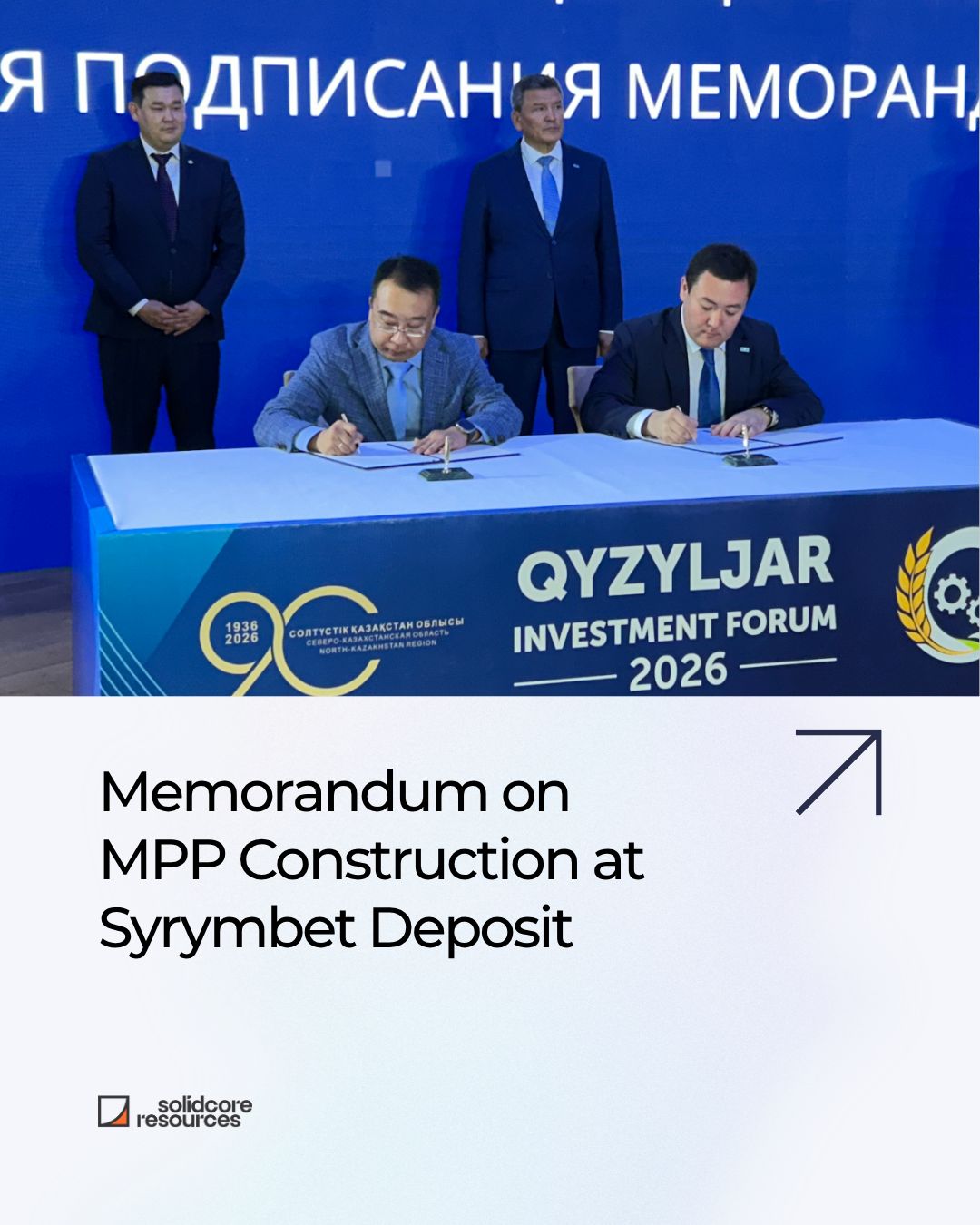
Tin One Mining, a subsidiary of Solidcore Resources, has signed a significant Memorandum with the Department of Entrepreneurship and Industrial-Innovative Development of the North Kazakhstan region Akimat, marking a pivotal step in the development of the Syrymbet tin deposit. This agreement was formalised during the Qyzyljar Investment Forum 2026, where both parties committed to the construction of a mining and processing plant (MPP) at the site, which is recognised as the largest undeveloped tin deposit in Central Asia.
The memorandum solidifies prior discussions regarding the project, which is expected to create substantial employment opportunities and bolster the industrial capacity of the region. The initiative aims to modernise local engineering and transport infrastructure, thereby enhancing the overall economic landscape of North Kazakhstan. The Department of Entrepreneurship and Industrial-Innovative Development will play a crucial role in facilitating the project, ensuring collaboration with government entities, and providing support throughout the investment process.
Tin One Mining has announced plans to invest a minimum of KZT 150 billion (over US$ 315.5 million) into the development of the Syrymbet deposit, which includes the construction of the MPP and associated infrastructure. The company is dedicated to employing modern extraction and processing technologies that meet global standards for environmental protection and operational safety. Approximately 800 jobs are expected to be created, with a focus on hiring local residents who possess the required qualifications and skills.
The Syrymbet deposit, discovered in 1985, holds significant reserves, accounting for more than 70% of Kazakhstan’s total tin reserves. The JORC compliant Mineral Resource estimate indicates a total of 492.4 thousand tonnes of tin at a grade of 0.40%, alongside 91.4 thousand tonnes of copper at a grade of 0.07%, equating to approximately 5.9 million ounces of gold equivalent. This project not only represents a major investment in the mining sector but also underscores the potential of Kazakhstan’s mineral wealth in contributing to the region’s economic development.
What MINEX Asia in Ankara told us about the next chapter of the Middle Corridor — and why the conversation now belongs in London.
In mid April in Astana, and again in Ankara in late June, I watched the same shift happen in real time. The debate about critical raw materials — who has them, who needs them, who should be worried about China — quietly stopped being interesting to the people in the room. Reserves, corridor geography, geopolitical alignment: those questions have answers now. Everyone in senior mining, development finance and government policy already knows them. What they came to Ankara to argue about was something narrower and much harder.
Not whether the Middle Corridor matters. But who finances it, who processes on it, who certifies its output, and who staffs it.
The assumption era is over
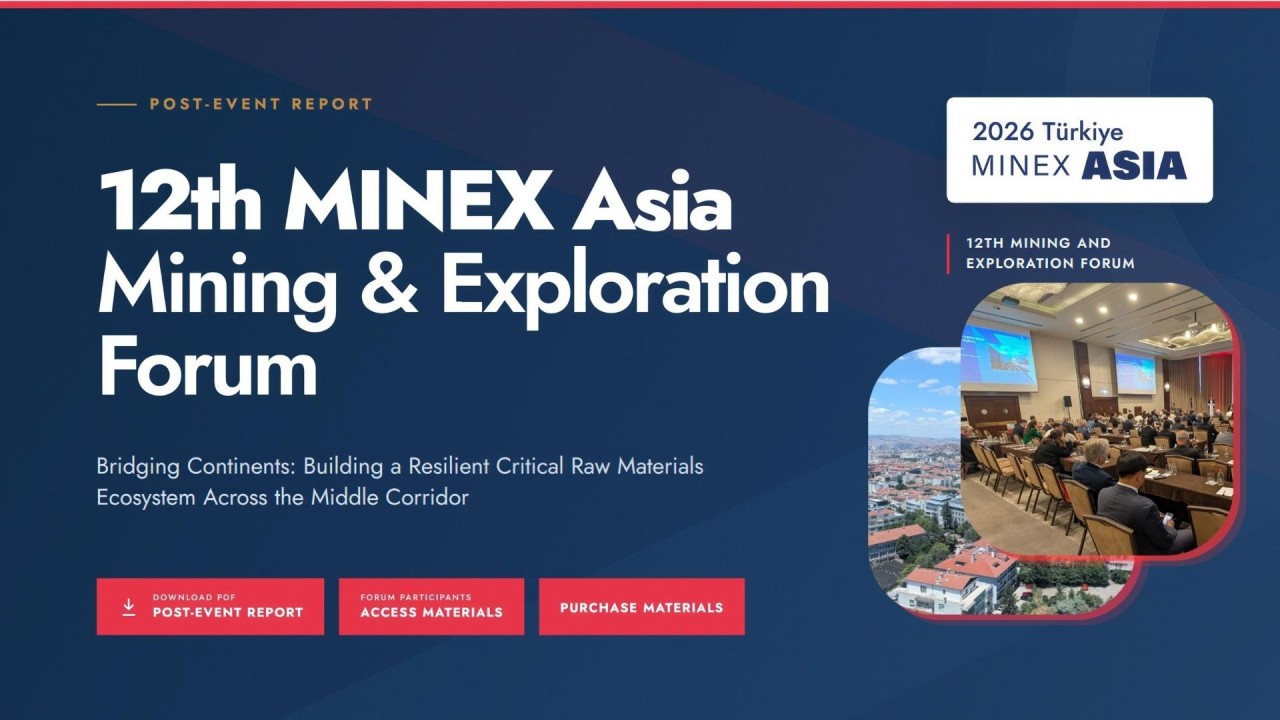
The 12th MINEX Asia Forum in Ankara brought together 140 delegates from 16 countries — engineers, ministry officials, multilateral bankers, laboratory operators, tailings specialists — and I noticed something I had not seen with quite the same force at earlier editions. Nobody was still making the strategic case. It was being assumed. Türkiye’s General Directorate of Mining and Petroleum Affairs speaker put it plainly: the country is no longer positioning itself as a reserve holder. It is positioning itself as an industrial bridge — the refinery, the workforce, the standards regime — between Central Asian ore and European demand.
That is a shift with consequences. If reserves are the starting point rather than the argument, then the real contest is over the intermediate layer: processing capacity, laboratory infrastructure, project bankability, tailings engineering, ESG certification, the availability of trade finance instruments that actually move tonnes of processed material rather than fund single mega-projects. This is where the room disagreed, and where the disagreements were worth having.
Two forums, one diagnosis
Put MINEX Kazakhstan in April alongside MINEX Asia in June and a consistent diagnosis emerges. In Astana, the surprise takeaway from Day 1 was not geological. It was that Kazakhstan has, in the phrase used by Nightingale International, a narrative deficit. The country appears in Western media coverage of critical minerals mainly as a footnote to Chinese dominance rather than as an author of its own story — despite 9,500 mineral deposits, a $1 billion DBK financing programme for rare-earth processing, and reforms that have pushed the country into the global top ten for mining investment attractiveness from 104th a decade ago.
Ankara made a parallel point in a different vocabulary. Geological wealth does not automatically translate into investment. It never has. The missing ingredient is not more MoUs between capitals. It is the workaday infrastructure — accredited laboratories, JORC- and UMREK-compliant reporting, GISTM-aligned tailings design, sovereign-scale processing capacity, and the kind of trade finance that treats critical minerals as a flow rather than a project. Kazakhstan and Türkiye are, from opposite ends of the corridor, converging on the same answer: extraction is not enough, and speaking louder about extraction will not fix it.
Speed is the variable nobody has solved
Ankara convened the largest single gathering of international financial institutions ever assembled at a MINEX Asia Forum — EBRD, EIB, KfW IPEX-Bank, IFC, UK Export Finance, ADB and BORG Capital Insights, all on the same panels, actively banking and investing in raw materials projects across the Middle Corridor. That, in itself, is a datapoint: the multilateral and export-credit community now treats Central Asian and Türkiye-adjacent critical minerals not as a policy interest but as a live pipeline.
Which is what made the most uncomfortable moment of the forum, for me, so telling. It was not on any panel. It was in the corridor conversation that followed the financing session. The mandates are there. The appetite is there. What is not there is speed. Western permitting and financing cycles routinely take three to five years. Chinese state capital deploys in eighteen to twenty-four months. That gap is not a policy problem for Brussels or Washington to solve on Central Asia’s behalf. It is a structural feature of how Western DFIs are governed, and it is the single variable that will determine whether the Middle Corridor becomes a supply line or a slogan.
The corollary is that first-loss capital, blended finance, and offtake-backed instruments — the least glamorous parts of the toolkit — matter more than another declaration of strategic alignment. The bankers I spoke with knew this. The question is whether their institutions are governed to act on it.
The quieter takeaways
Two threads deserve more attention than they will get. The first is workforce. Devrim Aksu closed Day 1 with the observation that every projection of regional CRM growth quietly assumes a workforce that does not yet exist — digitally trained, remote-operations capable, and drawing meaningfully on women, who remain a structurally underused reserve in mining talent pipelines across the region. No amount of financing solves this. It has a decade-long horizon and needs to start now.
The second is ESG, and specifically the reframing that Tunç Berkman offered in one line: mining’s greatest resource is no longer underground — it is public trust. That is not a slogan. It is a description of the mechanism by which projects with credible environmental and social governance move faster through Western permitting, attract patient capital sooner, and reach production ahead of peers who treated ESG as a compliance overhead. In a speed-constrained system, this is a decisive edge.
Why London is the logical next stop
The MINEX Forum series was built to move the same conversation through the geographies that actually have to reach agreement with each other. MINEX Kazakhstan showed a producer country working out how to move up the value chain. MINEX Asia showed a midstream candidate — Türkiye — arguing for its role as the refinery and the workforce between the ore and the market. What is missing from that arc is the room where the deal actually gets papered, financed and listed. That room is London.
https://2026.minexeurasia.com/
On 30 November, as part of London Mining Week, we convene the 14th edition of the MINEX Eurasia Conference. It has long been the cross-border forum for mining and mineral exploration across Central Asia, the Caucasus and Mongolia. Last year’s edition drew 135 senior delegates, more than three-quarters of them decision-makers, with a ministerial keynote from Central Asia. This year we are expecting 150 to 200 participants, with the programme built around the five questions Ankara pushed to the front of the queue: critical minerals, financing, the Middle Corridor, AI, and ESG.
We are co-organising with the Eurasian Critical Minerals Organisation and working closely with the UK Department for Business & Trade’s regional representatives across Central Asia and Türkiye. Overseas delegations are expected to include senior officials and mining company representatives from Kazakhstan, Uzbekistan, Mongolia, Tajikistan, Kyrgyzstan, Turkmenistan, Armenia, Azerbaijan, Ukraine and Türkiye. If Ankara made the case that processing is the strategic question, London on 30 November is where that case meets the capital and the counsel that decide whether it moves.
Read the record. Join us in London.
If you were not in Ankara, the post-event report is the closest thing to being in the room — statistics, speaker roster, and the argument as it unfolded across the two days: MINEX Asia 2026 post-event report. And the companion record from Astana in April, tracing where the value-added agenda started this cycle, is here: MINEX Kazakhstan 2026 media release.
Then join us in London on 30 November: MINEX Eurasia 2026 — the preliminary agenda is here and the background on the conference is here. The corridor question does not resolve itself in Central Asia. It resolves — or fails to — in the room where the buyers, the regulators and the capital actually meet the suppliers. That room is London Mining Week. I hope to see you there.
The Asian mining sector is increasingly capturing the attention of industry influencers on social media, particularly on X, as discussions revolve around energy security, critical minerals, and the rising demand driven by electrification, artificial intelligence (AI), and infrastructure development. Recent insights from GlobalData, a leading intelligence and productivity platform, highlight significant developments across the region, including Vietnam’s decision to allow coal mines to exceed their licensed capacity, India’s push for increased domestic coal production and gasification, and China’s tightening of controls on the extraction of strategic minerals. Furthermore, Indonesia’s evolving regulations regarding nickel and concerns over copper supply further solidify Asia’s pivotal role in global mining investment.
Smitarani Tripathy, a Social Media Analyst at GlobalData, notes that influencers perceive the Asian mining sector as entering a multi-year growth cycle, propelled by the convergence of energy security issues and the escalating demand for critical minerals. Governments across the region are reportedly prioritising domestic resource development as a strategy to reduce reliance on imports while ensuring a stable supply for strategic industries, including electric vehicles, power transmission, data centres, and advanced manufacturing. This shift indicates a broader transformation in which Asia’s mining sector is evolving from a mere commodity supplier to a strategic component of industrial policy.
The discussions captured by GlobalData’s platform suggest that copper, nickel, coal, and rare earth minerals are expected to receive heightened policy and investment focus in the coming years. Influencers believe that countries that effectively integrate mining, refining, and downstream processing capabilities will be best positioned to harness value from the global energy transition and the AI-driven infrastructure expansion. Prominent voices in the industry, such as Stephen Stapczynski from Bloomberg, highlight Vietnam’s initiative to boost coal production for energy security, while investors like Paul Johnson emphasize the potential for significant returns in the mining sector. Amit Kumar Gupta, founder of FinTrekk Capital, points out that copper is evolving beyond a traditional industrial commodity, driven by structural trends in AI data centres, power transmission, and vehicle electrification, which are creating sustained demand amidst challenges in bringing new supply online.
The Zijin RG Gold team recently visited the Tau-Ken Altyn refinery, a key player in Kazakhstan’s precious metals refining sector. This visit provided the team with an opportunity to observe the complete production cycle, including the organisation of technological processes, the accounting system for precious metals, and the approaches to quality assurance, industrial safety, and production control. Such professional meetings are crucial for exchanging experiences and fostering a deeper understanding of industry specifics, ultimately strengthening collaboration among enterprises united by the common goal of developing a modern, efficient, and responsible mining and metallurgical industry.
During the visit, the Zijin RG Gold team expressed gratitude to the Tau-Ken Altyn staff for their openness and the informative tour, which showcased practical experiences in the field. The interaction highlighted the importance of such engagements in enhancing professional competencies and laying the groundwork for future cooperation. The visit underscores the commitment of both companies to advancing the mining sector in Kazakhstan through shared knowledge and best practices.
As the mining industry continues to evolve, initiatives like this play a pivotal role in ensuring that companies remain competitive and compliant with international standards. The collaboration between Zijin RG Gold and Tau-Ken Altyn reflects a broader trend in the industry towards increased cooperation and knowledge sharing, which is essential for sustainable growth and innovation in the mining sector.
Cove Kaz Capital Group LLC, a U.S.-based company dedicated to the development of critical mineral resources in Kazakhstan, has announced the commencement of a Definitive Feasibility Study (DFS) for its Northern Katpar tungsten project. The study, which is set to begin in July 2026 and conclude by the end of 2027, aims to support a Final Investment Decision and meet the due diligence requirements of potential financing partners, including U.S. financial institutions. The Northern Katpar project is held by Severniy Katpar LLP, in which Cove Kaz holds a 70% controlling interest.
The engagement of top global engineering firms marks a significant step in the project’s development. DRA Global has been appointed as the lead contractor, responsible for mineral processing, while ERM will oversee geology, mine planning, and environmental frameworks. Knight Piésold will provide expertise in geotechnical and hydrological services. This consortium of contractors will work alongside Cove Kaz’s experienced in-house team, led by CEO Dominic Heaton, who has a proven track record in tungsten mining.
The DFS will outline the overall mine plan for Northern Katpar and inform the construction of a refinery designed to produce ammonium paratungstate (APT), a key tungsten product. The project is positioned to address the current global tungsten supply deficit, which is particularly acute given the systemic shortages that existing mines cannot meet. With significant undeveloped tungsten resources, the Northern Katpar and Upper Kairakty deposits are expected to contribute approximately 12,000 metric tonnes per annum to global production, representing a substantial share of the market. Cove Kaz Capital Group aims to establish a long-term, secure supply of tungsten to support critical industrial and high-technology applications.
Kazakhstan has reported a significant increase in its uranium production for the first half of 2026, with output rising by 9% compared to the same period last year. According to Kazatomprom, the world’s largest uranium producer, the country produced 13,291 tonnes of uranium in the first six months of 2026, up from 12,242 tonnes in the first half of 2025. This growth highlights Kazakhstan’s pivotal role in the global uranium market, particularly as demand for nuclear fuel continues to rise amid a global push for cleaner energy sources.
Kazatomprom, which is majority-owned by the Kazakh State fund Samruk-Kazyna, primarily sells uranium oxide concentrate under long-term contracts, with only a small fraction of its production being sold on the spot market. This strategic approach allows the company to maintain stable revenue streams while managing market fluctuations. The increase in production is indicative of Kazakhstan’s commitment to enhancing its mining capabilities and meeting the growing international demand for uranium, especially as many countries look to nuclear energy as a viable alternative to fossil fuels.
The rise in uranium output also reflects broader trends in the mining sector, where companies are increasingly focusing on sustainable practices and efficient production methods. As Kazakhstan continues to expand its uranium production, it reinforces its position as a key player in the global energy landscape, contributing to the transition towards more sustainable energy solutions. With Kazatomprom listed on the London Stock Exchange since 2019, the company’s performance is closely watched by investors and analysts alike, signalling the importance of uranium in the future energy mix.
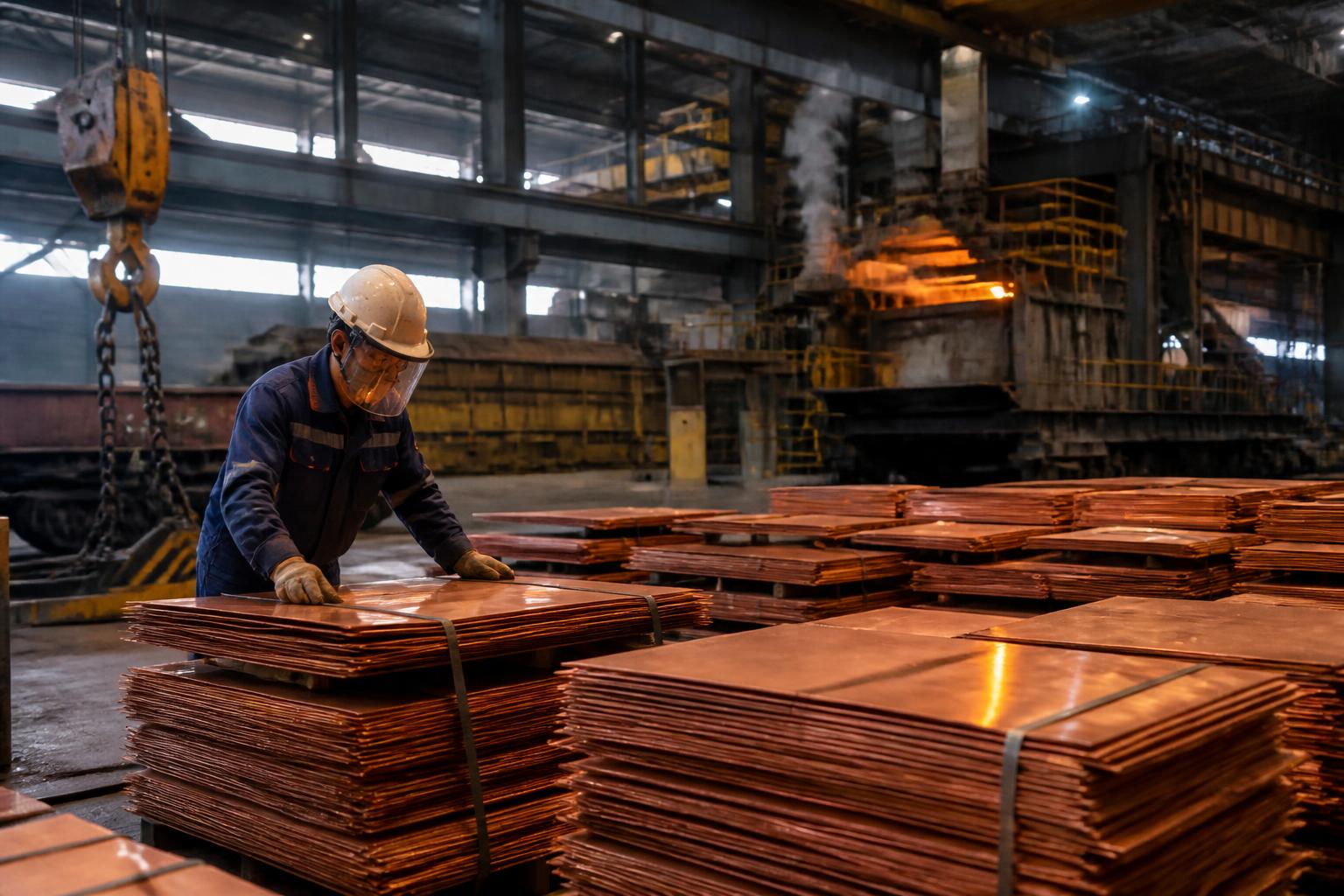
The government of Kazakhstan has approved an investment agreement for the construction of a copper smelting plant in Balkhash, Karaganda region, with a total investment of 750 billion tenge. The agreement was signed by Prime Minister Olzhas Bektenov and involves the Ministry of Industry and Construction along with Qazaq Smelter LLP. Construction is set to begin in 2027, with the plant expected to commence operations by 2030.
The new facility will boast an annual production capacity of 300,000 tonnes of cathode copper, alongside the production of 10 tonnes of gold, 300 tonnes of silver, and over 1.5 million tonnes of sulphuric acid. This ambitious project is anticipated to create approximately 1,200 permanent jobs, significantly contributing to the local economy. The introduction of these new capacities is projected to increase Kazakhstan’s copper production by 50%, raising annual output to over 800,000 tonnes.
Furthermore, the export of high-value-added products is expected to rise from 460,000 tonnes to 760,000 tonnes of copper annually. The plant will be equipped with modern technologies and digital solutions, aligning with global standards in the mining and metallurgy sectors. This initiative underscores Kazakhstan’s commitment to enhancing its mining industry and boosting economic growth through strategic investments.
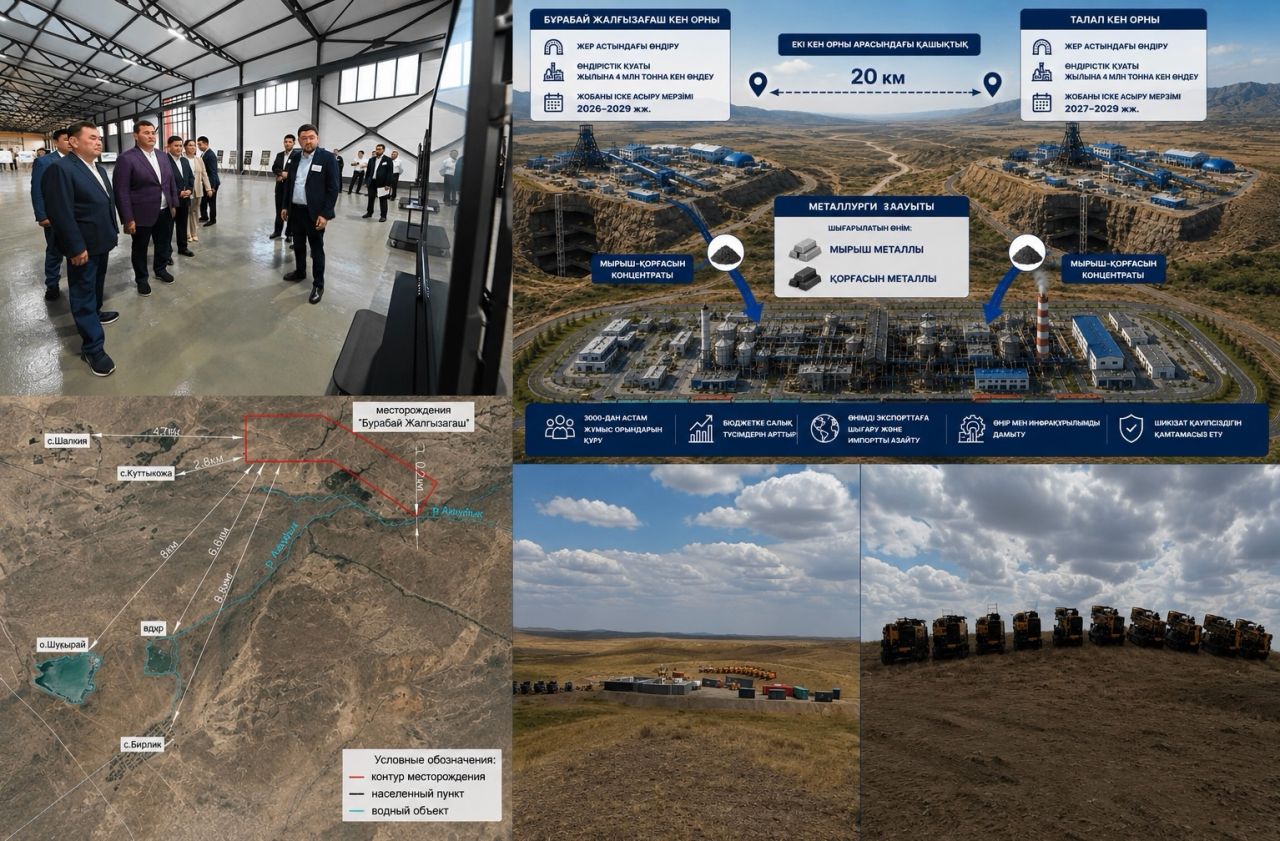
Hongda Group is set to embark on a significant investment project in Kazakhstan that could surpass Kazcink, positioning itself as the largest producer of lead and zinc in Central Asia. The initiative, valued at $1.3 billion, was highlighted during a recent visit by Kazakhstan’s First Deputy Prime Minister, Nurlan Naliyev, to the Kyzylorda region. The project entails the construction of two underground mines and two processing plants in the Zhanakorgan district, with a combined capacity of 8 million tonnes of ore per year, alongside a full-cycle metallurgical plant. This development is expected to create over 3,000 jobs, contributing significantly to the local economy.
The project will focus on the Talap and Burabay-Zhalgyzaghash deposits, located approximately 20 km apart. The Burabay-Zhalgyzaghash site will be developed using underground mining techniques to a depth of 500 meters. Both deposits are part of the Akuyuk-Maidantal lead-zinc ore district in the Karatau region, which is also home to the largest deposit in the area, Shalkiya. Initial exploration activities in this region took place between 1980 and 1985, with detailed surveys conducted from 2010 to 2012. The estimated reserves are classified as C2, with forecasted resources rated as P1. Geologists have noted an average zinc content of 2.01% and lead content of 1.62%, with potential for resource growth at depth.
Investors have indicated that the metallurgical plant will have an annual output of 420,000 tonnes of zinc and 220,000 tonnes of lead, totalling 640,000 tonnes of metals. In comparison, Kazcink is projected to produce 251,800 tonnes of zinc and 76,700 tonnes of lead by 2025. Upon reaching full operational capacity, the new complex could produce 66.8% more zinc and nearly three times the amount of lead than Kazcink. If the project meets its outlined parameters, it stands to become the largest lead and zinc producer in Central Asia. Notably, the Chinese investors have already committed around 9 billion tenge to geological exploration, operating 15 drilling rigs simultaneously. Although official reserves have yet to be disclosed, the scale of drilling and the proposed processing capacity suggest a substantial resource base. An official groundbreaking ceremony is anticipated later this year, marking a significant step in the development of this ambitious project.