Website: Asia.com

  • MINEX Kazakhstan 2026 – From Risk to Revenue: Modernising Access to Capital for Kazakhstan’s Mining Sector

    MINEX Kazakhstan 2026 – From Risk to Revenue: Modernising Access to Capital for Kazakhstan’s Mining Sector

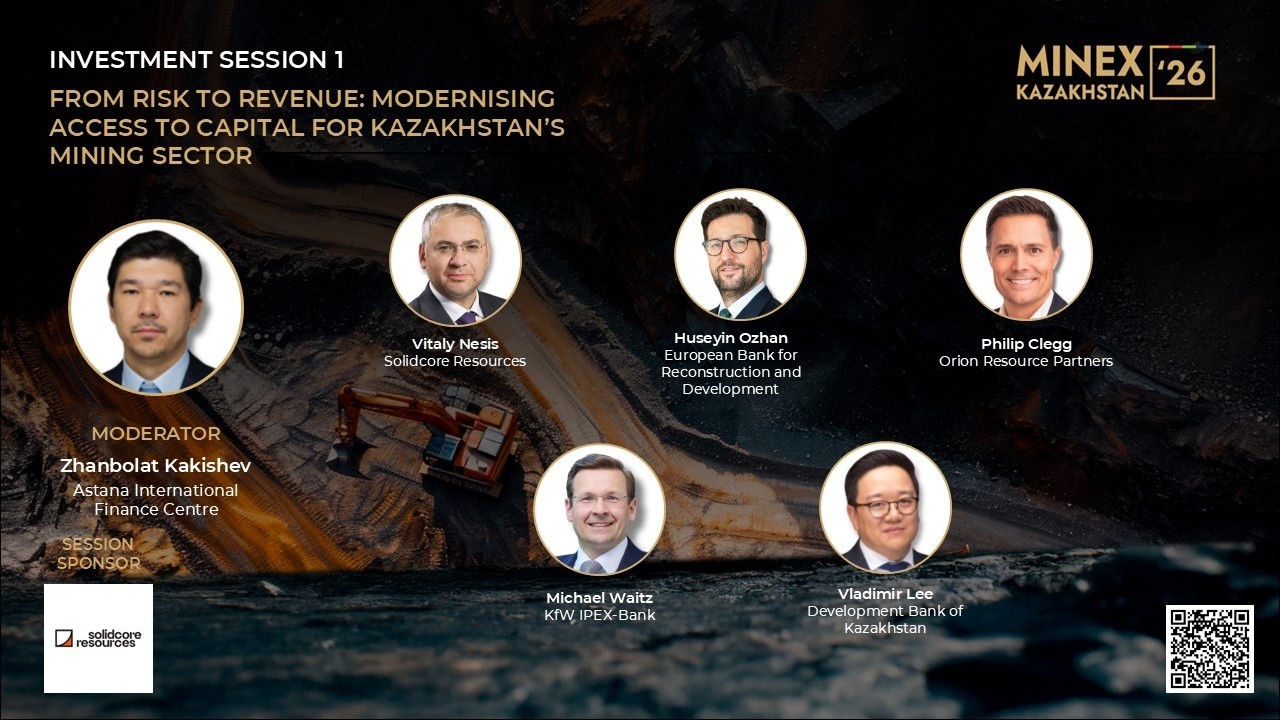
    Investment Session 1 – From Risk to Revenue: Modernising Access to Capital for Kazakhstan’s Mining Sector


    Format: Presentations and panel discussion organised in partnership with Astana International Financial Centre and Solidcore Resources

    Session will be held to discuss new financing solutions for geological exploration – a strategic area essential for unlocking Kazakhstan’s vast mineral potential.

    To promote long-term industrial growth, the Government of the Republic of Kazakhstan, together with the Development Bank of Kazakhstan, is implementing a package of financial support measures, including:
    a 100% tax deduction for geological exploration expenses;
    a USD 1 billion credit facility for 2025–2030 aimed at supporting projects in the critical minerals sector.

    The AIFC provides:

    a modern and reliable platform for structuring and financing projects;
    a listing framework for junior mining companies at the AIFC Exchange (AIX).

    Moderator

    Zhanbolat Kakishev
    Chief Product Officer
    AIFC

    Panellists:

    Vitaly Nesis
    Chief Executive Officer
    Solidcore Resources

    Huseyin Ozhan
    Managing Director, Central Asia and Mongolia
    European Bank for Reconstruction and Development

    Philip Clegg
    Managing Partner
    Orion Resource Partners

    Michael Waitz
    Head of Metals & Mining
    KfW IPEX-Bank

    Vladimir Lee
    Deputy Chairman of the Management Board for Lending
    Development Bank of Kazakhstan
  • MINEX Kazakhstan 2026 – A fireside chat with an issuer

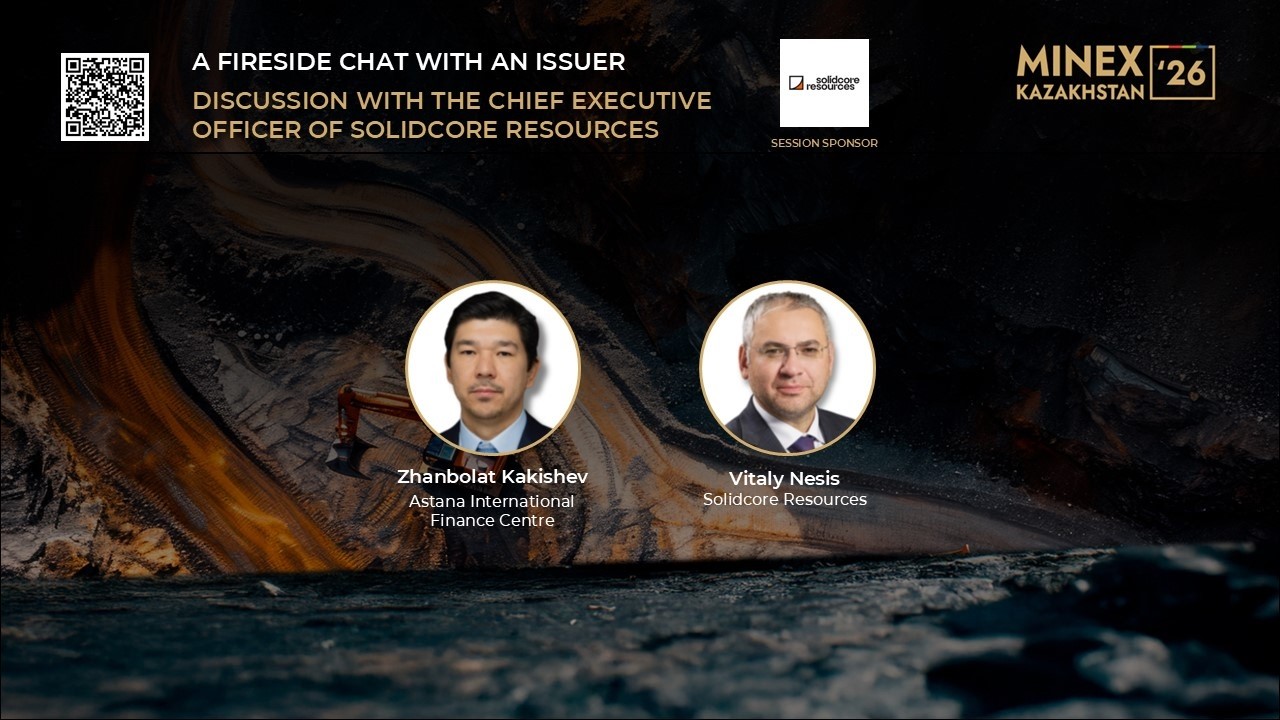
    MINEX Kazakhstan 2026 – A fireside chat with an issuer

    Discussion with the Chief Executive Officer of Solidcore Resources

    Moderator

    Zhanbolat Kakishev
    Chief Product Officer
    AIFC

    Presentation

    AIFC Kazakhstan Junior Mining Platform
    Zhanbolat Kakishev
    Chief Product Officer
    AIFC

    Panellist

    Vitaly Nesis
    Chief Executive Officer
    Solidcore Resources

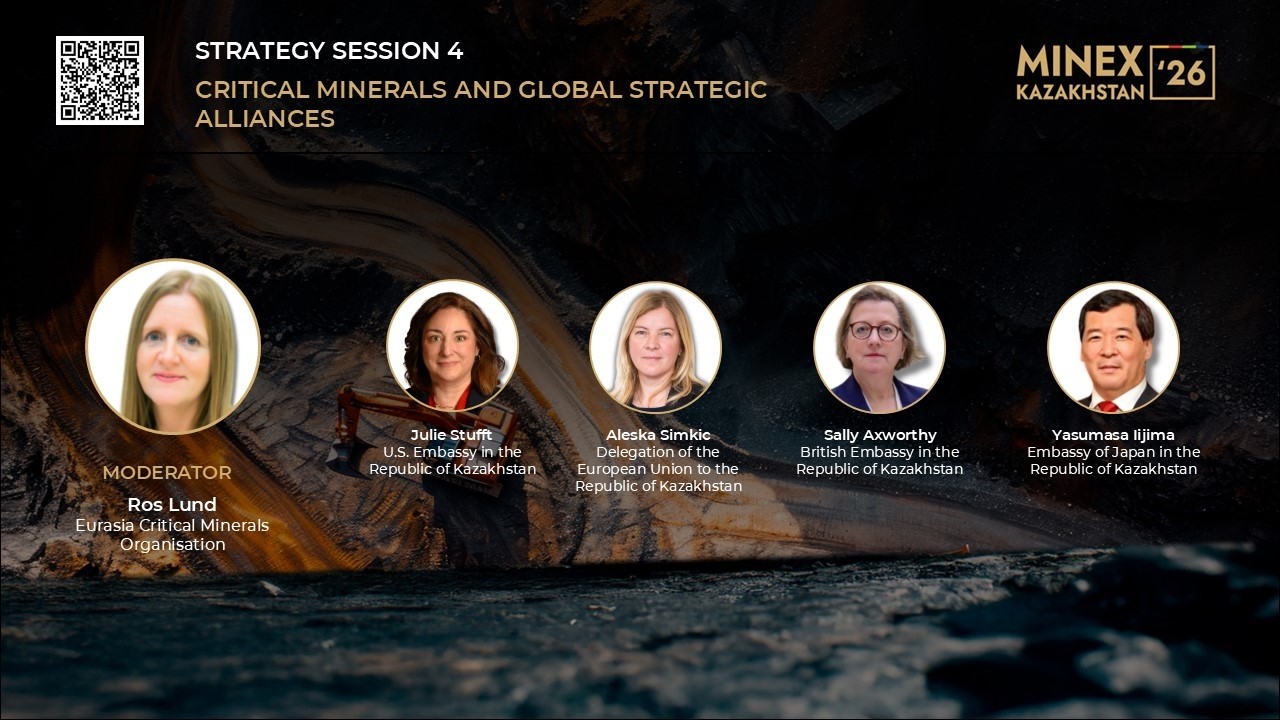
  • MINEX Kazakhstan 2026 – Critical Minerals and Global Strategic Alliances

    MINEX Kazakhstan 2026 – Critical Minerals and Global Strategic Alliances

    Critical Minerals and Global Strategic Alliances

    Format: Panel with high-level officials and Industry ambassadors

    Kazakhstan pursues foreign direct investment in critical minerals while strengthening state control over its natural resources. The 2026 Tax Code amendments establish “strategic investor” categories with tax incentives tied to mandatory local processing requirements, potentially undermining prior reforms aimed at improving business and investment environment. Recent multi-billion-dollar deals with China highlight escalating competition and a shift toward midstream processing. This panel will examine how the UK, USA, and EU can navigate the tightening regulatory landscape while leveraging Kazakhstan’s established processing advantage to turn high-level diplomacy into technology transfers and offtake agreements to build resilient supply partnerships amid China competition.

    Moderator

    Ros Lund
    CEO
    Eurasia Critical Minerals Organisation

    Panellists:

    Julie Stufft
    Ambassador Extraordinary and Plenipotentiary
    U.S. Embassy in the Republic of Kazakhstan

    Aleska Simkic
    Ambassador Extraordinary and Plenipotentiary
    Delegation of the European Union to the Republic of Kazakhstan

    Sally Axworthy
    His Majesty’s Ambassador to the Republic of Kazakhstan
    British Embassy in Kazakhstan

    Yasumasa Iijima
    Ambassador Extraordinary and Plenipotentiary
    Embassy of Japan in the Republic of Kazakhstan

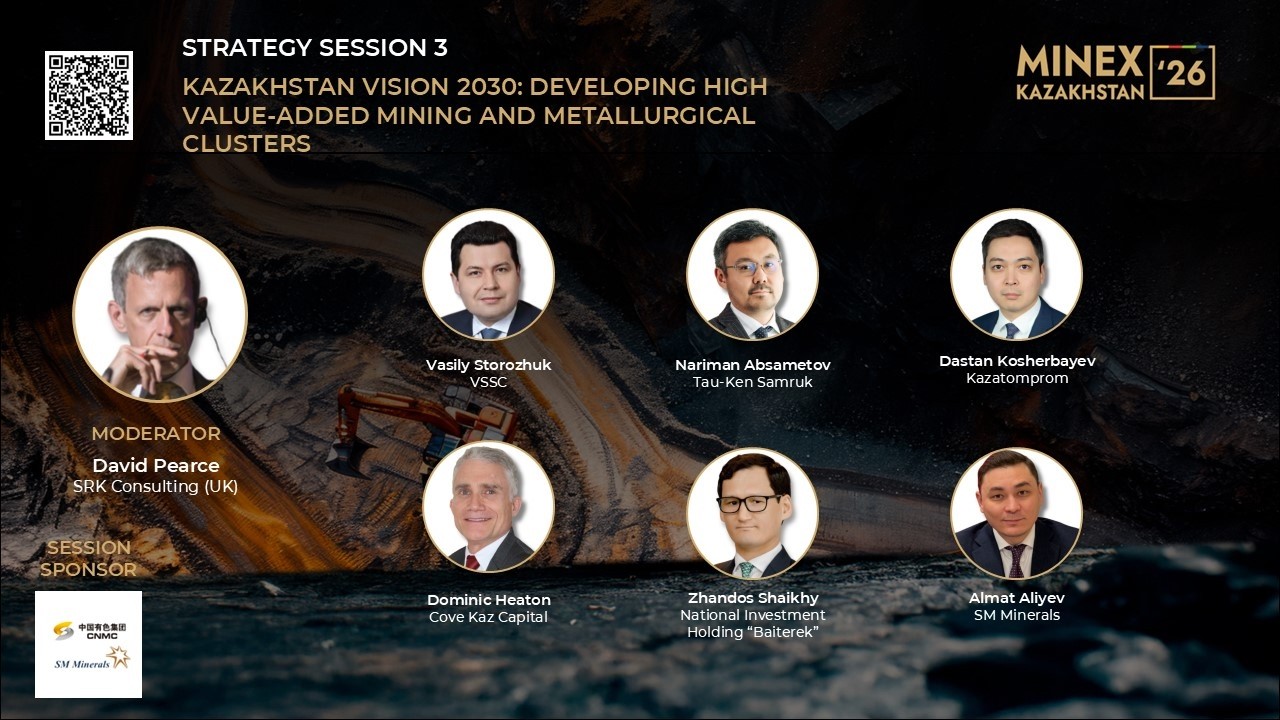
  • MINEX Kazakhstan 2026 – Kazakhstan Vision 2030: Developing High Value-Added Mining and Metallurgical Clusters

    MINEX Kazakhstan 2026 – Kazakhstan Vision 2030: Developing High Value-Added Mining and Metallurgical Clusters

    Kazakhstan Vision 2030: Developing High Value-Added Mining and Metallurgical Clusters

    Format: Presentations and panel discussion with high-level officials and Industry Champions

    Kazakhstan ranks sixth globally in total mineral reserves, hosting some 5,000 deposits. The country’s strategic value lies not only in the volume of its resources but in the diversity of its portfolio. Kazakhstan is moving swiftly into midstream mineral processing, aiming to maximise returns from its gold, copper, tungsten and rare earth reserves. This shift merges industrial policy with capital strategy, as Chinese mega‑projects deliver scale while Western investors introduce high‑tech, ESG‑aligned processing like POX and green-hydrogen-ready HBI. The session explores how Kazakhstan can attract financing, stabilise commodity-linked revenues, and build resilience amid volatile global metals markets. Can its energy and water systems sustain this leap? Is the Middle Corridor ready for high‑value exports? How will fiscal policy and investor confidence shape Kazakhstan’s next frontier in value‑added metals?

    Moderator

    David Pearce
    Corporate Consultant (Mining Engineering)
    SRK Consulting (UK)

    Presentations:

    From Local Champions to Global Players: The Next Stage of Development for Mining Companies in Central Asia
    Vasily Storozhuk
    Managing Partner
    VSSC

    Building Long-Term Partnerships for the Development of Critical Minerals Projects
    Nariman Absametov
    CEO
    Tau-Ken Samruk

    Dastan Kosherbayev
    Chief Strategy and International Development Officer
    Kazatomprom

    Cove Kaz Capital – Severniy Katpar Case Study
    Dominic Heaton
    CEO
    Cove Kaz Capital Group

    CNMC: Architecture of the Global Copper Industry
    Almat Aliyev
    Managing Director
    SM Minerals

    Panellist

    Zhandos Shaikhy
    Deputy Chairman of the Management Board
    National Investment Holding “Baiterek”


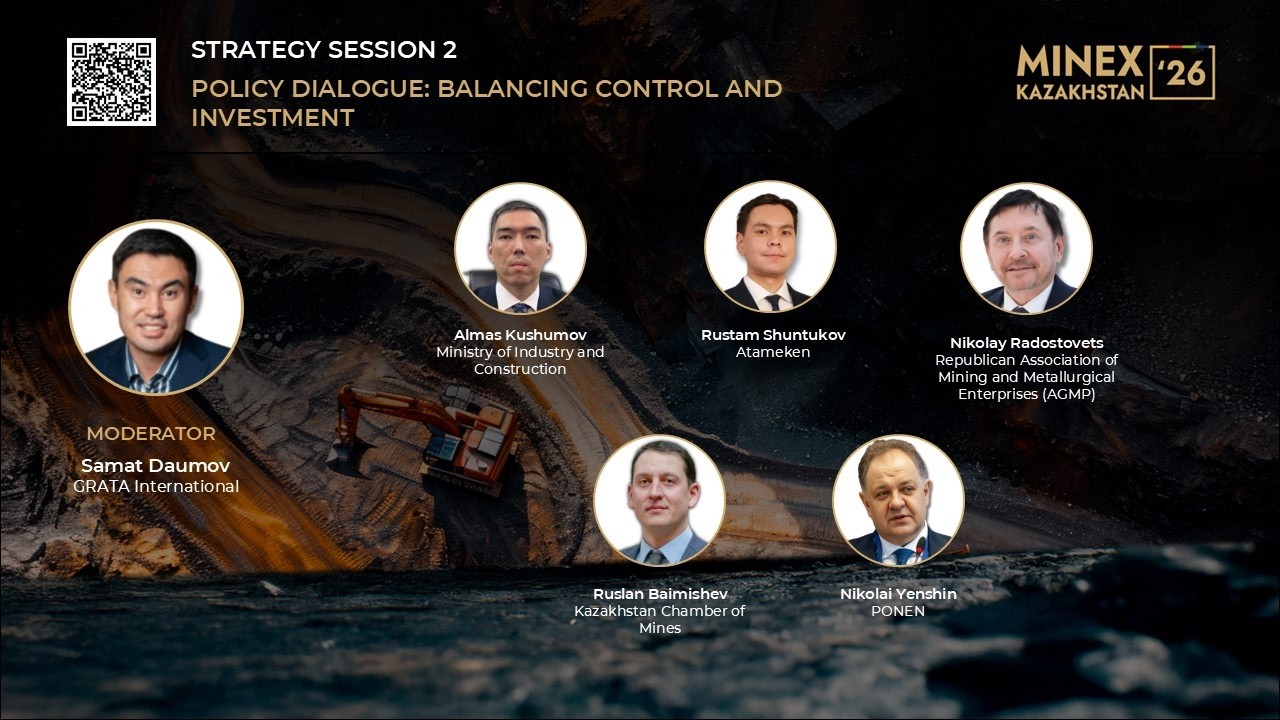
  • MINEX Kazakhstan 2026 – Policy Dialogue: Balancing Control and Investment

    MINEX Kazakhstan 2026 – Policy Dialogue: Balancing Control and Investment

    Strategy session 2 – Policy Dialogue: Balancing Control and Investment

    Format: Panel with high-level officials and Industry ambassadors

    Kazakhstan is navigating a dual-track regulatory shift. While aggressively courting Foreign Direct Investment (FDI) for critical minerals, highlighted by a transition from a Mineral Extraction Tax (MET) to a royalty-based model by 2026–2027-the state is simultaneously tightening its grip on its natural resources. New legislative amendments under the 2026 Tax Code will formalise “strategic investor” statuses and link fiscal terms to strict processing obligations. This session examines how Kazakhstan can reconcile rising resource nationalism with the need for global capital, comparing its strategy against other major mining jurisdictions to find a sustainable path for long-term development.

    Moderator:

    Samat Daumov
    Partner
    GRATA International

    Panellists:

    Almas Kushumov
    Director of the Department of Subsoil Use
    Ministry of Industry and Construction

    Rustam Shuntukov
    Managing Director
    National Chamber of Entrepreneurs of the Republic of Kazakhstan “Atameken”

    Nikolay Radostovets
    Executive Director
    Republican Association of Mining and Metallurgical Enterprises (AGMP)

    Ruslan Baimishev
    President
    Kazakhstan Chamber of Mines

    Nikolai Yenshin
    Deputy Chairman of the Executive Committee
    PONEN

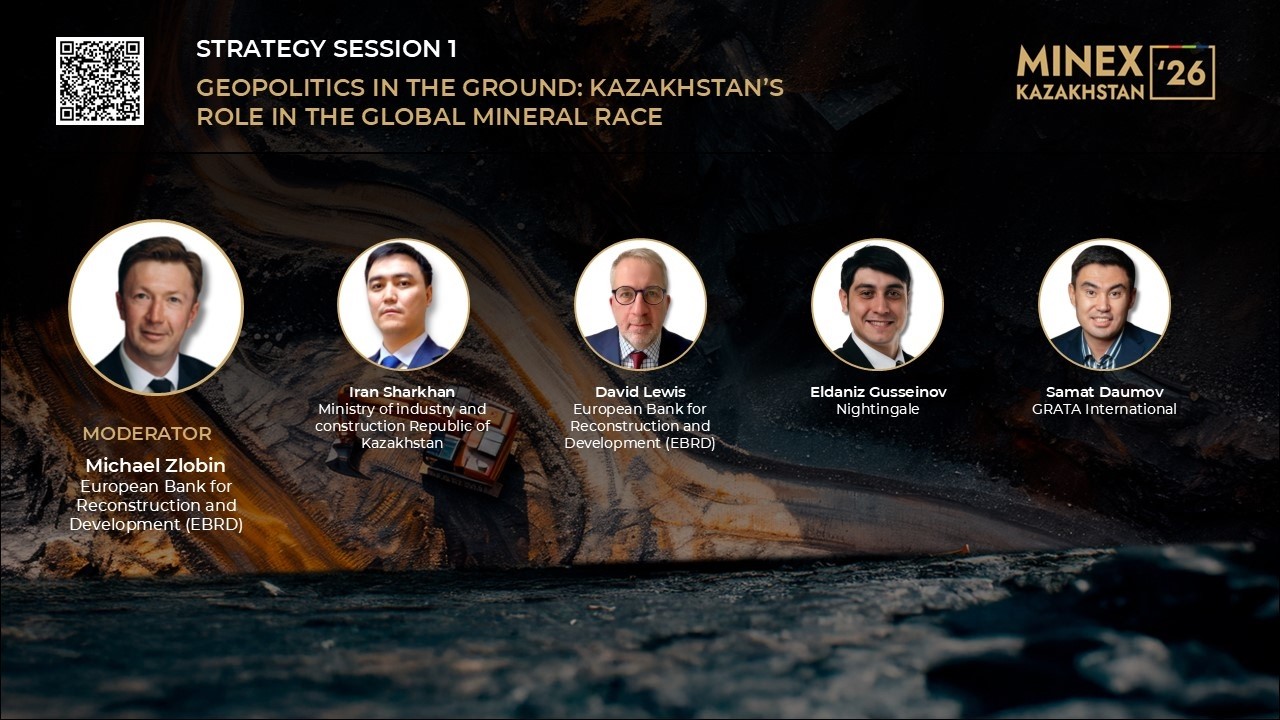
  • MINEX Kazakhstan 2026 – Geopolitics in the Ground: Kazakhstan’s Role in the Global Mineral Race Format: Presentations

    MINEX Kazakhstan 2026 – Geopolitics in the Ground: Kazakhstan’s Role in the Global Mineral Race Format: Presentations

    Mining has moved to the centre of geopolitical competition, as critical minerals underpin clean energy, defence and digital technologies. Kazakhstan sits at a strategic crossroads in this new landscape: a major uranium and copper producer with emerging rare earths potential, positioned between Russia, China and Western markets. This session examines how control over resources, refining and midstream processing is reshaping alliances, trade routes and sanctions. Where Kazakhstan fits in evolving supply chains, how partners seek to diversify away from single suppliers, and what this means for the country’s foreign policy and development path.

    Moderator

    Michael Zlobin
    Head of Equity for Natural Resources
    European Bank for Reconstruction and Development (EBRD)
    Presentations:
    Welcoming Remarks

    Iran Sharkhan
    Vice-Minister
    Ministry of industry and construction Republic of Kazakhstan
    New Trends in the Geopolitics of Critical Minerals: Implications for Central Asia

    David Lewis
    Senior Political Counsellor
    European Bank for Reconstruction and Development
    Critical Minerals, Great Powers, and Kazakhstan’s Multi-Vector Reality

    Eldaniz Gusseinov
    Co-Founder and Head of Research
    Nightingale Int.
    Regulation of the Mining Industry in Central Asia: Investment Lessons from Mongolia, Uzbekistan, and Kyrgyzstan for Kazakhstan

    Samat Daumov
    Partner
    GRATA International


  • Kazakhstan’s Tau-Ken Samruk Utilises Drones for Geological Surveying in Ulytau Region

    Kazakhstan’s Tau-Ken Samruk Utilises Drones for Geological Surveying in Ulytau Region

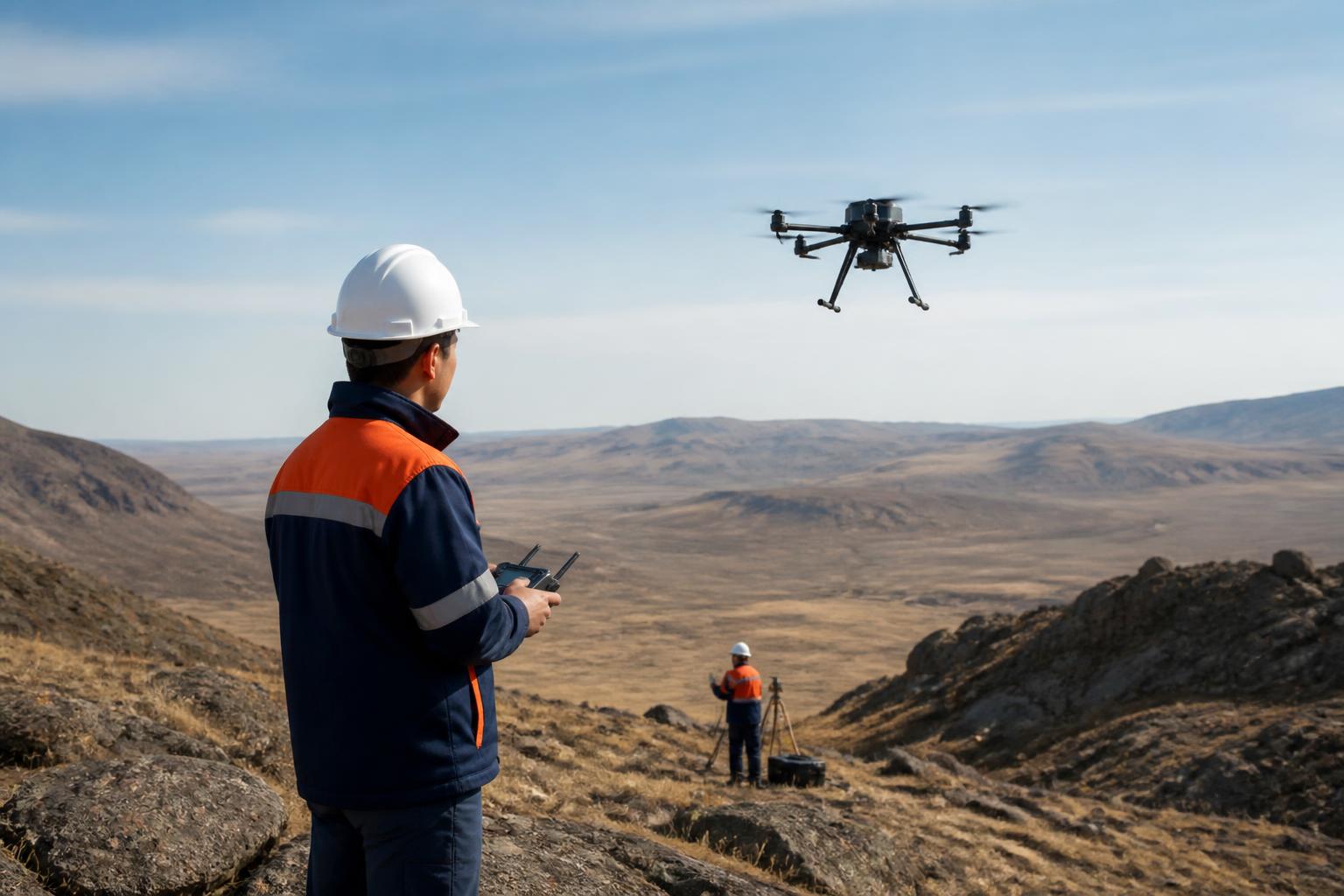
    The national mining company Tau-Ken Samruk has initiated the use of drone technology for state geological exploration in Kazakhstan’s Ulytau region. This project, which is part of a larger initiative by the Ministry of Industry and Infrastructure Development, aims to cover approximately 50,000 square kilometres with airborne geophysical studies. Currently, the company Kazgeologia is conducting these studies, as reported by the press service of the Samruk-Kazyna fund.

    The drones, equipped with geophysical sensors, are capable of conducting simultaneous magnetic, gamma-spectrometric, and gravimetric surveys. The measurement system includes devices from Medusa Radiometrics (Netherlands) for spectrometry, Geometrics (USA) for magnetometry, and iMAR Navigation (Germany) for inertial navigation. The positioning accuracy claimed is within a few centimetres, facilitated by RTK navigation technology combined with lidar systems that adjust flight trajectories, enabling the drones to operate effectively in complex terrain.

    Data processing at low altitudes provides sufficient resolution to detect small geological anomalies that might not be visible through traditional aerial surveys. This project aligns with a broader goal set by the Ministry of Industry and Infrastructure Development of Kazakhstan, which aims to conduct detailed geological mapping of the entire country at a scale of 1:50,000 by the end of 2026. To achieve this, modern technologies, including drone systems, will be integrated into the geological survey processes.

    In 2026, Kazakhstan allocated over 40.7 billion tenge from the government reserve to launch 20 geological survey projects at the 1:50,000 scale. The total area to be explored is around 100,000 square kilometres, with geological exploration expected to conclude by the end of 2028. This initiative is a significant step towards enhancing the country’s geological data and resource management, showcasing the integration of advanced technology in the mining sector.


  • Hongda Group Plans Major Lead and Zinc Project in Kazakhstan

    Hongda Group Plans Major Lead and Zinc Project in Kazakhstan

    Hongda Group is set to embark on a significant investment project in Kazakhstan, which could potentially surpass Kazcink and emerge as the largest producer of lead and zinc in Central Asia. Following a working visit by the First Deputy Prime Minister of Kazakhstan, Nurlan Naliyev, to the Kyzylorda region, attention has been drawn to this ambitious yet relatively low-profile project in the country’s mining and metallurgy sector. The project, valued at $1.3 billion, aims to establish two underground mines and two processing plants with a combined capacity of 8 million tonnes of ore per year, alongside a full-cycle metallurgical plant, creating over 3,000 jobs in the process.

    The project will focus on the Talap and Burabay-Zhalgyzagash deposits, located just 20 kilometres apart. The Burabay-Zhalgyzagash site will be developed through underground mining to a depth of 500 metres. Both deposits are part of the Akuyuk-Maidantal lead-zinc ore district in the Karatau region, which also houses the largest deposit in the area, Shalkiya. Initial exploration activities took place between 1980 and 1985, with detailed surveys conducted from 2010 to 2012. The reserves are classified under category C2, with forecasted resources rated as P1, showing an average content of 2.01% zinc and 1.62% lead, with geologists noting the potential for resource growth at greater depths.

    Investors have indicated that the metallurgical plant will have the capacity to produce 420,000 tonnes of zinc and 220,000 tonnes of lead annually, totalling 640,000 tonnes of metals. In comparison, Kazcink is projected to produce 251,800 tonnes of zinc and 76,700 tonnes of lead by 2025. Upon reaching its designed capacity, the new complex could produce 66.8% more zinc and 2.87 times more lead than Kazcink. If the project proceeds as planned, it stands to become the largest lead and zinc producer in Central Asia. Notably, the Chinese investors have already invested approximately 9 billion tenge in geological exploration, operating 15 drilling rigs simultaneously. While official reserves have yet to be disclosed, the scale of drilling and the proposed processing capacity suggest a substantial resource base. An official groundbreaking ceremony is expected later this year, reflecting a commendable approach where significant funds are first allocated for geological exploration to confirm resource viability before committing to the construction of a large-scale mining and metallurgical complex.


  • Uzbekistan and KAIST Explore Collaborative Opportunities in Metallurgy and Education

    Uzbekistan and KAIST Explore Collaborative Opportunities in Metallurgy and Education

    On 31 July 2026, F. Khamidova, the First Deputy Minister of Mining Industry and Geology of Uzbekistan, met with a delegation from the Korea Advanced Institute of Science and Technology (KAIST), led by Professor Shin Byungha, the Head of the Department of Materials Science and Engineering. The meeting focused on the potential for expanding scientific, technological, and academic cooperation between Uzbekistan and South Korea, particularly in the metallurgical sector.

    The discussions highlighted the importance of implementing joint projects aimed at enhancing mineral processing technologies and fostering collaborative research initiatives. Both parties recognised the need for innovation in the mining and metallurgy sectors, which are crucial for Uzbekistan’s economic development. The meeting also underscored the significance of academic exchange programmes and the training of highly qualified specialists, which are essential for building a skilled workforce capable of advancing the industry.

    As a result of the meeting, Uzbekistan and KAIST agreed to continue developing joint initiatives and prepare proposals to further strengthen their bilateral cooperation in science, education, and technology. This partnership is expected to contribute significantly to the advancement of Uzbekistan’s mining industry and enhance the capabilities of its educational institutions.


  • Kazakhstan Maintains Position Among Top Copper Producers with 710,000 Tonnes in 2025

    Kazakhstan Maintains Position Among Top Copper Producers with 710,000 Tonnes in 2025

    Kazakhstan’s copper industry has reaffirmed its status as a significant player in the global market, producing 710,000 tonnes of copper in 2025. This output has secured the country a place in the top ten copper-producing nations, ranking ninth alongside Indonesia, which reported similar production figures. The data, sourced from the Energy Institute and the United States Geological Survey, highlights Kazakhstan’s continued relevance in the competitive landscape of copper mining.

    The global copper production landscape is led by Chile, which produced a staggering 5.3 million tonnes in the past year. The Democratic Republic of Congo follows in second place with 3.2 million tonnes, while Peru rounds out the top three with 2.7 million tonnes. China and Russia occupy the fourth and fifth positions, respectively, with outputs of 1.8 million tonnes and 1.3 million tonnes.

    In addition to Kazakhstan and Indonesia, other notable producers include the United States, which achieved a production level of 1 million tonnes, Zambia at 740,000 tonnes, and Australia with 730,000 tonnes. Collectively, the top ten copper-producing countries accounted for a total of 18.39 million tonnes of copper, contributing significantly to the estimated global production of over 23 million tonnes, as reported by the Energy Institute.

    Kazakhstan’s performance in copper production not only underscores its mining capabilities but also reflects the country’s strategic importance in the global supply chain for this essential metal, which is critical for various industries, including electronics and renewable energy. As demand for copper continues to rise, Kazakhstan’s position in the market may further strengthen, providing opportunities for investment and development in its mining sector.