Tag: Workplace Safety

  • Tragedy in Ukrainian Mine: Two Miners Killed in Slurry Breach

    Tragedy in Ukrainian Mine: Two Miners Killed in Slurry Breach

    Dnipropetrovsk, Ukraine – A devastating slurry breach in a coal mine in the Dnipropetrovsk region has resulted in the tragic loss of two miners’ lives. The rescue operation, which spanned over 14 days at a depth of 410 meters below the surface, concluded with the recovery of the deceased and a thorough assessment of the disaster site.

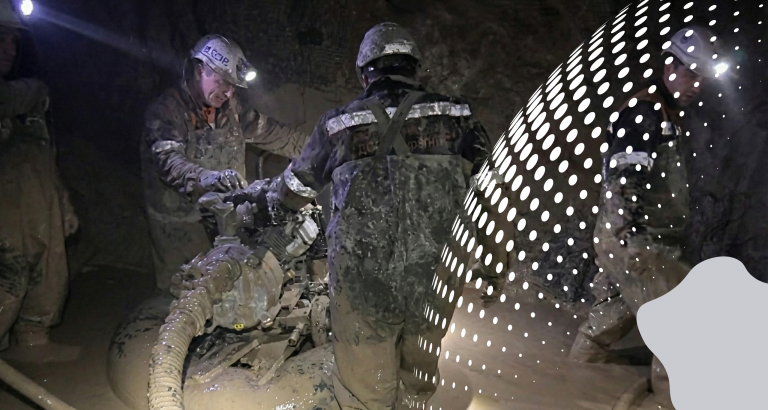
    According to the State Emergency Service, rescuers faced immense challenges as they battled a massive volume of slurry – a mixture of water and coal dust – following the breach. The team’s efforts were crucial in not only eliminating the immediate consequences of the accident but also locating the bodies of the two miners who were at the epicenter of the rupture. The search and evacuation operation was conducted under extraordinarily difficult conditions.

    “The operation was complicated by the large volume of slurry,” stated the State Emergency Service. “Employees of the plant, miners, and mine rescuers had to perform a colossal amount of work: pumping water from flooded horizons, handling and hauling away the slurry, searching for and evacuating the bodies of the deceased.”

    Investigators are currently working to determine the precise cause of the slurry breach and will focus on bolstering production safety protocols at the mine.

  • Kazakhmys Overhauls Safety Protocol Following Jomart Mine Tragedy

    Kazakhmys Overhauls Safety Protocol Following Jomart Mine Tragedy

    Kazakhstan’s mining and metallurgical giant Kazakhmys is implementing sweeping safety reforms following the February 2025 methane explosion at its Zhomart copper mine, which claimed seven lives. The tragedy exposed systemic risks in the sector, long regarded as one of the most hazardous in the country, and prompted regulators to issue 45 safety directives, over half of which have already been addressed.

    The company has since launched a comprehensive modernisation programme under its Digital Kazakhmys initiative. Key measures include real-time GPS tracking of all underground staff, predictive gas monitoring via advanced sensors integrated into the DMMS digital platform, and the installation of an in-house gas analysis laboratory. Additional safeguards—such as automatic equipment shutdowns when methane thresholds are exceeded—aim to reduce reliance on human intervention.

    Kazakhmys is also working with scientific institutes to study gas emissions in copper ore deposits, a relatively new phenomenon for the industry, with the aim of shaping updated mining regulations by 2026. The Zhomart mine has effectively become a testing ground for technologies that could transform Kazakhstan’s mining sector from one of the deadliest into a more predictable and manageable industry.

  • Kazakhstan Takes Measures to Enhance Workplace Safety and Reduce Work-Related Injuries

    Kazakhstan Takes Measures to Enhance Workplace Safety and Reduce Work-Related Injuries

    Kazakhstan witnesses over 1400 workplace accidents annually, with more than 200 resulting in fatalities. Among the various sectors of the Kazakhstani economy, the mining and metallurgical complex reports the highest number of casualties at 21.3%, followed by the construction industry at 10%, according to data from the Ministry of Labor and Social Protection cited by inbusiness.kz.

    More than 519,000 workers are employed in hazardous working conditions, with every third worker (37%) exposed to elevated levels of noise and vibration, every fourth worker (25%) operating in areas with increased gas and dust concentrations, and every eighth worker (13%) enduring unfavorable temperature conditions. Additionally, over 107,000 individuals (21%) are engaged in strenuous physical labor.

    In 2023, based on assessment results, 697,000 workers received various compensations for working in hazardous conditions, with employers allocating 255 billion tenge, a 23% increase from the previous year.

    Over the past five years, governmental and employer-initiated measures have contributed to a reduction in the rate of occupational injuries (frequency rate per 1,000 workers) from 0.23 to 0.21.

    Efforts towards ensuring healthy and safe working conditions in Kazakhstan continue with a comprehensive approach. In 2023, law enforcement agencies received 1055 reports on workplace accidents, resulting in 149 criminal cases being initiated.

    To evaluate actual workplace conditions, over 10,000 industrial facilities underwent assessment, while 3214 enterprises across the country implemented safety and labor protection standards to prevent violations.

    Since 2019, Kazakhstan has actively promoted the Vision Zero Concept, aiming for zero accidents. Currently, 536 national enterprises have joined this initiative, with 258 Kazakhstani enterprises adopting a vertical control model to ensure safety standards in subcontracting organizations within the construction sector.

    To further enhance social protection mechanisms for workers employed in hazardous conditions, special social payments were introduced from January 1, 2024, following the president’s directive. Nearly 6,000 workers have transitioned out of hazardous working environments and are receiving these special social payments.

    The Ministry of Labor and Social Protection of the Population of Kazakhstan aims to significantly reduce the number of hazardous workplaces and decrease the level of occupational injuries. Last year, the government approved the Safe Labor Concept until 2030, outlining plans for modernizing the national occupational safety management system, incentivizing measures to reduce professional risks, advancing professional competencies and scientific potential in labor protection, and improving the effectiveness of control and monitoring in the field of labor protection.