Tag: value-added processing

  • MINEX Kazakhstan 2026 Marks Turning Point for Mining Sector as Forum Calls for Legislative Overhaul and Proactive Investor Engagement

    MINEX Kazakhstan 2026 Marks Turning Point for Mining Sector as Forum Calls for Legislative Overhaul and Proactive Investor Engagement

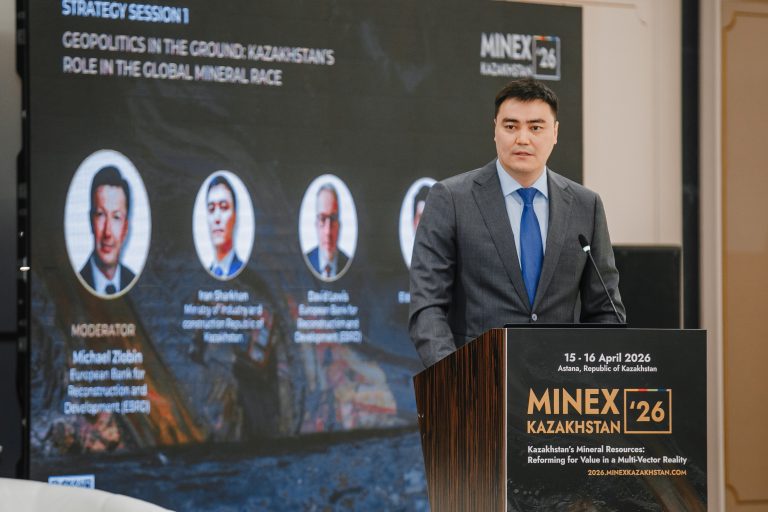
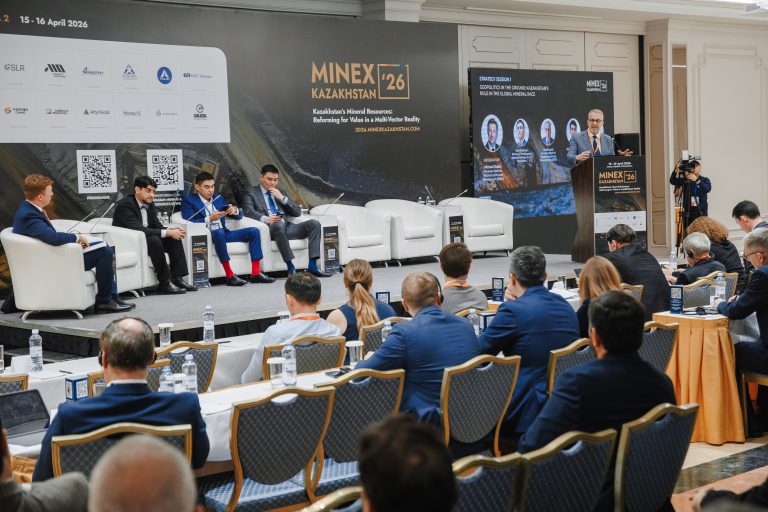
    Kazakhstan’s mining sector has reached a turning point, with the era of easy extraction behind it and a new strategic imperative to build domestic value chains, attract long-term investors and align national legislation with international best practice — that was the overarching message from the XVI MINEX Kazakhstan 2026 forum in Astana, held under the motto “Mineral Resources of Kazakhstan: Reforming for Value in a Multi-Vector Reality.”

    The forum brought together more than 500 representatives of government bodies, mining company executives, financiers, scientists and technology suppliers from over 30 countries. Opening the event, MINEX executive chairman Artur Polyakov declared that the global mining industry had entered a new era in which the focus is shifting from rapid extraction to the strategic use of key minerals as instruments of economic competitiveness, energy security and international influence.

    Vice minister of industry and construction Iran Sharkhan reaffirmed the scale of Kazakhstan’s geological endowment — approximately 10,000 registered deposits, with 17 new objects including Kok-Zhon, Altyn-Shoko and Samombet placed on the state register in 2025 alone — and highlighted the 2025 amendments to the Subsoil and Subsoil Use Code as a significant step toward simplified administrative procedures, investment attraction and process digitalisation.

    However, the forum also surfaced persistent structural problems. Nikolai Radostovets, executive director of the Association of Mining and Metallurgical Enterprises, acknowledged the importance of the 2018 Subsoil Code while noting that its adoption failed to fully synchronise provisions with the Land, Water, Environmental and Tax codes — a gap that continues to generate administrative barriers for exploration and production projects. “Kazakhstan must not only maintain investment attractiveness but also bring national legislation in line with the best international practices,” he said, citing growing global interest in critical and rare earth metals as a further reason for urgency.

    Geopolitical forecasting analyst Eldaniz Huseynov, founder of Nightingale Ind., argued that Kazakhstan should move beyond passive openness to investment toward actively offering turnkey projects to international partners. He identified molybdenum, zinc, cobalt, uranium and tungsten as priority resources for domestic processing, and said competition between investors from China and Europe could itself serve as a lever to improve cooperation terms. “Kazakhstan must build strategic partnerships and confidently offer its own projects to the international community,” he said, adding that investor engagement should encompass technology development, domestic supply chain integration, job creation and infrastructure commitments — not merely raw material exports.

    The forum concluded that Kazakhstan must simultaneously advance extraction infrastructure, refine its legislative framework, improve the investment climate and consolidate its position as a reliable partner in global critical mineral supply chains.

  • Kazakhstan Pivots From Raw Materials to Value-Added Economy With Royalty Reform and Strategic Investor Status at MINEX 2026

    Kazakhstan Pivots From Raw Materials to Value-Added Economy With Royalty Reform and Strategic Investor Status at MINEX 2026

    Kazakhstan is accelerating its transition from a raw materials export model toward a higher value-added economy, with deep in-country processing, legislative reform and the attraction of long-term strategic investors now at the centre of its mining sector strategy, according to the country’s vice minister of industry and construction.

    Speaking at the MINEX Kazakhstan 2026 forum in Astana, Iran Sharkhan outlined the government’s core priorities for the subsoil use sector. “Kazakhstan is moving from a raw materials model to a value-added economy,” he said. “The priority is deep processing of raw materials within the country, technology development and attracting strategic investors oriented toward long-term impact.”

    Central to the reform agenda are two significant legislative changes introduced through 2025 amendments to the Subsoil and Subsoil Use Code. The first is a shift from a mineral extraction tax to a royalty-based system, which the ministry says will improve sector transparency and make Kazakhstan more attractive for long-term investment, particularly in the deep processing segment. The second is the formal introduction of a “strategic investor” status, granting preferential conditions to investors who commit to processing raw materials domestically — creating a direct incentive for value-added industrial development over simple extraction and export.

    On the geological front, Kazakhstan’s mineral resource base encompasses approximately 10,000 registered deposits. In 2025, seventeen deposits were placed on the state register for the first time, including Kok-Zhon, Altyn-Shoko and Samombet. Survey coverage has now reached 2.038 million square kilometres against a target of 2.2 million square kilometres by 2026, with a transition to more detailed geological mapping scales planned to improve the identification of prospective areas. In 2026, auctions for subsoil use rights across 50 deposits are planned for both exploration and hard mineral extraction. A modern laboratory complex is also under development in Astana on the basis of the National Geological Survey, with commissioning scheduled for 2028.

    MINEX Kazakhstan 2026, running from 14 to 16 April in Astana, has brought together more than 500 participants, over 100 speakers, 40 exhibitors and more than 1,000 visitors from 33 countries, with industry reform, processing development and investment attractiveness as its central themes.

  • TMK Expands Industrial Cooperation with Kazakhstan’s Ulba Metallurgical Plant

    TMK Expands Industrial Cooperation with Kazakhstan’s Ulba Metallurgical Plant

    TMK has held high-level talks with representatives of Ulba Metallurgical Plant to expand industrial and technological cooperation in Central Asia. The meeting, which took place at TMK’s head office, focused on strengthening bilateral partnerships and exploring opportunities for joint projects in both Uzbekistan and Kazakhstan.

    Discussions centred on advancing deeper processing of critical raw materials, increasing production of high value-added products, and enhancing the integration of regional industrial value chains. Both sides emphasized the strategic importance of developing downstream capabilities in critical minerals to improve competitiveness and reinforce regional supply chain resilience.

    Ulba Metallurgical Plant is a key industrial enterprise in Kazakhstan, specializing in the production of uranium, beryllium, tantalum and niobium, as well as finished products based on these metals. The potential collaboration is expected to contribute to broader industrial development across Central Asia.