Tag: United States

  • Trump Team Pushes for U.S. Access to Major Tungsten Deposits in Kazakhstan

    Trump Team Pushes for U.S. Access to Major Tungsten Deposits in Kazakhstan

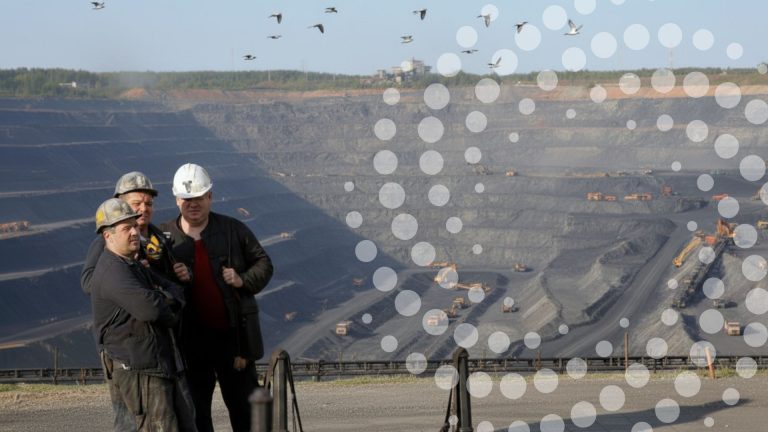
    According to Bloomberg, former U.S. President Donald Trump’s team is seeking to secure mining rights in Kazakhstan for Cove Capital, an American company aiming to develop some of the world’s largest untapped tungsten deposits. The negotiations involve the Kazakh-American joint venture Cove Kaz Capital and Kazakhstan’s sovereign wealth fund Samruk-Kazyna, with U.S. Commerce Secretary Howard Lutnick reportedly taking part in the talks.

    The project may receive financial backing from the U.S. International Development Finance Corporation (DFC) and the Export-Import Bank of the United States (Exim Bank). Sources indicate that Washington is particularly interested in developing the Verkhne-Kairaktinskoye and Severo-Katparskoye deposits located in Kazakhstan’s Karaganda region—assets valued at several billion dollars.

    Cove Kaz Capital has been in discussions with Samruk-Kazyna for several months, Bloomberg reports. However, the American firm faces competition from a Chinese state-owned company that has offered a price exceeding the market value for the same assets.

    The United States classifies tungsten as a critical mineral essential for national security and industrial applications. Under the proposed plan, Cove Kaz Capital and Samruk-Kazyna would jointly extract the ore in Kazakhstan, process it locally, and then export the finished metal to the U.S. for use in both defense and civilian industries. While Kazakhstan would receive a share of the joint venture’s profits, Cove Kaz Capital is expected to remain the main beneficiary.

  • U.S.–China Trade Escalation Puts Spotlight on Kazakhstan’s Rare Earth Potential

    U.S.–China Trade Escalation Puts Spotlight on Kazakhstan’s Rare Earth Potential

    Global markets endured one of their most volatile days since the early stages of the U.S.–China trade war, after China expanded export controls on rare earth elements and U.S. President Donald J. Trump announced sweeping new tariffs and export restrictions in response.

    In a series of social media posts, Trump first suggested there was “no reason” to meet Chinese President Xi Jinping at the upcoming APEC Summit, before declaring that China would impose “large-scale export controls” on nearly all its products starting November 1. The White House later confirmed that the U.S. would respond with 100% tariffs on Chinese imports and new export restrictions on critical software “on or before November 1.”

    The escalation has injected new urgency into the global scramble for rare-earth supply chains, pushing attention beyond East Asia to Central Asia, particularly Kazakhstan — one of the few countries outside China with verified rare-earth reserves and a functioning mining sector.

    Kazakhstan’s Rising Role in Supply Diversification
    Kazakhstan’s mineral wealth is rooted in Soviet-era geological mapping, with modern surveys confirming vast deposits of neodymium, praseodymium, dysprosium, terbium, and samarium — all essential for electric vehicles, wind turbines, and advanced defense systems. The Zhana Kazakhstan deposit in the Karagandy region could become one of the largest rare-earth reserves globally, pending validation of resource estimates.

    According to U.S. defense classifications, these are “critical defense materials.” Both the Pentagon and the Defense Logistics Agency have begun building stockpiles and identifying non-Chinese refining partners, but the challenge lies not in geology — Kazakhstan’s resources are proven — but in processing and commercialization.

    Existing facilities such as the Stepnogorsk Chemical Plant and Ulba Metallurgical Plant could be adapted for rare-earth processing, while the SARECO joint venture has already demonstrated the recovery of magnet-critical elements from uranium residues. The Kuirektykol deposit, rich in neodymium and dysprosium, further strengthens Kazakhstan’s feedstock base. However, infrastructure remains tailored to uranium and base metals, not the precise requirements of rare-earth refining.

    Legal Reforms and Foreign Partnerships
    Kazakhstan’s Unified Code on Subsoil Use (2018) has made the country more attractive to Western investors by clarifying ownership and capital entry rules. Since then, over $40 billion in new foreign mining investment has entered the sector. European and Japanese firms are now exploring partnerships in refining, metallurgy, and supply-chain development.

    The government’s focus is shifting from raw extraction toward value-added production, aligning with global efforts to reduce dependence on Chinese processing. Still, sustained investment will depend on policy consistency, financing mechanisms, and export infrastructure.

    Strategic Context: Central Asia’s Balancing Act
    Kazakhstan’s push to develop its rare-earth potential reflects a regional strategy to manage interdependence with China while courting Western partnerships. While China remains a dominant trading partner, Kazakhstan’s access to the Caspian Sea and international capital markets gives it greater flexibility than most of its neighbors.

    Recent trade volatility and increased Chinese port fees have added pressure to diversify trade routes, not by abandoning China, but by building redundant corridors and risk-mitigated financing.

    The United States, meanwhile, views Kazakhstan not as a substitute for China but as a strategic component in a diversified supply network. The U.S. International Development Finance Corporation (DFC) is assessing refining feasibility studies under strict governance and environmental standards.

    At the C5+1 meeting in Dushanbe on September 4, U.S. and Central Asian officials discussed rare-earth cooperation as part of broader economic diversification efforts — signaling a shift from diplomatic rhetoric to working-level engagement.

    Outlook
    As export controls and tariffs deepen supply chain instability, Kazakhstan is emerging as a key analytical focus for policymakers and investors seeking long-term alternatives. Its rare-earth deposits and industrial base give it potential leverage in the global realignment of strategic materials — but realizing that potential will depend on its ability to scale processing, secure investment, and build reliable transport routes.

    Rather than serving as a replacement for China, Kazakhstan illustrates how mid-sized economies are positioning themselves as essential nodes in a fragmented, multipolar supply chain system.

  • Turkey, US in Talks to Develop Rare Earth Deposits in Western Anatolia

    Turkey, US in Talks to Develop Rare Earth Deposits in Western Anatolia

    Turkey is in talks with the United States to jointly develop rare earth reserves in western Anatolia, signaling a potential pivot toward its NATO ally after similar negotiations with China and Russia stalled over disagreements on technology transfer and refining rights.

    According to people familiar with the discussions, Ankara and Washington are exploring a partnership to develop the Beylikova deposit, located near Eskisehir in central Anatolia. The site is believed to contain cerium, praseodymium, and neodymium—key elements used in magnets, electronics, and defense applications—though the exact quality of the reserves remains under assessment.

    The discussions come as the two countries seek to deepen cooperation in energy and defense, following a meeting between Presidents Donald Trump and Recep Tayyip Erdogan at the White House last month. If finalized, a joint refining agreement could replace a provisional deal with China, which faltered after Beijing insisted on processing the materials in China rather than transferring refining technology to Turkey.

    Talks with Russia also failed to produce results, sources said. Turkey’s Energy and Natural Resources Ministry declined to comment.

    Ankara plans to construct a local refinery in Beylikova, where ore samples have shown a rare earth oxide content exceeding 1% by weight, indicating commercial viability. Turkey is also engaging with Canada and Switzerland for potential cooperation on feasibility studies to advance the project.

    To attract investors and ensure transparency, the government intends to apply to the Australian Institute of Geoscientists for JORC Code certification, which establishes international standards for reporting exploration results and resource estimates.

    The move aligns with broader Western efforts to reduce reliance on China, which currently dominates more than 80% of global rare earth production and processing. Both the US and EU have intensified efforts to secure alternative sources of critical minerals essential for defense, renewable energy, and high-tech manufacturing.

    Turkey, which has long balanced relations between the West and China, joined a US-EU-led initiative in 2024 to diversify critical mineral supply chains. However, it has also attracted Chinese investment in electric vehicle production and has been offered partner-country status in the BRICS bloc.

    Ankara continues to emphasize technology transfer and local value creation in its foreign partnerships, including existing cooperation with Boeing and Lockheed Martin.

  • Bulgaria and University of North Dakota to Research Rare Earth Metals

    Bulgaria and University of North Dakota to Research Rare Earth Metals

    The Bulgarian Energy Holding has signed a Memorandum of Understanding (MoU) with the University of North Dakota, USA, to conduct joint research on rare earth metals in Bulgaria. The agreement was formalized during Prime Minister Rosen Zhelyazkov’s visit to the United States for the 80th session of the UN General Assembly.

    “Today’s signing is extremely important for the development not only of the Bulgarian mining industry, but also for the technological progress of Bulgaria and the USA,” said Zhelyazkov. He emphasized that by leveraging the scientific potential of the University of North Dakota, Bulgaria can unlock new opportunities offered by its natural resources.

    The government press service noted that the collaboration marks a significant step in strengthening ties between the two countries in science, mining, and technology.

  • US Delegation Explores Ukrainian Titanium and Zirconium Mines Under New Minerals Pact

    US Delegation Explores Ukrainian Titanium and Zirconium Mines Under New Minerals Pact

    A United States delegation has visited central Ukraine to assess titanium, zirconium, and hafnium mining opportunities, marking the first steps in a new minerals agreement between Kyiv and Washington.

    Representatives from the US International Development Finance Corporation (DFC), accompanied by Ukraine’s Minister of Economy, Environment and Agriculture Oleksiy Sobolev, toured the Birzulivskiy mining and processing complex and the Likarivske deposit in the Kirovohrad region. Both sites are operated by Ukrainian titanium producer Velta, which has mined in the area for more than 14 years.

    Velta’s expansion plans include producing zircon and hafnium—metals essential to the nuclear industry—in addition to titanium, while also generating by-products such as clay and sand for construction. “Our ability to provide an alternative source of critical raw materials outside of China is important to our American partners, while our additional products will be essential for the reconstruction of Ukraine,” said Velta director Andriy Brodsky.

    Titanium is one of the 34 critical raw materials on the European Union’s list, with applications across defense, aerospace, and technology sectors. Its global market value is forecast to exceed $53 billion by 2034, with demand rising amid supply disruptions caused by Russia’s war in Ukraine and Western sanctions. Before the conflict, Russia supplied nearly one-third of US titanium by-products, a gap Washington now seeks to fill through new partnerships.

    The April 30 minerals agreement grants the US preferential access to Ukrainian investment projects spanning natural resources, infrastructure, and defense programs. The site visits by the DFC and Ukrainian officials mark an early move to accelerate joint ventures under this framework.

  • Ukraine and US Advance Minerals Deal with Site Visits for Investment Projects

    Ukraine and US Advance Minerals Deal with Site Visits for Investment Projects

    Ukrainian officials and representatives from the US International Development Finance Corporation have begun site visits to identify investment opportunities under a bilateral minerals deal signed in April, Economy Minister Oleksiy Sobolev confirmed on Saturday.

    The agreement, strongly promoted by US President Donald Trump, grants the United States preferential access to new Ukrainian mineral projects in return for investment. Kyiv views the deal as a mechanism to attract US financing for economic recovery and infrastructure rebuilding, while also shoring up continued US defence support amid the ongoing war with Russia.

    Sobolev told a conference in Kyiv, attended by Ukrainian, US, and European officials, that the government aimed to identify three pilot investment projects within the next 18 months. “Right now, there are site visits … from the US, and we are going to the regions tomorrow with them to look for an investment pipeline,” he said.

    Under the terms of the agreement, half of Ukraine’s revenues from new mineral extraction will be directed into a joint investment fund, with profits shared between Kyiv and Washington. Beyond minerals, the fund is also expected to invest in Ukraine’s energy sector and infrastructure.

    Ukraine has reserves of 22 of the 34 minerals deemed critical by the European Union for industries such as defence, green energy, and high-tech manufacturing. These include ferro alloys for steelmaking, non-ferrous metals for construction, as well as rare earths and precious metals.

    The initiative underscores Trump’s view that the US should gain direct economic benefits in exchange for its role as Ukraine’s largest military donor since Russia’s full-scale invasion in 2022.

  • US-Ukraine Investment Agreement Faces Long Road to Mining and Energy Sector Boost

    US-Ukraine Investment Agreement Faces Long Road to Mining and Energy Sector Boost

    The recently ratified investment agreement between Ukraine and the United States, championed by US President Donald Trump, is not anticipated to deliver tangible results for at least a decade, experts told the Financial Times.

    The agreement, approved by Ukraine’s parliament on May 8, outlines the establishment of a joint “reconstruction investment fund” to support future mining and energy projects. Despite optimism, industry leaders warn that substantial challenges lie ahead, including Russia’s ongoing war on Ukraine, heavily damaged infrastructure, restricted Soviet-era geological data, corruption risks, and unexploded ordnance contamination.

    According to Eric Rasmussen, former head of natural resources at the European Bank for Reconstruction and Development, “It could be 10-15 years — that’s the sort of timeline we talk about.” Peter Bryant of the advisory group Clareo echoed these sentiments, stating that the deal “does little to de-risk the supply chain in the next 10 years.”

    Ukraine boasts significant natural resources, including iron ore, coal, lithium, graphite, and titanium-bearing ores. It is also Europe’s third-largest gas producer. While oil and gas fields may be quicker to develop, mining projects are expected to face lengthy geological exploration before reaching feasibility.

    Ukrainian Minister Yulia Svyrydenko mentioned that the reconstruction fund would be operational “within a few weeks,” although profits are expected to be reinvested for the first decade.

    US-backed TechMet, which aims to secure Ukrainian lithium, called the agreement promising but noted the long-term commitment required. DTEK, Ukraine’s largest private energy firm, expressed optimism, signaling that Ukraine was “open for business.”

    However, not all are convinced. One mining executive remarked skeptically, “This romantic idea that there’s lakes of lithium to be tapped is just not the case.”

  • Ukraine Ratifies Agreement with the US for Access to Natural Resources

    Ukraine Ratifies Agreement with the US for Access to Natural Resources

    Ukraine’s parliament has ratified a landmark agreement with the United States, paving the way for enhanced American access to the country’s natural resources. This move is seen as part of President Volodymyr Zelenskiy’s broader strategy to improve diplomatic and economic ties with former US President Donald Trump.

    The agreement, reached after prolonged negotiations, saw Washington abandon its demand for the repayment of billions of dollars in aid provided to Kyiv since the onset of Russia’s invasion over three years ago. In a decisive vote on Thursday, 338 Ukrainian lawmakers endorsed the ratification, signaling strong political support for the initiative.

    The deal grants the US privileged access to investment opportunities in Ukraine’s resource sectors, including aluminum, graphite, oil, natural gas, and other strategic deposits. This is viewed as a critical step to secure US favor as Trump advocates for an end to the conflict that would potentially benefit Moscow.

    Additionally, the agreement outlines the possibility of the US using future military aid as contributions to a joint investment fund, further solidifying economic cooperation between the two nations. As Russia maintains pressure along a thousand-kilometer frontline, Ukraine appears determined to leverage its natural assets to bolster international alliances and economic resilience.

  • Ukraine and U.S. Seal Controversial Minerals Deal After Tense Talks

    Ukraine and U.S. Seal Controversial Minerals Deal After Tense Talks

    Ukraine and the United States signed a landmark minerals and profit-sharing agreement on April 30 in Washington, marking the end of months of turbulent negotiations and the beginning of a new phase of economic cooperation focused on reconstruction.

    The agreement gives the U.S. preferential access to future Ukrainian mineral deals and establishes a joint investment fund for rebuilding Ukraine’s war-torn infrastructure. It also secures Ukraine’s full sovereignty over its natural resources, following President Volodymyr Zelensky’s refusal to sign earlier versions that would have required Ukraine to repay past military aid or relinquish control of key assets.

    “This is a win for Ukraine,” said Prime Minister Denys Shmyhal. “We will attract major investments, secure growth, and remain in control of our critical minerals.”

    The U.S. had previously pushed for terms granting it up to 50% of Ukraine’s revenues from rare earths, oil, and gas, and even a stake in infrastructure like ports. President Donald Trump reportedly demanded repayment of $300 billion in aid and up to $500 billion in future mineral revenue — conditions Kyiv firmly rejected.

    Only after Zelensky sent Trump a letter expressing willingness to negotiate and praising U.S. support did tensions ease. “Nobody wants peace more than the Ukrainians,” Trump quoted Zelensky as writing, using the letter to bolster support for the deal during a speech to Congress.

    The final agreement establishes a joint fund where both nations will equally manage proceeds from newly issued licenses for critical minerals. For the first ten years, profits will be reinvested into Ukraine’s infrastructure and economic development. Past revenues and aid are excluded, and there are no debt obligations.

    Ukraine’s mineral wealth includes Europe’s largest lithium deposits, 20% of global graphite resources, and significant reserves of rare earth elements vital to defense and green technologies. But much of this wealth lies in or near Russian-occupied territories, making future exploitation a complex and risky endeavor.

    Despite securing equal partnership terms and full resource control, the deal offers no U.S. security guarantees. Critics say the agreement may remain symbolic if the war drags on.

    Still, U.S. Treasury Secretary Scott Bessent called the agreement a signal to Russia of Washington’s enduring support for a “free, sovereign, and prosperous Ukraine.”

  • Ukraine and U.S. Sign Landmark Minerals Agreement to Launch Joint Reconstruction Fund

    Ukraine and U.S. Sign Landmark Minerals Agreement to Launch Joint Reconstruction Fund

    On April 30, Ukraine and the United States signed a pivotal minerals agreement establishing a joint “Reconstruction Investment Fund” aimed at supporting Ukraine’s economic recovery and long-term development. The deal was signed in Washington by Ukraine’s First Deputy Prime Minister Yulia Svyrydenko and U.S. Treasury Secretary Scott Bessent, following months of complex negotiations.

    “This document ensures success for both our countries,” said Svyrydenko, emphasizing that the fund marks a strategic investment partnership without compromising Ukraine’s sovereignty over its subsoil, infrastructure, or state-owned enterprises.

    The agreement creates a jointly managed fund to which both countries will contribute, using proceeds from newly issued licenses for critical minerals and oil and gas projects. It explicitly excludes revenue from existing projects and does not impose any debt obligations. Additionally, neither Ukraine nor the U.S. will tax the fund’s income or contributions.

    Bessent highlighted the deal as a sign of lasting U.S. support, stating, “This agreement signals clearly to Russia that the Trump Administration is committed to a peace process centered on a free, sovereign, and prosperous Ukraine.”

    While the deal offers no direct security guarantees, it outlines a long-term strategic alignment and commits the U.S. to help attract further investment and technological support for Ukraine. Importantly, it includes safeguards to prevent individuals or entities linked to Russia’s war machine from benefiting.

    Ukrainian Prime Minister Denys Shmyhal praised the agreement, noting it would help drive reconstruction, economic growth, and technology transfer. He confirmed that the deal must now be ratified by Ukraine’s parliament, the Verkhovna Rada.

    Despite last-minute tensions reported by the Financial Times, the agreement was finalized, setting the stage for a new phase of U.S.-Ukrainian economic cooperation.