Tag: Umicore

  • Umicore Advocates for a Comprehensive EU Critical Raw Materials Centre

    Umicore Advocates for a Comprehensive EU Critical Raw Materials Centre

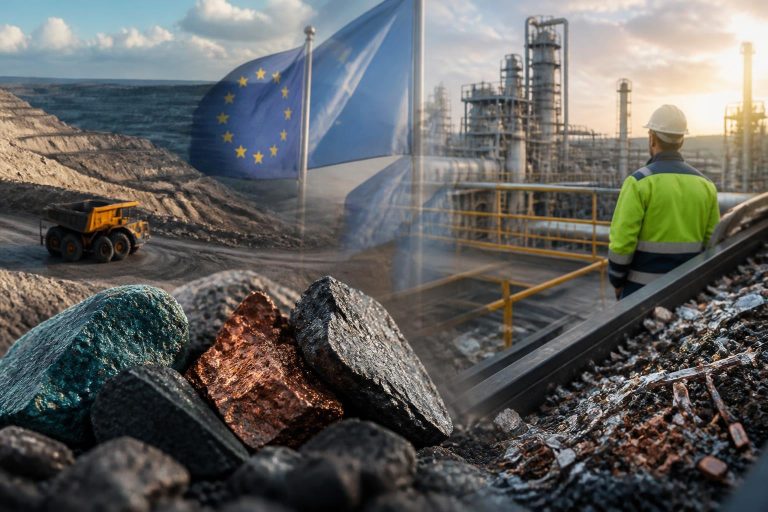
    Umicore has submitted a position paper to the European Commission, advocating for the establishment of a Critical Raw Materials (CRM) Centre in Europe that transcends mere joint purchasing and stockpiling initiatives. The company emphasises the need for the CRM Centre to focus on enhancing Europe’s refining, transformation, and recycling capabilities, which are crucial for the continent’s long-term resilience in the face of global supply chain challenges. The paper outlines key recommendations aimed at ensuring that the CRM Centre effectively addresses the unique characteristics of various critical raw material markets.

    Among the recommendations, Umicore suggests implementing a differentiated approach to joint purchasing and stockpiling, tailored to the specific needs of each CRM market. This approach would allow for more strategic investments through mechanisms such as offtake agreements, take-or-pay contracts, and contracts for difference. Additionally, the company highlights the importance of leveraging digital tools, such as Digital Product Passports, to enhance transparency regarding material flows and stocks within the European economy.

    Furthermore, Umicore calls for the introduction of new ‘anti-leakage’ measures to ensure that critical raw materials already present in Europe are refined and upgraded domestically before being exported. This would not only help retain value within European supply chains but also bolster the continent’s overall economic resilience. The proposed CRM Centre is envisioned as a pivotal entity that will monitor material flows and recommend corrective actions to prevent leakage, thereby reinforcing Europe’s position in the global raw materials market.


  • Gecamines to Ship First Germanium Concentrates to Europe from Congo

    Gecamines to Ship First Germanium Concentrates to Europe from Congo

    The Democratic Republic of Congo’s state miner, Gecamines, announced on Monday that it will make its first shipment of germanium concentrates to Europe, sourced from its Big Hill tailings dump. The new concentrates are produced at a new plant in Lubumbashi, the country’s mining hub, and will be sent to Umicore in Belgium for further processing to be used in high-tech applications, according to a statement released by the company.

    “This inaugural shipment of germanium confirms our ambition, nurtured over several years, to make Congo a global hub for strategic metals,” said Gecamines chairman Robert Lukama. The shipment follows a deal signed in May between Umicore and Gecamines, which has allowed the plant to increase output by processing waste material from the tailings site. This agreement also enables Umicore to diversify its supply of germanium, a rare mineral essential for chipmaking, infrared technology, fibre optic cables, and solar cells.

  • European battery companies call on EU for more support

    European battery companies call on EU for more support

    The companies said the European Union’s current plans and funds were not enough for the necessary investments in the bloc’s battery industry for electric vehicles and renewable power storage – a pillar of the shift to green technologies.

    “Today China controls not only large shares of cleantech manufacturing but also 50-90% of the critical minerals processing capacity needed for those, as well as many global resources,” said the letter to Commission President Ursula von der Leyen, signed by 16 companies and organisations.

    They included miner Rio Tinto, chemicals group Solvay and battery materials makers Umicore and Northvolt.

    “The U.S. is fast catching up with its mammoth investment package under the Inflation Reduction Act, while Europe’s investment climate has been further worsened from the ongoing Ukraine conflict,” the letter added.

    The companies called for a European Critical Minerals Fund, which would operate on an EU level and which could directly finance companies.

    They also urged the commission to expand its innovation fund with targeted support for the critical minerals sector.

    Existing EU funding streams are “a patchwork of insufficient, uncoordinated and complex schemes” which focus mostly on research and development, they said.

  • Vulcan fires up European lithium extraction plant

    Vulcan fires up European lithium extraction plant

    Vulcan Energy Resources has fired up its lithium extraction optimisation plant (LEOP) in Germany’s Upper Rhine Valley – a moment the company describes as a “significant milestone”.

    The budding carbon-neutral lithium developer is nudging closer to being the first company in Europe to produce the sought-after lithium hydroxide concentrate – crucial in the manufacturing of lithium-ion batteries – for the European market.

    Management has today revealed it has begun the commissioning phase for its LEOP and it is is expected to run until October, when the first bubbling-hot brine will be introduced into the plant for the lithium extraction process to begin.

    The newly-constructed LEOP is a ramped-up version of Vulcan’s pilot plant that has successfully produced lithium chloride from its producing well sites for the past two and half years.

    To extract lithium from brines, Vulcan is employing the adsorption-type direct lithium extraction (A-DLE) method, which has the added benefits of lower operating costs, greater time efficiency and a lower carbon footprint than legacy industry methods of lithium production.

    In the extraction process, the company will use its proprietary sorbent “VULSORB®”, which it has demonstrated to have a higher performance and lower water consumption for lithium extraction when compared with other commercially-available sorbents.

    From the LEOP, the lithium chloride will be refined to lithium hydroxide at Vulcan’s downstream central lithium electrolyser optimisation plant (CLEOP) in Frankfurt- Höchst and packaged up for further testing by notable offtake partners including Stellantis, Volkswagen, Renault, Umicore and LG Energy Solution.

    The commencement of the commissioning of our LEOP facility represents a significant milestone for us, as well as the entire European battery industry. By 2030, Europe is likely to face a significant lithium shortage, which could have serious implications for the European battery and automotive industries if domestic supplies are not realised. Vulcan is gearing up to be the first to produce lithium from Europe, for Europe, but also to be the first company worldwide to produce carbon-neutral lithium. The start of the commissioning of our LEOP facility is a key step toward the implementation of Phase One of our Zero Carbon Lithium Project, and in enabling a secure and independent European supply chain for lithium.

    Vulcan Energy Resources managing director and chief executive officer Cris Moreno

    With the company’s sights set firmly on a 2025 production target, it is also stepping up to help solve Europe’s looming lithium supply shortfall, with production forecast to supply up to 24,000 tonnes per annum of lithium hydroxide monohydrate.

    Located in the Upper Rhine Valley that extends across France, Germany and Switzerland, Vulcan has its foot on a 300km “graben” system that contains a sedimentary-hosted geothermal lithium reservoir that hosts 26.6 million tonnes of lithium carbonate equivalent – the biggest lithium resource in the European Union.

    Pioneering a carbon-free future, the company lays claim to the world’s first integrated renewable energy lithium extraction and lithium hydroxide project with net-zero greenhouse gas emissions, with the co-production of renewable geothermal energy on a mass scale.

    As Europe sweats through one of its hottest summers on record, discussions around climate change continue to be front and centre as the subcontinent steers towards its lofty 2050 carbon-neutral goals. With the transition to a global electric mobile fleet in full swing, Vulcan is neatly positioned to meet the unprecedented demand for the critical battery metal with its net-carbon neutral lithium.