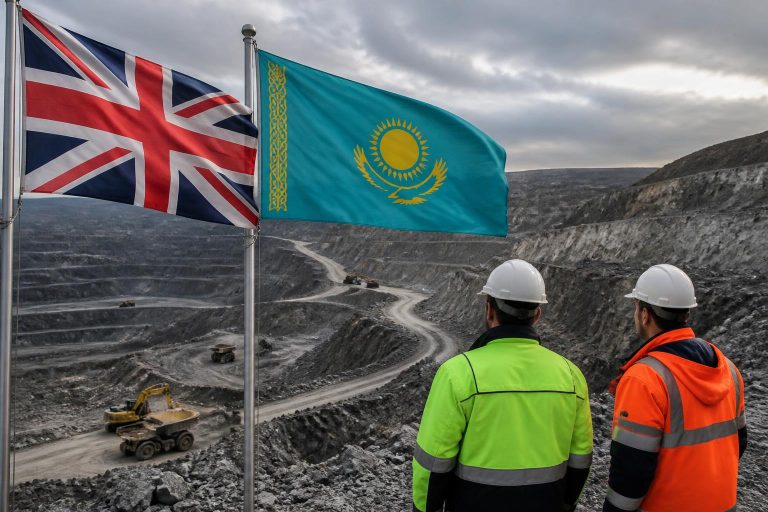
Tag: UK-Kazakhstan partnership

  • UK-Kazakhstan Strategic Partnership: A New Era of Economic Cooperation

    UK-Kazakhstan Strategic Partnership: A New Era of Economic Cooperation

    The recent entry into force of the Strategic Partnership and Cooperation Agreement (SPCA) between the United Kingdom and Kazakhstan marks a significant evolution in their bilateral relationship. This agreement, which was formalised in July 2026, is not merely a diplomatic formality but rather a strategic framework designed to enhance collaboration across various sectors, including critical minerals, energy, education, and technology. British Ambassador to Kazakhstan, Sally Axworthy, emphasised that the SPCA is a ‘signal of intent’ that positions the UK as a proactive partner ready to engage in meaningful investments and initiatives in Kazakhstan.

    Kazakhstan’s rich mineral resources and its growing role in Eurasian connectivity make it a focal point in the global race for critical minerals. The SPCA aims to transition the dialogue from mere resource extraction to value creation, highlighting the importance of processing and technological advancement. Recent projects, such as a $107 million agreement for rhenium recycling, illustrate this shift towards industrial cooperation, where both countries can leverage their strengths to create higher-value products rather than simply exporting raw materials.

    Moreover, the partnership extends beyond economic dimensions, with education playing a crucial role in fostering long-term ties. The Bolashak Scholarship programme has facilitated the education of thousands of Kazakh students in the UK, and British universities are increasingly establishing campuses in Kazakhstan. This educational exchange not only builds human capital but also aligns with the broader economic strategy of enhancing skills and technology transfer. As both nations look to solidify their partnership, the SPCA could serve as a pivotal foundation for a more mature and resilient economic relationship, contingent on the successful implementation of collaborative projects and initiatives.


  • UK-Kazakhstan Strategic Partnership: A New Era of Economic Cooperation

    UK-Kazakhstan Strategic Partnership: A New Era of Economic Cooperation

    The recent entry into force of the Strategic Partnership and Cooperation Agreement (SPCA) between the United Kingdom and Kazakhstan marks a significant milestone in the bilateral relationship, with implications that extend beyond mere diplomacy. British Ambassador to Kazakhstan, Sally Axworthy, emphasised that the SPCA is not just a ceremonial agreement but a ‘signal of intent’ that opens avenues for collaboration across various sectors, including critical minerals, energy, education, and technology. This agreement is poised to reshape how the two nations work together, fostering a more integrated economic partnership.

    As global competition for critical minerals intensifies, Kazakhstan’s mineral wealth positions it as a key player in the evolving landscape of resource management and supply chain resilience. The SPCA formalises a shift in focus from traditional sectors to a broader range of industries, reflecting the changing priorities of both countries. Notably, the agreement facilitates discussions around value creation and processing of resources, moving beyond mere extraction to encompass technological advancements and higher-value production. A prime example of this shift is the recent $107 million agreement between the UK’s Maritime House and Kazakhstan’s Zhezkazganredmet, aimed at expanding cooperation in rhenium recycling, a material crucial for aerospace manufacturing.

    Education plays a pivotal role in this evolving partnership, with the UK emerging as a leading partner in higher education for Kazakhstan. The Bolashak Scholarship programme has fostered strong ties, with many Kazakh professionals educated in the UK. The establishment of British university campuses in Kazakhstan signifies a commitment to long-term investment in human capital, aligning educational initiatives with industrial cooperation. As both nations navigate this new phase of their partnership, the SPCA serves as a foundational framework for future collaboration, with the potential to enhance economic ties and foster sustainable growth.