Tag: Turkey

  • Bridging Nuclear Technology and Mining: Turkey’s Strategic Role in Critical Minerals Supply Chains

    Bridging Nuclear Technology and Mining: Turkey’s Strategic Role in Critical Minerals Supply Chains

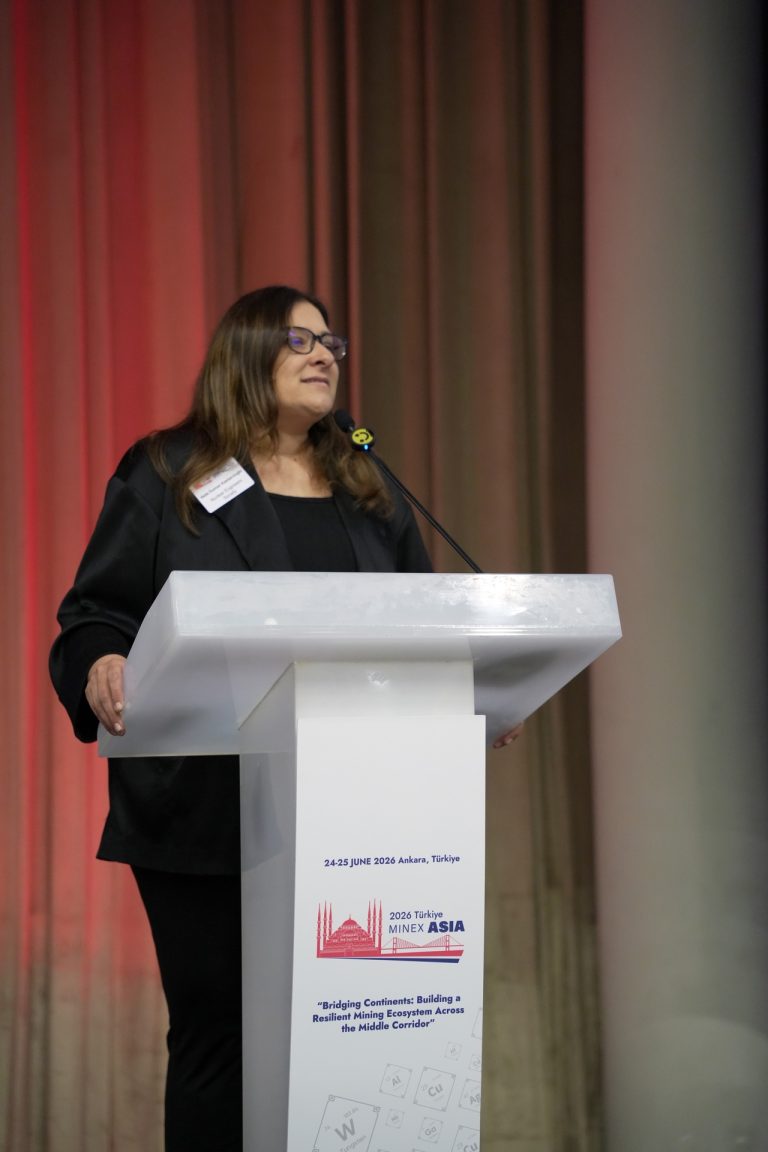
    In a recent presentation, Dr. Kantarcıoğlu, a competence development manager at the Secretariat of Defense Industries and a member of the Nuclear Engineers Society, highlighted the growing interconnection between the nuclear technology and mining sectors. With a background in nuclear engineering, she expressed her surprise at the insights gained from previous speakers and framed her talk as an effort to foster collaboration between these two industries. She posited that critical minerals have transcended their traditional mining context, becoming pivotal to energy security, industrial competitiveness, and technological independence.

    Dr. Kantarcıoğlu emphasised the potential for cooperation among Turkey, the UK, Europe, and Central Asian countries, suggesting that the conversation should extend beyond mere raw material supply to encompass technology and energy infrastructure. She advocated for the evolution of the Middle Corridor, traditionally viewed as a transport route, into a strategic supply line that integrates mineral resources with processing capabilities and global markets. Turkey’s geographical advantages, including its ports and industrial zones, position it as a key player in this emerging corridor.

    The urgency of this positioning is underscored by the rising global demand for critical minerals such as lithium, nickel, and rare earth elements, which are essential for future energy systems and advanced technologies. Dr. Kantarcıoğlu argued that Europe requires a secure and diversified critical mineral supply chain, while Turkey has the opportunity to leverage its resources and industrial capacity to meet this demand. She called for a shift from simple raw material trading to joint investments in processing and technology development.

    A significant aspect of her argument was the role of nuclear technology in the mining sector. She noted that nuclear technology is not only reliant on secure mineral supplies but also actively supports mining operations through various applications. These include exploration analysis, process control, and safety monitoring, with nuclear energy offering a low-carbon power alternative for mining operations, particularly in remote locations that currently depend on costly diesel fuel.

    Dr. Kantarcıoğlu highlighted the potential of small modular reactors (SMRs) and micro reactors to meet the diverse energy needs of mining operations, suggesting that these technologies could provide reliable, long-term energy solutions tailored to specific site requirements. She pointed out that many remote mines face logistical challenges with conventional fuel supplies, making nuclear energy an attractive option.

    Despite the promising prospects, she acknowledged the practical barriers to deploying advanced nuclear technology in mining, including regulatory frameworks, financing, and workforce capacity. However, she argued that a symbiotic relationship could develop, where mining supplies uranium and other critical minerals needed for nuclear systems, while nuclear energy enhances the efficiency of mineral extraction.

    In closing, Dr. Kantarcıoğlu tied her insights back to Turkey’s national context, noting the country’s ambitions to expand its nuclear energy capacity and develop local expertise. She stressed the importance of building coordinated national competencies in the nuclear sector to realise the potential benefits of this convergence. Ultimately, she concluded that the future of the nuclear and mining sectors is intertwined, and Turkey’s strategic positioning could enable it to become a vital industrial anchor in the region, moving beyond its role as merely a transit country.


  • UK Export Finance’s Role in Supporting Critical Minerals Projects in Central Asia and Eastern Europe

    UK Export Finance’s Role in Supporting Critical Minerals Projects in Central Asia and Eastern Europe

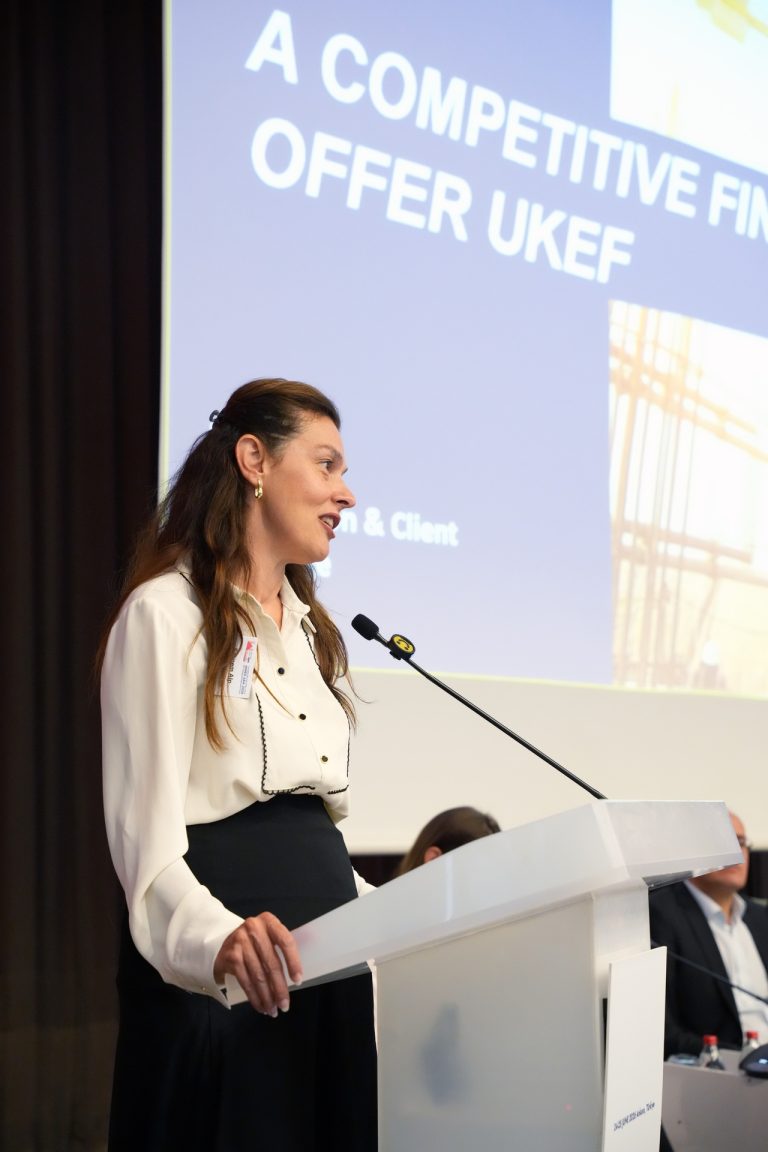
    In a recent presentation, Alp from UK Export Finance (UKEF) elucidated the agency’s operations and its pivotal role in financing critical minerals projects across Turkey, Central Asia, and Eastern Europe. UKEF, established over a century ago, serves as the UK government’s official export credit agency, aiming to bolster UK companies’ export growth while also extending its support to non-UK sellers supplying UK buyers. This dual approach is particularly significant in the context of critical minerals, where funding is essential for developing project pipelines and scaling investments.

    Alp highlighted UKEF’s impressive financial capacity, noting that in the last financial year, the agency provided £14.5 billion in support for export contracts, which generated over 70,000 jobs in the UK and contributed to GDP growth. UKEF’s guarantees can cover up to 85% of a contract’s value, enabling companies to secure financing with tenors of up to 22 years, significantly more favourable than standard commercial loans. Although UKEF’s presence in Central Asia has been limited, its overall lending capacity for the region has reached £40 billion, a substantial resource for the burgeoning critical minerals sector.

    The agency’s support is designed to foster economic development in host countries, with past projects including railways, hospital development, and mining equipment. Alp’s role encompasses a wide geographical area, from Mongolia to Moldova, ensuring that transactions across this region are routed through her team. UKEF can collaborate with sovereign counterparts or directly with the private sector, assessing the bankability of projects and offering tailored financing solutions.

    Alp explained how UKEF-backed guarantees alter borrowing economics, allowing lenders to price transactions based on the UK government’s credit rating rather than the borrower’s financial strength. This leads to more competitive interest rates and longer repayment terms. The mechanics of a UKEF-guaranteed transaction involve the agency issuing guarantees to approved lenders, who then extend these guarantees to borrowers, facilitating a smoother financing process.

    Focusing on critical minerals, UKEF maintains a list of minerals it supports, with a key requirement being the existence of an offtake agreement with a UK company. This policy aims to bolster the use of critical minerals in UK manufacturing destined for export. Notably, funding accessed through UKEF does not have to be strictly tied to the export contract; it can also assist with broader working capital needs. The agency’s financing can have a multiplier effect, allowing companies to access significantly more funding than the value of their export contracts.

    Alp also shared case studies showcasing UKEF’s diverse support across various sectors, while clarifying that the agency does not finance fossil fuel-related transactions. Furthermore, UKEF is increasingly collaborating with other export credit agencies and multilateral development banks to co-finance larger regional projects and is open to supporting cross-border partnerships, provided they meet a minimum UK content threshold. The presentation concluded with an invitation for further discussions on how specific projects could be structured to access UKEF support, emphasising the agency’s commitment to fostering ongoing engagement with potential partners in the region.


  • Evaluating ‘Mining Is Dead. Long Live Geopolitical Mining’ Against Real-World Mining Narratives

    Evaluating ‘Mining Is Dead. Long Live Geopolitical Mining’ Against Real-World Mining Narratives

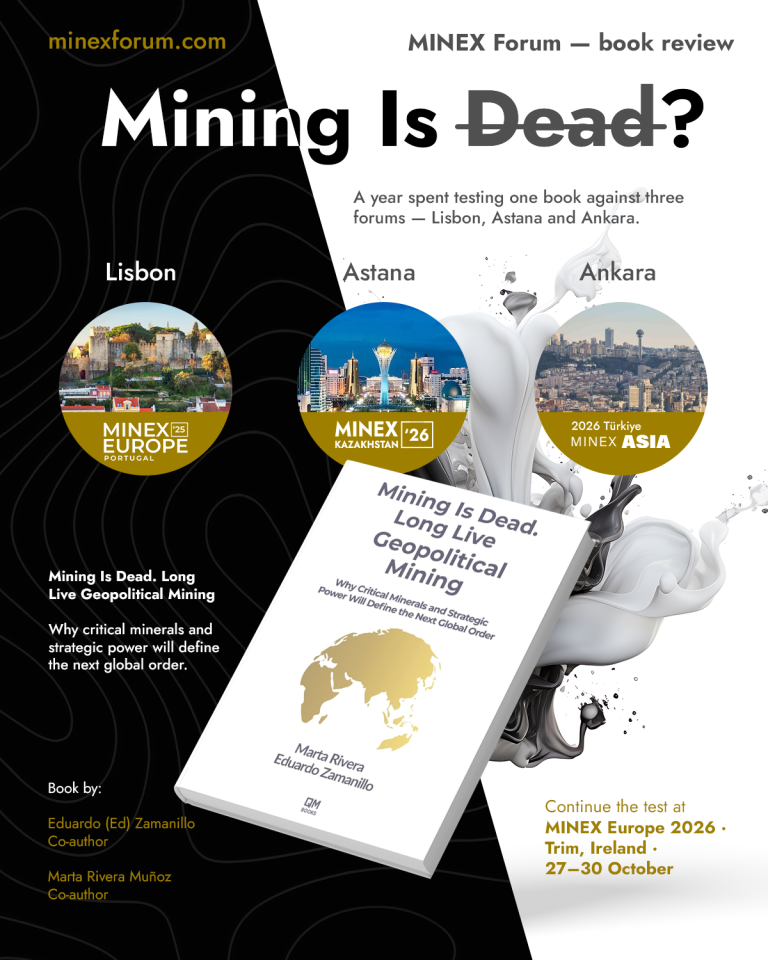
    Eduardo (Ed) Zamanillo and Marta Rivera Muñoz’s book, “Mining Is Dead. Long Live Geopolitical Mining,” presents a compelling narrative about the evolving landscape of the mining industry. The author of this review, who has been running the MINEX Forums across Europe and Central Asia for over two decades, took the time to critically assess the book’s arguments against the backdrop of live discussions at various mining events. This approach allowed for a thorough examination of the book’s seven strategic lessons, particularly in the context of recent forums held in Lisbon, Astana, and Ankara.

    The first lesson from the book posits that speed is a form of geopolitical power, suggesting that countries that streamline permitting and financing processes are more likely to win mining projects. This was echoed at MINEX Europe 2025 in Lisbon, where the European Commission highlighted its commitment to faster permitting for strategic projects under the Critical Raw Materials Act. However, the review notes that while the intention is clear, the actual outcomes have yet to materialise, indicating a persistent speed problem within the EU.

    The second lesson emphasises that narrative builds legitimacy in mining. This was reinforced by discussions at the forums, where industry experts argued that mining must be framed within broader narratives of energy transition and sustainability. The review cites a media analysis from MINEX Kazakhstan 2026, which revealed that countries like Kazakhstan struggle to assert their narratives in the global media landscape, often overshadowed by narratives surrounding Chinese dominance in the sector.

    The review also highlights the importance of industrialisation in extraction, as illustrated by initiatives in Kazakhstan, Uzbekistan, and Turkey, which are all moving towards processing rather than merely extracting raw materials. This shift is seen as essential for reducing strategic vulnerability in these nations.

    Furthermore, the review critiques the book’s framing of alliances as a means to achieve strategic resilience, noting that investor appetite for early-stage exploration is dwindling. The forums revealed that while there is a need for alliances, the speed and risk appetite for frontier projects remain significant hurdles.

    The review concludes that while the book provides a solid framework for understanding the current mining landscape, it misses some nuances, particularly regarding Turkey’s emerging role as a processing hub. The author suggests that the narrative around mining is not just crafted for external audiences but is actively negotiated in forums, reflecting the dynamic and evolving nature of the industry.

    As the mining sector continues to transform, the upcoming MINEX Europe 2026 in Ireland presents an opportunity to further explore these themes, particularly in the context of European mining history and the challenges of establishing legitimacy in a mature democracy. The review ultimately asserts that mining is not dead; rather, it is undergoing significant transformation, necessitating ongoing dialogue and adaptation within the industry.


  • Turkey’s Strategic Role in the Global Critical Minerals Landscape

    Turkey’s Strategic Role in the Global Critical Minerals Landscape

    In the August 2026 issue of Ekonomi-Analiz, a new article titled “The New World’s Oil: Critical Minerals and Turkey’s Strategic Position” by Selçuk Bostancı, Corporate Communications Coordinator at MAPEG  explores the evolving significance of critical minerals in the global economy and Turkey’s potential to emerge as a key player in this arena. The article argues that critical minerals, including lithium, cobalt, nickel, graphite, and rare earth elements, have transcended their traditional roles as mere inputs for the mining sector. Instead, they are now viewed as essential components of energy security, industrial capacity, and national defence, positioning them at the forefront of global competition akin to oil and natural gas.

    Why these minerals matter so much

    The reasoning given is straightforward: nearly every piece of modern technology — from smartphones and electric vehicles to wind turbines, defense systems, space technology, and data centers — depends on these raw materials. Being “critical” isn’t just about scarcity; it’s about how essential a mineral is to the economy, energy, defense, or advanced technology, and how disruptive it would be if supply were interrupted. Lithium, nickel, cobalt, and graphite are singled out for battery technology; rare earths for electric motors and high-performance magnets; and copper for everything from power grids to electric vehicles. The piece frames this as a value chain running from mining through refining, advanced materials, and finished products — arguing that while advanced technology is the visible face of the energy and tech transition, mining is its invisible foundation.

    A global race is underway

    Citing the International Energy Agency’s 2026 projections under its “Stated Policies” scenario, the article notes that demand for critical minerals is expected to nearly double by 2040. But the bigger issue, it argues, isn’t rising demand itself — it’s that production and especially processing capacity are concentrated in a small number of countries, turning critical minerals into a matter of supply security. This is pushing the US, China, and the EU, among others, to pursue new mining investment, processing facilities, recycling, and strategic stockpiles. The EU’s Critical Raw Materials Act, for instance, sets 2030 targets for extraction, processing, and recycling. The underlying point: future competition won’t just be between countries that hold mineral resources, but between those that can actually process those resources into high-value products.

    Turkey’s strategic standing

    Turkey’s geological diversity is presented as a real opportunity in this new landscape. A Critical and Strategic Minerals Report published by the Ministry of Energy and Natural Resources identifies 37 mineral types considered critical or strategic for the country.

    One standout example cited is the rare earth element site at Eskişehir-Beylikova. More than 125,000 meters of drilling there identified an estimated resource of around 694 million tons of rare earth material, and a pilot production facility is already running. Work is now underway to build out full industrial-scale capacity, including separation and processing. The article uses Beylikova to make a broader point: strategic value today isn’t just about owning a deposit — it depends equally on extracting, separating, and processing the ore into high-value products that industry can actually use. It notes that Turkey’s mineral assets — boron chief among them — along with its rare earth work and other critical minerals initiatives, show mining increasingly being tied together with technology and industry.

    Giving back to nature while extracting

    Growing demand for critical minerals comes with a responsibility, the article argues: sustainable mining. Today’s approach to mining isn’t just about extracting economic value from the ground — it also means restoring sites back to nature and the community once operations end.

    It points to concrete evidence of this in Turkey through MAPEG’s (General Directorate of Mining and Petroleum Affairs) nationwide project tracking rehabilitated mining sites and mining-related social responsibility work, known as TÜRMES. As of August 2026, the project has documented 205 rehabilitated mining sites across 35 provinces, covering roughly 13,252 hectares of restored land, with close to 23.9 million trees and plants replanted, and 185 mining-related social responsibility projects recorded. This data is made publicly available and transparent through a TÜRMES information map on MAPEG’s website, letting anyone see how sites across different regions of Turkey have been returned to nature after mining activity. The article presents these figures as proof that a mining model which “produces while also giving back to nature” is achievable with the right planning and rehabilitation practices.

    Turning underground value into future value

    The closing section argues that as electrification, defense technology, digitalization, and AI continue to advance, mineral raw materials will only grow more strategically important. Turkey, with its mineral diversity, mining experience, industrial base, and geostrategic location, is well positioned for this shift. But the article stresses that future value in mining won’t be measured by reserve size alone — it will come from combining resources with science and technology, converting them into high-value products, and doing so sustainably. It suggests this is exactly why the “new world’s oil” comparison for critical minerals keeps gaining resonance: what will ultimately determine future wealth isn’t simply what lies underground, but what we’re able to turn that underground value into — above ground, and with nature in mind.


  • Uzbekistan–Turkey Business Forum: A Key Opportunity for MINEX Forum Partners

    Uzbekistan–Turkey Business Forum: A Key Opportunity for MINEX Forum Partners

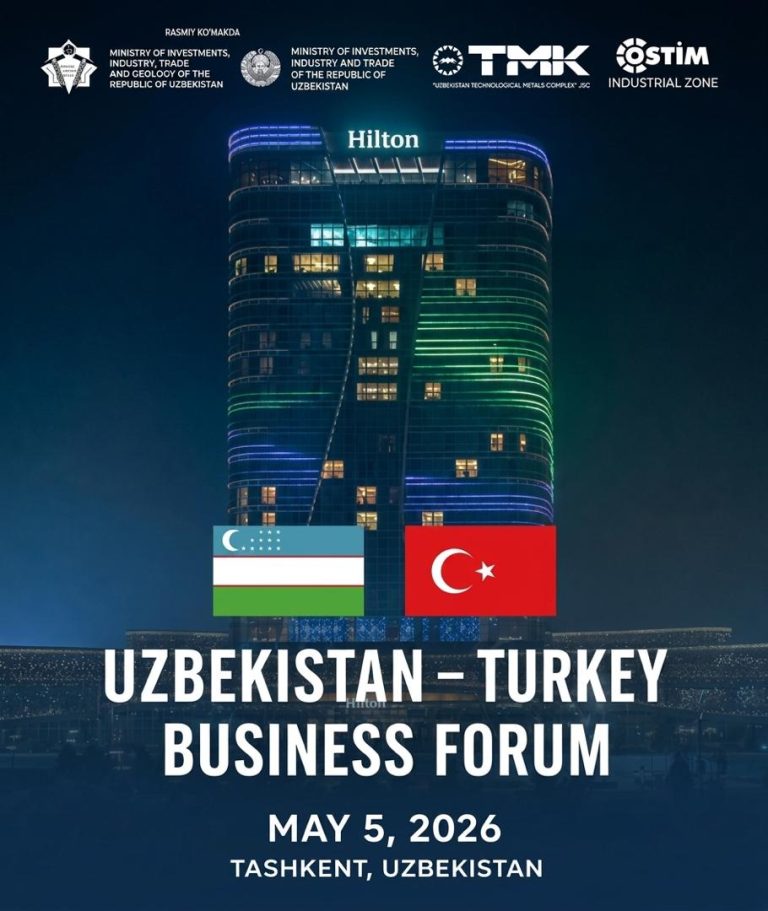
    The MINEX Forum team is delighted to participate in the upcoming Uzbekistan–Turkey Business Forum on 5 May at the Hilton Hotel. This event serves as a vital precursor to our broader regional discussions, focusing on concrete industrial proposals and joint investment ventures.

    The forum is a collaborative effort between OSTIM, the Ministry of Mining Industry and Geology of Uzbekistan, and TMK. It offers a deep dive into Uzbekistan’s ambitious industrial roadmap, specifically focusing on critical minerals and deep processing.

    Key highlights include presentations on:

    • The R&D Park for critical minerals.

    • Technopark initiatives for high-value metal processing.

    • Graphtech’s latest mining developments.

    Our representatives will be on the ground to discuss how these initiatives align with the broader goals of value creation and regional connectivity that we champion at MINEX. We invite our colleagues and partners to join us for a day of high-level networking and strategic planning.

  • The First Mining-Site Digital Product Passport in Turkey

    The First Mining-Site Digital Product Passport in Turkey

    Minespider, a leading traceability and Digital Product Passport (DPP) platform, and TETHYS Trans-Eurasian Gateway, a company specializing in bridging European technologies to mining projects in Turkey and Central Asia, announce the first Digital Product Passport (DPP) implemented at the Çataltepe Mining Project, marking a significant milestone in the digital transformation of the critical minerals sector.

    This is one of the first implementations of the Digital Product Passport in mining sites in Central Asia and Turkiye, which now positions Çataltepe as a pioneering project in the region’s transition toward transparent and traceable critical minerals supply chains.

    Following a collaboration that began in May 2025, the two companies launched a Digital Product Passport (DPP) pilot at the Çataltepe Polymetallic mine located in the Dardanelles (Çanakkale) in Turkey. The traceability project, including capturing and linking data of origin, processing, and ESG indicators, is planned to be introduced across the entire supply chain – from the Çataltepe Mine based in Lapseki, Çanakkale to the Yenice Flotation Plant, and finally to export.

    A New Standard for Critical Minerals Transparency

    The Digital Product Passport is a dynamic digital record that captures verified data across the full lifecycle of a product—from raw material extraction to end-of-life. The system will provide a transparent chain of custody for each shipment of lead concentrate, zinc concentrate and copper concentrate from the Çataltepe polymetallic mine, with the expected volumes of ~15,000 tonnes of ore processed monthly, yielding 1,000–1,200 tonnes of concentrate output. The introduction of Digital Product Passports will consolidate reporting, improve efficiency, and enhance trust with downstream customers and will help to ensure compliance with international regulations such as the EU Carbon Border Adjustment Mechanism (CBAM) and the Critical Raw Materials Act (CRMA).

    Driving Accountability Across the Critical Minerals Value Chain

    Digital Product Passports are rapidly becoming a cornerstone of the global transition toward sustainable and accountable supply chains. They enable the collection and sharing of product data across the entire value chain, closing information gaps and enhancing decision-making.

    Leyla Keser, Chairperson of TETHYS, stated:

    “At TETHYS, we define accountability not as an abstract principle, but as a measurable and traceable reality across the entire value chain. With the Çataltepe Digital Product Passport, we are embedding transparency at the very origin of critical minerals—where trust must begin. This is not only a technological milestone, but a strategic step toward aligning our region with global standards, strengthening responsible sourcing, and positioning Greater Central Asia, Türkiye, and the Balkans as reliable and future-ready partners in the global critical minerals supply chain.”

    Nathan Williams, Founder & CEO of Minespider, said:

    “We are entering a new phase where mineral supply chains must be not only efficient, but also transparent and verifiable by design. Each shipment can be traced back to its origin, with verified data on production and ESG parameters. This is a critical step toward enabling trusted, data-driven mineral supply chains that meet emerging regulatory requirements and industry expectations. We are proud that the Çataltepe project creates a new benchmark for sustainable mining projects in the region.”

    About Tethys

    Tethys operates across Greater Central Asia, Türkiye, and the Balkans, focusing on critical minerals, infrastructure, and sustainable value chains. Through its integrated approach, Tethys combines investment, technology, and ESG principles to deliver accountable, scalable, and future-oriented projects across strategic regions.

    https://www.tethysgateway.com/

    About Minespider

    Minespider is a leading European mineral traceability platform, trusted by global companies including Microvast, Renault, Minsur, TEMSA, PTL, Ford Otosan, and Tata Elxsi. Its blockchain-based system provides secure, transparent data sharing across supply chains in Digital Product Passports (DPPs) and Digital Battery Passports (DBPs) to support compliance and sustainability from mine to manufacturer.

    For more information about Minespider, please email marketing@minespider.com or visit our website at www.minespider.com.

  • Turkey’s Gokirmak Copper Mine Put Under Review as Owners Sound Out Buyers

    Turkey’s Gokirmak Copper Mine Put Under Review as Owners Sound Out Buyers

    The shareholders behind Turkey’s largest open-pit copper operation have begun exploring a potential sale, capitalising on a strong rally in copper prices, according to people familiar with the process.

    The owners — Akfen Holding AS, Ilbak Holding AS and Bacaci Yatirim Holding AS — have appointed Goldman Sachs Group Inc. to advise on a possible divestment of Acacia Mining Enterprises Inc., which operates the Gokirmak copper mine in Kastamonu province in northern Turkey. The mandate includes assessing interest in either a partial stake sale or a full exit, the sources said.

    Market participants indicate that the shareholders are seeking valuations of up to $1 billion for the entire asset, although pricing expectations could shift depending on demand and market conditions. The sale process remains confidential, and there is no certainty that a transaction will proceed.

    Copper has climbed sharply over the past year, supported by tightening global supply, disruptions at key mining operations, and accelerating demand linked to electrification, renewable energy and grid infrastructure. Prices recently pushed above $13,000 per tonne, reinforcing investor appetite for large-scale producing assets.

    Acacia Mining Enterprises holds an estimated 24 million tonnes of copper-ore reserves and produces roughly 120,000 tonnes of copper concentrate per year, according to disclosures by Ilbak Holding. Export revenues from the operation totaled $265 million in 2024, based on the latest figures from Turkey’s Chamber of Industry.

    Goldman Sachs declined to comment on its role, while the shareholder groups did not respond to requests for comment.

  • Turkey’s Miryildiz Mining to Launch Gold and Copper Production in Kazakhstan by 2026

    Turkey’s Miryildiz Mining to Launch Gold and Copper Production in Kazakhstan by 2026

    Turkish mining company Miryildiz Mining plans to begin gold and copper production in Kazakhstan by late 2026, the company’s CEO Emrah Erdem announced at the Kazakhstan Global Investment Roundtable (KGIR).

    “We are engaged in gold and copper mining. Our plants in Turkey have been operating for nearly ten years. I hope that by the end of 2026, we will start gold production in Kazakhstan,” Erdem said.

    According to him, Miryildiz Mining is currently working in cooperation with the Development Bank of Kazakhstan (DBK), a subsidiary of the Baiterek Holding.

    The company operates in five countries, extracting gold, copper, chromium, and other metals, with Turkey remaining its primary market. It produces around 1 million tonnes of copper ore annually.

    “We have now set targets for copper mining in Kazakhstan,” Erdem said, adding that the company sees strong potential for copper extraction in East Kazakhstan, particularly in the Abai and Pavlodar regions.

    He also highlighted promising opportunities in the gold and rare earth metals sectors, noting Kazakhstan’s untapped mineral wealth.

    $482 Million Mining and Processing Project

    Earlier this year, Miryildiz Mining presented a $482 million project to construct a mining and processing complex (MPC) in the Zhanan-Boko-Zaisan gold ore zone to Abai Region Governor Berik Uali. The facility is expected to employ around 2,000 workers.

    The company has already completed geological exploration and purchased some of the necessary extraction and ore-processing equipment.

    Global Footprint

    Miryildiz Mining holds over 100 exploration and production licenses worldwide and is active in Central African Republic (CAR)Sierra Leone, and The Gambia, where it is also building a gold mining operation.

    In Kazakhstan, its subsidiary MIRYILDIZ KZ Ltd plans to conduct metal exploration at the Takyr site in the Zhetysu and Abai regions between 2025 and 2030.

    Market Context

    The company’s expansion comes amid record-high commodity prices — copper surpassed $11,000 per tonne, and gold exceeded $4,000 per ounce in 2025 — boosting investment in mining and geological exploration across the sector.

  • Turkey, US in Talks to Develop Rare Earth Deposits in Western Anatolia

    Turkey, US in Talks to Develop Rare Earth Deposits in Western Anatolia

    Turkey is in talks with the United States to jointly develop rare earth reserves in western Anatolia, signaling a potential pivot toward its NATO ally after similar negotiations with China and Russia stalled over disagreements on technology transfer and refining rights.

    According to people familiar with the discussions, Ankara and Washington are exploring a partnership to develop the Beylikova deposit, located near Eskisehir in central Anatolia. The site is believed to contain cerium, praseodymium, and neodymium—key elements used in magnets, electronics, and defense applications—though the exact quality of the reserves remains under assessment.

    The discussions come as the two countries seek to deepen cooperation in energy and defense, following a meeting between Presidents Donald Trump and Recep Tayyip Erdogan at the White House last month. If finalized, a joint refining agreement could replace a provisional deal with China, which faltered after Beijing insisted on processing the materials in China rather than transferring refining technology to Turkey.

    Talks with Russia also failed to produce results, sources said. Turkey’s Energy and Natural Resources Ministry declined to comment.

    Ankara plans to construct a local refinery in Beylikova, where ore samples have shown a rare earth oxide content exceeding 1% by weight, indicating commercial viability. Turkey is also engaging with Canada and Switzerland for potential cooperation on feasibility studies to advance the project.

    To attract investors and ensure transparency, the government intends to apply to the Australian Institute of Geoscientists for JORC Code certification, which establishes international standards for reporting exploration results and resource estimates.

    The move aligns with broader Western efforts to reduce reliance on China, which currently dominates more than 80% of global rare earth production and processing. Both the US and EU have intensified efforts to secure alternative sources of critical minerals essential for defense, renewable energy, and high-tech manufacturing.

    Turkey, which has long balanced relations between the West and China, joined a US-EU-led initiative in 2024 to diversify critical mineral supply chains. However, it has also attracted Chinese investment in electric vehicle production and has been offered partner-country status in the BRICS bloc.

    Ankara continues to emphasize technology transfer and local value creation in its foreign partnerships, including existing cooperation with Boeing and Lockheed Martin.

  • Kazakhstan Proposes Uranium Mining Contract to Turkey to Fuel Its Growing Nuclear Energy Program

    Kazakhstan Proposes Uranium Mining Contract to Turkey to Fuel Its Growing Nuclear Energy Program

    Kazakhstan has proposed a long-term partnership with Turkey in the nuclear fuel cycle, offering a contract for uranium mining within Kazakhstan to help meet Turkey’s rapidly growing demand for nuclear energy. The announcement was made by Bauyrzhan Duisebayev, Director General of the Chemical Engineering Design Bureau, during the MINEX Kazakhstan forum.

    Duisebayev highlighted that Turkey is emerging as a major nuclear player with four reactors under construction and four more planned. He emphasized that Kazakhstan, given its vast uranium reserves and experience, is a natural partner. He estimated that Turkey’s two existing nuclear plants alone will require 1,800 tonnes of uranium annually, and that future demand could reach 5,000 to 8,000 tonnes per year.

    A presentation prepared for Turkish officials outlined Kazakhstan’s proposed role in the entire nuclear fuel cycle — from uranium mining to fuel fabrication. Currently, Kazakhstan mines uranium in collaboration with Russia, where it is converted, enriched, and fabricated into nuclear fuel. Duisebayev suggested Kazakhstan could independently provide conversion services, potentially at facilities like the Ulba Metallurgical Plant or the Stepnogorsk Mining and Chemical Plant.

    He noted that Turkish officials had expressed interest in nuclear cooperation during President Erdoğan’s visit to Astana for the SCO summit in July 2024, but no uranium contracts have yet been signed. Duisebayev emphasized that Turkey could become involved in three stages of the nuclear cycle — mining, conversion, and fuel fabrication — and eventually, more, except for enrichment, which still requires time and development.

    He also outlined Kazakhstan’s long-term strategy to shift from selling natural uranium to offering higher-value products like uranium tetrafluoride and hexafluoride, enriched uranium, and eventually, only nuclear technologies and energy. This transition is driven by expectations that global uranium demand may decline by 2040 due to the rise of alternative reactors, such as thorium or fast reactors that do not rely on natural uranium.

    Duisebayev mentioned that conversion operations could be hosted not only in Stepnogorsk, now part of Rosatom’s structure, but also in Ust-Kamenogorsk or Uralsk. He expressed hope for progress with or without Turkish participation, including potential cooperation with Rosatom.

    Turkey’s first nuclear power plant, Akkuyu, is being built by Rosatom under a build-operate-transfer model. It will consist of four VVER-1200 reactors with a total capacity of 4,800 MW. The construction cost is estimated at $24–25 billion, with Russia providing both the fuel and the handling of spent nuclear material.