Tag: Trump

  • EU to Offer US Critical Minerals Partnership to Counter China’s Dominance

    EU to Offer US Critical Minerals Partnership to Counter China’s Dominance

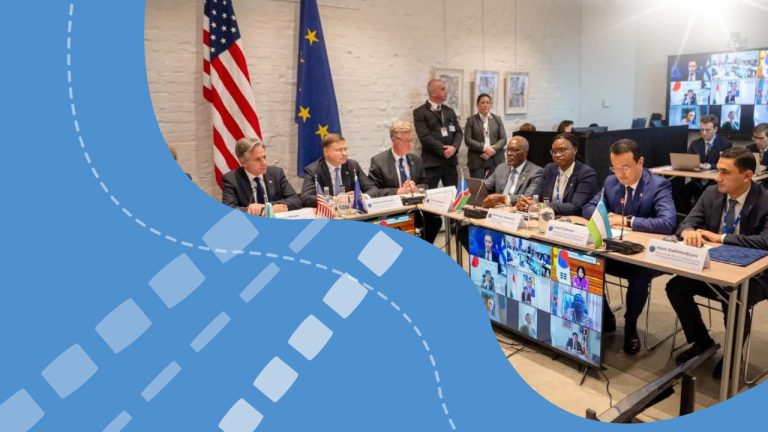
    The European Union is set to offer the United States a critical minerals partnership designed to curb China’s influence over global supply chains, according to people familiar with the matter.

    Brussels is preparing a memorandum of understanding to create a “Strategic Partnership Roadmap” within three months, which would guide joint efforts to source and refine essential materials for modern technologies—ranging from batteries to semiconductors—without heavy reliance on Beijing.

    The proposal includes initiatives such as joint mineral projects, price support mechanisms, and safeguards against market manipulation. It also encourages building reciprocal supply chains between the two economies while maintaining mutual respect for territorial integrity—a pointed reference after tensions rose when U.S. President Donald Trump signaled interest in purchasing Greenland, an autonomous territory of Denmark.

    The renewed cooperation effort comes ahead of a major U.S.-led meeting of foreign ministers and senior officials this week aimed at forming global alliances to reduce Chinese mineral dominance. Washington’s sense of urgency follows Beijing’s export restrictions on rare earth elements last year, temporarily eased under a deal between Trump and Chinese President Xi Jinping.

    Underlining its seriousness, the Trump administration this week launched a $12 billion national critical mineral stockpile. The EU’s draft mirrors this approach, suggesting both sides could coordinate stockpiling and rapid response measures to supply disruptions.

    Key pillars of the EU proposal include cooperation on securing supply chains, developing international premium markets, and sharing information to boost market transparency. It also envisions exemptions from mutual export restrictions, collaboration on innovation and research, and the creation of a joint EU-U.S. response group to manage potential shortages.

    Despite concerns over the pace of negotiations, EU officials called the talks “vital to diversify our supplies away from any single country,” indicating that the transatlantic allies are increasingly aligned in reshaping critical mineral dependencies.

  • U.S.–China Trade Escalation Puts Spotlight on Kazakhstan’s Rare Earth Potential

    U.S.–China Trade Escalation Puts Spotlight on Kazakhstan’s Rare Earth Potential

    Global markets endured one of their most volatile days since the early stages of the U.S.–China trade war, after China expanded export controls on rare earth elements and U.S. President Donald J. Trump announced sweeping new tariffs and export restrictions in response.

    In a series of social media posts, Trump first suggested there was “no reason” to meet Chinese President Xi Jinping at the upcoming APEC Summit, before declaring that China would impose “large-scale export controls” on nearly all its products starting November 1. The White House later confirmed that the U.S. would respond with 100% tariffs on Chinese imports and new export restrictions on critical software “on or before November 1.”

    The escalation has injected new urgency into the global scramble for rare-earth supply chains, pushing attention beyond East Asia to Central Asia, particularly Kazakhstan — one of the few countries outside China with verified rare-earth reserves and a functioning mining sector.

    Kazakhstan’s Rising Role in Supply Diversification
    Kazakhstan’s mineral wealth is rooted in Soviet-era geological mapping, with modern surveys confirming vast deposits of neodymium, praseodymium, dysprosium, terbium, and samarium — all essential for electric vehicles, wind turbines, and advanced defense systems. The Zhana Kazakhstan deposit in the Karagandy region could become one of the largest rare-earth reserves globally, pending validation of resource estimates.

    According to U.S. defense classifications, these are “critical defense materials.” Both the Pentagon and the Defense Logistics Agency have begun building stockpiles and identifying non-Chinese refining partners, but the challenge lies not in geology — Kazakhstan’s resources are proven — but in processing and commercialization.

    Existing facilities such as the Stepnogorsk Chemical Plant and Ulba Metallurgical Plant could be adapted for rare-earth processing, while the SARECO joint venture has already demonstrated the recovery of magnet-critical elements from uranium residues. The Kuirektykol deposit, rich in neodymium and dysprosium, further strengthens Kazakhstan’s feedstock base. However, infrastructure remains tailored to uranium and base metals, not the precise requirements of rare-earth refining.

    Legal Reforms and Foreign Partnerships
    Kazakhstan’s Unified Code on Subsoil Use (2018) has made the country more attractive to Western investors by clarifying ownership and capital entry rules. Since then, over $40 billion in new foreign mining investment has entered the sector. European and Japanese firms are now exploring partnerships in refining, metallurgy, and supply-chain development.

    The government’s focus is shifting from raw extraction toward value-added production, aligning with global efforts to reduce dependence on Chinese processing. Still, sustained investment will depend on policy consistency, financing mechanisms, and export infrastructure.

    Strategic Context: Central Asia’s Balancing Act
    Kazakhstan’s push to develop its rare-earth potential reflects a regional strategy to manage interdependence with China while courting Western partnerships. While China remains a dominant trading partner, Kazakhstan’s access to the Caspian Sea and international capital markets gives it greater flexibility than most of its neighbors.

    Recent trade volatility and increased Chinese port fees have added pressure to diversify trade routes, not by abandoning China, but by building redundant corridors and risk-mitigated financing.

    The United States, meanwhile, views Kazakhstan not as a substitute for China but as a strategic component in a diversified supply network. The U.S. International Development Finance Corporation (DFC) is assessing refining feasibility studies under strict governance and environmental standards.

    At the C5+1 meeting in Dushanbe on September 4, U.S. and Central Asian officials discussed rare-earth cooperation as part of broader economic diversification efforts — signaling a shift from diplomatic rhetoric to working-level engagement.

    Outlook
    As export controls and tariffs deepen supply chain instability, Kazakhstan is emerging as a key analytical focus for policymakers and investors seeking long-term alternatives. Its rare-earth deposits and industrial base give it potential leverage in the global realignment of strategic materials — but realizing that potential will depend on its ability to scale processing, secure investment, and build reliable transport routes.

    Rather than serving as a replacement for China, Kazakhstan illustrates how mid-sized economies are positioning themselves as essential nodes in a fragmented, multipolar supply chain system.

  • Dodik Offers Republika Srpska’s Minerals to Trump in Exchange for Sovereignty Guarantees

    Dodik Offers Republika Srpska’s Minerals to Trump in Exchange for Sovereignty Guarantees

    Milorad Dodik, the separatist leader of Republika Srpska in Bosnia & Herzegovina, has publicly offered the entity’s mineral resources to former US President Donald Trump in exchange for guarantees of political sovereignty. The statement, made during a special parliamentary session on May 21, comes amid rising political isolation of Dodik’s SNSD party and mounting legal pressure.

    Dodik framed the gesture as a strategic opportunity for the US to secure critical minerals—such as lithium, magnesium, potassium, and boron—amid global efforts to reduce reliance on Chinese supply chains. He claimed the West, particularly Germany, is attempting to strip Republika Srpska of its mineral wealth, with international High Representative Christian Schmidt acting as an “executor” of those plans.

    This move follows a 2023 announcement by Swiss firm Arcore AG, which reported uncovering substantial lithium deposits in the Lopare region, sparking both investor interest and local opposition due to environmental concerns.

    Despite Dodik’s appeal to the US and Hungary for a strategic mineral partnership, opposition parties boycotted the session, and no response has yet been received from Trump or his circle. Dodik and his family remain under US sanctions, further complicating his overtures.

    Dodik emphasized that the offer is conditional: “Give us freedom, confirm our sovereignty, guarantee the Dayton Agreement, our autonomy and independence – and we are partners.”

  • Ukraine and U.S. Seal Controversial Minerals Deal After Tense Talks

    Ukraine and U.S. Seal Controversial Minerals Deal After Tense Talks

    Ukraine and the United States signed a landmark minerals and profit-sharing agreement on April 30 in Washington, marking the end of months of turbulent negotiations and the beginning of a new phase of economic cooperation focused on reconstruction.

    The agreement gives the U.S. preferential access to future Ukrainian mineral deals and establishes a joint investment fund for rebuilding Ukraine’s war-torn infrastructure. It also secures Ukraine’s full sovereignty over its natural resources, following President Volodymyr Zelensky’s refusal to sign earlier versions that would have required Ukraine to repay past military aid or relinquish control of key assets.

    “This is a win for Ukraine,” said Prime Minister Denys Shmyhal. “We will attract major investments, secure growth, and remain in control of our critical minerals.”

    The U.S. had previously pushed for terms granting it up to 50% of Ukraine’s revenues from rare earths, oil, and gas, and even a stake in infrastructure like ports. President Donald Trump reportedly demanded repayment of $300 billion in aid and up to $500 billion in future mineral revenue — conditions Kyiv firmly rejected.

    Only after Zelensky sent Trump a letter expressing willingness to negotiate and praising U.S. support did tensions ease. “Nobody wants peace more than the Ukrainians,” Trump quoted Zelensky as writing, using the letter to bolster support for the deal during a speech to Congress.

    The final agreement establishes a joint fund where both nations will equally manage proceeds from newly issued licenses for critical minerals. For the first ten years, profits will be reinvested into Ukraine’s infrastructure and economic development. Past revenues and aid are excluded, and there are no debt obligations.

    Ukraine’s mineral wealth includes Europe’s largest lithium deposits, 20% of global graphite resources, and significant reserves of rare earth elements vital to defense and green technologies. But much of this wealth lies in or near Russian-occupied territories, making future exploitation a complex and risky endeavor.

    Despite securing equal partnership terms and full resource control, the deal offers no U.S. security guarantees. Critics say the agreement may remain symbolic if the war drags on.

    Still, U.S. Treasury Secretary Scott Bessent called the agreement a signal to Russia of Washington’s enduring support for a “free, sovereign, and prosperous Ukraine.”

  • Zelenskiy Rejects US Demands for $500 Billion Cut from Ukraine’s Mineral Wealth

    Zelenskiy Rejects US Demands for $500 Billion Cut from Ukraine’s Mineral Wealth

    Ukrainian President Volodymyr Zelenskiy confirmed on Sunday that the United States had dropped its demand for Kyiv to commit to paying $500 billion as part of a controversial deal to give Washington a cut of Ukraine’s mineral wealth. However, Zelenskiy made it clear that US military support must be included in any agreement, further signaling the significant differences between the two countries in negotiations.

    The US had previously pressured Zelenskiy to accept a proposal to tap into Ukraine’s mineral wealth, which was introduced by US Treasury Secretary Scott Bessent during a visit to Kyiv on February 12. Zelenskiy rejected the proposal, stating that it lacked the strong security guarantees Ukraine requires in the face of ongoing Russian aggression.

    The deal, which is part of the US strategy to broker a ceasefire in the three-year war with Russia, was presented as a key component of Washington’s broader diplomatic efforts, especially following direct talks with Russia in Saudi Arabia. Zelenskiy, however, stressed that the arrangement must be mutually beneficial for both Ukraine and the US, noting that he would not accept a deal that undermines Ukraine’s security.

    Despite the US’s stance, Zelenskiy also rejected the argument that American companies investing in Ukraine would serve as a form of security guarantee. Instead, he insisted that military support must remain a cornerstone of any agreement.

    In contrast, Bessent, speaking on Fox News, framed the proposal as an opportunity for Ukraine’s economic growth, suggesting that the partnership would focus on strategic minerals and energy, offering an “economic security guarantee” rather than a traditional military one.

    The ongoing talks, however, have led to escalating rhetoric between the two sides. US President Donald Trump has referred to Zelenskiy as a “dictator,” while Zelenskiy has accused Trump of repeating Russian disinformation.

    Ukraine, despite reports of vast mineral resources, does not have internationally recognized reserves of rare earth minerals that would likely yield the $500 billion Trump has proposed. The country’s critical minerals, including titanium and gallium, are not expected to be as valuable as projected by the US.

    Zelenskiy, however, said Ukraine would proceed with a comprehensive survey of its mineral reserves, including clarifying their ownership status and possibly retaking assets acquired illegally.

  • Unclear Whether Ukraine-US Rare Earth Saga is a Masterstroke or Colonial Appropriation

    Unclear Whether Ukraine-US Rare Earth Saga is a Masterstroke or Colonial Appropriation

    The ongoing saga between Ukraine and the United States over rare earth elements and critical minerals has sparked debate over whether this is a strategic masterstroke by Ukraine or a case of colonial-style resource appropriation by the US. Deep beneath eastern Ukraine lies a treasure trove of mineral wealth, including coal, iron ore, manganese, and other exotic minerals. These resources have long been coveted by global powers, from Tsar Alexander II in the 19th century to Adolf Hitler during World War II.

    Recently, former US President Donald Trump has turned his attention to Ukraine’s mineral riches, proposing a deal that would grant the US 50% of future revenues from these resources. This proposal, championed by Senator Lindsey Graham, emerged following a meeting between Trump and Ukrainian President Volodymyr Zelenskyy last September. Zelenskyy reportedly offered the US a direct stake in Ukraine’s rare earth elements in exchange for continued military support.

    However, critics argue that the deal could be economically devastating for Ukraine, with some comparing it to the harsh reparations imposed on Germany after World War I. The feasibility of the proposal is also under scrutiny, as the geological and industrial realities of mining in Ukraine raise questions about its profitability. Additionally, the deal appears contradictory to Trump’s broader economic policies, which have focused on reducing reliance on foreign resources.

  • EU Awaits Clarification on Trump’s Proposed Metals Tariffs Before Responding

    EU Awaits Clarification on Trump’s Proposed Metals Tariffs Before Responding

    The European Commission announced on Monday that it will take action to protect EU interests following former U.S. President Donald Trump’s declaration of new 25% tariffs on steel and aluminum imports. However, the EU will wait for official clarification before responding.

    Trump’s statement, made on Sunday, signals a significant escalation in trade tensions. The Commission emphasized that it had not yet received formal notification of the tariffs and would not react based on broad announcements. In a statement, the EU reiterated that it sees “no justification” for such tariffs and will take necessary measures to safeguard European businesses, workers, and consumers.

    If confirmed, these tariffs would mirror Trump’s 2018 trade policies, which saw 25% duties on steel and 10% on aluminum, impacting €6.4 billion ($6.6 billion) worth of EU exports. The EU previously retaliated with tariffs on U.S. goods, but a suspension was negotiated under President Joe Biden.

    A key concern for European steel producers is that U.S. import restrictions could redirect 15 million tons of steel originally destined for the U.S. into the EU market, potentially destabilizing the industry. One EU diplomat indicated that if Trump’s policies mirror his first term, the EU’s response is likely to be similar as well.

  • Trump Proposes Rare Earth Deals with Ukraine in Exchange for U.S. Aid

    Trump Proposes Rare Earth Deals with Ukraine in Exchange for U.S. Aid

    U.S. President Donald Trump announced on Monday that he wants Ukraine to supply the United States with rare earth minerals as compensation for financial aid provided to support Ukraine’s war efforts against Russia.

    Speaking to reporters at the White House, Trump stated that Ukraine was open to the idea, emphasizing the need for “equalization” in return for Washington’s nearly $300 billion in assistance.

    “We’re telling Ukraine they have very valuable rare earths,” Trump said. “We’re looking to do a deal with Ukraine where they’re going to secure what we’re giving them with their rare earths and other things.” However, it remains unclear whether Trump was using “rare earths” to refer specifically to rare earth elements or to a broader category of critical minerals.

    Rare earths are a group of 17 metals essential for electric vehicles (EVs), cellphones, and other electronics due to their role in power conversion. The U.S. Geological Survey classifies 50 minerals as critical to the nation’s economy and national security, including rare earth elements, nickel, and lithium.

    While Ukraine possesses significant deposits of uranium, lithium, and titanium, none rank among the world’s top fivein volume. The United States also has untapped reserves of these and other critical minerals.

    Currently, the U.S. has only one active rare earths mine and limited processing capacity, although several companies are working on domestic projects. Meanwhile, China remains the world’s largest producer of rare earths and other critical minerals.

  • Ferrexpo Shares Surge as Trump’s Victory Fuels Speculation on Ukraine Peace Prospects

    Ferrexpo Shares Surge as Trump’s Victory Fuels Speculation on Ukraine Peace Prospects

    Ferrexpo PLC (LSE), a Ukraine-based iron ore miner, experienced a sharp rise in its stock price, soaring by 22% to 76p following Donald Trump’s unexpected win in the U.S. presidential race. Analysts suggest the rally reflects investor optimism that Trump’s promise to end the Russia-Ukraine war could soon bring stability to Ukraine. Despite ongoing conflict, Ferrexpo has managed to sustain its mining operations. Ukrainian President Volodymyr Zelenskyy also congratulated Trump, expressing hopes for continued bipartisan support from the U.S. under his leadership.