Tag: Trump administration

  • Pensana Scraps £250m Rare Earth Refinery in Hull, Shifts Operations to the US

    Pensana Scraps £250m Rare Earth Refinery in Hull, Shifts Operations to the US

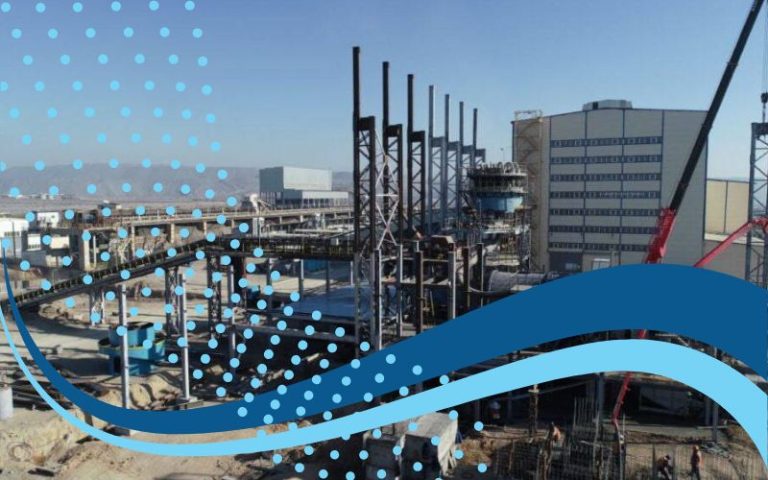
    Britain’s ambitions to become a critical minerals powerhouse have suffered a major setback after Pensana Plc abandoned its £250 million rare earth refinery project near Hull, opting instead to relocate operations to the United States, Sky News reported.

    The proposed refinery at Saltend Chemicals Park was intended to process rare earth elements for use in electric vehicle motors and wind turbine magnets, creating 126 jobs and serving as the centerpiece of the UK’s 2022 Critical Minerals Strategy. The project had been promised millions in government funding — funding that was never disbursed as construction failed to begin.

    Pensana’s chairman, Paul Atherley, said the move was driven by the Trump administration’s decision to guarantee purchases of rare earths from the US Mountain Pass mine at fixed prices — a level of state support he said Europe and the UK have failed to match.

    “That’s repriced the market — and Washington is looking to do more of these deals, moving at an absolute rate of knots,” Atherley said. “Europe and the UK have been talking about critical minerals for ages. But when the Americans do it, they go big and hard, and make it happen. We don’t; we mostly just talk about it.”

    The decision comes amid heightened geopolitical tensions and growing global competition for rare earth supply chains, as China — which produces about 90% of the world’s refined rare earth metals — tightens export restrictions. The announcement follows Beijing’s latest export curbs, which prompted President Donald Trump to threaten 100% tariffs on Chinese goods.

    The Hull refinery was once touted as a flagship project for the UK’s green industrial transition. During the project’s 2022 groundbreaking, then–Business Secretary Kwasi Kwarteng described it as “the only facility of its kind in Europe,” promising it would “secure Britain’s supply resilience.”

    However, Atherley said rare earth processing remains too complex, energy-intensive, and costly to be commercially viable in the UK, citing record-high industrial energy prices as a key obstacle.

    Pensana continues to pursue lithium refining plans in Teesside through its related venture Tees Valley Lithium, which Atherley described as more feasible given current economics.

    The move deals another blow to Britain’s chemicals and materials sector, already struggling with high energy costs and recent shutdowns, including the closure of Vivergo, a biofuels refinery located in the same industrial park.

    A Department for Business and Trade spokesperson called the decision “disappointing” but acknowledged it was a commercial matter for Pensana.

    “We will publish a new Critical Minerals Strategy soon to help secure our supply chains for the long term, and we’re reducing industrial electricity costs as part of our modern Industrial Strategy,” the department said.

  • Trump Administration Weighs $50 Million Equity Stake in Greenland Rare Earths Developer Critical Metals

    Trump Administration Weighs $50 Million Equity Stake in Greenland Rare Earths Developer Critical Metals

    The Trump administration is in talks to acquire an equity stake in Critical Metals Corp, giving Washington a direct interest in Greenland’s Tanbreez rare earth project — one of the world’s largest undeveloped deposits, four people familiar with the matter told Reuters.

    If completed, the deal would mark a significant political and strategic move for the United States, deepening its role in Greenland’s mineral sector — the same Arctic territory former President Donald Trump once proposed purchasing outright.

    Critical Metals, a New York–based company, acquired the Tanbreez project in 2024 for $5 million in cash and $211 million in stock, after the Biden administration successfully pushed for the sale to a Western buyer rather than a Chinese firm.

    The company has since applied for a $50 million grant under the Defense Production Act, a Cold War-era program that supports domestic production of materials essential for national security. According to three sources, the administration has begun discussions about converting that grant into an equity stake worth roughly 8%, although negotiations remain preliminary.

    A senior Trump administration official told Reuters that “hundreds of companies” had approached Washington seeking investment, and that “there is absolutely nothing close with this company at this time.”

    Critical Metals did not respond to requests for comment. Greenland, while self-governing, remains part of Denmark, whose embassy in Washington also declined to comment.

    The Tanbreez deposit, located in southern Greenland, is considered a cornerstone for Western efforts to diversify rare earth supply chains away from China, which currently dominates more than 80% of global production and processing. The project also hosts valuable gallium and tantalum, both of which are under Chinese export restrictions.

    Bringing the mine to commercial operation is expected to cost $290 million, with production forecast at 85,000 tonnes of rare earth concentrate per year by 2026. The U.S. Export-Import Bank (EXIM) is separately considering a $120 million loan to support mine development, according to sources.

    The potential U.S. investment follows other government-backed moves in the sector, including stakes in Lithium Americas and MP Materials, underscoring Washington’s strategy to secure critical minerals for electric vehicles, defense systems, and renewable technologies.

    Even before Trump’s renewed engagement with Greenland, the U.S. had maintained a longstanding presence on the island — including one of its largest Air Force bases — and successive administrations have sought to increase economic and strategic cooperation.

    Analysts note that the harsh Arctic environment and Greenland’s slow regulatory processes remain challenges to large-scale mining. However, the project could play a central role in the West’s efforts to counter China’s dominance in the rare earth supply chain.

  • US Treasury Secretary to Visit Ukraine Amid Resource and Security Discussions

    US Treasury Secretary to Visit Ukraine Amid Resource and Security Discussions

    US Treasury Secretary Scott Bessent will travel to Ukraine this week, marking the first cabinet-level visit from former President Donald Trump’s administration to the war-torn country. The visit aims to negotiate US access to Ukraine’s rare earth minerals, energy resources, and key state-owned enterprises as part of a broader effort to end the Russia-Ukraine war and strengthen American resource security.

    According to an anonymous source, discussions will cover the possibility of a resource-sharing pact, under which the US would gain access to Ukrainian rare earths in exchange for ongoing support against Russian aggression. Trump and Ukrainian President Volodymyr Zelenskiy have expressed mutual interest in such an arrangement.

    US National Security Adviser Mike Waltz further emphasized on Sunday that the US aims to recoup its war-related expenditures by partnering with Ukraine on energy and natural resource projects, including oil and gas.

    A high-profile US delegation, including Secretary of State Marco Rubio, Vice President JD Vance, Defense Secretary Pete Hegseth, and Special Envoy for Ukraine Keith Kellogg, will also hold talks with European allies and Ukrainian officials this week.

    The Trump administration is reportedly pressuring European nations to purchase more American weapons for Ukraine, a move aimed at strengthening Kyiv’s defenses ahead of potential peace negotiations with Moscow.

  • Central Asia in Focus: U.S. Senators Call for Increased Engagement

    Central Asia in Focus: U.S. Senators Call for Increased Engagement

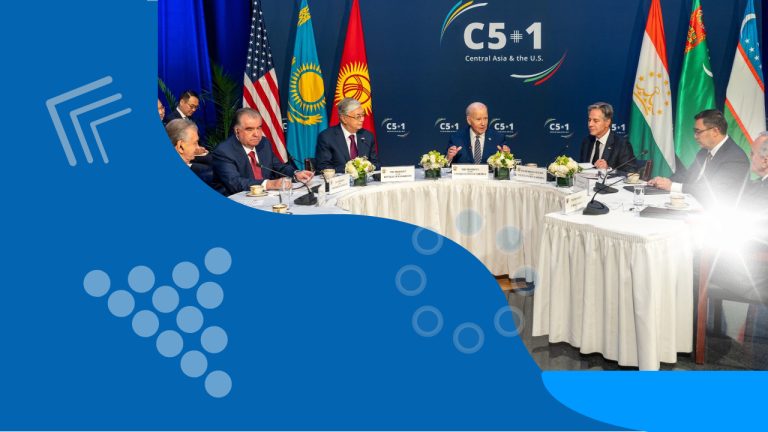
    In a move that could redefine U.S. relations with Central Asia, the Trump administration is signaling readiness to repeal the decades-old Jackson-Vanik Amendment, a Cold War-era trade restriction that has long hindered stronger economic ties with the region. The potential policy shift, highlighted during the recent Senate confirmation hearing for then-designate Secretary of State Marco Rubio, could pave the way for expanded cooperation on trade, energy, critical minerals, and counterterrorism efforts in a strategically vital part of the world.

    A Long-Overdue Repeal

    The Jackson-Vanik Amendment, originally enacted in 1974, was designed to pressure nonmarket economies—primarily the Soviet Union—to allow freedom of emigration by imposing trade barriers. While most former Soviet republics have since been exempted from its provisions, five Central Asian nations—Kazakhstan, Uzbekistan, Tajikistan, Turkmenistan, and Azerbaijan—remain subject to its restrictions. Critics argue that the amendment is an outdated relic with no relevance to today’s geopolitical realities.

    During his confirmation hearing, Senator Steve Daines (R-MT) pressed Rubio on the need to repeal Jackson-Vanik, emphasizing its negative impact on U.S.-Central Asia relations. Rubio appeared to agree, calling the amendment “an absurd relic of the past.” This bipartisan acknowledgment signals growing momentum for legislative action, particularly as lawmakers like Senators Chris Murphy (D-CT) and Todd Young (R-IN), along with Representative Jimmy Panetta (D-CA), have already introduced bills aimed at granting permanent normal trade relations (PNTR) to key Central Asian states.

    Repealing Jackson-Vanik would not only remove unnecessary trade barriers but also position the United States as a more attractive partner for investment and collaboration in a region increasingly dominated by Russia and China.

    Strategic Opportunities Abound

    Central Asia, home to resource-rich nations like Kazakhstan and Uzbekistan, offers immense untapped potential for U.S. businesses and strategic interests. Kazakhstan, the region’s largest economy, is spearheading the development of the Trans-Caspian International Transport Route, or “Middle Corridor,” which aims to connect Europe and Asia via rail and maritime links while bypassing Russia. Strengthening U.S. involvement in this initiative could bolster European energy security and reduce Moscow’s influence over global markets.

    Kazakhstan also holds significant reserves of rare earth elements—critical components for green energy technologies and advanced electronics. Currently, China dominates global production and processing of these materials, controlling over 85% of the supply chain. By establishing PNTR and fostering closer trade ties with Kazakhstan, the United States could diversify its sources of critical minerals and reduce reliance on Beijing.

    Similarly, Uzbekistan, under President Shavkat Mirziyoyev’s reformist leadership, is opening its doors to foreign investors and seeking to modernize its rapidly growing economy. Tashkent recently signed an agreement with Washington to support its bid to join the World Trade Organization (WTO). With PNTR status, Uzbekistan could emerge as a competitive hub for IT exports, rivaling Eastern Europe and India.

    Countering Russian and Chinese Influence

    Beyond economics, deeper engagement with Central Asia aligns with broader U.S. goals of countering Russian and Chinese dominance in the region. Beijing’s Belt and Road Initiative (BRI) has financed infrastructure projects across Central Asia, often saddling countries with unsustainable debt. For instance, Kyrgyzstan owes nearly 37% of its external liabilities to China’s Export-Import Bank. By offering high-quality alternatives through public-private partnerships and financing mechanisms like the U.S. International Development Finance Corporation (DFC), Washington can provide Central Asian nations with viable alternatives to predatory lending practices.

    Energy diplomacy presents another avenue for U.S. influence. Supporting projects such as an undersea gas pipeline from Turkmenistan to Azerbaijan could unlock new routes for hydrocarbon exports to Europe, driving down energy prices and aiding industrial revitalization. Such initiatives align with President Trump’s vision of reducing Russia’s stranglehold on European energy markets.

    A Historic Presidential Visit?

    Looking ahead, experts suggest that President Trump should consider making a landmark visit to Central Asia—the first by a sitting U.S. president. Such a trip could yield tangible outcomes, including deals on energy cooperation, mining rights for critical minerals, and enhanced trade agreements. Given Kazakhstan’s vast reserves of rare earth elements, a bilateral agreement on mineral extraction could serve as a major diplomatic win.

    Counterterrorism Collaboration

    Finally, Central Asia remains a crucial front in the fight against terrorism, especially given its proximity to Afghanistan. With U.S. troops having withdrawn from Afghanistan in 2021, regional partners are essential for intelligence sharing, border security, and counter-radicalization efforts. Facilitating regional cooperation among Central Asian states on counterterrorism initiatives would further stabilize the area and protect U.S. national security interests.

    A Policy Shift Long Overdue

    As the Trump administration contemplates its approach to Central Asia, repealing the Jackson-Vanik Amendment represents a practical and symbolic starting point. By removing outdated barriers and embracing opportunities for collaboration, the United States can strengthen its presence in a region where it has historically lagged behind competitors like Russia and China.

    For Central Asian leaders eager to diversify their international partnerships, the prospect of closer ties with Washington offers hope for economic growth and greater geopolitical balance. And for the United States, engaging more deeply with Central Asia promises both immediate economic benefits and long-term strategic advantages.