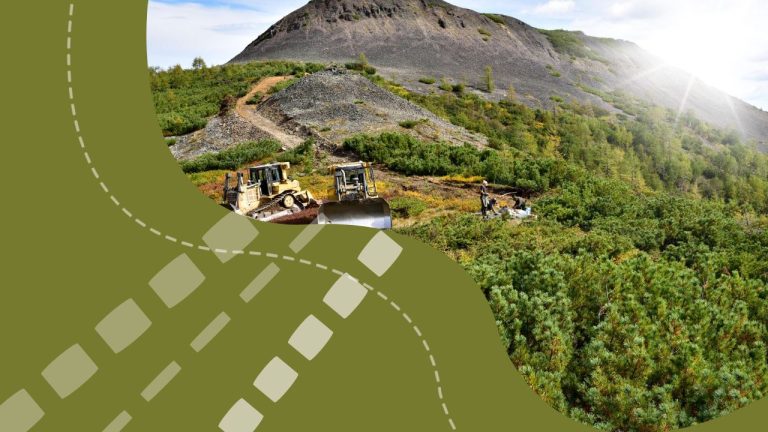
Tag: Trojarova antimony

  • Slovakia Revokes Military Metals’ Trojarova Antimony Licence Without Explanation, Sending Shares Down 60%

    Slovakia Revokes Military Metals’ Trojarova Antimony Licence Without Explanation, Sending Shares Down 60%

    Military Metals Corp has suffered a potentially devastating setback at its flagship European asset after Slovakia’s Ministry of the Environment revoked the exploration licence for the Trojarova antimony-gold project near Bratislava without providing clear justification — a decision that sent the company’s shares sliding by up to 60% to a 52-week low on Friday.

    The revocation is particularly striking given its timing and context. The ministry’s decision came just weeks after Military Metals filed the NI 43-101 technical report supporting a maiden inferred mineral resource estimate of 6.5 million tonnes grading 1.02% antimony and 1.06 grams per tonne gold, containing 67,000 tonnes of antimony and 222,000 ounces of gold. The MRE had been published on 8 April, with analyst Christopher Ecclestone of Hallgarten & Company highlighting its strategic importance for Europe’s critical minerals needs and the value of the project’s existing Soviet-era underground infrastructure. The licence revocation also came despite Trojarova having been listed in Slovakia’s own National Program for the Exploration of Critical Mineral Raw Materials.

    Military Metals has announced it will appeal the decision within the 15-day statutory window and pursue all available legal options. The company described the revocation as inconsistent with Europe’s stated goals for secure critical mineral supply chains — a pointed observation given that antimony has been subject to Chinese export controls since September 2024, causing prices to double and exposing Western defence and semiconductor supply chains to acute vulnerability.

    Trojarova’s strategic case rests on antimony’s role in hardening lead for ammunition, flame retardants in military equipment, infrared detectors, semiconductors and next-generation batteries. The project’s location near Bratislava and its extensive historical workings were seen as advantages that could accelerate development and reduce costs relative to greenfield projects.

    While the legal battle proceeds in Slovakia, Military Metals is continuing exploration at its North American assets — the Last Chance antimony property in Nye County, Nevada, with a history of production, and the West Gore antimony-gold property in Nova Scotia, which produced during the First World War.

  • Europe’s Fear of Missing Out on Critical Minerals Is Crystallising Around a Forgotten Slovak Antimony Mine — and a Funding Gap No One Has Filled

    Europe’s Fear of Missing Out on Critical Minerals Is Crystallising Around a Forgotten Slovak Antimony Mine — and a Funding Gap No One Has Filled

    Deep in the wooded Little Carpathian hills near Bratislava, a Soviet-era mine shaft bores into a hillside above the Slovakian wine town of Pezinok. The Trojarova antimony deposit, discovered by Soviet engineers in the 1980s and abandoned when the Iron Curtain fell, has become an unlikely symbol of Europe’s failure to match its critical minerals ambitions with the money and institutional resolve to act on them.

    Military Metals Corp, the small Canadian company that acquired Trojarova almost two years ago, is pitching the project as a chance for Europe to secure domestic supply of a metal used in munitions, night vision goggles, infrared sensors, fire retardants and nuclear energy. If reactivated, the site could supply as much as a third of the continent’s annual antimony demand of approximately 6,000 tonnes and be operational within two to three years. But the company, with a market capitalisation of less than $30 million, needs partners — and Europe has not yet provided them. No offtake agreement has been secured from EU buyers.

    Antimony sits at the intersection of several geopolitical fault lines. China controls approximately 80% of global processing capacity and, along with Russia and Tajikistan, dominates primary supply. Beijing imposed sweeping export controls on critical minerals and rare earths last year, and the US has since aggressively pursued partnerships and project financing worldwide. Europe has lagged. “Antimony is a textbook example of a small-volume mineral with outsized strategic impact,” said Sabrina Schulz of the European Initiative for Energy Security. “Europe is almost entirely import-dependent, and supply is highly concentrated.”

    The gap between European ambition and action is not lost on officials inside the bloc. The European Critical Raw Materials Act of 2023 set targets for extracting at least 10% and processing 40% of annual key mineral consumption — benchmarks that galvanised some action on battery metals but have not been extended to defence-critical materials such as antimony, gallium and germanium. Brussels officials lack both the mandate and the budget to pursue the kind of direct project financing the US has deployed. Germany’s own €1 billion raw materials fund has supported only two projects and is criticised for creating more qualification hurdles than it removes. Between the economy ministry, the chancellery and the foreign ministry in Berlin, there is still no agreed definition of what a de-risking strategy in critical minerals actually entails, according to people familiar with the internal discussions.

    Frank Hartmann, the German foreign ministry official responsible for Asia, was direct at a March event in Berlin: “What we have to do is long-term strategy, take money and funds into our hands to invest in these critical mineral funds for the next 10 years. Otherwise, we never escape this dependency trap.”

    The contrast with American action is stark. One US company has already approached Military Metals about Trojarova. Last month, the US government’s investment arm agreed a $5 million deal to restart a dormant antimony mine in North Macedonia. As US President Donald Trump heads into summit talks with Xi Jinping in Beijing this week, the Trojarova situation illustrates precisely what European officials fear — that any deal struck between Washington and Beijing could bypass Europe entirely.

    Military Metals CEO Scott Eldridge has outlined a vision that goes beyond the mine itself — with plans to produce ingots directly for defence clients and potential refining partnerships in Germany and Sweden that could anchor a complete European supply chain. But execution requires partners that have not materialised. Thomas Hüser, the company’s chairman and a former Glencore executive, put the situation plainly: “What we are still lacking is not ambition, but execution. Europe’s raw materials strategy remains fragmented, slow, and often disconnected from industrial reality.”

    The EU and US last month reached a coordination accord on critical minerals supply chain policies, which Military Metals hopes could eventually lead to joint investment and offtake partnerships for Trojarova. Whether that translates into concrete action — or remains another framework document in a drawer — may determine whether Europe’s most strategically important forgotten mine stays forgotten.