Tag: trade

  • Europe Warned of New “China Shock” as Industrial Dependence Deepens

    Europe Warned of New “China Shock” as Industrial Dependence Deepens

    Europe is facing growing concerns over a new “China shock” that analysts warn could accelerate deindustrialisation across the continent, threaten local manufacturing, and deepen dependence on Chinese imports.

    Trade experts and industry representatives say the combination of heavily subsidised Chinese production, low-cost exports, and currency imbalances is placing severe pressure on European factories and supply chains. The concerns echo the original “China shock” experienced in the United States after China joined the World Trade Organization, a period linked to the loss of millions of industrial jobs due to rising imports.

    Jens Eskelund, president of the European Chamber of Commerce in Beijing, warned that the issue extends far beyond finished goods such as electric vehicles. According to Eskelund, Europe is becoming increasingly dependent on Chinese-made industrial components embedded throughout the continent’s manufacturing sector.

    The growing reliance on Chinese suppliers has prompted fresh discussions within the European Union over industrial resilience and supply chain security. European commissioners are expected to hold urgent talks later this month on possible measures to reduce strategic dependence, including proposals requiring companies to source critical components from multiple suppliers.

    Industry groups argue that Chinese state subsidies and exchange rate distortions are allowing Chinese products to undercut European competitors. German economist Jürgen Matthes suggested that the yuan may be significantly undervalued against the euro, making Chinese imports dramatically cheaper for European buyers.

    Oliver Richtberg, head of foreign trade at the European machinery and equipment manufacturing association VDMA, said European companies are increasingly choosing Chinese suppliers because they offer products at lower prices while approaching European quality standards. He warned that the trend is already damaging Europe’s industrial base and contributing to substantial job losses.

    Recent data cited by trade analysts highlights Europe’s growing dependence on Chinese chemical and industrial products. In sectors such as amino acids and polyhydric alcohols, Chinese imports account for the overwhelming majority of EU supply volumes, raising concerns that domestic production may eventually become economically unviable.

    Trade figures also show China’s surplus with the European Union continuing to expand. Analysts argue that tariffs imposed by the EU on Chinese electric vehicles in 2024 have been largely offset by exchange rate shifts and continued Chinese export growth.

    Germany has been particularly affected, with estimates suggesting that around 250,000 industrial jobs have disappeared since 2019. The automotive sector has experienced some of the sharpest declines, while China recently overtook the United States as Germany’s largest trading partner.

    Andrew Small, director of the Asia programme at the European Council on Foreign Relations, said existing EU measures are insufficient to address the scale of imports and industrial pressure facing Europe. He noted that while Brussels is preparing legislation such as the Industrial Accelerator Act and updates to cybersecurity rules aimed at limiting strategic dependence, most of the measures are unlikely to take effect before 2027.

    Analysts say the EU now faces mounting pressure to introduce faster support mechanisms for European industry while balancing concerns over trade retaliation from Beijing. Environmental, industrial, and geopolitical debates surrounding Europe’s economic relationship with China are expected to intensify in the coming months.

  • EU to Offer US Critical Minerals Partnership to Counter China’s Dominance

    EU to Offer US Critical Minerals Partnership to Counter China’s Dominance

    The European Union is set to offer the United States a critical minerals partnership designed to curb China’s influence over global supply chains, according to people familiar with the matter.

    Brussels is preparing a memorandum of understanding to create a “Strategic Partnership Roadmap” within three months, which would guide joint efforts to source and refine essential materials for modern technologies—ranging from batteries to semiconductors—without heavy reliance on Beijing.

    The proposal includes initiatives such as joint mineral projects, price support mechanisms, and safeguards against market manipulation. It also encourages building reciprocal supply chains between the two economies while maintaining mutual respect for territorial integrity—a pointed reference after tensions rose when U.S. President Donald Trump signaled interest in purchasing Greenland, an autonomous territory of Denmark.

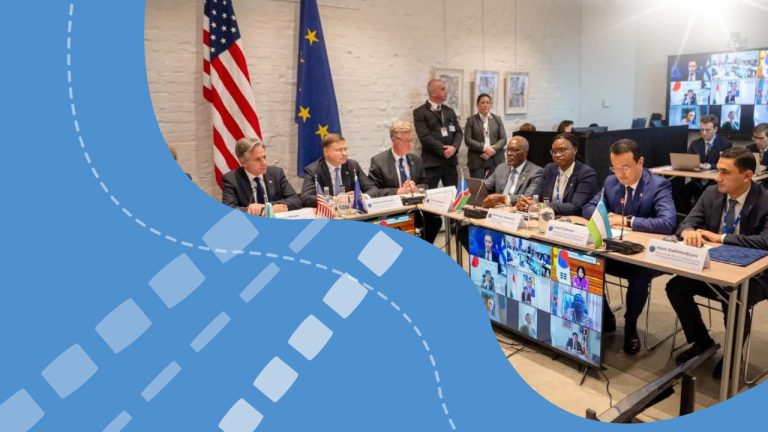
    The renewed cooperation effort comes ahead of a major U.S.-led meeting of foreign ministers and senior officials this week aimed at forming global alliances to reduce Chinese mineral dominance. Washington’s sense of urgency follows Beijing’s export restrictions on rare earth elements last year, temporarily eased under a deal between Trump and Chinese President Xi Jinping.

    Underlining its seriousness, the Trump administration this week launched a $12 billion national critical mineral stockpile. The EU’s draft mirrors this approach, suggesting both sides could coordinate stockpiling and rapid response measures to supply disruptions.

    Key pillars of the EU proposal include cooperation on securing supply chains, developing international premium markets, and sharing information to boost market transparency. It also envisions exemptions from mutual export restrictions, collaboration on innovation and research, and the creation of a joint EU-U.S. response group to manage potential shortages.

    Despite concerns over the pace of negotiations, EU officials called the talks “vital to diversify our supplies away from any single country,” indicating that the transatlantic allies are increasingly aligned in reshaping critical mineral dependencies.

  • EU Sets Up “Special Channel” with China to Secure Rare Earth Supply

    EU Sets Up “Special Channel” with China to Secure Rare Earth Supply

    The European Union has established a special communication channel with Chinese authorities to ensure the continuous flow of rare earth materials essential for European industries, EU Trade Commissioner Maros Sefcovic said on Wednesday.

    The move comes after China imposed export controls on rare earths earlier this year, triggering alarm in Europe over possible disruptions to the supply of critical materials used in electric vehicles, wind turbines, and permanent magnets — key components for clean energy and high-tech manufacturing.

    Speaking at the 2025 GCC–EU Business Forum in Kuwait, Sefcovic told Reuters that he had held multiple discussions with Chinese Commerce Minister Wang Wentao, emphasizing that bureaucratic delays in export procedures could have a “very negative impact on production and manufacturing in the EU.”


    Fast-Track Cooperation Mechanism

    Brussels and Beijing have agreed to prioritize export permit applications from European companies. Through the newly established channel, EU and Chinese officials are jointly reviewing and fast-tracking export approvals for rare earth shipments.

    According to Sefcovic, European companies have submitted about 2,000 applications since the controls were introduced, with just over half already approved. He said the EU was urging China to accelerate the remaining cases while pursuing broader supply chain diversification.

    “We continue to press for faster processing,” Sefcovic said, adding that Europe is simultaneously developing alternative rare earth sources, including new mining and magnet production projects in Estonia.


    Wider Context

    The announcement follows months of tension between Europe and Beijing after China’s export restrictions on rare earths and related technologies. Although subsequent deals with the EU and the United States helped ease the immediate supply squeeze, both regions have intensified efforts to reduce dependence on Chinese critical materials.

    On Tuesday, the European Commission confirmed that EU and Chinese officials discussed introducing general export licenses to simplify rare earth shipments — similar to arrangements reportedly secured by the United States.

  • EU Commission Approves €1.3 Billion State Aid for ArcelorMittal’s Green Steel Initiative

    EU Commission Approves €1.3 Billion State Aid for ArcelorMittal’s Green Steel Initiative

    The European Commission announced on Friday its approval of €1.3 billion ($1.41 billion) in state aid from Germany to support steel producer ArcelorMittal in its efforts to decarbonize a portion of its production processes.

    Stating that the aid was essential to promote the production of environmentally friendly steel, the commission deemed it necessary and fitting. It emphasized that the anticipated positive impacts, particularly in terms of reducing carbon emissions, outweighed any potential negative effects on competition and trade within the EU

  • Kazakhstan-Uzbekistan cooperation discussed in Navoi

    Kazakhstan-Uzbekistan cooperation discussed in Navoi

    Ambassador of Kazakhstan to Uzbekistan Beibut Atamkulov paid a working visit to Navoi region, Uzbekistan. The meeting with activists of the Kazakh Cultural Center in Navoi took place. Then, the ambassador visited the Seitkul Aulie – Aiteke bi mausoleum and the Chachma memorial complex located in Nurata district. On May 15-16, 2024, the 380th anniversary of the outstanding statesman Aiteke bi is expected to be celebrated in Navoi region, Kazinform News Agency cites the press service of the Kazakh MFA.

    The head of the Diplomatic Mission also visited the Kazakh secondary school No. 14, founded in 1966 in Kenimekh district of the village of Terikkuduk. During the meeting the issues of educational process were discussed with the teaching staff of the school and the elders of the settlements. In 28 schools out of 36 operating in Kenimekh region, education is conducted in the Kazakh language.

    Ambassador Beibut Atamkulov held a meeting with the Khokim of Navoi region Normat Tursunov. During a meeting the issues of trade, economic, cultural and humanitarian ties with the regions of Kazakhstan were discussed.

    Particular attention was paid to the development of cooperation in chemical and mining industries, organizing mutual visits of delegations, holding a joint business forum, as well as a Youth Festival in Navoi.

    The parties also considered the possibility of establishing sister city ties between Navoi region and its administrative center of Navoi with the regions and cities of Kazakhstan, as well as developing interregional dialogue by establishing direct contacts between business circles.

    The head of the Kazakh Diplomatic Mission visited the Navoi free economic zone and got acquainted with the activities of large industrial complexes of the region as Navoi Mining and Metallurgical Plant JSC, Navoiyazot JSC, Kizilkumcement JSC and Gidro Stanko Servis LLC. Significant potential between the two countries was noted to increase the trade turnover.