Tag: tin

  • Spain Accelerates Critical Minerals Strategy with €414 Million Investment

    Spain Accelerates Critical Minerals Strategy with €414 Million Investment

    Spain is strengthening its position in the European critical minerals supply chain through a new 2026-2030 Action Plan for the Sustainable Management of Mineral Raw Materials, backed by €414 million in public investment to support exploration, mining, processing and innovation.

    The initiative includes the launch of the National Mineral Exploration Program (PNEM), with €182 million allocated to mineral exploration aimed at unlocking the country’s resource potential and supporting exploration companies. The strategy also introduces 34 measures covering regulatory reform, institutional coordination, research, innovation and the development of the domestic mining value chain.

    The plan aligns with the EU Critical Raw Materials Act (CRMA), which seeks to increase domestic extraction, processing and recycling of strategic minerals to reduce Europe’s dependence on external suppliers.

    Tin project advances in Andalucía

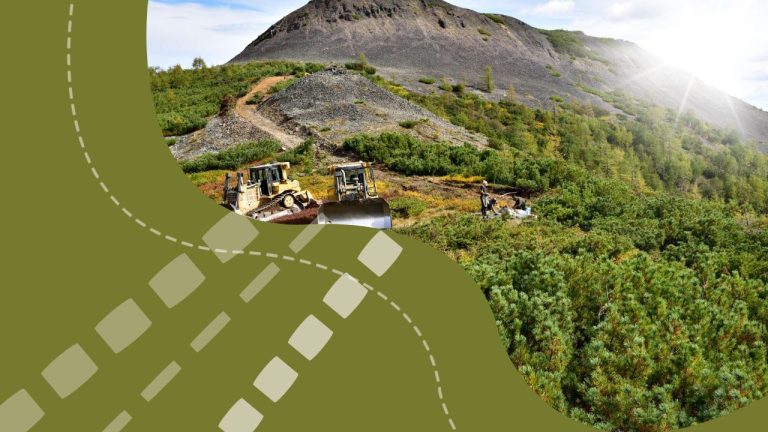
    Among the projects expected to benefit is Elementos’ Oropesa Tin Project in the Andalucía region, Spain’s largest mining jurisdiction, which accounts for around 90% of the country’s metallic mining production.

    The project has been designated as being of “Overriding Public Interest” by the regional government and has been included in Andalucía’s Project Accelerator Unit, recognising its economic, environmental and social importance.

    Elementos believes Oropesa could eventually supply around 10% of the European Union’s tin demand, while a proposed domestic smelting facility would allow more than 10% of EU tin consumption to be processed within Spain. The company has signed an option agreement to acquire up to a 50% interest in the nearby Robledallano tin smelter, supporting downstream processing and reducing transport costs and emissions.

    The Oropesa project hosts an ore reserve of 15.9 million tonnes grading 0.36% tin and a mineral resource of 19.6 million tonnes at 0.39% tin, with a definitive feasibility study outlining a projected 12-year mine life.

    Tungsten production expands

    EQ Resources is also strengthening Spain’s strategic minerals sector through its Barruecopardo tungsten mine, one of the largest tungsten operations outside China, Russia and North Korea.

    The company produced approximately 1,680 tonnes of tungsten trioxide (WO₃) concentrate during FY2025 and aims to increase annual production to 3,000-3,500 tonnes across its operations in Spain and Australia.

    In June 2026, EQ Resources launched a 36-hole drilling programme at Barruecopardo to extend the mine’s life and evaluate deeper mineralisation. The project currently hosts a 22.9 million tonne resource grading 0.2% WO₃ with an estimated mine life of approximately nine years.

    With around 85% of global tungsten supply currently originating from China, Spain’s expanding production is expected to contribute to efforts to diversify global supply chains for this critical mineral.

    Spain’s new investment programme, together with ongoing permitting reforms and support for downstream processing, is expected to strengthen the country’s role as a strategic supplier of critical minerals within the European Union.

  • Military Metals Expands to Slovakia with Acquisition of Antimony and Tin Projects

    Military Metals Expands to Slovakia with Acquisition of Antimony and Tin Projects

    Military Metals (CSE: MILI) has broadened its search for critical mineral assets beyond Canada, signing a deal to acquire three brownfield projects in Slovakia. The newly acquired projects include two antimony-focused sites and one tin-focused site. This move aligns with the company’s goal of becoming a leading explorer and developer of critical minerals essential for battery technology and advanced industrial applications.

    Under the letter of intent, Military Metals will acquire these Slovakian projects by issuing 10 million shares, valued at C$5.6 million. The company’s stock rose by 4%, reaching C$0.78 per share with a market capitalization of C$25.5 million by noon ET on Monday.

    The key asset is the Trojarova antimony project, located near Pezinok in western Slovakia, which was heavily explored during the Soviet era. Historical data indicates a resource of 415,000 tonnes grading 0.162% antimony and 1.148 g/t gold. Military Metals plans to verify these figures with modern drilling to meet NI 43-101 compliance standards.

    Also included is the Medvedi tin project, which has a historical reserve estimate of 863,000 tonnes grading 0.19% tin. The third acquisition, Tiennesgrund, is another antimony project with a 10-kilometer fault-hosted vein system, though no resource estimate has yet been published for this site.

    Military Metals CEO Scott Eldridge emphasized that these acquisitions strategically position the company as a leading player in the critical minerals sector, particularly for antimony. He highlighted the importance of Slovakia’s strong mining infrastructure and the alignment with the European Union’s Critical Raw Materials Act, which could provide access to EU funding.

    This acquisition follows Military Metals’ recent purchase of the past-producing West Gore antimony project

  • Tajikistan or Britain? Origin of famous Bronze Age tin ingots sparks controversy

    Tajikistan or Britain? Origin of famous Bronze Age tin ingots sparks controversy

    Tin was used in the Bronze Age for 150 years. Bronze is an alloy of copper and tin, and in the Bronze Age, it was used to make a range of goods including swords, helmets, bracelets, plates and pitchers. A recent study by a team of archaeometallurgists refutes previous findings published in 2022, which state that most of the tin came from the Mushiston tin deposit in northwestern Tajikistan, as well as from two mines in the Taurus Mountains near the present-day Turkish-Syrian border.

    For this previous analysis, researchers took samples of 105 tin ingots from the wreck, determining chemical and isotopic signatures of 90% of the tin cargo. In particular, they measured the isotope ratios of tin and lead, which, like the chemical composition, provide clues to the origin of the tin.

    Also, the proportion of the trace element tellurium points to tin deposits in Central Asia. The group claims to be able to infer a clear attribution based on the matching signatures between the ingots from Uluburun and tin ore samples from the above mentioned mines.

    But according to the new paper, the data doesn’t support this interpretation or a clear conclusion.

    For the current study, Daniel Berger from the Curt Engelhorn Center for Archaeometry (CEZA), extensively checked chemical and isotopic analyses from previous studies and cross-checked them with the 2022 data set.

    “Due to the isotopic ratios and chemical characteristics, it would be even more likely that at least part of the cargo of tin ingots from the Uluburun shipwreck originated from Cornwall in Britain,” Berger said. “In particular, the comparison with Bronze Age tin ingots from Britain and Israel which we have considered in the past on a similar question of origin suggests this conclusion.”

    He added that more samples and analyses of ores from European and Asian tin deposits were needed.

    Overall, the Bronze Age lasted from the late fourth millennium to the early first millennium BCE—but with different beginnings and ends depending on the region of the world. Bronze, an alloy of copper and tin in a ratio of nine to one, is significantly harder than copper alone.

    Copper ores are found in many regions of Eurasia and Africa. However, tin ores that were accessible in the Bronze Age can only be found in a few places in Central Asia, Iran and Europe.

    It is all the more astonishing that some of the earliest bronze artifacts have been found in the Mesopotamian city-states of the Tigris–Euphrates river system. But there are no tin deposits there; the metal had to be obtained via long-distance trade.

    “Numerous archaeological finds show that the British Isles and Central Europe formed an economic sphere with the Mediterranean region in the Bronze Age and was connected via the transport routes of the Danube, Rhine and Rhône rivers, or via the ocean,” Ernst Pernicka, co-author of the new paper, said. “For instance, amber beads likely traded from the Baltic were found in the Uluburun wreck, indicating the existence of north-south trade routes.”

    The use of standardized weights had already spread in the course of the second millennium BCE, coming from Egypt and Mesopotamia, via Syria, Anatolia and the Aegean, and across the Alps to Central Europe. These standard weights were used to weigh merchandise, including tin ingots.

    For the time of the Uluburun ship, neither weight systems nor established trade connections to Europe and the Eastern Mediterranean can be documented for Central Asia, which underscores the likelihood that the tin originated from the West.


  • EBRD has agreed to invest €6 million to support the development of the Cinovec Project in the Czech Republic

    EBRD has agreed to invest €6 million to support the development of the Cinovec Project in the Czech Republic

    European Bank for Reconstruction and Development (EBRD) Strategic Investment: On July 21, 2023, European Metals Holdings Limited announced a strategic investment agreement with the European Bank for Reconstruction and Development (EBRD). EBRD has agreed to invest €6 million to support the development of the Cinovec Project in the Czech Republic.

    As part of the due diligence process, EBRD engaged an independent, international mining consultancy to undertake a technical review of the Cinovec Project. EBRD also performed a review of the Cinovec Project in respect to compliance with EBRD’s Environmental and Social Policy.

    Keith Coughlan, Executive Chairman, said: “The Company welcomes EBRD’s strategic investment, which is a strong endorsement of the Cinovec Project’s value and its commitment to the highest environmental and social standards. The EBRD investment aims to fund the project’s predevelopment work and opens a pathway to potentially securing project financing. The successful completion of the technical due diligence process is a testament to the quality of the Cinovec team, the work which has been done to date and a strong vote of confidence in the project.

    “The EBRD investment is confirmation that the Cinovec Project is a vital part of establishing a strong, sustainable European electric vehicle battery supply chain to support Europe’s accelerating transition to e-mobility.

    Natalia Lacorzana, Head of Natural Resources at EBRD said:

    “We are pleased to support the Cinovec project, the first lithium project financed by the Bank, on its path to become a responsibly mined source of battery grade lithium for Europe. EBRD is committed to supporting the global transition to a green economy, the move towards wider adoption of electric vehicles, in particular, via providing necessary funding and know-how to junior miners of critical and/or strategic raw materials.”

    The Company’s relationship with EBRD is expected to be highly strategic as the European Union charts a path towards greater lithium supply security and sustainability. Support for the Company’s lithium, tin and tungsten Cinovec Project aligns with these EU goals. The investment is to be implemented by way of a private placement of 12,315,213 shares of the Company to be issued to EBRD at a price of £0.423 per share (the “Placement”).2 Upon the closing of the Placement, EBRD will hold approximately 6% of the Company’s shares on issue (on a non-diluted basis).

    In connection with the Placement, European Metals and EBRD have an agreement whereby, subject to certain conditions, the EBRD has been granted rights that allow participation in future financings to maintain its pro rata equity interest in the Company. The agreements also provide for the Cinovec Project to be developed according to EBRD’s Environmental and Social Policy.

    The proceeds from the Placement will be used to assist in funding pre-development works and studies for the Cinovec Project including environmental works and working capital expenditures for the period up to the completion of the DFS. The Placement is subject to normal and customary conditions precedent for a transaction of this nature. The shares will be issued without shareholder approval utilising the Company’s existing placement capacity under ASX Listing Rule 7.1.

  • Audi partners with university to research mineral recycling tech

    Audi partners with university to research mineral recycling tech

    [vc_section][vc_row][vc_column width=”1/6″][/vc_column][vc_column width=”1/2″][vc_row_inner][vc_column_inner][vc_empty_space][vc_column_text]

    Audi is funding the research to examine the possibility of extracting tin, gallium and indium from incinerated household waste.

    [/vc_column_text][/vc_column_inner][/vc_row_inner][vc_empty_space height=”10px”][vc_row_inner][vc_column_inner width=”2/3″][widget-SocialWidget][/vc_column_inner][vc_column_inner width=”1/3″][link url=”https://www.mining-technology.com/news/audi-environmental-foundation-researc/” content_text=”News source”][/vc_column_inner][/vc_row_inner][vc_empty_space][vc_column_text]

    German auto manufacturer Audi’s Audi Environmental Foundation (AEF) has announced a collaboration with the Freiberg University of Mining and Technology to fund research into new recycling technologies to recover critical minerals.

    The university is developing a technology to selectively extract critical minerals such as tin, gallium and indium from recycled electronics to increase sustainability.

    While electronics containing valuable minerals are put into household waste and incinerated, the new technology that the university is developing would allow users to extract mineral ions from the resultant fly ash. This means that even when electronics are not correctly recycled, valuable minerals may still be recovered.

    The technology works by the creation of specially shaped “tweezer” heads called ligands. These heads will be made from the molecules that bind to the precious metal ions.

    Each head will collect one specific metal ion, be it gallium, indium or tin, and once collected an acid will be used to separate the molecule from the tweezer head. This will ensure that the minerals collected are still in a condition where they can be recycled into new technology, increasing sustainability.

    “The challenge is to produce molecules that specifically bind the desired metal ions,” said Betty Leibiger, the doctoral student at the university who is developing the recycling technology.

    “At this stage of the project, the focus is on developing a number of suitable tweezer heads, which will then be tested and further optimised on a small scale,” she continued. Once the process is optimised, experiments will be conducted on real fly ash. The university believes that the process can be scaled up once optimised.

    This is the latest mineral-focused renewable investment from Audi. In February 2022, the carmaker announced that from 2026 onwards, it would only launch fully electric models. Furthermore, it aims for 100% of its cars sales to be of electric vehicles (EVs) from 2030 onwards.

    The minerals being targeted in this recycling collaboration are vital elements in technologies such as semiconductors, fiber-optics and lithium-ion batteries crucial in EVs.[/vc_column_text][vc_empty_space][epic_post_tag compatible_column_notice=”” font_size=”17px”][/vc_column][vc_column width=”1/6″][vc_text_separator title=”LATEST NEWS” color=”juicy_pink”][vc_empty_space height=”10px”][widget-LatestPosts post_number=”4″][vc_empty_space height=”10px”][vc_text_separator title=”MOST POPULAR” color=”juicy_pink”][vc_empty_space height=”10px”][widget-popular-posts post_count=”4″][vc_empty_space][vc_wp_search title=”Search”][vc_empty_space][lvs display_like=””][/vc_column][vc_column width=”1/6″][/vc_column][/vc_row][/vc_section][vc_section][vc_row][vc_column][distance desktop_type=”50″][/vc_column][/vc_row][vc_row][vc_column width=”1/2″][epic_block_28 compatible_column_notice=”” number_post=”6″ post_offset=”0″ first_title=”You may also like”][/epic_block_28][vc_empty_space][/vc_column][vc_column width=”1/2″][epic_hero_5 compatible_column_notice=”” hero_margin=”0″ content_filter_number_alert=”” post_offset=”0″][/vc_column][/vc_row][/vc_section]

  • Extraction and processing of tin ores

    Extraction and processing of tin ores

    [vc_row][vc_column][vc_column_text]Source: Kazakh Invest[/vc_column_text][vc_raw_html]JTNDZGl2JTIwY2xhc3MlM0QlMjJ0YWJsZV9pbl9kZXRhaWwlMjIlM0UlMEElMjAlMjAlMjAlMjAlMjAlMjAlMjAlMjAlM0N1bCUyMGNsYXNzJTNEJTIybWFwX3RhYmxlJTIyJTNFJTBBJTIwJTIwJTIwJTIwJTIwJTIwJTIwJTIwJTIwJTIwJTIwJTIwJTNDbGklM0UlMEElMjAlMjAlMjAlMjAlMjAlMjAlMjAlMjAlMjAlMjAlMjAlMjAlMjAlMjAlMjAlMjAlM0NzcGFuJTNFSW5kaWNhdG9yJTNDJTJGc3BhbiUzRSUwQSUyMCUyMCUyMCUyMCUyMCUyMCUyMCUyMCUyMCUyMCUyMCUyMCUyMCUyMCUyMCUyMCUzQ3NwYW4lM0VSZXN1bHRzJTNDJTJGc3BhbiUzRSUwQSUyMCUyMCUyMCUyMCUyMCUyMCUyMCUyMCUyMCUyMCUyMCUyMCUzQyUyRmxpJTNFJTBBJTIwJTIwJTIwJTIwJTIwJTIwJTIwJTIwJTIwJTIwJTIwJTIwJTNDbGklM0UlMEElMjAlMjAlMjAlMjAlMjAlMjAlMjAlMjAlMjAlMjAlMjAlMjAlMjAlMjAlMjAlMjAlM0NzcGFuJTNFSW52ZXN0bWVudCUyMGFtb3VudCUyQyUyMHRob3VzYW5kJTIwVVMlMjBkb2xsYXJzJTNDJTJGc3BhbiUzRSUwQSUyMCUyMCUyMCUyMCUyMCUyMCUyMCUyMCUyMCUyMCUyMCUyMCUyMCUyMCUyMCUyMCUzQ3NwYW4lM0UyODUlMjAwMDAlM0MlMkZzcGFuJTNFJTBBJTIwJTIwJTIwJTIwJTIwJTIwJTIwJTIwJTIwJTIwJTIwJTIwJTNDJTJGbGklM0UlMEElMjAlMjAlMjAlMjAlMjAlMjAlMjAlMjAlMjAlMjAlMjAlMjAlM0NsaSUzRSUwQSUyMCUyMCUyMCUyMCUyMCUyMCUyMCUyMCUyMCUyMCUyMCUyMCUyMCUyMCUyMCUyMCUzQ3NwYW4lM0VOUFYlMjBvZiUyMHRoZSUyMFByb2plY3QlMjB0aG91c2FuZCUyQyUyMFVTJTIwZG9sbGFycyUzQyUyRnNwYW4lM0UlMEElMjAlMjAlMjAlMjAlMjAlMjAlMjAlMjAlMjAlMjAlMjAlMjAlMjAlMjAlMjAlMjAlM0NzcGFuJTNFMzgwJTIwMDAwJTNDJTJGc3BhbiUzRSUwQSUyMCUyMCUyMCUyMCUyMCUyMCUyMCUyMCUyMCUyMCUyMCUyMCUzQyUyRmxpJTNFJTBBJTIwJTIwJTIwJTIwJTIwJTIwJTIwJTIwJTIwJTIwJTIwJTIwJTNDbGklM0UlMEElMjAlMjAlMjAlMjAlMjAlMjAlMjAlMjAlMjAlMjAlMjAlMjAlMjAlMjAlMjAlMjAlM0NzcGFuJTNFSVJSJTJDJTIwJTI1JTNDJTJGc3BhbiUzRSUwQSUyMCUyMCUyMCUyMCUyMCUyMCUyMCUyMCUyMCUyMCUyMCUyMCUyMCUyMCUyMCUyMCUzQ3NwYW4lM0U0MSUyQzIlMjUlM0MlMkZzcGFuJTNFJTBBJTIwJTIwJTIwJTIwJTIwJTIwJTIwJTIwJTIwJTIwJTIwJTIwJTNDJTJGbGklM0UlMEElMjAlMjAlMjAlMjAlMjAlMjAlMjAlMjAlMjAlMjAlMjAlMjAlM0NsaSUzRSUwQSUyMCUyMCUyMCUyMCUyMCUyMCUyMCUyMCUyMCUyMCUyMCUyMCUyMCUyMCUyMCUyMCUzQ3NwYW4lM0VJQklUREElMjB5aWVsZCUyQyUyMCUyNSUzQyUyRnNwYW4lM0UlMEElMjAlMjAlMjAlMjAlMjAlMjAlMjAlMjAlMjAlMjAlMjAlMjAlMjAlMjAlMjAlMjAlM0NzcGFuJTNFJTNDJTJGc3BhbiUzRSUwQSUyMCUyMCUyMCUyMCUyMCUyMCUyMCUyMCUyMCUyMCUyMCUyMCUzQyUyRmxpJTNFJTBBJTIwJTIwJTIwJTIwJTIwJTIwJTIwJTIwJTIwJTIwJTIwJTIwJTNDbGklM0UlMEElMjAlMjAlMjAlMjAlMjAlMjAlMjAlMjAlMjAlMjAlMjAlMjAlMjAlMjAlMjAlMjAlM0NzcGFuJTNFUGF5YmFjayUyMHBlcmlvZCUyQyUyMHllYXJzJTNDJTJGc3BhbiUzRSUwQSUyMCUyMCUyMCUyMCUyMCUyMCUyMCUyMCUyMCUyMCUyMCUyMCUyMCUyMCUyMCUyMCUzQ3NwYW4lM0U0JTJDNyUzQyUyRnNwYW4lM0UlMEElMjAlMjAlMjAlMjAlMjAlMjAlMjAlMjAlMjAlMjAlMjAlMjAlM0MlMkZsaSUzRSUwQSUyMCUyMCUyMCUyMCUyMCUyMCUyMCUyMCUyMCUyMCUyMCUyMCUzQ2xpJTNFJTBBJTIwJTIwJTIwJTIwJTIwJTIwJTIwJTIwJTIwJTIwJTIwJTIwJTIwJTIwJTIwJTIwJTNDc3BhbiUzRURpc2NvdW50ZWQlMjBwYXliYWNrJTIwcGVyaW9kJTJDJTIweWVhcnMlMjAtJTIwLSUzQyUyRnNwYW4lM0UlMEElMjAlMjAlMjAlMjAlMjAlMjAlMjAlMjAlMjAlMjAlMjAlMjAlMjAlMjAlMjAlMjAlM0NzcGFuJTNFJTNDJTJGc3BhbiUzRSUwQSUyMCUyMCUyMCUyMCUyMCUyMCUyMCUyMCUyMCUyMCUyMCUyMCUzQyUyRmxpJTNFJTBBJTIwJTIwJTIwJTIwJTIwJTIwJTIwJTIwJTNDJTJGdWwlM0UlMEElMjAlMjAlMjAlMjAlM0MlMkZkaXYlM0U=[/vc_raw_html][vc_column_text]Project

    Construction of a mining and metallurgical complex for the extraction and processing of tin ores at the Syrymbet deposit. The main products are tin concentrates and tin sublimates with an annual production capacity of 3,500 tons and 4,900 tons respectively.

    Company

    75% of the shares of Tin One Mining JSC are owned by the private company Berkut-Mining LLP, the remaining 25% of the shares are owned by the state investment company Samruk Kazyna Invest LLP.

    Market

    The global tin ore market was worth $7 billion in 2020, with an expected CAGR of 2.24% over the next decade. Due to the growing demand in the electronics industry and the corresponding manufacturing base, the Asia-Pacific region is currently the largest market for tin-based products. North America is the second largest market followed by Europe.

    What is the attraction of the project?

    The Syrymbet deposit is the only one in Kazakhstan and the world’s largest undeveloped deposit with proven and classified tin reserves in accordance with the 2012 JORC Code. The commercial reserves of the Syrymbet deposit amount to 124.7 million tons of ore, with total tin reserves of about 501,000 tons. To date, tin is not produced in Kazakhstan, the country is completely dependent on imports (320 tons were imported in 2019).

    Investment proposal

    A $125 million equity investment is required to build a mining and smelting plant for the extraction and processing of tin ores at the Syrymbet deposit in exchange for a 50% stake in the project.


    [/vc_column_text][/vc_column][/vc_row]