Tag: tax reform

  • Polish Government Moves to Cut Copper Mining Taxes and Restructure Coal Sector

    Polish Government Moves to Cut Copper Mining Taxes and Restructure Coal Sector

    The Polish government has approved a draft amendment to the tax act on the extraction of certain minerals, designed to ease the tax burden on copper producers, government spokesman Adam Szłapka announced on Tuesday. The cabinet also adopted draft changes to the acts regulating hard coal mining and personal income tax, paving the way for a gradual restructuring of Poland’s coal sector.

    The Ministry of Finance, which prepared the proposal, said the reform aims to support copper producers as they invest in projects crucial for the energy transition, noting copper’s vital role in clean energy technologies. The tax reductions will be implemented in phases: in 2026, the coefficient used to calculate mineral extraction tax will drop from 0.85 to 0.74, followed by a further cut to 0.68 in 2027–2028.

    Earlier drafts of the legislation, presented in July, proposed even lower coefficients — 0.71 for 2026 and 0.64 for 2027–2028 — but these were adjusted during consultations. According to ministry estimates, the reduced rates will lower annual state revenues from copper and silver mining taxes by about PLN 0.5 billion (EUR 117.2 million) in 2026, and by PLN 0.75 billion (EUR 175.8 million) per year in 2027–2028.

    Separately, the draft amendment to the act on the functioning of hard coal mining and the personal income tax act will enable companies in the support system to gradually close down coal mines and pay social benefits to affected workers — a process previously blocked by legal constraints.

    The new regulatory impact assessment projects that closing down Poland’s hard coal mines over the next decade will cost PLN 11.275 billion (EUR 2.6 billion). Earlier estimates placed the cost between PLN 4.182 billion (EUR 980 million) and PLN 9.125 billion (EUR 2.1 billion).

  • The Devil is in the Detail: Key Concerns of Kazakhstan’s Mining Sector Investors

    The Devil is in the Detail: Key Concerns of Kazakhstan’s Mining Sector Investors

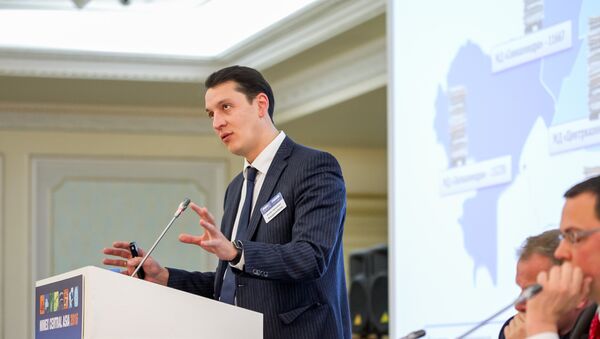
    While Kazakhstan has established itself as one of the most attractive jurisdictions for geological exploration investment, recent developments have unsettled international partners. Ruslan Baimishev, President of the Kazakhstan Mining Chamber, outlined these concerns during a panel discussion in Almaty, as reported by LS.

    Baimishev noted that major industry players invest with long-term horizons—often 10 to 15 years—making regulatory stability crucial. He acknowledged that reforms in 2018 had positioned Kazakhstan as a globally competitive mining jurisdiction. However, he warned against backtracking, citing attempts to reintroduce restrictive policies, such as stricter reserve reporting rules and restricted access to geological data.

    “During the last parliamentary session, several draft laws initially welcomed by MPs were later amended, effectively reverting to outdated practices and deviating from international standards,” Baimishev explained. Though these changes were ultimately halted, the mere attempt sent worrying signals to investors.

    Another pressing issue is tax reform. The new Tax Code, set to take effect in 2026, introduces higher land lease fees, which could discourage large-scale exploration. Baimishev argued that while the intent—to incentivise faster project development—is logical, investors need clarity on post-exploration taxation. He also criticised proposed royalty rates, which, despite being marketed as investor-friendly, may apply unevenly, disadvantaging existing license holders.

    On a positive note, Baimishev praised ongoing government-business dialogue and improvements in geological data accessibility. However, he urged further refinements, particularly in licensing procedures for restricted areas.

    Separately, Nikolai Radostovets of the Republican Association of Mining and Metallurgical Enterprises raised concerns over a proposed 1% R&D levy. While 30% would fund geological studies—a sector priority—he argued the remaining 70% should support industry-specific innovation rather than being absorbed into the state budget.

    Saken Shayakhmetov of Kazakhmys added that without strategic R&D investment, Kazakhstan risks falling behind technologically as mineral reserves deplete.

  • Kazakhstan Considers New Royalty-Based Tax Model for Mining Sector

    Kazakhstan Considers New Royalty-Based Tax Model for Mining Sector

    Kazakhstan plans to transition from its current mineral extraction tax to a royalty-based system, calculated on the sale value of mineral raw materials. Minister of Industry Kanat Sharlapayev believes this will enhance transparency and attract foreign investors. The new model aims to incentivize domestic processing by imposing lower taxes on minerals processed locally compared to those exported raw. The proposal is set to be included in the 2026 Tax Code. Additionally, the minister emphasized boosting geology research as a fundamental science, advocating increased state funding.