Tag: Tajikistan

  • Tajikistan Aims to Become a Key Producer of Critical Metals for the Green Transition

    Tajikistan Aims to Become a Key Producer of Critical Metals for the Green Transition

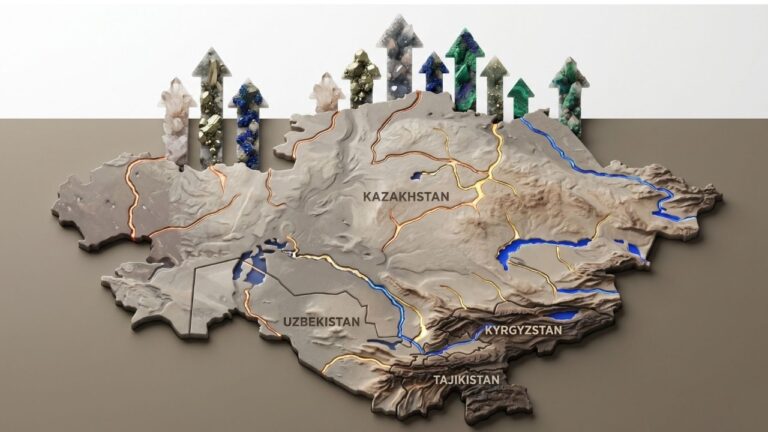
    Tajikistan holds reserves of ten out of twelve metals essential for the global green transition and is actively developing their production, Minister of Industry and New Technologies Sherali Kabir announced on October 14 at the Dushanbe – 2025 International Investment Forum. According to the minister, six of these critical metals are already being produced domestically, with plans to further expand operations and integrate into the new global supply chain of rare earth elements.

    Critical metals, such as those used in solar and wind power systems as well as electric vehicles, are vital to green technologies. Kabir highlighted that during the Soviet era, only three plants in the entire USSR produced rare earth metals—two of them located in Tajikistan and one in Russia. Negotiations are currently underway with several international companies to modernize these facilities. “I am confident that in the near future we will see very good results,” Kabir said.

    Special focus has been placed on elements like antimony and stibnite, which play an important role in the green transition. “Tajikistan ranks second in the world in terms of antimony reserves,” Kabir noted, adding that four antimony plants are currently under development, ranging from feasibility studies to active construction stages.

    The minister also reported that Tajikistan has launched copper production—a key metal for the green economy—and plans to significantly increase output by attracting investment. Gold production is growing at around 20% annually, while the country also possesses large reserves of nickel and lithium. “We will be the first country in the CIS to produce lithium,” Kabir declared.

    Enterprises such as Azot and TALCO Gold are being positioned not only as regional leaders but as integral players in the global critical metals market. State programs are already in place to develop the mining sector, with Kabir expressing confidence that Tajikistan will soon secure a prominent place in the international market for metals vital to the green transition.

    He emphasized that international cooperation remains the main driver of growth for the metallurgical industry and that establishing new supply chains for rare earth and critical metals is essential to stabilizing global markets. The country’s president has made rapid industrialization a national priority—an approach that has already doubled Tajikistan’s industrial output over the past five years.

  • Tajikistan Targets Role in Global Rare Earth Supply Chain, Eyes Lithium and Antimony Production Expansion

    Tajikistan Targets Role in Global Rare Earth Supply Chain, Eyes Lithium and Antimony Production Expansion

    Tajikistan holds deposits of 10 out of 12 metals critical for the global energy transition, with six already being mined, Minister of Industry and New Technologies Sherali Kabir said at the Dushanbe 2025 International Investment Forum, according to Asia-Plus.

    Kabir outlined the government’s vision for Tajikistan to become an active player in the global rare earth supply chain, emphasizing that the country was once a hub for rare earth production within the former Soviet Union. Of the three rare earth processing plants that existed in the USSR, two were located in Tajikistan and one in Russia.

    Authorities are now in talks with international partners to modernize these facilities, with Kabir noting that the government expects “very good results” from these negotiations in the near future.

    Tajikistan is also doubling down on antimony, one of its most abundant resources. The country ranks second globally in terms of antimony reserves. Four new processing plants are in the pipeline, at various stages ranging from feasibility studies to construction.

    The minister also highlighted the growing copper industry, confirming that domestic production has already begun and that the government plans to significantly expand output by attracting foreign investment.

    Kabir further revealed that Tajikistan has large deposits of nickel and lithium ores, adding that the country’s ambition is to become the first among CIS nations to launch lithium production — a crucial material for batteries and clean energy technologies.

  • China Tightens Grip on Tajikistan’s Antimony Industry

    China Tightens Grip on Tajikistan’s Antimony Industry

    In Tajikistan’s mountainous heartland, the Soviet-era Saritag antimony mine stands testament to China’s growing influence in Central Asia. Run by the joint venture Talco Gold, a collaboration between Tajik and Chinese companies, the mine produces over 5,000 tonnes of antimony concentrate daily, crucial for many industrial applications. The ore is crushed, ground in large drums, and then separated from the metal using chemical reagents before being dried and bagged as 30% pure antimony. This large-scale operation was made possible by a significant Chinese investment in 2022, which is now being followed by the construction of a new purification plant.

    Pictures of Tajikistan’s long-time President Emomali Rakhmon coexist with portraits of Chinese leader Xi Jinping on posters juxtaposing the country’s past with its present economic reality. While remnants of the Soviet era remain, China has overtaken Russia as the dominant power in the region’s crucial mining sector.

    The full potential of the mine is yet to be unlocked. China’s ambitious $359 million project aims to build a state-of-the-art purification plant on the site, allowing for even greater control over the antimony production chain.

    The Chinese investment, pouring in, signals a strategic move to secure access to vital resources and cement political ties. While offering much-needed economic boost to Tajikistan, it raises concerns about resource dependence and potential environmental consequences.

    This narrative paints a picture of delicate balance: economic prosperity coupled with increasing reliance on a single partner, leaving Tajikistan to navigate the complex landscape of China’s expanding geopolitical footprint in Central Asia.

  • Kyrgyzaltyn Strengthens Ties with Tajik Mining Giants Through Strategic Co-Op Agreements

    Kyrgyzaltyn Strengthens Ties with Tajik Mining Giants Through Strategic Co-Op Agreements

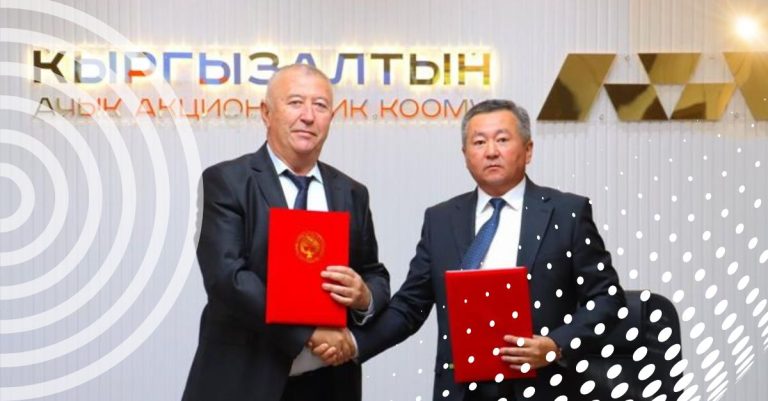
    Kyrgyzaltyn, Kyrgyzstan’s state-owned mining company, has entered on 27 August 2025 into significant co-operation agreements with three of Tajikistan’s premier mining firms: Talco Gold, Tajik-China Mining Company, and Pakrut. The memorandums of understanding were officially signed during a high-level visit by Tajikistan’s First Deputy Prime Minister, Hokim Kholikzoda, and a large business delegation.

    The agreements, which were announced by Kyrgyzaltyn, are intended to bolster the development of the mining sector across both nations. The focus will be on the implementation of advanced technologies, improving production efficiency, and creating new job opportunities.

    In a further sign of burgeoning economic ties, a separate memorandum was also signed between the Tajik delegation and the wheel processing and restoration plant belonging to Kumtor Gold Company, a subsidiary of Kyrgyzaltyn.

    As part of their visit, the Tajik delegation toured several key Kyrgyz enterprises, including the wheel processing and restoration factory and Kyrgyzaltyn’s main facilities.

    Kyrgyzaltyn, which holds a crucial position as the sole domestic producer of refined gold and gold bars in Kyrgyzstan, stated that the newly signed agreements will lay the groundwork for strengthened good-neighbourly relations and foster long-term, mutually beneficial collaboration between the two countries.

  • Zijin’s Shadow: Villagers in Serbia and Tajikistan Bear Brunt of Chinese Mining Expansion

    Zijin’s Shadow: Villagers in Serbia and Tajikistan Bear Brunt of Chinese Mining Expansion

    In the hills of eastern Serbia and the valleys of western Tajikistan, villagers say they’re paying the price for China’s global mining ambitions. The Chinese-owned Zijin Mining Group, operating major copper and gold projects in both countries, stands accused of polluting the air, poisoning rivers, and displacing communities—while receiving strong political backing under the umbrella of Beijing’s Belt and Road Initiative (BRI).

    In Bor, Serbia, residents near Zijin’s Cukaru Peki copper mine complain of worsening air quality, arsenic, and fine particulate matter still lingering in the atmosphere despite the company’s reported $259 million investment in environmental improvements.

    “You used to see the smoke,” says Violeta, a Bor resident. “Now you don’t—but it still stinks.”

    In Krivelj, just outside Bor, Milos Bozic says the dust has made farming impossible. Professor Snezana Serbula of the Bor Technical Faculty confirms that PM particles and arsenic persist in the air. Meanwhile, residents like Dragoslav Stanculovic in nearby Ostrelj refuse to sell their properties. “What am I supposed to do—sell my dignity?” he asks.

    Despite environmental alarms, the Serbian government has doubled down on its support for Zijin, with Chinese companies now Serbia’s top exporters, surpassing $1 billion in trade by 2024.

    In Tajikistan, the story echoes Serbia’s. In Khumgaron and Shing, villagers say Zijin’s Zarafshon gold mine, where the company owns a 70% stake, has brought choking air and poisoned water. “Thick smoke covers the village in the morning,” says Abutolib Mukhtorov.

    Local residents in both countries report broken promises of relocation, inadequate compensation, and police intimidation of those who speak out. In Tajikistan, women who protested in Panjakent were detained. Firuza Kahorova recalls collapsing during the protest and being mocked by authorities: “They said, ‘Don’t give her water—give her dirt.’”

    Zijin claims 98% of Serbian land was acquired voluntarily and insists its projects meet environmental laws, branding Cukaru Peki as Serbia’s first “green mine.” In Tajikistan, Zijin has been fined, but continues operating with 20-year plans and strong support from the government, which highlights tax revenues and economic benefits.

    But for many residents, those benefits are illusory. “Peaches don’t grow. Cucumber flowers fall off. The river’s poisoned,” says Asadulo Rahmonov in Tajikistan. “It’s not progress. It’s survival.”

  • Vast Resources Signs MoU with Tajik Ministry at UK-Tajikistan Mining Forum

    Vast Resources Signs MoU with Tajik Ministry at UK-Tajikistan Mining Forum

    Vast Resources plc, an AIM-listed mining company, announced its active participation in the Tajikistan-UK Mining Forum held yesterday at the London Stock Exchange. The event served as a platform to reinforce bilateral ties between the United Kingdom and Tajikistan while spotlighting the investment potential within Tajikistan’s mining sector.

    During the forum, Vast Resources signed a non-binding Memorandum of Understanding (MoU) with the Ministry of Industry and New Technologies of the Republic of Tajikistan. The agreement outlines a framework for cooperation aimed at identifying both historical and greenfield exploration opportunities for non-ferrous and strategic mineral deposits.

    A notable element of the MoU includes plans to jointly develop a “Tajik Mineral Investment Fund” to facilitate growth in Tajikistan’s mining industry. The agreement remains in effect until 19 May 2026. Vast Resources confirmed that any material developments arising from the MoU will be disclosed as they occur.

  • Tajikistan’s Minister Showcases Nation’s Mining Potential at London Stock Exchange Forum

    Tajikistan’s Minister Showcases Nation’s Mining Potential at London Stock Exchange Forum

    His Excellency Sherali Kabir, Minister of Industry and New Technologies of the Republic of Tajikistan, delivered a compelling presentation at the Tajikistan-UK Mining Forum held yesterday at the London Stock Exchange. The high-profile event, which took place on 19 May 2025, highlighted the significant investment opportunities within Tajikistan’s rapidly developing mining sector.

    Mineral Wealth and Strategic Resources

    In his address, Minister Kabir emphasised Tajikistan’s extensive mineral resources, noting that the country currently extracts over fifty types of raw materials from explored deposits. These include gold, silver, lead, antimony, tungsten, rare and scattered elements, precious and semi-precious stones, and rock salt.

    The Minister highlighted that Tajikistan possesses ten different types of strategic metals and minerals that feature on the critical resources lists of China, the European Union, the United States, and the United Kingdom. These include copper, aluminium, lithium, zinc, antimony, chlorite, graphite, nickel, tungsten, and rare earth metals.

    “Dependence on critical raw materials may soon replace dependence on oil and gas,” Minister Kabir stated, emphasising the growing global demand for these resources due to international economic competition, industrialisation in developing countries, and ongoing transformations in the global economic order.

    Future Market Prospects

    Minister Kabir presented a strategic outlook for the critical minerals market, predicting substantial price increases for rare earth metals—potentially up to 1,000 percent by 2035—driven largely by the projected production of 140 million electric vehicles worldwide. Despite the current global market for rare earth metals being valued at only $15 billion annually, Tajikistan is positioning itself to become an integral part of new supply chains.

    “We are a country that possesses unique resources, and we believe we can be part of new supply chains. We will certainly use this opportunity,” the Minister asserted.

    Investment Framework and Government Support

    The Tajik government has established a robust investment framework that guarantees stability for mining projects. Minister Kabir explained that investment agreements include provisions ensuring that legislative changes will not affect approved projects during their operational period, thus mitigating fiscal risks for investors.

    “The task of our government is to ensure foreign investors feel comfortable in Tajikistan,” Minister Kabir stated, emphasising the government’s commitment to supporting international partners through active engagement and advocacy.

    Value-Added Production Strategy

    Looking ahead, Minister Kabir revealed that Tajikistan is moving away from the direct sale of raw mineral concentrates. The government has implemented a five-year programme using tariff regulation to encourage domestic processing of metals, aiming to create higher value-added products within the country.

    This strategic shift coincides with Tajikistan’s impressive economic growth, with an overall growth rate of approximately 8.5% and industrial sector expansion of 25% this year, following last year’s 20% increase.

    International Cooperation

    The forum also saw the signing of a non-binding Memorandum of Understanding between Vast Resources PLC, an AIM-quoted mining company that sponsored the event, and the Ministry of Industry and New Technologies of Tajikistan. The MoU establishes a framework for cooperation in identifying new exploration and exploitation targets for non-ferrous and strategic mineral deposits, as well as developing a “Tajik Mineral Investment Fund”.

    The Tajikistan-UK Mining Forum marked an important milestone in strengthening bilateral relations and showcasing the Central Asian nation’s growing significance in the global critical minerals supply chain.

  • TALCO’s Electricity Debt Reaches $52.6 Million Amid Legal Dispute

    TALCO’s Electricity Debt Reaches $52.6 Million Amid Legal Dispute

    The Tajik Aluminum Company (TALCO) has accumulated a significant electricity debt of 571.5 million somonis (US$52.6 million) as of January 1, 2025, marking a 62% increase from the previous year’s debt. The figures were revealed during a February 11 press conference by Muhammad Ghulomzoda, a representative of OJSC Distribution Electric Networks. This debt includes both accumulated liabilities and current monthly payments of around 25 million somonis (US$2.3 million). However, no details were provided on TALCO’s total payments for 2024.

    TALCO’s electricity consumption is substantial, averaging 5.7 million kWh per day—equivalent to 10% of Tajikistan’s total electricity production. In August 2024, TALCO had reportedly paid 90 million somonis after negotiations, agreeing to a monthly payment of 35 million somonis.

    The company is also embroiled in a legal dispute with Barqi Tojik, Tajikistan’s state-run electricity provider, over a US$37 million debt allegedly accumulated in 2020. TALCO has disputed the full amount, claiming calculation errors. The representative of Distribution Electric Networks declined to provide an update on the lawsuit’s status during the recent press conference.

    The debt dispute between Barqi Tojik and TALCO dates back to 2020. That year, Barqi Tojik claimed TALCO owed 415 million somonis (US$39.2 million), which TALCO denied, asserting that it had overpaid for electricity. As of January 2024, TALCO’s debt stood at over 351.7 million somonis (US$32.2 million).

    TALCO benefits from preferential electricity rates—18.6 dirams per kWh—compared to 70.35 dirams for other industrial enterprises and 30.75 dirams for residential customers.

  • Tajikistan Seeks $100 Million Investment to Revive Lead-Silver Mining Complex

    Tajikistan Seeks $100 Million Investment to Revive Lead-Silver Mining Complex

    Tajikistan is seeking a $100 million investment to modernise the Adrasman mining and processing plant.

    The plant’s raw material base consists of the Eastern and Western Konimansur deposits.

    The project’s first phase involves modernising the production facilities, while the second phase aims to increase capacity, construct a beneficiation plant, and build a metallurgical plant.

    The project’s phased approach to revitalising the plant includes the following stages:

    • Year 1: Repair and restoration work on mining sites and the beneficiation plant, procurement of essential equipment (mining machinery, transport vehicles, etc.), with the extraction and processing of 300,000 tonnes of ore and production of 6,000 tonnes of concentrate.
    • Year 2: Preparatory mining works for the next block. Extraction and processing of 500,000 tonnes of ore and production of 10,000 tonnes of concentrate.
    • Years 3-5: Extraction and processing of 1 million tonnes of ore per year, producing 20,000 tonnes of concentrate annually.
    • Year 6: Scaling up extraction and processing to 2 million tonnes per year, with a concentrate output of 40,000 tonnes.

    At the end of the project, the plant plans to produce up to 40,000 tonnes of concentrate annually.

    The concentrate produced by the plant will contain the following primary components:

    • Lead: 31-36%
    • Silver: 2,200-3,300 grams per tonne of ore, depending on ore quality and enrichment technology.

    To increase the company’s capacity, it is necessary to upgrade mine No. 12, which is in need of reconstruction, said company head Sobirjon Mamadjonov to Sputnik Tajikistan.

    The project has been developed by one of Uzbekistan’s geological institutes. According to the business plan, for the revival, upgrade, and expansion of mining capacities, production must increase to 1 million tonnes per year or more, as otherwise, the operation will not be profitable.

    Previously, the Russian company “Formula Svet” expressed interest in the launch of the Adrasman plant in Guliston.

    History of the Plant:

    The development of the Adrasman deposit was first discussed in 1944, when the USSR NKVD, under the direction of the Soviet government, began exploring uranium deposits in Central Asia, including in Adrasman.

    In addition to uranium, the Soviet government planned to extract bismuth and its concentrates at this site. Large reserves of lead and silver were later discovered.

    In 1970, based on the Karamazar mine, the Adrasman mining and beneficiation plant was established, specialising in the extraction and processing of lead-silver ores to produce lead concentrate. The plant’s capacity was over 650,000 tonnes of ore per year.

    In mid-2006, the Kazakh company “Kazinvest-Mineral” acquired 100% of Adrasman’s shares. In 2007, over 200,000 tonnes of lead-zinc concentrate were extracted and processed here.

    However, in July 2013, the Adrasman plant ceased production due to a decline in global silver prices, making the extraction and processing of this metal unprofitable.

    Since 2013, the plant has been inactive and declared bankrupt.

    In 2017, by decision of the Dushanbe Economic Court, Adrasman became the property of the Tajik government, which explained the move by stating that the Kazakh owners had failed to take measures to revitalise the enterprise.

  • Tajikistan Backs “Green Corridor” Initiative, Eyes Enhanced Regional Cooperation

    Tajikistan Backs “Green Corridor” Initiative, Eyes Enhanced Regional Cooperation

    Tajikistan has announced its support for the creation of a “green corridor” connecting Azerbaijan, Kazakhstan, and Uzbekistan, signaling a commitment to enhanced regional collaboration. In an interview with Report, Jamshed Shoimzoda, Tajikistan’s First Deputy Minister of Energy and Water Resources, highlighted the country’s untapped hydropower potential, noting that only 5% of it is currently utilized. Remarkably, 95% of Tajikistan’s energy production is already green, Shoimzoda stated.

    He emphasized that if Tajikistan’s full potential were harnessed, the energy generated would exceed the combined needs of Central Asian countries by four times. Shoimzoda also praised Azerbaijan’s efforts to establish transport corridors linking Central Asia to Europe, which could enable Tajikistan to deliver its green energy not only regionally but also to European markets.

    Shoimzoda noted that advancements in technology and lower costs have made this project feasible, despite its technical challenges two decades ago. In addition to energy, Tajikistan and Azerbaijan are exploring cooperation in mineral resource development. At a recent intergovernmental meeting, the two nations discussed leveraging Azerbaijan’s experience in this field to support Tajikistan’s burgeoning extraction industry.