Tag: Sweden mining

  • Sweden’s Per Geijer Deposit Emerges as One of Europe’s Largest Rare Earth Discoveries

    Sweden’s Per Geijer Deposit Emerges as One of Europe’s Largest Rare Earth Discoveries

    A major rare earth discovery linked to Sweden’s long-established Kiruna iron mining district is positioning northern Europe as a potential future supplier of critical minerals essential for electric vehicles, renewable energy and advanced technologies.

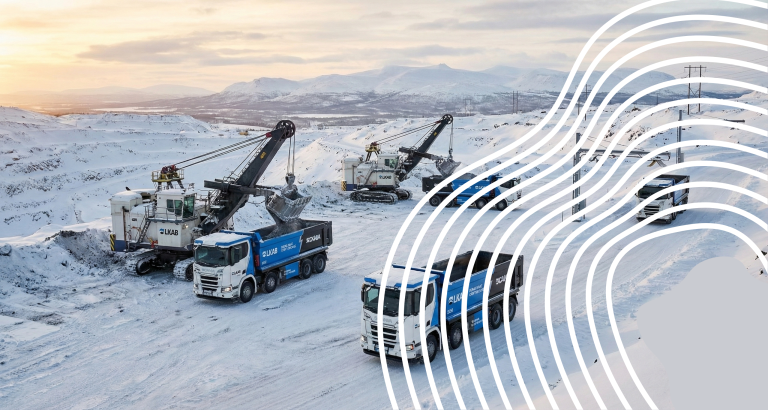
    State-owned miner LKAB has confirmed that the Per Geijer deposit, located near Kiruna above the Arctic Circle, contains an estimated 2.2 million tonnes of rare earth oxides alongside substantial volumes of iron ore and phosphorus. The updated resource estimate places the site among the largest known rare earth deposits in Europe.

    Rare earth elements are vital components in permanent magnets used in electric vehicle motors, wind turbines and consumer electronics. Europe currently relies heavily on imports, with China responsible for processing nearly 90 percent of global rare earth supply, creating strategic vulnerabilities across industrial and energy transition supply chains.

    LKAB estimates that once fully developed, Per Geijer could eventually meet up to 18 percent of Europe’s rare earth demand. The deposit also contains approximately 1.2 billion tonnes of iron ore and phosphorus, with rare earth minerals primarily hosted in apatite, allowing recovery alongside existing iron mining operations.

    The project forms part of a broader European effort to strengthen domestic raw material production under the EU Critical Raw Materials Act, which aims to reduce reliance on single external suppliers and expand regional mining and processing capacity by 2030. Per Geijer, together with LKAB’s related developments in Malmberget and Luleå, has received strategic project status, enabling accelerated permitting procedures and improved access to financing.

    Rather than developing a standalone rare earth mine, LKAB plans an integrated industrial chain linking iron ore extraction in Kiruna with downstream processing facilities. Concentrates produced at Malmberget would be transported to a new industrial hub in Luleå, where hydrometallurgical processing will separate rare earth oxides, phosphoric acid for fertiliser production and gypsum by-products.

    To support final separation of individual rare earth elements, LKAB has also invested in Norwegian technology company REEtec, which is developing alternative refining methods aimed at reducing dependence on Chinese processing technologies.

    Despite its strategic importance, the project faces social and environmental challenges. Mining activity has already forced the gradual relocation of Kiruna due to ground subsidence, while Indigenous Sámi communities have raised concerns that expanded mining could disrupt traditional reindeer herding routes and fragile Arctic ecosystems.

    LKAB emphasises that Per Geijer remains a mineral resource rather than an approved mining reserve, with further exploration, technical studies and permitting required. Industry analysts expect large-scale rare earth production to take between 10 and 15 years before material from the project reaches European manufacturing supply chains.

    Even at full capacity, experts note that the deposit will complement rather than replace global supply networks. However, the presence of a major domestic rare earth source marks a significant shift in Europe’s long-term strategy to secure materials underpinning the green and digital transition.

  • Deep beneath Kiruna, Sweden pushes forward in Europe’s race to mine rare earths

    Deep beneath Kiruna, Sweden pushes forward in Europe’s race to mine rare earths

    In the depths of Arctic winter, with temperatures plunging to minus 20 degrees Celsius and daylight reduced to a few hours of twilight, a team of miners is advancing one of Europe’s most strategically important resource projects beneath the Swedish town of Kiruna. Around 900 metres underground, workers at the state-owned LKAB are tunnelling toward the Per Geijer deposit, regarded as one of the continent’s largest known concentrations of rare earth elements.

    Europe currently has no operating rare earth mines, despite rising demand for materials critical to electric vehicles, renewable energy systems, consumer electronics and defence technologies. The push to develop domestic supply has intensified as geopolitical tensions grow and China maintains near-total dominance over rare earth processing and magnet production.

    At Kiruna, the rare earths occur alongside iron ore in a magnetite-hematite-phosphate formation identified more than a century ago. Teams work at depths of up to 1.3 kilometres, drilling, blasting and reinforcing tunnels that will eventually link the existing iron ore mine with the Per Geijer resource roughly two kilometres away. Progress is incremental, averaging about five metres per day, reflecting both the technical complexity and environmental sensitivity of the operation.

    LKAB’s strategy differs from earlier mining approaches. Rather than exposing the entire deposit at once, the company plans phased development, gradually integrating rare earth extraction into the established iron ore system. Chief executive Jan Moström has said this approach is essential to manage risk, control costs and accelerate learning as Europe rebuilds lost mining and processing capabilities.

    To shorten timelines, LKAB has invested €80 million in a demonstration plant in Luleå to test separation technologies ahead of full-scale mining. The company has also taken a stake in Norway-based REEtec to develop cleaner refining methods, aiming to meet strict European environmental standards.

    Industry experts note that even with favourable geology, moving from resource discovery to refined rare earth products can take a decade or more. Still, Kiruna is widely viewed as Europe’s strongest near-term opportunity to reduce dependence on Chinese supply chains, which currently account for around 85% of global rare earth processing and virtually all heavy rare earth refining.

    European officials, including EU industry commissioner Stéphane Séjourné, have visited the site, underlining its strategic importance as the bloc seeks greater resource autonomy. While China is expected to retain dominance for years, projects like Kiruna are seen as critical first steps toward a more resilient European supply chain.

  • Kiruna Seeks Government Help as Iron Ore Mine Expansion Forces Relocation of One-Third of Residents

    Kiruna Seeks Government Help as Iron Ore Mine Expansion Forces Relocation of One-Third of Residents

    The Arctic town of Kiruna, already known for its unprecedented relocation to accommodate mining activity, now faces another massive move. Municipal officials say 2,700 additional homes and some 6,000 residents — a third of the town’s population — will need to be relocated over the next decade due to the planned expansion of LKAB’s giant underground iron ore mine.

    “I call on the Swedish government to contact Kiruna municipality as quickly as possible. We can’t manage without help from the state and the government in this situation,” municipal leader Mats Taaveniku told reporters on Friday.

    State-owned miner LKAB, which operates the world’s largest underground iron ore mine, confirmed in updated forecasts on Thursday that relocation must begin immediately to secure operations until and beyond 2035.

    The latest phase follows earlier moves: in 2022, a new retail district opened 3 km from the original town center, and just this month Kiruna’s historic church was physically transported to a new location.

    Sweden’s Minister for Energy, Business and Industry, Ebba Busch, said the government had contacted the municipality and acknowledged the complexity of balancing “different national interests.” She emphasized that LKAB had committed to providing compensation and welcomed the company’s continued investments in Norrbotten, which she said would safeguard jobs and reduce reliance on “dangerous states” for raw materials.